

Antigone the Defiant Heroine: Myth, Tragedy, and the Unbreakable Law
Antigone buried her brother against the king's decree and chose death over silence. Her story, preserved in Sophocles' tragedy, remains the sharpest meditation on conscience, law, and the price of defiance in all of ancient literature.
Contents
The stone had not yet sealed the tomb when the soldiers found her. Antigone, youngest daughter of Oedipus, was kneeling in the dust outside Thebes, pouring funeral libations over the exposed corpse of her brother Polynices. She did not run. She did not weep with self-pity. She looked up at the guards and let them take her.
That moment, crystallised by Sophocles around 441 BCE, is one of the most electrically charged scenes in the history of human storytelling. A young woman, alone, defying the full weight of royal authority for the sake of a religious obligation and a dead brother's dignity. The act is simple. The consequences are total. And the question it places on the reader's chest has never gone away: when the law of the state and the law of the conscience collide, which one yields?
Antigone the defiant heroine did not invent moral courage, but she gave it a face, a name, and a voice sharp enough to cut across twenty-five centuries.
The House of Oedipus: The Cursed Bloodline Antigone Was Born Into
To understand Antigone, you have to understand the catastrophe she was born into. She is the daughter of Oedipus and Jocasta, which means her father is also, by the terrible logic of the Theban myth cycle, her half-brother. The curse on the house of Oedipus predates even that horror; it reaches back to Laius, king of Thebes, who transgressed divine hospitality by assaulting Chrysippus, the son of Pelops. From that original violation, the gods loaded generation after generation with ruin.
When the truth of Oedipus's parentage came to light, Jocasta hanged herself and Oedipus gouged out his own eyes. He went into exile, accompanied only by Antigone, who served as her blind father's guide through years of wandering. The other children stayed in Thebes: her sister Ismene, and her two brothers Eteocles and Polynices.
The brothers agreed to share the kingship, rotating annually. Eteocles took the throne first and refused to step down. Polynices raised an Argive army and marched against Thebes. This was the assault known as the Seven Against Thebes, recorded in the earlier Aeschylean trilogy and referenced in Pindar's Olympian Odes. The assault failed. Both brothers died at each other's hands at the city gate, fulfilling their father's dying curse that they would divide his inheritance by the sword.
Creon, their uncle, assumed the throne. He decreed that Eteocles, who died defending Thebes, would receive full burial rites. Polynices, the attacker, would lie unburied, exposed to dogs and vultures. To touch the body was to be stoned to death.
That decree is the opening gun of Sophocles' play.

Antigone Against Creon: Reading the Confrontation Scene by Scene
The play opens not with Creon's proclamation but with Antigone telling Ismene what she intends to do. This is deliberate. Sophocles places us immediately inside Antigone's decision, not inside the king's authority. We do not hear the edict first and then watch a citizen defy it; we hear the defiance first and understand it as the primary reality.
Ismene's response is the foil that sharpens Antigone's position. She is not a coward, Ismene; she is a realist. She says, in the R. C. Jebb translation: "We are women; it is not for us to fight against men." She loves her brother. She recognises the injustice. She simply believes that survival matters more than gesture. Antigone dismisses her. She will act alone.
The burial Antigone performs is ritual, not logistical. Ancient Greek religious belief held that an unburied soul could not cross the river Styx and enter the underworld; it would wander the near shore for a hundred years. To deny burial was therefore not merely a political insult but a metaphysical punishment, reaching beyond death. Antigone's act is precisely calibrated: she covers the body with dust and pours libations, a minimum offering that satisfies the chthonic obligations. She is not staging a political protest. She is fulfilling a sacred duty.
When she is brought before Creon, the confrontation is one of the most precisely argued dialogues in Greek drama. Creon accuses her of breaking his law. Antigone's response is the keystone of the whole play:
"Nor did I think your edicts strong enough / that you, a mortal man, could override / the gods' unwritten and unfailing laws." (Sophocles, Antigone, lines 453-455, Fagles translation)
She does not deny the act. She does not beg. She invokes a law older than Creon's edict: the agraphos nomos, the unwritten law, rooted in divine obligation and natural human kinship. Creon's law is positive law, decreed by a ruler for political reasons. Antigone's law is something prior to politics. The play never declares one side the winner. Sophocles is too honest for that.
Creon is not written as a simple tyrant. He believes, with genuine conviction, that loyalty to the city must come before loyalty to any individual. He argues that a city survives only if its laws are absolute. He is not wrong, exactly. He is catastrophically rigid. His error is not malice but hubris of a civic kind: the inability to admit that his reasoning might have a limit.

Haemon, Tiresias, and the Voices Creon Refuses to Hear
Two figures try to crack Creon's resolve before fate does it for him. The first is Haemon, Creon's own son, who is betrothed to Antigone. Haemon does not plead from love, at least not only from love. He reports what the city is whispering: that the people of Thebes believe Antigone acted rightly. He urges his father to listen to those he governs.
Creon hears filial disrespect and explodes. He will not be taught by his son. He will not be told by a crowd. The scene is a masterclass in dramatising the psychology of authoritarian certainty: every reasonable voice reads as a threat to the person who cannot distinguish between being challenged and being attacked.
The second voice is Tiresias, the blind prophet. Tiresias appears in myth after myth, always as the one who has already seen what others refuse to see. Here he tells Creon bluntly: the gods are offended. The altars of Thebes are polluted by the unburied flesh of Polynices. The birds will not fly straight, the fire on the altars will not catch clean, because the city has violated the boundary between the living and the dead. Creon accuses him of taking a bribe.
Tiresias delivers a prophecy so specific it functions as a deadline: before the sun sets, Creon will have traded a child of his own body for the two bodies he has mishandled, one above ground and one below. Haemon will die. The chorus, elders who have agreed with Creon through almost the entire play, finally breaks and urges him to relent.
He does. Too late.
Antigone has already been walled alive inside a cave tomb. By the time Creon arrives to release her, she has hanged herself. Haemon, finding her dead, draws his sword and tries to kill his father; when Creon steps back, Haemon turns the blade on himself and dies in the entrance to the tomb. Creon's wife, Eurydice, hears the news and kills herself at the altar of the house. Creon is left standing in the ruin of his family, holding nothing but the correctness of his edict.
The Unwritten Law: What Antigone's Theology Actually Says
The agraphos nomos is not a vague appeal to feeling. It has specific theological content in fifth-century Athenian thought. The obligation to bury the dead was considered a gift of the gods to humanity, a boundary that defined civilised life against barbarism. Thucydides records that even in wartime, bodies were returned across enemy lines for burial. The Athenian generals who failed to retrieve their dead after the Battle of Arginusae in 406 BCE were tried and executed, not for cowardice but for that failure.
Antigone is not being impulsive. She is citing a consensus that most of her audience would have shared. The political shock of the play is not that she is right; the audience knows she is right. The shock is that being right is not enough to keep her alive.
This is also where Sophocles departs from any simple morality tale. Antigone is right about divine law. Creon is wrong to deny burial. And yet Antigone is sometimes cold, dismissive of Ismene, apparently indifferent to her own suffering. She delivers a speech near the end, the so-called "tomb speech", in which she mourns that she will never marry, never know children, and then offers a surprisingly transactional argument: she would not have done the same for a husband or a child, only for a brother, because brothers cannot be replaced once parents are dead. This passage, which some nineteenth-century scholars dismissed as an interpolation, is now accepted as genuine by most classicists. It makes Antigone stranger and more human simultaneously.
Ismene as Mirror: The Ethics of Survival
It is easy to read Ismene as the lesser sister, the one who blinked. That reading is too comfortable. Ismene represents the choice that most people, in most historical circumstances, actually make. She is not indifferent to her brother's fate. She is not indifferent to injustice. She simply calculates the cost and decides she cannot pay it.
Antigone
Acts immediately, before the play begins, outside the frame of deliberation. Claims divine law as her authority. Rejects compromise entirely. Refuses to let Ismene share her guilt or her credit when Ismene later offers to stand beside her. Dies for her certainty, leaving no descendants.
Ismene
Deliberates, calculates, and chooses survival. Recognises the injustice but cannot act on it alone. Later offers to die with Antigone, an offer Antigone rejects. Survives the play. Represents the majority position in any genuinely dangerous political situation.
The play does not punish Ismene. She lives. It does not reward Antigone with survival. It rewards her, if that is the word, with the integrity of her own choice. Sophocles seems to understand that both positions are human, that the tragedy is not that Ismene failed but that the situation forces a binary no one should have to face.
Scholars including Bernard Knox (The Heroic Temper, 1964) have argued that Antigone fits the mould of the Sophoclean hero specifically because she is inflexible: like Ajax, like Philoctetes, like Oedipus himself, she possesses a heroic absolutism that makes negotiation impossible. The hero cannot bend. That rigidity is simultaneously their greatness and their destruction.

Cross-Cultural Echoes: Defiant Women Who Chose Law Over Life
Antigone the defiant heroine is not culturally isolated. The same narrative pressure, a woman who chooses a higher obligation over self-preservation in the face of male state authority, appears across mythological traditions in forms that illuminate her by contrast.
In Hindu mythology, Savitri follows her dead husband to the court of Yama, the god of death, and argues so skillfully for his life that Yama concedes. Like Antigone, she acts for the dead. Unlike Antigone, she wins. The difference is instructive: Savitri operates within a framework of dharmic obligation that the divine authority ultimately recognises. Antigone operates against a human authority that refuses to recognise the divine framework she invokes.
In Norse mythology, the valkyrie Brynhildr is imprisoned within a ring of fire by Odin for disobeying his command in battle; she had granted victory to the man she judged more worthy, not the man Odin had designated. Like Antigone, her crime is choosing a personal moral judgment over institutional authority. Both women end inside enclosures, one a cave, one a fire-circle, and both emerge from their enclosure only through death.
In Mesoamerican tradition, the Popol Vuh presents Xquic, the Blood Woman, who acts against her father's direct order by speaking to the skull of Hun Hunahpu and becoming pregnant with the Hero Twins. She is condemned to death, escapes through cleverness, and carries the future of the world in her body. Her transgression is generative where Antigone's is sacrificial, but both women place a sacred obligation above an authoritative father figure's command.
The pattern suggests something close to a universal: the figure who breaks the law of the father to fulfill the law of the dead or the divine is one of the oldest story shapes in human culture. Antigone is its most articulate and most costly version.
Antigone in History: How Real Political Crises Rewrote the Play
The play has never been performed in a vacuum. Every major production of Antigone has been shaped by the political moment around it.
Jean Anouilh's 1944 adaptation premiered in German-occupied Paris. Its Antigone is stripped of theology; she acts not because the gods demand it but because she simply cannot do otherwise. Anouilh's Creon is sympathetic, reasonable, the man who keeps the machinery of the city running. The ambiguity was deliberate: collaborationist audiences could read Creon as the necessary realist, Resistance audiences could read Antigone as the martyr who would not comply. The play passed the German censors and meant something different to every person in the theatre. That is the measure of how politically volatile the original text remains.
Bertolt Brecht wrote his own adaptation in 1948, relocating the story to the final days of Nazi Germany, with Creon as a war criminal and Antigone as a German woman who refuses to celebrate her brother's death in a senseless campaign. The agraphos nomos becomes anti-fascist resistance.
In South Africa during apartheid, Athol Fugard, John Kani, and Winston Ntshona's The Island (1973) staged two prisoners on Robben Island rehearsing the trial scene from Antigone as part of a prison concert. The prisoner playing Antigone addresses the audience directly. The play within the play becomes an act of testimony.
In each case, the mythological kernel, the single individual who invokes a law higher than the state's, proves equally useful to radically different historical contexts because the myth is not ideological. It is structural. It describes a situation that recurs.
The Archaeology of the Text: What We Know and What Remains Uncertain
Sophocles was born around 496 BCE at Colonus, near Athens, and died around 406 BCE. He wrote approximately 123 plays, of which seven survive complete. Antigone is among the earliest survivors, probably performed at the City Dionysia in 441 BCE. Ancient sources report that the Athenians were so impressed they elected Sophocles as one of the ten generals for the Samian War, a story that is possibly legendary but reflects how seriously his contemporaries took the political intelligence of the play.
The text we have descends from medieval manuscripts, primarily the Laurentianus 32.9 in the Biblioteca Medicea Laurenziana in Florence, copied in the tenth or eleventh century CE. Before Sophocles, Aeschylus had staged the Theban legend in his Seven Against Thebes (467 BCE), in which Antigone's resolve to bury Polynices is mentioned but not dramatised. There was also an earlier Antigone attributed to Euripides, now lost, in which, according to ancient summaries, Antigone and Haemon had a child and Haemon was saved from execution, a far more conciliatory ending. Sophocles' version imposed its finality so completely that the others were largely forgotten.
The Theban myth cycle itself predates any of the tragedians. It appears in the Iliad (Book 4 and Book 23), where heroes who fought at Thebes are referenced as belonging to an earlier generation of warfare. Hesiod's Works and Days places the Seven Against Thebes in the age of the heroes. The story of Oedipus existed in variant forms; the Oedipodeia, an epic now lost except for fragments, apparently told a different version in which Oedipus continued to rule Thebes after the revelation and the death of Jocasta. Sophocles chose, shaped, and compressed a vast mythological inheritance into a single day's action.
Frequently Asked Questions About Antigone
Frequently asked questions
Is Antigone based on a historical person?
No. Antigone is a figure from the mythological cycle surrounding Thebes, a legendary city whose stories pre-date reliable Greek history. The Theban legend cycle, including the House of Oedipus and the Seven Against Thebes, belongs to the same layer of myth as the Trojan War stories; both were treated by Greek audiences as legendary ancestral history rather than documented events. There is no archaeological or epigraphic evidence for an individual named Antigone who performed the acts described in the myths.
What is the 'unwritten law' Antigone invokes, and where does the concept appear in Greek thought?
The agraphos nomos, unwritten law, refers to obligations considered divinely ordained and universally binding, independent of any city's legislation. Sophocles' Antigone cites it explicitly at lines 450-460 of the play. The concept appears also in Thucydides, who records Pericles invoking unwritten laws in his Funeral Oration (History of the Peloponnesian War, Book 2), and in Aristotle's Rhetoric (1373b), where he defines unwritten law as what is universally recognised as just even without legal codification. The burial of the dead was its clearest and most widely shared example.
Why does Antigone refuse to let Ismene share her fate at the end of the play?
Sophocles gives Antigone a hard answer: she does not want Ismene to claim credit for an act she did not perform, and she does not want her sister's death to serve as a gesture rather than a genuine conviction. There is also, as Bernard Knox argued in The Heroic Temper (1964), a specifically Sophoclean heroic logic at work. The hero cannot share the heroic act; the act is inseparable from the person who chose it without wavering. Antigone's rejection of Ismene's offer is cruel on the surface and consistent at the level of character throughout. It also guarantees Ismene's survival, which some readers see as an unconscious protective act.
How does Creon's character function in the tragedy: is he the villain?
Sophocles resists that simplification. Creon holds a coherent political philosophy: the city requires unconditional loyalty to survive, and a king who exempts his own family from his own laws is no king at all. His error is not moral malevolence but a failure of proportion and an inability to hear correction. Ancient Athenian audiences would have recognised his arguments as serious; Pericles made similar arguments about civic duty. The play measures him not by his principles but by what those principles cost when applied without wisdom. He loses his son, his wife, and his moral authority in a single afternoon. The gods, through Tiresias, do not condemn his preference for civic order; they condemn his specific act of leaving a body unburied and entombing a living woman.
Which translation of Antigone is considered most faithful to the original Greek?
R. C. Jebb's 1888 prose translation remains the standard for scholarly accuracy and is freely available online. Robert Fagles' 1982 verse translation (Penguin Classics) is widely considered the most theatrically alive and is the version most often performed in English. Anne Carson's 2012 Antigonick is a radically experimental version that retains Carson's characteristic precision. For readers working with the Greek text, Hugh Lloyd-Jones's Loeb Classical Library edition provides the Greek alongside a literal English rendering.
What happened to Antigone's father, Oedipus, and how does his fate shape hers?
After his self-blinding and exile from Thebes, Oedipus wandered for years with Antigone as his guide, a detail Sophocles expands in Oedipus at Colonus, his final play, performed posthumously in 401 BCE. Oedipus died at Colonus, near Athens, passing into the earth in a mysterious death witnessed only by Theseus. He left a curse on both his sons. Antigone returned to Thebes to find her brothers already locked in conflict. Her years of accompanying her outcast, reviled father are essential to understanding her character: she had already chosen obligation over safety, presence over comfort, years before the burial of Polynices.
Antigone's Afterlife in Modern Thought: The Heroine Philosophy Cannot Stop Debating
Antigone the defiant heroine became a philosophical object almost as soon as Enlightenment thinkers encountered the Greek corpus. G. W. F. Hegel, writing in the Phenomenology of Spirit (1807) and more fully in his Lectures on Aesthetics, made Antigone the defining example of genuine tragic conflict: not good versus evil but right versus right. For Hegel, Antigone represents the law of the family and the private sphere; Creon represents the law of the state and the public sphere. Both are partial expressions of ethical life (Sittlichkeit). The tragedy is that the collision between them is real, not resolvable by identifying the villain.
Hegel's reading was enormously influential and also, as Luce Irigaray argued in Speculum of the Other Woman (1974), suspiciously convenient: it subsumes Antigone's individual voice into a dialectical abstraction and assigns her permanently to the domestic, the familial, the sphere outside politics. Irigaray reads Antigone as a figure whose radical singularity philosophy has repeatedly tried to domesticate.
Judith Butler's Antigone's Claim (2000) takes the argument further. Butler argues that Antigone's act is not a performance of kinship but a disruption of it: she speaks in the register of state power (she makes a proclamation, she claims authority, she argues publicly) while nominally acting from family obligation. Butler sees her as a figure who queers the boundary between public and private, between what counts as political action and what counts as personal grief.
The play still generates this level of philosophical heat because Antigone refuses to be captured. She is too political for pure domesticity, too personal for pure politics, too theological for secular reading, too human for hagiography. Every era that has looked at her has found its own argument reflected back, which is the mark of a myth that has not finished working.
Oedipus, Tiresias, and the broader Greek heroic tradition all shaped the ground from which Antigone emerged. But she walked off that ground alone, into the cave, carrying nothing except her certainty. That is why she is still here.
Read the full book
Want the whole story?
The complete edition is an instant PDF download here, with a paperback on Amazon for selected titles.
Mythology
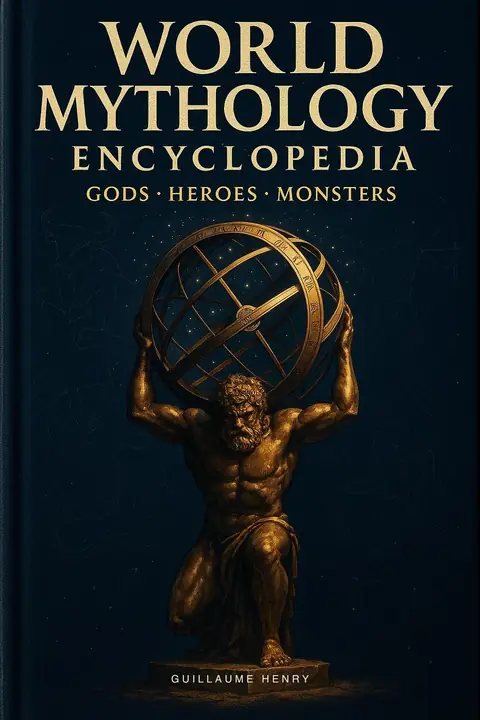
The World Mythology Book: The Gods, Heroes and Myths of Every Culture
The Gods, Heroes and Myths of Every Culture, in One Volume
The whole of world mythology in a single volume: Greek, Norse, Egyptian, Japanese, Hindu, Celtic, Slavic, Mesoamerican and African myths gathered side by side, each drawn from the primary sources.