
Egyptian
Egyptian mythology occupied a central place in the history of ancient Egypt, the Egyptian gods exerting a strong influence on the society. Read more
Browse Egyptian
You want an introduction to Egyptian mythology? You’ve come to the right place!
For the Ancients, Egypt will be essentially taoui – “the double country”; this duality of nature (between Upper Egypt, a valley wedged between two deserts, and Lower Egypt, an alluvial plain coinciding with the Nile delta) and this double attraction (towards Africa on the one hand, towards Asia and the future Europe on the other hand) will mark all the elements and the facts of the political, economic and human life of this predestined country. (Journey in Egypt)
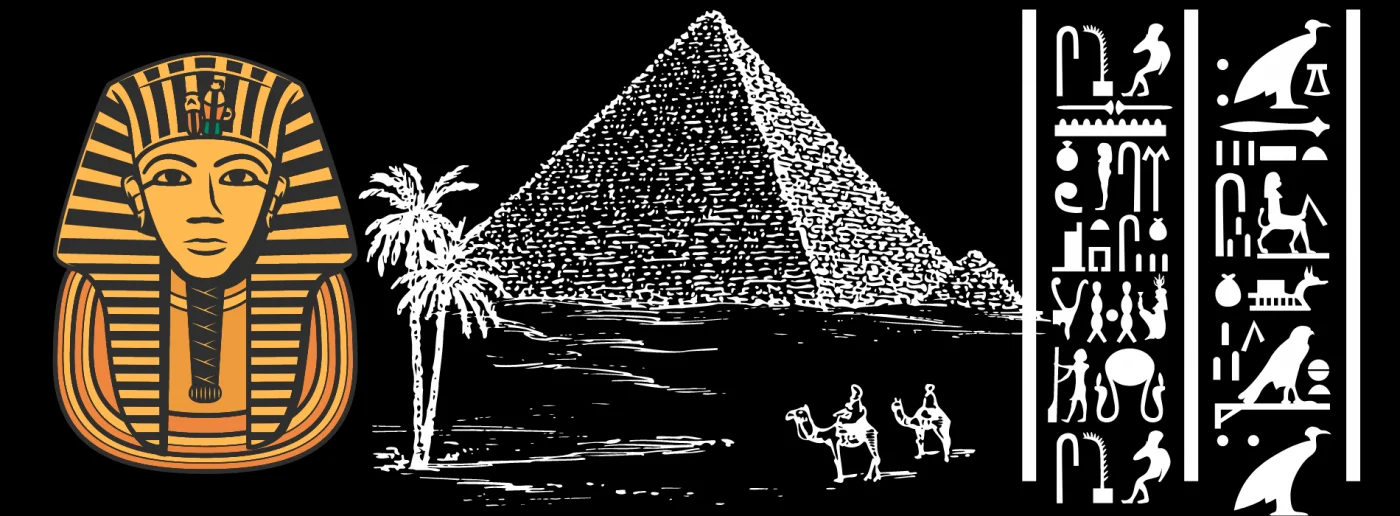
A contrast of colors reinforces, from east to west, another duality, between Kemet “the black one” (the fertile valley with the dark silt) and Deshret “the red one” (the sterile region of the deserts with the sands shining under the sun). The Egyptian civilization takes its roots in the mists of time, more than six thousand years ago (chronology). Religion, based on polytheism, guided every aspect of Egyptian life.
Emergence of Egyptian protective deities in egyptian mythology
Ancient Egypt was divided into about forty territories – the nomes -, each one venerating more particularly a divinity, which appeared on the monuments under the aspect of an animal, a plant or an object: in Memphis, it was the bull Apis; in Mendes, a goat. The cartouche of one of the most ancient pharaohs contained a representation of a scorpion.
As Egyptian civilization expanded, some of these local cults came to assume greater importance: those of Horus and Osiris, or of Hathor; honored at Denderah, she was represented in the Predynastic period (before the third millennium B.C.) as a cow with a human head, and in the Old Kingdom (around the middle of the third millennium B.C.), she became the “cow of the sky”, the gentle protector of the pharaoh.
The creation of the world and Egypt
The theology of Memphis – the set of teachings of Menes (the name given by the Greeks to one of the oldest known pharaohs, Narmer, who founded his new capital around 3200 BC in Memphis) – describes the creation of the world and makes the unity of Egypt a process participating in the eternal order of the cosmos. It is the god Ptah who creates everything from ideas that he conceals in his heart and formulates in his language. The same is true of the gods who, first manifesting themselves in the form of concepts emanating from the spirit of Ptah, are materialized by objects of the Universe, stone, metal and wood, also generated by Ptah.
The theology of Memphis also borrows from the Old Kingdom myths concerning the gods Horus and Seth, who dispute the hegemony over Egypt. Intervening as a mediator, another god, Geh, first divides the country between the two, then, changing his mind, gives it all to Horus. The theology of Memphis identifies the pharaoh Menes with Horus and establishes a parallel between Ptah and Geb, who, in another mythological context, is the supreme spirit of the Earth, the divinity of the Earth, a masculine principle for the Egyptians, whereas Heaven, a feminine principle, appears to them in the guise of the goddess Nut, mother of the stars and of the Sun Ra.
Half-animal, half-man God in egyptian mythology
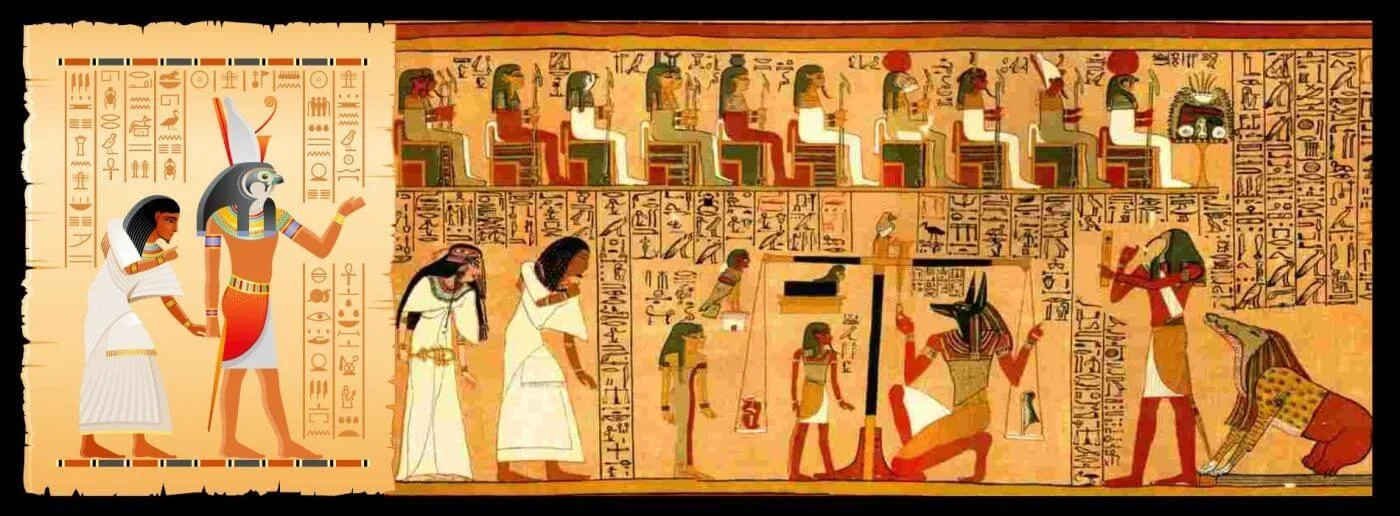
By the end of the Second Dynasty (c. 2778 BC), there are about twenty gods who are represented in animal form, human or with a human body and an animal head. Among the most famous is the jackal Anubis, who weighs the merits and faults of the deceased after death and presides over embalming ceremonies.
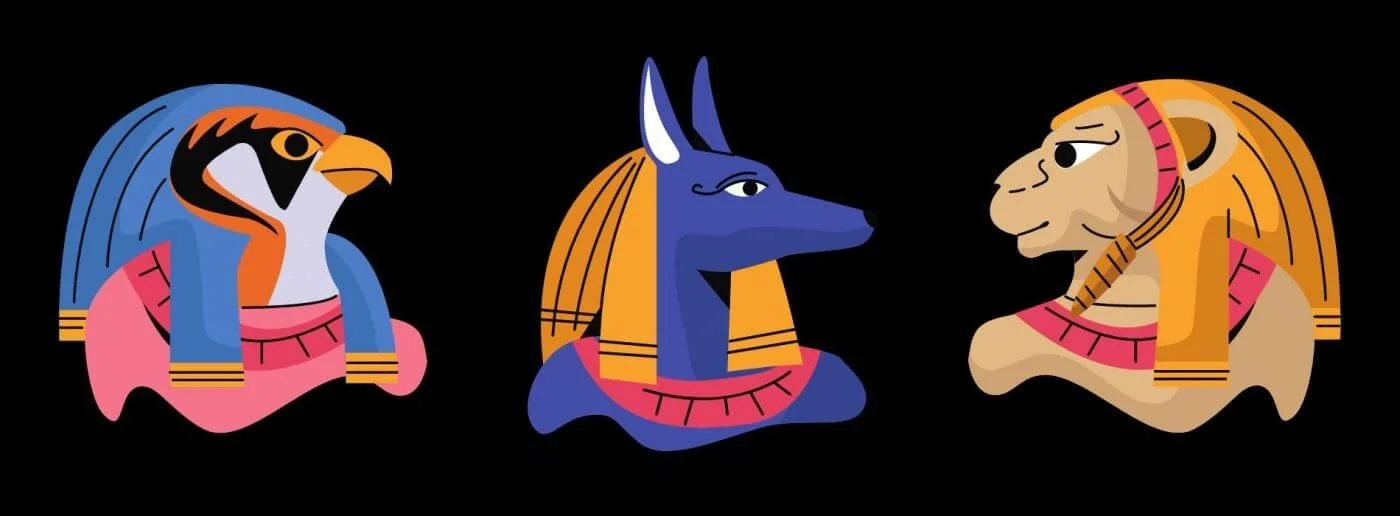
The cobra, although dangerous, became the protector of the tombs and is sometimes depicted standing on the front of the pharaoh’s double crown; its image is often reproduced in the tombs to deter grave robbers. The python, which disappeared from Egypt in the Pharaonic era, survived in the pantheon as Apopis, the main enemy of Ra, allied in his task of destruction to Set.
Unique egyptian god, supreme egyptian gods
Egyptian Gods of the Old Kingdom : Ra, Osiris, Set and Hathor
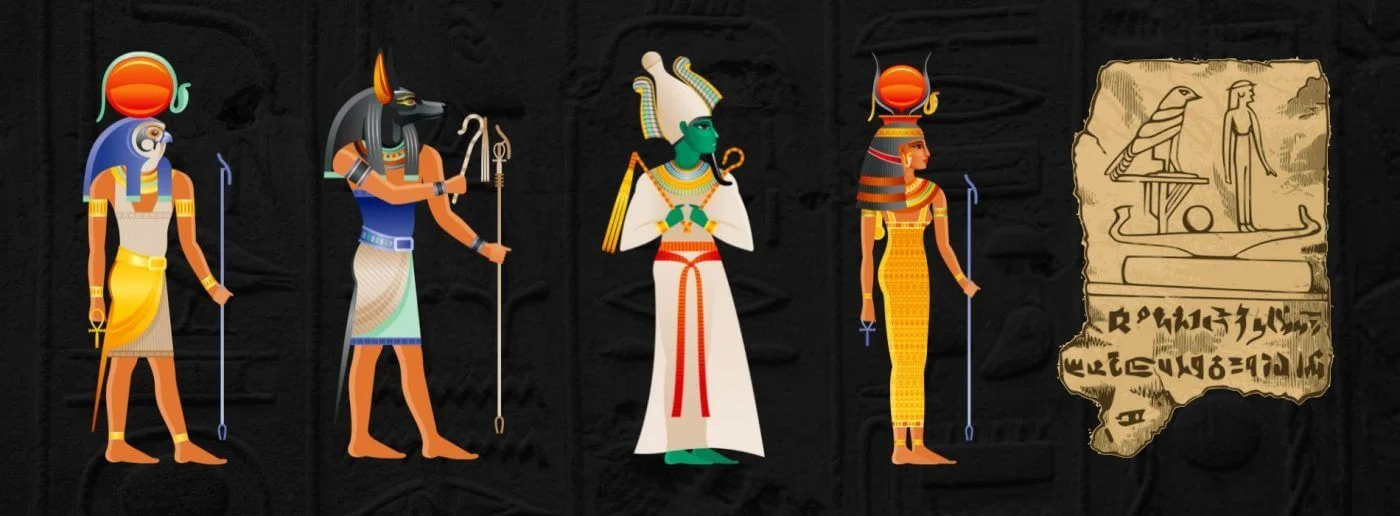
During the Old Kingdom (2778-2420 BC), some of these gods will take more importance than others. They are Ra, Osiris, Set and Hathor.
During the New Kingdom (1580-1085 BC), three gods gradually dominated the others: Amun, Ra and Ptah. At the same time, the success of the cult of Isis, born from that of Osiris, continued to grow. During the New Kingdom, Akhenaten tried to impose a monotheism: that of the cult of Aten, the solar disc with multiple arms. But this reform clashed with too many habits and too many interests and it did not survive him.
In the seventh century B.C., the XXVth Nubian dynasty, which reigned over Egypt for a little less than a century, contributed to the spread of the cult of Amun throughout the Nile valley.
Main deities of the Egyptian mythology
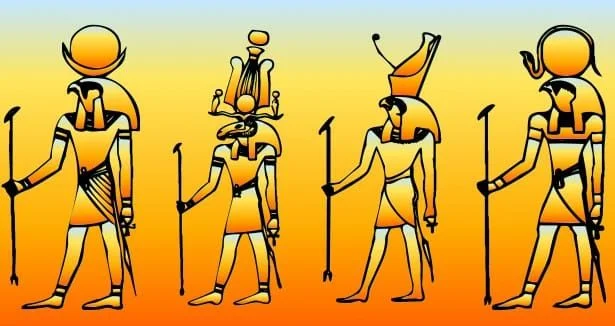
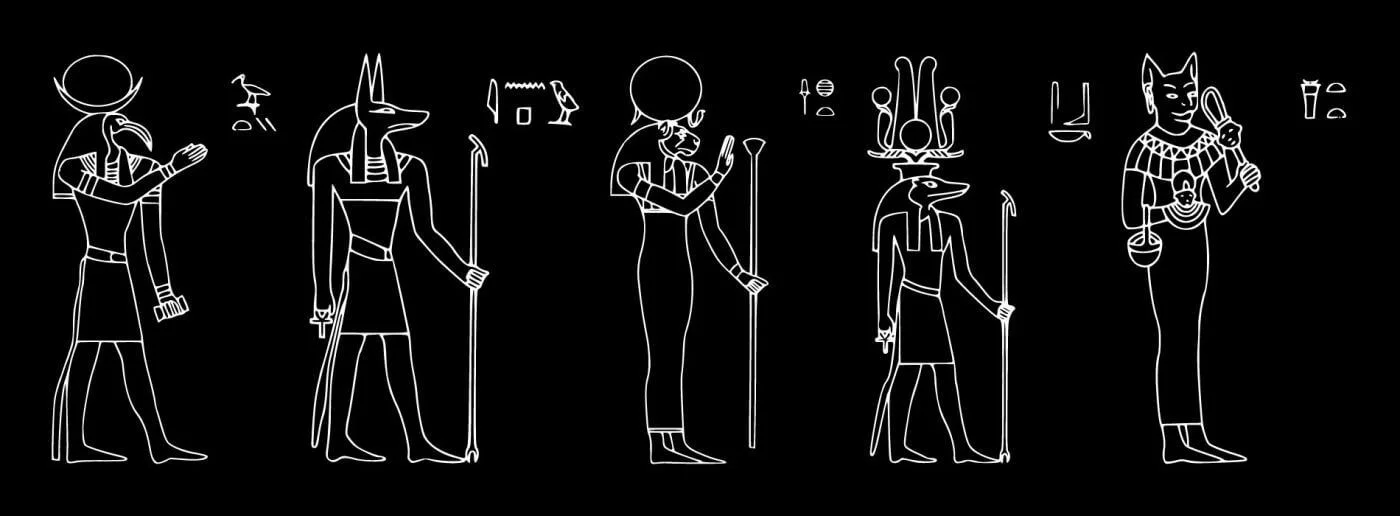
Name Characteristics Representation Amon “the hidden one”, king of the gods and supreme creator under the name of Amun-Ra. Man with ram’s head or with ram’s horns, or with a solar disc. Anubis God of the Dead and judge of souls. Man with head of jackal. Aten Solar god, unique god for Akhenaten. Solar disc. Bastet Goddess of Love and Fertility. Woman with cat’s head. Hathor Sky goddess of Love, Birth and Fertility. Cow, or woman with head of cow or wearing horns of cow. Horus God of Heaven, Love and Goodness. Falcon or man with the head of a falcon. Imhotep Patron of the Scribes and the Craftsmen. Seated man with shaved head and holding a papyrus scroll. Isis Goddess of fertility and motherhood. Woman wearing a throne on her head. Maat Goddess of the Law, Truth and Justice. Woman wearing an ostrich feather. Mout Mother-goddess. Woman, sometimes with a vulture head. Nut Goddess of the Sky. Naked woman lying on the earth curve. Osiris God of the Dead. Mummy, arms crossed on the chest, holding a scepter in one hand, a whip in the other. Ptah Creator Word. Mummy holding an ankh (symbol of life) and a scepter. Ra God of the Sun and of Creation. Man with hawk’s head, wearing the solar disk. Sekhmet Goddess of quarrels and war. Lioness or woman with lioness head. Seth God of Darkness and Evil. Chimerical creature or man with the head of a monster. Thot God of Knowledge and Wisdom. Man (or baboon) with the head of an ibis, baboon or dog.
Major gods of Egyptian
View all →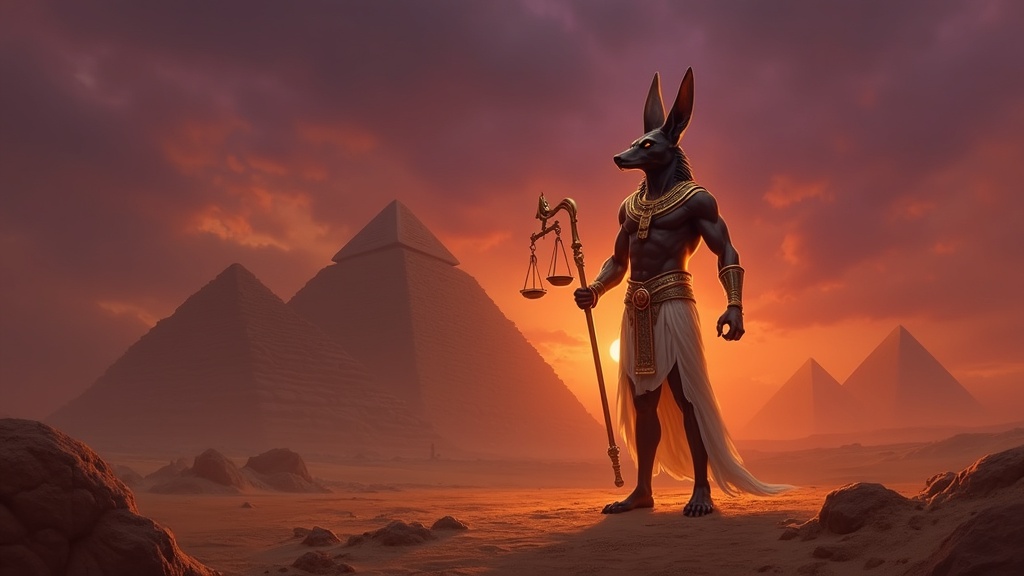
Egyptian
Anubis: God of the Dead, Guardian of the Scales
Anubis, the jackal-headed deity of ancient Egypt, presided over embalming, the underworld, and the judgment of souls. His is one of the oldest and most enduring divine figures in human history.
Egyptian
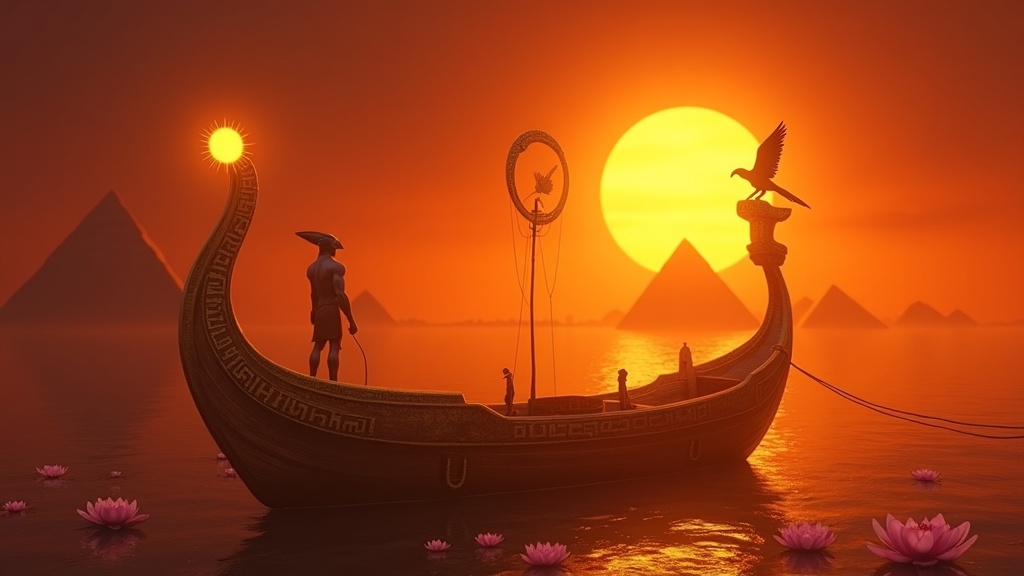
Ra the Sun God: Egypt's Supreme Ruler of Light and Creation
Ra, the ancient Egyptian sun god, blazed at the very heart of a civilization that worshipped light as the pulse of creation itself. Discover his origins, his many forms, and the sacred journey he took across the sky and through the underworld every single day.
Famous Egyptian myths
View all →
Recent in Egyptian
6 entries
Egyptian
Akhenaten: The Heretic Pharaoh Who Rewrote Egyptian Religion
Akhenaten dismantled Egypt's priesthood and elevated the Aten. Primary sources reveal a revolution driven by theology, politics, or both.
Egyptian
Birth Control in Ancient Egypt
Ancient Egyptian contraception from the Kahun, Ebers, and Berlin papyri. Acacia, honey, crocodile dung, and the medical logic behind each method.
Egyptian
Education in Ancient Egypt: Training Scribes and Priests
How Egypt trained scribes and priests through hieratic drills, temple schools, and sacred texts. Grounded in papyri and primary sources.
Egyptian
Ancient Egypt Funerals
How Egyptians prepared the dead for eternity. Mummification, processions, the Opening of the Mouth, and what the texts say about ba, ka, and the journey west.
Egyptian
Ancient Egypt History: A Timeline Grounded in Primary Sources
A chronological guide to ancient Egypt from Predynastic villages to Roman annexation, grounded in temple inscriptions and royal annals.
Egyptian
Ancient Egyptian Astronomy
How Egyptians tracked stars to measure time, align temples, and map the afterlife. Grounded in Pyramid Texts and astronomical ceilings.
Books on Egyptian
See the full library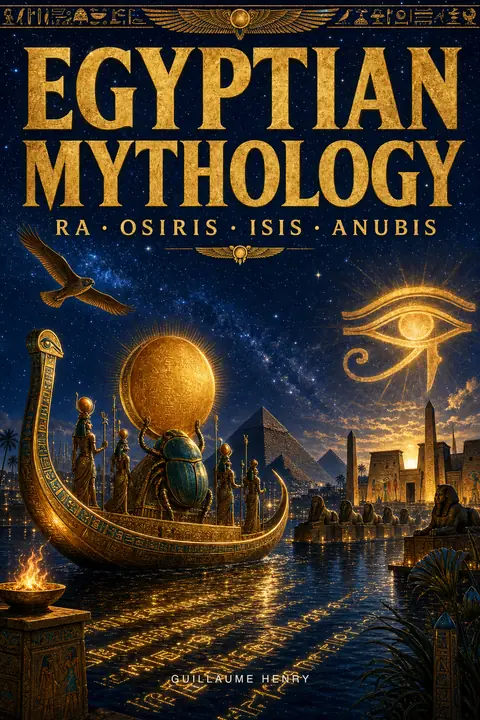
Egyptian
The Egyptian Mythology Book: Ra, Osiris, Isis, Anubis, and the Sacred Stories of the Pharaohs
$7.99
Egyptian
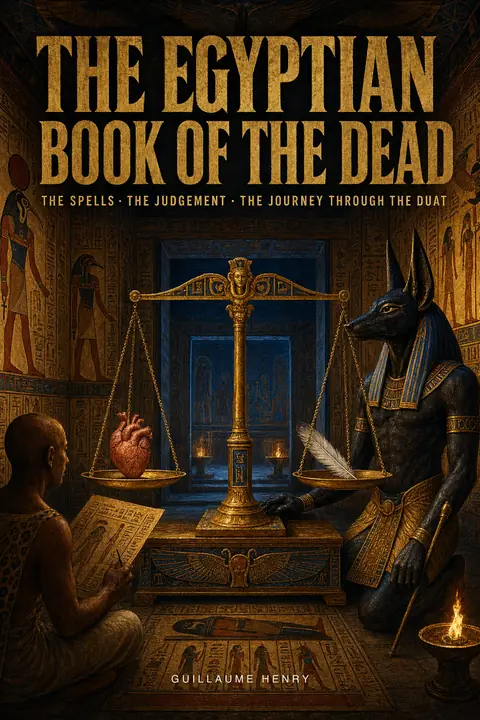
The Egyptian Book of the Dead: The Spells for the Afterlife
$7.99
Egyptian
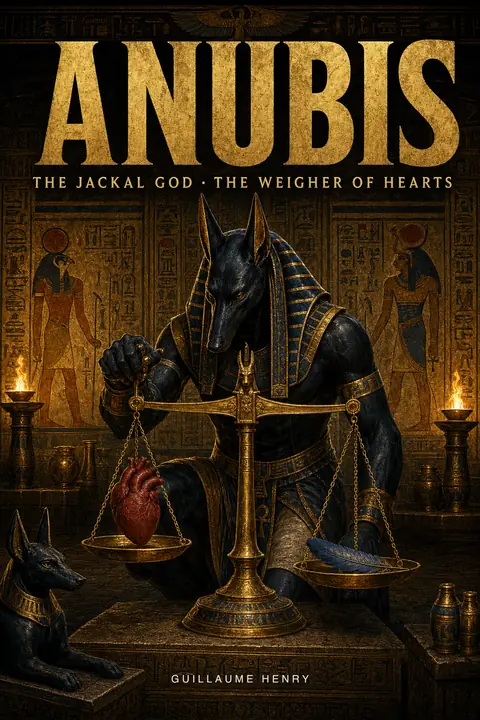
The Anubis Book: The Egyptian God of the Dead
$7.99
Egyptian
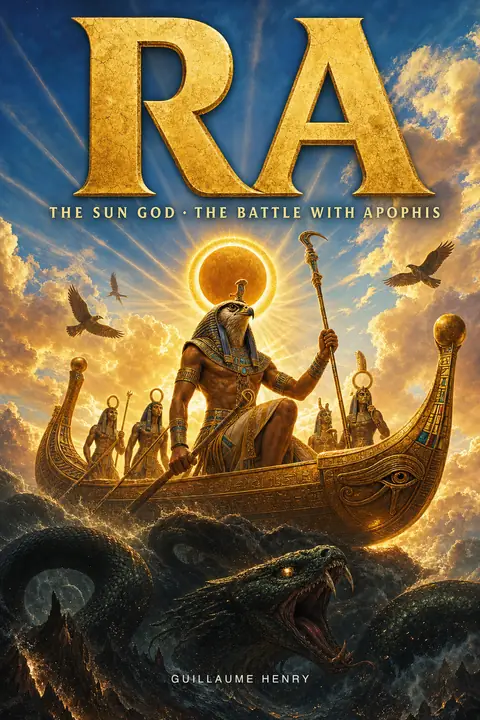
The Ra Book: The Egyptian Sun God
$7.99
Egyptian
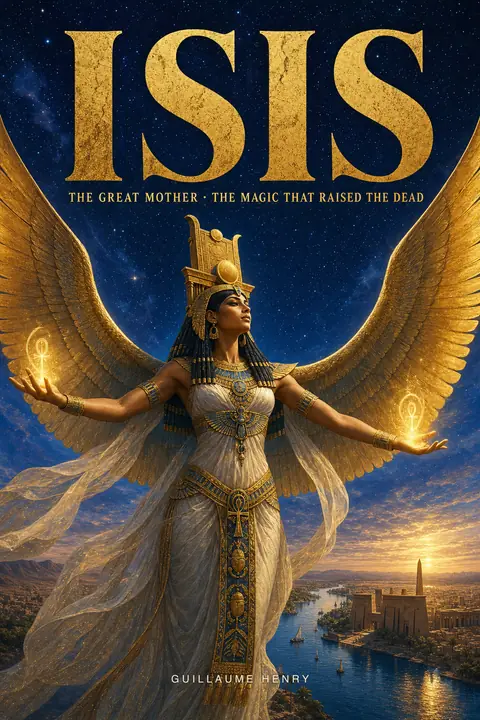
The Isis Book: The Egyptian Goddess of Magic
$7.99