

Jason and the Golden Fleece: The Full Myth, Its Heroes, and What the Quest Really Means
Jason's voyage to Colchis is more than a Greek adventure story. It is a collision of ambition, divine favour, betrayal, and magic that shaped Western mythology for three millennia.
Contents
The ship sat at the mouth of the harbour, fifty oars ready, the pine hull still smelling of the forests of Pelion. Jason and the Golden Fleece began not with heroism but with a throne stolen from a boy, and it would end not with triumph but with a woman standing in the wreckage of everything she had burned for someone who no longer wanted her.
That tension is what separates the Argonaut cycle from simpler hero tales. Perseus slays a monster and rides home clean. Heracles completes his labours and earns the sky. Jason earns his fleece through guile, supernatural help, and a love that corrodes the moment the prize is secured. Apollonius of Rhodes laid this out in the Argonautica (third century BCE) with startling psychological clarity, and Pindar's Pythian Ode IV (462 BCE) gave the myth its first extended literary treatment. Neither account lets Jason off the hook.
What follows is the full story: from the ram with wings to the rotting hull that crushed the man who once sailed it.
The Ram of Hermes and the Fleece Left Hanging in Colchis
Every quest needs a MacGuffin. The Golden Fleece's origin sits inside a domestic tragedy. Athamas, king of Boeotia, had two children by the cloud-nymph Nephele: a boy named Phrixus and a girl named Helle. When Athamas took a second wife, Ino, the stepmother plotted the children's deaths, bribing oracle-messengers to announce that Phrixus must be sacrificed to end a famine she herself had engineered.
Nephele intervened. She sent a golden-fleeced ram, a gift from Hermes, to carry the children east across the sea. Helle fell from its back above the straits that now bear her name, the Hellespont. Phrixus arrived in Colchis, on the eastern shore of the Black Sea, where King Aeetes received him. Phrixus sacrificed the ram to Zeus and gave the fleece to Aeetes, who nailed it to an oak in a grove sacred to Ares and set a serpent that never slept to guard it.
There it hung, luminous, political. It was the proof of Colchian divine favour, the physical residue of a miracle.

Pelias, the Sandal, and the Man Who Should Not Have Come Back
Jason's father was Aeson, rightful king of Iolcus in Thessaly. His half-brother Pelias seized the throne before Jason was born, and Aeson sent the infant away to be raised by Chiron the centaur on Mount Pelion. Chiron taught him medicine, music, hunting, and the ethics of heroic conduct. When Jason turned twenty, he came down from the mountain to reclaim what was his.
Crossing the river Anauros, he helped an old woman (Hera in disguise) and lost a sandal in the mud. He arrived at Iolcus wearing one sandal, and Pelias went cold. An oracle had warned him to fear "the man with one sandal." Pelias could not kill a kinsman in public without losing legitimacy, so he offered a compromise: bring back the Golden Fleece from Colchis and the throne would follow.
It was a death sentence dressed as a commission. Colchis lay at the far edge of the known world, past the Symplegades, the Clashing Rocks that crushed ships between them. Pelias expected Jason to die at sea.
Jason did not.
The Argonauts: Fifty Heroes on One Ship
Jason commissioned Argus, son of Phrixus's descendant, to build a ship. The vessel, the Argo, was fitted with a timber from the oracle oak at Dodona that could speak prophecy. Then Jason sent heralds across Greece.
The crew that assembled was the greatest roster in Greek mythology before the Trojan War. Among the Argonauts:
- Heracles, the strongest man alive, who joined before his labours were complete
- Orpheus, whose lyre could calm storms and slow rivers
- Castor and Polydeuces (the Dioscuri), master horseman and boxer
- Zetes and Calais, winged sons of Boreas the North Wind
- Atalanta, the huntress, in some versions of the crew list
- Meleager, who would later hunt the Calydonian Boar
- Peleus, father of Achilles, still young here
- Idmon the prophet, who boarded knowing he would not return home
Fifty men, one ship, one impossible destination.

The Voyage Out: Lemnos, the Harpies, and the Clashing Rocks
The Argo did not sail straight to Colchis. The voyage was a geography of Greek imagination, each stop a test or a revelation.
At Lemnos, the crew found an island of women who had killed every man among them, punished by Aphrodite for neglecting her worship. The Argonauts stayed long enough to repopulate the island, with Jason taking the queen Hypsipyle as his bed-companion. Orpheus had to play the oars into motion to drag the crew back to the mission.
At Salmydessus in Thrace, they found Phineus, a blind prophet tormented by the Harpies, winged spirits who snatched or fouled every meal he tried to eat. Zetes and Calais chased the Harpies to the edges of the world, and in return Phineus told Jason the route to Colchis, including how to navigate the Clashing Rocks.
The Symplegades were the gate into the Black Sea. Ships that tried to pass were crushed between moving cliffs. Phineus had given a single instruction: release a dove first. If it passed through, the ship would follow. The dove lost only its tail feathers. The Argo shot through on the following wave, the rocks shearing off the stern ornament as they snapped shut behind it. They have stood frozen open ever since, their purpose undone.
At Bebrycos, King Amycus forced every stranger to box him. Polydeuces accepted, and killed him. Each island, each encounter, refined the crew and trimmed the unnecessary. By the time the Argo reached Colchis, it carried exactly the people it needed.
Aeetes' Impossible Tasks and the Burning Logic of Medea
Aeetes had no intention of giving Jason the fleece. But he could not simply murder a Greek prince in his own hall without violating xenia, the sacred law of hospitality that Zeus enforced personally. So he offered a compromise: complete the tasks, take the fleece.
The tasks were meant to be fatal:
- Yoke two fire-breathing bronze bulls (khalkotauroi) forged by Hephaestus
- Plough a field with them and sow it with the teeth of the Colchian dragon
- Kill the armed warriors that would spring from the earth
No man alive could do this unaided.
Medea changed the calculation. Aeetes' daughter was a priestess of Hecate, fluent in pharmaka (drugs and poisons), one of the most potent figures in Greek religious thought. Aphrodite, on Hera's instruction, sent Eros to shoot Medea with an arrow so that she fell in love with Jason before he asked her for anything.
What follows in the Argonautica is one of Greek literature's most psychologically precise scenes. Medea fights the feeling, knows it will destroy her, and surrenders to it anyway. She gives Jason an ointment of the Promethean herb, a plant that sprang from the blood of the Titan's wounds, which made him invulnerable to fire and iron for one day. She tells him to throw a stone among the earth-born warriors and they will turn on each other. She asks for nothing yet, but her eyes carry the price already.
Jason performed the tasks perfectly. Aeetes, furious and afraid, planned to burn the Argo and massacre the crew. Medea moved first.
She led Jason to the grove of Ares at night and sang the serpent to sleep with her voice and with sprigs of juniper soaked in the pharmaka. Jason took the fleece. They ran. The Argo was already at the oars.

The Return: Absyrtus, Circe, and the Road That Could Not Be Clean
Aeetes pursued with the Colchian fleet. Medea had brought her younger brother Absyrtus with her, either as a hostage or (in darker versions, including Apollodorus) as a deliberate tool. In some accounts she killed him and scattered his body on the water to slow her father, who stopped to collect the pieces. In the Argonautica, Apollonius places Absyrtus as a fleet commander whom Jason lures to a parley and murders, with Medea as knowing accomplice.
Neither version is comfortable. The myth insists on this discomfort.
The Argo could not return directly. The gods were angry at the murder of Absyrtus, and the speaking timber from Dodona told Jason and Medea they must be purified by Circe, the witch-goddess of Aeaea, who happened to be Aeetes' own sister. They detoured through the Adriatic, up rivers, across northern Europe (in later geographical imaginations), and finally to Aeaea.
Circe purified them without asking what they had done. But she sent them away without comfort, because the blood of kin sat too heavy for forgiveness.
The return voyage passed the Sirens (Orpheus played louder and the crew heard only him), the Wandering Rocks, the strait guarded by Scylla and Charybdis, and finally the island of the Phaeacians, where King Alcinous and his wife Arete welcomed the crew. The Colchians caught up there, demanding Medea's return. Arete negotiated: if Medea and Jason were already married, she stayed; if not, she returned to her father. Arete told Jason of the clause that night, and a wedding was arranged in a cave before dawn.
The fleece lay across the marriage bed.
They reached Iolcus at last, but Pelias was dead, killed by his own daughters. Medea had convinced them that she could rejuvenate their father by boiling and reassembling him, as she had demonstrated on an old ram. She gave them false instructions. Pelias boiled and did not rise. Jason had the throne, the fleece, the wife, the children. He had everything.
He discarded Medea to marry the Corinthian princess Glauce, daughter of King Creon, in a politically advantageous match.
Medea's Answer: Fire, Children, and the Limit of Betrayal
The events in Corinth belong to Euripides more than to any earlier source. His Medea (431 BCE) crystallised what other versions left vague. Medea was a foreigner in Greece, protected only by the bond of marriage Jason had sworn before the gods. When he broke it, she had no legal recourse, no family to return to, no country that would shelter her after she had betrayed Colchis. Creon moved to exile her and her children within a day.
She had one tool left: her knowledge of pharmaka.
She sent Glauce a wedding gift: a robe and crown soaked in poison that burned through flesh and metal alike. Glauce died. Creon died embracing his daughter. Then Medea killed her own children by Jason, not from madness but from calculation: they would have been killed or enslaved by Corinthian vengeance anyway. She denied Jason the one form of continuity he had left.
She escaped to Athens in a chariot sent by her grandfather Helios, the sun.
Jason died alone, the myth insists. Old, sitting in the shadow of the rotting Argo beached at Corinth, he was struck on the head by a piece of falling timber from the stern. The ship that had carried him to glory killed him.
The Argo's Crew and the Wider Heroic World
The Argonaut cycle functions as a kind of pre-Trojan clearing house for the Greek heroic tradition. Almost every significant hero of the generation before the Trojan War appears in the crew lists. Peleus is there, and his presence explains why the future Achilles had a father who had sailed with the greatest company in Greece. Heracles departs mid-voyage, searching for his beloved Hylas who was pulled underwater by a naiad at Mysia, and this departure hints at the stories that will surround him independently. Orpheus uses the voyage as a first test of his power over nature before his greater catastrophe with Eurydice.
The Argonautica and the mythographic collections of Apollodorus and Diodorus Siculus treat the expedition as a historical horizon: before the Trojan War, after the age of the Titans, when the world still had room for miracles.
That positioning is deliberate. Jason and the Golden Fleece marks the last moment when a mortal could rely on sustained divine help to complete an impossible task. After Colchis, after Troy, the age of heroes closes. The gods withdraw into their Olympian remoteness, and humans are left to manage alone.
Colchis, the Black Sea, and the Historical Sediment Behind the Myth
Scholars since antiquity have wondered whether Colchis was real. It was. The ancient kingdom of Colchis occupied what is now the western coast of Georgia, and Greek colonists established trading posts there by the seventh century BCE. The region was known for alluvial gold. Locals reportedly trapped gold dust in the river sediment using sheepskins, which were then hung to dry with the gold glittering in the wool. This practice, documented by Strabo in his Geographica, almost certainly underlies the myth's central image.
The Symplegades likely encode the real dangers of the Bosporus strait, where unpredictable currents and rocky outcrops wrecked ships. The Harpies at Salmydessus place the myth on the actual Thracian coast. The mythographers were drawing on genuine geography, fusing trading-voyage memory with divine narrative.
This does not flatten the myth. It deepens it. When you read the Argonautica knowing that Apollonius was a Hellenistic librarian in Alexandria writing about routes that Greek merchants actually sailed, the epic becomes something stranger: an act of cultural memory dressed as divine adventure.
Jason Across Traditions: Echoes and Parallels
Jason and the Golden Fleece has structural echoes in mythologies far outside Greece. The pattern of an impossible quest assigned by a hostile king, completed through the help of a woman the king trusts, is found in the Sumerian tales surrounding Gilgamesh's companions, in the Irish voyage-tales called immrama, and in the Norse tradition of heroes who win supernatural brides by means of trials.
Medea herself maps onto a persistent archetype: the powerful woman at the edge of the known world whose knowledge exceeds the hero's, who chooses to enable him, and who is destroyed by that choice. Ariadne, who gave Theseus the thread through the Labyrinth and was abandoned on Naxos, is her closest Greek parallel. The Norse valkyrie who teaches a hero runes and is then bypassed for a political marriage follows the same grammar.
The parallel deepens when you compare the fleece itself to the objects of power in other traditions. The chintamani stone in Hindu and Buddhist cosmology, the cauldron of Bran in Celtic tradition, the grail in medieval Christian synthesis: all are radiant objects at the world's edge, all require a journey that changes the seeker permanently, and all carry a condition that the seeker, in the end, cannot fully meet.
The difference with the Golden Fleece is that Jason does meet the condition. He gets the object. The myth then asks a harder question: what do you do with the prize once it no longer needs to be sought?
Frequently Asked Questions About Jason and the Golden Fleece
Frequently asked questions
What exactly was the Golden Fleece, and why was it in Colchis?
The Golden Fleece was the skin of the divine ram sent by Hermes to rescue Phrixus and Helle from Boeotia. After the ram carried Phrixus safely to Colchis, he sacrificed it to Zeus and gave the fleece to King Aeetes, who nailed it in a grove sacred to Ares and set a sleepless serpent to guard it. The fleece represented divine favour and, in Pindar's reading, legitimate kingship. Its presence in Colchis was the mythological anchor that made Colchis a place of power at the edge of the known world.
Why did Medea help Jason, and was she punished for it?
Medea helped Jason because Aphrodite, acting on Hera's request, sent Eros to make Medea fall in love with him before they had even spoken. The Argonautica presents this as a genuine, agonising passion that Medea recognises as destructive and chooses anyway. Her punishment, if we call it that, was total: she abandoned her country, killed her brother, and eventually killed her own children. She survives the myth (escaping to Athens and later Colchis in some traditions), but the survival is not triumphant. Euripides' Medea and Apollonius both refuse her a happy ending, though they disagree on what a bearable one would look like.
What primary sources tell the story of the Argonauts?
The earliest extended literary account is Pindar's Pythian Ode IV (462 BCE), written for the ruler of Cyrene. The fullest narrative version is Apollonius of Rhodes' Argonautica (third century BCE), an epic in four books that covers the entire voyage. Apollodorus' Library (second century BCE or later) provides a mythographic summary. Euripides' Medea (431 BCE) covers the Corinthian aftermath. Roman versions include Valerius Flaccus' unfinished Argonautica (first century CE). Strabo's Geographica provides the geographical and quasi-historical commentary.
How does Heracles fit into the Argonaut story, and why does he leave?
Heracles joined the expedition at the outset and was reportedly the natural leader, but he declined leadership in favour of Jason out of respect for Hera's investment in the quest (a significant gesture given Hera's hatred for Heracles elsewhere). At Mysia, his companion Hylas went to fetch water and was pulled beneath a spring by a naiad enamoured of his beauty. Heracles abandoned the quest to search for him and was left behind when the Argo sailed, either through oversight or the will of the gods. His departure was necessary: with Heracles aboard, the voyage would have become his story, not Jason's.
Is there a historical basis for the voyage of the Argonauts?
There is strong circumstantial evidence for a historical substratum. Colchis was a real kingdom in what is now western Georgia, and Strabo records that local peoples used sheepskins to trap alluvial gold dust from rivers, which were then hung to dry, glittering. Greek colonists were trading in the Black Sea region by the seventh century BCE, and the mythic voyage may preserve memory of early Bronze Age or Archaic-period commercial expeditions along that route. The Symplegades encode real navigational hazards at the Bosporus. None of this proves a historical Jason, but it anchors the myth in genuine geography and trade.
How did Jason die?
According to the mythographic tradition recorded in Apollodorus and elsewhere, Jason's death was both ignoble and fitting. After Medea's departure, he lived on in Corinth without throne, family, or purpose. One day, resting in the shadow of the Argo, which had been beached and dedicated at the sanctuary of Poseidon at Corinth, a rotting section of the stern fell on him and killed him. The ship built for his glory became his coffin.
The Myth After Antiquity: From Medieval Allegory to Modernity
The Argonautica never achieved the canonical status of Homer in antiquity. Apollonius was a librarian, not a court poet, and the Hellenistic period treated his epic as a learned curiosity. But the story survived and transformed.
Medieval European writers filtered Jason and the Golden Fleece through allegorical lenses. The Fleece became a symbol of Christ's redemptive sacrifice in French morality texts. Philip the Good of Burgundy founded the Order of the Golden Fleece in 1430, one of Europe's most prestigious chivalric orders, which still exists. The choice of the Fleece as its emblem was explicitly Christianised: the ram of Colchis was read as a prefiguration of the Lamb of God.
The Romantic period recovered the psychological dimensions. William Morris wrote The Life and Death of Jason in 1867, a long narrative poem that dwelt on the human cost of heroism. Robert Graves, in The Greek Myths (1955), decoded the myth in his characteristic manner: he saw the Golden Fleece as a symbol of sacral kingship rituals in pre-Hellenic Thessaly, the ram-sacrifice connected to the Minyan tribes. His reading remains contentious, as most of his symbolic archaeology does, but it opened comparative questions that classical scholars subsequently pursued on stronger ground.
Contemporary novelists have returned to Medea as the story's actual centre. Christa Wolf's Medea: A Modern Retelling (1996) inverted the myth completely, presenting Medea as innocent and the Corinthians as the murderers of her children. The gesture was deliberate: Wolf was writing in the aftermath of German reunification, thinking about how a society projects its violence onto the outsider. The myth was elastic enough to hold it.
That elasticity is the final evidence of the myth's staying power. A story that can carry Bronze Age trade routes, Burgundian chivalry, and post-Cold War political allegory simultaneously is not merely a Greek adventure. It is a structure for thinking about what the quest costs, who pays, and what happens to the hero when the object of desire turns out to be the least important thing he carried home.
Read the full book
Want the whole story?
The complete edition is an instant PDF download here, with a paperback on Amazon for selected titles.
Mythology
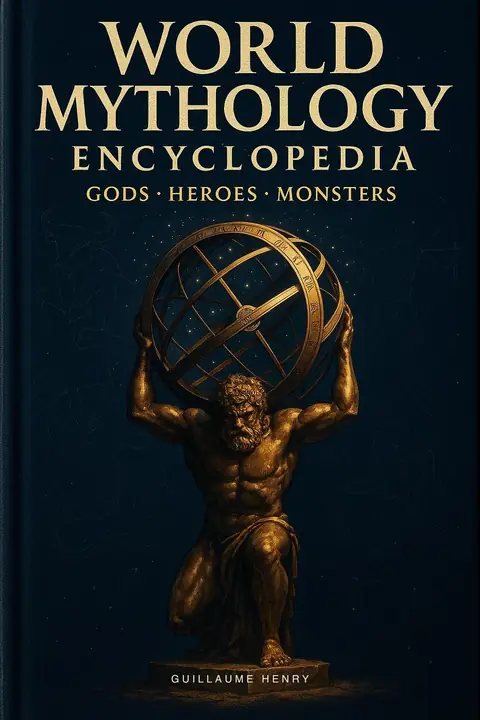
The World Mythology Book: The Gods, Heroes and Myths of Every Culture
The Gods, Heroes and Myths of Every Culture, in One Volume
The whole of world mythology in a single volume: Greek, Norse, Egyptian, Japanese, Hindu, Celtic, Slavic, Mesoamerican and African myths gathered side by side, each drawn from the primary sources.