

Penelope the Faithful Queen: Cunning, Grief, and the Long War at Home
Twenty years. A loom, a shroud, and a bow no suitor could draw. Penelope's story is not a footnote to Odysseus's voyage but a war of its own, fought with thread and silence.
Contents
The ship had been gone for twenty years. In the palace at Ithaca, a woman unravelled her own work each night so that the men crowding her hall would have nothing to hold her to. They ate her food, drank her wine, and slept with her serving-girls. She watched all of it through a half-open door and said very little. Her name was Penelope the faithful queen, and patience was her sharpest weapon.
It is easy to mistake patience for passivity. The ancient audience of the Odyssey did not make that mistake. They recognised the queen of Ithaca as a strategist operating under siege conditions, managing a household economy, a son's passage into manhood, and a dozen political factions, all while projecting the appearance of helpless grief. Homer frames her and Odysseus as a matched pair: his cunning at sea, her cunning at home. Both survive by being underestimated.
What follows is a full reading of Penelope's myth, from her genealogy through her role in the Odyssey and the stranger texts that rearrange her story entirely, to her afterlife in philosophy, art, and feminist literary criticism.
Penelope's Origins and the Family Tree Behind Her
Penelope was the daughter of Icarius, a Spartan prince, and the naiad Periboea (sometimes named Polycaste in variant sources). Her parentage already places her in two worlds: the human aristocracy of Sparta and the half-divine register of water nymphs. The name Penelope itself has been contested by scholars for centuries. The most credible ancient derivation links it to pene (thread on the weft of a loom) combined with ops (face, or voice), yielding something like "the face at the loom" or "she who speaks through weaving." Others have proposed a connection to penelops, a type of duck known to Greeks, suggesting the name may carry the implication of clever, darting movement beneath a still surface.
Her betrothal to Odysseus came through a foot race, at least in some traditions preserved by Apollodorus in the Bibliotheca. Icarius held a running contest for suitors; Odysseus won. Icarius then tried to convince his daughter to stay in Sparta rather than sail west to rocky Ithaca. According to Apollodorus, she pulled her veil over her face in answer, a gesture of modest refusal that her father read as a choice to follow her husband. The image of the veil became an emblem: Penelope always half-hidden, always communicating through indirection.
She arrived in Ithaca as a young bride and bore one son, Telemachus, before Odysseus was called to fight at Troy. By the time the Odyssey opens, Telemachus is roughly twenty years old and Penelope has been managing Ithaca alone for the entirety of his life.

The Loom, the Shroud, and Twenty Years of Tactical Delay
The suitors arrived gradually, then all at once. By the poem's opening they number one hundred and eight, drawn from the noble families of Ithaca and the surrounding islands. Their logic was pragmatic: with Odysseus almost certainly dead, whoever married his widow would control Ithaca. They occupied the palace, treating it as a long-running feast at Penelope's expense.
She could not simply refuse. Refusing without grounds would have been read as political defiance, potentially dangerous for her and for Telemachus. She needed delay that looked like process.
The stratagem she invented was this: she told the suitors she would choose a husband only after she had finished weaving a burial shroud for Laertes, Odysseus's aging father. It was an unimpeachable excuse. No one could argue against proper funerary preparation without appearing impious. For three years she wove by day and unpicked the weft by night, maintaining the fiction of progress. Homer tells the story in Books II and XIX of the Odyssey, where it is revealed first by the indignant suitor Antinous, then confirmed in Penelope's own words.
When a treacherous servant betrayed the trick to the suitors, Penelope was forced to finish the shroud and face renewed pressure. But she had bought three years. Three years during which Telemachus grew, the political situation clarified, and the gods continued steering Odysseus homeward.
Penelope's War
Fought in the great hall and the upper chamber. Enemies: 108 suitors, informant servants, her own son's inexperience. Weapons: the loom, silence, strategic delay, controlled grief. Duration: twenty years, the last four under direct siege. Outcome: she holds Ithaca intact until the king returns.
Odysseus's War
Fought on the wine-dark sea and on foreign shores. Enemies: the sea, the Cyclops, Circe, Scylla, the Laestrygonians, his own crew's weakness. Weapons: cleverness, disguise, the gods' favour. Duration: ten years after Troy. Outcome: he returns alone, his crew lost, his ship gone.
The shroud episode has attracted intense scholarly attention. The classical philologist Gregory Nagy has noted that the weaving motif connects Penelope to a broader tradition in which women's textile work functions as a form of speech, a text that can be read, misread, or revealed. In this reading, the shroud is not just a ruse but a kind of writing, and its unravelling each night mirrors the perpetually deferred meaning of Penelope's situation itself.

The Dream of the Eagle and the Geese: Penelope as Oracle
Modern retellings often reduce Penelope to waiting. The ancient text is far stranger. In Book XIX of the Odyssey, a disguised Odysseus sits before her as a wandering beggar and listens while she describes a dream. Twenty geese feed on grain in her courtyard. A great eagle swoops down, breaks their necks, and flies away. She weeps over the dead geese. Then, within the dream itself, the eagle returns and speaks in a human voice, telling her the geese were the suitors and he was her husband come home.
What follows is one of the most debated passages in ancient literature. Penelope then tells the beggar she does not know whether the dream comes through the Gate of Horn (true dreams) or the Gate of Ivory (false ones). She gives the standard Homeric disclaimer for uncertain prophecy. But she immediately announces the bow contest, which will lead directly to the suitors' deaths.
Did she know the beggar was Odysseus? Scholars have argued this for decades. The analyst position, represented by scholars like Anne Amory Parry, holds that Penelope recognised her husband at this very point in the poem, and that her staging of the bow contest was a deliberate act of collaboration. The unitarians, following the more literal reading, insist she did not yet know and simply followed divine prompting. The poem keeps both readings alive. Homer does not close the question, and that refusal to close it is a mark of the Odyssey's extraordinary psychological sophistication.
What seems certain is this: whether or not Penelope consciously recognised the beggar as Odysseus, she acted in a way that served his return perfectly. She announced the contest. She retrieved his great bow from the storeroom herself, in a passage full of emotional weight. She wept over it. Then she handed it to a stranger and walked back to her chamber.
The Bow Contest: Staging the Massacre
The contest Penelope set was brutal in its elegance. The suitors must string Odysseus's great bow, a weapon so powerful that none of them could bend it, and shoot an arrow through the aligned holes of twelve axe-heads set in a row. The suitor who succeeded would win her hand.
She knew, or half-knew, that none of them could do it. The bow belonged to a world of heroic physicality the suitors did not inhabit. They were political opportunists, not warriors. Antinous, Eurymachus, and the rest try in turn and fail. The beggar then asks to try. The suitors object furiously. Telemachus asserts his authority in the hall for the first time, siding with the beggar. Penelope herself defends the stranger's right to compete.
When the beggar strings the bow with effortless ease and drives the arrow clean through all twelve axe-heads, the suitors have not yet grasped what is about to happen. Penelope has already been sent to her chamber by Telemachus, who tells her with sudden authority that the bow is men's business. She goes. Upstairs, Athena sends her into sleep while the massacre unfolds below.
She sleeps through the killing, which is structurally important. The blood is not hers. The violence belongs to the men. She emerges only after it is over, to face a hall full of corpses and a man claiming to be her husband.
The Test of the Bed: Penelope's Final, Decisive Move
Here the poem reaches its most quietly devastating scene. Odysseus has slaughtered the suitors, revealed himself to Telemachus, and cleaned the hall. His old nurse Eurycleia runs upstairs to wake Penelope and tell her the news. Penelope descends, looks at the man who claims to be her husband, and feels nothing she will act on yet.
She sits across the hall from him and tests him. Not with a riddle exactly, but with a command to Eurycleia: move the great bed out of the bridal chamber and make it up with fleeces for the stranger. Odysseus erupts. He built that bed himself, he says, carving the frame from an olive tree that was still rooted in the ground, so that the bed cannot move. It is immovable. No one but Odysseus and Penelope and one trusted handmaid knew this.
She breaks then, and the grief she had held back for twenty years comes out. She runs to him. Homer describes it with particular tenderness: she weeps and clasps his neck, and her weeping is compared to survivors clinging to land after their ship has been wrecked by the sea.
The bed test is Penelope's final counter-intelligence operation. She gives away nothing until he gives away the secret only a husband could know. She withholds recognition the way she withheld her remarriage: carefully, deliberately, at the pace she chooses. Critics who read her as passive overlook that she runs this final scene entirely on her own terms.
Alternative Traditions: The Penelope Who Did Not Wait
The Odyssey as we have it is one strand of a much larger mythographic tradition. Several ancient sources preserve versions of Penelope's story that look radically different.
Pausanias, writing in the second century CE, records a tradition from Mantineia in Arcadia that claimed Penelope was exiled by Odysseus after his return because she had been unfaithful with the suitors, either collectively or with the suitor Antinous specifically. In this version, she went to Arcadia and died there; the Mantineians showed visitors her tomb. The geographer's tone is matter-of-fact: he presents this as a regional tradition without adjudicating it against Homer.
More dramatically, several mythographers record that Penelope was seduced by the god Hermes and gave birth to Pan, the goat-footed deity of wild places. The logic of divine parentage follows familiar Greek patterns: a god desires a mortal woman, and the resulting offspring explains an anomalous being. In this tradition, the name Pan is glossed as "all" (Greek pas), referring to all the suitors who lay with her, making the god a kind of collective product of her infidelity. This version was known to Pindar and is mentioned in the Homeric scholia, the ancient commentary tradition.
These alternatives do not cancel Homer. They show the depth of tradition from which the Odyssey emerged and what it chose to argue against. The Homeric Penelope is a deliberate construction: a queen who holds the line. The competing traditions make that construction visible as a choice, not simply a fact.
Circe and Helen exist in the same tension within Greek tradition: each is simultaneously the figure Homer presents and the darker double that other sources preserve.

Penelope and the Tradition of Wise Mortal Women in World Mythology
Penelope the faithful queen does not stand alone in the mythological record. The figure of the woman who holds home and kingdom through cunning while the warrior is absent recurs across cultures with enough regularity to suggest a deep narrative need.
In the Hindu epic Mahabharata, Draupadi faces a comparable siege. Five husbands, years of exile, a hall full of men who feel entitled to her, and a dignity she preserves through strategic speech rather than physical force. Both women use language as armor. Both refuse to become the passive prize the surrounding men insist they must be.
In Irish tradition, the figure of Emer, wife of the hero Cu Chulainn, holds a similar position. While her husband ranges across supernatural landscapes and takes divine lovers, Emer negotiates, argues with goddesses, and ultimately accepts compromise on terms she herself defines. The pattern is not identical but the structural role recurs: the wife at the center who keeps meaning anchored while the hero dissolves into adventure.
The Norse Frigg, though divine rather than mortal, shows a cognate wisdom: she knows Odin's fate and does not speak it. Knowledge withheld becomes power. Penelope's silence and Frigg's silence operate by the same logic, in traditions that have no direct line of contact.
What these figures share is a refusal of the simpler narrative the male world around them wants to impose. They are not merely waiting. They are making decisions in narrow conditions, and their decisions shape the outcome as surely as any sword stroke.
Penelope in Ancient Philosophy, Medieval Reading, and Modern Feminist Criticism
The ancient world read Penelope explicitly as a moral type. Plutarch, in his Moralia, praised her as the exemplar of a virtuous wife, placing her loyalty to Odysseus in the context of what he considered proper female comportment. The Stoics used her as an illustration of constancy, the virtue of remaining unchanged under external pressure.
Medieval European readers, working largely from Latin summaries of the Odyssey since the Greek text was not widely read, inherited this framing. Penelope appears in Ovid's Heroides as the author of a letter to Odysseus, a voice of longing and reproach that is more emotionally direct than anything the Odyssey gives her. Ovid's Penelope is not merely patient; she is angry. "The years pass," she writes. "Where are you?"
The twentieth century cracked the moral-type reading open. Feminist classicists, beginning most influentially with Helene Foley's work on female agency in Greek epic, argued that Penelope's cunning had always been there in the text and simply misread as passivity. Nancy Felson-Rubin's Regarding Penelope (1994) built a detailed case for her as an active, calculating figure whose choices drive the plot of the second half of the Odyssey.
The novelist Margaret Atwood engaged this directly in The Penelopiad (2005), which retells the entire story from Penelope's perspective, with the twelve hanged maids (the servants killed by Telemachus as punishment for sleeping with the suitors) transformed into a chorus demanding justice. Atwood's Penelope is smart, ironic, and aware of her own mythologising: she knows she has been made into a symbol and resists it even as she performs it. The twelve maids become the story's moral burden, the cost of the heroic narrative that history smoothed over.
That discomfort is real in the Homeric text too, if you press it. Telemachus orders the execution of twelve women for acts they may not have chosen freely. Penelope is asleep when it happens. Her faithfulness is preserved; theirs is not forgiven. The poem does not linger on this. It moves quickly toward reunion. Atwood refuses to let it move quickly.
Frequently Asked Questions About Penelope in Greek Mythology
Frequently asked questions
What is the significance of Penelope's weaving in the Odyssey?
The shroud she weaves for Laertes functions simultaneously as a practical delay tactic and a symbolic act. By weaving and unravelling for three years, she keeps the suitors in a permanent state of false progress. Scholars including Gregory Nagy have connected the weaving motif to a Greek tradition in which women's textile work constitutes a form of text, a medium for communication and meaning-making that operates outside the male-dominated spaces of speech and war.
Did Penelope know Odysseus was the beggar in disguise?
This is one of the most enduring debates in classical scholarship. The poem preserves deliberate ambiguity. Anne Amory Parry and several later analysts argue that Penelope recognised Odysseus during their conversation in Book XIX, pointing to her immediate announcement of the bow contest as evidence of conscious collaboration. The opposing view holds she was guided by divine prompting without conscious recognition. Homer never resolves it, and that unresolved quality is central to what makes the character so durable.
What are the alternative myths in which Penelope is unfaithful?
Several ancient sources diverge sharply from Homer. Pausanias records an Arcadian tradition in which Odysseus exiled Penelope for infidelity with the suitors, and she died at Mantineia; her tomb was shown there. Some mythographers, including Duris of Samos and sources preserved in the Homeric scholia, claim she was seduced by Hermes and became the mother of Pan, either before or after Odysseus's return. These traditions coexisted with the Homeric version and reflect the diversity of oral traditions from which the epics crystallised.
What does the test of the bed reveal about Penelope's character?
When Penelope instructs Eurycleia to move the immovable bed, she is not being cautious in a timid sense; she is running a security check. Only Odysseus knows the bed's construction. By pretending it can be moved, she extracts proof of identity that no impostor could fake. The scene makes clear she has thought about this contingency. She has a test ready. She applies it before she allows herself to feel the reunion. The bed scene is the final move in a twenty-year campaign of controlled disclosure.
How does Penelope compare to other mortal women in Greek mythology?
Among mortal women in the Greek tradition, Penelope is distinguished by the consistency of her agency across the full span of a long narrative. Figures like Andromache or Alcestis are defined primarily by grief or sacrifice. Penelope is defined by decision-making under sustained pressure. The nearest parallel within Greek tradition is perhaps Clytemnestra, who also manages a palace in a warrior's absence and also uses intelligence as her primary weapon, though toward different ends and with different moral valence assigned by the tradition.
What primary sources cover Penelope's story beyond Homer?
The Odyssey (Books I, II, IV, XVI-XXIV) is the central text. Apollodorus's Bibliotheca (Epitome VII) covers her genealogy and the suitor contest. Pausanias's Description of Greece (VIII.12) records the Arcadian exile tradition. Ovid's Heroides (Epistle I) gives her a voice in the first person. The Homeric scholia preserve several mythographic variants, including the Pan genealogy. Plutarch discusses her in Moralia as a moral exemplar. Together these sources cover a far wider range of readings than any single retelling can contain.
The Penelope Problem: What Her Myth Asks of Us Now
The question the Odyssey quietly refuses to answer is whether Penelope the faithful queen was faithful because she chose to be or because she had no real alternative. Homer frames it as virtue. Modern readers, and some ancient readers in the dissenting traditions, see something more complicated.
She had one son, no army, no fleet, and a palace full of armed men who wanted to either marry or displace her. Her options were structurally narrow. Within those narrow options, she made intelligent, consistent, courageous choices. The shroud ruse worked for three years. The bed test worked in the final hour. But the structural constraint remains.
This is not a reason to diminish her. Quite the opposite. Heroism inside impossible conditions is still heroism. The war at home was real, even if no epic cycle was built around it. The fact that we remember her name, two and a half thousand years after Homer composed the poem, suggests the ancient audience understood this better than the medieval summarists who reduced her to a symbol of wifely virtue.
What makes Penelope genuinely difficult, and genuinely interesting, is that she operated at the intersection of political necessity and personal feeling and never let either one fully swallow the other. She grieved Odysseus. She also protected Ithaca. She remained open to his return. She also prepared, in case of his death, to negotiate terms. That is not simple faithfulness. That is governance.
The twelve hanged maids Atwood returns to haunt the story remind us that governance always has costs the victors prefer not to catalogue. Penelope's survival required theirs. The Odyssey calls this justice. The question stays open.
Odysseus gets the sea, the monsters, the long homecoming celebrated across two and a half millennia of Western literature. Penelope gets the hall, the suitors, and a loom. She held the kingdom together. The least we can do is read her closely.
Read the full book
Want the whole story?
The complete edition is an instant PDF download here, with a paperback on Amazon for selected titles.
Mythology
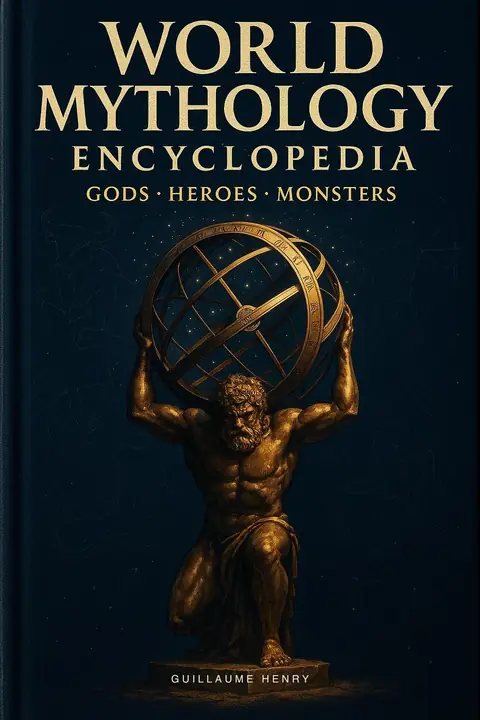
The World Mythology Book: The Gods, Heroes and Myths of Every Culture
The Gods, Heroes and Myths of Every Culture, in One Volume
The whole of world mythology in a single volume: Greek, Norse, Egyptian, Japanese, Hindu, Celtic, Slavic, Mesoamerican and African myths gathered side by side, each drawn from the primary sources.