
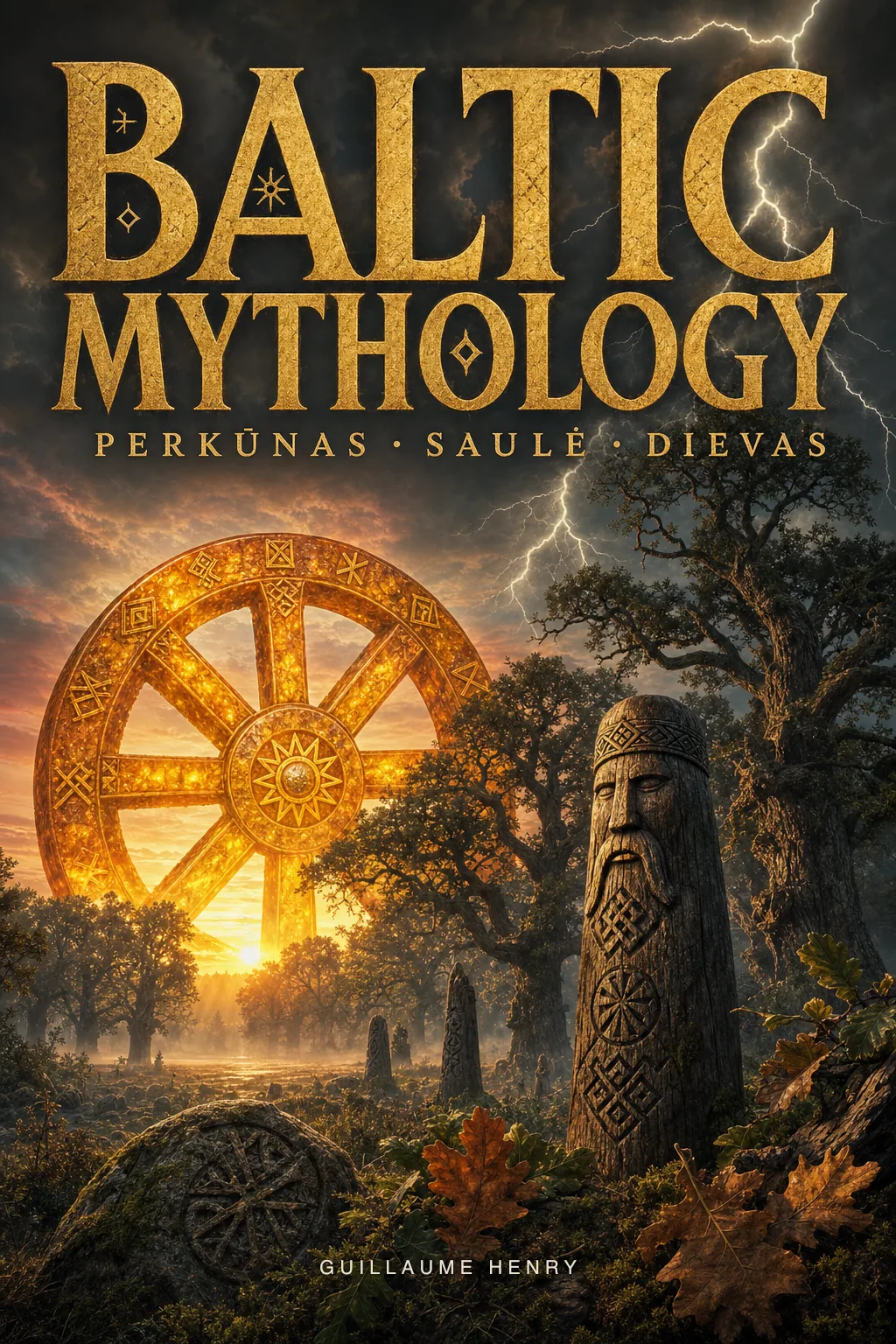
Baltic Mythology
The Baltic Mythology Book: Perkūnas, Saulė, Dievas, and the Gods of Lithuania and Latvia
Perkūnas, Saulė, and Dievas
The last pagans of Europe: the Lithuanians and Latvians who kept their old gods into the 1400s. Perkūnas the thunderer, Saulė the sun, the sky-god Dievas, and a forest religion preserved in tens of thousands of folk songs.
$14.99
Pre-order: delivered within 24h
Inside this book
What you will read
- 11 chapters, primary sources
- Instant PDF download
- Original ink illustrations
- Inline citations to the dainas and chronicles
- Designed for print quality
See all chapters +
- 01The Last Pagans of Europe
- 02Dievas and the Bright Sky
- 03Perkūnas, the Thunderer
- 04Saulė the Sun and Mėnuo the Moon
- 05The Celestial Wedding and the Sky Family
- 06Žemyna and the Sacred Earth
- 07Laima and the Spinning of Fate
- 08Velnias and the Lord of the Dead
- 09The Sacred Groves, Fires, and Serpents
- 10The Dainas: A Religion in Song
- 11The Conversion and the Baltic Revival (Romuva)
About this book
About this Baltic mythology guide
The last pagans of Europe: Perkūnas the thunderer, Saulė the sun, and a forest religion preserved in tens of thousands of folk songs.
Lithuania was the last pagan state in Europe. While the rest of the continent had been Christian for centuries, the Balts still kept sacred groves, fed eternal fires, and sang to the sun as a living goddess. When the conversion finally came, the old religion did not vanish; it hid inside the folk songs, the dainas, where scholars later found it almost intact.
This book reconstructs that forest faith. Eleven chapters cover the sky-god Dievas, Perkūnas the thunderer and his war on the devil, the sun Saulė and the moon Mėnuo and their broken marriage, the earth-mother Žemyna, Laima who spins fate, the lord of the dead, and the sacred groves, fires, and serpents. The whole tradition is read through the dainas. Every chapter cites its sources.
Delivered as a print-quality PDF within 24 hours of purchase.
What you will discover inside
- How the Lithuanians stayed pagan until 1387, the last in Europe
- Perkūnas the thunderer and his endless war on the devil Velnias
- Saulė the sun, Mėnuo the moon, and the celestial wedding gone wrong
- Žemyna, the earth you kiss each morning and thank each night
- Laima, who spins your fate at the moment of your birth
- A whole religion preserved in tens of thousands of folk songs
Baltic mythology book at a glance
| Tradition | Baltic mythology |
|---|---|
| Chapters | 11 chapters |
| Length | 150 pages |
| Sources | Drawn from the primary sources, cited inline |
| Reading level | Beginner-friendly. Every name and place is explained from scratch |
| Format | Print-quality PDF |
| Delivery | PDF within 24 hours |
Formats and editions
| Edition | What you get | Price |
|---|---|---|
| Instant PDF | Print-quality download, readable on any device. PDF within 24 hours. | $7.99 |
| Paperback | A paperback edition is on the way. Sign up on this page to hear when it lands on Amazon. | Coming soon |
About the author

Guillaume Henry
Founder & Editor-in-Chief, Mythologis
Guillaume Henry founded Mythologis to make the world's mythologies readable without losing what makes them strange. Every Mythologis book draws on the primary sources first, cross-references multiple translations, and avoids inventing details that aren't in the originals.
More about the authorKeep exploring Baltic mythology
Prefer to read before you buy? These free, fully sourced guides cover the same gods, myths and sources you will meet in the book.
Read the complete Baltic mythology guideQuestions about the Baltic mythology book
When will I receive my PDF?
Within 24 hours of purchase. Your download link arrives in your inbox automatically.
Is this book based on primary sources?
Yes. It draws on the Lithuanian and Latvian dainas (folk songs), the chronicles of the Teutonic crusaders, the early modern accounts of Baltic religion, and the scholarship of Marija Gimbutas and Algirdas Greimas, with references to the standard translations.
What is the difference between Baltic and Slavic mythology?
They are neighbours and cousins, not the same. The Baltic peoples (Lithuanians, Latvians, Old Prussians) speak Baltic languages and kept their paganism far longer than the Slavs. The two traditions share some figures (a thunder-god, a sky-god) but differ in detail. This book focuses on the Baltic side.
How long is the book?
Eleven chapters, around 150 pages depending on the final layout. Designed to be read in evenings or in one long sitting.
Is this book for beginners or specialists?
Beginners welcome. The book explains every name, place, and concept from scratch. Specialists will find the source citations useful for further reading.
Will there be a paperback on Amazon?
The PDF is available immediately. A KDP paperback edition follows once the book has been validated by readers.
What formats is this book available in?
Every title is available as an instant PDF, downloaded the moment you buy it: the link appears on the confirmation page and lands in your inbox. Selected titles also have a paperback edition on Amazon. Where the paperback is not out yet, you can sign up to be notified the day it does.
What is the return policy?
The PDF is delivered instantly by Mythologis. If a download ever fails or a file looks wrong, get in touch and we will make it right. Paperbacks bought on Amazon are handled under Amazon's own returns and refund policy.
Can I order from outside the United States?
Yes. The PDF is a digital download, so it works instantly anywhere in the world, with nothing to ship. Where a paperback edition exists, it is sold across Amazon's international marketplaces, with shipping rates and delivery times depending on your country.
You might also like
See the full library
Norse
The Norse Mythology Book: Odin, Thor, Loki, Ragnarok and the Sagas of the Vikings
$7.99
Greek
The Greek Mythology Book: Zeus, the Olympians, the Heroes, and the Sacred Stories of Ancient Greece
$7.99
Egyptian
The Egyptian Mythology Book: Ra, Osiris, Isis, Anubis, and the Sacred Stories of the Pharaohs
$7.99
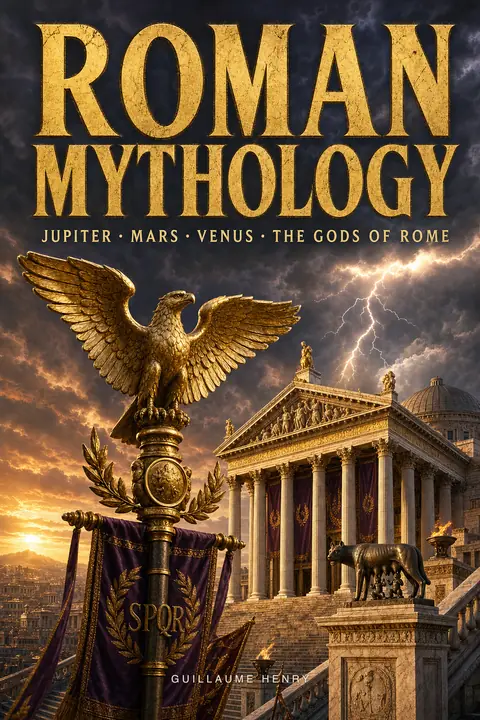
Roman
The Roman Mythology Book: Jupiter, Mars, Venus, the Aeneid, and the Sacred Stories That Built an Empire
$7.99
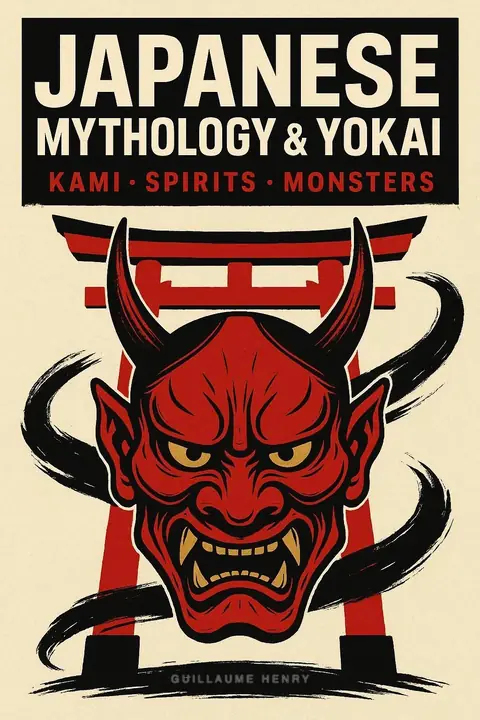
Japanese
The Japanese Mythology and Yokai Book: Amaterasu, Susanoo, Kami, and the Sacred Stories of Japan
$7.99

Hindu
The Hindu Mythology Book: Vishnu, Shiva, Brahma, the Mahabharata, and the Sacred Stories of India
$7.99