
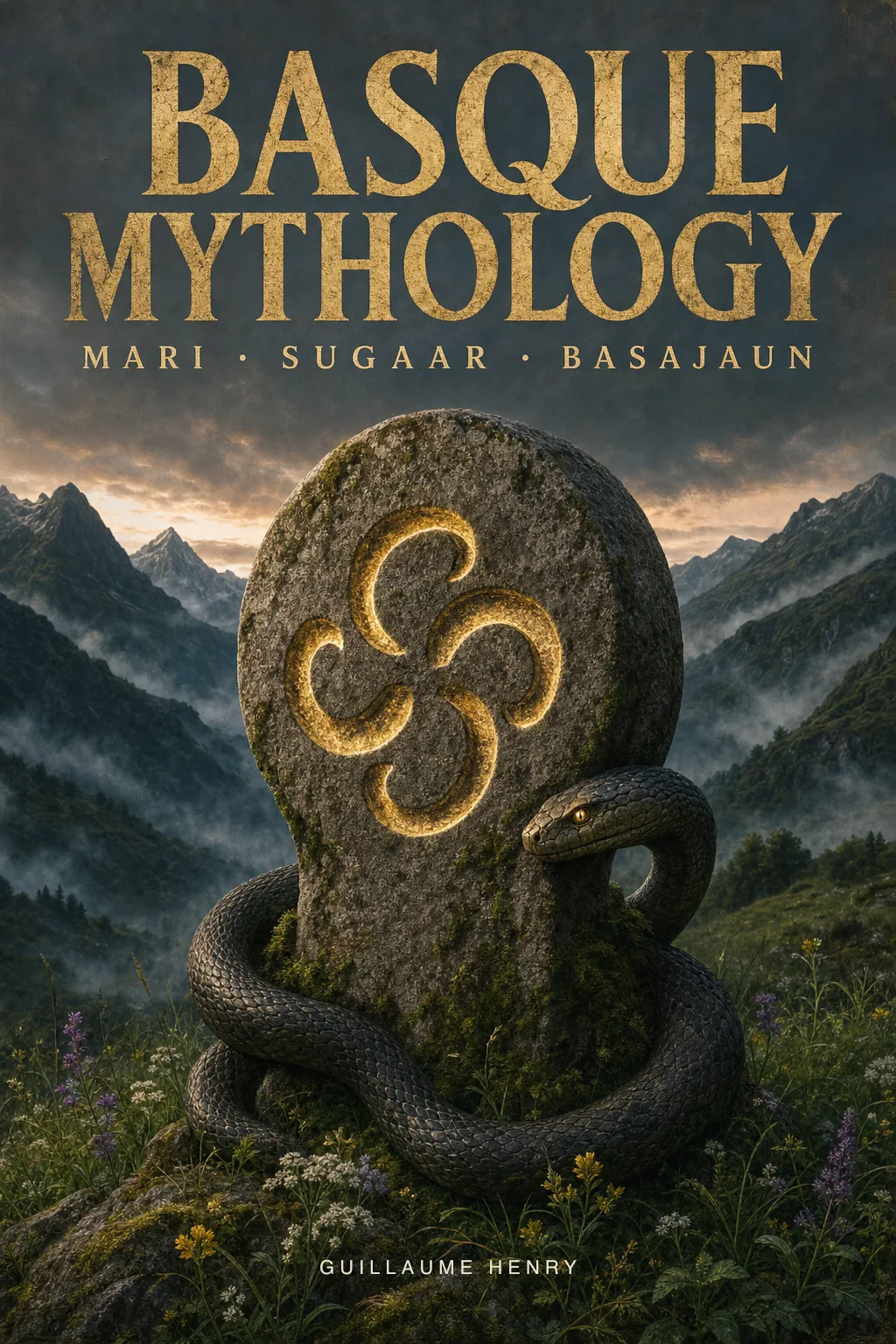
Basque Mythology
The Basque Mythology Book: Mari, Sugaar, Basajaun, and the Oldest Gods of Europe
Mari, Sugaar, and Basajaun
The mythology of Europe’s oldest people, who speak a language related to no other on earth. Mari the goddess of the mountains, her serpent-consort Sugaar, the wild lord of the woods Basajaun, and a pre-Indo-European world that survived in the Pyrenees.
$14.99
Pre-order: delivered within 24h
Inside this book
What you will read
- 11 chapters, primary sources
- Instant PDF download
- Original ink illustrations
- Inline citations to the folklore collections
- Designed for print quality
See all chapters +
- 01The People Without Relatives
- 02Mari, Lady of the Mountains
- 03Sugaar and the Serpent of Storms
- 04The Children of Mari: Mikelats and Atarrabi
- 05Basajaun, the Wild Lord of the Woods
- 06The Lamiak and the River Spirits
- 07Tartalo, the One-Eyed Giant
- 08The Jentilak: The Giants Who Built the Dolmens
- 09The Sun, the Moon, and the Eguzkilore
- 10Witches, Akelarre, and the Inquisition
- 11The Survival of a Pre-Indo-European Faith
About this book
About this Basque mythology guide
The mythology of Europe's oldest people: Mari of the mountains, the serpent Sugaar, and a pre-Indo-European world that survived in the Pyrenees.
The Basques are a mystery. Their language is related to no other on earth, and they may be the last living link to the Europe that existed before the Indo-Europeans arrived. Tucked into the western Pyrenees, they kept a goddess-centered mythology so old it has no real cousins: a faith of mountains, caves, serpents, and the weather, presided over by a woman who lives inside the peaks.
This book gathers what the folklorists saved before it faded. Eleven chapters cover Mari the lady of the mountains, her serpent-consort Sugaar, her warring sons, the wild lord Basajaun who gave humans agriculture, the river-women called lamiak, the one-eyed giant Tartalo, the dolmen-building jentilak, and the sun and moon that guard against the night. The last chapter follows it into the witch trials. Every chapter cites its sources.
Delivered as a print-quality PDF within 24 hours of purchase.
What you will discover inside
- Mari, the goddess who lives in the mountains and rules the weather
- Sugaar, her serpent-consort, who streaks across the sky as a storm
- Basajaun, the hairy lord of the woods who taught humans how to farm
- The lamiak, the river-women with the feet of ducks
- The jentilak, the giants who built the dolmens and threw the standing stones
- How a pre-Indo-European faith survived in the oldest language in Europe
Basque mythology book at a glance
| Tradition | Basque mythology |
|---|---|
| Chapters | 11 chapters |
| Length | 150 pages |
| Sources | Drawn from the primary sources, cited inline |
| Reading level | Beginner-friendly. Every name and place is explained from scratch |
| Format | Print-quality PDF |
| Delivery | PDF within 24 hours |
Formats and editions
| Edition | What you get | Price |
|---|---|---|
| Instant PDF | Print-quality download, readable on any device. PDF within 24 hours. | $7.99 |
| Paperback | A paperback edition is on the way. Sign up on this page to hear when it lands on Amazon. | Coming soon |
About the author

Guillaume Henry
Founder & Editor-in-Chief, Mythologis
Guillaume Henry founded Mythologis to make the world's mythologies readable without losing what makes them strange. Every Mythologis book draws on the primary sources first, cross-references multiple translations, and avoids inventing details that aren't in the originals.
More about the authorKeep exploring Basque mythology
Prefer to read before you buy? These free, fully sourced guides cover the same gods, myths and sources you will meet in the book.
Read the complete Basque mythology guideQuestions about the Basque mythology book
When will I receive my PDF?
Within 24 hours of purchase. Your download link arrives in your inbox automatically.
Is this book based on primary sources?
Yes. It draws on the field collections of José Miguel de Barandiarán and Resurrección María de Azkue, the living Basque folk tradition, and the Inquisition records of the Zugarramurdi witch trials, with references to the standard scholarship.
Why is Basque mythology called the oldest in Europe?
Because the Basque language is a pre-Indo-European survivor, unrelated to any other living tongue, and the mythology preserved in it carries archaic, goddess-centered features that predate the arrival of the Indo-European peoples. It offers a rare window onto an older European world.
How long is the book?
Eleven chapters, around 150 pages depending on the final layout. Designed to be read in evenings or in one long sitting.
Is this book for beginners or specialists?
Beginners welcome. The book explains every name, place, and concept from scratch. Specialists will find the source citations useful for further reading.
Will there be a paperback on Amazon?
The PDF is available immediately. A KDP paperback edition follows once the book has been validated by readers.
What formats is this book available in?
Every title is available as an instant PDF, downloaded the moment you buy it: the link appears on the confirmation page and lands in your inbox. Selected titles also have a paperback edition on Amazon. Where the paperback is not out yet, you can sign up to be notified the day it does.
What is the return policy?
The PDF is delivered instantly by Mythologis. If a download ever fails or a file looks wrong, get in touch and we will make it right. Paperbacks bought on Amazon are handled under Amazon's own returns and refund policy.
Can I order from outside the United States?
Yes. The PDF is a digital download, so it works instantly anywhere in the world, with nothing to ship. Where a paperback edition exists, it is sold across Amazon's international marketplaces, with shipping rates and delivery times depending on your country.
You might also like
See the full library
Norse
The Norse Mythology Book: Odin, Thor, Loki, Ragnarok and the Sagas of the Vikings
$7.99
Greek
The Greek Mythology Book: Zeus, the Olympians, the Heroes, and the Sacred Stories of Ancient Greece
$7.99
Egyptian
The Egyptian Mythology Book: Ra, Osiris, Isis, Anubis, and the Sacred Stories of the Pharaohs
$7.99
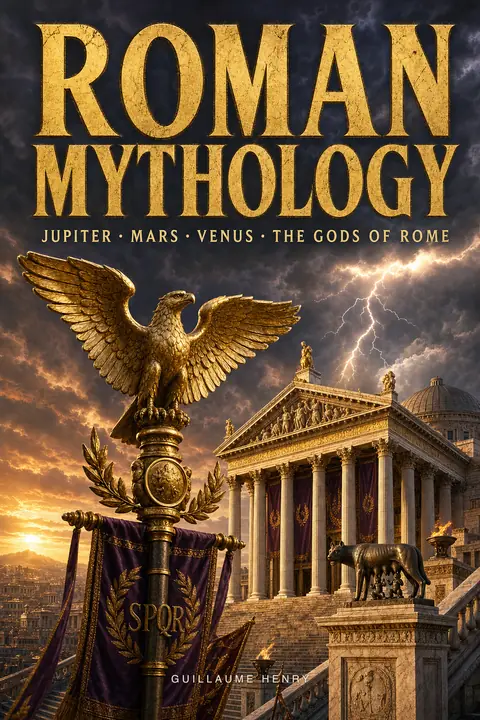
Roman
The Roman Mythology Book: Jupiter, Mars, Venus, the Aeneid, and the Sacred Stories That Built an Empire
$7.99
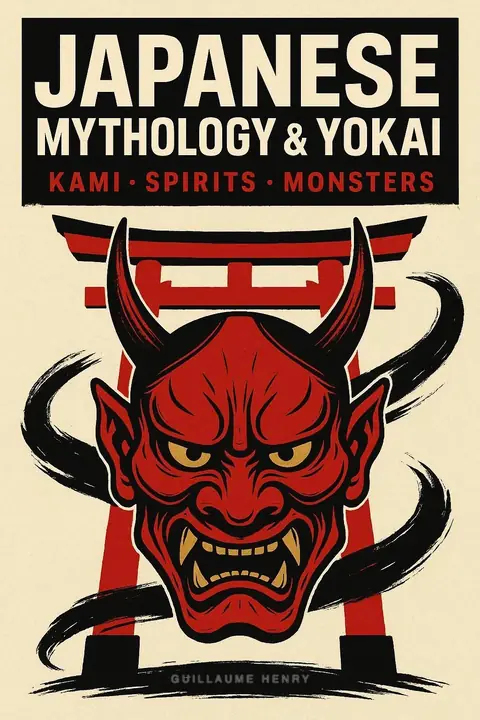
Japanese
The Japanese Mythology and Yokai Book: Amaterasu, Susanoo, Kami, and the Sacred Stories of Japan
$7.99

Hindu
The Hindu Mythology Book: Vishnu, Shiva, Brahma, the Mahabharata, and the Sacred Stories of India
$7.99