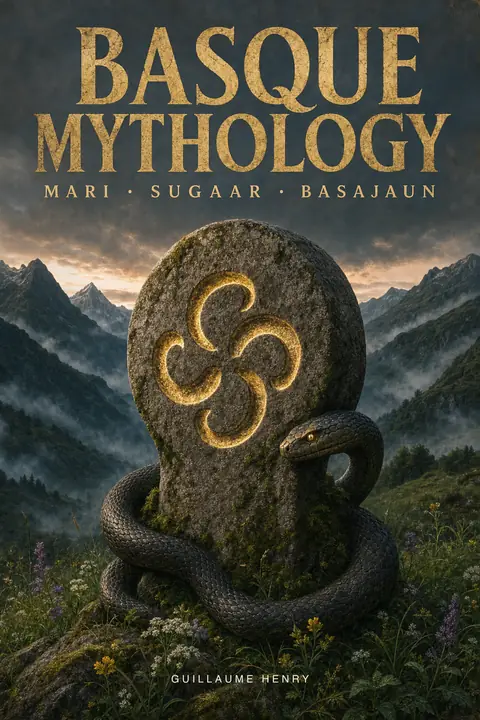
Basque
Pre-Christian Basque beliefs, deities, and cosmology. What survives, what was reconstructed, and what the sources actually tell us.
Most online guides to Basque mythology treat it as either a pristine survival from the Neolithic or a romantic invention of twentieth-century nationalists. The truth is harder to pin down and more interesting. What survives is a patchwork: oral testimony collected in the early twentieth century, place names that predate Latin, archaeological traces of funerary practice, and a handful of figures whose names appear in trial records and folk songs but never in a written cosmogony. There is no Basque Hesiod. There is no sacred text.
The work of reconstructing this tradition falls largely to ethnographers, above all José Miguel de Barandiarán, who spent decades in the mountains of Navarre and the French Basque Country recording what elderly shepherds and farmers still remembered. What emerges is not a system but a landscape: deities tied to specific caves and peaks, spirits who guard thresholds, and a cosmology that places the earth, not the sky, at the centre.
The Problem of Sources
The first thing to understand about Basque mythology is that it was never written down by the people who believed it. The earliest references come from Roman geographers who mention the Vascones but say nothing of their gods. Medieval chronicles are silent. The Inquisition records from Zugarramurdi in 1610 mention witches and night gatherings but frame them through Christian demonology, not indigenous cosmology.
What we have instead is the product of systematic fieldwork conducted between the 1920s and 1950s, primarily by José Miguel de Barandiarán, a priest and ethnographer who travelled village to village in the Basque Country recording oral testimony. His Mitología Vasca, published in 1960, synthesises decades of interviews with shepherds, farmers, and midwives in places like Ataun, Sara, and the valleys of Navarre. Resurrección María de Azkue's earlier Euskalerriaren Yakintza (1935-1947) provides complementary material, though Azkue was more interested in language than belief.
This creates a methodological problem. The informants Barandiarán interviewed were already Christian, often devoutly so. They spoke of Mari and Sugaar as figures from the past, beings their grandparents had feared or respected but whom they themselves no longer worshipped. Some scholars, Julio Caro Baroja among them, argue that what Barandiarán recorded was not ancient paganism but a hybrid tradition shaped by centuries of coexistence with Christianity. Others believe the core figures and cosmological structure are genuinely pre-Christian, preserved in oral memory long after the rituals died.
Both are probably right.
The Cosmology: Sky, Earth, and Underworld
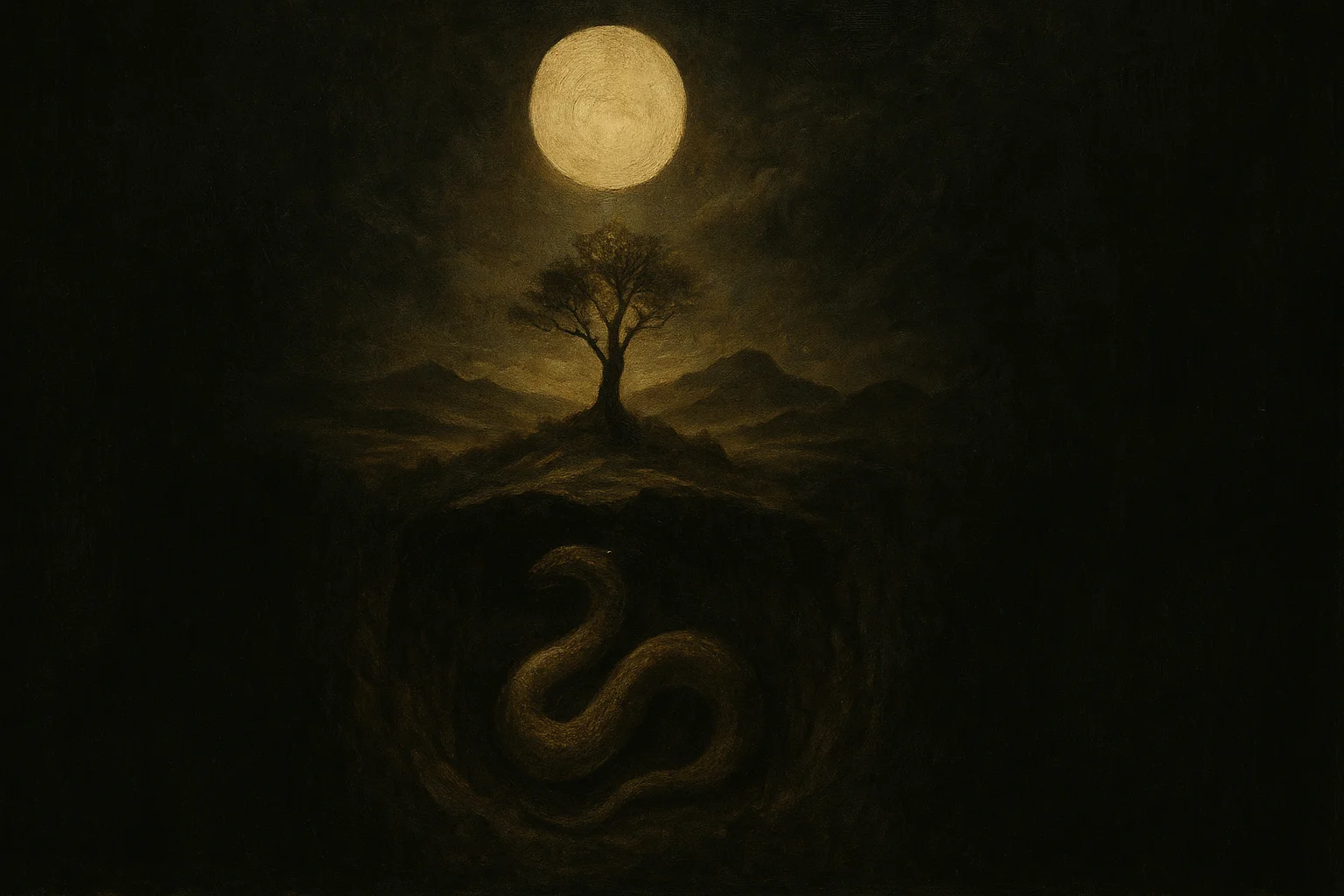
Basque cosmology, as reconstructed from oral sources, divides the world into three zones: the sky, the surface of the earth, and the subterranean realm. Unlike many Indo-European systems, the sky is not the seat of supreme power. The gods live in caves, not on mountaintops. The earth itself, personified as Amalur, is the generative centre. The underworld is not a place of punishment but the domain of the dead and certain chthonic spirits.
Mari: Goddess, Storm, and Sovereignty
Mari is the central figure in Basque mythology, described in oral testimony as a woman of great beauty who lives in caves, particularly in the peaks of Anboto, Txindoki, and Aizkorri. She controls the weather. When she moves from one mountain to another, storms follow. She appears sometimes as a woman dressed in red or green, sometimes as a ball of fire crossing the sky, sometimes as a white cloud. Barandiarán's informants in Ataun described her as the "lady of the storms" and said that farmers would pray to her for rain or for the storms to pass.
Her name, Mari, is also the Basque form of Mary, which has led to endless debate. Some argue that she is simply a Christianised version of the Virgin. Others, Barandiarán included, believe that the name is a coincidence or a deliberate substitution, that Mari predates Christianity and that her attributes, her association with caves and weather, belong to an older stratum. The fact that she is never depicted with Christian iconography and that her consort is a dragon-like serpent suggests the latter.
She is not a benevolent mother goddess in the modern sense. She punishes liars, thieves, and those who break oaths. She demands respect. In some accounts, she appears at the threshold of her cave and combs her hair with a golden comb, a detail that recurs in water spirits across Europe but here is tied to sovereignty and the land itself.
Sugaar: The Serpent Consort
Sugaar, also called Sugar or Maju, is Mari's consort. He appears as a serpent or a man wreathed in flame, moving through the sky in a trail of fire. Some testimonies describe him as a dragon-like serpent, others as a man who transforms into a serpent when he meets Mari. Their union, which takes place on Fridays according to some accounts, brings storms and fertility to the land.
The name Sugaar may derive from suge, the Basque word for serpent, and ar, male. He is not subordinate to Mari but complementary, a figure of raw elemental power to her sovereignty. In some versions, their children become the first lords of Biscay, a mythic charter for the region's noble families.
Amalur: The Earth Mother
Amalur, whose name means "Mother Earth" in Basque, is less a personified deity than the living substance of the world itself. She receives the dead. She nourishes the living. Barandiarán's informants spoke of her as the ground beneath their feet, not as a figure who appears in stories. Some scholars argue that Amalur is a modern reconstruction, a term popularised in the twentieth century to fit a broader European archetype of earth goddesses. Others point to the deep Basque reverence for the land, the practice of burying the dead in a foetal position facing east, and the persistent belief that the earth is alive and aware.
Whether Amalur was worshipped as a distinct entity in pre-Christian times or is a later synthesis, the concept reflects a cosmology in which the earth, not the heavens, is sacred.
Spirits of the Land and Threshold
Beyond the major deities, Basque tradition is thick with spirits who inhabit specific places: forests, rivers, caves, and the boundaries between human settlement and wilderness. These figures appear in the ethnographic record more consistently than the gods, suggesting that their veneration persisted longer or was less threatening to Christian authorities.
Basajaun: The Wild Lord of the Forest
Basajaun, the "wild man of the forest," is described as a large, hairy humanoid who lives in the deep woods and protects flocks of sheep and herds of livestock. He is not hostile unless provoked. Shepherds in the Pyrenees told Barandiarán that they would leave offerings of bread or cheese at the edge of the forest to ensure Basajaun's goodwill. In return, he would warn them of approaching storms by howling from the peaks.
Some accounts credit Basajaun with teaching humans the arts of agriculture and ironworking, skills he possessed before humans arrived. In one story, a clever man tricks Basajaun into revealing the secret of the saw by challenging him to a contest. The detail is telling: Basajaun is not a monster but a figure of knowledge, older than human culture, tied to the land before it was cleared and farmed.
His female counterpart, Basandere, appears less frequently in the sources but shares his role as guardian of the wild.
Lamiak: Water Spirits and Builders
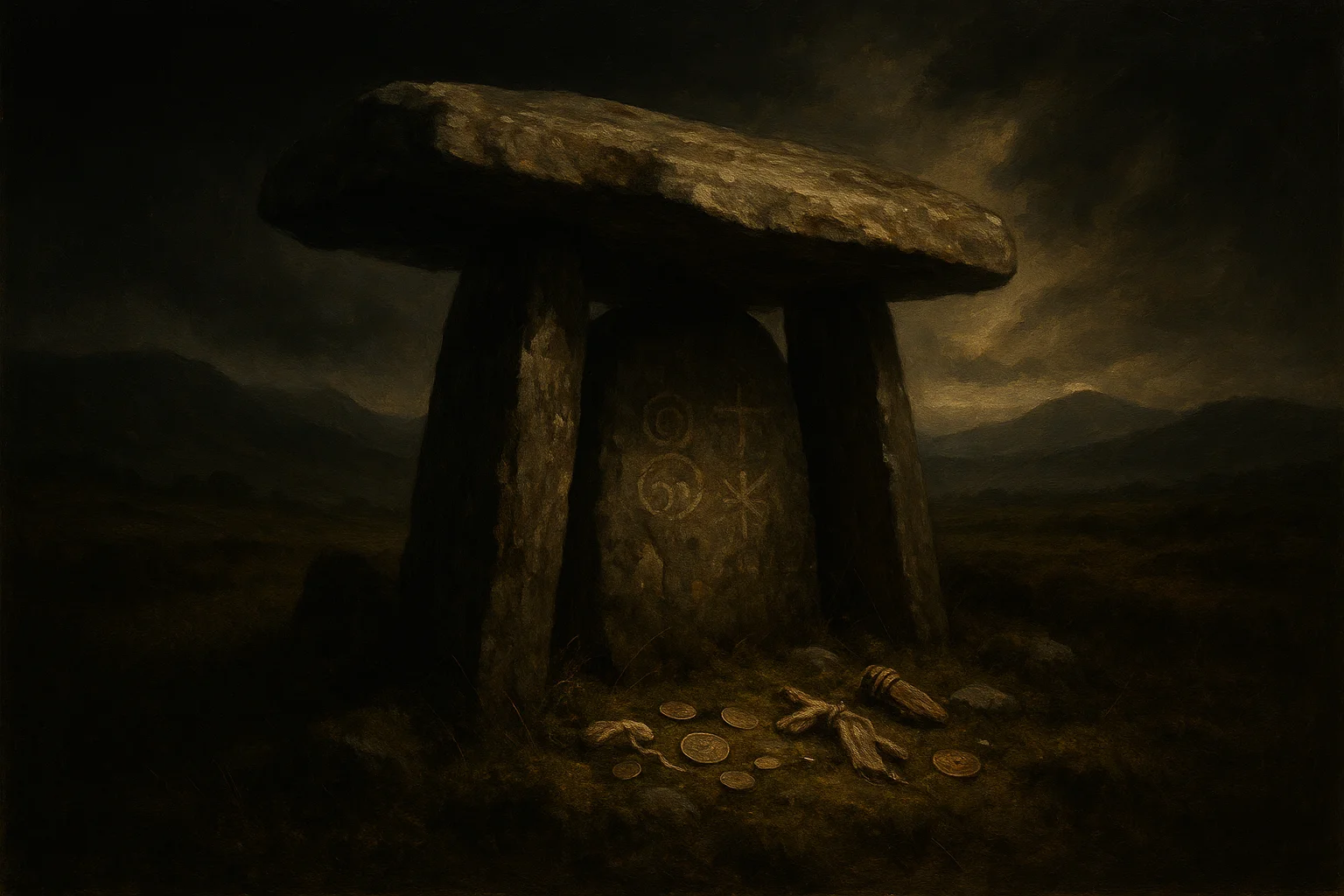
Lamiak are water spirits, usually female, who live in rivers, springs, and caves. They are described as beautiful women with long hair, sometimes with the feet of a duck or a goat. They comb their hair by the water's edge, a motif shared with water spirits across Europe. They are skilled builders and are credited in oral tradition with constructing dolmens, bridges, and megalithic structures in a single night.
Lamiak are ambivalent. They help humans who treat them with respect, offering gifts of bread or golden combs. They punish those who offend them, luring men into the water or causing floods. In some accounts, they are the mothers of half-human children, figures who mediate between the human and spirit worlds.
The name may derive from lamia, the Greek term for a female demon, introduced through Latin and Christian demonology. But the Basque Lamiak retain characteristics that predate this overlay: their association with water, their role as builders, their connection to specific springs and rivers.
Sorginak: Witches and Night Gatherings
Sorginak are witches, figures who gather at night to perform rituals, often in caves or at crossroads. The term sorgin in Basque means both "witch" and "one who creates" or "one who does," a linguistic detail that suggests an older, more neutral meaning before the Inquisition reframed witchcraft as diabolical.
The trial records from Zugarramurdi in 1610 describe night gatherings where women flew through the air, transformed into animals, and met with a figure the Inquisition called the Devil but whom some scholars identify with older chthonic deities. Barandiarán's informants spoke of Sorginak as night-flying creatures who could steal milk from cows or cause illness, but also as midwives and healers, women with knowledge of herbs and the body.
The overlap between Sorginak and older spirit categories, particularly Lamiak, suggests that "witch" became a catch-all term for women who operated outside Christian norms, whether as healers, as keepers of oral tradition, or as practitioners of older rites.
Basque Sorginak
Witches tied to night gatherings, shape-shifting traditions, and healing knowledge; ambiguous figures before Christian demonisation.
Slavic Baba Yaga
A solitary witch of the forest, keeper of life and death, who tests those who seek her; feared but not purely evil.
Household Protectors and Ancestral Spirits
Basque tradition places as much emphasis on the household and the hearth as on the wild. The home is a sacred space, protected by specific spirits and rituals that survived Christianisation because they were domestic, not public.
Etxeko Jaun and the Hearth
Etxeko Jaun, the "Lord of the House," is the protective spirit of the household. He is not a god but an ancestral presence, tied to the lineage of the family and the structure of the house itself. In some accounts, he is the spirit of the first ancestor who built the house. In others, he is a more generalised protective force, invoked to guard against illness, fire, and misfortune.
The hearth is his seat. Families would leave offerings of bread or milk by the fire, and it was considered unlucky to let the fire go out completely. The Etxeko Jaun is silent and invisible but ever-present, a guardian who expects respect and reciprocity.
Eguzkilore: The Flower of the Sun
Eguzkilore, the "flower of the sun," is the dried head of the Carlina acaulis thistle, hung above doorways to protect the household from evil spirits, witches, and storms. Barandiarán recorded its use across the Basque Country, from farmhouses in Navarre to fishing villages on the coast. The flower is said to capture the light of the sun and hold it through the night, a solar talisman in a cosmology otherwise dominated by chthonic and terrestrial powers.
The practice persists. Even today, you can find Eguzkilore above doors in rural Basque homes, a continuity of belief that spans centuries.
Death, the Afterlife, and the Cult of the Dead
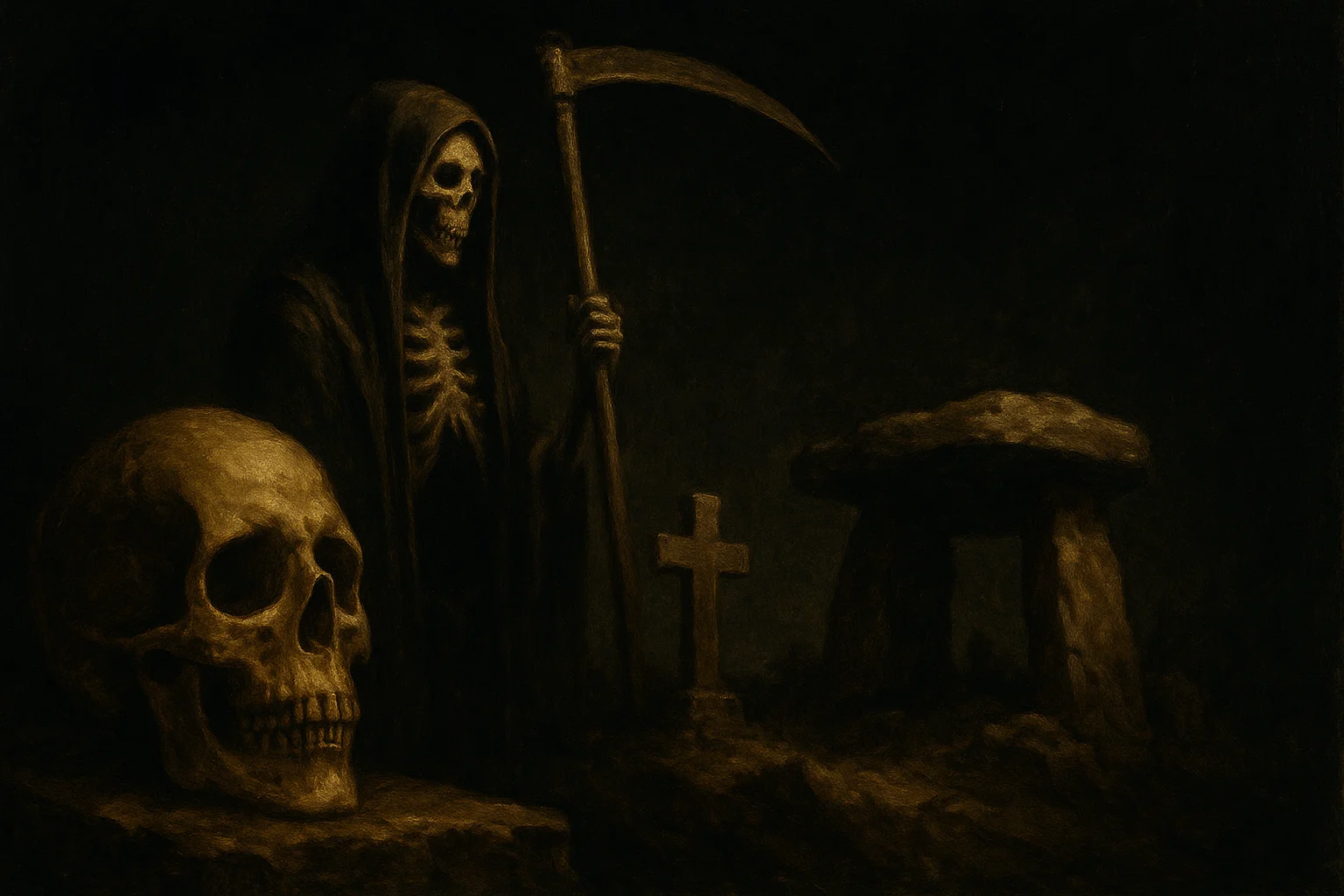
Basque funerary practice, as reconstructed from archaeology and ethnography, centres on the earth as the destination of the dead. Burials in the Basque Country often placed the body in a foetal position, facing east, a posture that suggests rebirth or return to the womb of Amalur. Grave goods were minimal, but the placement of stones and the orientation of the body were deliberate.
The dead were not gone. They remained part of the household, invoked in prayers and offerings. All Saints' Day and All Souls' Day, though Christian festivals, absorbed older practices of feeding the dead, leaving out bread and wine, and lighting candles to guide ancestral spirits home.
There is no surviving account of a Basque underworld comparable to Hades or Hel. The dead seem to have remained close, in the earth, in the stones, in the memory of the living. This is a cult of proximity, not separation.
Christianisation and Survival
Christianity arrived in the Basque Country gradually, beginning in the fourth century but not fully established until the medieval period. The process was not one of violent suppression but of slow absorption. Churches were built on sites already considered sacred: hilltops, springs, caves. Saints replaced older deities, but the geography remained.
Mari became conflated with the Virgin Mary in some areas, though her attributes, her cave-dwelling and storm-bringing, remained distinct. Basajaun and the Lamiak were reframed as demons or fairies, figures to be feared rather than respected, but they did not disappear from oral tradition. The household cults, the Etxeko Jaun and the Eguzkilore, survived because they were private, beneath the notice of bishops and inquisitors.
The witch trials of the seventeenth century, particularly at Zugarramurdi, represent the most violent Christian intervention, but even here the older beliefs persisted in altered form. The Sorginak were prosecuted, but the knowledge they carried, the herbs and the songs, passed to the next generation.
The Twentieth-Century Revival: Barandiarán and the Ethnographic Record
The modern understanding of Basque mythology owes almost everything to José Miguel de Barandiarán. Born in 1889 in Ataun, he trained as a priest but spent his life as an ethnographer, walking the mountains and valleys of the Basque Country with a notebook, recording what the oldest generation still remembered. His work was not romantic. He did not invent or embellish. He asked questions, wrote down answers, and cross-referenced testimonies from different villages.
"Mari lives in the cave of Anboto. When she leaves, a storm follows. She is the lady of the weather, and the farmers fear her." Testimony recorded by Barandiarán in Ataun, 1920s
His Mitología Vasca, published in 1960 after decades of fieldwork, remains the foundational text. It is not a sacred book but a record of what survived, a snapshot of a tradition in its last generation of oral transmission. By the time Barandiarán was writing, most of his informants were elderly, and their children no longer believed. He was documenting a memory, not a living religion.
This raises the question: how much of what Barandiarán recorded was genuinely ancient, and how much was already a reconstruction, shaped by centuries of Christianity, by regional variation, by the fading of ritual into story? The answer is that we cannot know with certainty. But the consistency of certain figures, Mari, Basajaun, the Lamiak, across different valleys and villages, suggests a shared cosmology that predates the modern era.
Barandiarán's work has since been supplemented by other scholars, by archaeological finds, by the study of place names and linguistic survivals. But his notebooks remain the primary source, the closest we have to the voices of those who still remembered.
Frequently asked questions
What are the main deities in Basque mythology?
The central figure is Mari, a goddess associated with storms, caves, and sovereignty. Her consort, Sugaar, appears as a serpent or man wreathed in flame. Amalur, the Earth Mother, represents the living substance of the land itself. Beyond these, Basque tradition includes numerous spirits like Basajaun, the wild man of the forest, and Lamiak, water spirits who inhabit rivers and springs.
How much of Basque mythology is pre-Christian?
The core figures and cosmological structure, particularly Mari and the chthonic focus, likely predate Christianity. However, all surviving sources were recorded in the twentieth century from informants who were already Christian. Scholars debate how much was preserved intact and how much was reshaped by centuries of coexistence with Christian belief. The absence of written pre-Christian texts makes certainty impossible.
Who is Mari in Basque tradition?
Mari is the central deity, described as a beautiful woman who lives in mountain caves and controls the weather. She appears in various forms: a woman in red or green, a ball of fire, or a white cloud. She punishes liars and oath-breakers and is associated with sovereignty over the land. Her name coincides with the Basque form of Mary, but her attributes suggest a pre-Christian origin.
What role do spirits like Basajaun and Lamiak play?
Basajaun, the wild man of the forest, protects livestock and warns shepherds of storms. He is credited with teaching humans agriculture and ironworking. Lamiak are water spirits, often female, who live in rivers and springs, build megalithic structures, and can help or harm humans depending on how they are treated. Both figures mediate between the human world and the wild, representing older knowledge and power tied to specific landscapes.
How did Christianity change Basque beliefs?
Christianity absorbed rather than erased older practices. Churches were built on sacred sites, saints replaced deities, and household cults persisted in private. Figures like Mari were sometimes conflated with the Virgin Mary, while spirits like Basajaun and Lamiak were reframed as demons or fairies. The witch trials of the seventeenth century targeted Sorginak, but oral tradition and domestic rituals, such as the use of Eguzkilore, continued largely uninterrupted.
What sources exist for studying Basque mythology?
The primary modern source is José Miguel de Barandiarán's ethnographic fieldwork, particularly his Mitología Vasca (1960), based on oral testimonies collected in the 1920s through 1950s. Resurrección María de Azkue's Euskalerriaren Yakintza (1935-1947) provides additional material. Earlier references are scarce: Roman geographers mention the Vascones but not their gods, and medieval chronicles are silent. Inquisition records from Zugarramurdi (1610) offer indirect evidence through the lens of Christian demonology.