
The Contendings of Horus and Set: Divine Conflict and Royal Succession in Ancient Egypt
The contendings of Horus and Set is a sprawling mythological dispute over Egypt's throne, preserved in papyrus and carved in temple walls. Discover how this ancient lawsuit shaped the way Egyptians understood divine justice, kingship, and cosmic order.
Contents
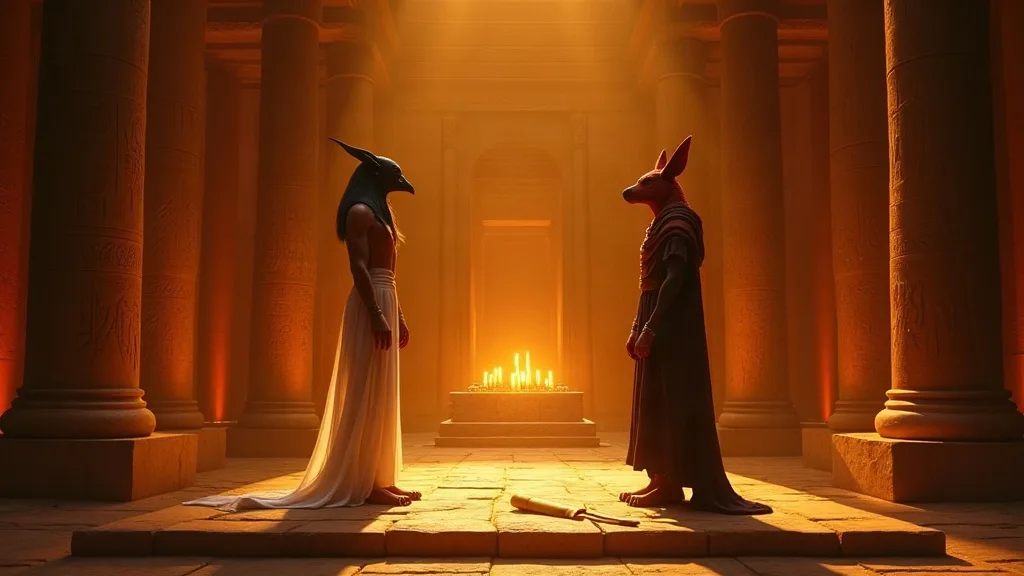
Two brothers stand before a divine council. One claims the throne by birthright; the other by force of will and cunning. The courtroom is not stone and wood, but the hall of the gods themselves. Scribes record their arguments. Tempers flare across eighty years of contestation. This is the contendings of Horus and Set, one of the most vivid legal dramas ever preserved from the ancient world.
The Egyptians loved this story. They carved versions of it into temple walls at Edfu, copied it onto papyrus in scribal exercises, and invoked it when settling real disputes over property and succession. It tells us what they believed about power, justice, and the fragile balance between order and chaos.
The Myth's Origins and Primary Sources
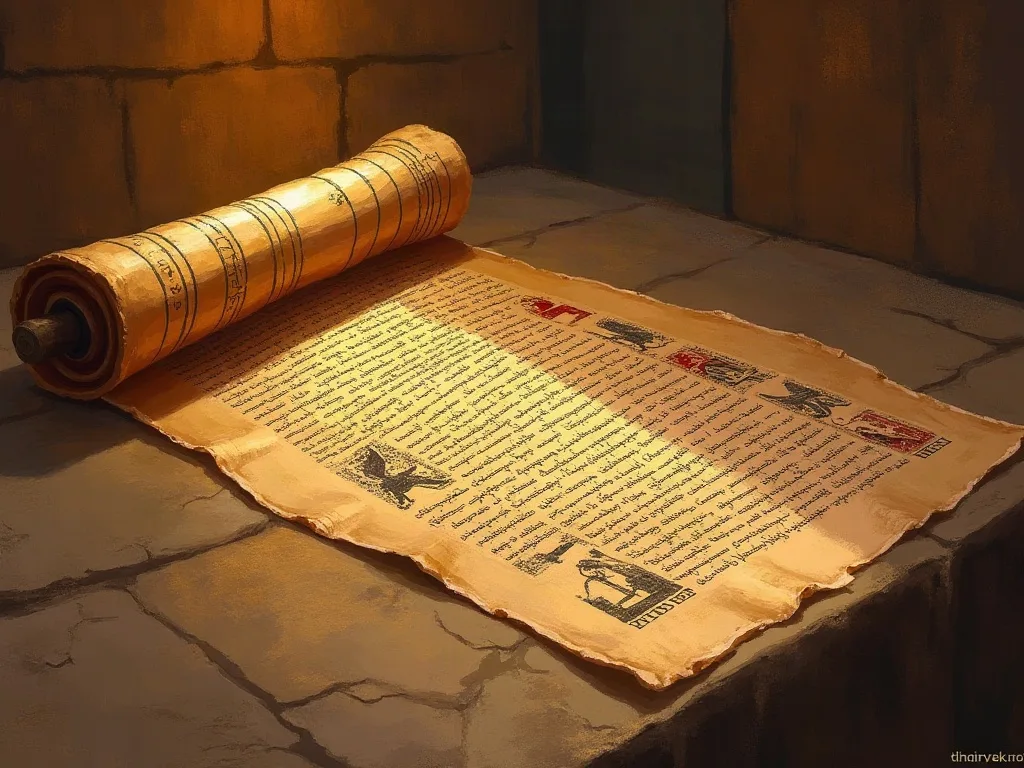
The contendings of Horus and Set survives most fully in the Papyrus Chester Beatty I, written around 1160 BC during the reign of Ramesses V. This is a manuscript, not a temple inscription, which means it was written for entertainment and instruction in the private world of Egyptian scribes and educated households. The text is both comic and serious: it mocks the gods even as it explores fundamental questions about legitimate rule.
Earlier echoes of the conflict appear in Old Kingdom pyramid texts and Middle Kingdom coffin texts, where Horus claims his father's throne and Set opposes him. The Edfu Temple, built during the Ptolemaic period (after 237 BC), inscribes a much older version of the myth onto its walls, preserving a ritual drama performed during the god's festival. This suggests the contendings were recited, enacted, and celebrated for at least two thousand years.
The story has roots deeper still. In the Pyramid Texts, composed around 2400 BC, Horus and Set are already locked in their eternal antagonism. What begins as fragmented conflicts in the oldest sources crystallizes by the New Kingdom into a coherent narrative of a lawsuit that stretches across decades.
The Cast: Gods at the Heart of Conflict
Horus appears in this myth not as the falcon-headed sky god of remote divinity, but as an heir born in struggle. He is the son of Osiris and Isis, and his very existence is an act of resurrection. After Set murders Osiris and dismembers his body, Isis collects the pieces and uses magic to restore her husband long enough to conceive. Horus is born in hiding, in the papyrus marshes of the Delta, weak and vulnerable. His mother raises him in secret, protecting him from Set's assassins. By the time he enters the divine court, Horus has learned patience, strategy, and the power of righteous grievance.
Set, god of chaos, the desert, and foreign lands, is not simply evil in Egyptian theology. He is necessary, dangerous, and unpredictable. He governs the storms that destroy crops, the red chaos beyond Egypt's borders, and the wild forces that must be contained but never eliminated. In earlier myths, Set is Osiris's own brother and ally. His crimes do not make him a demon; they make him a force out of balance, a god who has crossed the line from necessary chaos into tyranny. He claims the throne not as a usurper but as the stronger god, the one who has proven his power by defeating his brother in combat.
Osiris, though dead, never leaves the case. His throne hangs in the balance. His memory is invoked. His kingship is the measure of legitimacy. He represents order, fertility, civilization, and the continuity of kingship itself. Though he cannot appear physically, his absence shapes everything.
Isis stands behind Horus, advising, scheming, and fighting in the background. She is the magician, the devoted wife, the clever mother. When the divine court hesitates, she manipulates situations to force their hand. She is not passive; she is the architect of her son's eventual triumph.
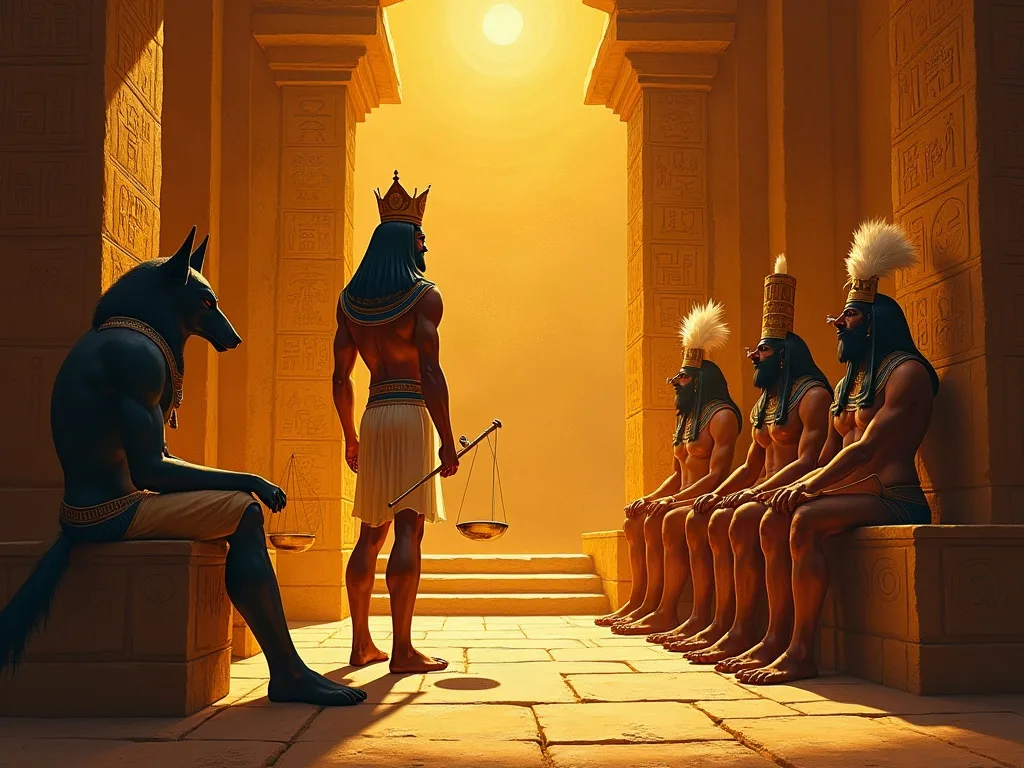
The Ennead, the council of nine gods, presides over the trial. These are the high gods who must decide the case: Ra, Shu, Tefnut, Geb, Nut, Osiris, Isis, Set, and Nephthys. They squabble, change their minds, and are periodically overruled by Ra-Horakhty, a manifestation of the sun god who grows impatient with their indecision.
The Eighty-Year Trial: Narrative and Absurdity
The Papyrus Chester Beatty presents the contendings as a prolonged lawsuit, and much of its power comes from the bureaucratic comedy underlying a cosmic dispute. The gods argue as mortals might argue before a vizier: they present evidence, make speeches, appeal to precedent, and lodge formal complaints.
The trial begins with a simple question: should Horus or Set inherit the throne of Egypt? Horus argues that the throne is rightfully his as the son of the former king Osiris. Set counters that he is the stronger god and therefore the rightful ruler. Strength, he insists, should decide kingship.
For eighty years, the gods cannot reach consensus. Ra-Horakhty initially favors Set, drawn to the god's power and aggression. But Osiris intervenes with a pointed question: if the gods reject Horus and award his father's throne to the murderer, what hope do any of their own children have? The logic is devastating. Legitimacy cannot rest on might alone; it must honor the line of succession and the rule of law.
The contendings escalate into contests of strength. In one famous episode, the two brothers transform into hippopotami and engage in an underwater battle. In another, they turn into serpents and fight in the darkness. Each transformation reflects their natures: Horus, who must win, and Set, who refuses to surrender even when losing. These contests are not settled by victory. They are frustrated by divine incompetence; the judges cannot swim well enough to follow, or they lose interest, or Isis, meddling from the sidelines, interferes.
The most memorable episode involves a trick. Horus fashions a boat from stone and paints it to look like real wood. When Set launches his own boat, certain it will sink (because stone sinks), he appears foolish. The gods laugh. Set, enraged by mockery, demands compensation for the insult rather than accept the decision. The trial continues.
At its heart, the myth uses absurdity to explore a real problem: the law alone cannot determine who should rule. Strength cannot be the criterion; neither can blood, because blood can be tainted by murder. The judges must eventually invoke something deeper: cosmic order, the will of Osiris, and the principle that legitimate succession preserves the state.
The Judgment and Its Meaning
After eighty years, the gods finally decide. Horus receives the throne. Set is given dominion over the desert and foreign lands, the spaces at the edge of civilization. Some versions reward him with thunder and the red chaos of storms. The compromise satisfies neither god fully; it is a settlement, not a victory.
The judgment matters less than the principle it establishes. Horus wins not because he is stronger, but because he is the rightful heir and because accepting him preserves cosmic order. The Egyptians called this maat, a concept often translated as "truth," "justice," or "order," but more precisely understood as the correct functioning of the universe. Maat is what exists when things are in their proper places, when the rules are followed, when chaos does not consume creation.
Set's punishment is paradoxical. He is not destroyed or exiled to the underworld. He becomes the guardian of the boundaries, the god who fights the serpent Apophis each night as the sun god Ra travels through the underworld. In some tellings, Set is bound under magical chains or integrated into Ra's solar barque. He is controlled but necessary; his chaotic energy is harnessed rather than eliminated.
Cosmic Order and the Principle of Ma'at
The contendings of Horus and Set is fundamentally a story about maat. To the ancient Egyptians, the universe is not naturally stable. Chaos is always present, always pressing in. Ra fights Apophis every night. The Nile's flooding must be negotiated with Hapi. Every king must constantly work to maintain order through ritual and justice.
In the myth, the gods learn that they too must respect maat. Ra cannot simply award the throne to the stronger god. Horus cannot seize it by force. The law must be followed, evidence heard, and decisions made according to principle. When the gods themselves uphold maat, the entire cosmos remains in balance.
This is why the story was so important to Egyptian kingship. Every pharaoh, from the Old Kingdom onward, was identified with Horus. Every deceased pharaoh became Osiris. The contendings provided a mythological template for legitimate succession: the son inherits the father's throne, even if challenged by powerful enemies. The king who rules through maat rules justly.
The myth also explains why chaos (Set) could never be eliminated. A king who simply crushed his enemies and seized absolute power risked becoming Set himself: a force of pure will untempered by law. The strongest pharaohs were those who ruled through justice and incorporated opposing forces into a greater harmony. Set's survival in the myth reflects this political wisdom.
Versions and Variations Across Time
The myth exists in multiple versions, each adapted to its era's concerns. The Old Kingdom texts emphasize the combat between the brothers. Middle Kingdom versions add legal elements. The New Kingdom Papyrus Chester Beatty is the longest, most comedic, and most explicitly concerned with proper procedure and justice.
The Edfu Temple inscriptions preserve what scholars believe is an older version, organized as a ritual drama performed annually during the god's festival. In this version, the conflict resolves through formal judgment, and the ritual enacts a renewal of divine order. Priests may have played the roles of Horus and Set, reenacting the dispute and its resolution as a form of religious theater.
Ptolemaic versions, written after Greek rule brought new ideas about law and governance, sometimes emphasize democratic principles and the voice of the assembled gods. These later texts show how easily the myth could be reframed to reflect contemporary concerns.
Symbolism: Beyond the Narrative Surface
On one level, the contendings tells a story of familial conflict and royal succession. On another, it encodes cosmological meaning.
Horus represents order, legitimacy, and the continuity of civilization. He is associated with the sky, with light, with the proper functioning of the state. His victory is not the triumph of might but the vindication of law.
Set represents chaos, boundaries, and the forces that must be controlled but not destroyed. He is the storm, the desert wind, the enemy at the gates. His partial defeat and transformation into a border guardian shows that even chaos has a place in a balanced cosmos.
Osiris, though dead, is the ground of legitimacy itself. His murder and resurrection establish a cycle: the king dies, becomes Osiris in the underworld, and his son (as Horus) inherits the throne. This cycle was reenacted in every pharaoh's succession.
Isis represents the power of magic, loyalty, and feminine intelligence. She preserves her husband's legacy through her son and is willing to bend rules, deceive, and manipulate to ensure justice. She is not idealized as purely passive; she is active, strategic, and willing to use her full range of powers.
The geographic dimension also matters. Horus is associated with Egypt proper, the fertile Nile Valley. Set rules the desert and foreign lands. The myth encodes Egypt's relationship with the world beyond its borders: necessary as a source of trade and slaves, dangerous as a constant threat, but ultimately controlled by Egyptian order.
Scholarly Interpretations and Debates
Modern scholars have proposed several frameworks for understanding the contendings.
Political allegory is one major lens. Some scholars see the myth as a commentary on actual dynastic conflicts, possibly encoding disputes between royal families or the anxieties surrounding succession during periods of weakness. The eighty-year trial might reflect real legal disputes over legitimacy that took generations to resolve.
Cosmic dualism offers another reading. The conflict between Horus and Set mirrors the duality present in all Egyptian thought: order and chaos, civilization and wilderness, Egypt and the foreign world. The myth teaches that these opposites cannot be simply eliminated; they must be balanced.
The historical evidence complicates any single interpretation. The myth appears in multiple forms across a thousand years, each adapted to its context. The Papyrus Chester Beatty is comic and entertaining; the Edfu Temple version is solemn and ceremonial. Both are "true" in the sense that both preserve ancient tradition, but neither represents a fixed, unchanging doctrine.
Feminist scholarship has highlighted Isis's agency in some versions, noting that she is not a passive victim but an active manipulator of events. Her magic and cunning are as important to Horus's victory as his rightful claim. This reflects a broader pattern in Egyptian mythology where female deities possess tremendous power and independence.
Comparative mythology reveals similar disputes in other traditions. The Hindu conflict between the devas and asuras, the Norse rivalry between Aesir and giants, and the Mesoamerican ball game between the Hero Twins and the Lords of Xibalba all explore the tension between order and chaos. The contendings sits in a global conversation about how divine and cosmic forces resolve their conflicts.
The Myth in Ancient Egyptian Religion and Ritual
For the Egyptians, the contendings was not merely a story. It was a religious and legal template.
In temple ritual, the myth was reenacted during festivals. Priests playing Horus and Set would contest, argue, and eventually settle their dispute according to precedent. The audience watched as divine order was reestablished, and by extension, as Egypt itself was renewed. These festivals affirmed that the current pharaoh, as Horus incarnate, held the throne legitimately and would continue to preserve maat.
In everyday law, the myth provided justification for specific legal principles. Egyptian judges invoked it when settling inheritance disputes, appeals against unfair decisions, or conflicts between powerful rivals. The principle that law, not strength, determines rightful succession was woven into the fabric of Egyptian justice.
In funerary religion, the myth shaped how Egyptians understood death and the afterlife. A deceased person was assimilated into Osiris; a deceased king became Osiris in the afterlife and his successor became the living Horus. The contendings guaranteed that this succession was not mere power-transfer but a cosmic renewal.
In kingship ideology, every pharaoh incorporated elements of both Horus and Set. As Horus, the king was the rightful inheritor of Ma'at and the defender of order. As a possessor of Set's power, he was the one strong enough to defeat chaos and protect Egypt's borders. The ideal king balanced both forces.
Echoes in Later Cultures and Literary Tradition
The myth's influence extended beyond ancient Egypt.
Ptolemaic Egypt, after Alexander's conquest, reframed the contendings through a Greek legal lens. Ptolemy I and his successors cast themselves as new Horus figures, legitimate heirs to Egypt's throne despite being of Macedonian origin. The myth's emphasis on lawful succession over mere conquest made it useful for dynasties seeking to legitimize their rule.
Islamic and medieval writers, encountering the myth in the great temple inscriptions and papyri, sometimes reinterpreted it through their own frameworks. In the modern era, the contendings has become a staple of both scholarly study and popular literature.
Contemporary fiction has mined the myth for its dramatic potential. Naguib Mahfouz, Egypt's most celebrated novelist, drew on pharaonic mythology in works like "The Thief and the Dogs." Modern authors continue to find in Horus and Set a template for exploring power, legitimacy, and justice.
The Unresolved Questions: What Ancient Egyptians Still Ask Us
Scholars continue to debate key aspects of the myth.
Was there a historical basis? Did the contendings encode a real succession dispute, perhaps the conflicts that followed the collapse of the New Kingdom? The evidence is suggestive but inconclusive. The myth may preserve a memory of actual historical events, or it may be a timeless exploration of universal conflicts over power.
How did Egyptians themselves interpret the eighty-year trial? Did they see it as literal history, cosmic drama, or moral instruction? The variety of versions suggests they read it differently in different contexts. A scribe copying the Papyrus Chester Beatty for amusement may have focused on the comedy. A priest performing the ritual at Edfu focused on its spiritual renewal.
Why does Set survive? If the myth is about good defeating evil, why is Set not destroyed? The answer points to a sophisticated understanding: chaos cannot be destroyed without destroying creation itself. Order exists in dynamic balance with chaos. This insight remains philosophically powerful today.
What does the verdict truly mean? Horus wins the throne, but Set is not vanquished. Is this a compromise, a draw, or Horus's genuine victory? The ambiguity may be intentional, reflecting real-world experience in which legal disputes rarely produce total victory for either side.
Frequently asked questions about the contendings of Horus and Set?
Frequently asked questions
Is the contendings of Horus and Set a real historical event or a myth?
It is a myth, though it may preserve memories of real succession disputes. The Papyrus Chester Beatty, our most detailed source, was written around 1160 BC and presents the story as divine narrative, not historical chronicle. However, the myth's emphasis on lawful succession and the dangers of unchecked power suggests the Egyptians were encoding real political anxieties into mythological form.
Why does Set get to survive and rule the desert?
In Egyptian thought, chaos (Set's domain) is not evil; it is necessary and dangerous. The cosmos requires both order and the forces that test order. By giving Set control of the desert and storms, the myth teaches that chaos cannot be destroyed but must be controlled and directed toward productive purposes. A king who rules through pure domination becomes Set; a wise king incorporates Set's power into a greater harmony.
What is maat and why does it matter in the myth?
Maat is often translated as truth, justice, or order, but more precisely it means the correct functioning of the universe and society. In the contendings, Horus wins not because he is stronger but because accepting him as king preserves maat. The myth teaches that legitimate power rests on upholding order, not on raw strength. This principle was central to Egyptian kingship and law for over three thousand years.
How was the contendings used in ancient Egyptian religion and law?
The myth was reenacted in temple festivals to affirm the pharaoh's rightful rule and to renew cosmic order each year. In the legal system, judges invoked it when settling inheritance disputes and succession conflicts, using Horus's victory as precedent for the principle that law, not strength, determines who should rule. It was fundamental to how Egyptians understood both divine and human justice.
Are there other mythologies with similar disputes over power and succession?
Yes, many traditions explore the same themes. Hindu mythology includes the conflict between devas and asuras, Norse mythology features the antagonism between Aesir and Jotuns, and Greek mythology includes the war between Olympians and Titans. These myths often teach that order and chaos must coexist and that legitimate power requires more than strength alone.
What does the eighty-year trial tell us about how the ancient Egyptians viewed law and justice?
The prolonged trial emphasizes that justice cannot be rushed or decided by force. The gods must gather evidence, hear arguments, appeal to precedent, and eventually reach a decision that honors both law and cosmic principle. The comedy of the endless trial (with hippopotamus battles and boat tricks) does not undermine this message; it reinforces it by showing how easily disputes can become absurd when proper procedure is ignored.
Why the Contendings Still Resonates: Power, Law, and the Limits of Strength
The contendings of Horus and Set speaks to a permanent human concern: how is power legitimized? The myth offers an answer that remains relevant in any era: strength alone is not enough. A ruler who governs by force alone, crushing all opposition, becomes a tyrant like Set. A ruler who respects succession, honors the past, and rules through law becomes a king like Horus.
The Egyptians lived in a precarious world. The Nile could fail; enemies could invade; the desert pressed in from all sides. Yet they believed that order could be maintained and renewed through ritual, law, and the willingness to incorporate opposing forces into a greater harmony. The contendings taught them that this balance was worth the eighty years of argument, the apparent foolishness of the trial, the compromise that leaves no one entirely satisfied.
In the modern world, where authoritarian leaders cite strength and necessity to justify unchecked power, the myth's insistence that law and succession matter may be more necessary than ever. The contendings suggests that legitimacy is not given by might; it is earned through respect for order and for the structures that preserve society across generations.
The conflict between Horus and Set does not end in the myth. Set remains, powerful and dangerous, at the boundaries of order. The work of maintaining maat continues. Every pharaoh must renew it; every judge must uphold it; every citizen must understand that order is something achieved and maintained, never finally won.
Free 25-page sample
Want the whole story?
Take the first 25 pages free. If it pulls you in, the full edition is yours as an instant PDF download, with a paperback on Amazon for selected titles.

Mythology
The World Mythology Book: The Gods, Heroes and Myths of Every Culture
The Gods, Heroes and Myths of Every Culture, in One Volume
The whole of world mythology in a single volume: Greek, Norse, Egyptian, Japanese, Hindu, Celtic, Slavic, Mesoamerican and African myths gathered side by side, each drawn from the primary sources.