
The Death of Baldur: Why the Norse Gods' Most Beloved Son Fell to Mistletoe
In Norse mythology, Baldur the Beautiful falls to a blind god's arrow, triggering the end of the world itself. Learn how mistletoe became the weapon of fate and why his death shaped the destiny of Asgard.
Contents
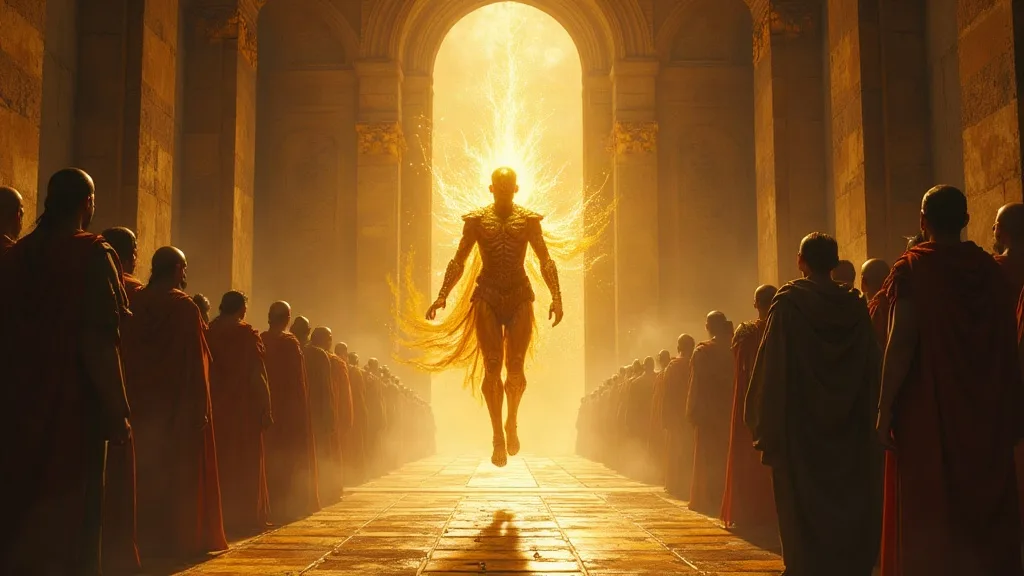
Baldur rides through Asgard on a horse woven from light itself. Every god loves him. The sun seems dimmer when he leaves a hall. Then a blind god throws a branch, and the most luminous being in the Nine Worlds falls dead into darkness.
The death of Baldur is not a random tragedy in Norse mythology. It is the pivot point of cosmic fate, the moment when even the Aesir, the chief gods of Norse tradition, realize that their immortality is an illusion. The tale comes to us most fully through the Prose Edda, a 13th-century Icelandic retelling by Snorri Sturluson of older Norse poems, and the Poetic Edda, a collection of Old Norse verse whose origins trace back centuries before.
What makes Baldur's death crucial is not just his fall, but what it triggers: the breaking of oaths, the loosening of bonds, and finally Ragnarok, the twilight of the gods. To understand why a god's death matters so deeply to the Norse imagination is to understand how they saw fate, love, and the fragility of order itself.
Who Was Baldur in Norse Mythology
Baldur (sometimes spelled Baldr or Balder) was the son of Odin, king of the gods, and Frigg, the mother goddess. In the Prose Edda, Snorri describes him as "the best of the gods." His beauty was so complete that light radiated from his skin and hair. No one who saw him could help but love him.
His gifts extended beyond appearance. Baldur was wise, eloquent, and just. When gods gathered to settle disputes, his words carried weight. He had a wife, Nanna, and a son, Forseti, who inherited his father's role as a mediator of conflicts. Unlike many Norse gods who embodied war, chaos, or cunning, Baldur represented harmony, light, and the best qualities of the divine order.
The Prose Edda tells us that Baldur's hall was called Breidablik, or "broad gleaming." It was so bright that no darkness could enter it. The very mention of his name brought joy to those who spoke it. In the Poetic Edda, a poem called the Griminismal speaks of Baldur in the past tense, as if the poet already knew his death, showing how deeply embedded this tragedy was in Norse storytelling tradition.
Why the Gods Feared for Baldur
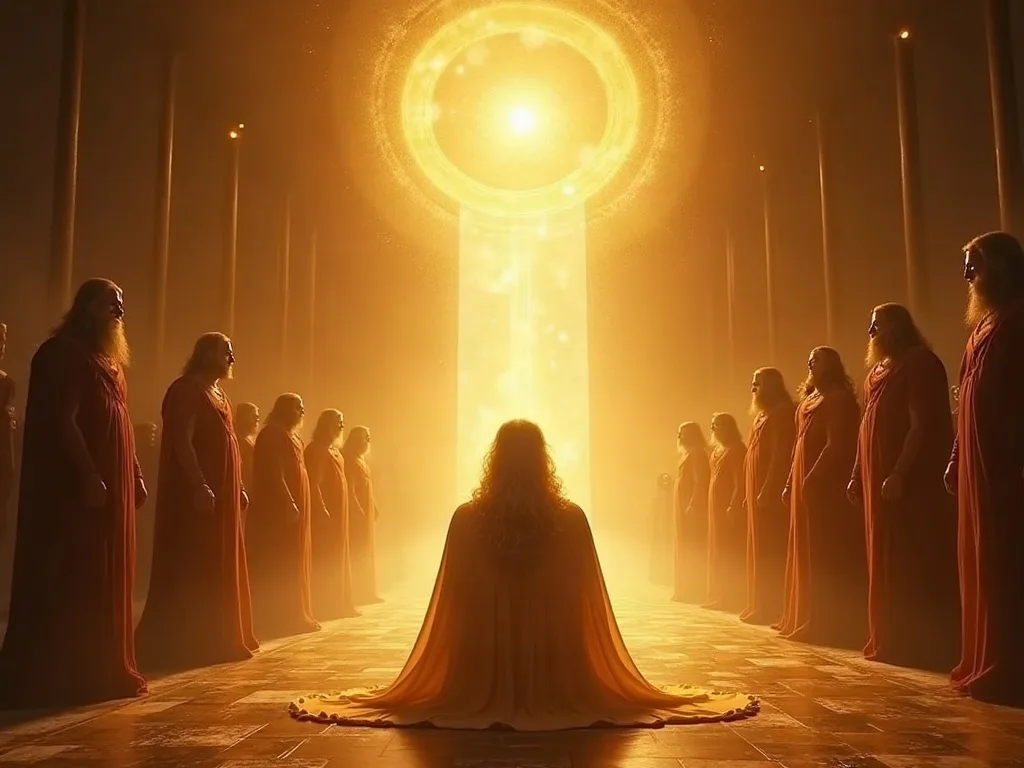
Baldur began having nightmares. In the Prose Edda, Snorri reports that these dreams were troubling enough for the gods to gather in council. Odin, the all-father who sees much but not all, grew alarmed. The dreams felt like a warning.
Frigg, Baldur's mother, decided to act. She traveled through the Nine Worlds and demanded an oath from every thing that lived: no creature, no plant, no object would harm her son. Fire swore an oath. Water swore. Iron, stone, earth, metals, wood, sickness, all beasts and birds. Even poison promised not to touch him.
When Frigg returned to Asgard, the gods devised a game. They would stand Baldur in the center of a hall and throw weapons at him. Spears would glance off him. Axes would miss. Rocks thrown with all a giant's strength would bounce away harmlessly. It became a joyous proof of his invulnerability. The gods laughed and threw again and again.
Everyone loved Baldur. Everyone had sworn to protect him. The order of the cosmos seemed secure.
The Trickster's Revenge
Not everyone joined in the celebration. Loki, the shapeshifting trickster god, watched from the edges of these proceedings. The Prose Edda describes Loki as one who "changes shape and deceives everyone." He was bound by oath to the Aesir, yet his nature was to unravel bonds, to find the flaw in every plan, to see beauty only as an opportunity for destruction.
Loki felt something the other gods did not: resentment. He may have harbored jealousy at Baldur's universal love, or merely been drawn to the one flaw in Frigg's perfect precautions. The Prose Edda suggests Loki asked himself: what if something had been overlooked?
He took the form of an old woman and approached Frigg's hall. Frigg, unsuspecting or perhaps trusting too much, told the disguised Loki of her oath-gathering. Frigg mentioned only one small plant she had overlooked: the mistletoe. It grew to the west of Valhalla, and it seemed so young and harmless that she had not bothered to make it swear.
Loki left Frigg's presence, and the Prose Edda tells us he went straight to the mistletoe, pulled up the plant by its roots, and carried it back to the hall where the gods were playing their game with Baldur.
The Arrow That Changed Fate
In the hall, Hodr (also spelled Hödur), Baldur's blind brother, stood alone. Hodr was sightless and so could not join the game of throwing weapons. Loki approached him and asked why he did not participate.
"I cannot see where Baldur stands," Hodr replied. "And I have no gift to throw."
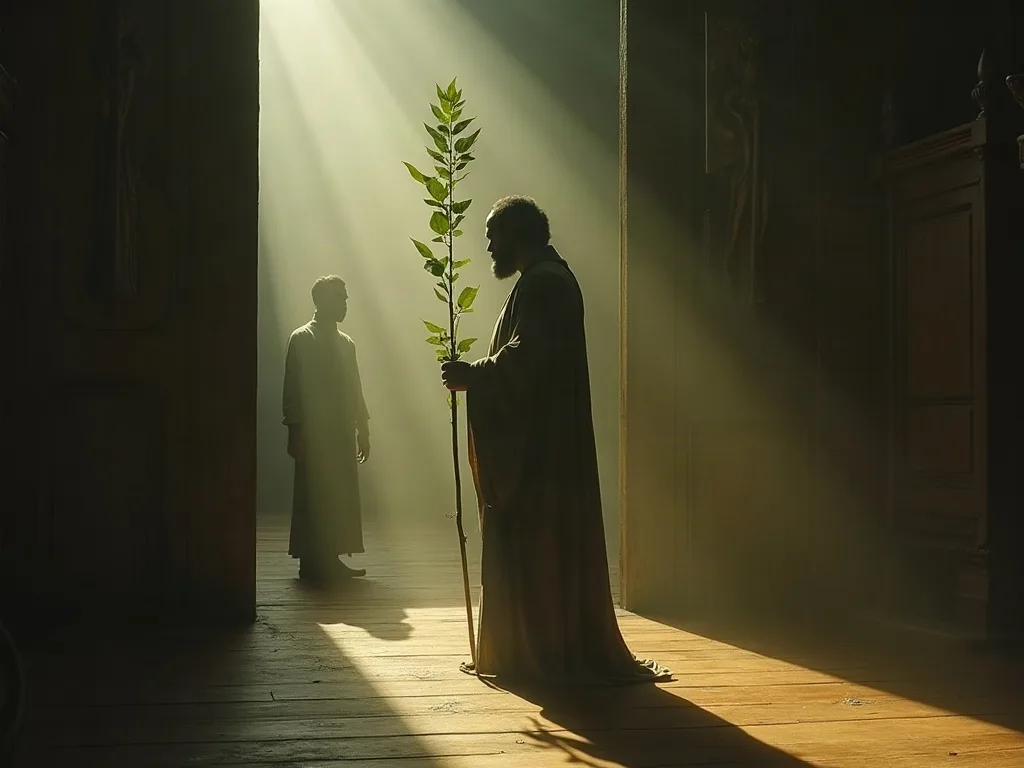
Loki smiled and offered Hodr the mistletoe branch. "Here. Use this dart. I will stand beside you and guide your arm so you do not miss the game."
The Prose Edda is careful about the next moment. It says Loki guided Hodr's hand. The blind god threw the mistletoe dart. It flew true through Baldur's body.
Baldur fell. Light left the Nine Worlds in that instant. The god who had never been harmed by anything lay dead on the floor of the hall. The silence that followed was the silence of the cosmos recognizing that its deepest law had been broken.
The Grief That Shakes the Worlds
When the gods saw what had happened, they could not at first speak. They looked at each other in horror. Baldur was dead. Their beloved was gone.
Frigg was the first to act. She asked if any of the gods would ride to Muspelheim, the realm of fire, or to the realm of the dead, to try to bring Baldur back. Hermödr, Odin's son and Baldur's brother, offered himself. He saddled Sleipnir, Odin's eight-legged horse, and rode down the long path to Niflheim, the realm of mist and darkness where Hel, the goddess of death, kept the dead.
When Hermödr reached Hel's hall, he found Baldur sitting at the highest seat, and beside him sat Nanna, Baldur's wife, who had died of grief at the news of his death. Hermödr begged Hel to release them both.
Hel considered. She knew that Baldur was loved throughout the Nine Worlds. "If all things weep for Baldur," she said, "then I will let him return to the living. But if even one thing refuses to weep, he must remain with me."
The gods and all creatures began to weep. The Prose Edda says that everything wept for Baldur: humans and giants and beasts. Even stones and metals seemed to produce tears, as if the entire fabric of creation mourned his loss.
But one creature would not weep.
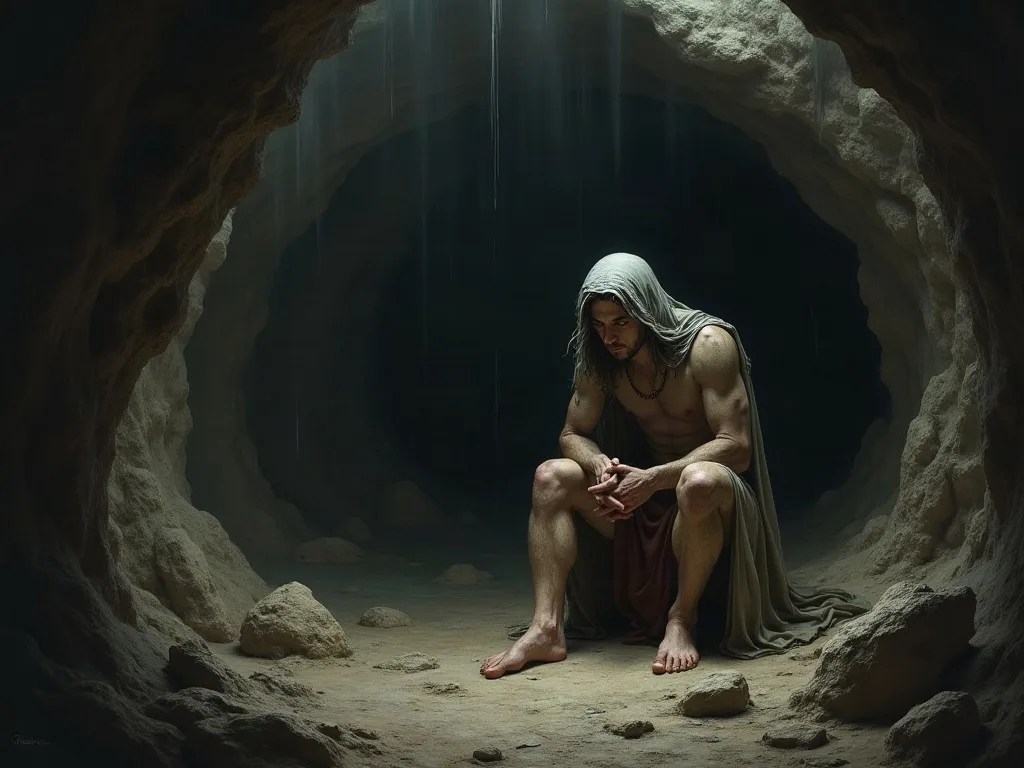
In a cave somewhere in the Nine Worlds sat an old giantess named Thökk (sometimes called Angrboda in other sources). When asked why she would not cry for Baldur, she refused. "Let Hel hold what she has," the giantess said. "I will not weep."
Why Baldur Could Not Return
The refusal to weep trapped Baldur in death. But this single tragedy was only the beginning of a cascade of consequences that the Norse saw as inevitable.
The gods discovered that Thökk was no giantess at all. She was Loki in disguise, ensuring that Baldur would never return to the light. The trickster had not merely killed Baldur; he had poisoned even the possibility of resurrection.
This act shattered the bonds of trust between Loki and the Aesir. The gods caught Loki and bound him deep beneath the earth with the entrails of his own son, Narfi. A serpent was placed above his head, dripping venom upon his face. Loki's companion, Sigyn, held a bowl to catch the poison, but whenever the bowl filled and she turned away to empty it, the venom fell directly on Loki's face, and he thrashed in agony so great that the earth trembled.
Yet this binding was temporary. In the Poetic Edda, a poem called the Voluspa, or "Prophecy of the Seer," describes how Loki would eventually break free from his bonds. When he did, he would join the forces arrayed against the gods for the final battle of Ragnarok.
The Cascade to Ragnarok
Baldur's World (Before)
The gods gather in joy, playing games where nothing can harm Baldur. Order prevails. The bonds that tie Loki to the Aesir are secure. Odin sits on his throne and sees much of what occurs. Frigga protects her son through universal oath-taking. The Nine Worlds turn in their appointed paths.
The World After (After)
Baldur lies dead and cannot return. Loki is bound but plotting his escape. The bonds begin to fray. Ragnarok approaches. The Midgard Serpent thrashes in the ocean. The wolf Fenrir pulls at his chains. The giants prepare for war. Heimdall stands watch at Bifrost, the rainbow bridge, knowing the end approaches but powerless to stop it.
In Norse mythology, the death of Baldur and the approach of Ragnarok are inseparable. The Voluspa poem opens by telling us that the seer is about to describe the end of all things, and Baldur's death is woven throughout the prophecy as a sign that the countdown has begun.
The Prose Edda explains the chain of events. With Baldur dead and Loki bound, the cosmic structure weakened. The giants sensed it. The Midgard Serpent, who encircled the world and held his tail in his mouth, began to twist. The venom he released would poison the sky and sea. Fenrir, the monstrous wolf, would break his chain. Surtr, the fire giant, would lead his forces across Bifrost, the rainbow bridge, to make war on the Aesir.
Odin himself would fall to Fenrir's jaws, though his son Vidar would avenge him. Thor would face the Midgard Serpent and slay it, but not before the serpent's venom sprayed across the Nine Worlds. Heimdall and Loki would kill each other. The sun would go dark. The stars would vanish from the sky. Mountains would crumble into the sea.
Yet the Norse story did not end in pure nihilism. After Ragnarok, a new sun would be born. Baldur himself would return from Hel's realm, walking into a new world alongside his brother Modi and other surviving gods. The Prose Edda tells us that Baldur would once again sit in a hall of light, and the world would be green and fertile.
Why Mistletoe
The choice of mistletoe as the weapon deserves its own consideration. In Norse tradition, mistletoe was not a major magical plant in the way that yew or rowan were in Celtic lore. Its significance in the story of Baldur's death seems almost arbitrary at first: simply the one thing Frigg overlooked.
Yet mistletoe has a strange botanical reality that may have resonated with the Norse imagination. It is a parasitic plant, growing upon other trees, drawing life from them. It remains green throughout the winter when other plants die. To medieval Scandinavian eyes, it embodied both vulnerability and mystery: soft, delicate, yet impossible to kill by ordinary means.
Some scholars have wondered whether the story preserves a memory of actual rituals or practices lost to time. Others note that the mistletoe's role is primarily a narrative device: Frigg's single moment of negligence becomes the flaw that breaks the perfect circle of protection. In mythology, such small oversights often carry the weight of fate.
The Grief of Frigg and the Nature of Loss
One detail often overlooked in retellings is the grief of Frigg and the other gods. The Norse did not shy away from depicting divine sorrow. When Baldur fell, the entire cosmos registered the loss not as an intellectual failing but as a wound.
Frigg's weeping shows something crucial about how the Norse understood motherhood and love. She had done everything she could. She had gathered oaths from all things. She had woven protections around her son. Yet one detail escaped her, and that single oversight undid all her work.
This speaks to a worldview in which even divine knowledge and divine power have limits. Frigg was mighty, but not omniscient. She could demand oaths, but she could not compel the truth from Loki when he came to her in disguise. The story acknowledges that the gods, for all their power, were vulnerable to deception, oversight, and the turning of fate.
The Prose Edda tells us that Nanna, Baldur's wife, died of heartbreak when she learned of his death. Her sorrow was so absolute that she could not remain in the world of the living. She followed her husband into death itself. This detail shows that Baldur's significance was not merely to the gods but to those bound to him by love.
Baldur in the Eddas and Scholarly Debates
The sources for Baldur's death are primarily two. The Prose Edda, written by Snorri Sturluson around 1220 CE, gives the most complete narrative. Snorri was an Icelandic chieftain and scholar who sought to preserve Norse lore at a time when Christianity had displaced the old religion. He drew on older poems, some of which survive in the Poetic Edda, and on oral tradition.
The Poetic Edda poems that touch on Baldur include the Voluspa, which prophecies his death and return; the Griminismal, which speaks of Baldur's hall Breidablik; and the Lokasenna, a flyting (or ritual insult exchange) in which Loki boasts of his role in Baldur's death.
Modern scholars have debated whether Baldur's story preserves ancient ritual practice, whether it reflects Indo-European mythological patterns, or whether it emerged primarily as a literary creation. Some have noted parallels to other death and resurrection myths: Osiris in Egypt, Dumuzi in Mesopotamia, even Christ in Christianity. The pattern of a beloved god who dies and returns, whose death triggers cosmic change, appears across cultures.
Yet the Norse version has its own distinctive features. Baldur's death is not a return to wholeness or redemption in the sense of other resurrection myths. He returns, but only after Ragnarok has destroyed the old world. His restoration is not about saving the cosmos but about renewal after destruction.
Baldur's Role in Pre-Christian Worship and Later Memory
Whether Baldur was worshipped as an independent deity in pre-Christian Scandinavia remains unclear. The Norse sources we possess were written after Christianity had taken root. Snorri Sturluson was a Christian writing about pagan gods. Archaeological evidence of worship is scarce.
Yet the emotional weight given to Baldur's death in the surviving literature suggests he held real importance. His connection to light, to justice, and to the cycle of seasons may have made him significant to agrarian societies watching for the sun's return each spring.
The Norse did not preserve temples dedicated to Baldur or invoke him in recorded prayers. But the story of his death became a touchstone for how the Norse understood tragedy, inevitability, and the fragility of even divine order. It was a story retold, remembered, and embedded in the cultural memory so deeply that it survived the conversion to Christianity.
How Baldur's Death Echoes in Later European Culture
After Christianity replaced Norse paganism, the story of Baldur did not vanish. It was preserved in manuscripts, read by scribes and scholars, and eventually rediscovered by 19th-century Romanticism.
Richard Wagner drew on Baldur's myth in his operatic cycle Der Ring des Nibelungen. 19th-century poets and painters saw in Baldur the epitome of tragic beauty: the innocent destroyed by fate and treachery. The Romantics were drawn to the Norse worldview's refusal to deny death or pretend that virtue guarantees safety.
In modern times, Baldur has appeared in fantasy literature, from William Morris to Neil Gaiman, often as a symbol of beauty and light lost to darkness. The archetypal pattern persists: the beloved figure whose death changes everything, whose absence is felt more powerfully than his presence was noticed.
Yet few modern retellings capture the specific weight of the Norse original. The death of Baldur was not sentimental. It was a cosmic event with consequences that rippled through the Nine Worlds. It was proof that even the gods could not escape fate, and that love, however universal, could not protect against deception and inevitability.
Frequently asked questions about the death of Baldur
Frequently asked questions
What killed Baldur in Norse mythology?
A mistletoe dart killed Baldur. Loki, the trickster god, discovered that mistletoe was the only thing Frigg had not secured with an oath of protection. Loki gave the dart to Hodr, Baldur's blind brother, and guided his hand to throw it. The dart pierced Baldur's body, and he died instantly.
Could Baldur have been brought back from the dead?
Yes, conditionally. Hel, the goddess of death, agreed to release Baldur if all things in the Nine Worlds would weep for him. Nearly everything did, but Loki disguised himself as a giantess named Thökk and refused to weep. Because of this single refusal, Baldur remained in Hel's realm. He returns only after Ragnarok destroys the old world and a new one is born.
Why is Baldur's death connected to Ragnarok in Norse mythology?
Baldur's death is the opening event in the cascade toward Ragnarok. His death weakens the bonds that hold Loki prisoner and destabilizes the cosmic order. The gods' grief and the impossibility of restoring Baldur signal that the old age is ending. The venom from the serpent, the breaking of chains, and the giants' war all follow from the fact that Baldur is gone and cannot return to restore harmony.
Was Baldur a real god worshipped by the Norse before Christianization?
There is no clear archaeological evidence that Baldur was independently worshipped. He appears in the preserved texts, the Prose Edda and Poetic Edda, which were written or recorded after Christianity had taken hold in Scandinavia. However, the emotional depth and narrative centrality of his story suggest he held cultural significance, possibly connected to light, justice, or seasonal renewal.
How does Baldur's death compare to other dying-and-rising gods in world mythology?
Many cultures have myths of gods who die and return: Osiris in Egypt, Dumuzi in Mesopotamia, and Christ in Christianity. Baldur's death differs in an important way: he does not return to restore the old order. Instead, he returns only after Ragnarok has destroyed the world and a new cosmos is born. His resurrection is renewal, not redemption, and the old world cannot be saved.
The Tragedy That Cannot Be Undone
The death of Baldur remains one of mythology's most powerful meditations on loss and inevitability. The Norse understanding of fate, the wyrd, was that it could not be fully known and could not be fully avoided. Frigg did everything right. She was wise and powerful and loving. It was not enough.
Loki's act was malice, but it was also, in the Norse vision, written into the fabric of things. The blind god threw the dart. Light left the Nine Worlds. And from that moment, the gods knew that their immortality was an illusion and that the end was approaching.
What makes this story endure across centuries is not special effects or supernatural power but something much simpler: the recognition that the things we love most can be taken from us, and that even our best efforts to protect them may fail. The Norse, watching the sun set each winter and wait for its return each spring, understood this deeply. They built a mythology around it.
Baldur will return when the world is new. But the old world must first fall into darkness and flame. There is sorrow in that knowledge, but also a kind of acceptance. The Norse did not ask their gods to prevent tragedy. They asked only that the gods face it with courage and that the world, afterward, be renewed.
Free 25-page sample
Want the whole story?
Take the first 25 pages free. If it pulls you in, the full edition is yours as an instant PDF download, with a paperback on Amazon for selected titles.

Mythology
The World Mythology Book: The Gods, Heroes and Myths of Every Culture
The Gods, Heroes and Myths of Every Culture, in One Volume
The whole of world mythology in a single volume: Greek, Norse, Egyptian, Japanese, Hindu, Celtic, Slavic, Mesoamerican and African myths gathered side by side, each drawn from the primary sources.