
The Destruction of Mankind Myth: From Egyptian Cataclysm to Global Apocalypse
Across cultures, gods destroy humanity. From Sekhmet's plague to the Norse Fimbulwinter, discover why ancient peoples imagined apocalypse, and what these myths reveal about divine justice and human fragility.
Contents
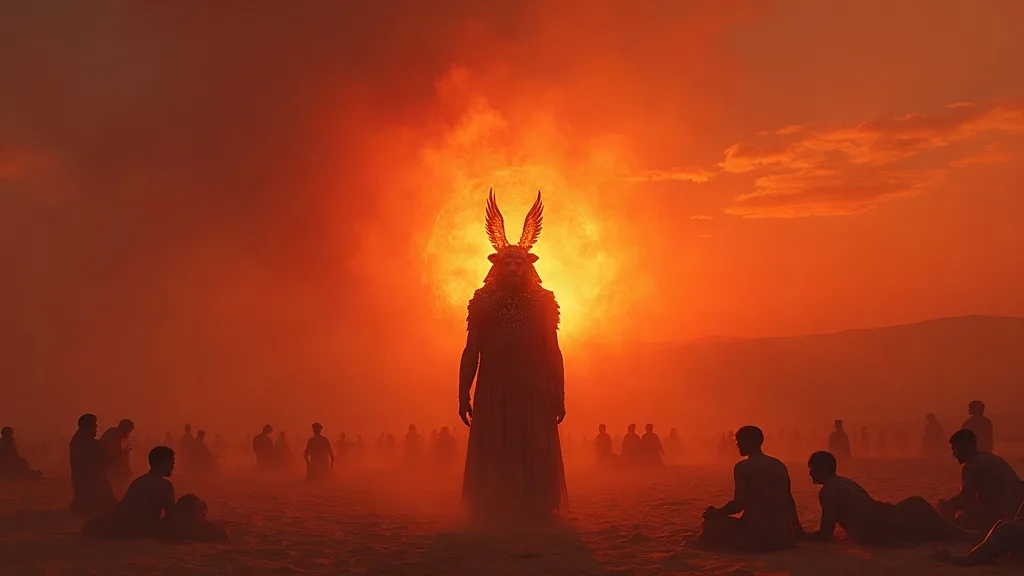
In the tomb of Thutmose III, carved into the hidden chambers of the Valley of the Kings, a story surfaces that Egyptian priests whispered only in sacred precincts. Ra, the sun god, grew old. He gazed upon the earth and saw humans plotting rebellion, mocking his authority, forgetting the divinity that had shaped them. His anger swelled. He summoned Sekhmet, the lioness goddess of plague and divine wrath, and sent her to destroy mankind. What follows is not a quick death; it is a myth of drowning in blood, of divine power unleashed without mercy, and of the terrifying fragility of human life in a cosmos ruled by capricious gods.
This is the destruction of mankind myth: a narrative that appears across the ancient world, from the Nile to Mesopotamia, from the Norse north to Mesoamerican jungles. In every version, humans are erased not by accident but by divine will. The stories shift, the gods change, the weapons vary. Yet the fundamental tension remains constant: Why would creators destroy their own creation? What provokes a god to annihilate the species they made? And can the end ever be prevented, or is apocalypse written into the cosmic code?
The Egyptian Cataclysm: When Ra Sent Sekhmet
The oldest written account of mankind's destruction comes not from prophecy but from memory. The Egyptians, who ruled the Nile for three thousand years, carved their myths into stone as if recording historical fact. In the Temple of Dendera, in the Second Pylon of Edfu, and across the papyri of the Book of the Cow of Heaven, a narrative emerges: Ra grew weary. His reign had lasted eons. Humans, ungrateful and corrupt, whispered against him.
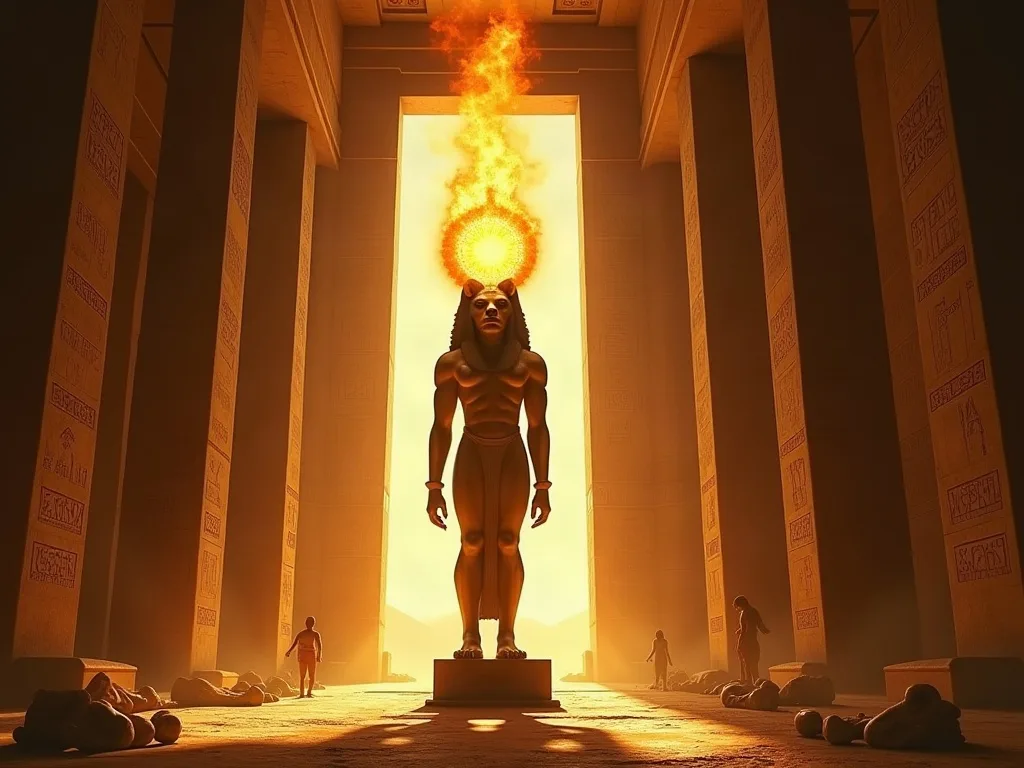
Ra made a choice. He sent his daughter Sekhmet, the Eye of Ra, a goddess both beautiful and terrible. Sekhmet had the face of a lioness and the body of a woman. She wore the solar disk crowned with the uraeus serpent, symbol of royal power and divine wrath. When Ra commanded her to punish mankind, Sekhmet did not hesitate. She descended to earth and began to slaughter.
The Egyptians described her work with brutal poetry. In the Papyrus Harris, preserved in the British Museum, scribes wrote that Sekhmet drank human blood like wine, that her footsteps turned the ground red, that humans tried to flee but she outran them across the desert. The destruction was so thorough, so absolute, that Ra himself grew horrified. He had wanted punishment, not annihilation. He had wanted submission, not extinction.
To stop her, Ra devised a trick. He commanded servants to brew a beverage of blood, pomegranate juice, and beer; they flooded the fields where Sekhmet hunted. The goddess, parched from slaughter, drank deeply, became intoxicated, and fell asleep. When she woke, her bloodlust had faded. Mankind was saved, though decimated.

This myth appears in multiple versions across Egyptian texts, each adding layers. In some versions, Hathor, goddess of love and fertility, takes Sekhmet's place as the destroyer; in others, Sekhmet returns every year to bring plague and must be appeased with festival. The Festival of Sekhmet, celebrated annually in the month of Thoth, commemorated both the near-extinction and the salvation. Priests would offer prayers and sacred beer to keep the goddess calm. The message was clear: humanity existed only because the gods permitted it. At any moment, that permission could be revoked.
Why Ra Commanded Destruction
The Egyptian worldview was one of cosmic order, called maat, which meant truth, justice, balance, and harmony. Ra maintained maat by traveling through the sky each day, defeating chaos in the form of the serpent Apophis (also written Apep), who tried to prevent the sunrise and plunge the world into eternal darkness.
Humans were created to serve the gods and maintain maat through ritual and obedience. When they rebelled, mocked Ra, or strayed from cosmic law, they became agents of chaos. Destruction was not cruelty; it was correction. The goddess Maat herself, daughter of Ra, stood on the scales of judgment after death; only those whose hearts balanced against her feather of truth could enter the afterlife. Those whose hearts were heavier, weighed down by sin, were devoured by Ammit, the devourer of the dead.
The destruction myth was thus an extension of maat itself. Ra was not angry in a human sense; he was restoring order. That humans suffered was irrelevant. They were dust. Only the cycle mattered.
The Role of Sekhmet in Egyptian Worship
Sekhmet occupied a unique place in Egyptian religion. She was feared and revered in equal measure. Priests called her "she who is powerful," "lady of slaughter," "eye of Ra." She was also a healer; the same power that brought plague could cure it. Physicians in ancient Egypt were sometimes called "priests of Sekhmet," and medical papyri were associated with her domain.
Temples dedicated to Sekhmet rose across Egypt. At Memphis, her sanctuary stood beside that of Ptah, the creator god, and she was known as the mother of Nefertum, god of the lotus and renewal. On her feast day, statues of Sekhmet were carried through the streets, and the people would make offerings and pray for protection from the very goddess they were honoring.
The irony was intentional. By acknowledging Sekhmet's power and appeasing her, Egyptians believed they could prevent her wrath. The myth was not abstract theology; it was survival strategy written into liturgy.
The Flood Myth: Mesopotamian and Hebrew Echoes
While the Egyptians imagined destruction as plague and violence, the Mesopotamians and Hebrews envisioned it as water. In the Epic of Atrahasis, one of the oldest written myths (dating to the 18th century BCE), the gods grow angry at human noise. Humans multiply and their clamor disturbs divine sleep. Enlil, king of the gods, decides they must be destroyed. He brings plague, famine, and drought. Yet each time, the wise man Atrahasis finds a way to protect his people through prayer and sacrifice.
Frustrated, Enlil persuades the other gods to send a great flood. Enki, god of wisdom, warns Atrahasis in a dream. The man builds a ship, gathers his family and animals, and survives. When the waters recede, Enlil is furious to find a remnant alive. But Enki argues that total extinction serves no purpose; the gods need human beings to make offerings and maintain their temples. A compromise is reached: humanity will continue, but death will be their burden to bear.
The parallel to the Hebrew flood in Genesis is striking. There, too, humans corrupt the earth through violence and sin. Yahweh commands Noah to build an ark. The waters rise for forty days and forty nights. Every living thing that breathes air dies, except those in the ark. The covenant is reestablished, and humanity begins again.
Both myths share a structure: rebellion or corruption, divine punishment, survival through a chosen vessel, and renewal. But they differ in crucial ways. The Mesopotamian flood is presented as a mistake, a miscalculation by quarrelsome gods. The Hebrew flood is moral judgment, carried out by a single, omnipotent God who is grieved by human sin. The Egyptian destruction under Sekhmet is neither accident nor moral correction; it is restoration of cosmic order.
The Norse Fimbulwinter: Apocalypse at the World's End
Not all mythologies imagined the destruction of mankind as divine punishment during an otherwise stable cosmic age. The Norse peoples of Scandinavia imagined it as the culmination of time itself.
In the Poetic Edda, a collection of Old Norse poems preserved in a 13th-century manuscript, the völva (seeress) describes the end of the nine worlds. The poem is called the Voluspa, and it begins with creation and ends with Ragnarok, the fate of the powers, often translated as the twilight of the gods.
Ragnarok arrives in stages. First comes the Fimbulwinter, a winter lasting three years with no summer. Snow falls from all directions. The wind grows cruel. The sun offers no heat. Brother betrays brother. Fathers and sons clash. All bonds of kinship snap. The great wolf Fenrir, bound since the beginning of time with a magical ribbon, breaks free and devours the sun. The serpent Jormungandr, which encircles the world in the ocean, writhes so violently that the sea overflows the land. Stars vanish from the sky.
The world tree Yggdrasil trembles. Mountains crumble. The rainbow bridge Bifrost shatters. The fire giant Surtr crosses the broken bridge and engages Heimdall, god of boundaries and watchfulness. Odin is devoured by Fenrir. Thor, god of thunder, kills Jormungandr but is poisoned by its venom and dies. Heimdall and Loki kill each other.
Crucially, this is not punishment. It is not punishment because the Norse did not imagine a creator god separate from the cosmos who could choose to destroy it. Rather, Ragnarok is inevitable, written into the nature of the nine worlds themselves. The gods know it will happen. They feast at Valhalla, the hall of the slain, not in defiance but in acceptance.

Yet Ragnarok is not the final word. The Voluspa continues. The earth rises again from the sea. Green fields return. A new sun is born. Two humans survive, hidden in Yggdrasil: Ask and Embla. They emerge to repopulate the world. Heimdall and Modi (Thor's son, who inherits his father's hammer) survive and dwell in a new hall. A new god, Baldr (who was killed long before Ragnarok), returns from Hel, the realm of the dead, to rule in a restored cosmos.
The Norse destruction myth is thus cyclical, not apocalyptic. The cycle is inevitable, but renewal is guaranteed. There is resignation in the Norse vision, but also a strange peace. The gods do not rail against fate; they accept it.
Mesoamerican Apocalypse: The Popol Vuh's Failed Creations
The K'iche' Maya and other Mesoamerican peoples possessed a radically different model: multiple creations and destructions. In the Popol Vuh, a sacred text transcribed into Latin script by K'iche' Maya and Spanish friars in the 16th century, the gods create the world not once but several times, destroying each failed attempt.
The first creation involved creation from mere thought and word by the gods Ixmucane and Ixpiyacoc, the grandmother and grandfather. They created animals first. But the animals could not speak or honor the gods. So the gods destroyed this creation.
The gods tried again. This time they created humans from mud. But mud humans dissolved in water. They tried again with wood. These wooden humans looked human but lacked hearts, minds, and blood. They performed no rituals, showed no devotion. The gods sent a great flood to destroy them.
On the third attempt, the gods shaped humans from maize dough. These beings could speak, move, see, and think. They multiplied and populated the earth. But they were too perfect, too knowing. They could see to the edge of the horizon, understand all things. This knowledge made them dangerous, too close to divine. The gods took some of their knowledge away, clouded their vision, and reduced their lifespan.
What is striking is the transactional nature of Mesoamerican destruction. Creation is not an act of love or moral design. It is an experiment. Humans are not destroyed for rebellion but for unsuitability; they are revised like a text until the gods achieve the balance they want: beings who can work, sacrifice, and speak, but not so powerful as to rival the gods themselves.
The Common Structure: Why Destruction?
Across these mythologies, certain patterns emerge. First, humanity is expendable. In no version is mankind's destruction presented as a tragedy that the gods must reluctantly accept. Even the Norse, who accept Ragnarok as inevitable, do not mourn human extinction the way they mourn the death of Baldr or the fate of Odin. Humans exist because they serve a purpose: labor, sacrifice, ritual. When they fail in that purpose, they can be unmade.
Second, destruction is justified. It is never arbitrary cruelty. Ra acts to restore maat. Yahweh acts because humans have corrupted the earth. Enlil acts because humans disturb divine rest. The gods have reasons, even if those reasons would seem harsh by modern ethics. The myths embed a message: the cosmos operates on rules, and those who break the rules face consequences.
Third, survival is possible through a savior figure. Noah in Genesis, Atrahasis in Mesopotamia, Ask and Embla in Norse myth, the maize humans in the Popol Vuh: each tale includes a remnant who survives. This remnant is often chosen or protected by a sympathetic god (Enki favors Atrahasis, Yahweh chooses Noah, Yggdrasil protects Ask and Embla). The message is ambiguous: there is hope, but only for the few. Most perish.
Sekhmet, Maat, and the Cosmic Balance
To understand the Egyptian version more deeply, one must grasp the relationship between Sekhmet and Maat. Both were daughters of Ra, but they represented opposite forces. Maat was order, harmony, justice. Sekhmet was chaos, disease, divine wrath. Yet both were necessary.
Maat was not a fixed state; it had to be maintained constantly. Every day, Ra battled Apophis to ensure the sun would rise. Every night, the forces of chaos gathered at the edges of creation. Sekhmet's violence was not the opposite of Maat; it was Maat's enforcer. When humans or gods stepped outside the proper order, Sekhmet punished them. In this way, cosmic balance was restored.
The Egyptians understood destruction not as punishment in the moral sense but as restoration. A crop that fails is destroyed so the field can lie fallow and become fertile again. A person who does not fit society is removed so the community can function. A god who grows old is replaced so the cycle continues. Death and destruction were not evils to be avoided; they were phases of an eternal cycle.
This explains why Sekhmet was both feared and venerated. In her aspect as Hathor, she was goddess of beauty, music, and love. In her aspect as Sekhmet, she was disease and slaughter. The Egyptians did not see these as contradictory. The same power that brought life could bring death. The same divine force that healed could kill. Duality was not a flaw in the cosmic design; it was the design itself.
The Festival of Sekhmet and Divine Appeasement
The ancient Egyptians celebrated the Festival of Sekhmet with particular intensity. In the month of Thoth (corresponding roughly to September), priests would gather at her temples. They would make offerings of sacred beer, honey, and flowers. Singers and dancers would perform to distract the goddess, to keep her pleasure focused on celebration rather than slaughter.
This was not mere superstition. It was a practical acknowledgment of divine power. The Egyptians believed that ritual, performed with precision and sincerity, could influence the gods. If Sekhmet was honored properly, she would withhold her plague. If she was neglected, she would strike. The festival was thus an annual renewal of the covenant between human and divine: we acknowledge your power; in exchange, spare us.
Similar festivals existed for other destructive deities. Sobek, the crocodile god, was both feared as a predator and revered as a protector of the Nile. Taweret, the hippopotamus goddess, brought death to those who challenged her, but protected women in childbirth. The Egyptians did not expect their gods to be kind; they expected them to be powerful and just.
Cross-Cultural Patterns: Water, Fire, and Divine Anger
Despite their different mythological frameworks, destruction myths across cultures reveal recurring patterns in how destruction is enacted. Water appears frequently: the Hebrew flood, the Mesopotamian deluge, the Popol Vuh's second creation destroyed by water. Water is universal, unstoppable, and purifying. It washes away the old world and allows the new to emerge.
Fire appears in Norse mythology as Surtr's assault and in Hindu mythology (the Mahabharata describes a fire that will consume all worlds at the end of time). Fire is more violent than water; it consumes rather than merely displaces. It suggests anger, passion, the white heat of divine wrath.
Plague and disease appear in the Egyptian myth and in Mesopotamian versions. These are intimate deaths, affecting individuals and families, creating a sense of personal vulnerability. A plague does not announce itself; it creeps through the population in silence.
Cosmic disorder appears most explicitly in Norse mythology: the sun devoured, the stars vanishing, the boundaries between worlds collapsing. This is not just destruction of humanity but collapse of the very framework that makes existence possible.
In every case, the method of destruction is proportional to the divine being who carries it out. Ra, a god of order, sends plague (a form of natural law breaking down). Enlil, a god of wind and breath, sends flood (the breath of life itself, inverted). Yahweh, an omnipotent creator, sends universal flood (a reset). The Norse gods, who exist within the cosmos rather than above it, experience destruction as cosmic transformation.
Survival, Sacrifice, and the Future
What is remarkable about these myths is not the destruction itself but the assumption of survival. In nearly every case, some humans endure. They are saved not by their own strength or virtue but by divine choice, divine whim, or sometimes divine error.
Noah is chosen by Yahweh for reasons the text does not fully explain. Atrahasis survives because Enki, a sympathetic god, warns him. Ask and Embla survive because they hide in Yggdrasil, and the world tree itself offers shelter. The maize humans survive because they are the third attempt, finally acceptable to the gods.
The pattern suggests a worldview in which extinction is always possible but never final. The cosmos is resilient. Creation can be unmade and remade. Humanity can be wiped out and repopulated. This is not a comforting vision, but it is not entirely hopeless either.
Moreover, in several traditions, human sacrifice is woven into the prevention of apocalypse. In Mesoamerican religions, humans were sacrificed on pyramids because the Aztecs believed the sun god needed blood to defeat the forces of darkness each night. If sacrifices were not made, they believed, the sun would not rise. Apocalypse would come not as an external catastrophe but as the failure to maintain the cosmic cycle.
The message embedded in these myths is this: humans are not masters of the cosmos. They are not even guests. They are servants, and their existence is contingent on fulfilling their duty. The destruction myth is thus both a warning and a command: obey the gods, maintain the rituals, make the sacrifices, and you will be permitted to continue. Fail, and you will join the masses of the destroyed.
Scholarly Debates: Myth as Moral Teaching or Cosmic Fact
Scholars of comparative mythology have long debated whether destruction myths are moral teachings or cosmological accounts. Did the ancient Egyptians believe that Sekhmet had literally destroyed a previous humanity, or did they use the myth to teach about the consequences of sin and chaos?
The evidence is mixed. Egyptian texts treat the destruction myth as if it were historical, written in the same register as accounts of pharaohs and conquests. Yet they also frame it as timeless, as something that happened and could happen again, embedded in the structure of reality itself.
Modern scholars like Mircea Eliade argued that myths operate on a different plane than history. They describe the eternal patterns underlying reality, not specific events. By this reading, the destruction of mankind is not about a past extinction but about the eternal vulnerability of order to chaos, the constant threat that creation faces.
Others, like Wendy Doniger, note that mythology serves multiple functions simultaneously. A myth can be cosmological (explaining how the world works), moral (teaching proper behavior), and psychological (expressing internal conflicts and anxieties). The destruction myth does all three: it explains cosmic cycles, it teaches the consequences of stepping outside cosmic order, and it expresses the human anxiety of insignificance in an indifferent universe.
What seems clear is that these myths were not casual stories told for entertainment. They were embedded in ritual, recited in temples, carved into tombs, and transmitted across centuries. The societies that preserved them believed them to express fundamental truths about existence.
The Absence of Guilt: Divine Power Beyond Morality
One detail stands out across these myths: the gods rarely experience guilt or remorse after destruction. Ra regrets the extent of the slaughter and stops Sekhmet, but he does not regret the decision to punish humanity. Yahweh grieves over human sin, but not over his decision to wipe them out; he regrets only that sin exists. The Norse gods accept Ragnarok as inevitable, without anguish.
This stands in sharp contrast to the modern Western imagination, where apocalypse is often presented as tragedy, as something to be mourned and prevented. Contemporary climate fiction and science fiction apocalypses are told from the perspective of the humans destroyed, and they emphasize pathos and loss.
Ancient destruction myths reverse this perspective. They are told from the divine point of view. Destruction is not tragedy; it is correction, reset, restoration. The emotional register is cool, matter-of-fact, even impersonal.
This reflects a fundamental difference in how ancient peoples understood divine morality. Modern monotheistic religions have emphasized God's love, mercy, and grace. Ancient polytheisms emphasized divine power, capriciousness, and the vast distance between gods and humans. A god did not have to justify destruction to humans any more than a farmer has to justify plowing a field to the insects that live in it.
Yet this does not mean the ancients saw the cosmos as purely arbitrary. Order existed. Rules existed. If humans kept the rules and honored the gods through ritual and sacrifice, they would be protected. Destruction was reserved for those who broke the rules or corrupted the cosmic balance.
Echoes in Modern Culture and Religion
The destruction myths have not disappeared with the ancient religions that birthed them. They persist in modern culture, sometimes explicitly, often implicitly. Biblical apocalyptic literature, especially the Book of Revelation, draws heavily on earlier destruction myths. The Four Horsemen of the Apocalypse evoke the multiple methods of destruction seen in earlier texts: conquest, war, famine, and death. The final judgment echoes the Egyptian weighing of the heart before Ammit and Maat.
In contemporary fiction and cinema, apocalyptic narratives are ubiquitous. Yet they have been psychologized and democratized. Modern apocalypses are often brought about by human action (nuclear war, climate change, pandemic) rather than divine will. And they are presented from the perspective of humans trying to survive, not gods justifying their actions. This reflects modern values: human agency, human perspective, moral concern for human suffering.
Yet the underlying structure persists. In modern apocalyptic narratives, there is often a chosen remnant who survives (the survivors of The Walking Dead, the crew of the last starship in Battlestar Galactica, the people in the bunker in The Road). There is often a sense that the old world was corrupt and had to be destroyed. And there is often a question of whether the survivors deserve to repopulate the earth or whether they too will repeat the sins of their predecessors.
Religious communities have also grappled with destruction myths. Some Christian theologians have tried to harmonize the wrathful God of the Old Testament with the loving God of the New Testament by arguing that destruction was always for a redemptive purpose, to clear away sin and allow grace to flourish. Some Jewish interpretations of the flood myth emphasize that even though Yahweh destroys, he also rescues and renews, teaching a lesson about divine mercy even in judgment.
Scholars of Hinduism note that destruction myths in the Mahabharata and Puranas (ancient Hindu texts) serve to emphasize the impermanence of all things and the inevitability of cosmic cycles. This aligns with Buddhist and Hindu philosophy: nothing is permanent, all worlds arise and pass away, and this is not a tragedy but the nature of reality.
Frequently Asked Questions About the Destruction of Mankind Myth
Frequently asked questions
Did ancient Egyptians really believe Sekhmet had destroyed humanity in the past?
Egyptian texts suggest they treated the myth as cosmologically true: Sekhmet's destruction of mankind was part of the eternal cycle of cosmic order and chaos. Whether they believed it had happened literally in historical time is unclear. More likely, they understood it as expressing a timeless truth: that humanity exists in a precarious balance, maintained by divine will, and that chaos lurks always at the edges of creation, held back only by divine power.
Why do so many ancient mythologies feature the destruction of mankind?
Destruction myths reflect the human experience of vulnerability and contingency. Ancient societies faced plague, famine, war, and natural disaster with no scientific explanation. These events felt arbitrary, overwhelming, beyond control. Destruction myths rationalize this experience: catastrophe is not accident but divine judgment or cosmic law. The myth provides a framework for understanding why suffering happens and what role humans play in a cosmos larger and more powerful than themselves.
Is the Norse Ragnarok a destruction myth or an apocalypse myth?
It is both, but with a crucial difference. Ragnarok is an apocalypse (the end of all things) but not a destruction in the sense of divine judgment. The gods do not choose Ragnarok to punish humans; it happens because the cosmos is built to run through cycles. Humans are destroyed incidentally, caught in the collapse of reality itself. Afterward, the world renews. This cyclical vision contrasts with linear apocalypses (like the Biblical end times), where the final destruction is permanent unless redeemed by divine grace.
Do modern religions still accept destruction myths as true?
Christian, Jewish, and Muslim traditions continue to engage with Biblical destruction accounts (the flood, the plagues of Egypt) and apocalyptic prophesies (Revelation, the Quran's descriptions of the Day of Judgment). How they interpret these as literal versus metaphorical varies widely among believers and scholars. Hindu and Buddhist traditions, which include cyclical time, still affirm that worlds arise and pass away according to cosmic law. For most modern practitioners, the mythology functions as moral and spiritual teaching rather than literal prophecy.
Why are survivors chosen in these myths? Is there a pattern to who survives?
Survivors are typically chosen by sympathetic gods (Enki protects Atrahasis, Yahweh chooses Noah, Yggdrasil shelters Ask and Embla). The selection does not depend on moral superiority of the survivors; rather, it depends on divine favor. This reflects an ancient understanding of grace as undeserved privilege. The myth teaches that survival is not earned but given. Those who survive have a duty to repopulate and maintain proper order; they are trustees of a second chance, not heroes of their own story.
Are there ancient mythologies without a destruction myth?
Some traditions (particularly pre-literate African religions, many Indigenous Australian and American mythologies) preserve creation myths without corresponding destruction myths. Others emphasize renewal over destruction. However, among the major written mythologies (Egyptian, Mesopotamian, Hindu, Norse, Mesoamerican, Abrahamic), destruction myths are nearly universal. This suggests that settled, complex societies came to see apocalypse as a conceptual necessity: if the world was created, it can also be unmade. Cyclical or continuous creation does not require destruction.
The Persistence of Divine Judgment in a Modern Age
The destruction myths have outlasted the societies that created them by millennia. This persistence suggests they address something deeper than local anxiety or cultural peculiarity. They seem to articulate a fundamental human intuition: that order is fragile, that we live by permission rather than right, and that the forces that made us can unmake us.
In a secular age, these themes have been translated into new registers. Climate catastrophe plays the role that plague and flood once did: an external force indifferent to human intention, capable of erasing civilization. Artificial intelligence assumes the role once occupied by capricious gods: a power we create but cannot fully control, which might one day turn against us. The impulse to ask "why would the cosmos destroy us?" has been reframed as "why would the systems we built destroy us?"
The destruction myths, in other words, did not teach ancient peoples that apocalypse was likely. Rather, they taught that vulnerability is the human condition. To exist is to depend on forces larger than oneself. To be created is to face the possibility of being unmade. And yet, the myths also taught that survival is possible, that renewal follows destruction, and that the cosmos, however indifferent, continues to turn.
This vision is neither optimistic nor pessimistic; it is tragic in the classical sense. It accepts human limitation while preserving the possibility of meaning through duty, through ritual, through the maintenance of order in the face of chaos. The gods destroy, but they also renew. Humanity perishes, but somehow continues. The cosmos operates by laws we do not make and cannot break, yet we are bound to try.
In studying these myths, we study not ancient ignorance but ancient wisdom about a condition that remains true: we are not masters of the cosmos; we are part of it. And like all parts of the cosmos, we are subject to forces that may, at any moment, transform or unmake us. This knowledge, far from being paralyzing, can be liberating. If our existence is not guaranteed, then it is precious. If destruction is possible, then preservation requires constant effort. The myths teach us to build, to remember, to honor the forces that sustain us, and to understand that the world we inhabit is maintained only through the ongoing work of maintaining it.
Free 25-page sample
Want the whole story?
Take the first 25 pages free. If it pulls you in, the full edition is yours as an instant PDF download, with a paperback on Amazon for selected titles.

Mythology
The World Mythology Book: The Gods, Heroes and Myths of Every Culture
The Gods, Heroes and Myths of Every Culture, in One Volume
The whole of world mythology in a single volume: Greek, Norse, Egyptian, Japanese, Hindu, Celtic, Slavic, Mesoamerican and African myths gathered side by side, each drawn from the primary sources.