
Kappa: The River Child of Japanese Folklore and Shinto Tradition
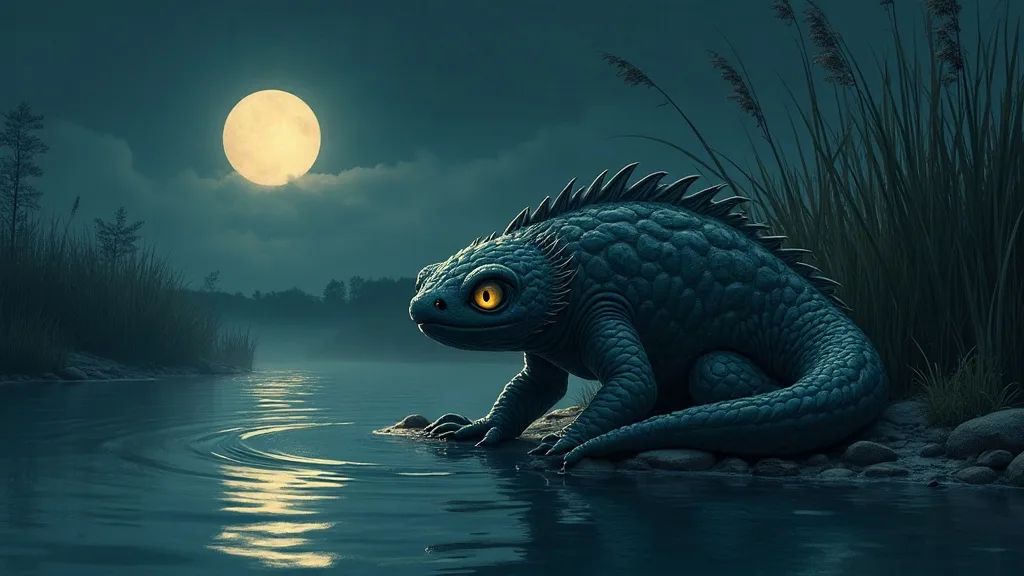
Meet the kappa, a mischievous water spirit with a shell-like back and a water-filled cavity on its head. Rooted in Shinto sacred waters and rural Japanese folklore, the kappa shape-shifts between trickster demon and tragic outsider in stories that have captivated writers and filmmakers for centuries.
Contents
A boy wades into a river on a hot summer day. The water is calm, almost too calm. His mother called him back to shore, but the current looks gentle. He steps deeper. Then his legs slide out from under him, and a webbed hand, cold as stone, pulls him down.
This is the world of the kappa, the river child that haunts the Japanese imagination. Not quite demon, not quite god, the kappa lives in the boundary between the human and the wild. It drowns swimmers, wrestles travelers, steals rice, and yet sometimes teaches humans its secret gifts. For over a thousand years, the kappa has appeared in Buddhist scrolls, woodblock prints, Edo-period guidebooks, and modern anime. It remains one of the most recognizable yokai, the spirit realm's trickster, teacher, and warning all rolled into one.
The kappa exists in the gap between Shinto and folklore. It emerges from the sacred rivers and wetlands that Shinto tradition teaches are inhabited by kami, divine spirits. But unlike the grand celestial kami of the Kojiki (a Japanese historical chronicle written around 712 CE), the kappa is earthy, local, grounded in the specific river valley or pond where farmers and fishermen encounter it. It is a creature of the everyday sacred.
Where the Kappa Comes From: Origins in Water Worship and Shinto
The kappa's origins tangle Shinto cosmology with rural animism. In classical Shinto belief, every natural body of water has kami. Rivers, ponds, and springs are gateways to the spirit world. The mizu no kami, or water kami, govern fertility, renewal, and danger. They can bless crops or drown the unwary.
The word "kappa" itself carries this dual nature. Early texts refer to the creature as kawa-waro (river child) or kawatarō (river boy). "Kawa" means river; "waro" or "tarō" suggest a child or youth. Some scholars link the name to kappa, a word that originally described a raincoat or cape, perhaps referencing the shell-like back the creature is said to carry. Over centuries, the name crystallized into "kappa."
The oldest written records appear in the Kojiki and the Nihon Shoki (Chronicles of Japan, 720 CE), though they do not name the kappa explicitly. Instead, they describe water demons and river spirits that behave much like the kappa: they pull swimmers under, demand tribute, and inhabit liminal spaces where human water meets untamed wilderness. One Nihon Shoki passage tells of a supernatural creature that emerges from a river and challenges a prince to a contest of strength, vanishing if defeated. This proto-kappa image repeats across Japanese regions for centuries.
By the Heian period (794-1185), the kappa had taken clearer shape in Buddhist and court literature. The Konjaku Monogatarizhu, an 11th-century anthology of Buddhist tales, includes stories of water demons that sound unmistakably like kappas: small, humanoid, dwelling in rivers, prone to mischief and malice. They eat human flesh and steal children. They are not gods but threats, beings that lurk in the spaces where human order dissolves into wilderness.
The transition from Shinto water kami to folklore demon is gradual and deliberate. As Buddhism spread through Japan, it reinterpreted local spirits. Native kami were welcomed into Buddhist cosmology as protectors or, conversely, as demons requiring spiritual containment. The kappa moved between these roles. Sometimes it was a corrupted kami, a water spirit fallen into vice. Sometimes it was simply a creature born from the untamed essence of rivers themselves.

The Anatomy of Mischief: What a Kappa Looks Like and How It Behaves
Any Japanese child who grew up hearing kappa stories could paint the portrait. The kappa is small, roughly human-sized but compacter, with the limbs of a child or young adolescent. Its skin ranges from green to yellow to brown, depending on the region telling the tale. Some accounts describe it as hairless and smooth; others give it rough, scaly skin like a frog or turtle.
The most distinctive feature is the shell. The kappa carries a hard carapace on its back, not attached to its body but worn like armor. This shell is said to be impenetrable to most weapons. The back of the skull has a depression, a smooth hollow or pool that holds water. This cavity is the source of the kappa's strength and life. If the water spills, the kappa becomes weak, almost human, vulnerable. This detail is so central to kappa lore that every storyteller, every traveler's tale, every protective charm hinges on it.
The kappa's face is often described as reptilian but not quite monstrous. Early woodblock prints show it with bulging eyes, a protruding snout, and a mouth that stretches too wide. Yet the expression is often playful rather than purely evil. It has a personality. It laughs. It speaks. It negotiates.
The kappa's hands and feet are webbed. This is not incidental; it speaks to its nature as a being of the water-land boundary. It walks on shore but is most powerful in the current. Some accounts describe it as having a short tail; others omit this detail. Regional variations abound. The kappa of the Kino River is described differently from the kappa of the Tone River. Local rivers, local spirits.
The kappa's behavior follows clear patterns in folklore. First and foremost, it is a drowner. It pulls swimmers, often children, beneath the surface. It is drawn to the vigorous young, those confident in the water. The kappa waits in deep pools, in dark currents, under the shade of riverbank trees. Second, the kappa is a thief. It steals rice, sake, and vegetables from villagers. It pilfers small treasures from houses near the riverbank. Third, the kappa is a wrestler. It challenges humans to contests of strength, seemingly for sport. The kappa never fights to kill in these contests; it wants dominance, acknowledgment, respect. Fourth, the kappa is playfully obscene. It exposes itself, defecates in public places, and plays pranks of a sexual nature. This last trait appears consistently in Edo-period accounts and remains a hallmark of kappa humor in Japanese culture.
Yet the kappa is not purely malevolent. It is capable of gratitude, of bargaining, of learning. In some stories, a kappa befriends a human after being helped or impressed. It shares knowledge of medicine or metalwork. It warns a village of danger. It honors agreements struck with humans. This capacity for relationship is what makes the kappa dangerous and fascinating in equal measure. It is not an enemy to be destroyed but a neighbor to be managed, respected, appeased, and occasionally trusted.
The Water-Hollow Weakness: Kappa Apotropaism and Protective Rituals
Every tale of a kappa ends with the question of how to survive it. The folklore surrounding kappa defense is elaborate and reflects centuries of accumulated strategies.
The primary weakness is water loss. The hollow on the kappa's head must stay filled. If a human can trick a kappa into bowing deeply, water spills from the cavity. The kappa becomes temporarily paralyzed or weakened. This is the doorway to escape or victory. In some stories, a quick-thinking person challenges the kappa to a deep bow as a gesture of respect, and when the kappa obliges, the water spills and the human flees. In others, a person might deliberately provoke the kappa into an aggressive posture where the hollow tips and empties. Once the water is gone, the kappa loses its supernatural strength. It becomes almost pitiful, increasingly human.
Cucumber is sacred to the kappa. The folklore is consistent: if you leave a cucumber or a cucumber offering near water, the kappa will eat it and leave you alone. Some accounts say the kappa finds the vegetable irresistible; others say it is a respectful offering that satisfies the spirit. This belief is so widespread that Japanese families have historically placed cucumbers in a saucer of water at the river's edge as a placating gesture. The Shinto shrine practice of making offerings to water kami connects directly to this folklore. The cucumber becomes a currency of negotiation between human and spirit.
Sake works similarly. A kappa offered fine rice wine may be so enchanted by the gift that it forgets its mischief. Some stories describe kappas becoming drunk and useless after drinking, passed out by the riverbank. This transforms the kappa from predator to vulnerable creature, subject to human capture or mercy.
Certain places are said to be kappa-proof. Homes with salt or iron placed near doors are protected. Iron is particularly potent; the kappa is said to fear it the way European folklore describes faeries fearing cold iron. Salt, a purifying agent in Shinto ritual, repels water spirits. Some villages built their wells and water-drawing spots away from deep, still water, preferring fast-moving currents where the kappa had less power.
Names carry power. If you learn a kappa's true name, you gain dominion over it. This is a Japanese magical principle applied to yokai: to name is to control. Several kappa tales hinge on a human discovering the creature's true name and using it to banish or bind the spirit.
The most elaborate form of kappa defense is ritual. In Shinto tradition, priests would perform rites to pacify a dangerous water kami. A kappa troubling a village might be formally fed, given respect, and invited into the protective umbrella of local shrine guardianship. By treating the kappa as a legitimate inhabitant of the landscape rather than a pure evil, communities could shift from predator-prey dynamics to coexistence.

Kappa Encounters: Famous Stories and Regional Variations
The written record of kappa encounters stretches back over a millennium. Each region of Japan developed its own kappa stories, color, and behavior.
The Kino River, which runs through modern-day Wakayama Prefecture, is famous for its aggressive kappas. One legend tells of a kappa that challenged a samurai to a wrestling match. The samurai, confident, accepted. The kappa's strength was inhuman; the samurai realized mid-struggle that he was locked in combat with something far more than human. He managed to break free, later discovering that he had been fighting a kappa, not a human opponent. The story becomes a lesson: the world contains more than our eyes perceive.
The Tone River, one of Japan's longest, has a reputation for drowning accidents attributed to kappas. Edo-period travelers' guides (karuta and otogizoshi, popular woodblock print series) repeatedly warn visitors about the Tone River's dangers. The guides describe the kappa as the likely culprit in unexplained drownings. This folklore served a practical purpose: it explained accidents and reinforced water safety lessons.
In the Kumano region, kappas are sometimes depicted as less dangerous, more pitiful creatures. One story describes a kappa that became pregnant and sought help from a midwife. The woman, frightened but compassionate, assisted in the delivery. The kappa, grateful, promised the woman's family protection forever. This tale humanizes the kappa; it can feel pain, fear, gratitude. It shifts the kappa from monster to neighbor.
The Fushimi Inari shrine region near Kyoto has stories of kappas dwelling in conjunction with the inari foxes (kitsune), another celebrated yokai. In these tales, the kappa and kitsune coexist in the same landscape of sacred water and shrine, each with its own territory and role. The kappa controls the water; the kitsune controls the land. This regional layering reflects the complexity of Japanese spirit ecology.
One famous Edo-period account, recorded in Gazu Hyakki Yagyo (a collection of illustrative yokai catalogs from the 17th and 18th centuries), describes a kappa that repeatedly stole women's sandals from near a river. The thefts became so constant that villagers set an elaborate trap, capturing the kappa and bargaining for its promise to stop. The kappa agreed, apparently amused by the whole affair. This story reflects the folklore's recognition that kappas are intelligent, capable of humor, and willing to negotiate.
The gender dynamics of kappa stories are complex. Most kappas are depicted as male, often in tales involving young people or pranks of a sexual nature. However, some accounts describe female kappas, sometimes referred to as hime-kappa (princess kappas). These are occasionally portrayed as more dangerous or alluring, using charm rather than brute force. The folklore reflects anxieties about water, fertility, seduction, and the uncontrollable forces of nature.
The Kappa in Buddhist Cosmology and the Spirit Hierarchy
When Buddhism arrived in Japan and gradually merged with Shinto practices, the kappa had to fit somewhere in the new religious order. The result was complex and sometimes contradictory.
In Buddhist texts and temple art, the kappa was sometimes classified as a yama or yaksha, terms borrowed from Hindu-Buddhist cosmology referring to supernatural beings that could be virtuous or vicious. This placed the kappa in a hierarchy below the celestial devas (gods) but above purely material creatures. The kappa was a being with agency and potential for growth or corruption.
Some Buddhist temples sought to convert or contain kappas through ritual. Priests would perform ceremonies designed to remind the kappa of the Buddhist law of karma and consequence. If a kappa continued to harm humans, it was believed to accumulate karmic debt that would result in rebirth in a lower realm. Conversely, if a kappa refrained from harm and even aided humans, it might achieve a better rebirth. This framing offered the kappa a path toward redemption, which was more merciful than pure demonization.
The concept of henge, or transformation, is central to how Buddhism interpreted yokai. A kappa could be understood not as a fixed demon but as a being capable of change. Under the right circumstances, with proper teaching and ritual, a kappa might transform into a more benevolent entity or might even achieve enlightenment. This belief reflects a broader Buddhist principle: all sentient beings have Buddha-nature and potential for salvation.
Kappa in Medieval and Edo-Period Art and Literature
The kappa became visually iconic during the Edo period (1603-1868), when woodblock printing made images widely available. The most famous kappa illustrations come from Toriyama Sekien's illustrated catalogs of yokai, particularly his Gazu Hyakki Yakushu (1786). Sekien's kappa is immediately recognizable: green-skinned, shell-backed, with a mischievous expression. His images defined the visual standard for the kappa for centuries to come and continue to influence how Japanese and international audiences imagine the creature.
Medieval Buddhist scrolls, particularly those depicting the six realms of rebirth, sometimes included kappas as examples of beings trapped in intermediate states, neither fully human nor fully divine. The kappa's appearance in these sacred texts legitimized it as a subject worthy of serious artistic and theological consideration.
In Edo-period popular literature, particularly in otogizoshi (illustrated storybooks) and kibyoshi (comic books), the kappa appeared frequently. These works were mass-produced and widely circulated among commoners. They served entertainment but also education: they warned against water danger, reinforced moral lessons, and codified folklore into shared cultural knowledge. The kappa became a star of popular culture long before film or animation existed.
Kappa warnings and apotropaic instructions were integrated into travel guides. The Meisho Zue (Illustrated Guides to Famous Places) included sections on local kappas, describing their habits, the best times they were active, and the safest practices for travelers. In this sense, the kappa crossed from folklore into practical information, treated with the same seriousness as terrain and weather warnings.
The Modern Kappa: From Folklore to Pop Culture and Cinema
In the 20th century, the kappa shifted from rural folklore into urban fantasy and popular media. As Japan industrialized and river-bathing became less common, the kappa moved from active threat to cultural memory to artistic subject.
The writer Akutagawa Ryūnosuke featured the kappa in his 1927 novella Kappa, a surreal work in which the protagonist encounters an entire kappa society in a subterranean river. Akutagawa's kappas are more humanlike, capable of conversation and philosophy. They debate their own nature and morality. The work is a philosophical exploration disguised as fantasy, examining what it means to be human or inhuman, rational or instinctive. This elevated the kappa from a folklore creature into a vehicle for literary and existential inquiry.
Anime and animation brought the kappa to global audiences. The kappa appears in Shinto-influenced stories and fantasy works throughout Japanese and international animation. It has become a recognizable icon of Japanese folklore, up there with the ninja and the samurai in the Western imagination.
Hayao Miyazaki's animation films draw on Shinto and folklore imagery. While no feature film centers solely on a kappa, kappa-like spirits appear in the background of Miyazaki's worlds, confirming the creature's role as a standard element of Japanese spirit ecology.
In contemporary manga, visual novels, and video games, the kappa appears as a yokai type: sometimes mischievous, sometimes fierce, sometimes romantic. The kappa has been transformed into a collectible creature in Japanese media franchises. It appears in Pokémon-style games, card games, and fantasy role-playing settings. The modern kappa is less a real danger and more an aesthetic, a reference point for "Japanese folklore," a marker of authenticity and cultural depth.
Tourism has also reshaped the kappa's meaning. River towns and villages throughout Japan have embraced the kappa as a cultural symbol. Statues and shrines dedicated to kappas attract tourists. Local restaurants serve "kappa rolls" (cucumber-filled sushi, obviously). The kappa has become a brand, a source of pride and economic activity for regions connected to historical kappa legends. This commercialization is a form of cultural preservation: the kappa remains alive in the collective imagination because it has utility in the present.
Kappa Across Regions: A Map of Variation and Local Identity
Japan's geography meant that each river valley had its own version of the kappa story. This regional variation is not a sign of corruption or confusion; it is a sign of the folklore's vitality. Each community shaped the kappa to fit its landscape and concerns.
The Kino River kappa is described as particularly fierce. The Tone River kappa is known for drowning. The kappas of Kyoto's Yodo River are sometimes depicted in collaboration with shrine protective spirits, less dangerous and more integrated into the local religious hierarchy. The Kumano region's kappas, as mentioned, are sometimes depicted with capacity for compassion.
Mountain streams versus slow rivers produced different kappa behaviors in the folklore. A kappa in a swift mountain stream was less likely to drown swimmers; it was more likely to reveal itself during moments of danger and then vanish. A kappa in a still, deep river pool was the classic drowner, the patient predator.
This regional variation serves several functions. First, it anchors the kappa to specific places, making it real and present rather than generic. A family living on the Tone River had a specific kappa to fear, not an abstract concept. Second, it allows communities to develop local expertise and identity. The kappa becomes a marker of regional belonging. Third, it explains accidents and unusual phenomena within a cosmological framework that makes sense to the community. The drowning is not random; it is the action of a known being governed by known rules.
Kappa in Cross-Cultural Yokai Context: The Ecosystem of Japanese Spirits
The kappa exists within a rich ecosystem of yokai and kami. Understanding the kappa requires understanding its neighbors in the spirit world.
The kitsune (fox spirit) is the kappa's most famous peer. Both are intelligent, long-lived spirits capable of both harm and help. Both can shapeshift and deceive. The kitsune is associated with fire, trickery, and agriculture; the kappa is associated with water, wrestling, and drowning. Together, they represent complementary aspects of the untamed world. Stories sometimes pit them against each other or depict them in uneasy coexistence.
The tanuki (badger spirit) shares the kappa's trickster quality but is generally more benign and comedic. Tanuki stories often emphasize the creature's buffoonish nature, whereas kappa stories balance humor with real danger.
The tengu (long-nosed mountain goblin) operates in mountainous terrain, whereas the kappa rules water. The tengu is associated with the air and the high places; the kappa with the low places and water. Both are beings of the boundary, neither purely good nor evil.
The yuki-onna (snow woman) mirrors the kappa as a beautiful but dangerous water spirit. She appears in snow and ice; the kappa in rivers and rain. Both embody the seductive and lethal aspects of natural forces.
The broader point is that the kappa does not exist in isolation. It is part of a Japanese cosmological imagination in which spirit beings populate every aspect of the landscape. Mountains, forests, water, fire, weather itself is alive with conscious entities. The kappa is one species in this diverse ecosystem, distinguished by its aquatic nature, its trickster intelligence, and its specific relationship to human safety and transgression.
The Hidden Depths: Scholarly Interpretations and Ongoing Debates
Japanese folklorists and religious scholars continue to debate the kappa's origins and meaning.
One school of thought, represented by folklorist Yanagita Kunio (1875-1962), argued that kappas represent memories of actual encounters with unusual animals or human populations. Perhaps early Japanese people encountered sea mammals hauling themselves onto riverbanks, or perhaps nomadic or outcast human groups were mythologized as yokai. This ecological or proto-anthropological interpretation grounds folklore in physical reality.
Another school emphasizes psychological and sociological functions. The kappa reflects anxieties about water safety and drowning, particularly in premodern Japan when bathing was communal and river work was necessary. The kappa folklore served as a mnemonic device for passing down safety lessons. It encoded practical knowledge in narrative form. Children learned to fear the river because they feared the kappa.
A third interpretation, drawing on more recent religious studies, emphasizes the kappa as a manifestation of Shinto water kami that became partially demonized through Buddhist influence. In this reading, the kappa is a fallen or corrupted kami, a spirit that once received reverence but became perceived as dangerous when people's relationship to the landscape changed. The kappa is less a fixed demon and more a historical artifact reflecting changing religious attitudes.
Comparative mythology offers another lens. The kappa shares features with water spirits across cultures: the selkies of Scotland, the nixies of Germanic folklore, the water nixies of Slavic tradition. All are water-dwelling beings capable of both harm and relationship with humans. Whether these are examples of universal human patterns, cultural diffusion, or convergent responses to similar environments remains open to debate.
Kappa Medicine and Knowledge Transfer: The Benevolent Exception
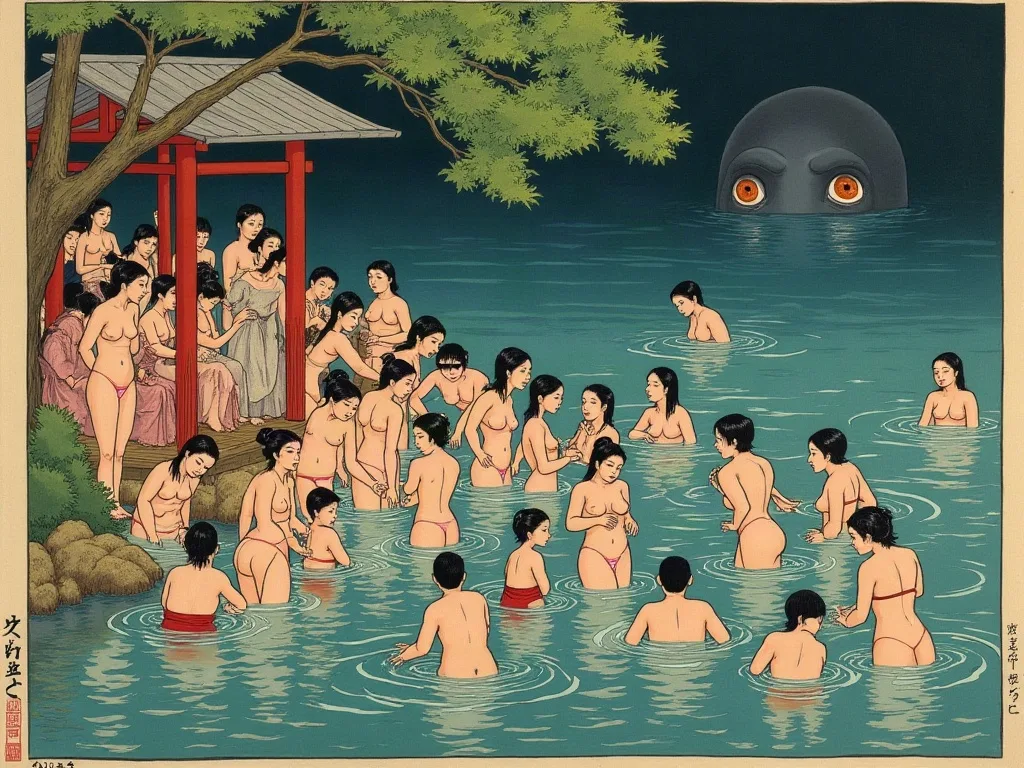
Folklore contains a fascinating counter-narrative to the standard kappa-as-drowner stereotype. In some stories, the kappa is a source of knowledge, particularly medical knowledge.
One celebrated account describes a kappa that appeared to a physician and revealed the techniques of reduction for dislocated joints. The kappa demonstrated the maneuver, and the physician, impressed, promised to document and preserve the technique. The kappa seemingly wanted the knowledge to survive and spread. In return, the kappa asked only for cucumbers as ongoing tribute. The physician agreed, and from that point onward, the specific reduction technique was known as the "kappa reduction" and remained in medical practice.
This story is likely apocryphal, but it reflects something real: Japanese physicians and herbalists did credit knowledge to supernatural sources, particularly in pre-modern eras when the line between natural and supernatural medicine was less clearly drawn. More importantly, the story reveals a possibility within the folklore: the kappa is not purely malevolent. It has agency, it can choose to help, it can be reasoned with.
Some scholars interpret these knowledge-transfer tales as traces of actual cultural exchange. Perhaps knowledge came from outside Japan, from contact with other Asian peoples, and was attributed to the kappa as a way of authorizing it. Or perhaps the tales reflect moments when communities recognized that non-human creatures (animals, unusual people) possessed skills worth learning.
The Water-Filled Head: Kappa Cosmology and the Philosophy of Spiritual Embodiment
The detail of the water-filled hollow is not merely a quirk of description; it encodes a philosophy of spiritual embodiment.
In Japanese religion and cosmology, water is understood as a medium for the divine. Purification involves water. Kami are approached through water offerings. Water connects the human realm to the spirit realm. The kappa's hollow, filled with water, might be understood as a chamber containing sacred essence, spiritual power, life force itself.
When the water spills, the kappa loses not just strength but coherence. It becomes almost human, almost material, almost vulnerable. The water is what makes the kappa what it is. Remove the water, and the essence drains away. This parallels concepts in other Japanese philosophies where certain forces or essences are understood as liquid-like, flowing, requiring containment to maintain form.
The association between the water-hollow and the kappa's mortality also suggests a metaphysical claim: the kappa is immortal or semi-immortal only so long as it retains its supernatural nature. Once robbed of that nature, it becomes subject to human time and mortality.
Some interpretations link the water-hollow to the concept of hara, the belly or center of being in Japanese philosophy. The hara is the seat of life force and intention. The kappa's hara, so to speak, is not internal but external, visible, vulnerable. This makes the kappa fundamentally different from humans, whose life force is hidden and protected.
Kappa in the Modern Shinto Revival and Neo-Yokai Movements
In contemporary Japan, there is renewed interest in traditional folklore and yokai as part of a broader cultural nationalism and environmental consciousness.
Environmental movements have sometimes invoked the kappa as a symbol of river protection. If we acknowledge that rivers are inhabited by spirits deserving respect, the argument goes, we approach river management differently. Pollution and damming are not merely technical or economic issues; they are violations of the sacred. This neo-yokai environmentalism repurposes folklore for modern advocacy.
Shinto revival movements and neo-Shinto practitioners have similarly embraced the kappa as a subject for veneration and study. Shrines dedicated to kappas exist throughout Japan, receiving both ritual respect and tourist attention. Some practitioners view the kappa as a legitimate kami deserving formal worship.
This modern revival raises interesting questions about authenticity and anachronism. Is a 21st-century shrine to the kappa a continuation of genuine tradition or a nostalgic invention? The answer is probably both. Tradition is not fixed; it evolves through reinterpretation and reuse. The kappa in a modern environmentalist movement is not less authentic than the kappa in a medieval Buddhist scroll; it is differently authentic, adapted to new needs and contexts.
Frequently Asked Questions About the Kappa
Frequently asked questions
Did Japanese people actually believe kappas were real?
Yes, until the modern period. From medieval times through the early 20th century, many Japanese people, particularly in rural areas near rivers, believed in kappas as real beings. Drowning deaths were attributed to kappas, and protective measures were taken seriously. As scientific understanding grew and modern bathing replaced river bathing, belief declined. Today, most Japanese view the kappa as folklore, though it remains culturally significant. The question of "real" is complex in Japanese religion, where the boundary between literal and symbolic is deliberately ambiguous.
Where is the best place to encounter a kappa in modern Japan?
Historically, specific rivers were famous for kappa activity: the Kino River, the Tone River, and the Yodo River. Today, these places attract tourists interested in kappa lore rather than genuine encounters. Some shrines dedicated to kappas exist throughout Japan, particularly in river towns. The kappa experience in modern Japan is cultural and touristic rather than supernatural. You will encounter kappa statues, restaurants serving kappa-themed food, and folklore guides rather than actual spirits.
How does the kappa relate to Hindu water spirits or other Asian traditions?
The kappa shares features with water spirits across cultures, suggesting both universal patterns and regional religious influences. Japanese Buddhism brought Hindu and Buddhist cosmology into contact with indigenous Shinto beliefs, so some aspects of kappa lore may reflect Indian yaksha or deva traditions. However, the kappa developed its distinctive character through specifically Japanese folk experience and environmental adaptation. It is influenced by broader Asian religion but is distinctly Japanese in execution and meaning.
What is the scholarly consensus on kappa origins?
There is no single consensus. Major theories include: (1) kappas preserve memories of encounters with unusual animals or unusual human populations; (2) kappas embody anxieties about water safety and served pedagogical functions in folklore; (3) kappas are manifestations of Shinto water kami reinterpreted through Buddhist categories; (4) kappas are universal archetypes that emerge in any culture's interaction with water. Most scholars view these as complementary rather than mutually exclusive. The kappa likely arose from multiple sources and served multiple social functions.
How has anime and modern media changed the kappa image?
Modern media has made the kappa less overtly dangerous and more aesthetically interesting. Contemporary depictions often emphasize the kappa's playfulness or complexity rather than pure malice. The kappa has become a collectible creature type, a reference to Japanese authenticity, a design aesthetic. This has made the kappa more globally recognizable but perhaps less culturally rooted. Modern media kappas are often decontextualized from river-specific locations and Shinto cosmology, becoming generic yokai or fantasy creatures. This is a transformation of meaning rather than a corruption; it reflects how living folklore adapts to new media environments.
The Kappa's Unfinished Story: Why This Spirit Endures
The kappa remains vital in Japanese culture because it holds contradictions that refuse to resolve. It is demon and neighbor, drowner and teacher, threat and object of sympathy. It cannot be reduced to a single meaning or dismissed as mere superstition.
The kappa also endures because it speaks to something true about the human relationship to water and wild nature. Rivers are genuinely dangerous. Their beauty and necessity make the danger all the more poignant. The kappa transforms that danger into a personality, a being you can address, negotiate with, sometimes even befriend. This is not primitive or false thinking; it is a sophisticated way of acknowledging that natural forces have agency and power that human beings must respect without understanding completely.
In the 21st century, as Japan faces environmental challenges, the kappa has become a symbol for water protection and sacred ecology. The spirit that once represented danger now represents value. This shift reflects how mythology evolves: the kappa does not change, but our use of it does.
The river still flows. Somewhere in Japanese folklore, in local memory, in the collective imagination reinforced by anime and shrines and tourist guides, the kappa still waits by the deep pool, water balanced on its head, ready to challenge the unwary, to steal rice, to teach medicine, to remind humans that the world is stranger and more alive than rational certainty admits.
Free 25-page sample
Want the whole story?
Take the first 25 pages free. If it pulls you in, the full edition is yours as an instant PDF download, with a paperback on Amazon for selected titles.

Mythology
The World Mythology Book: The Gods, Heroes and Myths of Every Culture
The Gods, Heroes and Myths of Every Culture, in One Volume
The whole of world mythology in a single volume: Greek, Norse, Egyptian, Japanese, Hindu, Celtic, Slavic, Mesoamerican and African myths gathered side by side, each drawn from the primary sources.