
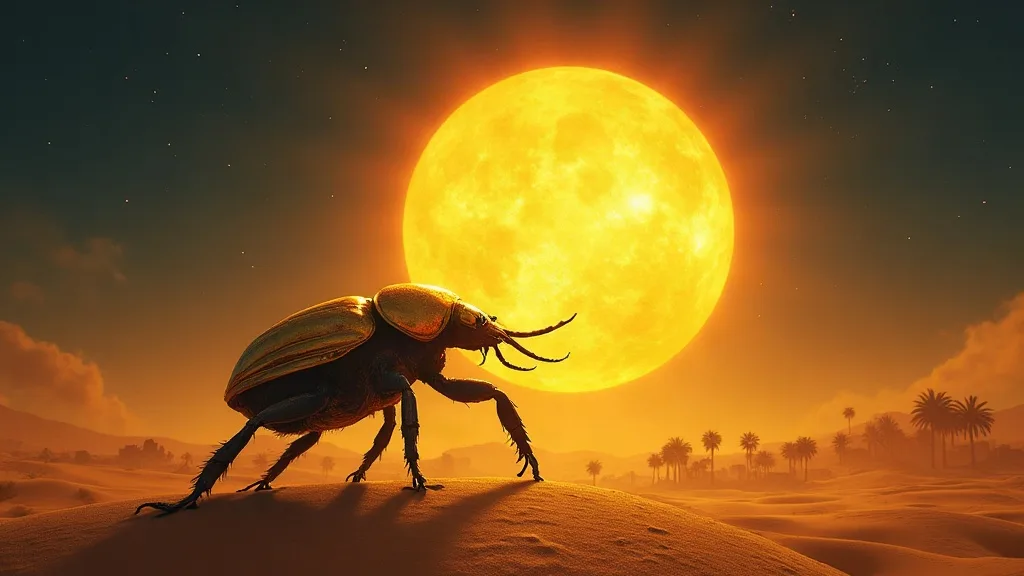
Khepri the Scarab God: Symbol of Transformation and the Daily Rebirth
Khepri, the scarab-headed god of the Egyptian dawn, embodies transformation and cosmic renewal. Discover how ancient Egyptians saw the sacred beetle as the force that rolls the sun across the sky each morning, and why his image became the ultimate symbol of rebirth and persistence.
Contents
Every morning in ancient Egypt, the sun climbed the sky. But how? The Egyptians had an answer: Khepri, a god with the head of a sacred beetle, rolled the sun forward like a dung beetle rolls a ball of dung. This wasn't poetic fancy. It was theology woven into the rhythm of daily life.
Khepri represented something the Egyptians understood in their bones: that transformation is not magic, but work. The beetle does not merely push; it creates. It takes what others leave behind and converts it into something new. In that gesture lay the entire Egyptian philosophy of death, rebirth, and divine action.
The Form and Name of Khepri
The name Khepri comes from the Egyptian word kheper, which means "to become" or "to transform." The god's image is unmistakable: a man with the head of a scarab beetle, or sometimes depicted as a full scarab, golden and gleaming. In some depictions, he carries or rides within the solar disk itself, cradling it as if it were his most precious burden.
The scarab beetle (Scarabaeus sacer) was not chosen by accident. Adult beetles emerge from their pupae and dig upward through the earth toward the sun, a journey the Egyptians witnessed countless times in their hot, sandy landscape. Then they watched the beetle collect dung, roll it into spheres, and push it across the ground to bury it in tunnels. Inside that humble sphere, life would eventually emerge. Death became life. Chaos became order.
The hieroglyph for Khepri sometimes showed just the beetle, sometimes the beetle-headed human. In temple reliefs, he appears as a divine laborer, muscles tensed, pushing that golden orb.
Khepri and the Solar Cycle: The Morning Sun
In Egyptian cosmology, the sun was not merely a star. It was Ra, the supreme creator god, who traveled through the sky by day and the underworld by night, dying and being reborn with each cycle. But the sun needed a guide, a protector, a force of transformation for the dangerous journey of dawn.
That force was Khepri. He was the morning aspect of the sun, the moment of transformation from darkness into light. While Ra was the god of the sun itself, and Atum the primordial creator, Khepri was the principle of becoming. Each dawn, Khepri pushed the newborn sun above the eastern horizon, rolling it with the same patient effort a beetle uses to move its sphere.
Texts from the Pyramid Texts, the oldest religious compositions in the world (inscribed on the walls of royal tombs around 2400 BCE), describe Khepri as the one who "comes into being by himself" and who "fashions himself." He was self-created, perpetually renewing, independent of outside power. This made him one of the most mysterious and revered figures in the Egyptian pantheon.
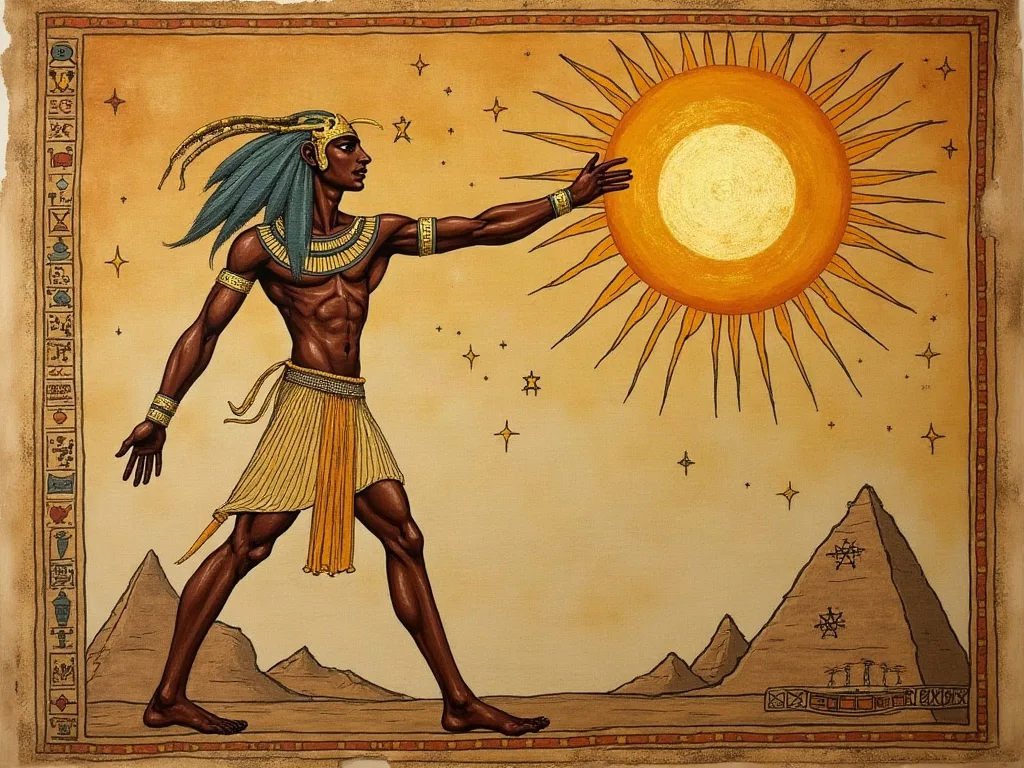
The Journey of Ra across the sky was not guaranteed. Each night, Ra faced enemies. The serpent Apophis, a creature of chaos and destruction, tried to swallow the sun-god and plunge the world into eternal darkness. Khepri participated in Ra's nightly battle against Apophis in the twelve hours of the Duat, the underworld, ensuring that the sun could be reborn and pushed upward once more. Without Khepri's constant labor, the cosmos would collapse.
Khepri as a Symbol of Transformation and Rebirth
For the Egyptians, Khepri was more than a morning god. He embodied transformation itself, the movement from one state to another. This made him central to funeral theology, because death in ancient Egypt was not an ending. It was a transformation, a becoming something new.
When a pharaoh or a noble died, the Egyptians did not speak of annihilation. They spoke of transformation, of resurrection, of entering a new life in the afterlife. Khepri was the god who made this journey possible. He pushed not just the sun, but the soul of the deceased, guiding it through the underworld and upward toward eternal life.
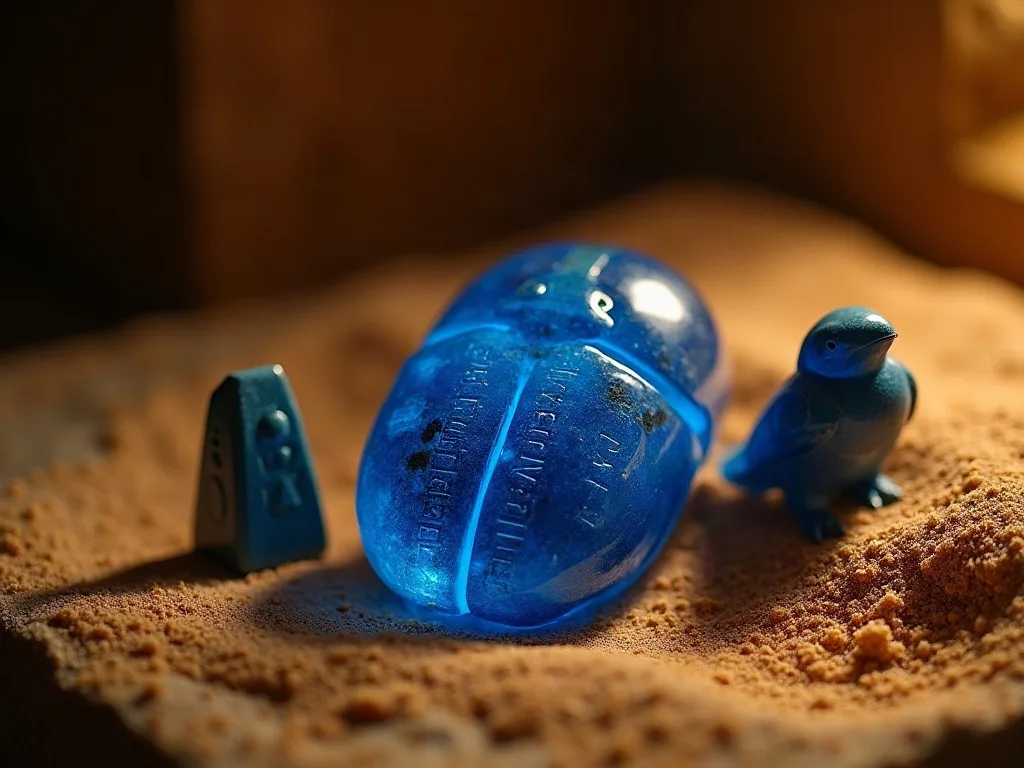
The scarab amulet, called a scarab, became one of the most popular protective charms in ancient Egypt. Egyptians wore them around their necks or placed them in tombs. Carved from stone, lapis lazuli, or faience, these beetle charms invoked Khepri's power of renewal. They were not mere decorations. They were prayers in the form of the god, asking for the wearer's transformation, for their protection, for their rebirth.
The greatest pharaohs chose Khepri as part of their divine names. Thutmose III, one of Egypt's most successful military commanders, took the name "Kheperkare," meaning "Khepri is the Ka (soul) of Ra." In doing so, he claimed that he embodied the power of transformation and cosmic order, that he was not merely a king but a living representative of the force that sustains the universe.
Worship and Temples Dedicated to Khepri
Khepri was worshipped across Egypt, but he held special prominence in Heliopolis (called Iunu in Egyptian), the great solar cult center near modern Cairo. Heliopolis was the intellectual and religious heart of ancient Egypt, home to the most learned priests and the oldest solar theology. There, Khepri stood alongside Ra and Atum as part of the Ennead, a group of nine divine principles that created and sustained the world.
In temples, Khepri received offerings of grain, flowers, and incense. Priests made hymns to him at dawn, reciting texts that praised his power of becoming and his role in the cosmic cycle. One famous hymn addresses him as the god who "comes into being of his own accord" and "fashions his own form."
Unlike some Egyptian gods who had grand temple complexes dedicated solely to them, Khepri's worship was often integrated into larger solar sanctuaries. But this did not diminish his importance. He was invoked in personal prayers, in spells for protection, in funeral rites. Every Egyptian who looked at a scarab amulet was, in a sense, worshipping Khepri.
The Egyptians also associated Khepri with the god Ptah, the creator-god who shaped things through thought and will. Both gods embodied the principle of creation and transformation, though Ptah worked through intellect and craft, while Khepri worked through physical, relentless effort. These two stood as complementary forces: thought that becomes action, intention that becomes reality.
Khepri and Other Egyptian Deities
Khepri did not stand alone in the Egyptian cosmos. He was part of a vast family of divine beings, each with specific roles and domains.
His relationship with Ra was particularly complex. Ra was the sun-god in his fullness, the supreme creator and judge. But Ra changed forms throughout his journey. As Khepri, he was the morning sun, still rising. At noon, he became the fully mature Ra. In the evening, as he descended toward the Duat, he became Atum, the creator at rest. This was not three different gods but three aspects of one solar principle, a cycle of transformation that mirrored human life and the seasons.
Sekhmet, the fierce lion-headed goddess of war and plague, represented raw, destructive power. Thoth, the ibis-headed god of wisdom and writing, represented intellectual order. Maat, goddess of truth and cosmic order, ensured that chaos never overwhelmed the universe. Khepri worked alongside these forces, providing the active principle of transformation that allowed order to persist. Without Khepri's constant pushing, Maat's order would stagnate and die.
The Scarab in Egyptian Art and Daily Life
The scarab beetle became one of the most iconic symbols of ancient Egypt, largely due to Khepri's association with it. Scarab amulets filled tombs and adorned the living. They were carved from stones of different colors, each with symbolic meaning. Green scarabs invoked fertility and life. Black scarabs invoked protection in the afterlife. Blue scarabs evoked the heavens and the sky.
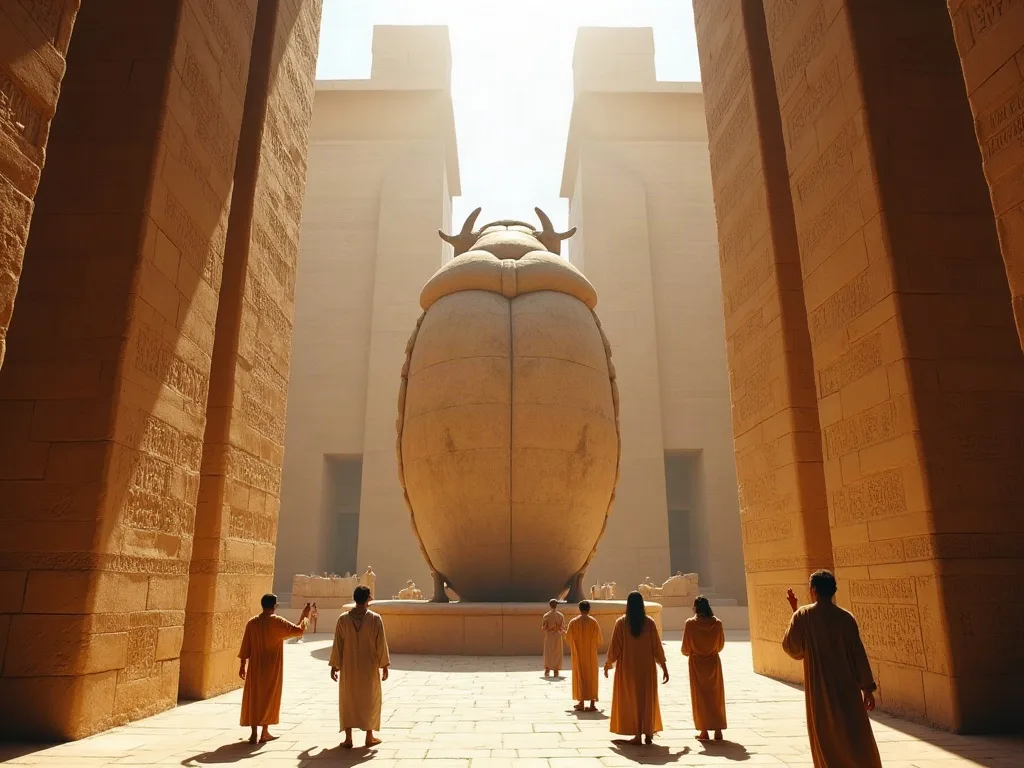
Large ceremonial scarabs were created as well. The Temple of Amon at Karnak once contained an enormous stone scarab, which pilgrims would touch to invoke Khepri's blessings. These ritual objects were not mere art; they were focal points for prayer and transformation.
Egyptians placed scarab amulets on the hearts of mummies, inscribed with spells to protect the deceased and aid their journey through the underworld. The scarab became such a potent symbol of Egypt itself that when Europeans encountered Egyptian artifacts centuries later, the scarab was often among the first images they recognized and treasured.
Khepri in Funerary Texts and the Afterlife
The Egyptians left behind thousands of written spells and prayers, inscribed on tomb walls, coffins, and papyrus scrolls. These texts, collectively called the Book of the Dead (though the Egyptians called it the "Book of Coming Forth by Day"), invoke Khepri repeatedly.
In these spells, the deceased speaks to Khepri, asking for transformation. The soul might say: "I am Khepri, and I am reborn in the morning, even as the sun is reborn. I travel with you through the darkness, and I emerge with you into the light." The scarab god becomes a model for the dead, proof that transformation is possible, that death is not final.
Some texts describe the deceased as becoming one with Khepri, or riding in the solar boat alongside Ra and Khepri as they journey across the sky. This was not mere wishful thinking. For the Egyptians, identifying with a god through ritual, spell, and prayer was a real and powerful act. By speaking the words, by wearing the amulet, by gazing at the carved image, one could actually become one with that divine principle.
Khepri Across Egyptian History
From the Old Kingdom (around 2686-2181 BCE) through the Roman period (after 30 BCE), Khepri remained a constant in Egyptian religious life. His imagery appears in some of the oldest religious texts and in some of the latest. This consistency is remarkable. Most Egyptian gods underwent transformations, gained or lost worshippers, merged with other deities, or faded from prominence. But Khepri never did.
Why? Because his symbolic power was too perfect, too rooted in observable nature. Every Egyptian who saw a beetle rolling a ball of dung understood Khepri's message. Transformation was real. Effort mattered. What seemed finished could become new again. In a land where crops died each year but the Nile flooded to bring new life, where the sun died each night but rose each morning, Khepri's theology made absolute sense.
During the Greco-Roman period, when Greek and Roman ideas flooded Egypt, Khepri did not disappear. He was sometimes associated with Apollo, the Greek sun-god, but his identity remained distinct. Late temple inscriptions still praise him. Scarab amulets continued to be carved. The symbolic power of the beetle transcended any particular historical period.
Khepri's Influence on Egyptian Philosophy and Values
Khepri was not merely a religious symbol. He embodied values central to Egyptian civilization: persistence, self-reliance, and the belief that order could triumph over chaos if one worked hard enough.
The Egyptians admired the scarab beetle for its single-minded labor. It did not complain. It did not give up. It pushed its sphere forward with patient, unrelenting effort. This beetle became a moral exemplar. Kings compared themselves to Khepri; priests invoked his patience; ordinary people wore him as a charm, hoping his qualities would rub off on them.
The concept of kheper, the action of transformation and becoming, became a philosophical principle. To act in accordance with kheper was to act in accordance with the nature of the universe itself. It was the highest form of virtue, because it meant working with the cosmos rather than against it.
This is why Khepri, the lowly beetle-god, stood so high in the Egyptian spiritual hierarchy. He was not a god of power in the sense of domination. He was a god of power in the sense of creative action, of will applied to reality, of the persistent effort that moves mountains.
Frequently Asked Questions About Khepri the Scarab God
Frequently asked questions
Why did the Egyptians choose a dung beetle to represent their sun god?
The scarab beetle was chosen because Egyptians observed it in their daily lives. The beetle collects dung, rolls it into a sphere, and pushes it across the ground to bury it in underground tunnels, where new beetles eventually emerge. This behavior paralleled the sun's journey: descent into darkness (the dung), transformation, and emergence reborn the next morning. The beetle's actions made the solar cycle visible and understandable.
What is the difference between Khepri, Ra, and Atum?
These three are aspects of the Egyptian sun-god at different times of day and life stages. Khepri is the morning sun, the force of transformation and becoming. Ra is the mature, powerful sun at midday, fully formed and supreme. Atum is the aging sun in the evening, descending toward rest and the underworld. Together, they form a complete cycle reflecting creation, sustenance, decline, and renewal.
How common were scarab amulets, and what did people expect them to do?
Scarab amulets were ubiquitous in ancient Egypt, found in tombs across all social classes, from pharaohs to common workers. People wore them for protection and to invoke Khepri's power of transformation and rebirth. In funerary contexts, scarabs were placed on mummies' hearts to protect the dead during their journey through the afterlife and to aid their resurrection, mimicking Khepri's daily rebirth of the sun.
Did worship of Khepri change over Egypt's long history?
Remarkably, Khepri remained consistent from the Old Kingdom through the Greco-Roman period. Unlike other Egyptian gods who gained, lost, or transformed their worship over centuries, Khepri's symbolic power remained stable because it was rooted in observable natural behavior that transcended historical change. His scarab imagery continued to be carved and worn throughout Egyptian civilization.
What texts mention Khepri, and where can readers find them?
Khepri appears in the Pyramid Texts (the oldest religious texts, carved on tomb walls from around 2400 BCE) and throughout the Book of the Dead, a collection of spells and prayers meant to aid the deceased in the afterlife. He is also mentioned in temple inscriptions, hymns, and informal religious texts. The Pyramid Texts and Book of the Dead have been translated into English by scholars like E. A. Wallis Budge and more recently by others.
Khepri's Legacy: The Beetle That Still Rolls
Khepri did not survive into the modern world as an active religious force. When Christianity and Islam reached Egypt, the ancient temples were abandoned, the spells fell silent, and the scarabs were buried beneath sand and time. But something of Khepri persisted in the human imagination.
The scarab amulet never fully disappeared. It became a symbol of Egypt itself, recognized instantly across the globe. Museums house thousands of them. Modern Egyptians, and people everywhere fascinated by ancient Egypt, still wear scarabs as symbols of transformation and protection, often without knowing Khepri's name but somehow understanding his message: that transformation is possible, that effort creates change, that what dies can be reborn.
The persistence of the scarab image speaks to something universal in Khepri's symbolism. Every human faces the scarab's challenge: to take what seems finished or dead and transform it into something new. Every human watches the sun set and rise again. Every human dies and must, in some sense, be reborn into whatever comes next. Khepri's theology transcends ancient Egypt because the cycle he embodies transcends time.
In that sense, Khepri still rolls the sun across the sky. Not literally, not in temples, but in the imagination of anyone who looks at a scarab and recognizes the ancient god pushing the sun forward, reminding us that transformation is not just possible. It is the fundamental nature of existence itself.
Free 25-page sample
Want the whole story?
Take the first 25 pages free. If it pulls you in, the full edition is yours as an instant PDF download, with a paperback on Amazon for selected titles.

Mythology
The World Mythology Book: The Gods, Heroes and Myths of Every Culture
The Gods, Heroes and Myths of Every Culture, in One Volume
The whole of world mythology in a single volume: Greek, Norse, Egyptian, Japanese, Hindu, Celtic, Slavic, Mesoamerican and African myths gathered side by side, each drawn from the primary sources.