

The Mead of Poetry: Wisdom, War, and the Divine Gift of Eloquence in Norse Mythology
In Norse legend, a magical drink grants the gift of poetry and wisdom to gods and mortals alike. Discover how the Mead of Poetry shaped the Aesir and why ancient skalds risked everything to taste it.
Contents
Three gods spilled their blood into a cauldron. They mixed that blood with honey. The result was something no mortal had ever seen before: a drink that could grant the power of poetry itself to anyone who swallowed it. This is the origin of the Mead of Poetry, one of the most coveted treasures in Norse mythology, a substance so valuable that gods and giants waged war over it, and skalds (court poets) would stake their lives and honor for just a single sip.
The story of this mead lies at the heart of Norse cosmology. It tells us what the ancient Scandinavians believed about creativity, language, and the price of wisdom. It also reveals the political intrigue and theft that even immortals could not escape.
The Creation of the Mead: Blood, Honey, and the First War
The Poetic Edda, a collection of Old Norse poems compiled in the 13th century from much older oral traditions, preserves the mead's origin in the poem called the Havamal (the Sayings of the High One). The narrative begins with a war between two groups of gods: the Aesir and the Vanir. These were not creatures from different worlds; they were divine beings who lived in the same realm, and their conflict nearly tore the cosmos apart.
To end the bloodshed, the two sides agreed to make peace. They sealed it with an unusual act: both the Aesir and the Vanir spat into a large cauldron. From that saliva, they formed a man named Kvasir, a being of such wisdom that no one could ever stump him with a question. Kvasir traveled the nine worlds answering riddles and dispensing counsel, and for a time, the cosmos benefited from his perfect knowledge.
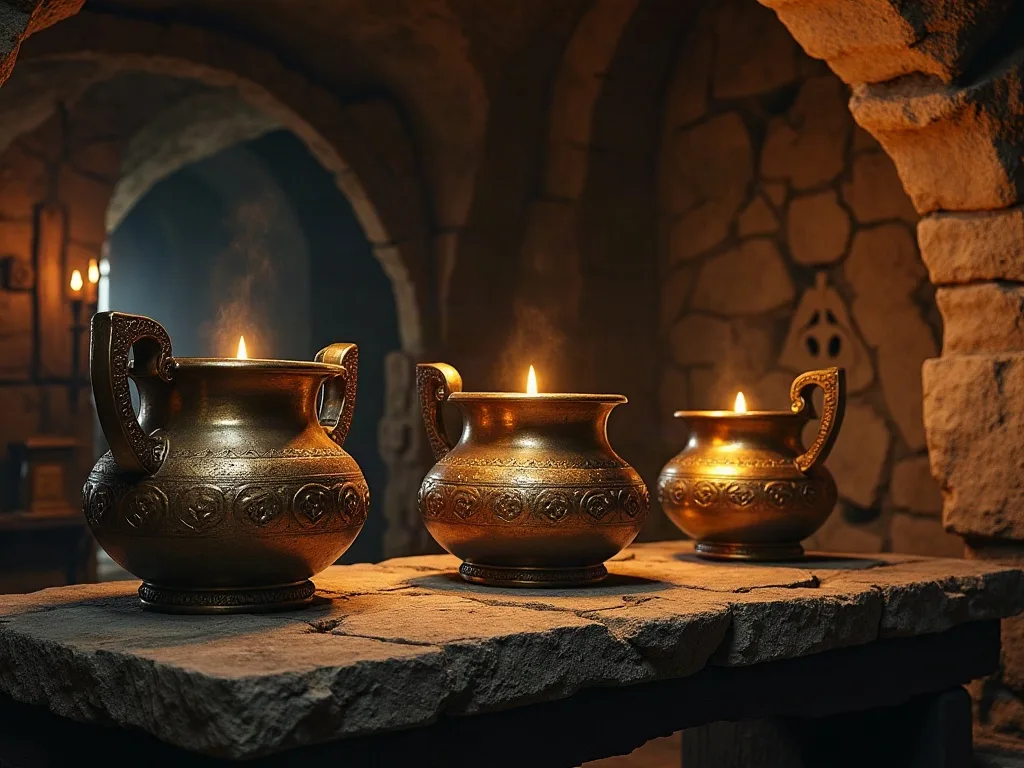
But not everyone celebrated Kvasir's existence. Two dwarves named Suttung and Gilling grew jealous. They murdered Kvasir and drained his blood into three vessels: the cauldron Odhroerir (the stirrer of fury), the pot Sonargoltr (the loss of sonship), and the bowl Bodn (the offering). They mixed Kvasir's blood with honey, and from this mixture arose the Mead of Poetry. Whoever drank from it would gain the power to compose any verse, master any language, and speak with a silver tongue that could sway kings and armies.
The dwarves guarded this treasure fiercely. They had paid in blood and cunning for it, and they had no intention of sharing.
Suttung's Theft and the Three Vessels
Word of the mead's existence spread through the nine worlds. Odin, the All-Father and god of wisdom, war, and poetry, learned of it and became consumed with desire. Odin was already renowned for his mastery of magic and runes, but the Mead of Poetry represented something he did not yet possess: the ability to share poetic inspiration freely with mortals. It was a gift he could grant, and through it, he could elevate human culture itself.
Odin's path to the mead was not direct. The dwarves had already hidden it away in a mountain called Hnitbjorg, guarded by the giant Suttung (the dwarves had murdered his father Gilling and offered the mead as compensation for his loss). Suttung's daughter, Gunlod, watched over the three vessels with perfect vigilance. No one had ever breached the mountain's defenses.
Odin, however, was resourceful. He descended to the earth in disguise and sought out Suttung's servants in a field. The Poetic Edda tells us that Odin offered them a whetstone as a gift. They quarreled over it so fiercely that they killed each other. From this chaos, Odin approached Suttung and promised to work off the debt of his servants' deaths by laboring in the giant's fields.
During the summer, Odin toiled, and as payment, he asked for a single drink from the mead. Suttung refused. But Gunlod, the giantess, took pity on the weary god. She agreed to let him taste the mead if he would spend three nights with her in her chamber.
The Theft and the Escape Across the Nine Worlds
Odin spent those three nights with Gunlod. On each night, he drank from one of the three vessels: Odhroerir, Sonargoltr, and Bodn. He consumed every drop. Whether this was seduction, trickery, or genuine affection between god and giantess depends on which version of the tale you read. The Eddas themselves offer no clear judgment.
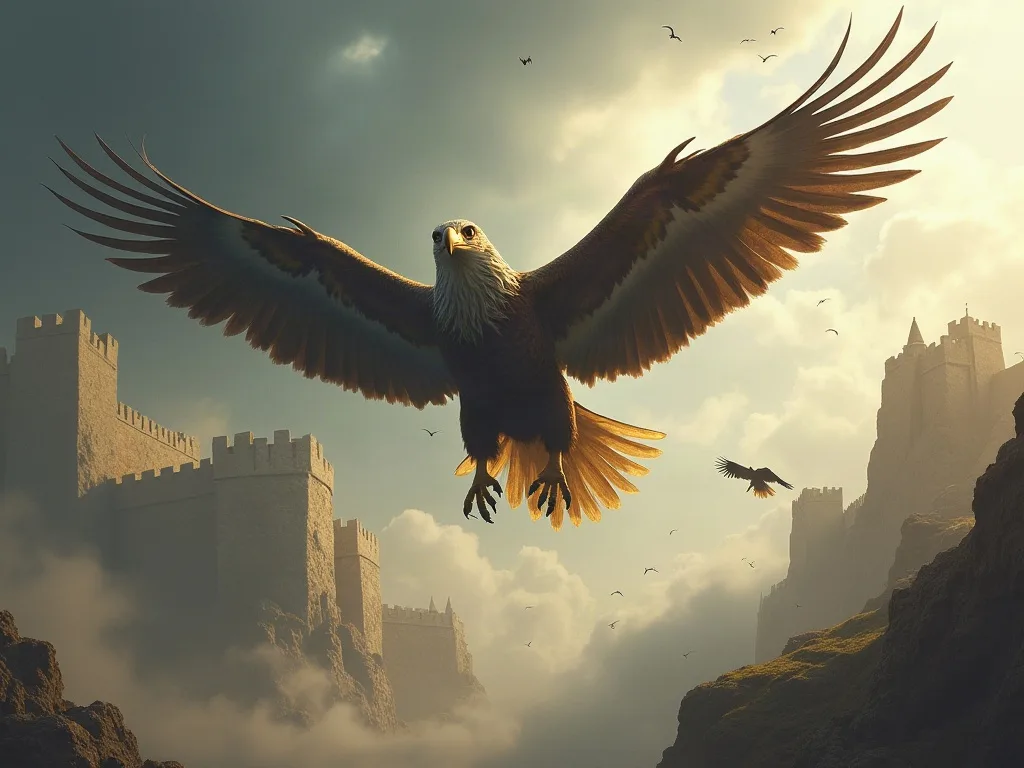
With the mead inside him, Odin transformed himself into an eagle and fled across the sky. Suttung, discovering the theft, immediately became an eagle himself and gave chase. The two birds raced across the cosmos, and the gap between them narrowed dangerously. Behind them, the dwarves watched the sky, waiting to see who would claim the prize.
Odin's pursuit was desperate. As he neared Asgard (the home of the Aesir), he saw the high walls of the great fortress drawing closer. Behind him, Suttung's wings beat harder, eager to catch the thief. Odin flew lower and lower, and at the last moment, he crossed the boundary of Asgard and transformed back into his human form.
He landed in the fortress and spat the mead into three vessels that the Aesir had prepared. But Suttung's claws raked the ground just behind him, and some of the mead splattered across the threshold. The drops that fell became the "poet's portion," small amounts given freely to lesser skalds and wanderers. The three full vessels remained in Odin's hands, to be guarded and dispensed only to those he deemed worthy.
What the Mead Represented to Norse Culture
To understand why the Norse people cherished the story of the Mead of Poetry so deeply, we must understand what poetry meant in their society. The skalds were not entertainers; they were the memory-keepers of culture. They composed verses that recorded genealogies, praised kings, immortalized deeds in battle, and preserved the laws and wisdom of the people. Without poetry, the Norse believed that culture itself would vanish.
A skald who drank from the mead (or claimed to have been blessed by Odin with poetic talent) could compose intricate kennings, metaphorical expressions that turned a sword into "the reddener of ravens" or battle into "the feeding of eagles." These figures of speech were not merely ornamental; they were the highest form of linguistic art, and mastering them meant mastering the very fabric of Norse identity.
The mead also represented the price of wisdom. Odin had to surrender his eye to the giant Mimir to drink from the Well of Wisdom. He had to hang himself on Yggdrasil, the World Tree, pierced by his own spear, for nine nights to learn the runes. The Mead of Poetry followed this pattern: it was a treasure that could not be obtained without sacrifice, cunning, or favor from the gods themselves. This philosophy ran deep in Norse culture. Nothing of value was free.
The Three Vessels and Asgard's Treasure
Once Odin possessed the mead, the story might have ended. But the Norse never simply "ended" their myths. Instead, they wove new tensions into them.
The three vessels that held the mead were themselves objects of power. Odhroeril, the largest, was said to contain the primary source. Sonargoltr and Bodn held portions of equal value. Odin kept them in Asgard, in a place guarded by the Valkyries and the Aesir themselves. The location was kept secret, known only to those gods who needed to know it.
From that point forward, the Mead of Poetry became the source of all poetic genius in the Norse world. When a mortal skald composed a verse of exceptional beauty, the Norse attributed it to Odin's inspiration. When a king demonstrated the wisdom to rule justly, they said Odin had touched his tongue. The mead was not drunk again by mortals in the myths we have; instead, it became the invisible force behind all eloquence.
Some scholars of Norse mythology suggest that Odin eventually shared portions of the mead with other gods. The myth hints that some of the "spilled" drops fell into the world of mortals, offering lesser but still potent gifts of inspiration to human poets who earned Odin's favor. This created a hierarchy of poetic talent: the greatest skalds were those chosen directly by the All-Father.
The Mead in the Broader Context of Norse Cosmology
The Mead of Poetry was not isolated in Norse myth. It connected to other treasures and sacred objects that shaped the gods' power. Idunn's apples granted immortality but required constant consumption; the golden apples represented eternal maintenance of youthfulness, an endless task. The Mead of Poetry, by contrast, was a one-time gift that could be shared or withheld. This difference reflected how the Norse viewed different kinds of power: some required constant vigilance, others involved strategic distribution and control.
The story also echoes the Norse obsession with Odin, who was never a god of simple strength or straightforward justice. Instead, he embodied contradiction: wisdom and madness, poetry and war, the honored patriarch and the wandering deceiver in disguise. The Mead of Poetry reflected this duality. It was a gift of high art and eloquence, yet Odin obtained it through seduction, theft, and escape. The end result was noble, but the means were morally ambiguous.
This ambiguity mattered to the Norse. They did not believe that all good things came through virtue. Sometimes cleverness, trickery, and even immorality could serve a greater purpose. Odin's theft of the mead elevated human culture and gave mortals access to divine creativity. That was worth whatever price Gunlod paid.
The Mead's Echo in Other Traditions
The concept of a drink that grants inspiration or wisdom appears across many world mythologies. The Greek soma, a sacred drink in Vedic tradition, functioned similarly: it opened the mind to divine knowledge. The soma appears in Hindu mythology as the drink that the gods consumed to maintain their power and immortality. Both the Norse mead and the Indian soma were tied to poetry, ritual, and the preservation of cosmic order.
In Celtic tradition, the Otherworldly cauldrons of Ceridwen performed a similar function: they contained brews of wisdom and inspiration that could transform mortals. The Irish poet Gwion Bach stole three drops of Ceridwen's cauldron and gained the knowledge of the future. Like Odin, he was pursued by the cauldron's guardian, and his theft was necessary for human culture to be elevated.
These parallels suggest that Indo-European cultures shared a common mythology about the sacred drink: that wisdom and inspiration were divine gifts that mortals could access only through cunning, sacrifice, or the favor of gods. The drink itself was secondary to the story of how it was obtained and what it cost.
The Skald's Sacred Oath and the Legacy of the Mead
In historical Norse society, skalds were not merely poets; they were commissioned artists who composed to order for kings and jarls. Yet the myth of the Mead of Poetry elevated them above mere craftsmen. A skald could claim that his verses came directly from Odin's gift, that the mead flowed through him as divine inspiration. This claim was not simply vanity. It was a way of asserting that poetry was a sacred art, worth protecting and honoring.
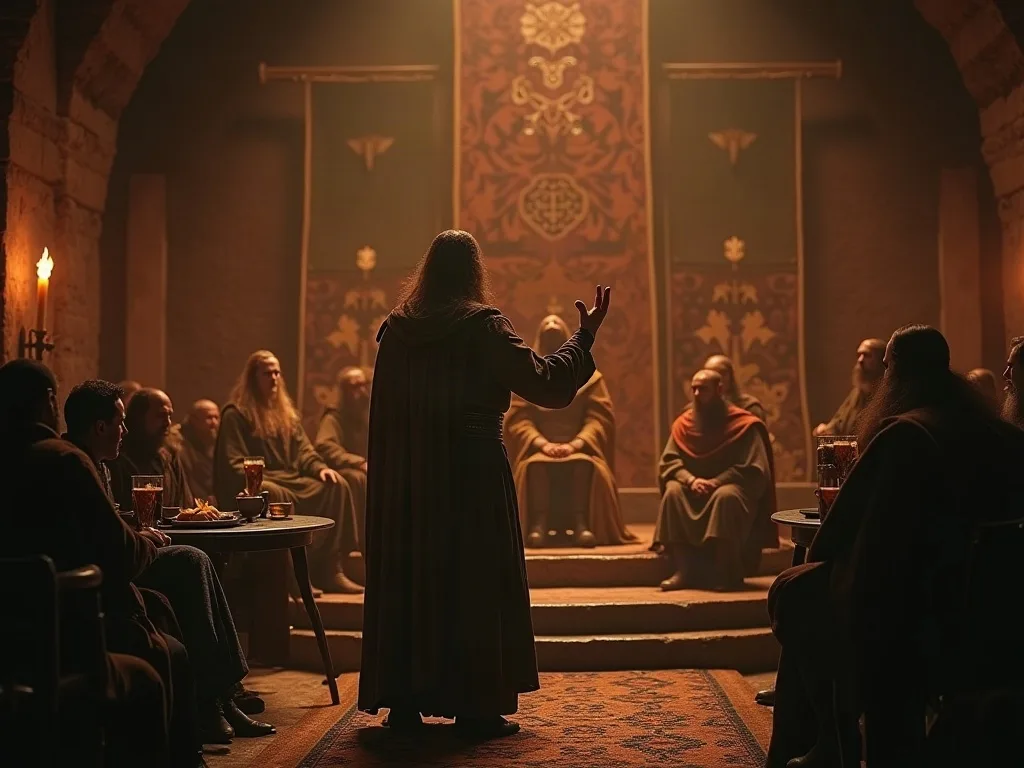
When a skald took his oath, he pledged to preserve the traditions of his people through verse. He became a kind of priest of memory. The Mead of Poetry legitimized this role. It said that eloquence was not just a skill to be learned through practice; it was a gift from the highest god, available only to those worthy of it.
This belief had practical consequences. A skald who displeased a king could be punished, even killed. But killing a skald was seen as an act of cosmic sacrilege, an offense against Odin himself. The Mead of Poetry created a shield around the poet's profession, protecting it from arbitrary violence.
Ragnarok and the Mead's Final Fate
Like all treasures in Norse mythology, the Mead of Poetry was not eternal. The Eddas tell us that at the end of time, when Ragnarok (the twilight of the gods) comes, the nine worlds will be consumed by fire and flood. Odin will be devoured by the wolf Fenrir. The sun will fail. The stars will vanish from the sky.
In this final cataclysm, the fate of the Mead of Poetry is not explicitly stated in the surviving sources. But the Norse worldview suggests that it, too, will perish. However, after the destruction, the myths promise that a new world will rise from the ashes. New gods will walk the earth. New humans will populate the lands. The Poetic Edda hints that some form of memory, some echo of the old knowledge, will carry forward.
This cyclical vision meant that the Mead of Poetry was never truly lost. As long as human beings felt the urge to compose, to speak beautifully, to preserve their culture through words, the spirit of the mead remained alive. The physical drink might vanish, but its essence, the drive to eloquence, would survive the end of all things.
Why Skalds Still Invoke the Mead Today
Modern scholars of Old Norse literature have long recognized the Mead of Poetry as a central metaphor in Norse intellectual life. When medieval Icelandic poets composed their sagas and eddas, they often invoked Odin and the mead as their source of inspiration. This was not mere convention. It was a way of claiming kinship with the ancient tradition, of saying that they, too, stood in the lineage of Odin's chosen skalds.
The mead also appears prominently in the prose framing of the Eddas. Snorri Sturluson, the 13th-century Icelandic historian who compiled and explained the mythic poems, described the mead's origin and theft as a founding act of culture itself. For Snorri, the mead was not a curiosity about gods; it was an explanation for why human beings could create beauty at all. We have that capacity because Odin stole it for us.
This interpretation has echoed forward through the centuries. When Romantic poets in the 18th and 19th centuries rediscovered Norse mythology, the Mead of Poetry became a symbol of artistic freedom and the sacred nature of creativity. It represented the idea that the poet was not a mere entertainer but a keeper of truth, a voice through which divine inspiration flowed.
In the 20th century, as Norse mythology was unfortunately coopted by extremist ideologies, the Mead of Poetry became contested ground. Some tried to weaponize it as a symbol of racial or national superiority. But scholars and artists who worked with integrity returned to the myths' actual complexity. The mead, they insisted, was a story about the universality of human creativity, not the exclusivity of any group.
Frequently asked questions about the Mead of Poetry
Frequently asked questions
Did the Norse believe mortals could actually drink the Mead of Poetry?
The Eddas suggest that only Odin possesses the full mead in Asgard. However, mortals could receive inspiration from it indirectly. The myth includes "spilled" drops of the mead that fell during Odin's escape, which became available to human skalds. A mortal who pleased Odin might receive his favor and be granted poetic genius, which the Norse attributed to the mead's influence flowing through them.
What is the difference between the Mead of Poetry and other Norse magical drinks or potions?
The mead stands alone in Norse mythology as a source of creative and linguistic power. Unlike Idunn's apples (which grant immortality and youth) or the mead of the gods more broadly (which sustained their divine nature), the Mead of Poetry specifically grants eloquence and the mastery of language. It is tied directly to art, memory, and the preservation of culture rather than to physical immortality or military strength.
Does the Poetic Edda explain what happened to the Mead of Poetry after Odin stored it in Asgard?
The surviving texts of the Poetic Edda do not describe what occurred to the mead after Odin brought it to Asgard. Snorri Sturluson's later prose account explains that Odin kept it guarded and could dispense it to skalds of his choosing, but the original poems are silent on its ultimate fate. Some scholars speculate that in the Norse imagination, the mead remained eternally available in the divine realm, ready to inspire any mortal skald worthy of its touch.
Why was the Mead of Poetry considered valuable enough for gods and giants to fight over it?
In Norse worldview, eloquence and poetry were not luxuries but the foundation of civilization itself. Poetry preserved genealogies, laws, religious knowledge, and the stories that held society together. A drink that granted the ability to compose and persuade was therefore as valuable as a drink that granted immortality or military invincibility. The mead represented the power to shape human thought and culture across generations, which made it more valuable than gold.
Is there a historical Norse text that names the author of the Mead of Poetry myth?
The Mead of Poetry appears in the Havamal, attributed to Odin himself (since it is framed as his own words), and in the Skaldic poetry tradition of Old Norse court verse. Snorri Sturluson, writing in the 13th century, recorded and explained the myth in his Prose Edda, drawing on older poems that are now lost. No single author can be named; the myth evolved orally across centuries before being written down.
The Mead's Presence in Modern Norse Literary Revival
Today, the Mead of Poetry continues to inspire writers, artists, and scholars who engage with Norse mythology. The image of a drink that grants eloquence has become a symbol for the creative process itself. Writers speak of being "drunk" on inspiration; poets invoke the mead as a metaphor for the moment when the right words arrive unbidden.
Literary scholars studying Old Norse texts have also used the mead's mythology to understand the actual craft of skaldic verse. The intricate meters, alliteration, and kenning-based language of Old Norse poetry were extremely difficult to master. Young apprentice skalds trained for years. The myth of the Mead of Poetry served a practical purpose: it offered an explanation for why some people seemed naturally gifted while others struggled. It was not merely talent or practice; it was the touch of Odin's mead.
Contemporary authors who write fantasy or historical fiction set in the Norse world frequently reference the Mead of Poetry as a source of power or a object of quest. The mead has become archetypal: it represents the idea that words themselves can change reality, that speaking truthfully or beautifully is an act of power. This reflects a deeper truth in Norse mythology: the cosmos was thought to have been sung into existence. The mead, then, is not separate from creation itself; it is the drink that allows mortals to participate in that creative power.
The Norse understood that language shapes thought, and thought shapes reality. The Mead of Poetry was their way of honoring that truth while acknowledging that such power was dangerous and could not be given to everyone. Only the worthy, those chosen by Odin, could wield it responsibly.
Free 25-page sample
Want the whole story?
Take the first 25 pages free. If it pulls you in, the full edition is yours as an instant PDF download, with a paperback on Amazon for selected titles.

Mythology
The World Mythology Book: The Gods, Heroes and Myths of Every Culture
The Gods, Heroes and Myths of Every Culture, in One Volume
The whole of world mythology in a single volume: Greek, Norse, Egyptian, Japanese, Hindu, Celtic, Slavic, Mesoamerican and African myths gathered side by side, each drawn from the primary sources.