
Tantalus and His Eternal Punishment: The Full Story, Sources, and Meaning
Tantalus stood neck-deep in water beneath fruit-laden boughs, yet starved and thirsted forever. His story is Greek myth's sharpest verdict on hubris, cannibalism, and the limits of divine favour.
Contents
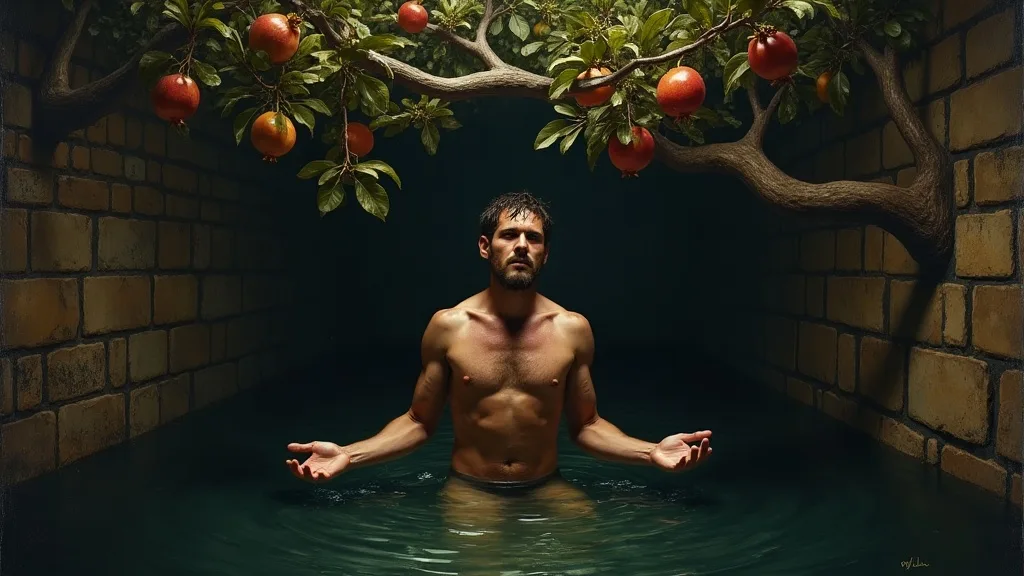
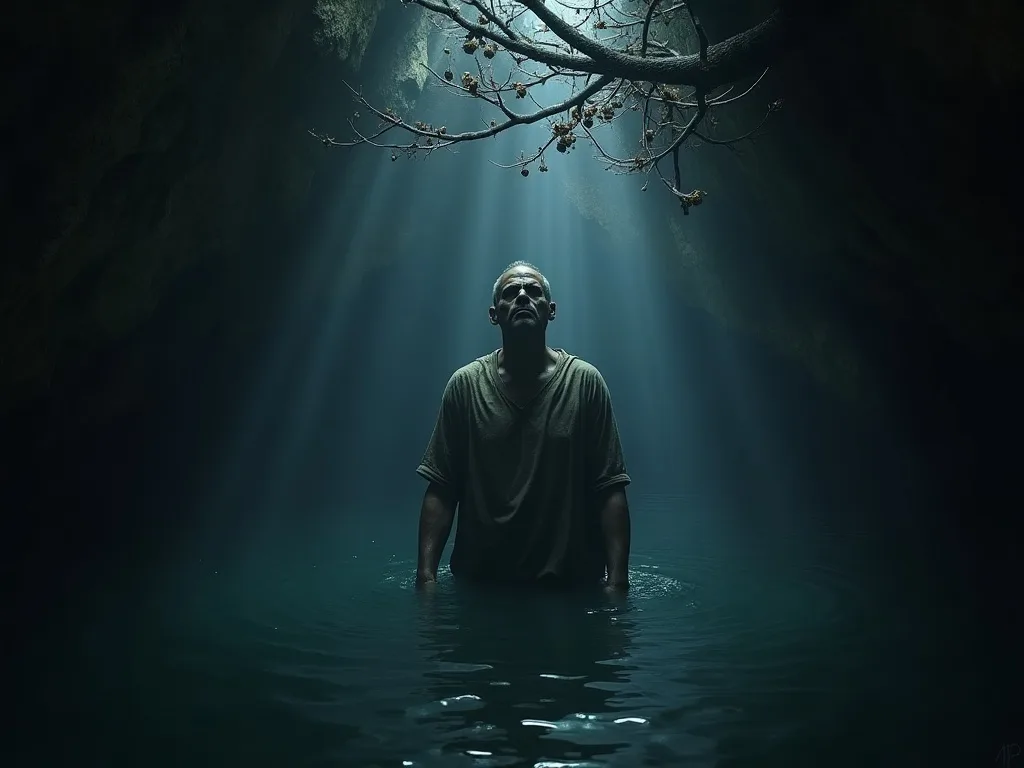
The water is always cold. It reaches his chin. Above him, branches hang heavy with pears, figs, and pomegranates, their skins bright as lanterns in the dim light of the Underworld. Every time Tantalus bends to drink, the pool drains into black earth. Every time he lifts his chin to bite a fig, the branch snaps upward, just out of reach. He has been standing here since before Homer put quill to papyrus. He will stand here until the cosmos folds.
This is not simply a story about a bad man getting what he deserves. The myth of Tantalus's eternal punishment is one of Greek religion's most carefully constructed arguments: about the boundary between gods and mortals, about what happens when privilege curdles into contempt, and about why certain crimes place a person permanently outside the community of the living and the dead alike. It repays close reading, because every version - Pindar, Homer, Euripides, Hyginus - adds a different charge to the indictment.
Who Was Tantalus? Origins and Divine Lineage
Tantalus was, by most accounts, a son of Zeus himself, fathered on a mortal woman named Pluto (not the god of the dead, but a daughter of Cronus in some tellings, or simply an Oceanid in others). His mother's identity shifts across sources, but his paternity is consistent: he had divine blood, and the gods knew it.
He ruled over the region of Lydia or Phrygia in western Anatolia - the ancient texts are not unanimous on the exact geography. Pindar, in his First Olympian Ode written around 476 BC, calls him lord of a prosperous kingdom, a man whose table gleamed with gold. The geographer Strabo later placed the territory of Tantalus near Mount Sipylus, and a rock formation there was identified in antiquity as the tomb of Tantalus himself.
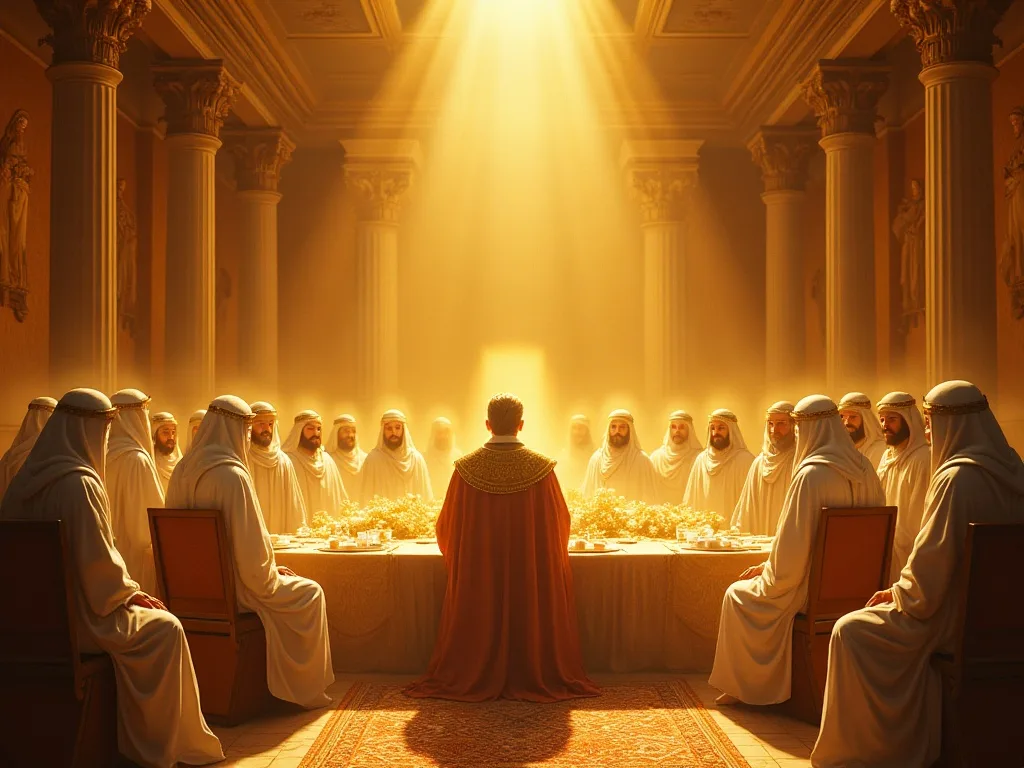
His privilege was extraordinary. Zeus admitted him to the table of the Olympians - a favour granted to almost no mortal. He ate ambrosia, the food of the gods, and drank nectar, their drink. He sat among the Aesir-equivalent of Greek divinity, listened to their councils, and carried their gifts home to Lydia. Pindar calls this "the greatest honour a mortal man had known." That sentence reads like a warning.
The Three Crimes: What Tantalus Actually Did
Here is where the sources diverge, and the divergence matters. The ancient Greeks themselves could not settle on one charge. Reading the texts side by side, three separate accusations emerge, and some authors stack them together.
Crime One: Stealing Ambrosia and Nectar
The first accusation appears across multiple sources. Tantalus, admitted to the feasts of the gods, did not simply enjoy his access. He began smuggling. He carried ambrosia and nectar back to his mortal companions - sharing the substance of divine immortality with people who had no right to it. This is the theft of a divine monopoly, and the gods treated it as treason against the natural order. Mortals were mortal for a reason.
Crime Two: Sharing Divine Secrets
Related to the first but distinct: Tantalus reportedly passed on secrets he had overheard at Olympus. The gods spoke candidly around their table, assuming a guest of divine blood was trustworthy. Tantalus used that trust as a currency among humans. Pindar, in Olympian I, implies this charge without spelling it out in full, preferring to focus on what came next.
Crime Three: The Feast of Pelops
This is the charge that most later writers consider the decisive one, the crime that moved punishment from possible to certain.
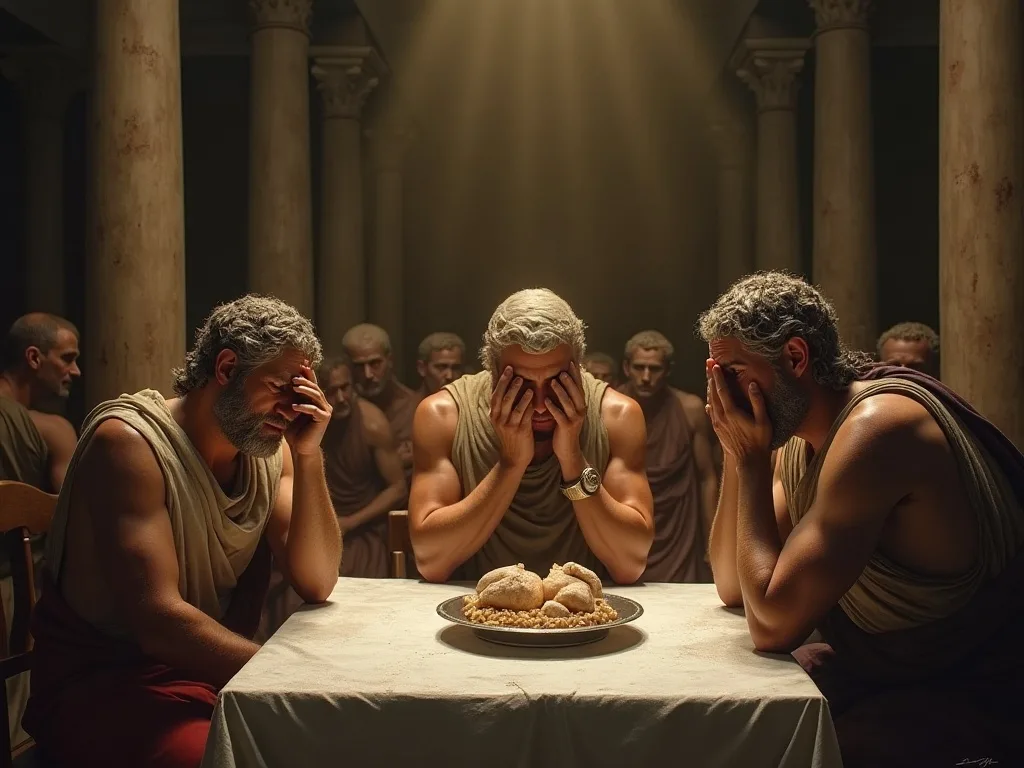
Tantalus invited the Olympians to a banquet at his palace. Then, either to test whether the gods were truly omniscient, or - in some readings - out of a grotesque kind of pride, he killed his own son Pelops, butchered him, and served the flesh to his divine guests.
The gods knew immediately. They stopped eating. Demeter alone, distracted by grief over her daughter Persephone, had absently consumed part of the shoulder before she recognized what was on her plate. The Olympians reassembled the boy's body, replaced the missing shoulder with carved ivory, and breathed life back into Pelops. He emerged from the cauldron more beautiful than before, which is why, Pindar explains, Poseidon fell in love with him on the spot.
Pindar is explicit that he finds the cannibalism story repugnant, and he rejects it in Olympian I, arguing that no god would eat a child. He offers an alternative: that mortals spread the cannibalism story to explain why Pelops disappeared to Olympus as Poseidon's companion. But Pindar is a lone dissenting voice. Hyginus in his Fabulae, Euripides in Orestes, and the mythographer Apollodorus all preserve the feast as historical fact within the myth.
The Verdict of the Gods: Why the Punishment Fits
The Olympians sent Tantalus to Tartarus, the deepest pit of the Greek Underworld, reserved for those who had committed crimes against the gods themselves. His sentence was not death - he was already mortal and would die regardless. His sentence was a specific, perpetual frustration that mirrored his crimes with surgical precision.
He had stolen food and drink from the gods. Now food and drink would be present around him always, forever unreachable.
He had hosted a false feast, offering his guests something that looked like hospitality but was in fact desecration. Now he would stand at a table he could never use.
He had tested divine omniscience. Now he would spend eternity being watched by forces he could not outwit.
Homer, in the Odyssey Book XI - the Nekyia section, where Odysseus visits the dead - gives the oldest surviving description of the punishment. Homer does not explain the crime. He simply shows Tantalus, standing in the pool, the water retreating and the branches lifting, and lets the image carry its own weight. That restraint is itself a kind of argument: the punishment is self-explanatory. You do not need to know what Tantalus did to understand that he crossed a line that cannot be uncrossed.
Pindar, writing two centuries after Homer, adds that a great stone hangs permanently above Tantalus's head, threatening to fall. This detail does not appear in Homer and is absent from most later versions, but it rhymes thematically with the myth of Sisyphus, whose own eternal labour crushes any notion of progress. You can read more about Sisyphus and the boulder to see how Greek myth built a whole theology of futile repetition.
Tantalus in the House of Atreus: How His Crimes Echoed Forward
The story of Tantalus does not end with his punishment. In Greek mythological logic, crime against the gods creates a miasma, a spiritual pollution, that flows through bloodlines like a current. His descendants carried the consequences.
His son Pelops survived the cauldron and became king of the Peloponnese - the peninsula in southern Greece still bears his name, Pelops's Island. Pelops won the hand of Hippodamia in a chariot race by bribing the king's charioteer Myrtilus, then threw Myrtilus into the sea to silence him. Myrtilus cursed the house of Pelops as he drowned.
That curse compounded with the original pollution of Tantalus and ran straight into the next generation. Atreus and Thyestes, sons of Pelops, became locked in a rivalry that produced one of the most savage sequences in all of Greek storytelling. Atreus, suspecting Thyestes of adultery with his wife, killed Thyestes's sons and served them to their father at a banquet. The echo of Tantalus's feast is unmistakable and deliberate.
Thyestes's surviving son, Aegisthus, would go on to murder Agamemnon, whose death set in motion the events of Aeschylus's Oresteia, the fourth-century BC trilogy that is arguably the Greek world's greatest surviving dramatic work. One man's feast in Lydia reverberated into the fall of Mycenae.
The Psychology of the Punishment: Hunger, Power, and Control
What makes the torment of Tantalus so precise is that it operates on the thing he had in excess. He had enjoyed divine food without earning it. The punishment is not fire or amputation or obliteration. It is proximity without access - the cruelest possible relationship to desire.
This structure appears across cultures. In Buddhist cosmology, hungry ghosts (pretas) are beings with vast, distended bellies and mouths too small to eat, condemned by greed to perpetual starvation. The Norse hell-realm of Niflheim held the dishonoured dead in cold and formlessness, cut off from the warmth and feasting of Valhalla. But the Greek version is unusually architectural: Tantalus is placed at a feast that was always designed not to feed him.
The Stoic philosopher Epictetus, writing in the first century AD, used Tantalus as a byword for the person who cannot distinguish between what belongs to them and what does not. To reach for things outside your proper sphere is, in Stoic terms, to live in permanent Tartarus whether or not you end up there after death.
The image is so potent that it has never needed updating. Sigmund Freud's discussions of frustrated desire map cleanly onto the Tartarean pool. Behavioural psychologists have used the phrase "tantalization" when describing learned helplessness produced by intermittent reward withdrawal. The myth became a clinical concept.
Pindar's Revisionism: A Poet Defends the Gods
Pindar's First Olympian Ode deserves its own moment of attention because it is one of antiquity's most interesting acts of theological editing.
Pindar wrote the ode in 476 BC to celebrate Hieron of Syracuse, who had won the horse race at Olympia. To honour Hieron, Pindar needed to invoke Pelops as a local hero and model. But the standard story of how Pelops came to exist again - served at dinner and reconstituted - struck Pindar as an indecent fiction. He writes directly: "It is not possible for me to call any of the blessed gods a cannibal. I stand apart."
So Pindar reconstructs the myth. In his version, Pelops simply disappeared because Poseidon, smitten, took him to Olympus. Jealous neighbours invented the feast story to explain the disappearance. Tantalus is still punished, but for the theft of ambrosia and the sharing of divine secrets, not for murder.
This is not just squeamishness. Pindar is making a theological argument: gods who eat children are not worthy of worship. His poem is an act of religious reform dressed in lyric metres. That the cannibalism story survived anyway, in Hyginus, in Apollodorus, in Euripides, suggests that the darker version had deeper roots than Pindar could pull up.
Cross-Cultural Parallels: The Punished Guest
The story of a mortal who dines with gods, breaks their trust, and suffers permanent exile from comfort has clear structural relatives outside Greece.
In Mesopotamian tradition, the hero Adapa was summoned before the god Anu, who offered him the bread and water of life. Adapa refused, having been warned (falsely) that it was the bread and water of death. He missed immortality through misunderstanding rather than malice, but the scenario - mortal at divine table, fatal transgression - runs parallel.
In the Hebrew Bible, Adam and Eve eat from a tree reserved for the divine and lose their place in a garden of abundant food. The punishment is not eternal starvation at a full table, but exile into a land where food must be wrested from thorns. The structure is similar: transgression at a sacred meal, followed by permanent exclusion from effortless nourishment.
The Yoruba tradition of West Africa includes cautionary stories about mortals who received gifts from the Orishas and abused that access, bringing ruin on their lineages for generations - a pattern structurally identical to the Tantalean curse that infected the house of Atreus.
These parallels do not mean the myths are the same. They mean the human intuition being addressed is the same: the fear that proximity to sacred power, handled badly, produces suffering that outlasts the individual transgressor.
Tantalus in Art, Literature, and Later Thought
The visual tradition begins early. Red-figure vases from the fifth century BC show Tantalus in the Underworld, sometimes alongside Sisyphus and Ixion (who was bound to a spinning wheel of fire for attempting to seduce Hera). The trio became a standard illustration of punishments in Tartarus, visible in museums from Athens to Naples.
Ovid's Metamorphoses, written around 8 AD, does not give Tantalus extended treatment but uses him as a reference point, confident that Roman readers needed no explanation. By Ovid's time, the name was a cultural shorthand.
The Renaissance returned to Tantalus repeatedly. Artists including Titian produced paintings of the condemned man straining toward the fruit. The image served moralists well: here was Pride made visible, reaching upward and always falling short.
Dante places sinners of comparable type in Purgatorio and Inferno, and though Tantalus by name appears in neither canticle, the logic of contrapasso - that a punishment should mirror the sin - owes its most famous literary articulation to exactly the Greek precedent Dante had absorbed through Virgil.
The Romantics transformed him into a symbol of the artist's condition: always grasping toward beauty, never quite touching it. Shelley and Keats both wrote in this vein, though not always naming Tantalus directly.
In the twentieth century, Albert Camus chose Sisyphus over Tantalus as the model for absurdist philosophy, but the choice says something about the two myths: Sisyphus has a task, a rolling stone, something to push. Tantalus has only passive, permanent frustration. The existentialist tradition preferred agency, even futile agency, over mere thirst.
The myth of Sisyphus and the story of Ixion share with Tantalus's tale the same Tartarean address and the same theological function: they are negative theology made narrative, showing through opposite examples what the gods demand of those they favour. Similarly, the tragedy of Persephone's descent to the Underworld illuminates what the Greek afterlife landscape actually looked like when Tantalus arrived there.
Frequently Asked Questions about Tantalus and His Eternal Punishment
Frequently asked questions
What exactly was Tantalus punished for?
Ancient sources disagree, and the disagreement is itself meaningful. Homer in the Odyssey (Book XI) shows the punishment without specifying the crime. Pindar in Olympian I (476 BC) charges Tantalus with stealing ambrosia and sharing divine secrets. Most other sources, including Hyginus in his Fabulae and Apollodorus in the Library, add the most serious charge: that Tantalus killed his son Pelops, cooked the body, and served it to the Olympians at a feast, either to test the gods' omniscience or out of sheer arrogance. Later tradition tends to treat all three charges as cumulative.
What happened to Pelops after the terrible feast?
According to the main mythological tradition, the gods recognised the meat immediately and refused to eat. Demeter alone, consumed by grief over Persephone's abduction, had absently eaten part of the shoulder before she realised what was in front of her. The Olympians then reassembled Pelops's body, gave him an ivory shoulder to replace the missing piece, and restored him to life. He emerged, in Pindar's telling, more beautiful than before. Poseidon became enamoured of him, took him to Olympus as a companion, and later returned him to the mortal world, where Pelops became king of the region that still carries his name: the Peloponnese.
Where does the word 'tantalize' come from?
Directly from this myth. Latin authors used Tantalus as a common reference for frustrating proximity, and from that, post-classical writers in several European languages formed verb equivalents. English "tantalize" appears from the late 16th century onward, meaning to tease with the sight or promise of something kept just out of reach. The word has outlasted almost every other product of classical learning in everyday English usage.
How does Tantalus's punishment connect to the curse on the house of Atreus?
Greek myth treats inherited guilt (miasma) as a literal contaminant that flows through bloodlines. Tantalus's crime against the gods left a spiritual stain on his lineage. His son Pelops added his own offence by cheating in a chariot race and killing the charioteer Myrtilus, who cursed the house as he died. These compounded pollutions drove the next generations: Atreus served Thyestes a cannibal feast that deliberately echoed Tantalus's crime, Thyestes's son Aegisthus murdered Agamemnon, and the chain only broke after the trials of Orestes as depicted in Aeschylus's Oresteia, performed in Athens in 458 BC.
Is there a rock at Mount Sipylus actually connected to Tantalus?
Yes, in the sense that ancient sources made the connection. The geographer Strabo, writing in the first century BC, describes a region near Mount Sipylus in what is now western Turkey as the homeland of Tantalus, and ancient travellers reported seeing a rock formation or tomb there identified as his burial site. A large natural rock formation at Sipylus was called "the throne of Pelops" in antiquity. These identifications reflect how Greek myth was anchored in real landscapes, not necessarily historical events. The site is in modern Manisa province in Turkey.
Why did the gods choose that specific punishment?
The punishment is structurally mirrored to the crime. Tantalus had stolen divine food and hospitality that was not his right. His torment places him permanently at the site of food and drink that is never his to consume. Greek religion operated on the principle of dike, proportional cosmic justice, and Tartarean punishments were understood as pedagogically precise, not merely retaliatory. The gods did not punish Tantalus with fire or physical pain but with the eternal replay of the desire he had misused. Several ancient commentators, including the philosopher Plutarch, cited the myth as proof that the Greeks believed the afterlife reflected moral structure, not random divine anger.
The Unresolved Question: Was Tantalus Guilty of Hubris or Love?
Scholarship since the 19th century has circled one question the ancient sources do not answer directly: did Tantalus host the feast of Pelops out of arrogance, or out of a desperate desire to give the gods something they could not buy for themselves?
The arrogance reading is straightforward. Tantalus, drunk on proximity to divinity, wanted to prove he could match the gods at their own table. He offered them the ultimate gift: the flesh of his own heir. He wanted to be remembered as a host without equal.
But some classical scholars, including Gregory Nagy in his work on archaic Greek religious practice, have noted that child sacrifice in very early Greek (and broader Aegean) religion may have been understood not as an act of contempt but as an act of desperate devotion. On this reading, Tantalus was not testing the gods; he was trying to consecrate his son, to make him permanently divine by having the Olympians consume and reconstitute him. It almost worked. Pelops did come back transformed, with divine ivory in his shoulder.
The gods rejected the gesture anyway. And that rejection is the real theological statement of the myth. You cannot decide, on your own authority, what constitutes a proper offering. The boundary between mortal and divine is not yours to dissolve, however pure your intentions. Tantalus overstepped the boundary in the most intimate possible way, and the boundary pushed back.
That is why Tantalus's eternal punishment still carries weight after three millennia. It is not a monster story. It is a story about the cost of misreading your position in a hierarchy you did not create and cannot control. The pool drains. The branch lifts. The stone hangs. And the water is always cold.
Free 25-page sample
Want the whole story?
Take the first 25 pages free. If it pulls you in, the full edition is yours as an instant PDF download, with a paperback on Amazon for selected titles.

Mythology
The World Mythology Book: The Gods, Heroes and Myths of Every Culture
The Gods, Heroes and Myths of Every Culture, in One Volume
The whole of world mythology in a single volume: Greek, Norse, Egyptian, Japanese, Hindu, Celtic, Slavic, Mesoamerican and African myths gathered side by side, each drawn from the primary sources.