

The Mead of Poetry: Odin's Quest for Wisdom and Inspiration in Norse Mythology
In Norse myth, the Mead of Poetry grants inspiration and divine knowledge to anyone who drinks it. Discover how Odin stole it from the giants, why skalds drank it to compose, and what it reveals about ancient Norse culture's hunger for wisdom.
Contents
In the darkness before creation, there existed something more precious than gold or silver. The Aesir gods did not hoard weapons or lands. They pursued something fiercer: the power to inspire, to shape reality through words, to make mortals remember them forever. That treasure was the Mead of Poetry, a brew so potent that a single sip granted the wisdom of ages and the gift of perfect verse.
The saga begins in blood and loss. Among the Norse cosmology, no treasure earned its value through peaceful means. The Aesir and the Vanir, two clans of gods, had clashed in war. When they finally agreed to peace, they sealed the pact with a ritual: both sides spat into a cauldron. From that mingled saliva, they shaped a figure named Kvasir, the wisest being ever born. His knowledge was so complete that there was no question he could not answer, no riddle that could stump him.
But wisdom makes enemies.
Two dwarves named Fjalar and Galar murdered Kvasir, draining his blood into three vessels: Odhroerir, Bodn, and Son. They mixed his blood with honey, creating the Mead of Poetry. Whoever drank it would inherit Kvasir's gift for eloquence and inspiration. The dwarves guarded this treasure jealously, keeping it hidden in the roots of the world. They knew that possession of such power would shift the balance of all nine realms.
The Giants' Theft and the Mead's Hidden History
The dwarves were not the only ones who recognized the mead's value. A giant named Suttung learned of their creation and moved swiftly. He captured Fjalar and Galar, demanding the Mead of Poetry as ransom for his life. The dwarves agreed, handing over their prize to save themselves. Suttung smuggled the mead into a mountain, where he set his daughter Gunlöð to guard it. She waited in absolute solitude, tending to the three sacred vessels, while her father kept watch from the summit.
The placement was strategic. Suttung knew that no ordinary being could reach the mead. The mountain stood in Jotunheim, the realm of giants, where even the boldest Aesir dared not venture alone. The mead would remain hidden for ages, a legend whispered among the gods but seemingly out of reach.
This is where the myth becomes about something deeper than theft: the price of knowledge and the lengths to which the desperate will go to obtain it.
Odin's Sacrifice: The Quest for Inspiration
Odin, the king of the Aesir, could not accept that wisdom lay beyond his grasp. He was already the god of war, magic, death, and rulership, but he hungered for more. In the Havamal, a collection of Old Norse wisdom poetry preserved in the Poetic Edda (a manuscript of Old Norse poems compiled in the 13th century), Odin speaks of his own self-sacrifice. He hung himself upon Yggdrasil, the world tree that connects all nine realms, for nine nights and nine days. He pierced his own side with his spear. He denied himself food and drink. Through this ordeal, he gained the knowledge of runes, the ancient symbols that held the power to shape fate itself.
But the runes were only the beginning.
Odin learned of Suttung's mead and decided he would possess it, whatever the cost. He traveled to Jotunheim and assumed the form of a serpent, burrowing deep into the mountain where Gunlöð kept her vigil. There, in that cramped darkness, he seduced the giantess with promises and persuasion. Over three nights, Gunlöð allowed him to drink from each of the three vessels: Odhroerir, Bodn, and Son.
In three draughts, Odin consumed all the Mead of Poetry.
The transformation was immediate and absolute. He shed his serpent form and flew skyward as an eagle. Suttung, enraged at the theft, transformed himself into an eagle as well and gave chase. The pursuit was a race across the cosmos. Odin flew toward Asgard, the home of the Aesir, while Suttung's wings beat hard behind him, closing the distance. Some versions say the chase was so close that Suttung nearly caught him; others claim Odin barely made it to the walls of Asgard before Suttung had to turn back.
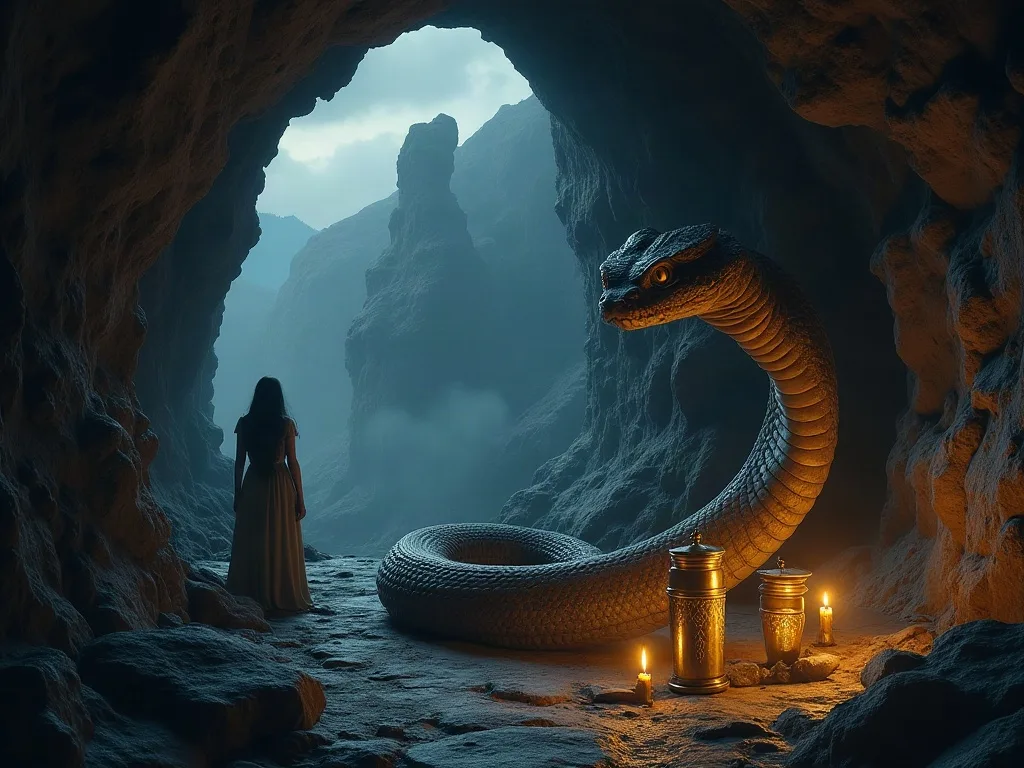
In his triumph, Odin brought the mead into Asgard. He poured it into vessels for the Aesir and for select humans: the poets and skalds who would compose in honor of gods and kings. Those mortals who received even a few drops would channel inspiration that seemed to come from beyond themselves, their words flowing with uncanny beauty and power.
The cost of this gift was paid in blood, sacrifice, and seduction. Odin did not steal the mead and then rest easy. The myth shows a god so committed to knowledge that he was willing to debase himself, to risk death, to use cunning against giants, and to deceive a lonely woman. The Mead of Poetry was never a simple treasure. It was a measure of how far one would go for wisdom.
The Significance of Poetry in Norse Culture
To understand why the Mead of Poetry mattered so profoundly to the ancient Norse, one must step outside the myth briefly and into the world it came from.
The Norse peoples lived in a harsh landscape: deep fjords, frozen winters, and an unpredictable sea. They had no written alphabet for most of their early history. Before the Latin alphabet arrived, knowledge was preserved in memory and in verse. A skald, a professional poet, was not a luxury or an ornament. He was essential. He recorded the genealogies of kings, the great deeds of warriors, the histories of settlements. Without poetry, there was no history. Without skalds, there was no continuity between generations.
This cultural reality shaped how the Mead of Poetry was understood. It was not merely a magic potion. It was the embodiment of civilization itself, the tool that allowed human experience to survive beyond a single lifetime. When Odin brought the mead to the gods and to a chosen few humans, he was establishing the sacred link between the divine and the mortal worlds, mediated through language and verse.
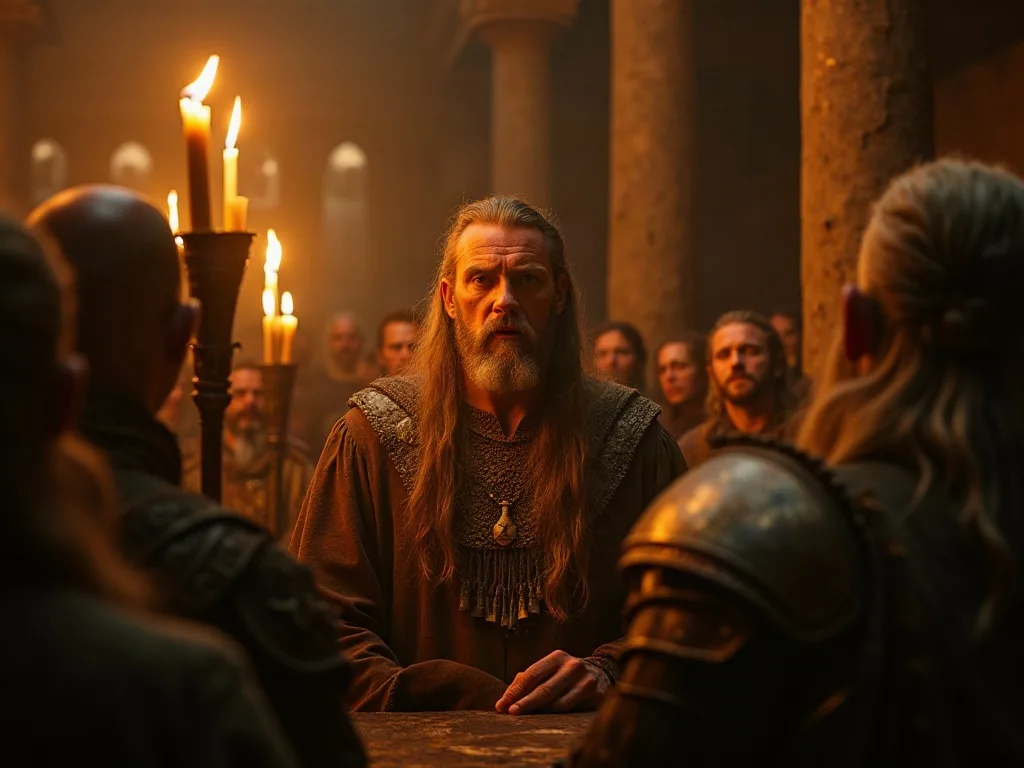
The Havamal itself contains passages that scholars believe were recited by skalds to invoke inspiration before composing. Lines like "I know I hung on the windy tree / nine full nights" were not meant to be forgotten. They were meant to be remembered, performed, and passed down. The mead existed to make such memory possible.
The Three Vessels and Spiritual Transmission
The myth preserves a curious detail that deepens its meaning: the mead was stored in three separate vessels, each with its own name. Odhroerir means "stirrer of inspiration" or "poetry stirrer." Bodn means "bowl." Son means "atonement" or "sacrifice." Each name hints at a different aspect of the creative process.
Odhroerir is the spark, the sudden arrival of inspiration that seems to come from outside oneself. It is the moment when a skald feels words flowing without effort, as if channeled from some higher source. Bodn is the vessel that holds and contains, the conscious craft that shapes raw inspiration into form. Son is the cost paid for such power: the sacrifice of comfort, the discipline required, the acceptance that creation demands something from you.
This tripartite understanding reflects a sophisticated view of art and knowledge. The Norse did not see inspiration as a gift that arrived complete. They saw it as a process involving the divine, the human, and sacrifice. The three vessels held not just mead but philosophy.
The Mead in Comparison with Other Mythological Treasures
Norse Mead of Poetry
Grants wisdom, eloquence, and poetic inspiration. Requires theft, deception, and sacrifice. Available only to a chosen few mortals. Transforms the drinker's inner capacity for language and thought. Associated with memory, history, and cultural continuity. Consumed ritually by skalds before composing.
Greek Ambrosia
Grants immortality and divine status. Often consumed casually by the Olympian gods. Reserved for gods and occasionally immortalized heroes. Sustains the body rather than transforming the mind. Associated with timelessness and divine nature. Consumed as daily food in Olympus.
The distinction is telling. Greek ambrosia sustains divine status and prevents aging. The Mead of Poetry does something more specific: it enables mortals to think and speak as the gods do, to achieve a momentary transcendence through language. Where ambrosia preserves, the mead liberates.
Comparisons also emerge with Hindu traditions. The soma in the Rigveda, one of the oldest Hindu sacred texts composed around 1500-1200 BCE, was an intoxicating plant drink that granted visions, strength, and communion with the divine. Like the Mead of Poetry, soma was central to ritual and transformation. But soma was often described as a communal experience, shared in elaborate sacrifices. The mead, by contrast, was hoarded and stolen, passed down through violence and seduction.
The Role of Poetry in Creating Reality
Norse mythology presents a striking idea: that poetry does not merely describe reality; it shapes it. The Mead of Poetry was not a metaphor for inspiration. In the worldview of the ancient Norse, it was the actual source of a specific kind of power.
When a skald composed a panegyric for a king, he was not simply praising him. He was investing the king with a particular kind of immortality. As long as the verse was remembered and recited, the king lived in the memory of his people. This was a form of resurrection. The Norse believed that the dead lived on in the minds of the living through the words spoken about them.
This explains why Odin, the god most associated with war and death, was also the god of poetry. In the Ynglinga Saga, a prose account of early Norse kings written by the 13th-century author Snorri Sturluson, Odin is described as having taught men the art of poetry so that they might preserve knowledge and honor the fallen. Poetry was not entertainment. It was magic, in the truest sense: a practice that altered the nature of reality by giving permanence to the temporary.

The Mead and the Gods' War with the Jotun
The theft of the Mead of Poetry sits within a larger conflict: the eternal struggle between the Aesir and the Jotun, the giants. This is not a simple battle between good and evil. Both sides represent necessary cosmic forces. The Jotun embody primal nature, chaos, and the raw power of existence. The Aesir embody order, culture, and civilization.
The mead belonged to neither side originally. It came from Kvasir, a being created from the mingled essence of both families of gods, a gesture of peace and balance. Yet the dwarves who made it gave it to the Jotun through coercion. Odin's theft was an act of cosmic rebalancing. He took back what neither purely chaotic nor purely civilized force could claim alone.
This suggests that the Norse saw wisdom, knowledge, and inspiration as resources that must be fought for, that exist in a state of tension between competing interests, and that the balance between chaos and order depends on such treasures remaining in motion rather than locked away.
The Mead and the End of the World
The Mead of Poetry appears again in one of the most significant moments in Norse cosmology: Ragnarok, the end of all things. In the Prose Edda, a 13th-century compilation of Norse mythology written by Snorri Sturluson, the Mead of Poetry is mentioned as one of the treasures that will be preserved when the nine realms are destroyed and reborn.
This is a profound statement about the Norse view of time and eternity. The physical world will be destroyed. The gods will die. But poetry will endure. The words that preserve memory, that grant inspiration, that link mortals to the divine, will survive the apocalypse itself. When a new world rises from the ashes, poetry will rise with it.
In this vision, the Mead of Poetry is more than a magical substance. It is a principle, a force, perhaps even the closest thing the Norse had to an idea of the soul of civilization itself.
The Historical Record: Skalds and the Mead
The myth of the Mead of Poetry was not mere fantasy. It shaped how real skalds understood their craft. Medieval Norse poets composed elaborate verses called drottkvaett, a complex meter that demanded technical mastery and emotional precision. These poets often invoked the mead as the source of their ability.
When a skald sat down to compose praise poetry for a king or to commemorate a fallen warrior, he was drawing on more than his own skill. He was, in his own understanding, accessing the power that Odin had won through sacrifice. The mead was present in his words, whether literally or through the cultural weight of the myth.
This created a kind of feedback loop. The myth explained why poetry had power. The power of poetry reinforced the truth of the myth. Every successful skald was proof that the mead was real, that Odin had succeeded in his theft, and that mortals could indeed access the wisdom of the ages through verse.
The Mead in Modern Reception and Adaptation
The Mead of Poetry has not remained confined to the medieval manuscripts where it was preserved. Modern writers, particularly those working in fantasy and speculative fiction, have drawn heavily on this myth. The idea of a magical substance that grants insight or creative power has proven endlessly generative.
Neil Gaiman's Norse Mythology, published in 2017, retells the story of Odin's quest for the mead with a novelist's eye for drama and character. Tolkien's works, though centered on different mythologies, reflect a similar reverence for the power of language and the way that words can preserve worlds. Video games, tabletop role-playing games, and contemporary music have all drawn on the image of the Mead of Poetry as a symbol of forbidden knowledge and divine inspiration.
What persists in these adaptations is the recognition that the myth speaks to something true about how creativity works. The sense that inspiration arrives unbidden, that it requires sacrifice, that it connects the human to something larger, and that it creates permanence in an impermanent world. These are not specifically Norse insights. They are universal. But the Norse myth gave them a particular form and power.
Frequently asked questions about the Mead of Poetry
Frequently asked questions
Did the ancient Norse believe the Mead of Poetry was a real, physical substance?
The surviving sources do not clearly indicate whether they believed it literally existed as a drink or whether it was understood as a symbolic truth about how inspiration works. The medieval manuscripts that preserve the myths, like the Poetic Edda and Prose Edda, were written long after Norse paganism had given way to Christianity. By then, the myths were understood primarily as stories. However, the reverence with which skalds invoked the mead in their verses suggests that they experienced its effects as real, even if the substance itself was metaphorical.
Who could access the Mead of Poetry after Odin stole it?
Odin poured the mead into vessels for the Aesir, the gods themselves, and distributed it to selected human poets and skalds. The myth does not specify exactly how many mortals received it or whether it was a one-time gift or an ongoing source. The implication is that only those with exceptional talent for verse, and perhaps divine favor, could access it. This created a sacred hierarchy: the greatest poets were understood to be those most blessed by Odin's gift.
Why did Gunlöð allow Odin to drink from the mead?
In the myth, Odin seduced Gunlöð over three nights with promises and persuasion. Some versions suggest he was kind to her, offering companionship in her lonely vigil. Others emphasize the deception. The ambiguity is intentional: the myth does not shy from showing that gaining wisdom often involves moral compromise. Odin sacrificed his dignity and used another being to achieve his goal. The price of knowledge is not always paid by the seeker alone.
What is the relationship between the Mead of Poetry and the runes Odin discovered?
The Havamal describes two separate quests for knowledge. Odin hung himself on Yggdrasil to gain the runes, and he stole the mead through cunning and theft. Both quests resulted in gifts to humanity: the runes provided a system of writing and magical knowledge, while the mead granted eloquence and inspiration. Together, they represent the dual sources of power in Norse culture: the fixed knowledge encoded in symbols and the flowing, living knowledge that dwells in language and song.
How does the Mead of Poetry compare to inspiration in other mythologies?
Most mythologies describe inspiration as a gift from a god or muse, often something that arrives without warning or explanation. The Norse myth is distinctive because it frames inspiration as something that must be taken, fought for, and distributed strategically. The mead cannot be created; it can only be stolen or passed down. This reflects a cultural belief that wisdom is finite, contested, and worth dying for. Other traditions often treat inspiration as infinite and freely available to the virtuous.
The Eternal Return of Inspired Words
The Mead of Poetry endures as a myth because it speaks to a truth that transcends time and culture. Those who create, who write, who compose, who make anything that requires both inspiration and craft, recognize the experience it describes. There is the waiting for inspiration to arrive. There is the moment when it comes, unbidden and sudden, like a gift from beyond oneself. There is the work of shaping that raw inspiration into something permanent and beautiful. And there is always a price: discipline, sacrifice, the willingness to venture into unknown territory.
Odin's theft of the mead was not ultimately about possession. It was about circulation. He stole the mead from locked chambers and shared it with mortals. The greatest value lay not in hoarding but in releasing. This insight, embedded in a myth told around fire more than a thousand years ago, remains central to how we understand the creative life today. The mead was never meant to be held still. It was always meant to flow through words, through verses, through the voices of those brave enough to speak and sing.
When a poet sits down to write, when a musician feels a melody arrive unbidden, when a storyteller speaks words that seem to come from somewhere deeper than conscious thought, the Mead of Poetry is present. Not as a literal substance but as a principle, as Odin's gift handed down through the ages, proving that what the ancient Norse believed about inspiration remains true: it is precious, it requires courage to pursue, it connects mortals to the divine, and it makes the temporary permanent.
Free 25-page sample
Want the whole story?
Take the first 25 pages free. If it pulls you in, the full edition is yours as an instant PDF download, with a paperback on Amazon for selected titles.

Mythology
The World Mythology Book: The Gods, Heroes and Myths of Every Culture
The Gods, Heroes and Myths of Every Culture, in One Volume
The whole of world mythology in a single volume: Greek, Norse, Egyptian, Japanese, Hindu, Celtic, Slavic, Mesoamerican and African myths gathered side by side, each drawn from the primary sources.