
The Volsunga Saga: The Norse Epic of Cursed Gold and Doomed Heroes
The Volsunga saga is the greatest prose epic of medieval Iceland, a sprawling tale of dragons, cursed gold, and warrior lineages that shaped how the Norse imagined their own heroic past. Discover the legend of Sigurd the dragon-slayer and the ring of Andvaranaut.
Contents
A dwarf's greed births a curse that will echo across generations. The dwarf Andvari loses his gold to the god Loki, and in rage, he lays a spell on the ring: it will bring ruin to anyone who holds it. This is how the Volsunga saga begins, not with a hero's glory, but with a transaction stained by divine theft and supernatural vengeance. What follows is one of medieval literature's most gripping narratives: a genealogy of kings and warriors, each touched by the same cursed gold, each driven closer to catastrophe.
The Volsunga saga is a prose epic from 13th-century Iceland that weaves together the fragmentary heroic poems of the Poetic Edda (an anonymous collection of Old Norse verses, mostly preserved in a single medieval manuscript) into a continuous, narrative-driven whole. It tells the story of the Volsung family across several generations, from the founding of their line to the death of Sigurd, the greatest dragon-slayer the Norse ever imagined. Scholars debate whether this saga preserves an ancient oral tradition or was largely invented by medieval scribes, but its power is undeniable: it became the template for every medieval European Arthurian romance and adventure epic that followed, and it continues to haunt modern literature, opera, and film.
The saga survives in a single vellum manuscript, known as the Nks 1824b, produced in Iceland around 1270-1280. No earlier written version exists. Yet the poems embedded within it, particularly those about Sigurd and the dragon Fafnir, are thought to preserve fragments of much older oral verse, possibly dating back to the Viking Age itself. The question of authenticity matters less than the question of meaning: why did medieval Iceland choose to commit this particular story to parchment, and what did they believe it revealed about their own ancestral heroism?
The Curse of Andvari: How Divine Theft Births Doom
Three gods descend to the world of humans seeking food and shelter. Odin, Hoenir, and Loki arrive at a river where an otter sits on a stone, eating a salmon. Without hesitation, Loki kills it. The otter is no ordinary animal; it is the son of a giant named Hreidmar, who owns the salmon-filled rivers around his home. When Hreidmar discovers his son's body, he seizes the three gods and demands compensation: the otter's skin must be filled entirely with red gold, inside and out, or all three will die.
The gods set out to gather the ransom. Loki ventures alone to the waterfall where dwarf Andvari lives, shape-shifting into a pike to catch the dwarf. Andvari has spent his days forging gold deep beneath the earth, and his hoard is immense. Loki strips him of everything, down to the last coin. But Andvari keeps one thing hidden: a ring of power called Andvaranaut. Loki sees it and tears it from his hand.
As the dwarf watches his wealth vanish, he curses the ring. Whoever possesses it will find it brings nothing but death and destruction. He curses the gold itself, swearing it will be the bane of all who hold it. Loki returns to the gods with the treasure, and Hreidmar's greed is satisfied; his son's body is wrapped in the otter skin and sealed with gold. But the moment the ransom is paid, the gods vanish, leaving Hreidmar alone with his cursed wealth.
This is not the beginning of the story in narrative time, but it is the beginning of the saga's tragedy. The curse of Andvari is the engine that drives every misfortune to follow. It is also the Norse understanding of how cosmic injustice works: a theft made by a god (Loki's murder of the otter) is punished not through direct retaliation but through a supernatural contamination that spreads across generations. The cursed gold does not make a man evil; it makes him unlucky, driven, obsessed. It is fate disguised as wealth.
The Volsung Dynasty: From Sigi to Sigurd
The family line begins with Sigi, a son of Odin himself, who marries and fathers a son called Rerir. Rerir's wife is barren until the gods intervene, sending an apple that grants her fertility. She bears Volsung, the patriarch whose name the entire family will carry. Volsung is a great king, and his wife bears him twelve children. The youngest is a daughter, Signy, and the eldest is a son called Sigmundr.
Signy is betrothed to a foreign king named Siggeir. At the wedding feast, Sigmundr pulls a sword from a tree (a detail echoed later in Arthurian legend, where Arthur draws the sword from the stone). Siggeir covets this blade and proposes a treacherous bargain: he will pay Sigmundr handsomely if he allows the king to take it. Sigmundr refuses. Siggeir, humiliated and nursing hatred, invites Volsung and his sons to visit his hall. There, he and his men slaughter the Volsung family in a massacre. Only Sigmundr and Signy escape.
Signy remains in Siggeir's hall, married to her brother's killer. She dreams of vengeance. Over years, she plots with a servant to seduce her own brother and bear him a son strong enough to avenge the family. Sinfjotli is born from this union, and Signy raises him to be a warrior. When he is old enough, Signy reveals the truth of his parentage. Sinfjotli and Sigmundr grow close, bind themselves as blood-brothers, and together they burn Siggeir's hall with the king and queen inside.
This section of the saga establishes the Volsung pattern: courage tested by betrayal, vengeance achieved through cunning and fraternity, and the family's unshakeable claim to heroic lineage. The incestuous union between Sigmundr and Signy is presented not as taboo but as sacrifice; it produces a son capable of justice. This reflects the saga's Old Norse sensibility, where kinship bonds (and sometimes their violation) matter more than Christian morality.
Sigmund and the Broken Sword: A Hero's First Fall
Sigmundr himself becomes a mighty king and warrior. He marries a woman named Hjordis and fathers a son destined for greater deeds than his own. But Sigmundr's power attracts the envy of other kings. One day, as he fights in battle, an old man appears on the battlefield. This is Odin himself, testing his human descendant's worthiness. Odin strikes Sigmundr's sword with his spear, and the blade shatters into pieces.
Without his sword, Sigmundr is defeated and dies of his wounds. Hjordis flees the battlefield, pregnant with Sigmundr's unborn son. That child is Sigurd, the greatest hero the saga will ever know.
This episode serves a narrative purpose beyond Sigmundr's fate. The broken sword becomes a relic, a symbol of a power that was and is no more. When Sigurd is old enough, the sword will be reforged, and the reunited blade will define his heroic identity. The destruction of Sigmundr's weapon by Odin hints that the gods themselves are invested in Sigurd's destiny; he is not merely a descendant but a chosen instrument of fate.
Sigurd the Dragon-Slayer: The Heart of the Saga
Sigurd is raised in obscurity by a man named Reginn, a dwarf smith who tends horses and teaches the boy the arts of war and swordsmanship. Reginn is a figure of hidden depths. He is the brother of the giant Fafnir, who once owned the cursed gold of Andvari. Fafnir, eaten up by greed, has transformed himself into a dragon and now hoards the treasure in a cave, guarding it obsessively.
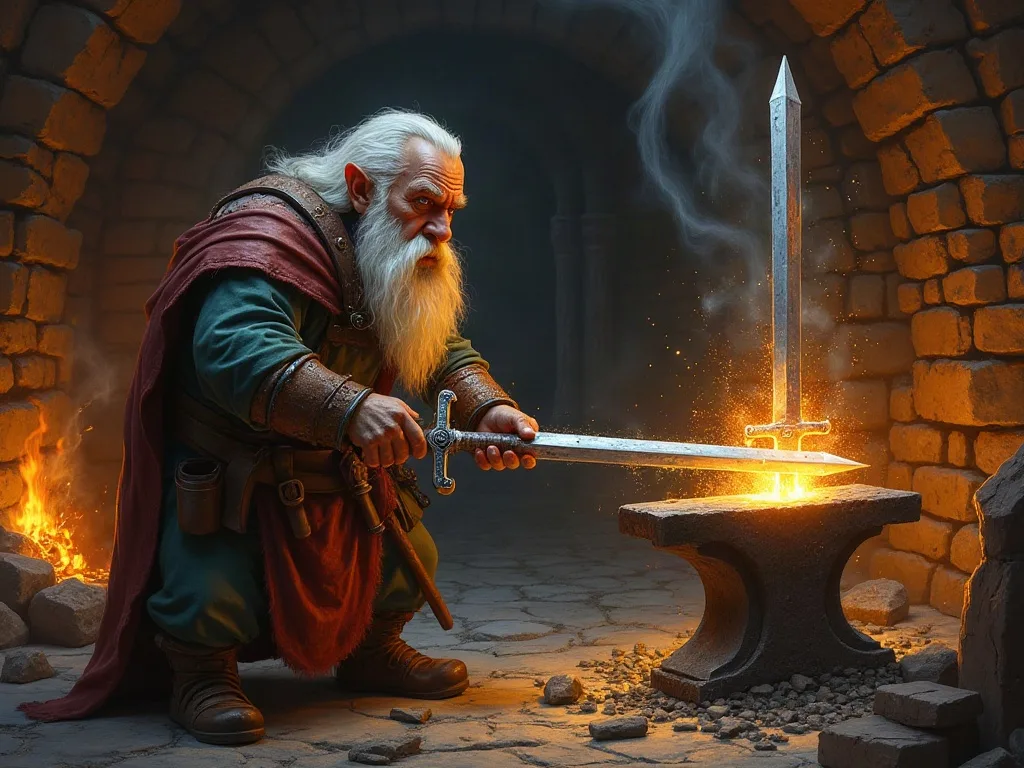
Reginn cultivates Sigurd's ambition, urging the boy to slay the dragon and win the hoard. But first, Sigurd travels to meet Gripir, a wise man who knows the future. Gripir warns Sigurd of dangers ahead but confirms his destiny: the dragon must fall by his hand. Sigurd returns and asks Reginn to forge him a sword. The first blade Reginn makes shatters when Sigurd tests it. The second breaks as well. Finally, Reginn remembers the shattered pieces of Sigmundr's sword, which Hjordis had preserved. From these fragments, he reforges the blade, calling it Gram. This sword does not break.
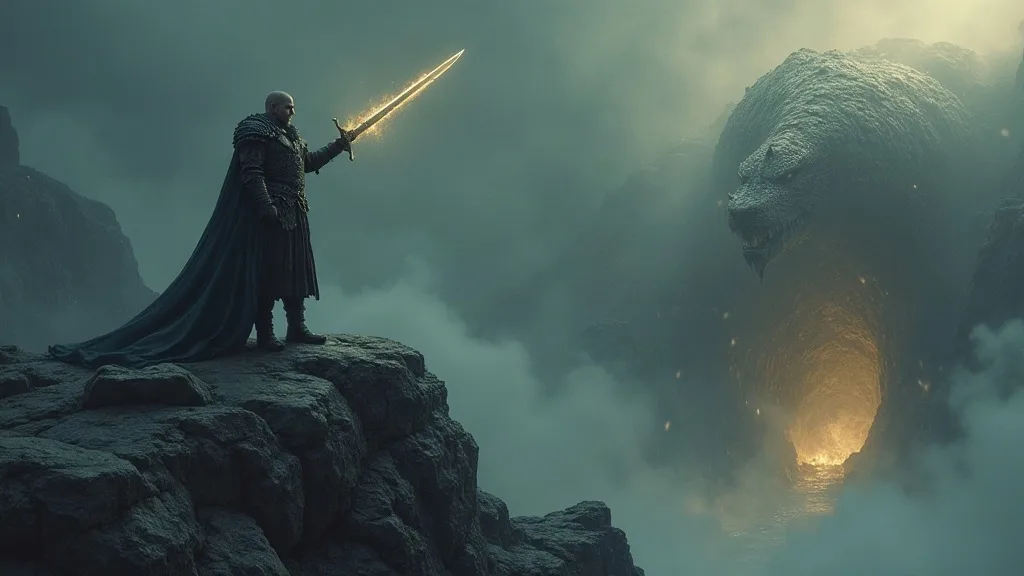
Sigurd rides out to face Fafnir. The dragon lies in a ravine, its breath foul with poison. Sigurd digs a pit beneath the creature's path, hides in it, and as Fafnir crawls over him, drives the sword Gram up through the dragon's belly. The wound is mortal. As the dragon dies, it speaks, cursing Sigurd with the knowledge that the cursed gold will be his doom as surely as it was Fafnir's.
This is the emotional and narrative center of the saga. The slaying of Fafnir is not simply a triumph of courage over brute strength; it is the moment when Sigurd becomes an instrument of fate. He kills the dragon not for glory or honor but because a curse, set in motion generations before his birth, demands it. The dying dragon's curse is Sigurd's first true confrontation with the supernatural machinery that governs his life.
After the dragon's death, Sigurd cooks Fafnir's heart. As the meat roasts, he touches it to test if it is done. The touch of the dragon's heart grants him the ability to understand the speech of birds. Two ravens perched above whisper to him: beware Reginn. The dwarf means to kill you and take the hoard for himself. Sigurd slays Reginn in his sleep.
The Ring of Andvaranaut and the Love of Brynhildr
Sigurd takes the hoard and travels on. He comes to a high mountain surrounded by flame. Within the fire, he finds Brynhildr, a Valkyrie (one of Odin's warrior maidens) who has been cursed to sleep, trapped in fire, until a hero fearless enough to ride through the flames reaches her. Sigurd does not hesitate. His horse, Grani, leaps through the inferno, and Sigurd finds the sleeping woman in full armor, more beautiful and terrible than any mortal he has ever seen.
Brynhildr wakes and recognizes Sigurd. She knows his lineage, his deeds, and his fate. They fall in love instantly. Sigurd swears an oath to marry her, and he gives her the ring Andvaranaut as a token of his troth. In this moment, Sigurd has unknowingly taken possession of the very curse that has haunted his family since before his birth. The ring of doom is now on Brynhildr's finger.
But Sigurd does not remain at the mountain. He rides away, and in his travels, he encounters the court of Gjuki, a powerful king with three sons: Gunnarr, Hogni, and Gutthormr. Gjuki has a daughter, Gudrun, who is as noble and beautiful as Brynhildr, though of mortal birth. Gjuki's wife, Grimhildr, is a wise woman versed in magic. She gives Sigurd a potion to drink, and the moment it touches his lips, his memory of Brynhildr dissolves entirely. He forgets their love, their oath, and the ring.
Under the spell, Sigurd falls in love with Gudrun and marries her. The saga does not present this as treachery on Sigurd's part; he is a victim of sorcery. Yet the consequences are catastrophic. Grimhildr had woven the forgetting-spell deliberately: she wanted Sigurd in her family, and she knew the only way to separate him from Brynhildr was to erase the memory of their bond.
The Tragedy of Brynhildr's Betrayal and Vengeance
News eventually reaches Brynhildr that Sigurd has married another woman. At first, she does not believe it. But when she learns it is true, her love turns to fury. She has been abandoned, betrayed by the man who swore eternal fidelity. The curse of Andvari is now working through human emotion: Brynhildr's grief and rage will ignite a chain of murders that will destroy every person she loves.
Brynhildr comes to the court of Gjuki, where she is received with honor. Grimhildr invites her to marry Gunnarr, the eldest of Gjuki's sons. Brynhildr accepts, but only on condition: whoever married Sigurd before she wed any other man is a liar and a traitor, and that man must die. This pronouncement is not a casual threat; it is a test Brynhildr knows Gunnarr cannot pass. She is forcing a confession and a reckoning.
Gunnarr is ambitious and wants Brynhildr as his wife. He agrees to kill Sigurd. But the task is harder than he thought. Sigurd is too powerful to overcome in direct combat. Gunnarr persuades his younger brother Hogni to help, and together they devise a plot. They get Sigurd drunk, and while he sleeps, Gutthormr (their half-brother, who has been given the blood of a serpent, making him incapable of fear) stabs him repeatedly. Sigurd dies in his bed, bleeding out slowly, managing to throw his sword Gram across the room with his dying strength and slay Gutthormr before falling finally silent.
Brynhildr sees Sigurd's body and understands what has happened. She knows Gunnarr killed him. In a moment of terrible clarity, she realizes that Sigurd had never truly betrayed her; he had been enchanted. All the suffering, all the murder, all the doom has unfolded because of the spell Grimhildr cast and because of the curse Andvari laid on the ring.
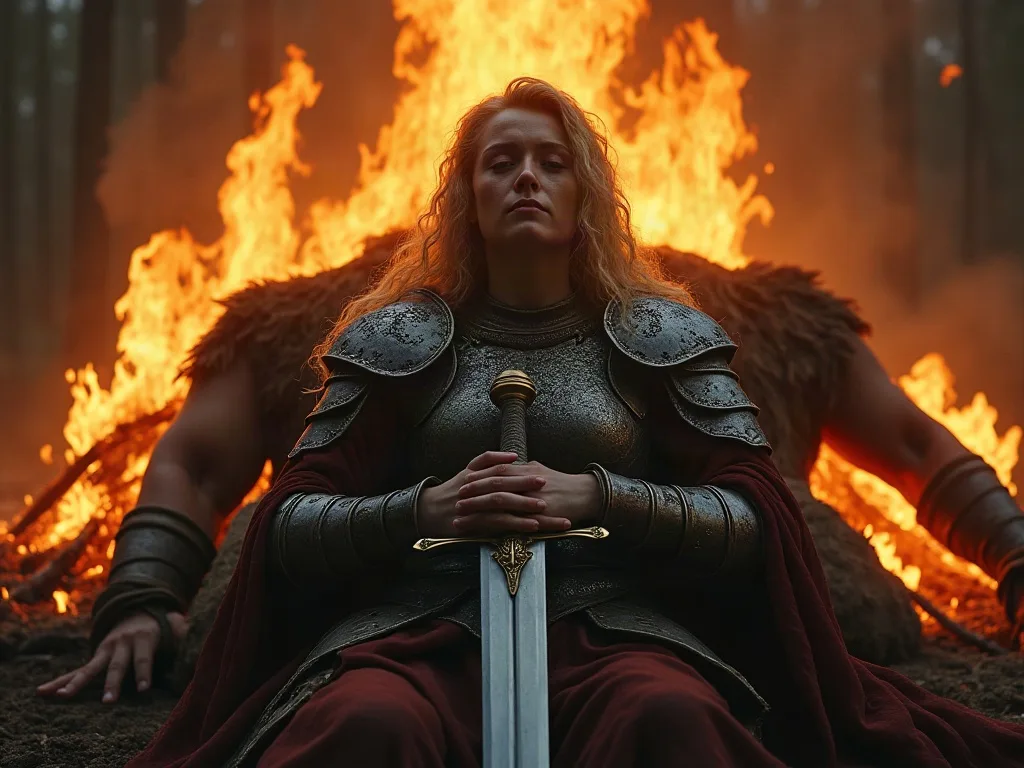
Brynhildr does not kill Gunnarr immediately. Instead, she asks him to build a great funeral pyre for Sigurd. As the pyre burns, she dresses herself in her war-gear, takes Gram (Sigurd's sword, which she reclaims from his corpse), and throws herself into the flames, declaring that she will find Sigurd in the afterlife and be his again. In death, where no spell can bind them and no curse can divide them, they are reunited.
The Nibelungenlied and Medieval Adaptation
The story of Sigurd and the cursed gold did not remain confined to Iceland. When the saga was written down in the 13th century, it was already hundreds of years old in oral form. But its influence spread far beyond the Norse world. In the early 13th century, an anonymous poet in Germany adapted the Volsunga saga (and the related heroic poems of the Eddas) into a new work: the Nibelungenlied, the German epic that rivals the French Chanson de Roland in scope and influence.
The Nibelungenlied follows the same basic plot: a dragon is slain, cursed gold is seized, a Valkyrie-like figure (Brunhilde) is won through deception, and tragedy engulfs a noble court. But the German poet changed crucial details. He softened the magical elements, emphasized courtly love over fate, and made the story fit the aesthetic of medieval chivalry. Where the saga is stark and fatalistic, the Nibelungenlied is grand and courtly.
Both works, however, share a core conviction: that certain acts, certain objects, and certain betrayals are cosmically catastrophic. The cursed gold does not simply make men greedy; it remakes their entire world, pulling kings and heroes into a gravitational field of doom from which escape is impossible.
Scholarly Debates: Oral Tradition versus Medieval Invention
How old is the Volsunga saga, really? This question has occupied scholars for nearly two centuries, and the answer remains contested.
On one side, many scholars argue that the core narrative preserves ancient oral traditions dating back to the Germanic peoples of the Migration Period (roughly 400-800 CE) or even earlier. The heroic names and genealogies, the references to real historical figures like the Burgundian kings, and the parallel versions of the story in Germanic and even Indian epics (the Mahabharata contains a hero named Sigurd-like figures and curse-filled treasures) suggest deep roots in Indo-European legend.
On the other side, critics point out that the oldest written manuscript of the saga dates only to the late 13th century. No earlier written version exists. The saga was composed by an unknown medieval Icelandic author (or authors) who drew on fragments of older poetry but also invented much of the prose narrative framework. The dialogue, the psychological depth, the structural coherence: these may be medieval creations, not ancient transmissions.
A middle position, held by many modern scholars, acknowledges both currents: the saga weaves together genuine fragments of much older heroic poetry (the Poetic Edda poems) with medieval invention and restructuring. The author was not merely transcribing; he was composing a new work that honored older sources.
What matters for readers is this: whether the saga is ancient or medieval, it was regarded by 13th-century Icelanders as a legitimate history of their ancestors. They believed (or wanted to believe) that Sigurd had really lived, that the cursed gold was real, that their own nobility descended from such heroes. The saga served as a kind of mythological genealogy, grounding Iceland's sense of itself in a heroic past that could rival any in Christendom.
The Afterlife of Sigurd: From Wagner to Modern Fantasy
The death of Sigurd did not end his influence. The story passed into European literature, shaped opera (Wagner's Ring cycle), inspired prose writers from William Morris to Tolkien, and became the template for virtually every modern fantasy epic involving dragons, cursed artifacts, and doomed heroes.
Wagner's operatic tetralogy, "The Ring of the Nibelung" (1876), brought the Volsunga saga and Nibelungenlied into the consciousness of 19th-century Europe. Wagner compressed, reorganized, and psychologized the material, making it speak to Romantic ideals of transcendent love and cosmic tragedy. Brynhildr (renamed Brunnhilde) became the emotional center; Sigurd (renamed Siegfried) became a symbol of human innocence destroyed by fate and manipulation.
Tolkien, a philologist who knew Old Norse intimately, drew deeply from the saga for his own mythology. Smaug, the dragon in "The Hobbit", echoes Fafnir. The cursed ring in "The Lord of the Rings" owes much to Andvaranaut. The genealogies, the doomed heroes, the sense that great power and great evil are intertwined: all of this flows from Tolkien's reading of the Volsunga saga.
In modern fantasy literature and games, the saga's influence is everywhere. Dragons are rarely mere monsters; they are tragic or intelligent creatures, hoarders of cursed wealth. Cursed artifacts drive narratives forward. Betrayals between lovers and kinsmen generate the deepest conflicts. The saga taught later storytellers that the most devastating tragedies are not those inflicted by villains, but those caused by love, loyalty, and fate colliding with each other.
The Ring, the Curse, and Fate in Norse Thought
What makes the Volsunga saga endure is not merely its plot but its philosophy. The saga embodies a particular vision of how the world works: one in which actions have consequences that ripple across time, in which wealth and power are morally ambiguous, and in which even the best-intentioned hero cannot escape the trajectory of doom set in motion before his birth.
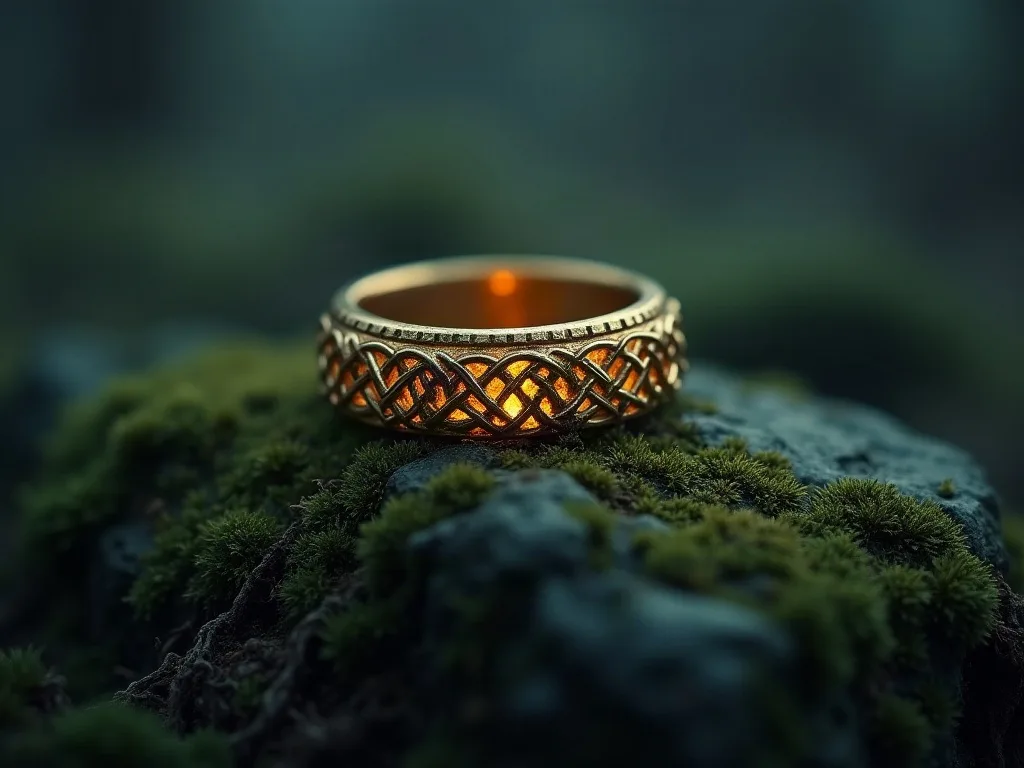
The ring Andvaranaut is the saga's central symbol. It is not evil in itself; it is simply cursed, contaminated by an act of injustice (Loki's theft). Yet everyone who possesses it suffers for it. Sigurd does not deserve the curse; he is guilty of no crime. Yet he inherits it through his love for Brynhildr, who first receives the ring as a token of his affection. The saga suggests a universe where moral innocence offers no protection against fate, where love itself can become a vector for doom.
This vision connects to deeper themes in Old Norse religion and philosophy. The Norse people believed that the world itself was fated to end in Ragnarok, a catastrophic destruction of the cosmos. No god, not even Odin, could prevent it. Yet heroes still fought, still loved, still swore oaths, knowing that their efforts might ultimately be futile. This is the ethical stance the saga champions: act with courage and honor, not because victory is assured, but because honor and courage matter regardless of the outcome.
The Volsunga saga is therefore not merely an adventure narrative. It is a meditation on how to live in a world where doom is inevitable and fate is inescapable. Sigurd's tragedy is noble precisely because he cannot win, yet he acts with full knowledge of the cost.
Frequently asked questions about the Volsunga saga?
Frequently asked questions
What is the Volsunga saga based on real history?
The saga blends genuine historical fragments with legend and invention. Some of the names and dynasties (like the Burgundian kings) refer to real peoples, and scholars believe fragments of the prose narrative preserve much older oral traditions. However, the oldest written manuscript dates only to the 13th century, and the author(s) likely invented much of the narrative framework. It should be read as literary art grounded in historical memory, not as literal history.
Who wrote the Volsunga saga?
The author is unknown. The saga survives in a single medieval Icelandic manuscript (Nks 1824b) from around 1270-1280, but the author's name was never recorded. Scholars believe it was composed by an educated Icelandic cleric or scholar who drew on fragmentary Poetic Edda poems and oral tradition but also created much original prose narrative. The identity of the author remains one of medieval literature's unsolved mysteries.
How does the Volsunga saga relate to the Poetic Edda?
The Poetic Edda is an anonymous collection of Old Norse poems, some of which directly concern Sigurd, Brynhildr, and the cursed gold. The Volsunga saga author wove many of these Edda poems into a continuous prose narrative, paraphrasing verse passages and bridging gaps with original prose. So the saga is partly a translation and reorganization of older poetry, and partly a new medieval composition that transformed fragments into a unified epic.
What happened to Sigurd after he killed the dragon?
After slaying Fafnir, Sigurd gained the cursed hoard and tasted the dragon's heart, which granted him the ability to understand bird speech. He then killed the dwarf Reginn (who planned to betray him), took the cursed ring Andvaranaut, and rode away. He later encountered the sleeping Valkyrie Brynhildr, fell in love, gave her the ring, and swore an oath to marry her. But a magical forgetting-spell caused him to abandon her and marry the mortal woman Gudrun instead, setting in motion the tragic chain of events that led to his murder.
Why did Brynhildr kill herself?
Brynhildr learned that Sigurd, the man she loved and to whom she had sworn eternal fidelity, had married another woman under a spell of forgetfulness. She felt betrayed and demanded vengeance, manipulating Gunnarr (the man who married her) into murdering Sigurd. But when she saw Sigurd's corpse, she realized he had been enchanted and had never truly abandoned her. Overcome by grief and a desire to rejoin him in death, where magic could not divide them, she dressed in her armor, took Sigurd's sword Gram, and threw herself onto his funeral pyre, declaring she would find him in the afterlife.
Is the Volsunga saga the same as the Nibelungenlied?
No, they are related but distinct works. The Volsunga saga is a 13th-century Icelandic prose epic. The Nibelungenlied is a 13th-century German verse epic. Both tell versions of the same basic story (dragon, cursed gold, Sigurd/Siegfried, Brynhildr/Brunhilde), and both likely drew from shared older traditions. However, the Nibelungenlied adapted the story to fit medieval German courtly aesthetics, while the Volsunga saga preserves a more starkly fatalistic, Norse sensibility. Reading them side by side reveals how the same myth can be transformed by different cultures and genres.
The Saga's Unresolved Mysteries: What We Still Don't Know
Scholars have debated the Volsunga saga for centuries, yet fundamental questions remain unanswered. Who composed it, and when, precisely? What earlier sources did the author consult, and how much did he invent? Why did medieval Iceland choose to preserve this particular story and not others?
One particularly vexing question concerns the saga's treatment of magic and the supernatural. The saga presents magical events (Brynhildr's enchanted sleep, the forgetting-potion, Andvari's curse) as factual, yet it shows no self-consciousness about their impossibility. Modern readers often assume this reflects a credulous medieval audience. But scholars like Jesse Byock have argued that medieval Icelanders understood the difference between myth, legend, and history; they chose to preserve the saga because they believed it encoded genuine ancestral memory, even if the magical framing was poetic rather than literal.
Another unresolved question is the saga's exact relationship to the Poetic Edda poems. The author clearly used Edda poems (scholars can identify direct borrowings), but he also departed from them significantly. Did he have access to poems that have since been lost? Did he invent new material, or was he following other oral sources? Without additional manuscripts, we may never know.
The saga's cultural significance to medieval Iceland also remains partly mysterious. Why did this particular story matter so deeply that an educated person took the time to write it down on expensive vellum? One answer is genealogical: many Icelandic families traced their lineage to the Volsungs, so the saga functioned as a mythological pedigree. Another is artistic: the saga simply tells a better story than most, and medieval Iceland produced enough high-quality literature that we know scribes were willing to preserve beautiful and important works for their own sake. The truth likely involves both motives.
Free 25-page sample
Want the whole story?
Take the first 25 pages free. If it pulls you in, the full edition is yours as an instant PDF download, with a paperback on Amazon for selected titles.

Mythology
The World Mythology Book: The Gods, Heroes and Myths of Every Culture
The Gods, Heroes and Myths of Every Culture, in One Volume
The whole of world mythology in a single volume: Greek, Norse, Egyptian, Japanese, Hindu, Celtic, Slavic, Mesoamerican and African myths gathered side by side, each drawn from the primary sources.