
The Land Without Evil: Yvy Marã Ey and the Sacred Quest
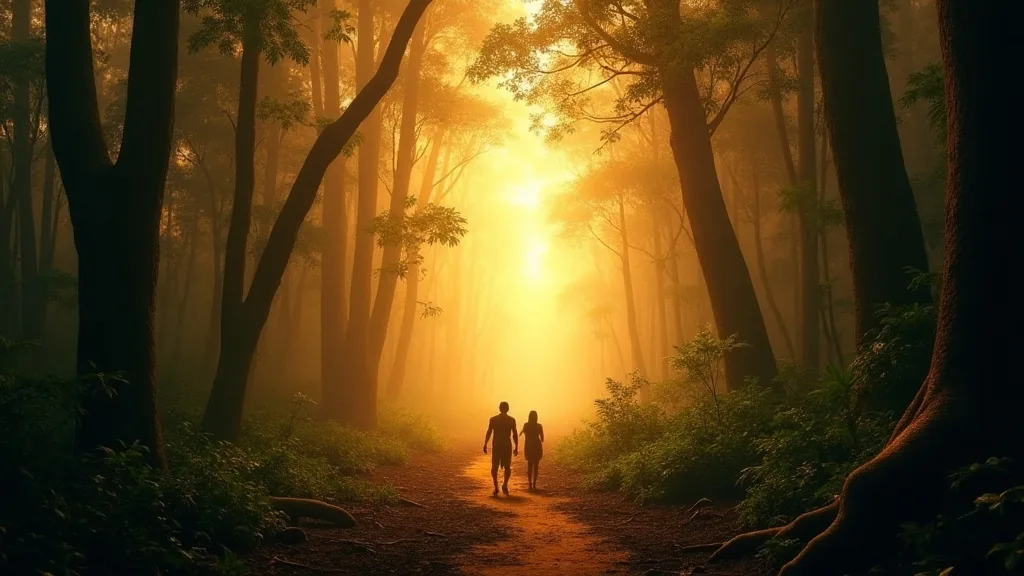
Yvy Marã Ey, the Tupi-Guarani "Land Without Evil," is more than a paradise myth. It is a living theology of escape, renewal, and sacred motion that drove entire nations to walk toward the horizon.
Contents
A World That Must Be Left Behind
Among the most extraordinary concepts in the religious history of the Americas, Yvy Marã Ey stands apart. Translated literally from Guarani as "land without evil" or "land that does not rot," it names a place beyond the known world where the earth itself does not decay, where human bodies shed their weight and become luminous, and where death loses its dominion. This is not merely a paradise imagined after death. It is a destination reachable by the living, through the right combination of ritual purity, collective suffering, and sustained sacred movement.
The Tupi-Guarani peoples, spread across the vast lowlands of South America from the Brazilian coast to the Paraguayan interior, carried this vision for centuries. It was not an idle dream. It was a mandate. Prophets called karai led entire communities away from their villages, across rivers and forests, in mass migrations toward a land they believed lay just beyond reach. Some groups walked for years. Some perished. A few, according to their own traditions, arrived.
The myth of Yvy Marã Ey is therefore not simply cosmology. It is one of history's most dramatic intersections of theology and collective action.
The Cosmological Architecture
To understand the quest, one must understand the Tupi-Guarani vision of the cosmos. The world, in this framework, is fundamentally impermanent. It was created by a divine being variously called Nhamandu, Tupã, or Ñande Ru (Our Father), depending on the specific community and linguistic tradition. This creator fashioned the earth, but the earth is aging. It carries within it an irreducible principle of corruption, a tendency toward rot, entropy, and moral degradation, which the Guarani term mba'e meguã, roughly translated as "bad things" or the corrupting quality inherent to this plane of existence.
The world will end. This is not a prophecy but a structural certainty. The Tupi-Guarani cosmos has been destroyed before and reconstructed. The present earth is itself a replacement for an older, ruined world. The god Tupã sits in the east, associated with thunder and creative force. Ñamandu resides at the origin of things, connected to sacred speech, since in many Guarani traditions the world was sung into being by divine word rather than crafted by hand.
Between destruction and divine perfection stands the human soul. Each person carries an ayvu, a sacred word-soul breathed into them before birth. This divine fragment seeks to return to its source. Yvy Marã Ey is where that return becomes possible without passing through death.
The Role of Sacred Speech
The Guarani concept of sacred language, called ñe'e porã (beautiful words or divine language), is inseparable from the myth. The karai prophets did not simply announce the Land Without Evil. They sang it into being as a real direction in space. Their chants mapped a spiritual geography, aligning cardinal points, rivers, and star positions with the location of the paradise. In the tradition of the Mbya Guarani, still living today across Paraguay, Argentina, and Brazil, the east is the direction of Ñamandu and of divine light. The west belongs to Ñande Ru Vusu, the great father of night and mystery. The Land Without Evil typically lies eastward, toward the sunrise, toward the sea.
The Karai: Prophets Who Walked

No figure is more central to the living mythology of Yvy Marã Ey than the karai, the prophet-shaman who receives the divine summons and then transmits it with irresistible urgency to their community. The karai occupied a distinct social position among the Tupi-Guarani. They were not hereditary priests. They were individuals who demonstrated an exceptional purity of soul, a capacity to fast for extended periods, to dance without rest for days, and to produce sacred chants that altered the spiritual state of listeners.
When a karai declared that the time had come to seek the Land Without Evil, the response could be total. Sixteenth and seventeenth century European missionaries and colonial administrators left astonished records of entire villages abandoning their fields, their pottery, their planted crops, and walking into the forest. The Portuguese and Spanish observers often misread these migrations as social collapse or the breakdown of indigenous order. In Tupi-Guarani terms, they were the highest possible expression of order: the community acting in concert on sacred authority.
The historian Hélène Clastres, in her essential study of Guarani religion, documented how these movements persisted across centuries and into the twentieth century. The migrations were not desperate flights from colonial violence alone, though colonial violence intensified their urgency. The theological imperative predated European contact. The Tupi on the Brazilian coast were already seeking Yvy Marã Ey before any Portuguese ship appeared on the horizon.
Ritual Preparation and the Lightening of the Body
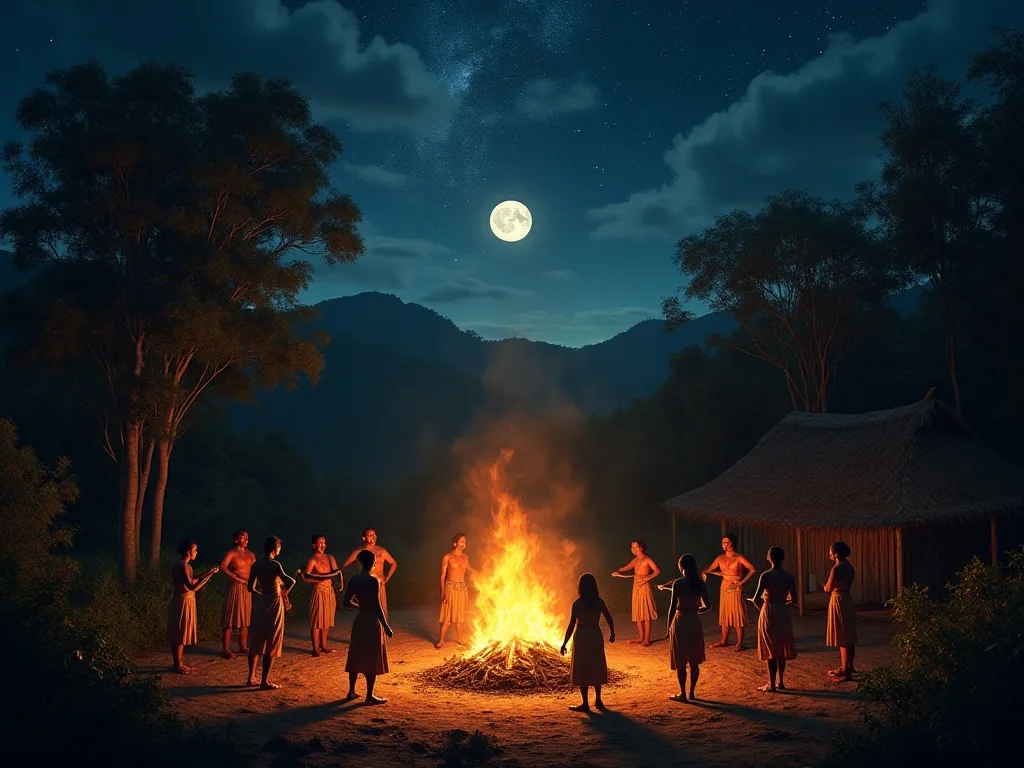
The journey demanded transformation. Pilgrims underwent extensive fasting, reducing food intake to the point where the body became, in Guarani terms, "light." This lightening was not metaphorical. The Guarani believed that the physical body, weighed down by ordinary food and ordinary desire, could not enter the Land Without Evil without preparation. The flesh had to become less dense, more permeable to the sacred. Ritual dance, performed in long communal sessions called jerojy, served the same purpose. Movement, song, and deprivation worked together to prepare the collective body for a crossing.
The women of the community were essential to this preparation. Guarani tradition does not restrict the sacred quest to male warriors or male prophets. The entire community, men, women, children, and elders, participated. Some accounts mention that the very old and the very young were carried when they could no longer walk. The communal nature of the pilgrimage was itself theologically significant. Yvy Marã Ey cannot be reached by individuals. It requires the assembled people moving together as a single sacred body.
Contact, Catastrophe, and the Myth's Transformation
The arrival of European colonization in the sixteenth century did not destroy the myth of Yvy Marã Ey. It intensified it. The destruction of indigenous communities, the introduction of epidemic disease, the forced labor of the encomienda system, and the cultural trauma of missionary conversion all gave the eschatological dimension of the myth a new and terrible urgency.
For the Guarani, the degradation of the world had accelerated visibly. The earth was rotting faster. The karai responded with increased prophetic activity. The migrations multiplied. Some Tupi groups walked thousands of kilometers southward from the Brazilian coast toward the Río de la Plata basin. Others moved inland. A remarkable documented migration in the late sixteenth century saw Tupi-speaking groups crossing the entire South American continent in what observers described as a religious frenzy, though from within their own cosmology, it was the most rational response imaginable to the collapse of the world.
Jesuit missionaries encountered Guarani communities in the seventeenth century and recognized something theologically familiar in the concept of a promised land. Some scholars have noted superficial resonances with the Hebrew idea of a promised land flowing with milk and honey. But the resemblance is structural only. Yvy Marã Ey does not require the conquest of another people's territory. It is not a land emptied for the chosen. It is a dimension of existence that transcends ordinary territory, already there, waiting to be reached by those who have made themselves spiritually worthy of arrival.
The Mbya Guarani and the Living Tradition
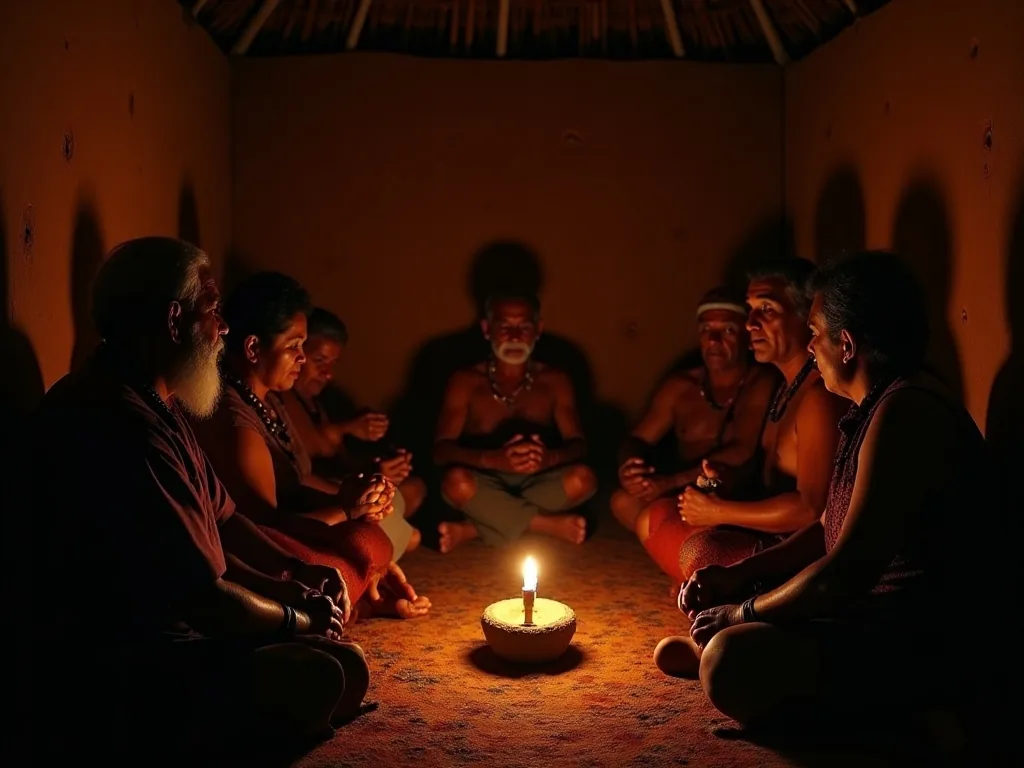
The myth of Yvy Marã Ey did not remain frozen in the historical past. Among the Mbya Guarani of present-day Paraguay, Brazil, and Argentina, the theology of the Land Without Evil remains active and central to religious life. The Mbya Guarani hold a rich ceremonial tradition built around the Opy, the sacred house of prayer, where jerojy dances and sacred songs continue to be performed as means of maintaining contact with the divine world and preparing for the eventual crossing.
Contemporary Mbya communities describe Yvy Marã Ey not as a destination abandoned because it proved unreachable, but as a reality that remains the ultimate horizon of human spiritual life. Some elders speak of ancestors who achieved the crossing and who now inhabit that luminous world, visible sometimes as flashes of light at the forest edge. The boundary between this world and the Land Without Evil is thin where the forest is deep and unbroken.
This living dimension of the tradition has made Yvy Marã Ey significant to scholars of religion far beyond the study of Tupi-Guarani culture. The theologian Bartomeu Meliá, who worked alongside Mbya communities for decades, described the Guarani religious world as one of the most coherent and self-sufficient indigenous theologies in the Americas, one that had maintained its integrity against enormous pressures.
Yvy Marã Ey and Political Resistance
The quest for the Land Without Evil also carried, and continues to carry, a dimension of political resistance that is impossible to separate from its spiritual content. The decision to leave, to refuse the rotting world, was also a refusal of colonial domination. Communities that departed for Yvy Marã Ey were communities that refused forced labor, forced conversion, and forced assimilation.
In the nineteenth and twentieth centuries, Guarani communities continued to organize migrations framed in terms of the sacred quest. The Brazilian anthropologist Nimuendajú, writing in the early twentieth century, documented migrations among the Apapocúva Guarani that culminated in groups reaching the Atlantic coast and pausing there, looking eastward over the ocean, believing the Land Without Evil lay just beyond what the eye could see.
Between the Sacred and the Horizon
Yvy Marã Ey remains one of the most philosophically rich concepts in world mythology. It refuses easy categorization. It is not merely an afterlife, because the journey is undertaken by the living. It is not merely a utopia, because utopia is a political construct imagined from within a society, while Yvy Marã Ey exists outside the structure of this world entirely. It is not simply a promised land, because no deity commands armies to take it; it must be approached through personal and collective purification.
The myth asks something demanding of those who believe in it: that they take the impermanence of the world seriously enough to move. That they trust sacred speech enough to follow it into the forest. That they believe the body itself can become light enough to cross into a different order of existence.
For the Tupi-Guarani peoples, this was never an abstract proposition. It was the central fact of their religious lives, the organizing principle of community, identity, and hope. The Land Without Evil was not a comfortable idea. It was an urgent one, compelling enough to set whole nations walking toward the horizon, sustained by song, thinned by fasting, carrying their children and their sacred words into the unknown.
The forest receives them. The horizon remains. And the songs continue.
Read the full book
Want the whole story?
The complete edition is an instant PDF download here, with a paperback on Amazon for selected titles.
Tupi-Guarani
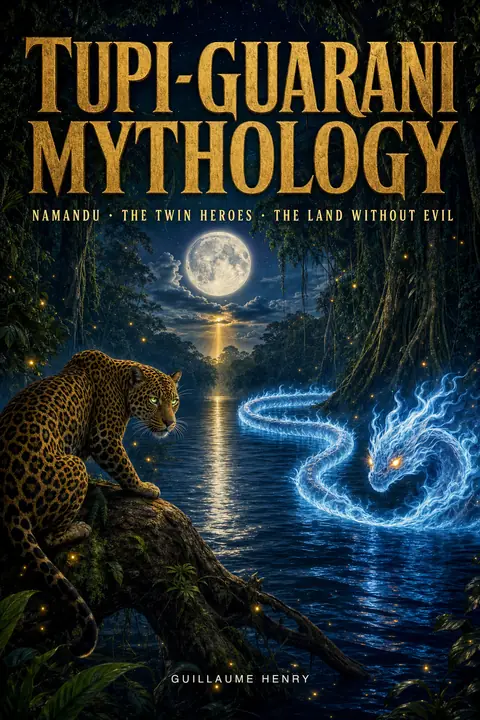
The Tupi-Guarani Mythology Book: The Land Without Evil, the Twin Heroes, and the Spirits of the Rainforest
Namandu, the Twin Heroes, and the Land Without Evil
The mythology of the Tupi and Guarani peoples of the Amazon and the Atlantic forest: Namandu the creator who unfolded the world out of darkness, the twin heroes raised by jaguars, Tupa of the thunder, the fire-serpent Boitata, and the long search for the Land Without Evil.