
Egyptian Mythology in Moon Knight: How Marvel's Hero Brings Ancient Gods to Modern Screen
Moon Knight fuses Marc Spector's fractured psyche with Khonshu's ancient vengeance, pulling Egyptian mythology into modern superhero storytelling. Discover how Marvel translated a 4,000-year-old moon god into a psychological thriller that respects both the source and the character.
Contents
Marc Spector bleeds on a statue of a moon god, and something shifts inside him. The mercenary's body lies broken in Cairo; the statue rises above, ancient and watchful. When Marc wakes, he doesn't just see visions anymore, he hears a voice speaking in rhythm with the lunar phases, demanding justice against those who hunt at night. This is where Moon Knight begins: not as a superhero origin, but as a collision between a traumatized mind and four millennia of Egyptian belief.
Egyptian mythology in Moon Knight transforms what might have been a simple mental-health storyline into something stranger and more honest. The Disney+ series (2024) and the Marvel Comics lineage that preceded it take Khonshu, the moon god worshipped along the Nile from roughly 2000 BC onward, and makes him the antagonist, the voice in Marc's head, the embodied form of a man's own fractured conscience. But here's the trap: is Khonshu a delusion, or is Marc actually chosen by an ancient god? The mythology doesn't answer. Neither does the show. That ambiguity is the whole point.
Who Khonshu Really Was in Ancient Egypt
To understand what Moon Knight borrows, and what it changes, you need to know the real Khonshu first. He wasn't one of the flashy gods. He had no major temple until the New Kingdom (roughly 1550-1070 BC), no elaborate priesthood, no festivals that commanded the Egyptian calendar like those of Amun or Osiris. But he was there, watching from the night sky.
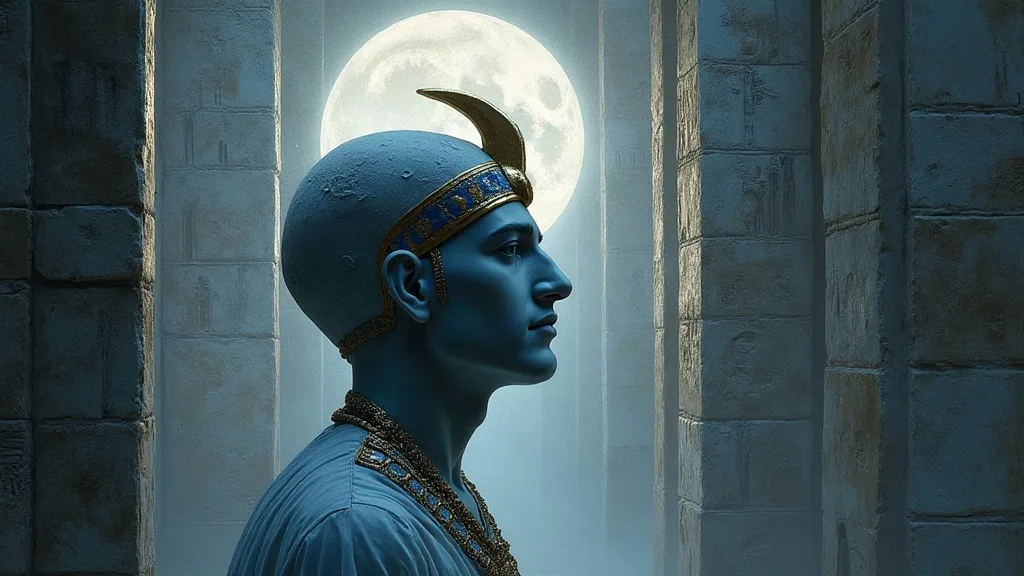
In the Ptolemaic texts and temple inscriptions from Thebes and Dendera, Khonshu appears as a healer, a measurer of time, a protector of travelers on dark roads. His name comes from khonsu, meaning "to traverse" or "the traveller," because the moon moves across the night sky. The ancient Egyptians saw him as the son of Thoth in some traditions, born from the union of Amun and Mut in others. Iconography shows him as a man with a crescent moon and full moon disk on his head, or sometimes as a baboon or dog (animals associated with the night).
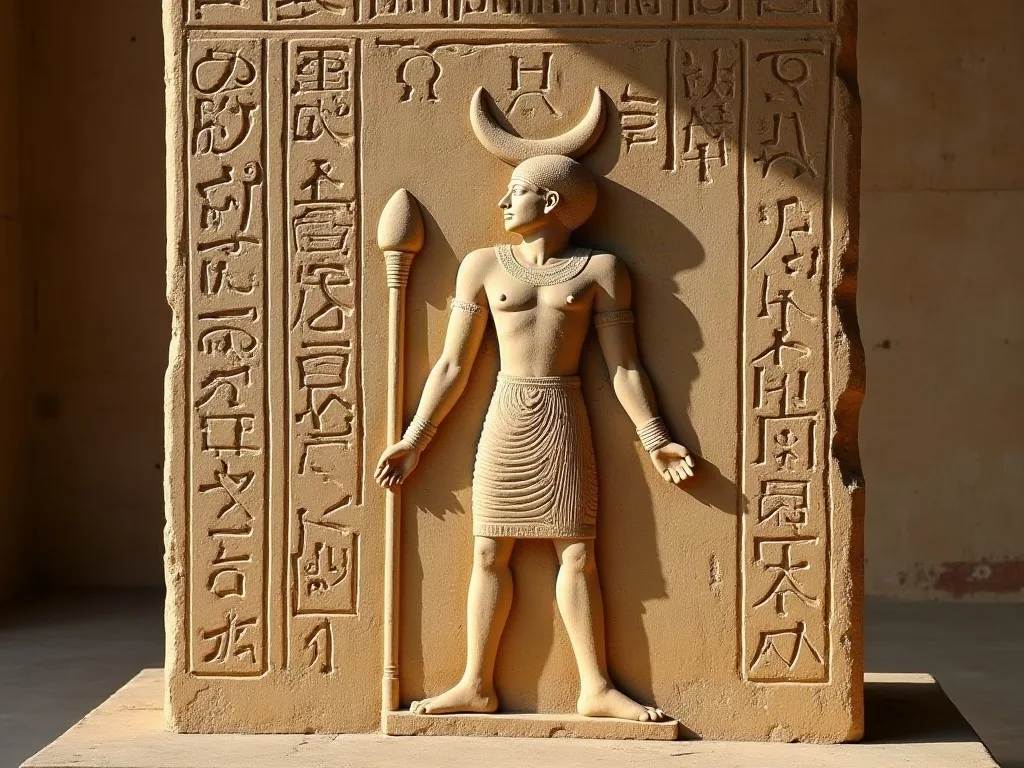
But here's the crucial detail Moon Knight latches onto: Khonshu was the god of madness and healing both. Ancient Egyptian medical texts attributed certain mental illnesses to Khonshu's touch. He could curse you with lunacy; he could also cure it. He was the god of night travelers, which meant he presided over danger, uncertainty, and all the terrors that lurk beyond the safety of firelight. He was the god who knew you when no one else was looking.
From Ancient God to Fractured Avenger
Moon Knight as a character predates Marvel's fascination with mental health storytelling. Marc Spector first appeared in Werewolf by Night #32 in 1975, created by writer Doug Moench and artist Don Perlin, as a minor antagonist. The moon god connection came later, woven in by Moench and artist Don Heck in the 1980s, when Spector's mercenary past collided with the notion that he might be Khonshu's earthly instrument.
What makes Marvel's adaptation remarkable is that it takes the original mythology seriously. When the 2024 Disney+ series opens, it doesn't wave away Khonshu as a "hallucination" in the first episode and move on. Instead, it holds both truths at once: Marc Spector's shattered mind and the possibility that Khonshu is real. Oscar Isaac, playing Marc, delivers dialogue that floats between fever dream and sacred calling. When Oscar Isaac's character Khonshu (the suit, the voice, the other consciousness) speaks, it's in a whisper that sounds like wind scraping sand, like something that has survived four thousand years of darkness.
The show does something the comics sometimes dance around: it grounds the mythology in Egypt itself. The first episode opens in Cairo, not New York or Los Angeles. Marc doesn't just hear about Khonshu; he's standing on the ground where Khonshu was worshipped, where he was believed to walk at night protecting travelers, where an entire cosmology once pivoted on his nightly journey. That location choice isn't accidental. It's Marvel saying: this god has weight, history, and the power to inhabit a broken man's mind because he occupied human imagination for four thousand years.
How Marvel Rewrites Ancient Theology
Here's where adaptation becomes interpretation. The original Khonshu of temple inscriptions and funerary texts was a cosmic functionary. He measured time. He guided souls. He was part of the vast machine of ma'at, the divine order that kept creation from collapsing back into chaos. He had ethical weight but no personal vendetta.
Marvel's Khonshu is something else entirely. He demands blood in payment for his work. He speaks in imperatives, not requests. He judges those who prey on night travelers, not as a function of cosmic order, but as an enraged enforcer with a personal stake in suffering. The Disney+ show makes this explicit: Khonshu doesn't just protect travelers; he hunts those who hurt travelers. There's a fury in that inversion.
This is a crucial shift. The ancient god was impersonal, archetypal. The Marvel god is intimate, obsessive, attached to one man's need for agency. That's not a flaw in Marvel's reading of Egyptian mythology; it's a feature. By reshaping Khonshu, Marvel makes him legible to modern storytelling, where gods are psychological forces as much as cosmic ones.
The show also plays with the idea of avatars and chosen vessels. In Egyptian theology, gods could inhabit statues, possessions, or animals, and priests would channel them in ritual. Moon Knight treats Marc's body as a similar vessel. Is Khonshu possessing Marc, or is Marc inventing Khonshu to survive a trauma that shattered him? The mythology allows both questions to remain open because ancient Egyptian theology itself was full of such paradoxes: a god could be a statue and also alive, could be manifested and also eternal, could be multiple things at once without contradiction.
The Lunar Cycle as Narrative Structure
One detail the 2024 series nails is the moon itself. It's not decoration. The lunar cycle becomes the story's clock. In ancient Egypt, the moon was the way people told time. The lunar calendar predated the solar one; Thoth, god of wisdom and time, was literally the moon before he became lord of writing. Khonshu's journey across the night sky was time itself made visible.
Moon Knight uses this architecture brilliantly. Marc's healing and breakdown don't follow a linear path; they follow the lunar phases. When the moon is full, Khonshu's voice grows louder, more insistent, more real. When the moon is dark, Marc is quieter, sadder, less sure. The show grounds its protagonist's psychology in genuine Egyptian cosmology, which believed the moon exerted real influence on human behavior and fate. It's not superstition the show is tapping into; it's an ancient, systematic framework for understanding how forces beyond our control shape what we do.

This is why Moon Knight feels different from other mental-health-coded superhero stories. It's not using mythology as window dressing. It's using Egyptian theology's actual architecture, its comfort with multiplicity, its linking of time to divine presence, its treatment of gods as forces that inhabit the human world directly, to structure how we understand a fractured mind.
Khonshu and Other Marvel Gods: A Comparative Lens
To see what Marvel learned from Egyptian mythology, you can compare Khonshu to how other Marvel properties handle pantheons. Thor and Loki draw from Norse mythology, but they're often written as alien princes with advanced technology, stripping away the theological weight. Black Panther uses African spiritual cosmology, but filtered through the Black Panther mythos and Wakandan nationalism rather than grounding in genuine Zulu or Yoruba theology.
Moon Knight does something riskier. It doesn't just borrow Khonshu's name. It takes the ancient god's actual nature, his role in measuring time, his association with healing and madness, his position as a god of boundaries between day and night, safety and danger, and lets that theological framework shape Marc's story. The show trusts that the mythology itself is psychologically rich enough to carry a modern narrative.
This is also why Moon Knight avoids the trap of treating Egyptian mythology as a dead thing. Other Marvel properties sometimes feel like they're dusting off old gods for novelty. Moon Knight feels like it's discovering that these gods still live, still matter, still speak to the parts of us that break in the dark.
The Problem of Representation and Authenticity
Any conversation about Egyptian mythology in modern media has to reckon with a painful history: the West has looted Egyptian artifacts, flattened Egyptian theology into mysticism and exoticism, and often used "ancient Egypt" as a fantasy backdrop divorced from actual Egyptian culture. Moon Knight isn't innocent of this.
The series centers on white male trauma (Marc/Oscar Isaac) being healed or complicated by an Egyptian god. It's set partly in Cairo, but Cairo is more backdrop than character. The Egyptians in the story are minor figures in Marc's journey. This is a real limitation, and it's worth naming.
That said, the show does something its critics sometimes miss: it treats Khonshu and Egyptian theology with theological seriousness. When Marc stands in front of statues of Khonshu, the camera holds on them. The carvings matter. The hieroglyphic inscriptions aren't decoration; they're part of the visual language that makes Khonshu real in the story. The show hires consultants (as the credits note), and those consultants' work shows. The theology isn't simplified into "moon god = vengeance"; it's complicated, layered, and rooted in actual Egyptian sources.
The ideal would be an adaptation centered on Egyptian characters navigating their own relationship to a living Egyptian theology. Moon Knight isn't that. But it's also not the reductive exotica that often mars superhero storytelling. It's a partial view of genuine mythology, filtered through Western psychology. Recognizing that limitation doesn't make the adaptation's engagement with the source material any less real.
Ancient Khonshu
God of time-measurement and lunar cycle; healer of madness; protector of night travelers; part of a cosmic order (ma'at); often depicted as baboon, man, or dog; worshipped from Middle Kingdom onward at temples in Thebes, Dendera, Edfu.
Marvel's Khonshu
Voice in Marc Spector's mind; enforcer of violent justice; god of vengeance against predators; ambiguous reality (delusion or deity); manifests through one man's fractured psyche; lunar cycle shapes his intensity; drives the narrative tension between control and possession.
How Moon Knight Reaches Audiences Who Don't Know Khonshu
The genius of Moon Knight's mythological integration is that it works for viewers who've never heard of Egyptian theology and for those deep in comparative mythology. A first-time viewer doesn't need to know that Khonshu was a healer to feel the weight of that crescent moon on the character's forehead. They just need to sense that this god is ancient, that he carries historical force, that he's not a modern invention.
But if you do know the Egyptian sources, the show rewards that knowledge. You hear echoes of Thoth's role as measurer and time-lord. You recognize the boundary-guardian aspect of Khonshu in how he judges those who cross into violence at night. You understand why a god of healing would also be a god of madness, because in ancient Egypt, those weren't opposites. Both required contact with the divine, a breaking-open of ordinary consciousness.
This is why Moon Knight matters for how we think about mythology in contemporary storytelling. It shows that ancient theologies aren't just historical artifacts to be quoted or referenced. They're still operative systems for understanding human psychology, trauma, and the forces that move through us. When Marc Spector bleeds in Cairo and a four-thousand-year-old god speaks in his mind, it's not because Marvel is being trendy. It's because Egyptian theology, its comfort with paradox, its linking of time to divinity, its treatment of gods as psychological forces as much as cosmic ones, is genuinely equipped to carry modern stories.
Khonshu in the Larger Marvel Cosmology
Moon Knight also raises questions about how Marvel treats gods across its properties. Are all Marvel gods aliens, as the MCU suggested with Thor? Are some real deities and others not? Where does Khonshu sit in that hierarchy?
The Disney+ series doesn't answer this explicitly, which is the right choice. By leaving open the question of whether Khonshu is "real" or "Marc's mind," the show dodges the trap that catches other superhero pantheons: the moment you confirm that the Greek gods are aliens or the Norse gods are refugees, you drain them of theological weight. You turn them into space-opera citizens rather than forces that shape human meaning.
Moon Knight keeps Khonshu theologically alive by never fully confirming his nature. In that ambiguity lies his power, the same power he held for four thousand years of Egyptian worship, when he was both statue and presence, both cosmic fact and intimate force.
Frequently asked questions about Egyptian mythology in Moon Knight?
Frequently asked questions
Was Khonshu really a god of vengeance in ancient Egypt?
No. Ancient Khonshu was primarily a god of healing, time-measurement, and protection of night travelers. Marvel's version as a strict avenger of predators is an adaptation that reshapes the original theology to fit modern superhero storytelling. That reshaping isn't inaccurate so much as selective, it amplifies one aspect of Khonshu's boundary-guardian role and makes vengeance its central expression.
Is Marc's Khonshu real or a delusion caused by Marc's mental illness?
The show deliberately refuses to answer this. That refusal respects both ancient Egyptian theology (which had no problem with gods inhabiting human consciousness and multiple truths coexisting) and modern psychological realism (which recognizes trauma can fragment identity and create distinct voices). The ambiguity is the point: Marc's fractured mind and Khonshu's real presence aren't mutually exclusive in the show's cosmology.
Did ancient Egyptians really believe the moon affected madness and healing?
Yes. Egyptian medical texts attributed certain mental illnesses to lunar influence and to Khonshu's direct touch. The root of our word "lunacy" (from Luna, the Roman moon goddess) echoes this ancient belief. The Egyptians thought consciousness itself was affected by lunar cycles, which is why Khonshu was both healer and bringer of madness. Moon Knight grounds its narrative in this genuine ancient understanding.
Why does Moon Knight take Egyptian mythology seriously while other Marvel shows don't?
Moon Knight's showrunner Jeremy Slater and the writing team chose to use Egyptian theology as structural architecture rather than decoration. By making Khonshu's nature, his role as time-measurer, boundary-guardian, healer-and-madness-bringer, central to how Marc's mind breaks and heals, the show integrates myth into narrative DNA rather than layering it on top. That integration requires genuine engagement with the source material.
What did Marvel get wrong about Khonshu?
Marvel simplified Khonshu's role in cosmic order and made vengeance his primary drive, when ancient texts show him as more impersonal and functionary. The series is also centered on white trauma rather than Egyptian culture or characters, which flattens the mythology into a backdrop. These aren't failures so much as limitations: Marvel shaped ancient theology to fit modern superhero and psychological-thriller conventions, which necessarily changes what the source material emphasizes.
How Moon Knight Opens a Door for Other Ancient Theologies
What Moon Knight does, perhaps unintentionally, is prove that ancient mythologies can carry contemporary storytelling if we treat them theologically rather than allegorically. The show doesn't use Khonshu to represent something else; it lets Khonshu be something in his own right, operating according to his own logic.
This has implications for how superhero narratives might engage with Hindu cosmology, Mesoamerican theology, Yoruba orisha worship, or Slavic pantheons. If Marvel (or other studios) approach these traditions with the seriousness Moon Knight brings to Khonshu, adapting their actual frameworks rather than flattening them into mystical wallpaper, the results could deepen what superhero storytelling can do.
The Mesoamerican Mythology book traces how Quetzalcoatl moved through cultures and centuries, each civilization reshaping him to fit new needs. Moon Knight does something similar with Khonshu: it respects the ancient god's history while letting him become something new in Marc Spector's mind and the modern viewer's screen. That's not betrayal of the source. That's how mythology has always worked, alive, changing, still speaking to the people who encounter it.
The Unresolved Question: Does the Adaptation Restore Khonshu's Power?
Here's the question Moon Knight leaves us with: by making an ancient god central to a modern psychological thriller, by treating his voice and presence with theological seriousness, does the show restore power to Khonshu that centuries of Western neglect had stolen? Or does it simply repurpose him for entertainment?
There's no clean answer. Moon Knight is a product of Marvel Studios, a corporate entity, designed to generate viewership and revenue. But it's also a story that takes the night journey of a four-thousand-year-old god seriously enough to structure an entire narrative around his nature. It's both exploitation and reverence, and they're not separable.
What matters is that Khonshu, largely forgotten in Western popular culture, now exists in the minds of millions who watched Oscar Isaac whisper in the dark as the moon rose. Whether that's restoration or appropriation depends partly on how Egyptian scholars, Coptic Christians, and modern Egyptians themselves view the adaptation. But it's undeniably a moment where ancient theology touched contemporary mass consciousness in a way most mythology cannot claim today.
Free 25-page sample
Want the whole story?
Take the first 25 pages free. If it pulls you in, the full edition is yours as an instant PDF download, with a paperback on Amazon for selected titles.

Mythology
The World Mythology Book: The Gods, Heroes and Myths of Every Culture
The Gods, Heroes and Myths of Every Culture, in One Volume
The whole of world mythology in a single volume: Greek, Norse, Egyptian, Japanese, Hindu, Celtic, Slavic, Mesoamerican and African myths gathered side by side, each drawn from the primary sources.