
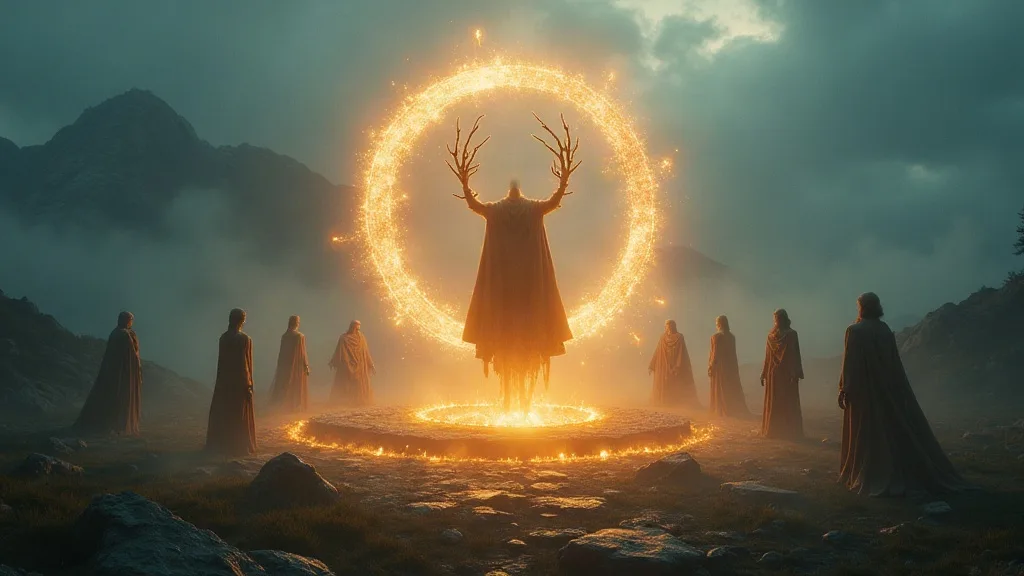
Final Fantasy Summons and Their Mythological Roots: Gods, Beasts, and Magic Across Cultures
Final Fantasy's summons pull from real mythology: Bahamut from Islamic cosmology, Ifrit from Arabian legends, Odin from Norse sagas. Discover which gods, demons, and beasts inspired gaming's most iconic magic, and how Square Enix transformed ancient lore into battle-shaping powers.
Contents
When Cloud Strife calls down Bahamut King in Final Fantasy, few players know they are summoning a creature whose roots run back to medieval Islamic texts. When Aerith channels Typhon in her ultimate spell, she invokes a hundred-headed titan from Greek cosmology. Final Fantasy summons have, for nearly four decades, borrowed from the world's oldest stories and woven them into combat magic that feels both alien and ancestral.
The summons are not random inventions. They are theft, and theft of the highest order: taking Odin's all-father power, Shiva's cosmic dance, Leviathan's oceanic dominion, and transplanting them into airships and crystal towers. Some summons stay close to source material. Others transform so completely that finding the mythological thread requires detective work. But the thread is always there, running through centuries of human imagination back to the earliest prayer circles and fireside tales.
This is the story of where Final Fantasy summons really come from. Not just their mechanical role in combat, but the ancient gods, demons, beasts, and disasters that lent them their names and natures.
The Norse Gods Who Became Summons: Odin, Typhon, and the Art of Adaptation
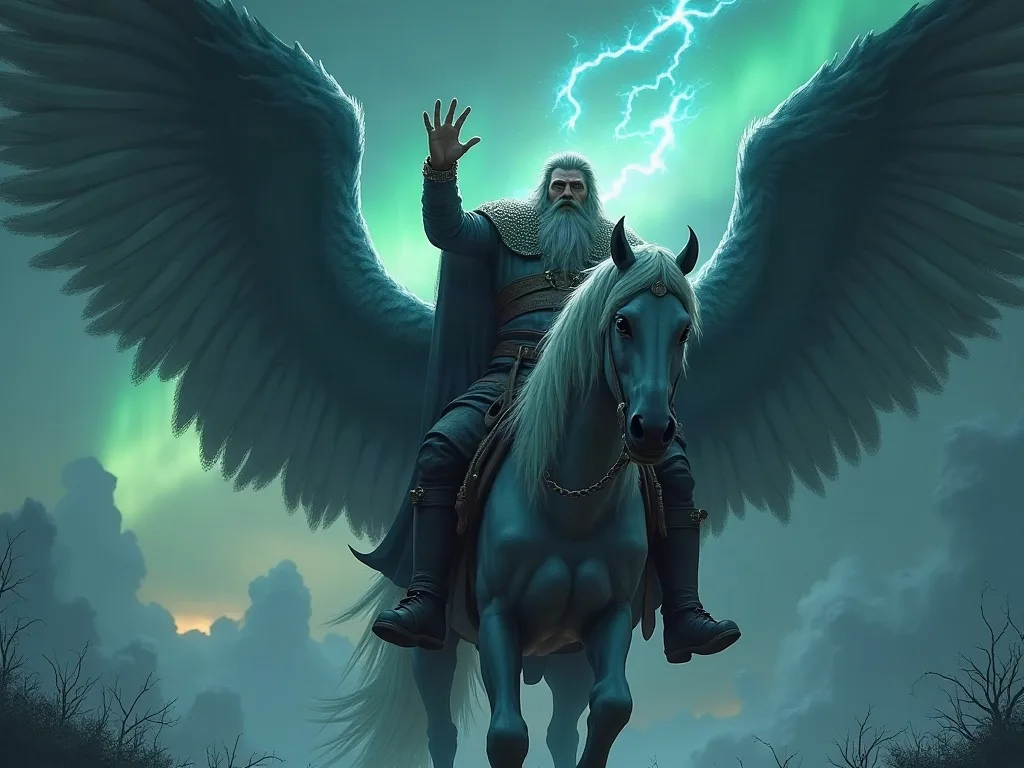
Odin appears in Final Fantasy across multiple games as a mounted warrior on a spectral steed, or as a figure hurling runes and piercing attacks. The mythological Odin is far older and stranger: the all-father of the Aesir, the chief Norse gods, who sacrificed his eye for wisdom and hung himself on Yggdrasil to learn the runes' power.
In Norse mythology, Odin wanders the nine worlds seeking knowledge, leading a warrior band called the Einherjar, and commanding Huginn and Muninn, two ravens who fly across creation bringing him news. Square Enix captured the wanderer's intensity and the commanding presence, but lost the melancholy. Video game Odin is pure martial thunder.
The mythological tradition is vast: Hesiod's Theogony, a Greek text from around 700 BC that tells the origin of the gods, describes how Typhon, a serpentine hundred-headed giant, nearly destroyed Zeus and Olympus. In Final Fantasy VI, Typhon is summoned as a creature of whirlwind and chaos. The games honour the original chaos aspect, though they streamline Typhon into a single-threaded narrative of raw power rather than the mythological embodiment of hubris that nearly toppled the cosmic order.
What is remarkable is not what is lost, but how much is retained. When you summon Odin in FF VII, you are calling on a Norse god whose defining trait is the relentless pursuit of knowledge and power at any cost. When you summon Typhon, you are invoking catastrophe itself. The games simplify, but they do not hollow out.
Islamic Cosmology in Your Party: Bahamut, Ifrit, and the Eastern Fantasy Roots
Bahamut is Final Fantasy's most iconic summon, a dragon so vast it holds worlds on its back. The name comes directly from Islamic and medieval Arabic cosmology, where Bahamut (also spelled Behemoth in Jewish tradition) is a colossal fish or creature that supports the cosmic order.
In the medieval Arabic text The Book of Curiosities, Bahamut is described as an infinite fish upon whose back rests the angel Kraim, who supports eight other creatures that in turn support the Earth. It is not a summonable ally or a playable character: it is the literal foundation of existence. Final Fantasy transmutes this into something more tactile, more intimate. In FF VII, Bahamut is a dragon that can be caught and trained; in FF XIV, it is an element of the game's mechanics tied to player identity and summoning ability.
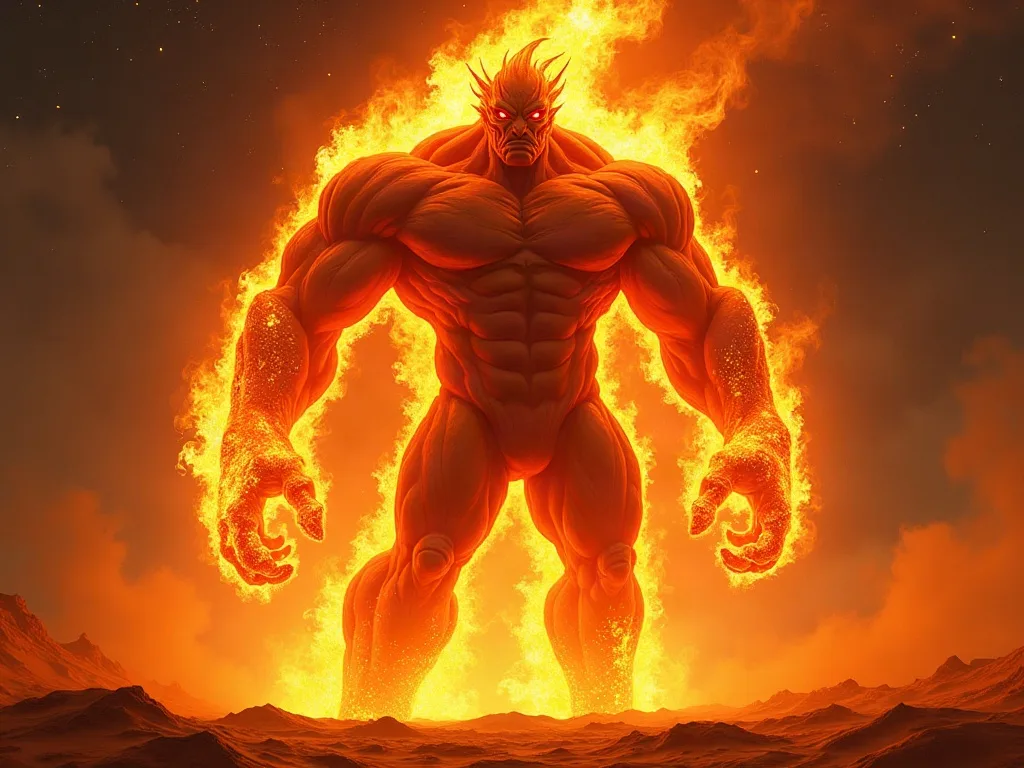
Ifrit carries an equally recognizable pedigree. In Islamic and Arabian mythology, Ifrit (also spelled Afreet) is a type of jinn, a fire-born demon of immense power, often placed in opposition to humans in tales like the Arabian Nights. Ifrit is malice and heat; Ifrit burns. In Final Fantasy, the summon Ifrit is a fiery giant that obliterates enemies in flames. The core essence has survived: Ifrit is still transgressive, still wild, still dangerous even when allied with the player.
Both Bahamut and Ifrit represent Square Enix's engagement with non-Western traditions. They are not European gods grafted into a European game; they are cosmological figures from the Islamic world and the broader Arabic tradition, given new life in Japanese interactive fiction. This cross-cultural reach set Final Fantasy apart from other Western RPG franchises and gave it a mythological vocabulary that felt both foreign and universal.
The Hindu Titans and the Dance of Destruction: Shiva and Kali
Shiva in Hinduism is not merely destructive; Shiva is the cosmic dancer, the Mahadeva, the great god who contains within himself both creation and annihilation. In Shiva Nataraja iconography, found in temples across India and Southeast Asia, Shiva dances the world into being and burns it away in an endless cycle. The rhythm of the cosmos is Shiva's rhythm.
Final Fantasy's Shiva captures this duality, though it filters it through ice rather than fire. In most games, Shiva is a female figure of devastating cold, and her ultimate summon animation shows her dancing in a glacial spiral. The games have feminized Shiva, which diverges from the explicitly masculine deity of Hindu scripture, but the logic of transformation is sound: ice is the feminine counterpart to Ifrit's masculine flame. The dance remains. The destruction remains.
Kali, the dark mother of Hindu mythology, appears less often in Final Fantasy, but when she does, she embodies her original nature: fierce, many-armed, adorned with severed heads and a skirt of corpses. She is death, but also protection. She dances on the body of her consort Shiva. In the Devi Mahatmya, an ancient Sanskrit text, Kali is born from the anger of Durga and fights demons that threaten the cosmic order. She is not evil; she is the fierce principle of cosmic justice.
The Hindu tradition gave Final Fantasy not just individual summons, but a philosophical framework. Destruction and creation are not opposites; they are partners. Heat and cold, male and female, are aspects of a single cosmic principle. This understanding infuses FF's summon system with a depth that most casual players never consciously register, but feel in the rhythm of the battles.
Greek Titans and Olympians: Typhon, Anima, and the Weight of Ancient Hierarchy
The Greek tradition runs deep through Final Fantasy's summons, though often translated beyond immediate recognition.
Typhon, as mentioned, derives directly from Hesiod's Theogony. In that poem, Typhon is born from Gaia (the Earth) and Tartarus (the Abyss) as the final challenge to Zeus's rule. Typhon has a hundred serpent heads, each breathing fire, and its roar can shatter mountains. Zeus defeats it only through supreme effort, trapping it beneath Mount Etna. The mythological image is pure apocalyptic horror.
Anima, who appears in several Final Fantasy games as a summon of raw elemental power, has more tenuous roots in classical Greek thought. The term anima itself is Latin (meaning "soul" or "breath"), but the concept draws from Platonic philosophy: the world-soul, the animating principle that gives the cosmos consciousness. When Anima is summoned in FF X, she appears as a skeletal figure wreathed in chains and sorrow, less a positive force than a conduit of suffering and pain. This is closer to Platonic dualism and Gnostic cosmology (where the material world is imprisonment) than to any single Greek myth, but the philosophical debt is undeniable.
The Greek summons tend to be the most difficult to parse because Greek mythology is so vast and so culturally layered that Final Fantasy must compress centuries of literary tradition into a single summoned image. This compression sometimes obscures the source, but it does not erase it.
The Christian and Judeo-Islamic Tradition: Kefka, Neo Bahamut, and the Devil's Masquerade
Final Fantasy's engagement with Judeo-Christian tradition is more oblique and more morally fraught than its engagement with pagan mythology. The series walks carefully here, and for good reason.
Kefka Palazzo, the villain of Final Fantasy VI, is not himself a summon, but he becomes one at the game's climax, transforming into a god-like being that draws on apocalyptic imagery from the Book of Revelation: a figure of pure chaos and malice, a god-in-reverse whose existence is the negation of order. This is not a summon a player will ever command, but it shows how deeply Judeo-Christian eschatology has embedded itself in RPG narrative language.
Neo Bahamut, which appears in Final Fantasy VII Remake, blends the Islamic Bahamut with overtones of the Christian Devil or the Biblical Satan: a creature of immense power that rebels against the established order. The mythological cross-pollination here is explicit and intentional.
The games tread carefully because summoning demons, in Christian tradition, is a transgression. But Final Fantasy frames summoning as heroic, as alliance-building, as partnership with forces outside the human realm. This is closer to Pagan animism and spirit-work than to Christian demonology. The theological slippage is deliberate.
The Japanese Tradition: Leviathan, Jade, and Folklore Transformed
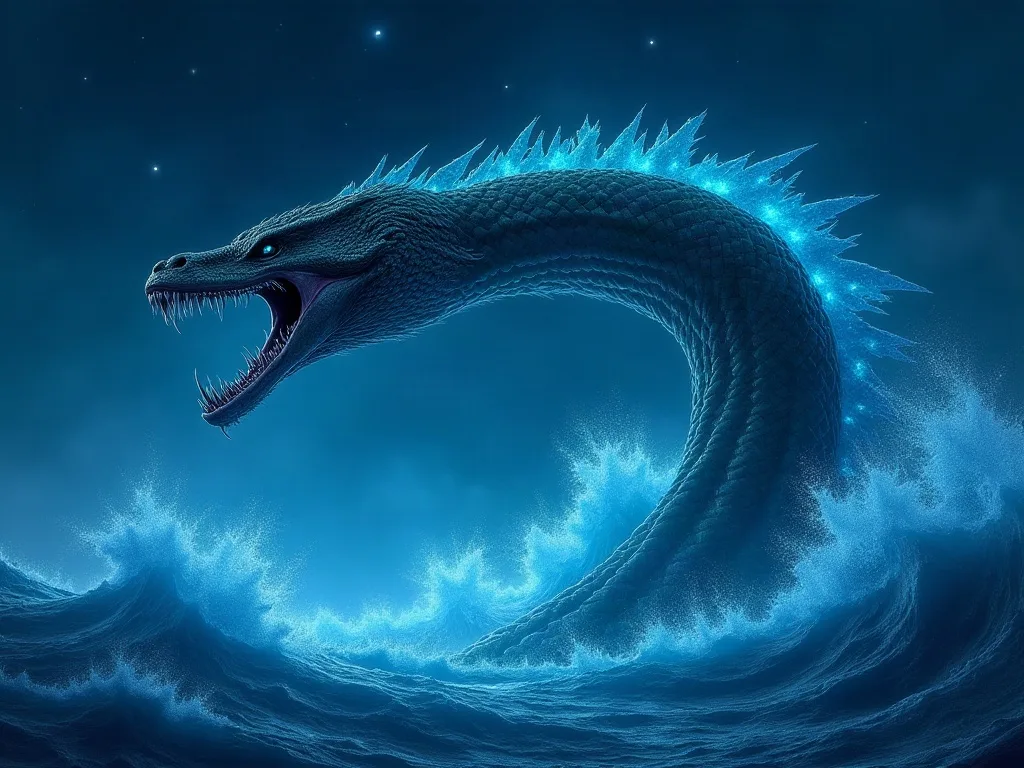
Leviathan is a Hebrew name with a vast mythological reach. In Jewish tradition, Leviathan is the great sea-beast, a creature of primal chaos that Yahweh alone can command. In the Book of Job, God speaks of Leviathan to humble Job, describing a creature of immense power that no human can capture or control.
But in Final Fantasy, Leviathan gains a second cultural resonance through Japanese tradition. The dragon-lords of Japanese myth (the ryu, the dragon-kami of rivers and seas) share Leviathan's dominion over water and chaos-potential. When Final Fantasy places Leviathan alongside other summons, it is drawing on both the Hebrew cosmological tradition and the Japanese understanding of water-spirits as entities of tremendous but ambivalent power.
The same cross-cultural grammar applies to many of FF's less-celebrated summons. They are palimpsests: layers of myth from different traditions written over one another, each visible if you know where to look.
The Mechanical Theology of Summoning: Why These Myths, and Why Now?
A deeper question lies beneath the surface: why does Final Fantasy summon these specific deities and creatures, and not others?
The answer lies partly in visual and narrative economy. A player who sees the name "Odin" and a mounted warrior needs no tutorial; the image is already loaded with centuries of cultural meaning. The summon system works precisely because it is a shorthand. Players carry the mythology with them.
But there is also a theological logic at work. Summoning, in the games, is an act of partnership. The player does not control these beings; they request aid. This is closer to the animistic and polytheistic worldview of ancient religions than it is to monotheistic command. When you summon Shiva or Ifrit, you are entering into a temporary alliance with a being of immense power and ambiguous morality.
This echoes how ancient humans related to gods. A prayer to Ares, in classical Greek religion, was not a command; it was a petition. The god might choose to help or might turn away. Final Fantasy's summon system revives this ancient understanding: the summoner is not master, but supplicant.
The Afterlife of Myth in Interactive Media: How Games Transform Ancient Stories
The transformation of myth through Final Fantasy is not degradation. It is the continuation of a process that began as soon as myths were first written down. Homer remixed Mycenaean legend. Ovid remixed Homer. Medieval poets remixed Ovid. Square Enix remixes them all.
What is new is the interactive layer. When you summon Bahamut in a video game, you do not simply read about Bahamut's power; you experience it. Your party is saved or your enemy is destroyed through Bahamut's intervention. The myth becomes embodied, tactile, mechanical.
This does not diminish the source material. If anything, it extends the reach of ancient traditions into new audiences who might never read the Eddas or the Mahabharata but who will encounter Norse and Hindu cosmology through a video game. The myths are not diluted; they are translated.
Whether this translation is faithful is a question that misses the point. Fidelity to source material has never been the goal of mythological reinterpretation. The goal is to keep the myths alive, to find new vessels for old truths, to make them mean something to people alive right now.
Final Fantasy summons do this. They carry Odin and Shiva and Ifrit and Bahamut forward into a world that barely speaks the languages those names came from. The games do not explain the mythological roots of these summons; most players never learn them. But the roots are there, drawing from deep wells of human imagination.
The myths survive because they transform. And Final Fantasy, more than almost any other interactive medium, has made that transformation visible, powerful, and accessible.
Frequently Asked Questions About Final Fantasy Summons Mythology Origins?
Frequently asked questions
Is Final Fantasy's Bahamut based on the Islamic Bahamut from Arab cosmology?
Yes, directly. In medieval Islamic texts and the Arabic Book of Curiosities, Bahamut is a colossal fish or creature that supports the cosmic order. Final Fantasy transformed this cosmological foundation-stone into a summonable dragon. The name and the concept of immense world-bearing power are preserved, even as the visual form changed to fit the game's aesthetic.
Where does Shiva in Final Fantasy come from, and why is she often depicted as female and ice-aligned?
Shiva in Hindu mythology is the Mahadeva, the great god of destruction and cosmic dance, traditionally masculine. Final Fantasy feminized Shiva and aligned her with ice rather than fire, creating a visual and elemental counterpart to Ifrit's masculine flame. The core essence of Shiva as a dancer of cosmic destruction is preserved; the presentation is a creative translation rather than a direct adaptation.
Do the summons stay true to their mythological origins, or does Final Fantasy invent new powers?
Final Fantasy does both. Summons like Bahamut and Ifrit keep their core mythological identity (immense cosmic power, fire and chaos respectively), but their specific abilities in combat are game inventions. The summons are recognizable to anyone who knows the myths, but they are also transformed through the logic of gameplay and narrative. This is consistent with how mythology has always evolved: Homer remixed older legends, medieval poets remixed Homer, and video games remix them all.
Are there summons in Final Fantasy based on mythologies beyond Europe, Islamic tradition, and South Asia?
Yes. Leviathan draws on Hebrew and Jewish cosmology. Japanese folklore and the dragon-kami (ryu) influence several summons. The series also draws on general themes from Chinese and Southeast Asian traditions, though less directly. Final Fantasy's summon roster is genuinely multicultural, reflecting Square Enix's willingness to borrow from non-Western sources and challenge the European-centered mythology common in Western RPGs.
If I want to learn more about the mythological sources of Final Fantasy summons, where should I start?
Start with the summon's name: search for "Odin Norse mythology" or "Ifrit Islamic cosmology" and read primary or secondary sources on the deity. Hesiod's Theogony covers Typhon and other Greek titans. The Prose Edda (written in 13th-century Iceland but recording much older Norse tradition) covers Odin. Books on Hindu mythology and cosmology will explain Shiva and Kali. You do not need to read these in any order; follow the summons that intrigue you most.
The Summon Ritual as the Oldest Human Act: Myth Continues
The final layer is this: summoning is not an invention of Final Fantasy. Humans have been summoning for as long as humans have existed.
A shaman in Siberia calls on the spirit of the bear. A Hindu priest performs a puja to invoke Durga. A medieval magician traces a pentagram to bind a demon. A Roman general makes an offering to Mars before battle. The structure is identical: the human stands at the boundary between the ordinary world and the realm of power, and calls.
Final Fantasy, in making summoning a central mechanic of gameplay, is not departing from mythology; it is returning to it. The games make explicit what was always true: that humans seek alliance with forces beyond themselves, and that those forces have names, histories, and personalities drawn from the deepest layers of cultural memory.
Consider what happens in Final Fantasy X when Yuna summons Bahamut for the first time. She raises her staff. The air shakes. A dragon descends from a sky that was clear a moment before. Yuna does not command Bahamut; she asks. The beast chooses to answer. That exchange, that moment of petition and response, mirrors exactly what a Vedic priest does when invoking Agni in a fire ritual, or what a Norse gothi does when calling on the Aesir before battle. The ritual grammar is thousands of years old. Final Fantasy simply wrote it into a controller button.
The myths do not end when the story is written. They echo forward through every retelling, every adaptation, every new medium. They survive in books and paintings and sculptures and, now, in the battle mechanics of Japanese video games played by millions of people who will never know where Bahamut or Odin came from, but who will carry these names and their power forward into their own imaginations.
That is the true afterlife of myth: not preservation in amber, but transformation into new vessels. Final Fantasy summons are not museum pieces. They are living myths, translated for an age of interactive storytelling, waiting to be called upon.
Free 25-page sample
Want the whole story?
Take the first 25 pages free. If it pulls you in, the full edition is yours as an instant PDF download, with a paperback on Amazon for selected titles.

Mythology
The World Mythology Book: The Gods, Heroes and Myths of Every Culture
The Gods, Heroes and Myths of Every Culture, in One Volume
The whole of world mythology in a single volume: Greek, Norse, Egyptian, Japanese, Hindu, Celtic, Slavic, Mesoamerican and African myths gathered side by side, each drawn from the primary sources.