
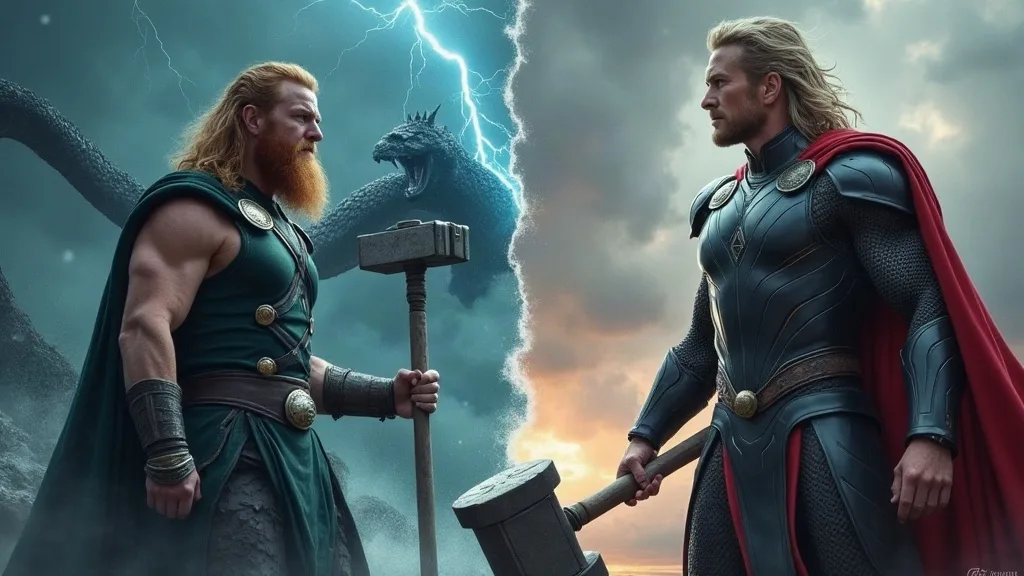
Marvel's Thor vs the Real Norse Thor: Myth, Marvel, and the God Between Two Worlds
Marvel's Thor bears the name of a genuine Norse god, but swaps lightning for comedy, nobility for humility, and apocalypse for redemption. Discover how the real Thor wielded a hammer that shook the cosmos, faced giants he could never defeat, and died knowing the end was already written.
Contents
When Tom Hiddleston, playing the Asgardian tyrant Loki, crashes into New Mexico in 2011, he brings with him Thor Odinson. That Thor fights for justice, cracks jokes about pop-tarts, and survives the film. The real Thor, the one from the Norse Eddas, did none of these things. He was louder, cruder, far less introspective. He would never crack a joke about being out of coffee. He would never learn humility. And he knew for certain he would die at Ragnarok, the end of all worlds, with no second chance.
The gap between them is not small. It is the distance between modern storytelling and ancient apocalyptic religion, between a superhero who grows wiser and a god locked in an eternal cycle of violence he could never escape. Yet both are called Thor. Both wield a hammer. Both stand against the forces of chaos. Marvel took a real myth and rewrote it as a hero's journey. The Norse tradition preserved it as a tragedy.
The Real Thor: Thunder God of the Norse Eddas
The authentic Thor appears in the Poetic Edda and the Prose Edda, two collections of Old Norse poems and prose written down in Iceland around the 13th century, though the stories they contain are centuries older. Thor was not a solitary warrior-prince like Marvel's version. He was the second most important god in the Norse pantheon, after Odin, his father. His domain was thunder, lightning, strength, and the protection of both gods and humans against the forces of chaos.
Thor's most famous possession was his hammer, called Mjolnir. In the Prose Edda, the poem "Skalds and Dwarves" (also called the Haustlong) describes how Mjolnir was forged by dwarven smiths. The hammer had three extraordinary properties: it always returned to Thor's hand after being thrown, it never missed its target, and it could only be wielded by someone with the strength and the magical belt and gloves Thor possessed. No mortal could lift it. Few gods could. This alone sets it apart from Marvel's hammer, which in recent films can be lifted by anyone "worthy."
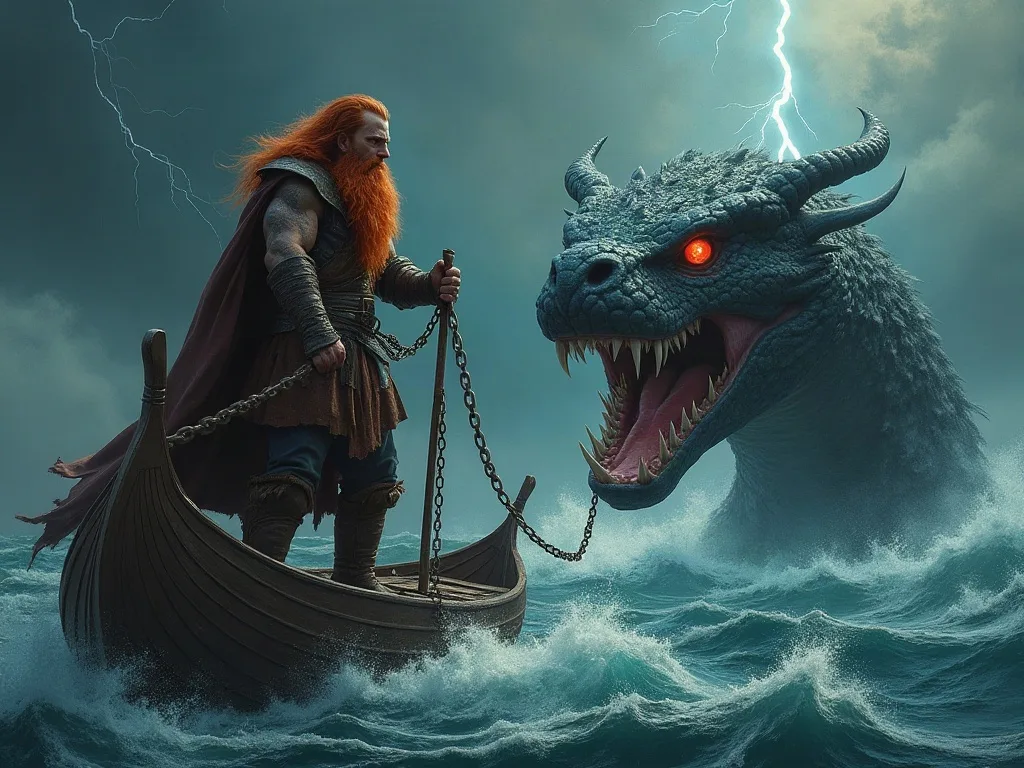
In the Eddas, Thor was massive, red-bearded, and perpetually hungry. He ate constantly. When traveling, he consumed entire oxen. The Norse imagined him as a workingman god, not an aristocrat. His personality was direct, often crude, sometimes foolish. He made mistakes. He got angry quickly. He had genuine flaws that were not later overcome through character development or a wise mentor's counsel. They were permanent parts of his nature.
One of the most famous stories from the Poetic Edda involves Thor's fishing expedition. He travels to the edge of the world with the giant Hymir and catches Jormungandr, the World Serpent, a creature so vast its body encircles Midgard (the human realm) and its tail touches its own mouth. When Thor attempts to haul the serpent aboard the boat, Jormungandr thrashes, causing earthquakes. Hymir, terrified, cuts the line. The World Serpent sinks back into the ocean, but the encounter foreshadows their final meeting at Ragnarok, when Jormungandr will rise, break its chains, and kill Thor.
Thor's constant enemies were the giants, the jotnar. The Norse imagined a cosmic struggle between gods and giants that was never truly resolved. Giants were not entirely evil; they were forces of nature, chaos, winter, and entropy. One of Thor's most famous victories involved the giant Thrym, who stole Mjolnir and demanded the goddess Freyja as ransom. Thor, disguised in a bride's dress (an act of profound shame in Norse culture), infiltrated Thrym's hall, recovered his hammer, and slaughtered the giants. The Eddas describe this story with dark humor, but also with a sense of Thor as a warrior locked in an endless cycle.
Another crucial story centers on the Midgard Serpent and Ragnarok. The Poetic Edda's "Voluspa" (the Seeress's Prophecy) describes the end of the world in terms that are apocalyptic, inevitable, and deeply tragic. Ragnarok is not a battle the gods can win. It is written. Thor will fight Jormungandr one final time, and he will kill it. But as the serpent dies, it will vomit a flood of venom that will poison Thor, and he will fall. The sky will split open. The stars will vanish. The earth will sink into the sea. And the Norse believed this was not mythology but destiny.
Marvel's Thor: The Reluctant Avenger
When Marvel introduced Thor in Journey Into Mystery #83 in 1962, the comic was written by Stan Lee and drawn by Jack Kirby, who were mining world mythologies for superhero concepts. They took the name, the hammer, the thunder-god archetype, and almost nothing else. Marvel's Thor is Prince of Asgard, a realm presented as an advanced alien civilization hidden from Earth by magic. He is noble, honorable, and speaks in a pseudo-Shakespearean dialect ("Verily!" and "Hark!") that has no basis in any actual Norse language or culture.
Early Marvel Thor was arrogant and needed to learn humility. This is the hero's journey template: the protagonist begins flawed, suffers consequences, grows wiser. In the comics, Thor gradually becomes less arrogant, more compassionate, and genuinely heroic. By the time he enters the Marvel Cinematic Universe in 2011's Thor, he has already had decades of character growth. The film opens with him arriving on Earth, still somewhat entitled but already capable of self-reflection. By the end of Thor: Ragnarok (2017), he has become a reluctant leader, a joker, a man shaped by loss and forced to grow.
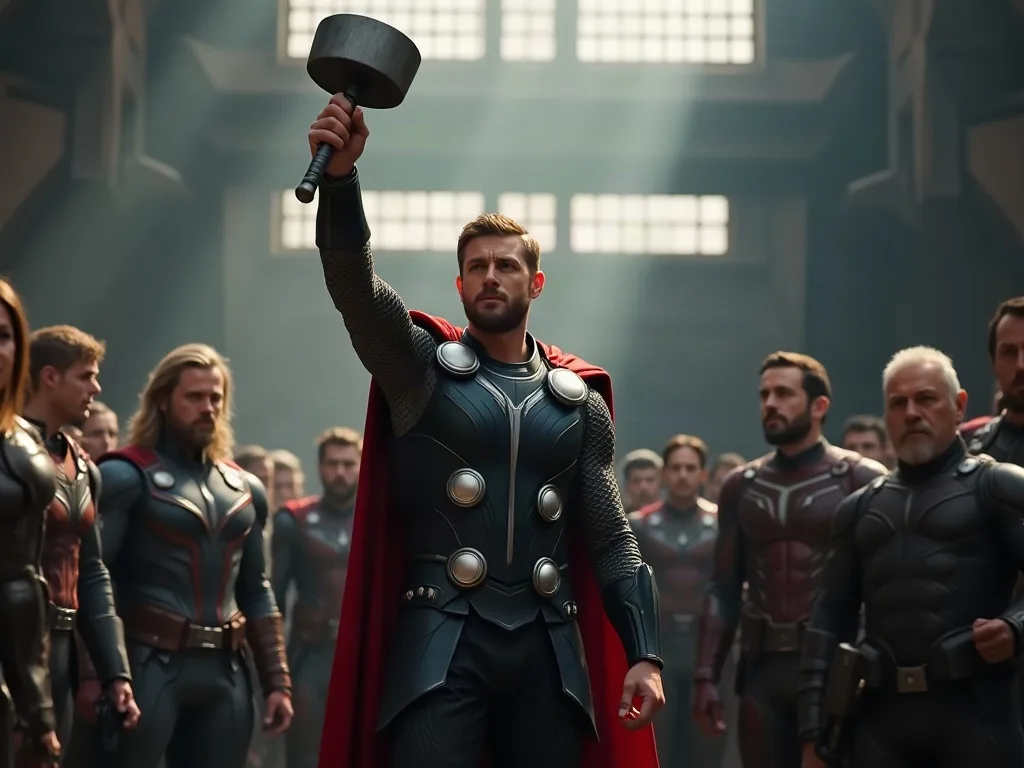
The MCU Thor is defined by his relationships and his capacity to change. He learns to value his friends over his birthright. He grows to respect Odin even as he rejects his father's methods. He forms genuine bonds with Bruce Banner, the Black Widow, and his adoptive brother Loki (though that relationship is turbulent). He learns that strength is not the answer to every problem. He becomes funny, self-aware, and vulnerable. By Avengers: Endgame, he has become so introspective that he is almost unrecognizable from the warrior of the 2011 film.
The MCU also fundamentally altered Ragnarok. In the real Eddas, Ragnarok is inevitable and apocalyptic. In Thor: Ragnarok, it becomes a stage in the cycle of life. Thor actually causes it to begin, destroying the entire realm of Asgard to save his people from Hela. In the films, destruction leads to renewal and hope. The survivors find a new home. Thor lives. The story is not tragic; it is transformative.
The Core Differences: Fate vs. Choice
The deepest difference between Marvel's Thor and the real one lies in their relationship to fate and choice. The real Thor is a tragic hero in the classical sense. He is bound by destiny. He knows the future because the Eddas reveal it. He will face the World Serpent. He will slay it. He will die from its venom. None of this can be changed. The Norse mythological worldview was not optimistic about individual agency. Fate (wyrd) was woven before the world began, and even the gods could not escape it.
Marvel's Thor, by contrast, is entirely modern. He is a superhero defined by his choices. He chooses to protect Earth. He chooses to value his friends. He chooses to sacrifice himself and to return. His choices matter. He is not bound by prophecy; he is shaped by consequence and relationship. This is the narrative DNA of the modern hero's journey, descended from Joseph Campbell and deeply embedded in American storytelling.
The tone is also radically different. The real Thor is grim, direct, sometimes crude. He is not funny (though some stories have dark humor). He does not make quips. He fights because he must, not because he has chosen a calling or discovered a greater purpose. Marvel's Thor, especially in the MCU films, is deeply funny. He makes jokes about food, about his lack of understanding of Earth customs, about his confusion with technology. Chris Hemsworth's portrayal is deliberately comedic. This is not faithful to the source material, but it is one reason audiences connect with him. A dour, fated-to-die god would not carry a multi-billion-dollar film franchise.
Marvel's Thor
Noble prince who learns humility and grows wiser through experience and friendship. Capable of change and self-reflection. Survives his greatest challenges through strength of character and the bonds he has forged. Faces an enemy (Hela) he can defeat. Ragnarok becomes an opportunity for renewal and rebirth.
Real Norse Thor
Workingman god, crude and direct, locked in an eternal cycle of violence against giants. His nature does not change; his strength is always his defining trait. Knows he will die and that his death is inevitable and meaningless in cosmic terms. Faces the World Serpent knowing the outcome: he will win the battle and lose his life. Ragnarok is apocalyptic and absolute; there is no renewal, only ending.
Asgard: Realm of the Gods vs. Alien Civilization
Marvel reimagined Asgard as a technologically advanced civilization hidden by magic. Thor's people are not gods but long-lived aliens who have been mistaken for gods by humans across cultures. This is actually a clever meta-narrative: it explains why the same figures appear in mythologies across the world. But it strips away the spiritual and religious dimension of Norse cosmology.
In the Eddas, Asgard is one of nine realms connected by Yggdrasil, the World Tree. The tree's roots reach into different worlds: Asgard (home of the Aesir gods), Vanaheim (home of the Vanir gods), Jotunheim (home of the giants), Muspelheim (the realm of fire), Niflheim (the realm of ice), and others. These are not places you travel to by bifrost (rainbow bridge). They are metaphysical locations in a cosmos held together by a cosmic tree. Yggdrasil itself suffers; its branches are eaten by creatures. At Ragnarok, Yggdrasil shakes, and the worlds begin to crumble.
Marvel's Asgard is a place you can fly to and from. It has cities, libraries, and advanced architecture. It is beautiful and functional. It is not a metaphysical realm but a location. This is a profound shift in what the story means. Norse cosmology is religious; it is a way of understanding the universe. Marvel's is science fiction; it is a way of making ancient stories fit into a modern, scientifically grounded universe.
The Hammer, Reforged
Both Thors carry Mjolnir, but the hammer itself has been transformed. In the Eddas, the hammer is inscribed with runes and can only be wielded by someone with the strength and the magical artifacts to control it. It is a weapon of last resort. Thor uses it to fight giants and to protect human settlements, but it is never presented as something beautiful or noble. It is a tool of violence, effective and terrible.
In Marvel, Mjolnir becomes a symbol of worthiness. In the comics, the hammer is said to be unworthy hands cannot lift it. This is reinforced in the MCU by the inscription: "Whosoever holds this hammer, if he be worthy, shall possess the power of Thor." This transforms the hammer from a tool into a judge of character. Only the pure of heart can wield it. This is completely absent from the Norse sources.
Furthermore, in Avengers: Age of Ultron, other heroes attempt to lift the hammer and fail, which becomes a humorous moment. In Avengers: Endgame, Captain America lifts it, and the audience applauds. The hammer has become a symbol of moral weight, not physical weight. It has become abstract. In the Eddas, Mjolnir is concrete and brutal. It is not a symbol. It is a weapon.
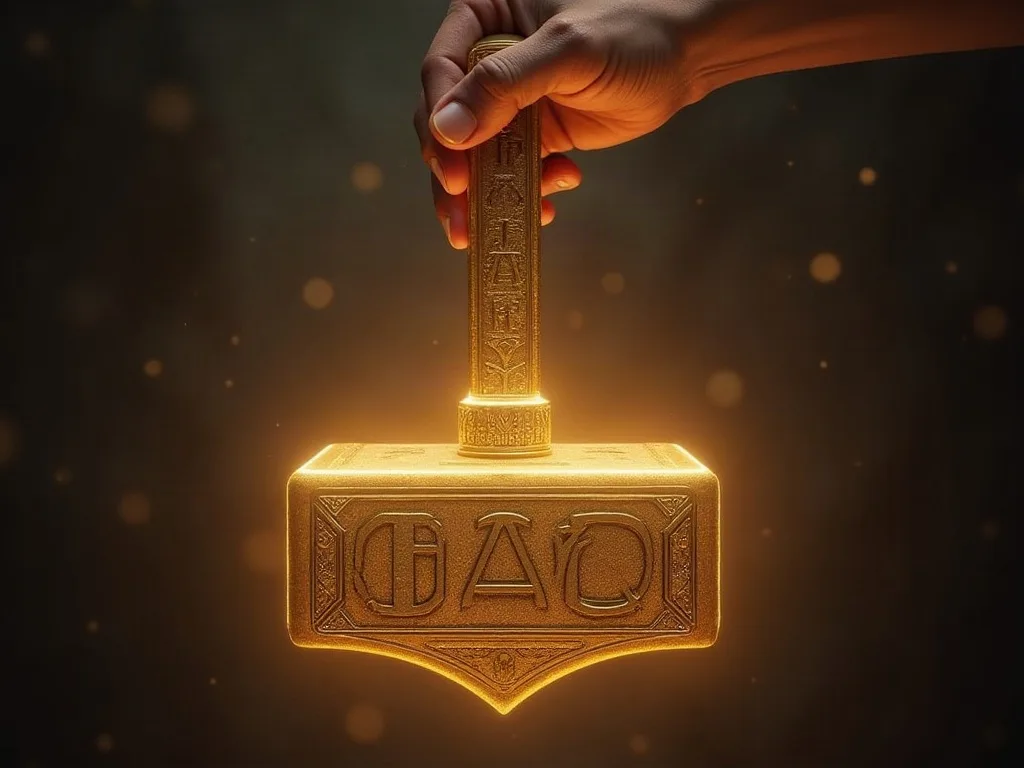
The fact that other heroes eventually can wield the hammer (Captain America, Jane Foster in the comics) is also a departure. The real Mjolnir is Thor's alone. It is not a prize to be passed around. It is fundamental to his identity in a way that Marvel's version is not.
Loki and the Family Dynamic
One of Marvel's most significant reimaginings involves Thor's relationship with Loki, his adoptive brother. In the MCU, Loki begins as a villain but gradually becomes a tragic, sympathetic figure. He and Thor have a complicated bond of genuine affection, betrayal, and eventual reconciliation. Tom Hiddleston's Loki is charming, witty, and deeply wounded by his sense of not belonging.
In the real Eddas, Loki is not Thor's brother. Loki is a trickster, a being of fundamental chaos. He is bound in the earth by the gods after causing the death of Baldr, one of the most beloved gods. He is held there with serpent venom dripping on his face as punishment. At Ragnarok, Loki breaks free from his chains, and he and his children (including the World Serpent and Fenrir, the great wolf) lead the assault on the gods. Loki and Thor meet in battle, and they kill each other. Loki is not sympathetic. He is not misunderstood. He is the embodiment of chaos and betrayal, and his role at the end of the world is apocalyptic and unavoidable.
The MCU's reinvention of Loki as a tragic figure reflects modern storytelling values: complexity, redemption, the possibility of change. The Eddas offer something different: a mythological world in which chaos and order are locked in eternal conflict, and there is no redemption, only the endless cycle.
Mortality and Destiny: The Unbridgeable Gap
Here is where the real gulf opens. Marvel's Thor is immortal but can be killed. In Avengers: Infinity War, Thanos kills him. In Avengers: Endgame, Thor is depressed and weightier (literally), haunted by his failure to stop Thanos. But he survives. He fights again. The experience changes him, but he continues.
The real Thor knows he will die. Not might die. Will die. The Eddas tell of Ragnarok in terms of absolute certainty. The seer in the "Voluspa" does not say "if Ragnarok comes" but "when it comes." The gods receive this knowledge and live their lives in the shadow of it. They do not despair. They do not stop fighting. They simply know that the fight is not winnable, that the outcome is fixed, and that they will nonetheless face their enemies with courage. This is the Norse concept of heroism: not triumph, but dignity in the face of inevitable defeat.
This is fundamentally tragic in a way modern superhero narratives almost never are. Marvel always offers hope: the hero will find a way, the good guys will prevail, the story will have a happy ending. Even when characters die, they can return (Infinity War and Endgame proved this). The Norse offered no such comfort. Ragnarok was the end. Full stop.
Thor Across Cultures: From Aesir to Avengers
Marvel's Thor exists in a strange space. He is not a direct translation of the ancient god. But he is not an invention from whole cloth either. He is a modern icon that borrows the name, the weapon, and the broad strokes of the myth and remakes them for contemporary audiences.
This has happened before in the history of mythology. During the Christianization of Scandinavia (from roughly the 10th century onward), Thor was sometimes reinterpreted through a Christian lens. The hammer became an emblem of old pagan belief, and over time, folk traditions blended the pagan and the Christian. The myths we have in the Eddas are themselves products of this collision: they were written down by Christian Icelanders who were recording the beliefs of their pagan ancestors. They preserved the stories but also changed them.
Marvel's reinvention is in this tradition. The studio took a real myth and adapted it. They made it comprehensible and compelling to a modern audience that does not believe in the Norse gods, does not fear Ragnarok, and expects heroes to overcome their challenges through growth and choice. This is not a betrayal of the source material. It is what cultures have always done with myths. They remake them. They update them. They make them speak to the present.
But in doing so, they inevitably lose something. The real Thor is not a hero who learns a lesson and finds happiness. He is a god locked in an eternal cycle of violence, knowing the end is already written, and fighting anyway. That is a different kind of heroism entirely. It is the heroism of Norse culture: stoic, unoptimistic, rooted in the belief that the universe is fundamentally indifferent to human (or divine) desires for justice or redemption.
Why Marvel's Version Works (And What It Leaves Behind)
The MCU's Thor is a brilliant reimagining precisely because it leaves behind the most troubling and most truthful aspects of the source material. Audiences do not want to watch a god know he will die. They want to watch a god learn to be better. They want to see friendships forged, sacrifices rewarded, and evil defeated. They want the universe to be fair.
The Norse knew the universe was not fair. They knew the good die as easily as the bad. They knew strength and courage were not always rewarded. They knew the end was coming. They lived in a harsh climate, endured short lifespans, and created myths that reflected these realities. Their gods were not perfect. They were like humans, but stronger and longer-lived. They had human flaws: pride, anger, lust, and greed. And they knew they would die.
Marvel's Thor is much more appealing. He is funny, noble, capable of growth, and ultimately victorious. He is the hero every modern audience wants. The real Thor is more complex, more alien, and more challenging. He offers a worldview that does not fit comfortably into modern values.
Yet there is also something in the real Thor worth preserving. He is not a character designed to teach lessons or to model moral behavior. He is a god reflecting the values of a people who lived at the edge of the habitable world, who endured brutal hardship, and who nonetheless maintained a sense of humor, honor, and courage. He is not optimistic, but he is not bitter. He is simply Thor: the thunder god, the giant-slayer, the one who will fight to the end even though he knows the end is already written.
Both versions matter. Marvel's Thor lets billions of people access the name and the image. The real Thor, preserved in the Eddas, offers something deeper: a window into how the Norse understood courage, fate, and the nature of heroism.
Frequently asked questions about Marvel's Thor and real Norse Thor
Frequently asked questions
Did the Norse really believe Thor would die at Ragnarok?
Yes. The Poetic Edda's "Voluspa" describes Ragnarok as a fixed event, not a possibility. Thor will fight the World Serpent, kill it, and be poisoned by its venom. The Norse did not view this as a tragedy to be prevented but as a cosmological fact. They believed the universe operated in cycles, and this cycle of creation, flourishing, and destruction was how reality worked.
Is Asgard really a hidden alien civilization?
No. In Norse cosmology, Asgard is one of nine worlds connected by Yggdrasil, the World Tree. It is not a distant planet or hidden civilization but a metaphysical realm. Marvel reimagined it as an advanced alien society to make the story scientifically coherent within a modern fictional universe. This is a creative choice, not a reflection of the historical belief.
Was Loki really Thor's brother?
Not in the Eddas. Loki is a trickster figure, sometimes counted among the gods but fundamentally chaotic and dangerous. He is bound by the gods after causing the death of Baldr and imprisoned until Ragnarok. He and Thor are enemies who eventually kill each other in the final battle. Marvel's portrayal of Loki as Thor's adoptive brother and eventual ally is entirely an invention, though a compelling one.
Why does Marvel's Thor make jokes if the real Thor didn't?
The historical Norse myths contain dark humor and some light moments, but they are not comedies. Marvel chose to make Thor funny to make him appealing to modern audiences who expect heroes to be self-aware and to laugh at themselves. This reflects modern storytelling values, not ancient Norse ones. Chris Hemsworth's comedic timing is a feature of MCU filmmaking, not of the source material.
Which version of Thor is more 'correct'?
The historical Eddas are the more accurate source for what ancient Norse peoples believed. But "correct" is the wrong question. Marvel's Thor is a creative adaptation meant to entertain a modern audience. The real Thor is a window into ancient religious belief and values. They serve different purposes. Neither is wrong; they are just different kinds of stories.
The Myth Remade: What Endures and What Changes
The journey from the Poetic Edda to the Marvel Cinematic Universe is a journey through time, culture, and storytelling. The real Thor is a god of an ancient people who lived with constant danger and saw the world as cyclical and ultimately tragic. He was strong, crude, and locked into an eternal struggle against chaos. He knew he would lose.
Marvel's Thor is a modern hero shaped by psychology, friendship, and the belief that people can change. He begins flawed but grows wiser. He faces challenges he can overcome. He survives to fight another day. He is shaped by the values of a culture that believes in progress, redemption, and the triumph of good over evil.
Both are called Thor. Both carry a hammer. But they are gods of different worlds, speaking to different peoples. The real one speaks to us across the centuries with a voice that is strange and distant, rooted in a worldview we no longer share. Marvel's one speaks in our language, with our values, and with our hope that courage and virtue will ultimately be rewarded.
Perhaps the greatest compliment you can pay to the real Thor is this: even after 1000 years, after his culture was replaced, after his religion was forgotten, his name and his hammer still carry power enough to carry a movie franchise. The ancient Norse created a god so vivid and so human that he survived Christianization, survived centuries of obscurity, and survived the transition into an entirely different kind of story. That is a kind of immortality. Not the kind Thor would have chosen. But immortality nonetheless.
Free 25-page sample
Want the whole story?
Take the first 25 pages free. If it pulls you in, the full edition is yours as an instant PDF download, with a paperback on Amazon for selected titles.

Mythology
The World Mythology Book: The Gods, Heroes and Myths of Every Culture
The Gods, Heroes and Myths of Every Culture, in One Volume
The whole of world mythology in a single volume: Greek, Norse, Egyptian, Japanese, Hindu, Celtic, Slavic, Mesoamerican and African myths gathered side by side, each drawn from the primary sources.