
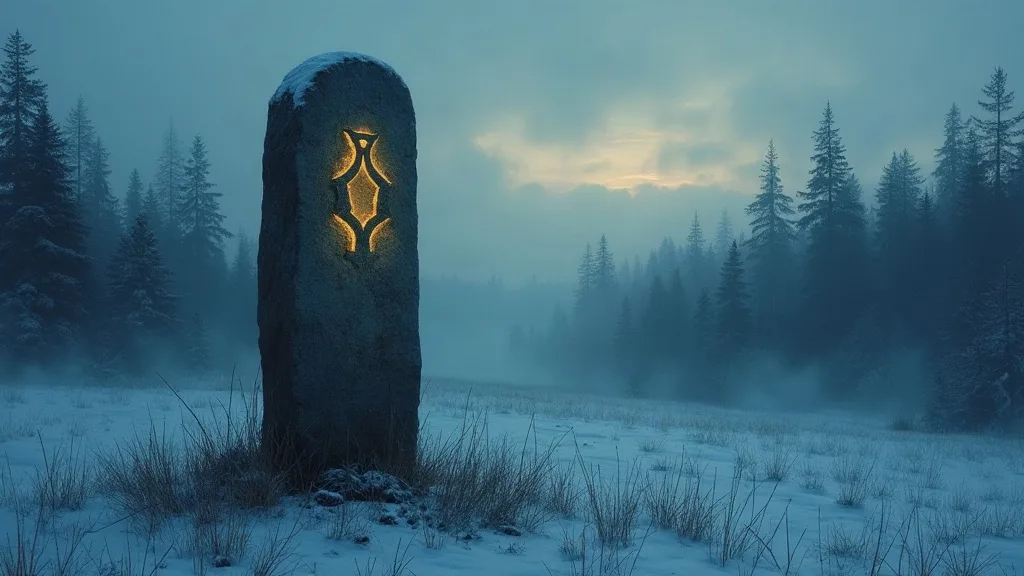
Norse Runes: Meanings, Origins, and Sacred Power in Old Norse Myth
Discover how Norse runes emerged from divine sacrifice and became tools of prophecy and power in Old Norse culture. Learn the origins of the Elder Futhark, the meanings behind each symbol, and how runes shaped Norse spirituality from Odin's revelation to Viking Age craft.
Contents
The Gift Born from Sacrifice
Odin, the All-Father, hung himself on Yggdrasil for nine nights and nine days. Wounded by his own spear, starving, deprived of drink, he dangled from the world tree's branches until knowledge struck him like lightning. In that moment of agony, Odin discovered the runes. The Poetic Edda, a collection of Old Norse poems preserved from around the 13th century, captures this revelation in the Havamal ("Words of the High One"):
"I know that I hung on that windswept tree, nine nights full long, wounded by spear and given to Odin, myself to myself, on that tree of which no one knows where its roots run."
The runes were not invented. They were found in the cosmic darkness, torn from the body of knowledge itself. Norse runes meanings flow from this primal act of sacrifice. They are not merely letters; they are tools of power that reflect the structure of the cosmos.
Odin's discovery transformed runes into more than writing. They became conduits for magic, prophecy, and the hidden patterns of fate. Every Norse rune carried weight in ritual, every carving a prayer or invocation.
The Elder Futhark: The Ancient Alphabet of Power
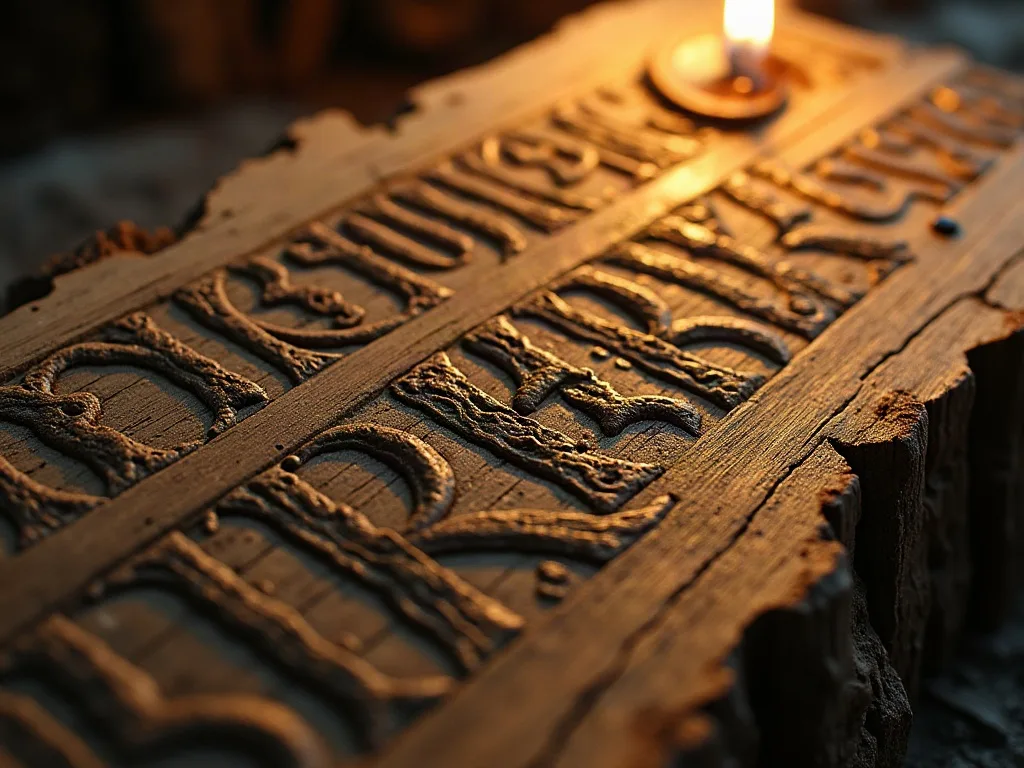
The Elder Futhark is the oldest form of Norse runes, comprising 24 characters that predate the Latin alphabet in Scandinavian and Germanic lands. The term "Futhark" comes from the first six runes: Fehu, Uruz, Thurisaz, Ansuz, Raido, and Kenaz. This is not coincidence; in the same way we say "alphabet" from Alpha and Beta, Norse peoples named their runic system after its opening characters.
Archaeological evidence places the Elder Futhark in use from roughly the 2nd to 8th centuries CE, though scholars debate its deeper roots. Some linguists argue the runes derive from the Etruscan alphabet, absorbed through trade and migration routes across Europe. Others point to an indigenous Germanic development. What is certain: the runes were carved into wood, bone, stone, and metal by craftspeople, warriors, and skalds (poets) across the Norse world.
Each rune served dual purpose. It was a letter; it was a symbol of cosmic forces. A merchant might carve Fehu (wealth) onto a chest to invoke prosperity. A warrior might inscribe Tiwaz, the rune of the god Tyr, onto a sword for victory in battle.
The Three Groups and Their Energies
The 24 runes divide into three groups of 8, each associated with different domains:
- Aett of Freyr (the cycle of fertility and growth): Fehu, Uruz, Thurisaz, Ansuz, Raido, Kenaz, Gebo, Wunjo
- Aett of Hagal (the cycle of disruption and transformation): Hagalaz, Nauthiz, Isa, Jera, Eihwaz, Perthro, Algiz, Sowilo
- Aett of Tyr (the cycle of manifestation and will): Tiwaz, Berkano, Ehwaz, Mannaz, Laguz, Ingwaz, Othala, Dagaz
This grouping reflects how the ancient Norse saw reality: cycles of growth, upheaval, and eventual creation. The runes were not abstract symbols but mirrors of lived experience.
The Meanings Behind Each Rune
Fehu (Wealth, Cattle, Movement)
Fehu means cattle or moveable wealth in Old Norse. For Viking Age societies, cattle were currency, status, and survival. To carve Fehu on a threshold or a trade item was to invite abundance and good fortune. The rune appears on runestones across Scandinavia, often marking boundary lines or ownership.
Uruz (Strength, Wild Power, Aurochs)
Named after the aurochs, the extinct wild ox of northern Europe, Uruz represents untamed strength. The aurochs was larger and more dangerous than domestic cattle, a symbol of raw primal force. In myth, Uruz connects to the wild, the uncultivated, the power that lies beyond human control. A warrior might invoke Uruz for courage; a healer might use it to draw on the body's natural resilience.
Ansuz (God, Breath, Odin's Gift)
Ansuz derives from Aesir, the family of gods that includes Odin. It represents speech, revelation, and divine inspiration. Skalds (poets) especially revered Ansuz because poetry itself was thought to be a form of god-given magic. The rune carries the breath of Odin, the power of words to shape reality.
Tiwaz (Warrior, Justice, The God Tyr)
Named for Tyr, the one-handed god of war and law, Tiwaz is the warrior's rune. Tyr sacrificed his hand to bind Fenrir, the great wolf, placing justice and cosmic order above personal safety. Carving Tiwaz meant calling on courage, honor, and the willingness to pay the price for what is right. Runestones from the Viking Age often show Tiwaz on weapons and armor.
Algiz (Protection, Elk, Warding)
Algiz depicts the antlers of an elk or moose, a protective stance. Carved above doorways or into amulets, Algiz was believed to ward against harm and invite divine protection. The rune's shape, with arms raised, suggests both the animal's defensive posture and a human plea for sanctuary.
Sowilo (Sun, Victory, Wholeness)
Sowilo embodies the sun itself, the source of warmth and light in the harsh northern lands. It represents victory, wholeness, and the turning of fate toward good fortune. The rune appears on weapons and personal amulets, invoking the sun's power to banish darkness and bring things to completion.
Laguz (Water, Flow, Intuition)
Laguz means lake or sea. The rune governs flow, emotion, intuition, and the hidden depths of consciousness. For a seafaring people, Laguz was essential. Viking navigators might carve it on ships for safe passage. Healers and völvas (female seers) used Laguz to connect with the unconscious currents of fate.
Othala (Heritage, Home, Ancestral Land)
Othala, the final rune, represents inheritance, ancestral lands, and family legacy. In a culture where bloodline and land ownership were sacred, Othala carried immense weight. To carve Othala was to claim lineage, to anchor yourself in the soil of your ancestors.
Rune Magic: Seidr and Spae
The Norse people did not merely read runes; they worked with them through magic. The Poetic Edda and the Prose Edda (a 13th-century prose account of Norse myth compiled by Snorri Sturluson) mention two primary forms of female magic: seidr and spae.
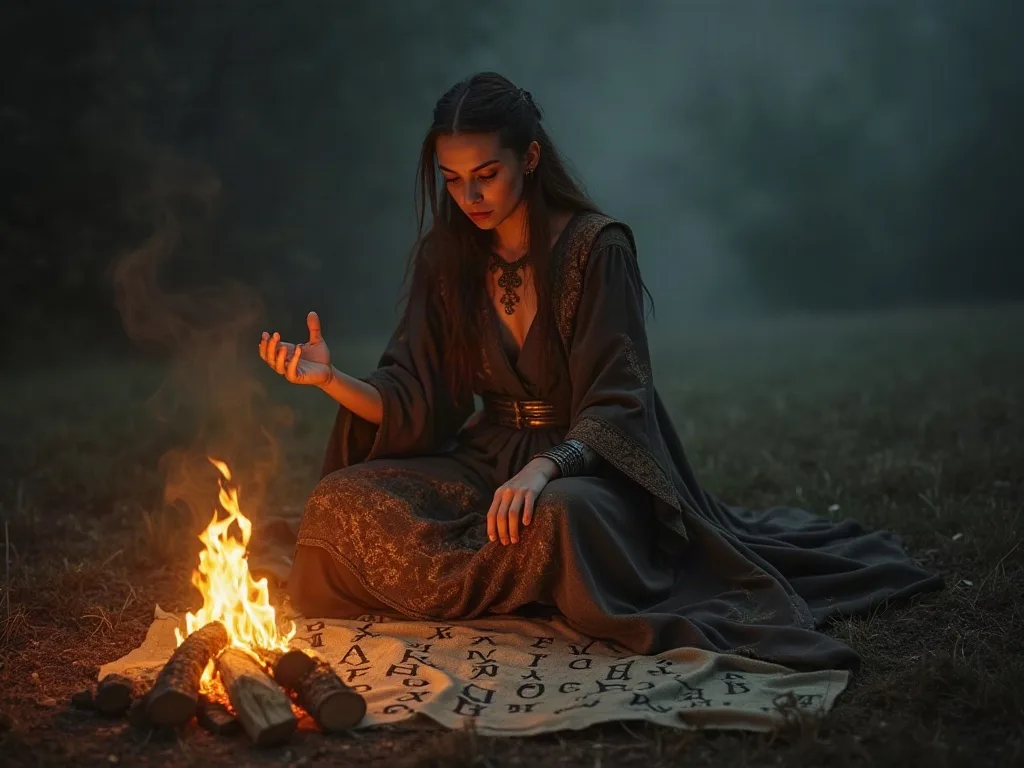
Seidr was ritualistic magic, often involving altered states and communion with the unseen worlds. A seidrkona, a woman skilled in seidr, would sometimes cast runes as part of divination. She might enter a trance, invoke the runes, and interpret the pattern that emerged. The Volva, the prophetess in the Poetic Edda's Voluspa ("The Seer's Prophecy"), possessed knowledge of the runes and of what was to come.
Spae was divination, the art of seeing and foretelling. Runes cast on a cloth or carved onto bones allowed a völva to perceive hidden patterns. The casting was not random; the völva believed she was reading the will of the Norns, the three female beings (Urd, Verdandi, and Skuld) who watered Yggdrasil and wove the fates of all beings.
The Norse understanding of rune magic was intimate. When you carved a rune, you were not merely making a mark; you were participating in the same creative force that Odin had accessed on the world tree. Magic flowed through intention, craft, and alignment with cosmic principles.
Runestones: Monuments of Memory and Power
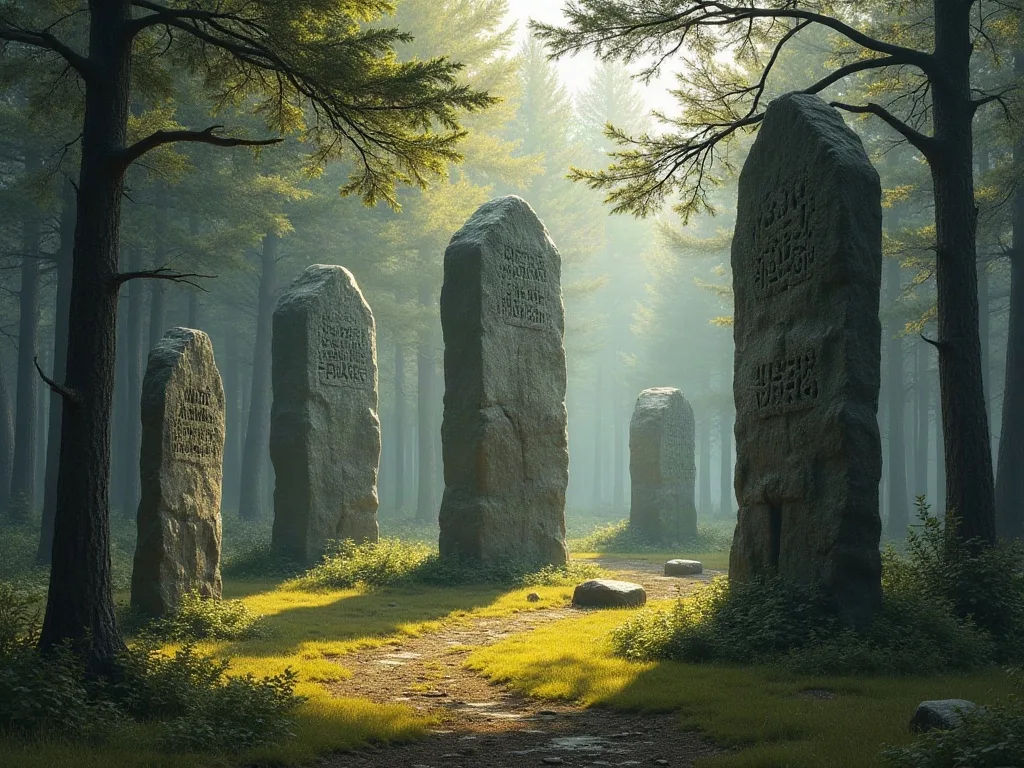
Between the 8th and 12th centuries, the Norse peoples raised runestones across Scandinavia. These were standing stones, often several feet tall, carved with runes and sometimes decorated with intricate patterns or imagery. Over 4,000 runestones survive in Sweden alone, with thousands more in Denmark, Norway, and beyond.
Runestones served multiple purposes. Many commemorated the dead: "Let this stone stand as a memory of Erik, who fell in the south." Others marked property boundaries or recorded important transactions. Some appear to be protective talismans, inscribed with runes to ward off harm or invoke blessing upon a household.
The runestone at Tune, in Norway, dates to around the 4th century and is among the oldest known runic inscriptions. Later runestones, such as the Rökstone in Östergötland, Sweden (9th century), are far more elaborate, their surfaces crowded with hundreds of runes forming an intricate message whose meaning scholars are still debating.
These stones reveal the deep integration of runes into daily Norse life. A farmer commissioning a runestone was not indulging in mysticism; he was performing a practical, spiritual act. The runes preserved memory and invoked protection in an age when writing systems were rare and the boundary between the practical and the sacred was blurred.
Transition to the Younger Futhark
By the 8th century, the Elder Futhark began to transform. A simplified version emerged, the Younger Futhark, with only 16 characters. This was not a decline in runic power; it was an adaptation. With fewer runes, each character carried more meaning. A single rune might represent multiple sounds. The Younger Futhark dominated in Scandinavia and remained in use until the late medieval period, long after the Elder Futhark had faded elsewhere.
The shift from 24 to 16 runes is still not fully understood. Some scholars believe it was a response to more efficient writing demands. Others suggest it reflected changing magical practice. What is clear: the Norse people preserved their runic tradition for over a thousand years, longer than almost any other ancient writing system.
Runes in Modern Norse Spirituality
Today, Norse rune meanings hold significance for modern practitioners of Norse paganism, heathenry, and runecraft. While contemporary practice differs from what a Viking Age völva would have done, the runes remain a bridge to ancient wisdom.
Modern rune readings often draw on the 24 Elder Futhark runes, with interpretations shaped by both historical understanding and contemporary spirituality. Some practitioners carve personal runestones; others cast runes for divination in ways that echo seidr practice, though filtered through modern sensibility.
The danger lies in romanticizing or inventing. The historical record shows that the runes were real, powerful, and integral to Norse life. Modern practice benefits from honoring that reality, learning from what the Eddas and archaeological evidence tell us, rather than projecting 21st-century New Age concepts onto ancient symbols.
Why the Norse Runes Endure
The Norse runes meanings and origins still speak to us because they embody principles that transcend culture. Growth and decay, order and chaos, the power of the word, the weight of fate, the strength of community. These are not quaint notions from a dead civilization; they are patterns that every human being encounters.
Odin's sacrifice on Yggdrasil was an act of radical commitment to knowledge. He wounded himself to gain power, suffering to transform. In that gesture, the runes were born. Every time someone carves a rune or learns its meaning, they participate in that same aspiration: to reach beyond the visible world and touch the forces that govern existence.
The runes were never mere letters. They were and remain a language of power.
Frequently asked questions about Norse runes meanings and origins?
Frequently asked questions
Did the ancient Norse use runes for everyday writing, or only for magic?
Both. Runes served practical purposes; people carved them on tools, marked ownership, recorded transactions, and raised commemorative stones. But every carving carried an implicit spiritual dimension. The Norse did not separate the practical from the magical. A merchant's mark on a barrel was both a label and an invocation of Fehu's blessing. The runes were a unified system where utility and spirituality were inseparable.
What does the Poetic Edda say about Odin's discovery of the runes?
The Havamal describes Odin hanging on Yggdrasil for nine nights, wounded, starving, and without drink. In this extremity, he "gained knowledge" and "saw nine mighty spells." The text does not name the runes explicitly, but later commentators understood this passage as Odin's discovery of the 24 Elder Futhark runes. The Havamal treats the runes as knowledge that Odin extracted from cosmic chaos through his own sacrifice, making them divine in origin and power.
How did rune meanings differ between the Elder Futhark and the Younger Futhark?
The Elder Futhark has 24 distinct runes, each with its own name and primary meaning. The Younger Futhark condensed these to 16 runes, with each character representing multiple sounds or concepts. The shift suggests the runes were adapted for speed and efficiency, but also that meanings may have been compressed or reinterpreted. Some rune meanings remained stable; others shifted. Unfortunately, written records of Younger Futhark interpretation are sparse, so much remains uncertain.
Were runes used for divination in the Viking Age the way modern rune readers use them?
The Poetic Edda and Prose Edda refer to völvas casting lots and practicing seidr, which likely involved rune casting. However, the specific methods are not detailed. Modern rune divination draws on historical rune meanings but uses techniques (like drawing runes from a bag) that may not reflect Viking Age practice. What is certain: the Norse believed runes held divinatory power and that skilled practitioners could interpret them to reveal hidden knowledge and forthcoming fate.
What is the historical evidence for the origins of the Elder Futhark?
The Elder Futhark appears in archaeological finds dating to around the 2nd century CE in what is now Germany and Scandinavia. Some scholars argue the runes derive from the Latin alphabet, others from Etruscan script, and still others from indigenous Germanic development. The debate remains active. What is accepted: the Elder Futhark became the standard runic system in the North, remained in use for over 600 years, and was eventually superseded by the Younger Futhark in Scandinavia while persisting longer in other Germanic lands.
The Runes as Living Symbols
The Norse runes remain alive because they represent forces that do not age. Tiwaz still speaks to the warrior's struggle between personal desire and justice. Laguz still governs the tides of emotion and the unknown. Othala still anchors us to the land and lineage that made us.
When scholars uncover a new runestone or decipher an old inscription, they add another thread to our understanding of how the ancient Norse saw the world. But the runes themselves transcend scholarship. They are a language older than written history in the North, carved into the consciousness of a people who believed that words had power and that the act of writing was a form of magic.
In learning what the runes meant to the Norse, we learn something about ourselves. We recognize in Odin's sacrifice and discovery the universal human hunger to reach beyond what we know, to suffer for knowledge, to find meaning in symbol and pattern. The runes are their gift to us across the centuries, an alphabet of power that still waits to be read.
Free 25-page sample
Want the whole story?
Take the first 25 pages free. If it pulls you in, the full edition is yours as an instant PDF download, with a paperback on Amazon for selected titles.

Mythology
The World Mythology Book: The Gods, Heroes and Myths of Every Culture
The Gods, Heroes and Myths of Every Culture, in One Volume
The whole of world mythology in a single volume: Greek, Norse, Egyptian, Japanese, Hindu, Celtic, Slavic, Mesoamerican and African myths gathered side by side, each drawn from the primary sources.