
Set: The Egyptian God of Chaos, Desert, and Storm
Set commands the desert and embodies chaos itself in Egyptian mythology, yet he was also a protector of the pharaoh and a necessary cosmic force. Discover how ancient Egyptians revered this red-skinned god of violence, magic, and the wild edges of the world.
Contents
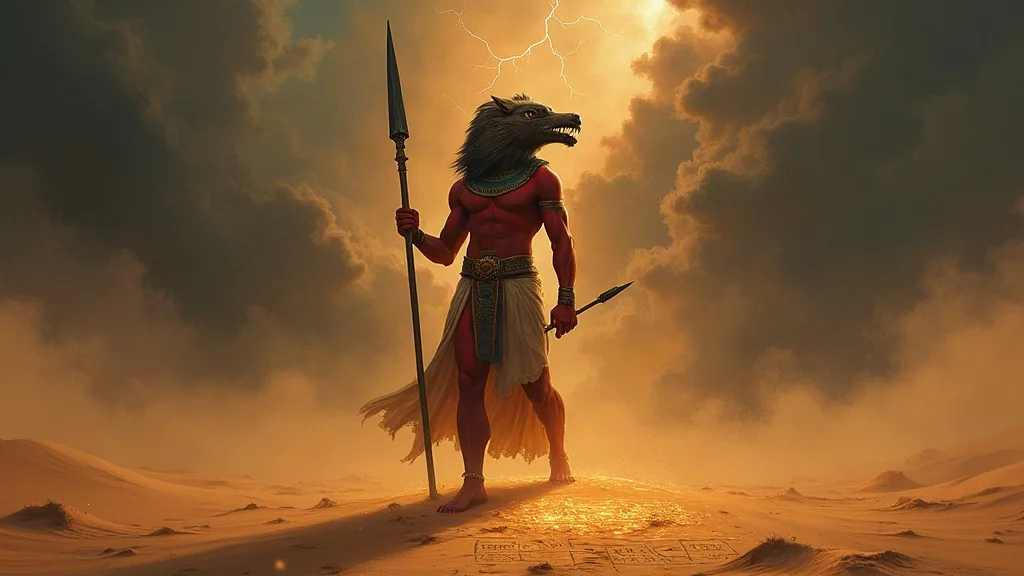
Set emerges from the primordial waters of the Nun in the Heliopolitan creation myth. He is the son of Geb, god of the earth, and Nut, goddess of the sky. From his birth, he is different. While his siblings Osiris and Isis embody order and fertility, Set embodies the raw, untamed forces that lie beyond the borders of civilization. He is red-skinned (a color associated with chaos and foreign lands), with tall ears and a long forked tail. Ancient Egyptian art shows him with the head of an animal that scholars still debate: perhaps an aardvark, a donkey, a mythological creature entirely his own.
The Egyptians called him Sutekh or Setesh in their own language. He ruled the deserts, the storms, and the violent edges of existence. Yet he was no simple villain. The pharaohs invoked his power for protection in battle. Priests performed rituals to harness his dangerous energy. He was as necessary to the cosmos as Osiris was; without chaos, without the storm, without the red desert that bordered the Nile, there could be no renewal, no boundary, no life.
The Mythological Character of Set
Set's most famous narrative unfolds in the Pyramid Texts and the later Coffin Texts, collections of spells and stories carved into tombs beginning around 2400 BCE. In these accounts, Set becomes the murderer of his brother Osiris. Jealous of Osiris's prosperity and his union with their sister Isis, Set lures Osiris into a coffin, seals it, and casts it into the Nile. Isis retrieves the coffin and hides it in the marshes to protect her unborn son Horus. But Set discovers the body and, in one version, cuts Osiris into fourteen pieces and scatters them across Egypt.
This act is Set's defining deed. It is not a momentary crime of passion but a cosmic violation. Osiris represents order, agriculture, the civilized state. Set's murder of him is the introduction of chaos into the ordered cosmos. Yet the myth does not end in triumph for Set. Isis gathers the scattered pieces of Osiris and uses her magic to restore him. She then conceives Horus, who grows up in secret to avenge his father.
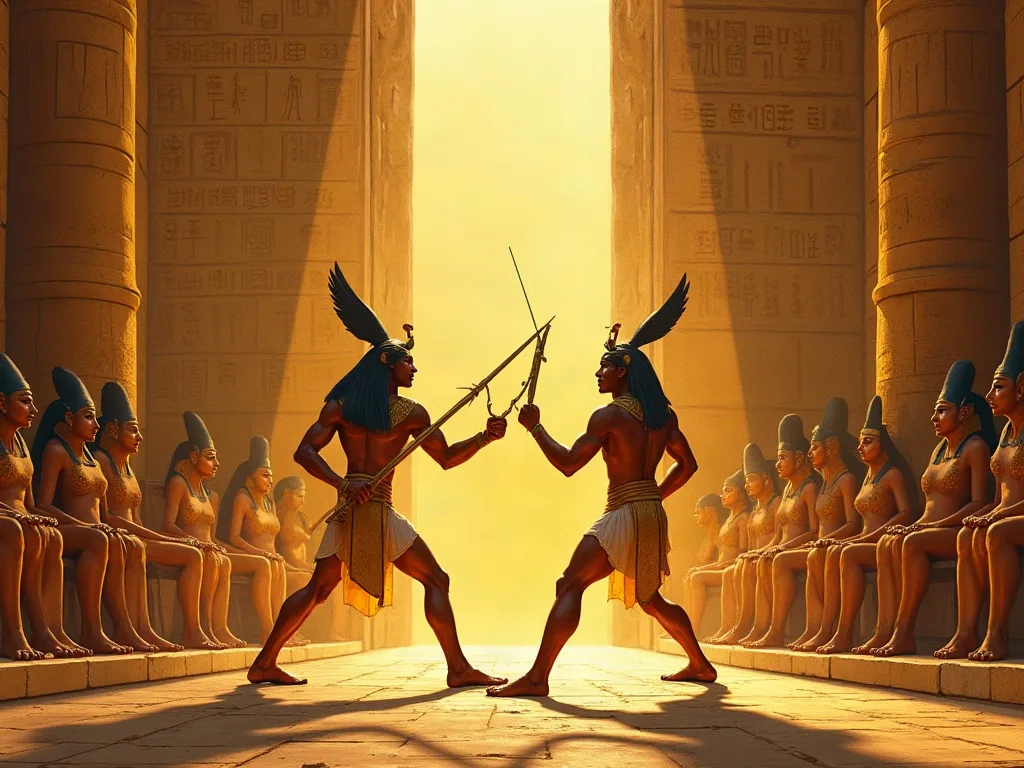
The conflict between Horus and Set forms the heart of one of the oldest mythological dispute narratives, the "Contendings of Horus and Set." This text, preserved on papyrus from the Twentieth Dynasty (around 1150 BCE), reads like a courtroom drama. Horus and Set present their claims before the assembled gods, each arguing why he should inherit the throne of Egypt. Horus invokes his bloodline; Set invokes his strength. The arguments drag on for eighty years. One god suggests they test their power by transforming into hippopotamuses and holding their breath underwater. Another recommends they simply fight. The god Ra grows exasperated with the proceedings.
What emerges from this myth is not a simple victory of good over evil but a complex settlement. Horus inherits the throne of Osiris and rules the living realm. But Set is not destroyed. Instead, he receives a position: lord of the desert, guardian of the edges of the world, protector against foreign invasion. His chaotic energy is contained, directed, made useful.
Set's Role in Egyptian Religion and Kingship
The ancient Egyptians did not fear Set in the way one might fear a devil. Rather, they recognized him as a force that needed to be managed, channeled, and honored in the right contexts.
The pharaohs, in particular, cultivated a relationship with Set. He was called "the strong arm of the king." During battle, the pharaoh was understood to embody Set's ferocity and destructive power. Kings performed rituals where they identified with Set to ward off enemies. The Nineteenth Dynasty pharaoh Ramesses II incorporated "Setekh" into his throne name, associating himself explicitly with the god's power. Later kings of the Nineteenth and Twentieth Dynasties continued this pattern, drawing on Set's strength as a protector against invasion and chaos from outside Egypt's borders.
Yet this royal affiliation existed alongside a deeper cultural anxiety about Set. By the New Kingdom (around 1550-1070 BCE), Set began to acquire more consistently negative associations. He became linked with Apophis (or Apep), the serpent of chaos who opposed Ra each night. Some texts suggest Set and Apophis were allied. In the underworld, Set sometimes appears as an enemy that the dead soul must overcome. By the Late Period and into the Greco-Roman era, Set's reputation darkened further. Temples that once honored him were defaced. His name was chiseled out of monuments, a practice called damnatio memoriae, the erasure of memory.
But during the Middle and New Kingdoms, Set remained a legitimate and complex deity. Soldiers invoked him before combat. Magicians studied his mysteries. Priests maintained his cults at centers like Avaris in the north and Ombos in the south.
Set's Domains: Desert, Storm, and Foreign Lands
Set god of chaos extended his influence across three interconnected realms: the scorching desert, the violent storm, and the foreign territories beyond Egypt's borders.
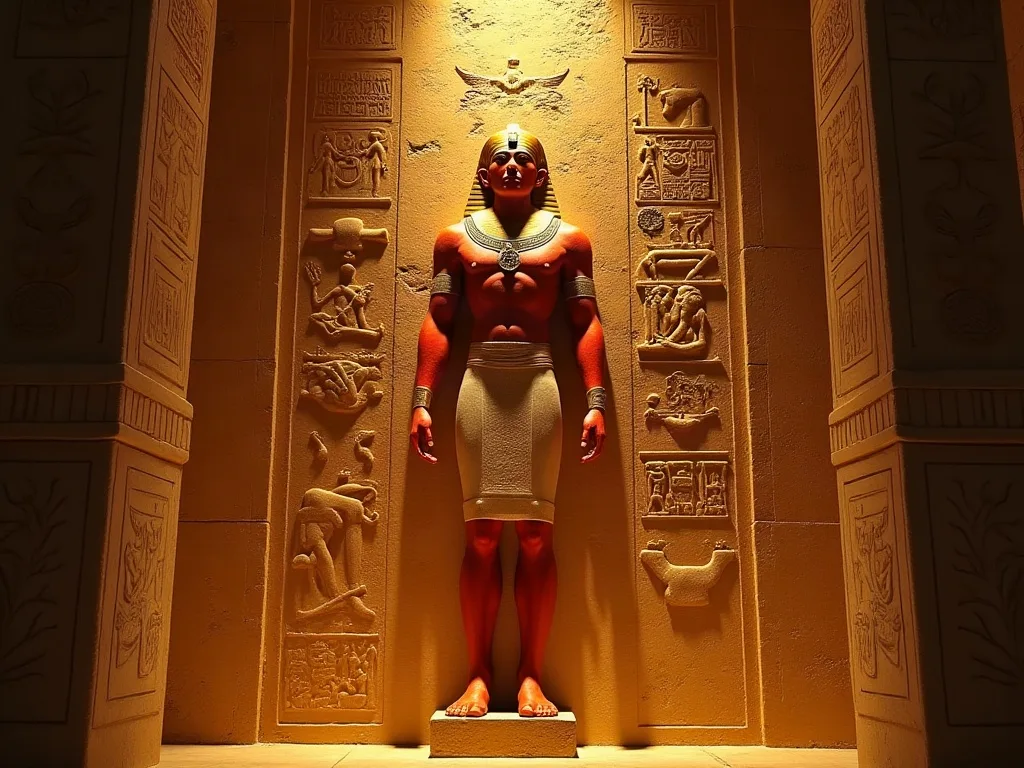
The desert was Set's primary domain. The ancient Egyptians called it the Deshret, the red land, in contrast to the Kemet, the black land of the fertile Nile valley. The desert was not simply uninhabitable wilderness but a space of danger, magic, and supernatural power. Set presided over its hostile creatures: scorpions, snakes, wild asses. He embodied the suffocating heat, the sandstorms that could kill a traveler, the emptiness that lay beyond civilization. Yet the desert also held resources: minerals, trade routes, hunting grounds. Set's mastery over this space made him a god one needed to petition.
The storm was equally Set's province. When thunder cracked and lightning split the sky, when wind tore at date palms and rain flooded the wadis, Egyptians recognized Set's voice. He was called the one with the violent voice. A particularly fierce storm was described as Set riding across the heavens in his chariot. Unlike other storm gods in Mediterranean traditions (like Zeus or Poseidon in Greek mythology, or Hadad in Syrian tradition), Set's storms were not primarily life-giving but destructive. They did not water crops but threatened them. The Egyptians did not pray to Set for rain; they prayed to him for protection from his fury.
Foreign lands and foreign peoples fell under Set's dominion as well. Non-Egyptians were often labeled "Asiatics" or "Nubians," and Set was their god. This association had multiple layers: it reflected the reality that Set's chaotic, uncontrolled nature aligned with Egyptian views of foreign peoples; it also suggested that Set could aid the pharaoh in dominating these territories. Hittites, Libyans, and peoples of the Levant were sometimes depicted as followers of Set. This mythology served a geopolitical purpose, framing Egypt's military campaigns as conflicts between the ordered cosmos and chaos.
Set's Attributes, Symbols, and Cult Practices
The animal most closely associated with Set was the Setekh beast, a creature with a long snout, squared ears, and a vertical, forked tail. While scholars debate its exact inspiration (aardvark, donkey, or an entirely mythological creature), ancient Egyptians recognized it instantly as Set's form. In temples and tomb paintings, the god appears with this head or in full animal shape.
Set also carried specific symbols. He held the was scepter, a staff with a forked top crowned with a deity head, symbolizing his power. He wielded weapons: the harpoon used to spear Apophis, the knife, the axe. These were not mere weapons but magical instruments for controlling chaos.
His sacred colors were red, reflecting his association with chaos and the desert, and sometimes gold. Red animals dedicated to Set (red cattle, red donkeys) were kept in temples. When the Nile flooded excessively, causing destruction, priests might blame Set's anger. When the river failed to flood enough, threatening famine, they performed counter-spells against Set's oppressive heat.
The major centers of Set's worship were in the northeastern Delta, particularly at Avaris, and in Upper Egypt at Ombos (modern Dendera region), where he shared a sanctuary with Horus. The pairing was deliberate: by placing their temples together, priests enacted the mythological settlement where chaos and order, destruction and protection, coexist.
Rituals honoring Set typically involved acts of reversal or symbolic confrontation. In the festival of Heb Sed, a jubilee marking a pharaoh's reign, Set was invoked to rejuvenate the king's strength. Magicians recited spells to bind Set, limiting his power while acknowledging his necessity. Warriors donned red cloth to assume his attributes before battle.
Set and Ra: Allies Against Apocalypse
One of the most intriguing aspects of Set's mythology is his relationship with Ra, the sun god. During the day, Ra travels across the sky in his solar barque, bringing light and life. But each night, he must journey through the Duat, the underworld, where the serpent Apophis waits to devour him and prevent the dawn.
Set becomes Ra's protector during this perilous voyage. Each night, Set stands at the bow of Ra's boat and spears Apophis, wounding the serpent but never destroying it (for chaos cannot be destroyed, only managed and reborn). Set's violence, his willingness to embrace bloodshed, makes him invaluable. He is the god who fights so that Ra can continue his cycle and the sun will rise.
This mythological pairing reveals the Egyptian understanding of cosmic balance. Chaos and creation are not opposites in a simple binary. Rather, controlled chaos, directed violence, and destructive power are necessary components of a functioning universe. Without Set's willingness to fight, without his red rage and his sharp spear, the cosmos itself would collapse into eternal night.
Some scholars suggest that Set's identification with Apophis, which became more pronounced in later periods, may have obscured an earlier, more nuanced view of him as Ra's necessary ally. The darker Set of the Late Period might represent a simplification of the more complex Middle Kingdom understanding.
Scholarly Debate: Was Set Evil or Necessary?
Modern scholars of Egyptian religion remain divided on how to interpret Set's character and role.
One school of thought argues that Set gradually became demonized over Egyptian history. Early texts present him as powerful and necessary, with both positive and negative qualities. But by the Late Period, growing religious anxiety about chaos, coupled with political instability and foreign invasions, transformed Set into a symbol of pure evil. The systematic erasure of his name from monuments was not an ancient tradition but a deliberate campaign of damnation, possibly inspired by Greco-Roman perspectives that viewed chaos-deities with suspicion.
Another perspective, offered by scholars like Typhon researchers and chaos-mythology specialists, argues that Set was always ambiguous: honored and feared, useful and dangerous, in constant tension. The ancient Egyptian worldview may have been comfortable with this ambiguity in a way that later Greek and Roman thought was not. The Stoics and Christian theologians sought to banish chaos; the ancient Egyptians sought to manage and channel it.
A third view proposes that Set's dual nature reflects genuine theological depth. He was not one god with changing reputation but a god whose very essence contained contradiction: destroyer and protector, lord of chaos and servant of order (when Set obeys the pharaoh or guards Ra's barque). This reading aligns with Egyptian philosophical traditions that embraced duality and paradox.
The disagreement persists because the textual evidence supports multiple interpretations. Set appears as both hero and villain, both reliable ally and unpredictable threat, in the same texts, sometimes within the same myth. Resolving this contradiction by declaring one view correct may actually distort the ancient Egyptian perspective.
Set's Afterlife and Modern Interpretations
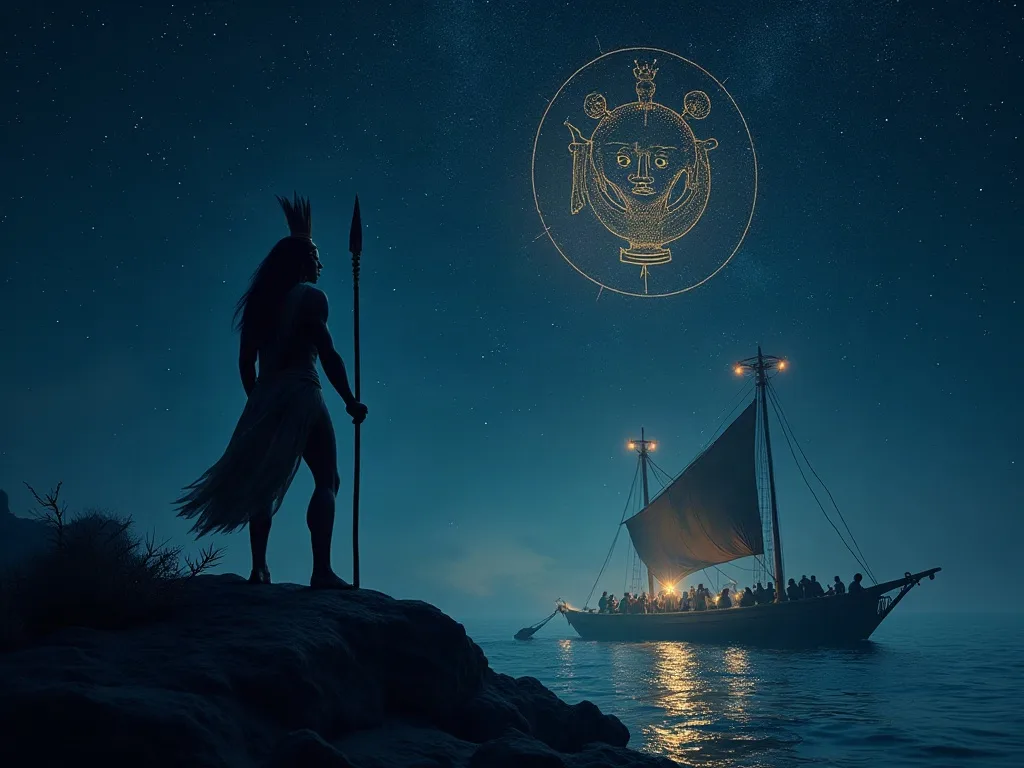
Set's reputation did not recover. By the Greco-Roman period, when Greek and Roman writers encountered Egyptian religion, Set had already been associated with chaos, disorder, and foreign invasion for centuries. Plutarch, writing in the first century CE, explicitly identified Set with Typhon (or Typhaeus), the monstrous chaos-serpent of Greek mythology. This equation proved influential. It locked Set into a framework where chaos is purely negative, purely destructive. In subsequent Christian and Islamic interpretations of Egyptian religion, Set became a demon.
Modern Egyptology has worked to recover a more nuanced understanding. Contemporary scholars emphasize that Set's violence and his association with chaos did not automatically make him evil in the Egyptian moral framework. The Ma'at (goddess and principle of order, harmony, and truth) did not triumph by eliminating Set but by limiting and directing him. The cosmos required both forces.
This recovery has consequences for how we read Egyptian culture. It suggests that ancient Egypt possessed a more sophisticated understanding of violence, power, and the necessity of destructive forces than many later traditions. The Egyptians did not require their gods to be purely good or purely evil. They could hold competing truths: Set is dangerous; Set is necessary. Set murdered Osiris; Set protects the sun. Set embodies chaos; Set serves order.
Set has experienced a minor revival in modern popular culture and fiction, where he appears as a complex, often sympathetic figure rather than a simple villain. This reflects a broader turning away from dualistic morality in fantasy and mythology. Writers recognize that the most interesting gods are those who contain contradiction.
Frequently Asked Questions About Set, God of Chaos
Frequently asked questions
Why did ancient Egyptians call Set the god of chaos if he also protected the pharaoh?
The Egyptians understood chaos not as pure evil but as raw, uncontrolled power. The pharaoh needed this power to maintain Egypt's borders and defeat enemies. Set's chaos, when directed through the king's authority, became a tool of order. It is the difference between a flood (Set's destructive rage) and an irrigation system (Set's power channeled for benefit). Both contain water; one destroys, the other sustains. Set was the force; the pharaoh was the one who wielded it.
What animal was Set supposed to be, exactly?
Ancient Egyptian art consistently depicts a creature with a long snout, squared ears, and a forked tail, which scholars call the Setekh beast. Theories include the aardvark, wild donkey, or an entirely mythological animal. No single identification has won universal acceptance. The ambiguity may have been intentional: Set was not easily categorizable, just as chaos itself resists neat classification.
Did Set have a wife, and did he have children?
Set was paired with Nephthys, goddess of mourning and magic, and they had a son together, Anubis (though some texts say Anubis was the son of Osiris and Nephthys). Nephthys was also Set's sister, following the pattern of divine kinship in Egyptian mythology. Set's relationship with Nephthys is less dramatized than his conflicts with Osiris and Horus, but her association with him suggests that even his closest ties carried complexity: Nephthys mourns what Set destroys.
Why did later Egyptians try to erase Set's name from monuments?
By the Late Period, Set had become symbolically aligned with foreign invasion, chaos, and disorder. The practice of damnatio memoriae (erasing names) was a form of magical erasure believed to unmake the person from the afterlife. Political instability and the encroachment of Greek and Roman power may have made Set's "foreign" nature feel threatening rather than protective. The erasure also reflects a simplification: later tradition preferred clear villains and heroes, whereas Middle Kingdom Egypt was comfortable with ambiguity.
Is Set the same as Typhon, the chaos monster in Greek mythology?
Greek and Roman writers, particularly Plutarch, explicitly equated Set with Typhon. This equation proved historically influential but may distort both traditions. Typhon is a monster of pure destruction with no redemptive qualities. Set was dangerous and chaotic but also useful, honored, and integrated into the cosmic order. The equation reflects Greek philosophical preferences for clear moral categories rather than Egyptian comfort with paradox and ambivalence.
Set in Comparative Mythology: The Paradox of the Necessary Evil
Set's role in Egyptian cosmology finds unexpected parallels in mythologies far removed in time and geography. The Norse trickster Loki, while not identical, shares Set's capacity to be both insider and outsider, sometimes helping the gods, sometimes threatening them. Like Set, Loki embodies a principle the cosmos needs but must also fear. Indra, the Vedic god of storm and war, carries destructive power yet is invoked for protection. The Mesoamerican Tezcatlipoca is a god of night, conflict, and uncertainty, necessary and dangerous in equal measure.
What these deities share is a refusal to fit into modern categories of good and evil. They represent a more ancient and more honest view of power itself: that power is amoral, that destruction and creation are often the same force viewed from different angles, and that any cosmos that endures must find room for both order and chaos, both cultivation and wilderness.
Set's story, properly understood, challenges us to recognize that ancient Egypt's theology was not primitive or simplistic but sophisticated and troubling in ways that still resonate. The Egyptians looked at the desert, the storm, the violent impulses within themselves and within power structures, and they did not deny or condemn these forces. They named a god to embody them, gave him honor and temples, and asked how to live with him rather than how to eliminate him. That question remains urgent today.
Free 25-page sample
Want the whole story?
Take the first 25 pages free. If it pulls you in, the full edition is yours as an instant PDF download, with a paperback on Amazon for selected titles.

Mythology
The World Mythology Book: The Gods, Heroes and Myths of Every Culture
The Gods, Heroes and Myths of Every Culture, in One Volume
The whole of world mythology in a single volume: Greek, Norse, Egyptian, Japanese, Hindu, Celtic, Slavic, Mesoamerican and African myths gathered side by side, each drawn from the primary sources.