
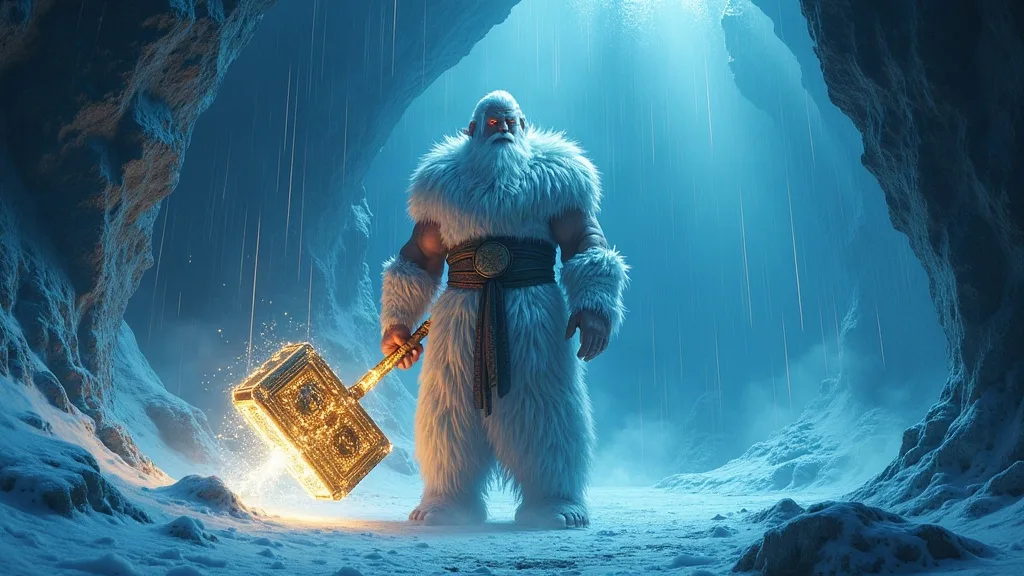
The Theft of Mjolnir: How a Giant Stole Thor's Hammer and Changed the Nine Realms
A giant steals the most powerful weapon in Asgard. Loki's trickery unravels. Thor's fury ignites. Discover the Norse myth where gods lose everything and must negotiate with chaos itself to get it back.
Contents
A giant walks into Asgard with a simple offer: he will rebuild the walls that protect the gods, but the price is steep. He wants the sun, the moon, and the hand of Freyja, the goddess of love and war. The gods refuse. They believe the work will take longer than any being can manage. They are wrong. The giant moves earth and stone with such speed that completion looms. Desperate, the gods turn to Loki, the trickster who got them into this mess in the first place. His solution is chaos. He transforms into a mare, seduces the giant's stallion, and delays the work just enough. The gods celebrate. But when Loki later visits Thrym, a frost giant, something dark is happening in the realm of ice and fire: Mjolnir, Thor's hammer, has vanished.
The theft of Mjolnir is not a single moment but a cascading crisis that tests the bonds of the Nine Realms and forces the Aesir, the chief gods of Norse mythology, into a negotiation so strange it reshapes how we understand divine power. In the Thrymskvida, a poem from the Poetic Edda (a 13th-century manuscript preserving Iceland's oldest oral traditions), the hammer's disappearance becomes the hinge on which the fate of gods and giants turns. This is not a battle story. It is a tale of loss, humiliation, and the lengths to which even immortal beings will go to recover what they have lost.
Who Stole Mjolnir and Why It Mattered
Thrym, a frost giant whose name means "noise" or "clamor," holds Mjolnir deep in a burial mound called Jotunheim, the land of giants. He has hidden the hammer eight miles beneath the earth. His terms for its return are not negotiable: he will give back the weapon on one condition alone. He demands Freyja as his bride.
To understand why this demand cuts so deeply, we must know what Mjolnir truly is. The hammer was forged by dwarven craftsmen called the Sons of Ivaldi and later improved by other dwarves named Sindri and Brokkr. According to the Prose Edda, a 13th-century prose retelling of Norse myths written by Snorri Sturluson, Mjolnir is not merely a weapon. It is the guarantor of cosmic order. In Thor's hands, it maintains the boundary between Asgard, the home of the gods, and Jotunheim, where chaos and frost threaten to consume the Nine Realms. Without it, the Aesir are exposed. Their fortress walls, rebuilt after the trickster's mare-seduction gambit, mean nothing if Thor cannot defend them.
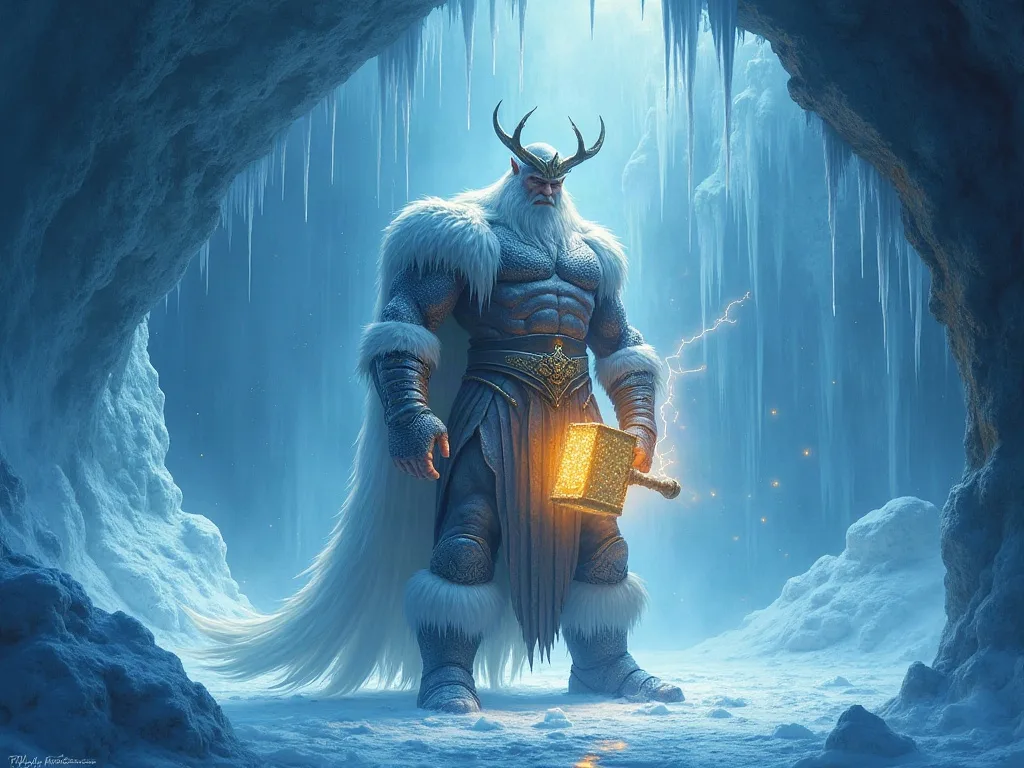
Thrym's theft is not random cruelty. It is strategic extortion. He knows that Thor cannot leave the hammer in giant hands because Mjolnir will be used against the gods in the final battle of Ragnarok, the twilight of the gods. Every moment the hammer remains stolen is a moment closer to that end. Thrym, though a frost giant of secondary rank, has found the one act that will force the immortal Aesir to bend.
The Gods' Desperation and Loki's Dark Admission
When Thor discovers the theft, his rage is immediate and volcanic. The Thrymskvida describes his fury in stark language: his beard shakes, his voice rumbles like thunder. He demands to know who took his weapon. The poem says that Heimdall, the watchman god with the sharpest sight and hearing in all the Nine Realms, suggests only one person could have orchestrated this theft: Loki.
Loki admits it. He had borrowed Mjolnir once before and left it somewhere. He does not say he took it, only that he lost it. But the truth hangs in the air. Loki, bound by his trickster nature, cannot leave well enough alone. His schemes have consequences that ripple outward, and this time, the consequence is the vulnerability of all the gods.
Freyja refuses the marriage outright. When the gods approach her, she is so angry that her necklace Brisingamen (the treasure of the Brisings, a mystical piece of jewelry) bursts from her neck in fury. She will not marry a giant. She will not be used as payment.
The gods are trapped. They need another plan, and only Heimdall, with his gift for foresight, sees a way forward. His suggestion is radical and humiliating: Thor must dress as Freyja. He must veil himself in bridal garments, complete with the dress, the veil, and the ceremonial bridal crown. He must go to Thrym's hall as a bride.
The Deception: Thor Dressed as a Bride
The Thrymskvida lingers on the humiliation of this moment. Thor protests immediately. If he goes dressed as a woman, the gods of Asgard will mock him forever. His reputation as the god of thunder and strength, the protector of Midgard (the realm of humans), will be destroyed. But Heimdall makes the argument that silences all objection: without Mjolnir, all the Nine Realms face destruction. Pride is a luxury the gods cannot afford.
Thor puts on the bridal dress. Loki, eager to make amends for his role in the theft, dresses as the bride's handmaid. Together, they travel to Jotunheim in a goat-drawn chariot (the same chariot that normally carries Thor to battle). The earth trembles. The sky ignites. Thrym, watching from his hall, thinks the bride-to-be is so powerful that merely her presence shakes the worlds.
When they arrive at the hall, Thrym hosts a wedding feast. The scene is grotesque and darkly comic. Thrym watches as the veiled figure consumes an entire ox, eight salmon, and all the delicacies prepared for the women of the giant household. She drinks three horns of mead. Thrym is shocked. He has never seen a woman eat and drink so much. Loki, hidden beside Thor, whispers an explanation for each excess: the bride has been so eager to reach Jotunheim that she has not eaten in eight nights.
The giants accept the lie. They are drunk on celebration. When the ceremony reaches its climax, Thrym brings out Mjolnir to bless the marriage. This is custom in giant culture: the hammer ensures fertility and abundance for the bride and groom. Thrym places the weapon on Thor's lap.
In that instant, Thor's patience ends.
The Reclamation: Thor's Revenge
The moment Thor's hands close around Mjolnir's haft, the bridal veil comes off. The Thrymskvida says that Thor's eyes "blazed with lightning." He raises the hammer and strikes. Thrym falls first. Then the other giants in the hall. The poem does not dwell on the slaughter, but the message is clear: Thor's fury, restrained until this moment, is absolute and final.
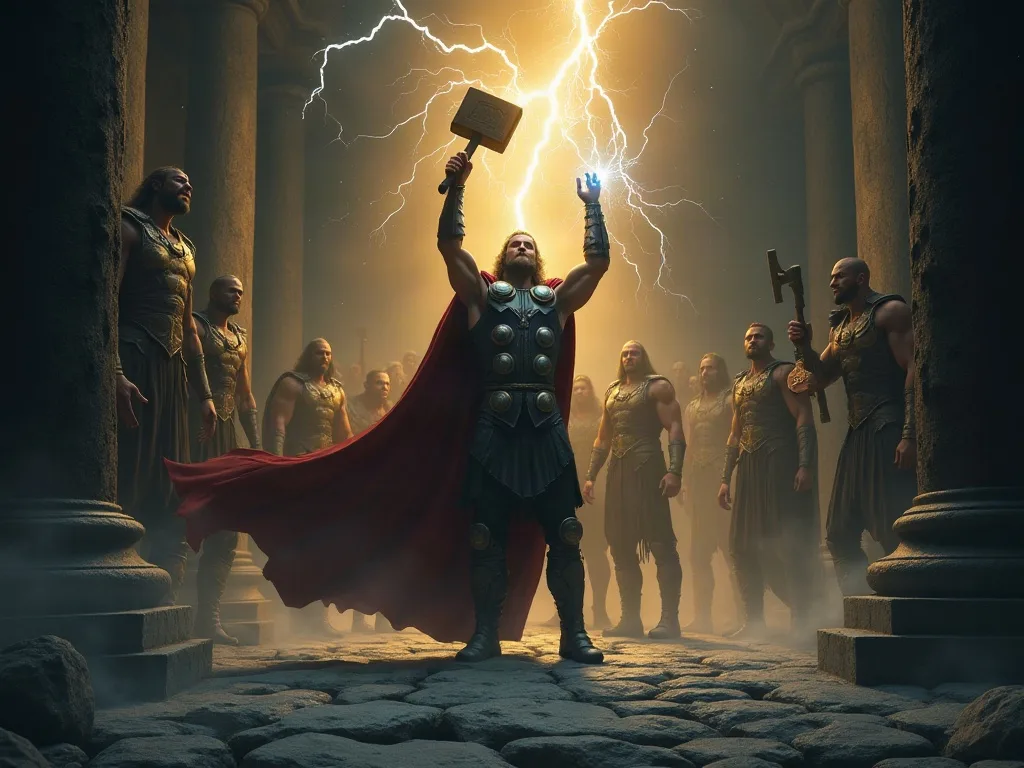
The theft is not simply recovered. It is avenged. Thor does not negotiate further. He does not bargain. He reclaims what is his and eliminates the threat in one catastrophic instant. The poem ends with Thor returning to Asgard, hammer in hand, order restored.
But this ending conceals a deeper truth about the myth. The theft and its resolution reveal something uncomfortable about the cosmos that the Norse understood. The gods are not all-powerful. They can be tricked. They can lose what they hold most dear. And when they face a crisis that their strength alone cannot solve, they must accept humiliation, disguise, and deception. They must become Loki's students, not his judges.
The Deeper Meaning: Loss, Disguise, and Divine Vulnerability
The theft of Mjolnir is one of the few Norse myths that dwells explicitly on divine powerlessness. The Aesir cannot simply take back what was stolen. They must play by the rules of the world in which they exist. Thrym has established a bargain, and even gods must honor the terms of negotiation or risk the collapse of trust that holds civilization together.
The myth also explores the theme of disguise and deception as forms of power. When Thor puts on the bridal dress, he does not lose his identity. He assumes a different role strategically. The disguise allows him to enter a space where he would otherwise be denied access. It is not weakness but a calculated submission to circumstance. In this way, the myth suggests that even the strongest must sometimes bend their pride to achieve their goals.
Loki's role in the story is complicated. He causes the theft, but he also helps solve it. He is the bridge between chaos and order, the figure who understands how to move through worlds that the straightforward god of thunder cannot navigate alone. The trickster is essential, not incidental.
How the Myth Echoes Across Norse Culture
The Thrymskvida appears in the Poetic Edda, a collection of Old Norse poems that were likely composed orally centuries before they were written down in the 13th century. The poem is one of the most vivid and humorous in the entire Norse corpus. It stands out because it treats the gods with a kind of affectionate irreverence: they are powerful, yes, but also capable of being mocked, humiliated, and forced into ridiculous situations.
This tone reflects the worldview of Norse culture itself. The gods of Asgard are not distant, untouchable beings. They are beings who struggle, make mistakes, and face consequences. They age. They die. They face enemies they cannot always defeat. The myth of Mjolnir's theft fits into this larger narrative of a cosmos that is neither static nor secure, but constantly threatened by entropy and chaos. Ragnarok, the end of all things, is not a distant possibility but a near certainty, already written into the fabric of fate.
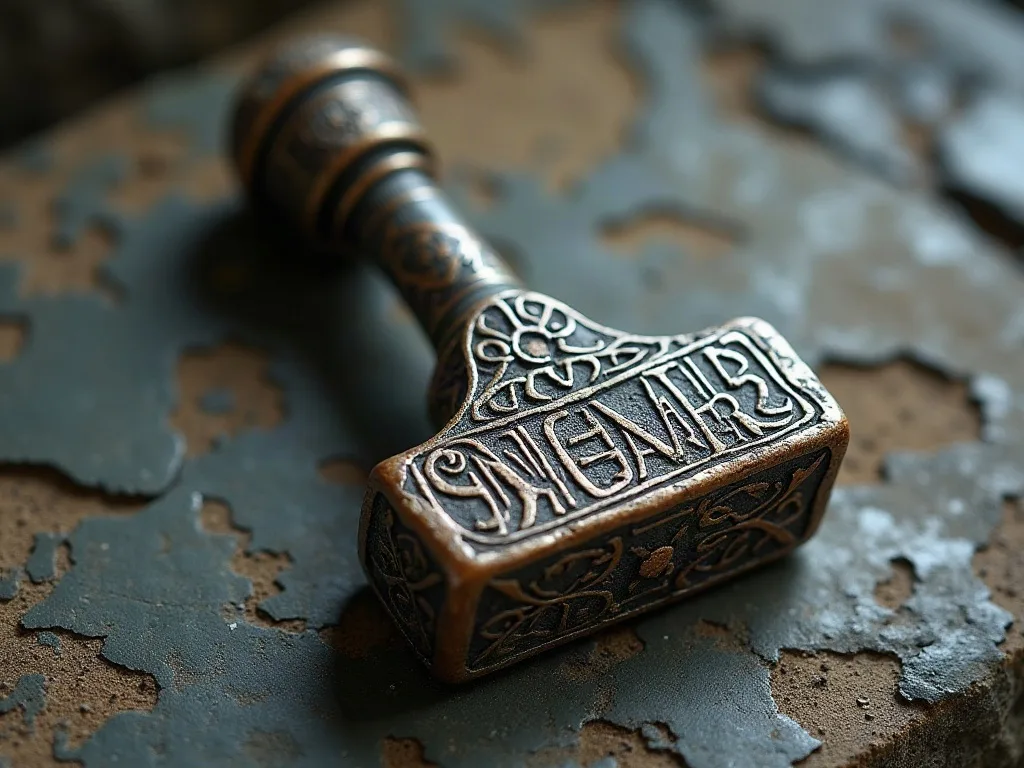
The hammer itself becomes a symbol in Norse culture that extends far beyond the myth. Mjolnir is worn as an amulet, carved into stone, invoked in blessing ceremonies. To wear a Mjolnir pendant is to invoke Thor's protection and to signal alignment with the old gods and old ways. When Christianity spread through Scandinavia in the 10th and 11th centuries, one of the acts of conversion was the renunciation of Mjolnir. People broke their amulets or exchanged them for Christian crosses. The hammer was not just a mythological object. It was a symbol of religious identity and cultural resistance.
The Theft in Comparative Myth: Loss and Recovery
The theft of Mjolnir pattern echoes across world mythology. In Hindu tradition, the asura (demon) Jalandhara steals a sacred object of power, forcing the gods to negotiate or wage war. In Greek myth, Prometheus steals fire from the gods, creating a theft that defines the relationship between divine and human worlds. In Mesoamerican tradition, the feathered serpent Quetzalcoatl engages in acts of theft and trickery that reshape the cosmos.
What makes the Norse version distinctive is its focus on the emotional and political consequences of loss rather than on the theft itself. The Thrymskvida asks: what happens when the source of your power is taken from you? How do you negotiate when you have nothing to bargain with? What are you willing to do or become to recover what you have lost?
These questions are not answered with victory alone. They are answered through humiliation, deception, and the reluctant admission that even gods must sometimes bend to circumstance.
How the Myth Was Transmitted: From Oral Verse to Written Word
The Thrymskvida survives in two primary sources. The first is the Poetic Edda, a manuscript copied in the 13th century by an unknown scribe but containing poems that are much older, likely composed in the 9th or 10th century. The second is references in Snorri Sturluson's Prose Edda, written in the early 13th century, which retells and comments on the older myths.
The poem's survival is remarkable. It exists in only a few manuscript copies, and much of what we know about Old Norse poetry comes from these fragile texts. The language is archaic even by medieval standards, filled with kennings (poetic metaphors where, for example, the sea might be called "the road of whales"), alliteration, and references that would have been crystal clear to an audience steeped in the tradition but require scholarly annotation for modern readers.
Scholars debate whether the Thrymskvida reflects a very old myth or was composed later, possibly as a piece of humorous fiction by a medieval Iceland poet. The tone of the poem, which treats a sacred subject with humor and lightness, differs from other Eddie myths. But whether ancient or medieval, the poem has become foundational to how we understand Thor and the Nine Realms.
Frequently asked questions about the theft of Mjolnir?
Frequently asked questions
Why didn't Thor just use his strength to recover Mjolnir without dressing as Freyja?
The theft of Mjolnir works because Thor cannot simply fight his way out of the situation. Thrym has established a bargain, and in Norse cosmology, agreements made between beings are binding even on gods. Brute force alone would not retrieve the hammer; only deception and the fulfillment of Thrym's terms would work. The myth explores the limits of strength and the necessity of cunning.
What is the significance of Freyja refusing to marry Thrym?
Freyja's refusal is crucial because it establishes that divine beings have agency and cannot be traded like property, even in moments of crisis. Her anger is so profound that her necklace Brisingamen breaks from her neck. Her refusal forces the gods to find a different solution and ultimately leads to the humiliation of Thor himself, making the sacrifice collective rather than placing the burden on a single goddess.
Is Mjolnir ever stolen again in Norse mythology?
The Thrymskvida is the primary myth of Mjolnir's theft. In the broader Norse cosmological timeline, Mjolnir plays a central role in Ragnarok, the end of all things, where Thor uses the hammer to fight the serpent Jormungandr. But no other myth describes the hammer being stolen. The theft episode is unique to this one narrative cycle.
Why do modern people wear Mjolnir as jewelry?
The hammer became a symbol of Norse identity and religious practice in medieval Scandinavia, worn as an amulet for protection and blessing. When Christianity spread, abandoning Mjolnir was an act of religious conversion. In modern times, Mjolnir jewelry is worn by people interested in Norse history, Norse paganism, and cultural heritage. The symbol has also been appropriated by various groups, some with troubling ideological associations, so context matters when interpreting its use.
How is the Thrymskvida different from other sources about Norse gods?
The Thrymskvida is distinctive because of its humor and lighter tone. It treats the gods affectionately but also mockingly, allowing them to be humiliated and to fail. This stands in contrast to other myths that emphasize divine power or tragic destiny. The poem preserves a tradition of humor and narrative pleasure alongside the more solemn mythological material.
The Theft's Afterlife: Why the Myth Endures
The theft of Mjolnir has become one of the most recognizable Norse myths in modern culture. It appears in contemporary fiction, games, and retellings ranging from Neil Gaiman's Norse Mythology to Marvel's Thor stories. But these modern versions often streamline or alter the original myth significantly.
The original Thrymskvida is not a straightforward action story. It is a meditation on loss, humiliation, negotiation, and the gap between divine power and divine vulnerability. The poem insists that even immortal beings can be trapped, forced to accept circumstances they did not choose, and compelled to become something they are not (at least on the surface) in order to recover what they have lost.
In an age when modern readers often expect heroes to overcome obstacles through strength and will alone, the Thrymskvida offers a different lesson. It suggests that sometimes the greatest power lies in accepting humiliation, working with unlikely allies, and using deception not as a moral failing but as a necessary strategy. The theft of Mjolnir, when understood in its original context, is not a simple adventure. It is a story about what the Aesir are willing to sacrifice to maintain order in a cosmos that is always on the brink of chaos."
Free 25-page sample
Want the whole story?
Take the first 25 pages free. If it pulls you in, the full edition is yours as an instant PDF download, with a paperback on Amazon for selected titles.

Mythology
The World Mythology Book: The Gods, Heroes and Myths of Every Culture
The Gods, Heroes and Myths of Every Culture, in One Volume
The whole of world mythology in a single volume: Greek, Norse, Egyptian, Japanese, Hindu, Celtic, Slavic, Mesoamerican and African myths gathered side by side, each drawn from the primary sources.