
Kali: The Fierce Mother Goddess Who Devours Time Itself
Kali is Hinduism's most electrifying deity: a goddess of death, liberation, and ferocious maternal love whose dark form conceals the deepest compassion in the cosmos.
Contents
The Dark Form That Illuminates
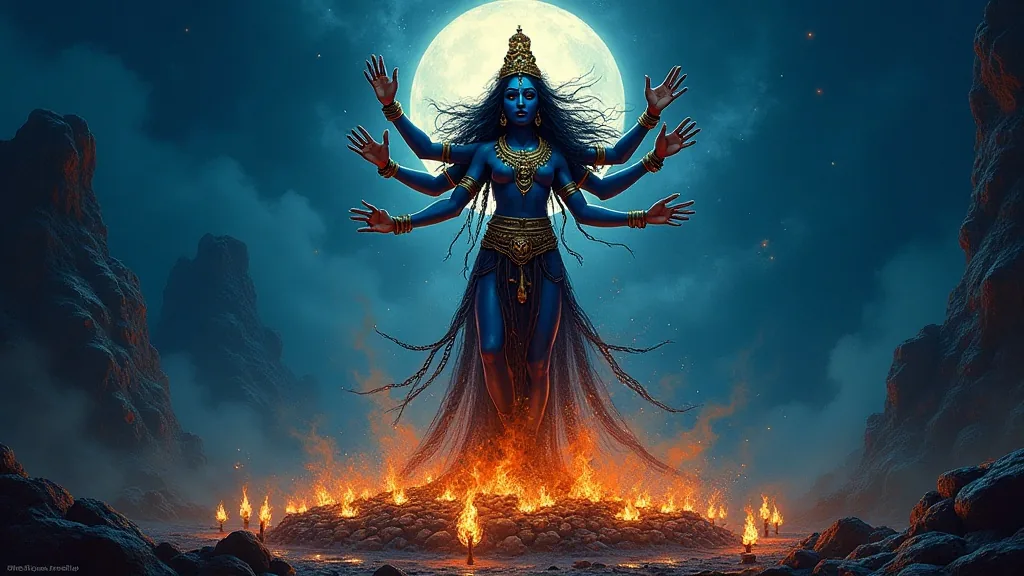
She stands on the chest of Shiva, tongue thrust out, a garland of severed heads around her neck, a skirt of dismembered arms at her waist. In one hand she lifts a bloodied cleaver; in another she offers the gesture of fearlessness, the abhaya mudra. To the unfamiliar eye, Kali appears as pure terror. To those who know her sacred texts, she is something far stranger and more beautiful: a mother whose love is so absolute that she destroys everything which stands between her children and liberation.
Kali, whose name derives from the Sanskrit kala, meaning both "time" and "black," sits at the intersection of death and eternity in the Hindu theological imagination. She is the fierce mother goddess who strips away illusion with the same hands that cradle devotees through the dark. She is perhaps the most misunderstood deity in any living religious tradition, and among the most profound.
Origins: Wrath Given Form
The earliest surviving textual appearance of Kali as a distinct goddess occurs in the Mundaka Upanishad (circa 500 BCE), where she is listed among seven flickering tongues of Agni, the fire god. Her name there already carries the weight of darkness and consuming flame. But it is the Devi Mahatmya, a sixth- or seventh-century Sanskrit hymn embedded in the Markandeya Purana, that gives her full mythological shape for the first time.
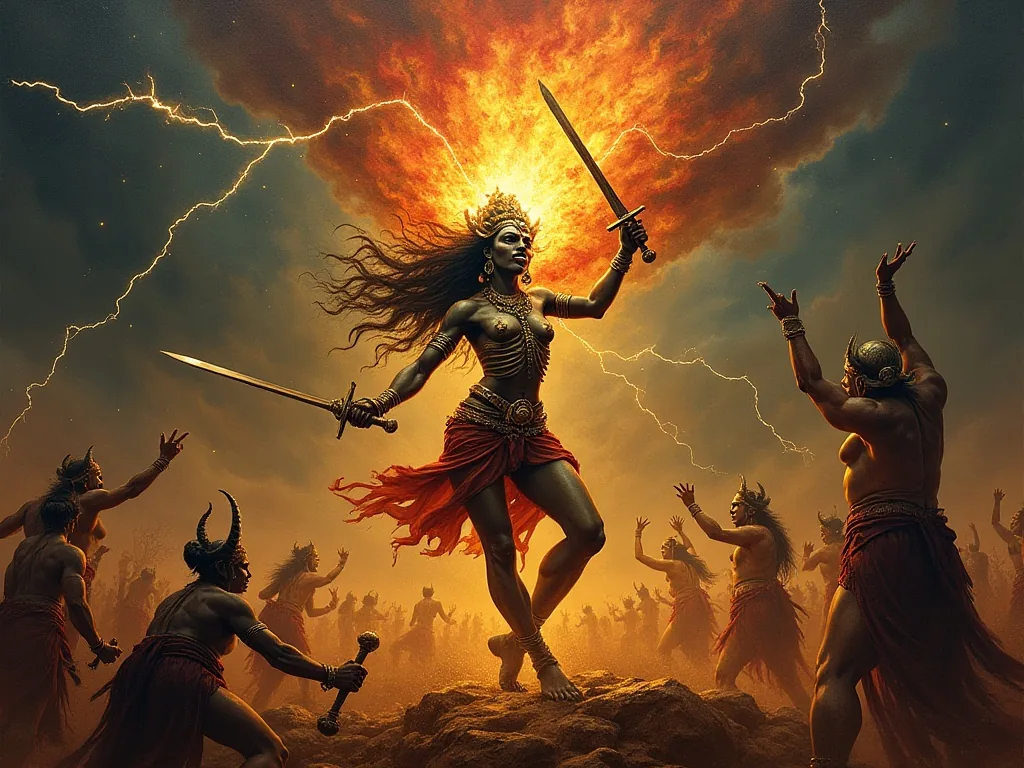
In the Devi Mahatmya, the great goddess Durga battles the demon generals Chanda and Munda. In the heat of her fury, her face darkens and Kali erupts from her forehead, skeletal and screaming, a sword in her hand and a noose around her arm. She devours the demons whole, crushing their elephants and war-chariots between her teeth as a child might crunch sweets. The passage is one of the most viscerally alive scenes in all of Sanskrit literature.
A second, even more famous episode follows. The demon Raktabija ("Blood-Seed") possessed the power to multiply from every drop of his blood that touched the ground. Each wound spawned thousands of identical demons. The gods were overwhelmed. Only Kali could defeat him: she stretched her tongue across the entire battlefield, catching every falling drop before it landed, drinking the demon's power dry until he collapsed, alone and small, into her mouth. This myth encodes a sophisticated idea: that certain forces in the cosmos can only be neutralized by absorption, not by combat.
Iconography: Reading the Terrifying Form
Every element of Kali's image carries encoded meaning within the Agama and Tantra traditions.
The Dark Skin
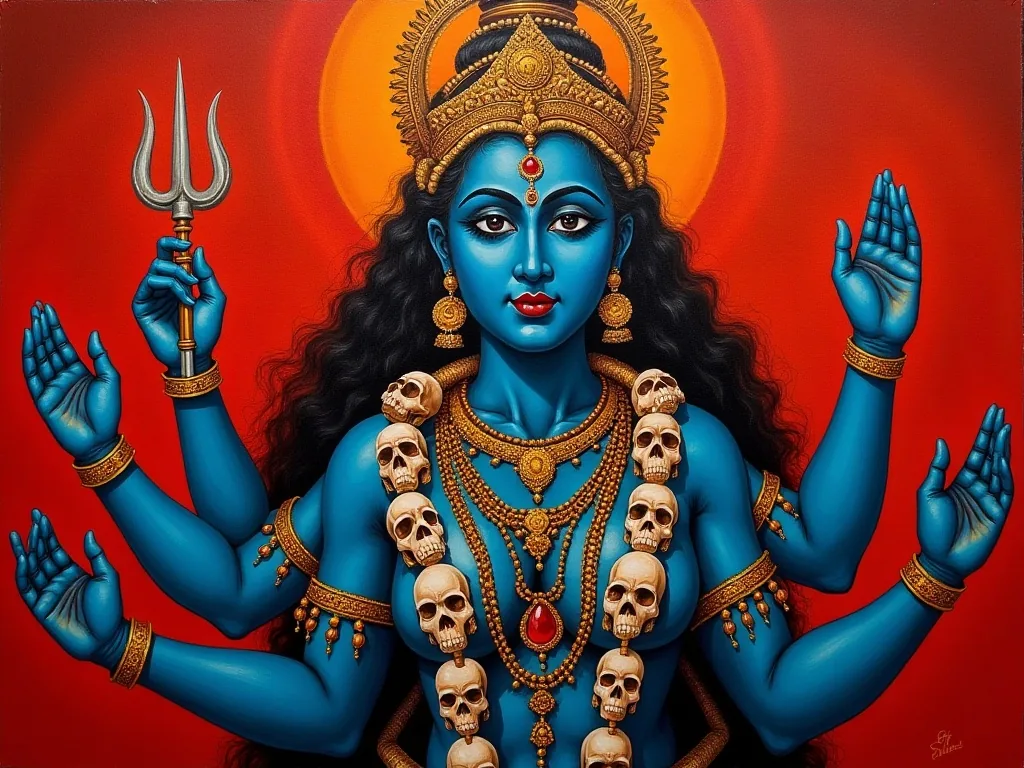
Her blue-black complexion is not mere shock imagery. It signifies the infinite void, the state before creation and after dissolution. She is the color of the night sky at its deepest, the color of the formless Brahman before any light was projected into it.
The Severed Heads and the Skirt of Arms
The garland of fifty-two skulls (or sometimes fifty, representing the letters of the Sanskrit alphabet in some interpretations) signals her dominion over language, knowledge, and the cycle of death and rebirth. The skirt of severed arms represents karma itself: the accumulated actions of human lives that she has cut free from the souls she liberates.
The Four Arms
Her four hands offer a compressed theology. Two carry weapons, symbols of the destruction of ego and delusion. Two offer boons: the abhaya mudra of protection and the varada mudra of gift-giving. Terror and grace are not opposites in her theology. They are the same gesture, depending on what the devotee brings to the encounter.
Standing on Shiva
This image originates in the Linga Purana and the tantric traditions of Bengal and Assam. Shiva, the cosmic masculine principle, lies still as a corpse beneath her dancing feet. Kali, the dynamic feminine principle (Shakti), is pure energy and movement. Without Shakti, Shiva is shava, a corpse. Without Shiva, Shakti has no ground on which to dance. The image expresses the inseparability of consciousness and energy in Hindu cosmology.
The Tantric Goddess: Night Rituals and Cremation Grounds
Kali finds her deepest theological home in the Shakta Tantra traditions, particularly those flourishing in Bengal, Assam, and parts of South India from roughly the seventh century CE onward. Within these schools, she is the supreme deity, the Adya Shakti, the primordial power who underlies and generates all other divine forms.
Tantric practice centered on Kali deliberately inverts conventional purity norms. Her worship traditionally takes place at cremation grounds (shmashan), precisely because those are the most fearful, polluted places imaginable in caste-orthodox Hinduism. The shmashan is where the ordinary frameworks of social existence dissolve. For Kali's devotees, that dissolution is the point: the devotee who can find the goddess in the cremation ground has learned to see the sacred where others see only death and refuse.
The ten Mahavidyas, the great wisdom goddesses of the Shakta tantric canon, place Kali at the head of the list. The others, including Tara, Tripura Sundari, Bhuvaneshvari, and Chinnamasta, each represent a specific mode of awakening, but Kali remains the root from which all others emerge. The Mahanirvana Tantra (an influential though late tantric text, probably eighteenth century) describes her as the ultimate reality, the nirguna Brahman, the formless absolute, who takes on form only out of compassion for devotees who need a face to love.
Kali in Bengal: The Mother Who Weeps and Laughs
Nowhere has the devotion to Kali taken deeper cultural root than in Bengal, where she became the presiding deity of Kolkata (Calcutta), her name embedded in the city's very identity through the Kalighat temple on the Hooghly River. The Kalighat Kali is considered one of the 51 Shakti Pithas, the sacred sites where body parts of the goddess Sati fell to earth as Shiva carried her corpse in grief across the cosmos.
The Bengali devotional tradition transformed Kali's terrifying iconography into something tenderly domestic. Poets of the Shakta padavali school, from the fifteenth century onward, addressed her as Ma, mother, and lamented her absence with the same aching intimacy a child feels for a mother who has stepped outside at night. The eighteenth-century mystic poet Ramprasad Sen wrote ecstatic songs to Kali that remain beloved today, songs that scold her, plead with her, and declare an unsentimental love that acknowledges her violence without flinching:
"You who devour the universe, yet you are my mother. How strange your ways, O Kali!"
This strand of devotion reached its most famous expression in the nineteenth century through Sri Ramakrishna Paramahamsa, the great mystic of Dakshineswar, who experienced Kali not as an abstract principle but as the living mother of the cosmos, weeping and laughing and calling him by name across the Ganges.
Kali Yuga: Time's Darkest Age
Kali's connection to the word kala (time) reverberates through Hindu cosmology in a broader context. The Kali Yuga, the current and most degraded of the four world-ages described in the Puranas, shares her etymological root and, in some interpretive traditions, her presiding presence. This is the age of darkness, confusion, and spiritual forgetfulness, an age that by classical Puranic reckoning began in 3102 BCE with the death of Krishna.
The relationship between the goddess Kali and the age Kali Yuga is a matter of genuine interpretive debate among Hindu scholars. They share a name, a color, and an association with destruction. Some Shakta theologians argue that living in the Kali Yuga makes devotion to the goddess Kali especially urgent: the very darkness of the age is her territory, and in her territory she offers her most direct protection.
Worship, Festivals, and Living Tradition
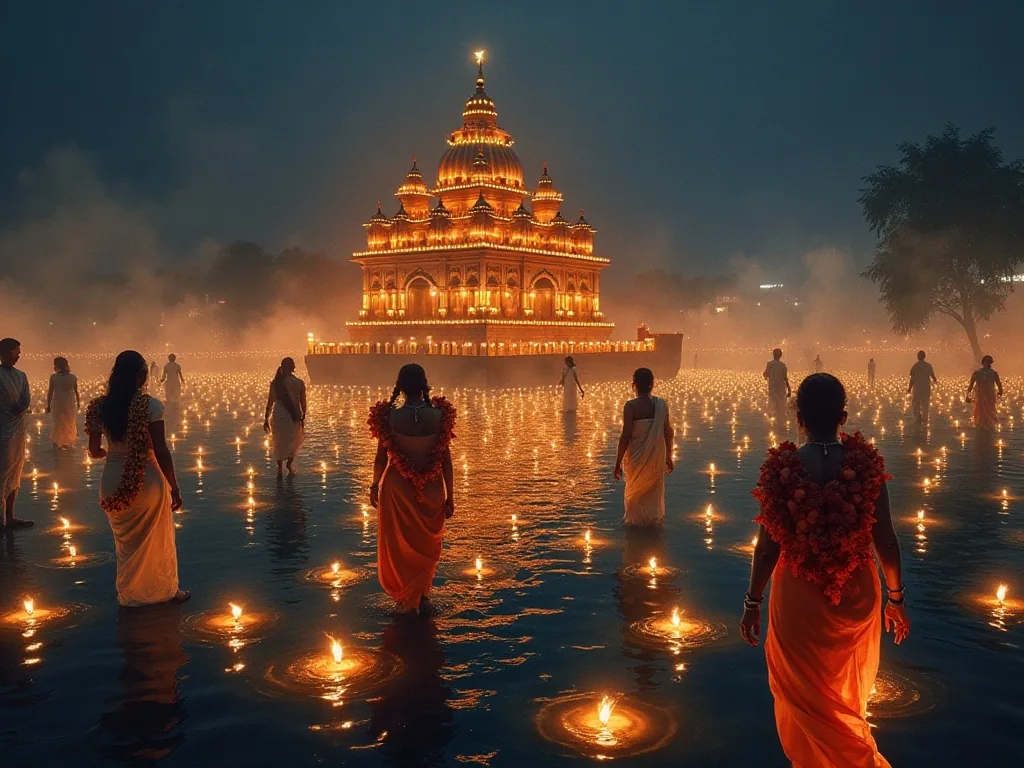
Kali Puja, the primary festival dedicated to the goddess, is celebrated on the new moon night of the Hindu month of Kartik (October or November), the same night that much of northern India celebrates Diwali. In Bengal and Odisha, the darkest night of the lunar year belongs to Kali. Rows of oil lamps are lit not to push away the darkness but to make it visible, to honor it as her domain.
Ritual observances vary widely across traditions:
- Tantric rites may involve offerings of red hibiscus flowers, red sandalwood paste, rice, fish, and in some orthodox Shakta temples, animal sacrifice, most commonly goat.
- Domestic worship in Bengali households centers on clay images of the goddess, elaborately painted, installed in temporary shrines and later immersed in rivers.
- Diksha (initiation) into Kali's mantra, particularly the Krim bija mantra considered her sonic essence, is transmitted through a living guru within the Shakta Tantra lineages.
The Kalighat temple in Kolkata, the Dakshineswar Kali temple on the Hooghly, and the Kamakhya temple in Guwahati, Assam (one of the most important Shakti Pithas), remain among the most heavily attended pilgrimage sites in South Asia, drawing millions of devotees each year.
The Goddess as Liberation Itself
What ultimately distinguishes Kali from deities primarily associated with destruction in other traditions is her theological function as moksha-dayini, the giver of liberation. She does not destroy for the sake of punishment or wrath. She destroys samsara, the cycle of conditioned existence, the endless wheel of birth and suffering and forgetting.
The Mahakala Samhita and various Shakta stotras (hymns) describe her devotees as those who have stopped fearing death, because they have placed themselves within the arms of the one who is death. That surrender is not passive resignation. It is the most radical act of trust in the Hindu devotional imagination: to see the skull-garlanded darkness and say, without irony or theater, this is my mother, and I am not afraid.
Her fierce form, then, is not a warning to stay away. It is a portrait of reality as it actually is: impermanent, consuming, and saturated with a love so vast it cannot afford to be gentle.
Free 25-page sample
Want the whole story?
Take the first 25 pages free. If it pulls you in, the full edition is yours as an instant PDF download, with a paperback on Amazon for selected titles.
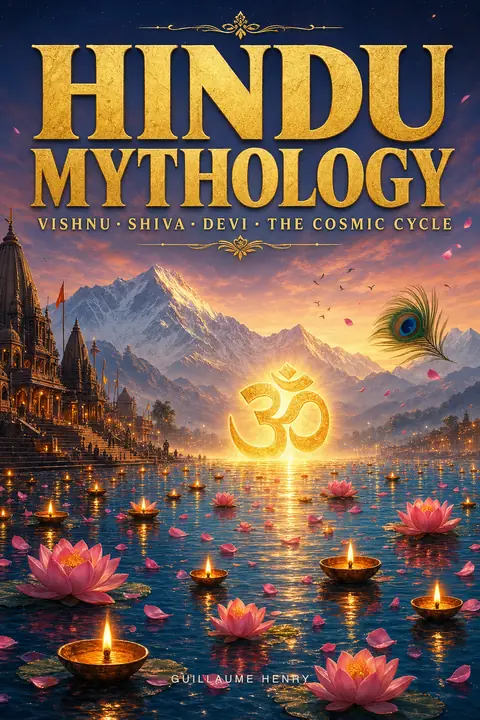
Hindu
The Hindu Mythology Book: Vishnu, Shiva, Brahma, the Mahabharata, and the Sacred Stories of India
Vishnu, Shiva, Brahma, the Mahabharata, and the Sacred Stories of India
The Rigveda, the Mahabharata, the Ramayana, and the major Puranas. Every god, every avatar, every sacred epic.
More from Hindu
All articles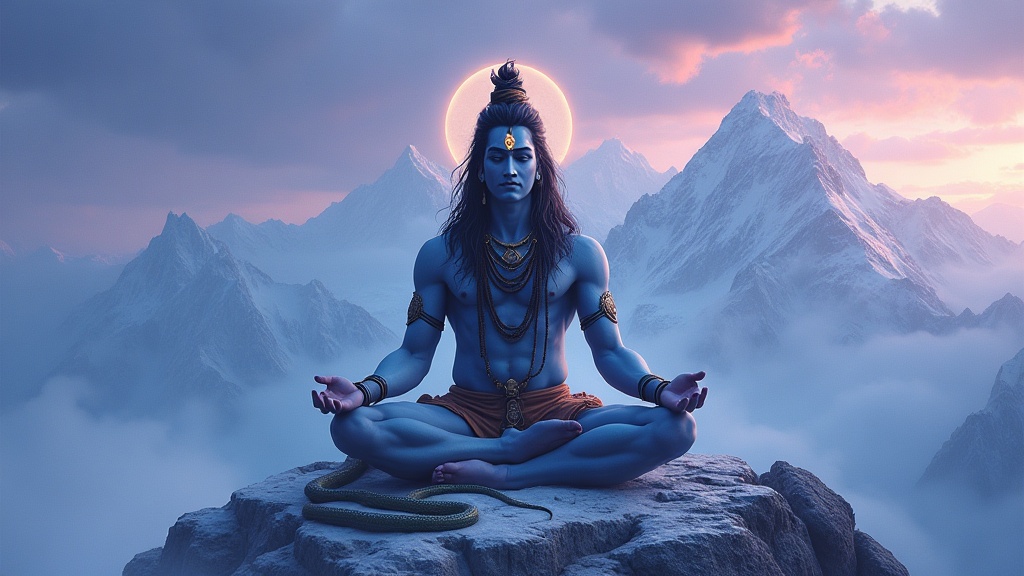
Hindu
Shiva the Destroyer: Lord of Dissolution, Transformation, and Cosmic Renewal
Shiva the Destroyer stands at the heart of Hindu cosmology not as a god of mere annihilation, but as the force that dissolves reality so creation can begin again. His mythology is among the richest and most paradoxical in the world.
Hindu
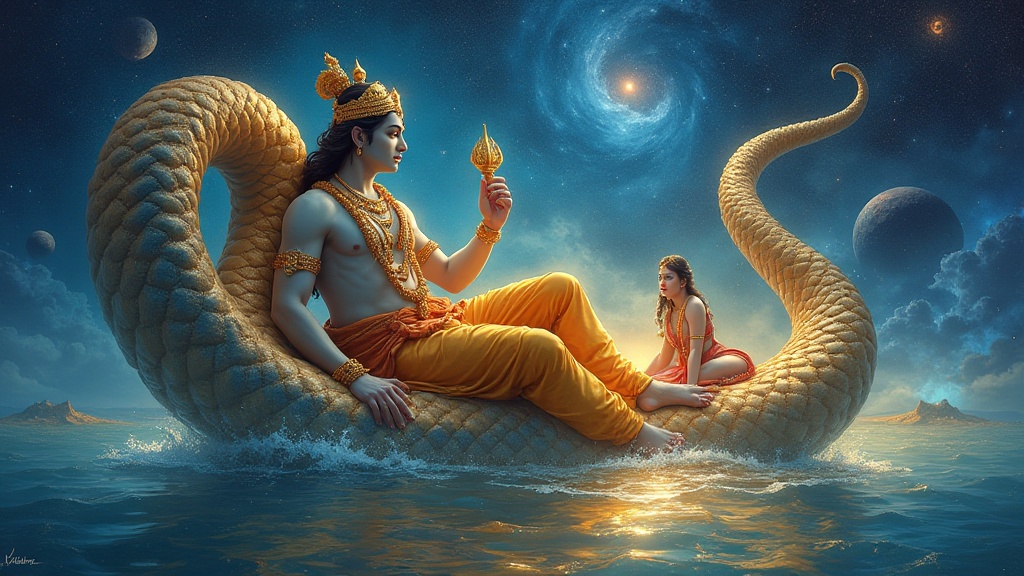
Vishnu the Preserver: Keeper of Cosmic Order
Vishnu stands at the heart of Hindu cosmology as the eternal guardian of dharma, descending into the world age after age to restore balance whenever creation tilts toward ruin.