
Vishnu the Preserver: Keeper of Cosmic Order
Vishnu stands at the heart of Hindu cosmology as the eternal guardian of dharma, descending into the world age after age to restore balance whenever creation tilts toward ruin.
Contents
The God Who Holds the Universe Together
In the vast architecture of Hindu theology, three divine principles govern the cycle of existence: creation, preservation, and dissolution. Brahma fashions the worlds, Shiva absorbs them back into the formless, and between these two poles stands Vishnu, the one who sustains. His role is neither the electric spark of genesis nor the consuming fire of ending; it is the long, patient work of maintenance, the quiet force that keeps stars in their orbits, rivers in their banks, and moral order alive in the hearts of living beings.
The Sanskrit root of his name is most commonly traced to the verb vish, meaning "to pervade." Vishnu does not rule from a distant throne; he saturates existence itself. The Rigveda, one of the oldest surviving religious texts in the world, already honors him, describing his famous three strides that measured the entire universe in a single cosmic gesture. From that earliest hymn to the elaborate devotional traditions of the medieval Puranas, his presence in Indian religious life has been unbroken for more than three thousand years.
Form, Iconography, and the Ocean of Milk
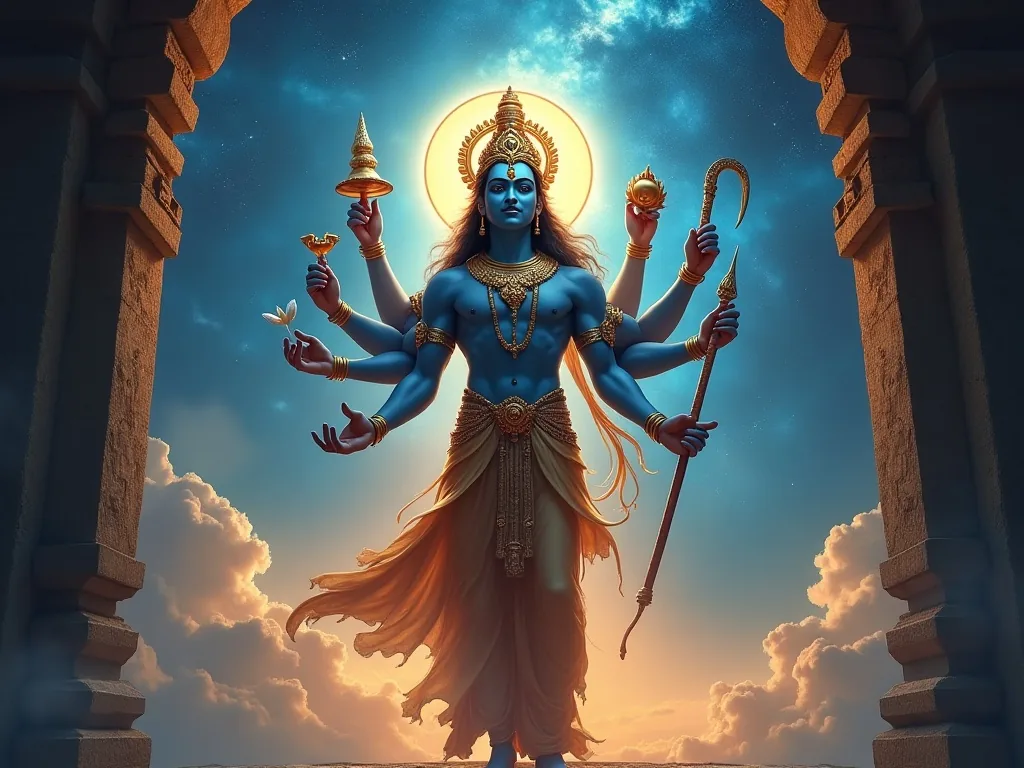
Vishnu is almost always depicted in a particular way, and every detail carries dense theological meaning. His skin is the blue-black of a rain-laden monsoon cloud, a color associated with infinity and the depths of space. He bears four arms, each holding one of his defining attributes: the shankha (conch shell), whose sound represents the primordial vibration of creation; the chakra called Sudarshana, a spinning discus of devastating precision; the gada (mace), symbolizing the power of knowledge and time; and the padma (lotus), emblem of purity emerging from the waters of existence.
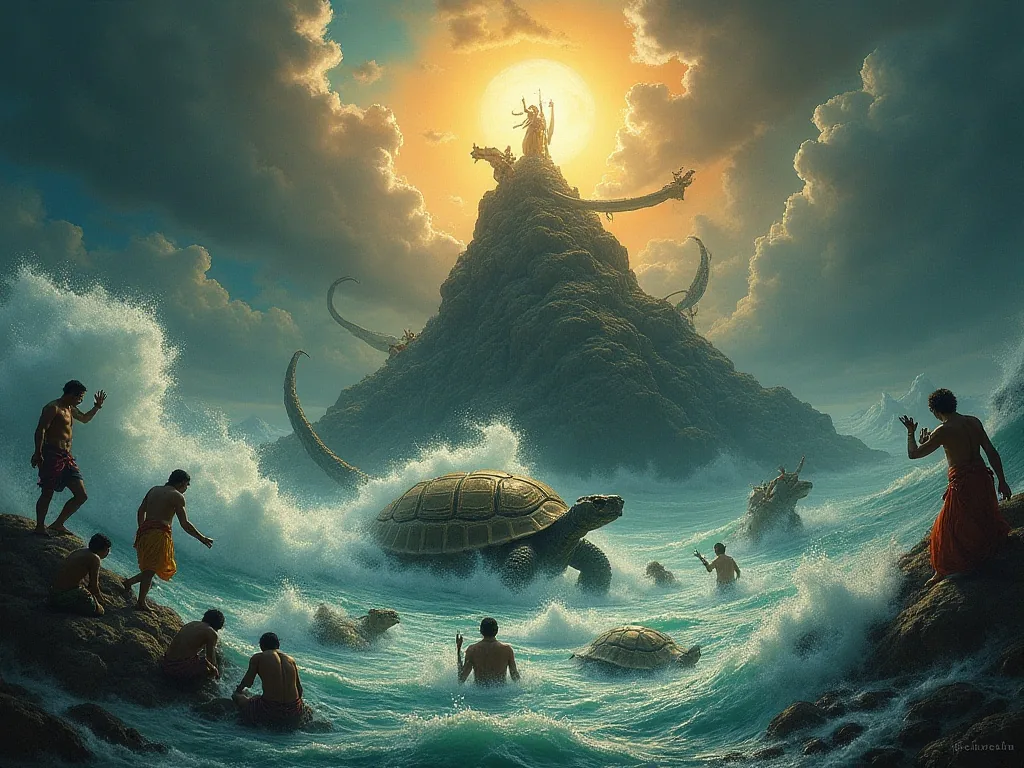
He wears a radiant crown, the Kirita, and a gem called Kaustubha rests on his chest, said to have emerged from the churning of the cosmic ocean, the Kshira Sagara or Ocean of Milk. That great churning, the Samudra Manthan, is one of Hinduism's most celebrated myths. Gods and demons cooperated, using the serpent Vasuki as a rope and Mount Mandara as a churning rod, to extract amrita, the nectar of immortality, from the primordial sea. Vishnu himself took the form of the tortoise Kurma to support the mountain on his back, preventing creation from sinking into chaos. He later appeared as the enchantress Mohini to ensure the nectar reached the gods rather than the demons.
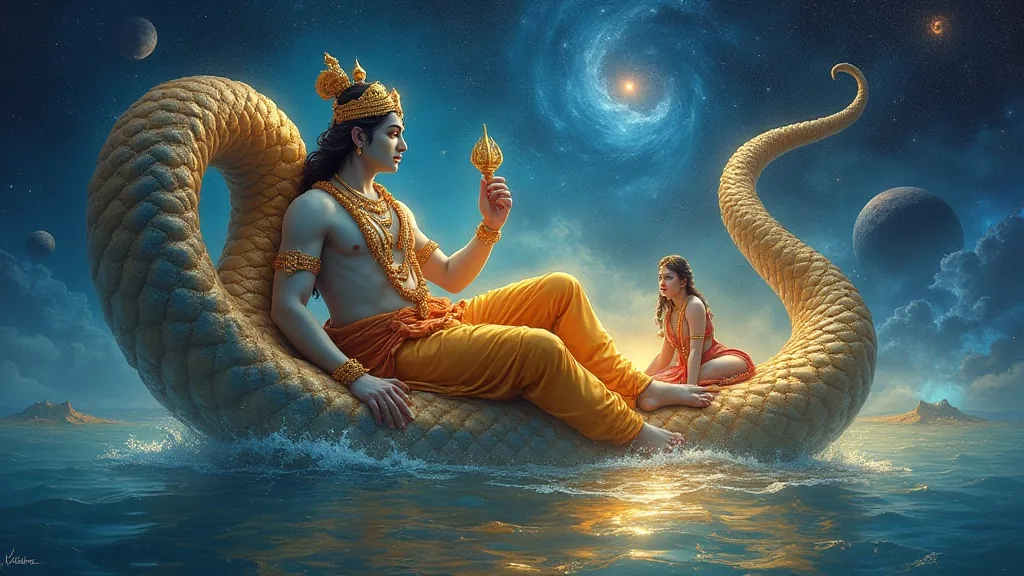
His eternal resting place is Vaikuntha, a paradise beyond the material cosmos. There he reclines on the great serpent Shesha (also called Ananta, "the infinite"), floating on the cosmic waters between the dissolution of one universe and the creation of the next. His consort Lakshmi, goddess of wealth and grace, attends him. This image of repose is not idleness; it is the calm of a power so vast it needs no effort to hold everything in place.
The Dashavatara: Ten Descents into the World
No aspect of Vishnu's character has shaped Hindu culture more profoundly than the doctrine of the avatara, the divine descent. When adharma (disorder, injustice, cosmic imbalance) threatens to overwhelm the world, Vishnu does not simply issue a decree from Vaikuntha. He enters creation directly, taking on flesh and limitation, to fight from within. The Bhagavata Purana and the Vishnu Purana both elaborate the classical list of ten avatars, the Dashavatara.
The First Five: From Ocean to Axe
- Matsya (the Fish): Vishnu appeared as a great fish to warn the sage Manu of a coming catastrophe, guiding his boat through the primordial flood and saving the Vedas from a demon who had stolen them into the depths. This myth carries unmistakable structural parallels to flood narratives from Mesopotamia and beyond.
- Kurma (the Tortoise): As described above, Kurma provided the stable foundation for the churning of the cosmic ocean, demonstrating that preservation begins with bearing weight others cannot.
- Varaha (the Boar): The demon Hiranyaksha dragged the earth goddess Bhudevi to the bottom of the cosmic sea. Vishnu plunged in as a colossal boar, slew the demon after a thousand-year battle, and lifted the earth on his tusks, restoring her to her place in the cosmos.
- Narasimha (the Man-Lion): To protect his devotee Prahlada, a child who worshipped Vishnu despite his demon-king father Hiranyakashipu's hatred, Vishnu burst from a stone pillar at twilight as a being neither fully man nor lion, sidestepping the boon that protected Hiranyakashipu from death by human, animal, god, indoors, outdoors, day, or night.
- Vamana (the Dwarf): The demon king Bali had conquered the three worlds through virtue and sacrifice. Vishnu appeared as a diminutive brahmin and asked Bali for only as much land as three steps could cover. When Bali agreed, Vamana expanded to cosmic scale and reclaimed heaven and earth in two strides, placing the third, with mercy, on Bali's own head, pushing him to the underworld but granting him sovereignty there.
- Parashurama (the Warrior-Priest): Vishnu's first human-form avatar, a brahmin armed with an axe, who purged the earth of corrupt and tyrannical kshatriya (warrior-caste) kings across twenty-one generations.
Rama, Krishna, and the Later Descents
- Rama: The hero of the Ramayana, composed by Valmiki, is Vishnu incarnate as a prince of Ayodhya. His journey, the abduction of his wife Sita by the demon king Ravana of Lanka, the alliance with the monkey general Hanuman, and the final war on Lanka, is read simultaneously as epic adventure and as a meditation on duty, loyalty, and ideal kingship. Rama is often invoked simply as Maryada Purushottam, the supreme example of righteous conduct.
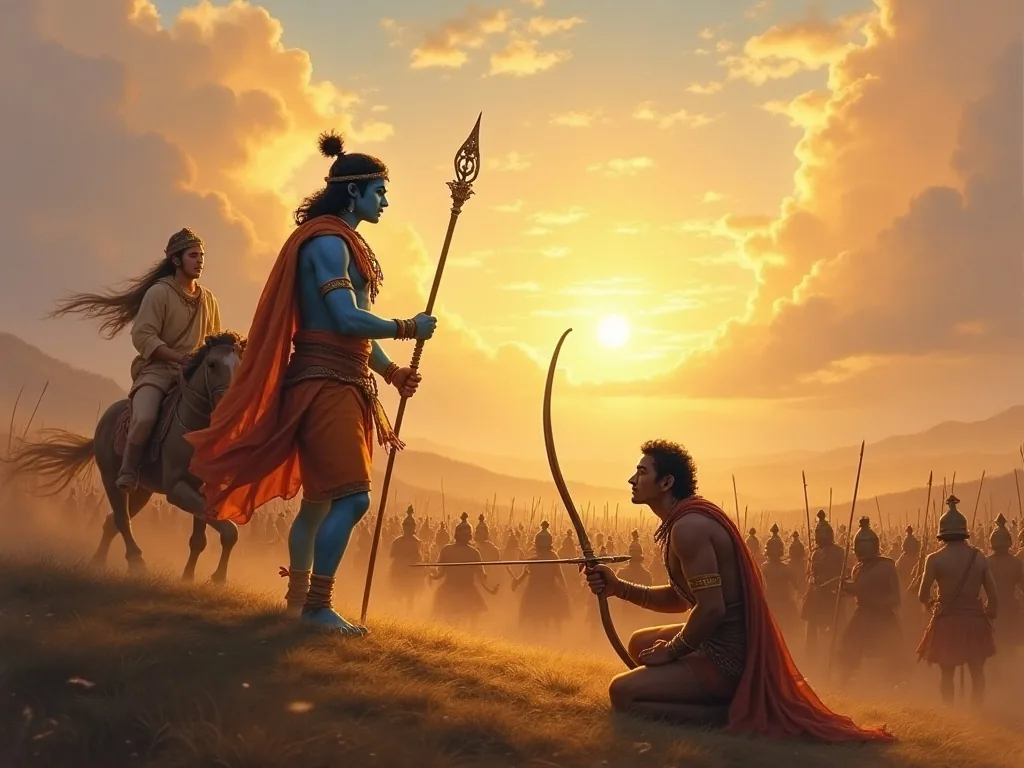
- Krishna: Perhaps the most beloved of all avatars, Krishna appears in both the Mahabharata and the Bhagavata Purana in roles ranging from divine infant to lover to statesman to philosopher. It is Krishna who delivers the Bhagavad Gita to the warrior Arjuna on the battlefield of Kurukshetra, laying out the philosophical foundations of karma yoga, jnana yoga, and bhakti yoga. His relationship with the cowherd women (gopis) of Vrindavan, particularly Radha, became the central metaphor of the bhakti devotional movement: the soul's yearning for union with the divine.
- Buddha: In several Puranic lists, the historical Siddhartha Gautama is incorporated as a Vishnu avatar, though the theological interpretation varies considerably across traditions.
- Kalki: The avatar yet to come. At the close of the present age, the Kali Yuga, when virtue has nearly vanished from the world, Vishnu will appear as Kalki, a warrior on a white horse bearing a blazing sword, to end the corrupt age and make way for a renewed cosmic cycle.
Vaishnavism: A Living Theological Tradition
Devotion to Vishnu as the supreme being gave rise to Vaishnavism, one of the largest branches of Hinduism. Unlike a purely ritual religion, Vaishnavism centers on bhakti, loving personal devotion, as the highest path to liberation. The Tamil poet-saints known as the Alvars, composing between roughly the sixth and ninth centuries CE, poured their devotion into the Nalayira Divya Prabandham, four thousand verses of passionate address to Vishnu in his various forms and at his sacred temples.
The philosopher Ramanuja (1017-1137 CE) provided Vaishnavism with its most influential theological framework, Vishishtadvaita (qualified non-dualism), arguing that individual souls and the material world are real but exist as the body of Vishnu, the supreme self. His contemporary Madhva (1238-1317 CE) went further, insisting on a strict dualism: Vishnu is eternally distinct from and superior to souls and matter.
Later, the Bengali saint Chaitanya Mahaprabhu (1486-1534 CE) ignited a new wave of devotional intensity centered on Krishna as the supreme form of Vishnu, emphasizing congregational chanting of divine names, sankirtana, as the most effective spiritual practice for the current age. This tradition eventually traveled west through the International Society for Krishna Consciousness (ISKCON), founded in the twentieth century, bringing Vishnu's name to every continent.
Sacred geography is inseparable from Vishnu worship. The Char Dham pilgrimage circuit includes Badrinath in the Himalayas, one of Vishnu's most venerated shrines. The Divya Desams, 108 temples celebrated in the verses of the Alvars, stretch across the Indian subcontinent and into Nepal. Tirupati Venkateshwara Temple in Andhra Pradesh, where Vishnu is worshipped as Venkateswara, draws more pilgrims annually than almost any other sacred site on earth.
Vishnu in Cosmic Time
Vishnu's relationship with time is not incidental to his nature; it is his nature. Hindu cosmology operates on scales that dwarf modern astrophysics in sheer imagination. A single kalpa, one day in the life of Brahma, equals 4.32 billion human years. Vishnu endures across kalpas, witnessing universe after universe breathe in and out of existence while he remains on Shesha, the coiled infinite, unchanged.
This is the deepest meaning of the name "the Preserver." He does not merely protect individuals or nations. He holds the structure of time itself in its proper shape, ensuring that each age flows into the next, that dissolution does not arrive before its season, and that the cosmos always carries within it a seed of renewal. Every avatar is a local intervention in service of this larger, unimaginable patience.
The Vishnu Sahasranama, the Thousand Names of Vishnu, recited daily by millions of devotees, expresses this scope in condensed poetic form. Each name is a lens on a different facet of the same infinite reality: Achyuta (the infallible), Ananta (the endless), Govinda (the protector of the earth), Madhava (born of wisdom), Narayana (the abode of all beings). To recite these names is, in the tradition's own understanding, to rehearse the full topology of existence.
The Eternal Return and the Promise Beneath the Cosmos
What makes Vishnu theologically and humanly compelling is not raw power but commitment. The Bhagavad Gita places in his mouth one of ancient literature's most famous pledges: whenever righteousness withers and unrighteousness rises, he will take birth age after age. This is not a statement of divine superiority; it is a promise of presence. The cosmos, in Vaishnava understanding, is never abandoned. The preserver does not preserve from a distance. He enters the story, takes on risk, bleeds if necessary, and fights the long labor of keeping the world worth living in.
That promise, repeated across ten avatars and thousands of years of lived devotion, is perhaps why temples to Vishnu remain among the most frequented on earth. In the architecture of Hindu myth, the god of preservation is also, at root, the god of hope.
Free 25-page sample
Want the whole story?
Take the first 25 pages free. If it pulls you in, the full edition is yours as an instant PDF download, with a paperback on Amazon for selected titles.
Hindu
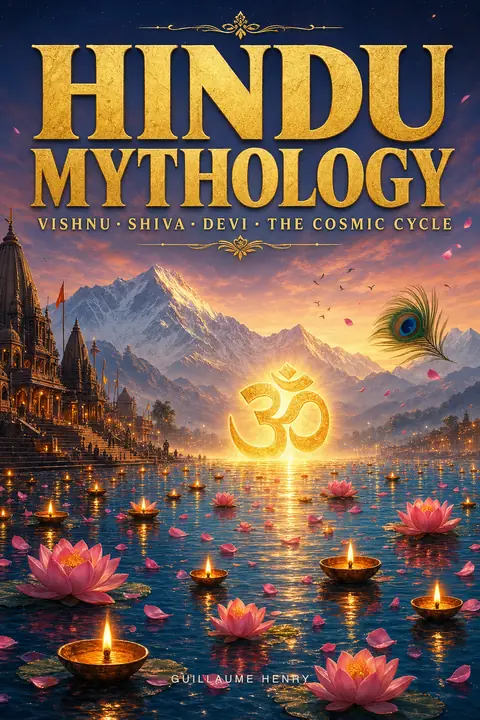
The Hindu Mythology Book: Vishnu, Shiva, Brahma, the Mahabharata, and the Sacred Stories of India
Vishnu, Shiva, Brahma, the Mahabharata, and the Sacred Stories of India
The Rigveda, the Mahabharata, the Ramayana, and the major Puranas. Every god, every avatar, every sacred epic.
More from Hindu
All articles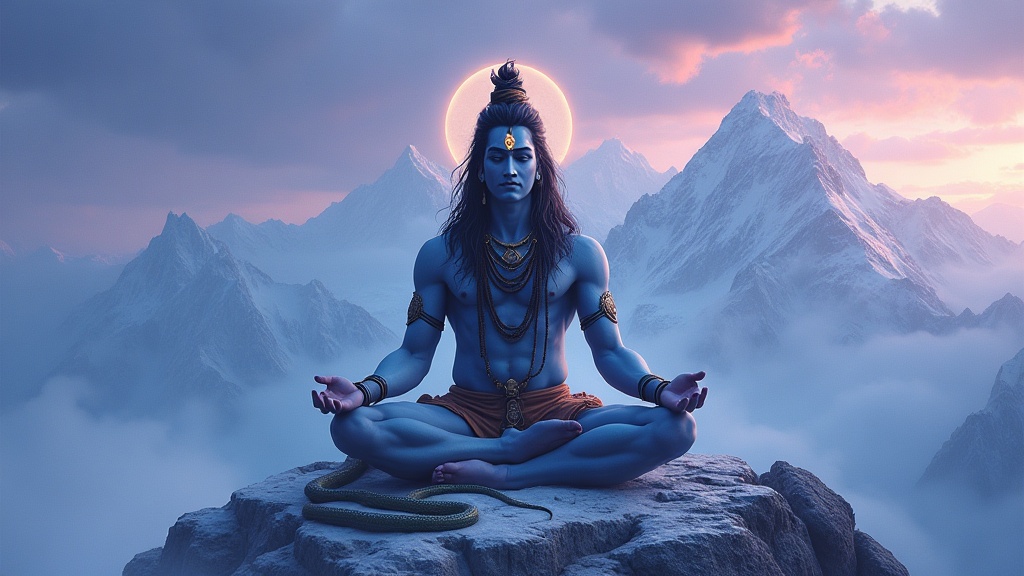
Hindu
Shiva the Destroyer: Lord of Dissolution, Transformation, and Cosmic Renewal
Shiva the Destroyer stands at the heart of Hindu cosmology not as a god of mere annihilation, but as the force that dissolves reality so creation can begin again. His mythology is among the richest and most paradoxical in the world.
Hindu
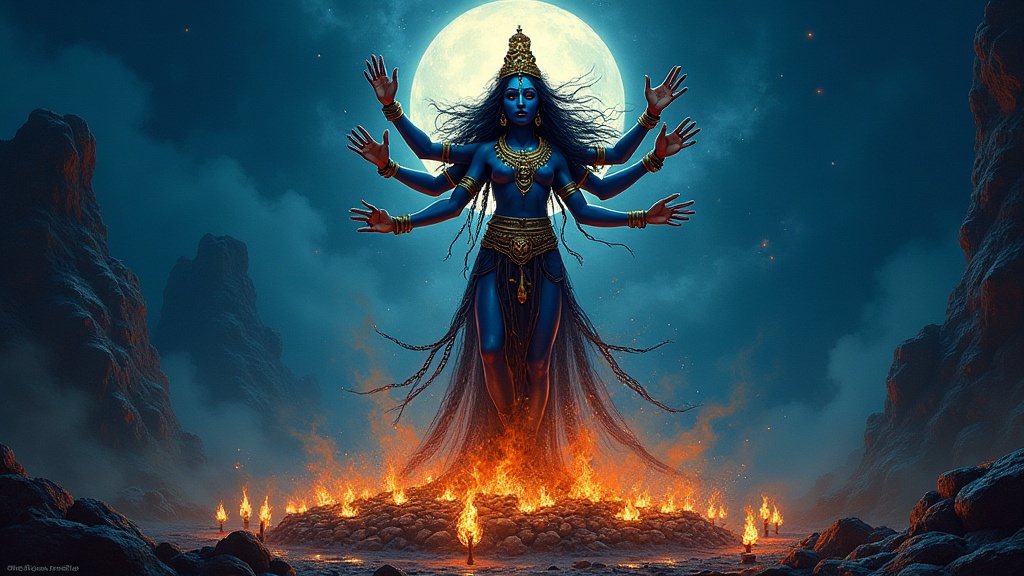
Kali: The Fierce Mother Goddess Who Devours Time Itself
Kali is Hinduism's most electrifying deity: a goddess of death, liberation, and ferocious maternal love whose dark form conceals the deepest compassion in the cosmos.