
Guru Nanak: Founder of Sikhism and First Guru
Born in 1469 in the Punjab, Guru Nanak walked out of a river three days after vanishing and declared that there is no Hindu, no Muslim. His life rewrote the spiritual map of South Asia forever.
Contents
The Man Who Disappeared into a River
In the year 1499, in the town of Sultanpur Lodhi on the banks of the Bein stream, a young accountant named Nanak walked into the water one morning and did not return. His companions dragged the river for three days. They found nothing. Then, on the third day, Nanak emerged. He said nothing for an entire day. When he finally spoke, his first recorded words were: Naa ko Hindu, naa ko Musalman. "There is no Hindu, there is no Muslim."
That moment, preserved across the Janam Sakhis (the hagiographic life-narratives of Guru Nanak), marks what Sikh tradition regards as the divine call. Nanak had been taken, in those three days, into the presence of God. He was given a cup of amrit, the nectar of immortality, and charged with a singular mission: to praise the Divine Name and to teach others to do the same. He returned from the river not as an accountant, but as a Guru.
Born into a World of Divisions
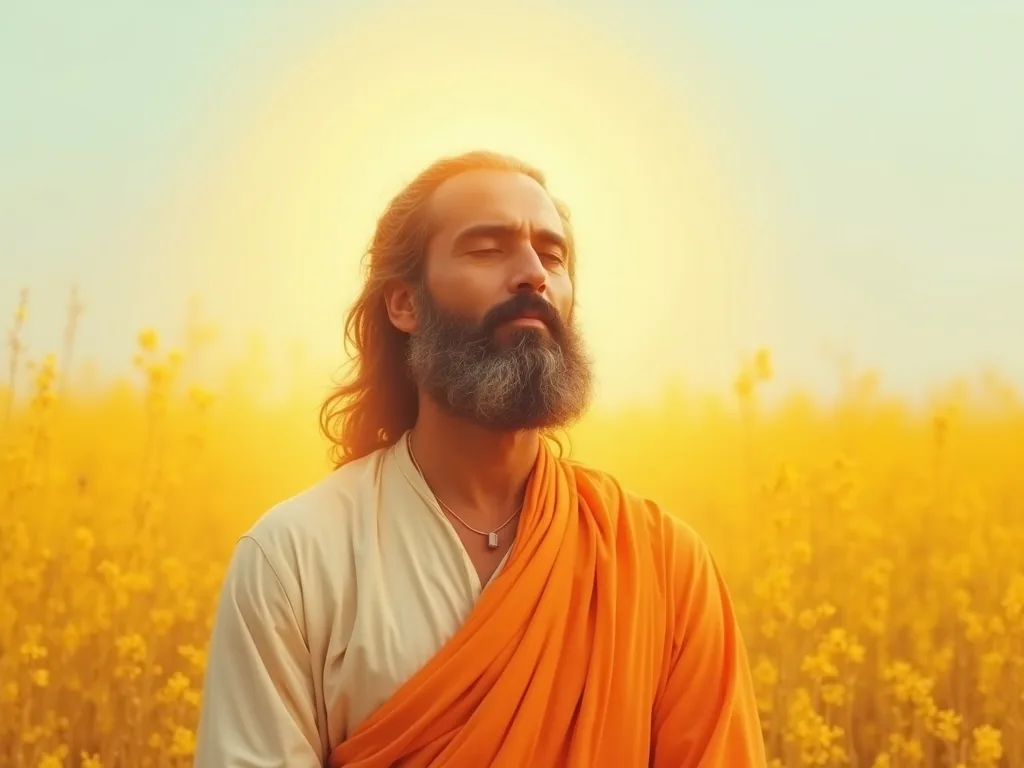
Nanak was born on the full moon of Kartik in 1469, in the village of Rai Bhoi di Talwandi, now known as Nankana Sahib in present-day Pakistan. His father, Mehta Kalu, was a revenue official of the Khatri caste. His mother, Mata Tripta, was by all accounts a woman of quiet devotion. He had one older sister, Nanaki, whose name echoes through his own; she was among the first to recognize the divine light within her brother.
The Punjab of the fifteenth century was a land suspended between worlds. The Delhi Sultanate was fracturing. Mughal pressure was building from the northwest. Hindu and Islamic traditions overlapped, competed, and sometimes violently collided. Sufism had already planted deep roots along the rivers of the Punjab, and the Bhakti movement further south was reshaping devotional life across the subcontinent. Nanak grew up drinking from all of these wells.
From his earliest years, the Janam Sakhis record moments of uncanny spiritual insight. As a child, he sat beneath a tree while a cobra spread its hood over him to shield him from the sun, a motif the tradition shares with the iconography of the naga protecting the meditating Buddha. His teachers reportedly declared they had nothing left to teach him. He spent long hours in the company of wandering sadhus and Muslim fakirs, absorbing the language of longing that both traditions shared.
The Journeys: Udasis Across the Known World
After his emergence from the Bein, Nanak embarked on a series of long journeys called the Udasis, meaning departures or travels. Sikh tradition counts four major Udasis that carried him across an astonishing geographical arc.
The First Udasi: East and South
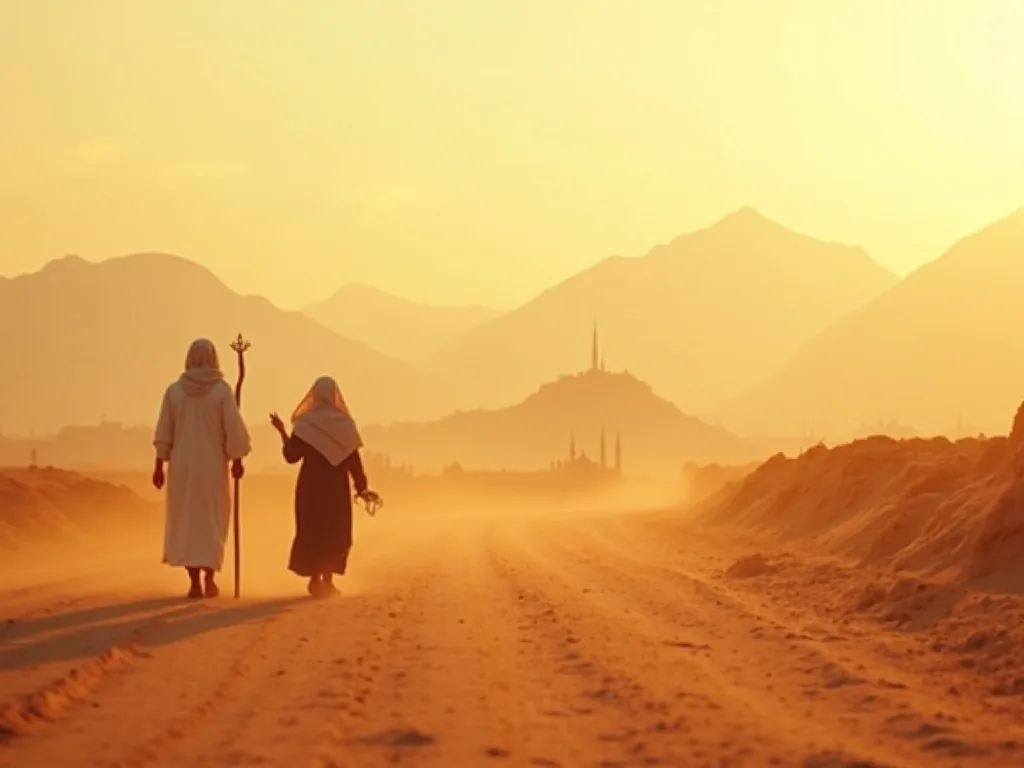
Accompanied by his lifelong companion Mardana, a Muslim rabab player of the Mirasi community, Nanak traveled east toward Hardwar, south toward the Tamil coast, and as far as Sri Lanka. At Hardwar, the famous pilgrimage city on the Ganges, he challenged the crowds throwing water eastward toward the rising sun to honor their ancestors. He began throwing water westward. When questioned, he said he was watering his fields in the Punjab. His point was precise: if water thrown by human hands could travel to the spirit world, surely it could travel to Punjab. The ritual, stripped of its inner meaning, becomes mere performance.
The Second and Third Udasi: Kashmir, Tibet, and the Himalayas
Nanak traveled north toward Kashmir and the Himalayan passes. He is said to have reached the mountain seat of the Siddhas, enlightened yogic masters, and engaged them in debate. The resulting composition, the Sidh Gosht ("Dialogue with the Siddhas"), is preserved in the Guru Granth Sahib and remains one of the most philosophically dense texts in Sikh scripture. The Siddhas asked why he, a householder, had not retreated from the world. Nanak replied that the lotus lives in water without being drowned by it; the devout can live in the world without being consumed by it.
The Fourth Udasi: Mecca and Baghdad
The fourth journey carried him west, to the Arabian Peninsula. At Mecca, he is said to have fallen asleep with his feet pointing toward the Kaaba. When a qazi (Islamic judge) angrily moved his feet, the Kaaba reportedly turned to follow his feet in every direction. The story is a parable, not a geographic claim; it speaks to the omnipresence of the Divine that no single direction can contain. In Baghdad, a pillar still bears an inscription in Persian commemorating Nanak's visit, a rare piece of material evidence that grounds the tradition in history.
The Theology of Ik Onkar
Everything Guru Nanak taught flows from two syllables written at the opening of the Guru Granth Sahib: Ik Onkar. One God. Not one god among many, not a sectarian deity of any particular people, but the single, formless, self-existent reality that undergirds all existence.
Nanak called this reality Waheguru (Wondrous Lord) or Satnam (True Name). The Divine had no gender, no fixed form, no religion. It could not be reached by pilgrimage alone, by ritual bathing, by caste observance, or by outward piety divorced from inner transformation. It could be reached through Nam Japna, the meditative repetition and internalization of the Divine Name, through Kirat Karni, honest labor, and through Vand Chakna, sharing one's earnings with the community.
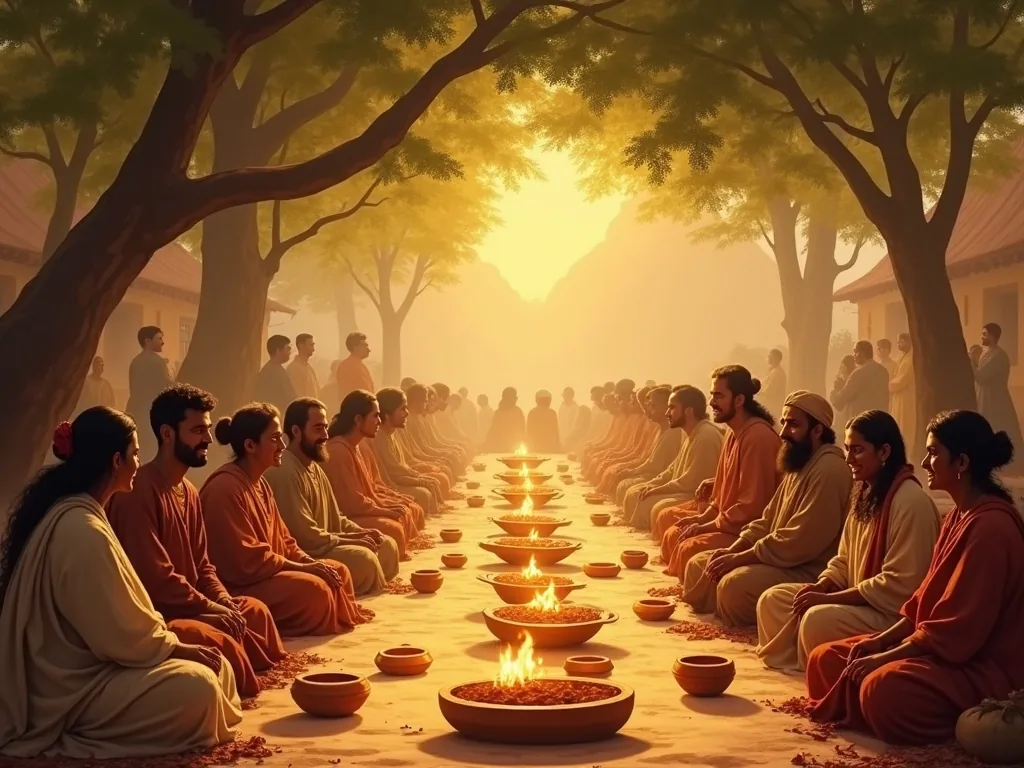
These three pillars formed the ethical and spiritual skeleton of what would become Sikhism. They were radical in the context of fifteenth-century South Asia: they dissolved caste distinctions at the point of practice, they honored the dignity of ordinary work, and they made the community meal (what would later be formalized as the langar, the free kitchen) an act of theology.
Nanak also composed prolifically. His hymns, numbering nearly 974 shabads (compositions) in the Guru Granth Sahib, span multiple musical ragas and address the human condition with startling directness. The Japji Sahib, the opening prayer of the Guru Granth Sahib composed by Nanak, begins with the Mool Mantar, the root statement of Sikh theology, and sets out in thirty-eight stanzas a vision of the soul's ascent through increasingly refined states of awareness, culminating in Sach Khand, the Realm of Truth.
Companions, Rivals, and the Community of Equals
The figure of Mardana deserves particular attention. A Muslim by faith, a musician by trade, he walked beside Nanak for nearly every step of the Udasis. When Nanak composed, Mardana played the rabab. Their partnership was not incidental. It was a living demonstration of Nanak's teaching: that the Divine transcended religious identity. Mardana's presence was itself a sermon.
Nanak also encountered and debated with figures across the religious spectrum. His exchanges with Sheikh Ibrahim, a Sufi custodian of the shrine of Baba Farid in Pakpattan, are preserved in shared compositions within the Guru Granth Sahib, where verses by Farid and Nanak sit side by side. His challenge to Brahminical priests at Hardwar and his engagement with the Nath yogi traditions of the Siddhas show a thinker who moved through the intellectual landscape of his era with both reverence and rigorous critique.
The institution of the Sangat (congregation) and the Pangat (sitting together in a common row to eat) further dismantled the social hierarchies that religious and caste tradition had long enforced. At Kartarpur, the town Nanak founded on the banks of the Ravi River in his final years, he established what might be called the first Sikh community: a settlement where people of all castes farmed together, worshipped together, and ate together.
The Passing of Light: Succession and Legacy
Nanak died around 1539 at Kartarpur. Even his death became the site of a luminous dispute. Hindus wished to cremate him according to their rites; Muslims wished to bury him according to theirs. When the sheet covering his body was lifted, the Janam Sakhis record, there was nothing beneath it. Only flowers. The Hindus took their flowers to cremate. The Muslims took theirs to bury. Both erected memorials at the spot, a final parable of the unity Nanak had spent his life embodying.
Before his death, Nanak appointed Lehna, a devoted follower, as his successor, renaming him Angad, meaning "part of my own limb." This act of spiritual succession would continue through ten human Gurus, ending with Guru Gobind Singh, who in 1708 declared the Guru Granth Sahib, the sacred scripture, the eternal living Guru of the Sikhs.
Guru Nanak Across Traditions: A Figure Who Refuses Easy Categories
Nanak has been claimed, interpreted, and sometimes appropriated by remarkably diverse communities. Hindus in some regions venerated him as a saint within their own devotional universe. Sufi orders recognized in his vocabulary of divine love a familiar grammar. Colonial-era scholars sometimes reduced him to a "reformer" who tried to reconcile Hinduism and Islam, a reading that flattens the originality of what he actually founded.
Sikh scholars have consistently pushed back against these framings. Nanak was not a bridge between two existing religions; he was the originating voice of a distinct tradition with its own theology, its own scripture, its own ethics of community, and its own understanding of the relationship between the human and the Divine. The Guru Granth Sahib, which contains not only Nanak's compositions but those of later Gurus and of Hindu Bhakti saints and Muslim Sufi poets, is itself the most eloquent argument for what Nanak actually built: a tradition capacious enough to hold many voices without collapsing into any single one.
The Living Presence in Sikh Devotion
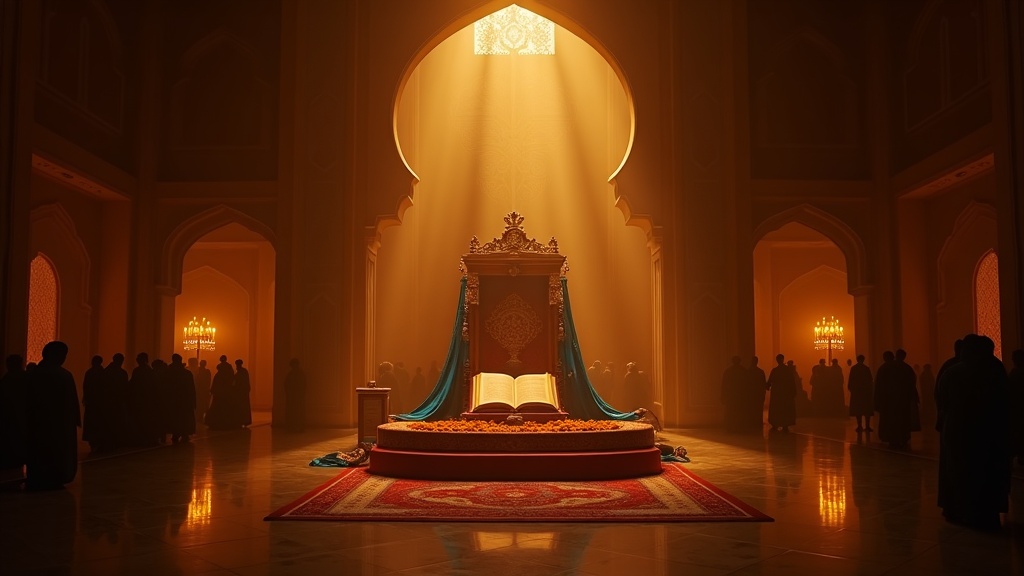
Nanak's birthday, Gurpurab, is celebrated with akhand paths (continuous readings of the Guru Granth Sahib over forty-eight hours), candlelit processions, and community feasts. Nankana Sahib draws hundreds of thousands of pilgrims each year. The Golden Temple in Amritsar, though built under the fifth Guru Arjan, is spiritually inseparable from Nanak's founding vision: its four open doors face the four cardinal directions, welcoming all people from all quarters of the earth.
In Sikh theology, Nanak is not a historical figure who was once present and is now absent. The jot, the divine light, that animated him passed into each successive Guru and now resides in the Guru Granth Sahib. To sit in the presence of the scripture, to hear it sung in the early morning hours, is to be in the presence of Nanak. The river at Sultanpur Lodhi, where he once disappeared, still flows. And the words he brought back from that silence still move through the world like water.
Read the full book
Want the whole story?
The complete edition is an instant PDF download here, with a paperback on Amazon for selected titles.
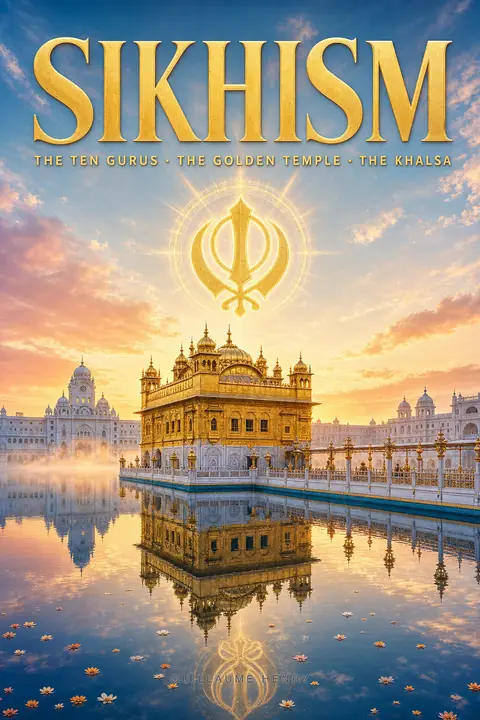
Sikhism
The Sikhism Book: The Ten Gurus, the Golden Temple, and the Teachings of the Khalsa
The Ten Gurus, the Guru Granth Sahib, and the Path of the Khalsa
A clear, respectful introduction to the world's fifth-largest religion: Guru Nanak and the line of ten Gurus, the one formless God, the Golden Temple at Amritsar, the eternal scripture of the Guru Granth Sahib, and the founding of the Khalsa. The history, teachings, and beliefs of a living faith.