Cu Chulainn, Hound of Ulster: Ireland's Greatest Hero
Cu Chulainn, the Hound of Ulster, stands as the fiercest and most celebrated hero in Irish mythology. Demigod, warrior, and tragic figure, his story reshapes everything you thought you knew about Celtic heroism.
Contents
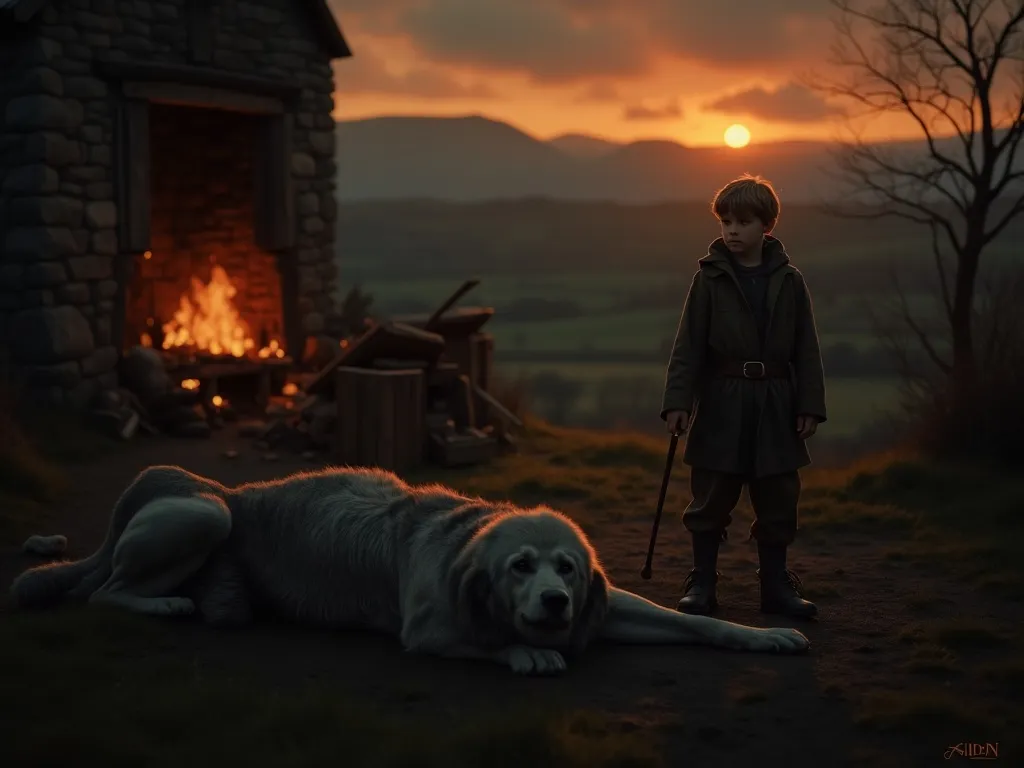
The boy stands over the body of a massive hound, a sling-stone still warm in his hand. He is perhaps seven years old. The dog belonged to Culann the smith, a creature fierce enough to guard an entire fortress, and now it lies dead on the grass. Young Setanta looks at the grieving Culann and offers to replace the animal - to serve as the man's hound himself until a new pup can be trained. From that moment forward, he is no longer Setanta. He is Cu Chulainn, the Hound of Culann, and his name will be spoken with reverence and dread for the next two thousand years.
That single scene, recorded in the medieval Irish manuscript tradition, captures something essential about this hero. He is generous and violent in the same breath. He destroys and immediately seeks to repair the damage. The warrior and the protector are not opposites in his character; they are the same impulse wearing different faces.
The Miraculous Origins of the Hound of Ulster
Every great hero in world mythology needs an extraordinary entry into the world. Cu Chulainn is no exception, and the Irish storytellers gave him not one origin but several, layered across different versions of the tale.
The most widely transmitted account appears in Compert Con Culainn, "The Conception of Cu Chulainn." Deichtine, sister of the Ulster king Conchobar mac Nessa, becomes somehow entangled with the god Lugh, the radiant deity of skill and light, a figure parallel in certain respects to Apollo in the Greek tradition. Lugh appears to Deichtine in a dream or, in some recensions, takes her into the Otherworld. She wakes pregnant. The child she bears is Setanta, who will become Cu Chulainn.
This divine paternity is not incidental. Lugh is the master of every craft, the god who defeats the Fomorians at the Battle of Mag Tuired by listing every skill he possesses until he finds one the Tuatha De Danann lack. His son inherits that same polymorphic excellence: Cu Chulainn is not merely a swordsman. He is a singer, a chess player, a charioteer, a negotiator. His martial ferocity is one instrument in a much larger orchestra.
The parallel with Greek heroes is worth noting here. Like Achilles, Cu Chulainn has a divine parent who warns him that glory and long life cannot coexist. Like Heracles, he performs extraordinary feats as a child that preview his adult power. Yet the Irish hero carries an additional layer: he belongs to a specific political community, the Ulaid, and his greatness is explicitly communal in purpose, not merely personal.
The Boy-Deeds: Violence as Vocation
The macgnimhartha, or "boy-deeds," of Cu Chulainn form a self-contained narrative cycle within the larger Tain. They read almost like a separate heroic biography, establishing every quality the adult warrior will need.
At five, Setanta travels alone to the boys' troop at Emain Macha, the Ulster royal seat, without first seeking the troop's protection - a calculated insult that the boys treat as license to attack him. He defeats one hundred and fifty of them single-handedly and stands over the prostrate bodies of his peers. King Conchobar is startled awake. He does not punish the boy. He recognises a force of nature.
The killing of Culann's hound follows. Then a sequence of other feats: Setanta joins the royal court, thrashes warriors who challenge him, and at one point saves the Ulstermen from ambush almost casually. What the storytellers are constructing, feat by feat, is a portrait of innate heroic nature. Cu Chulainn does not train into greatness; he reveals it, the way a sculptor removes stone to expose the form already inside.
At the age of seventeen, he undergoes formal martial training with Scathach, the legendary warrior-woman of the Isle of Skye, known in Old Irish as Dun Scaith, the Fortress of Shadows. The training is brutal and transformative. It is here that he masters the gae bolga, a javelin thrown with the foot that opens into multiple barbs inside its target. There is no defence against it, and he will eventually use it to kill his own foster-brother and closest friend, Ferdiad, in the most heartbreaking duel in Irish literature.
The Warp Spasm: When a Warrior Becomes a Catastrophe
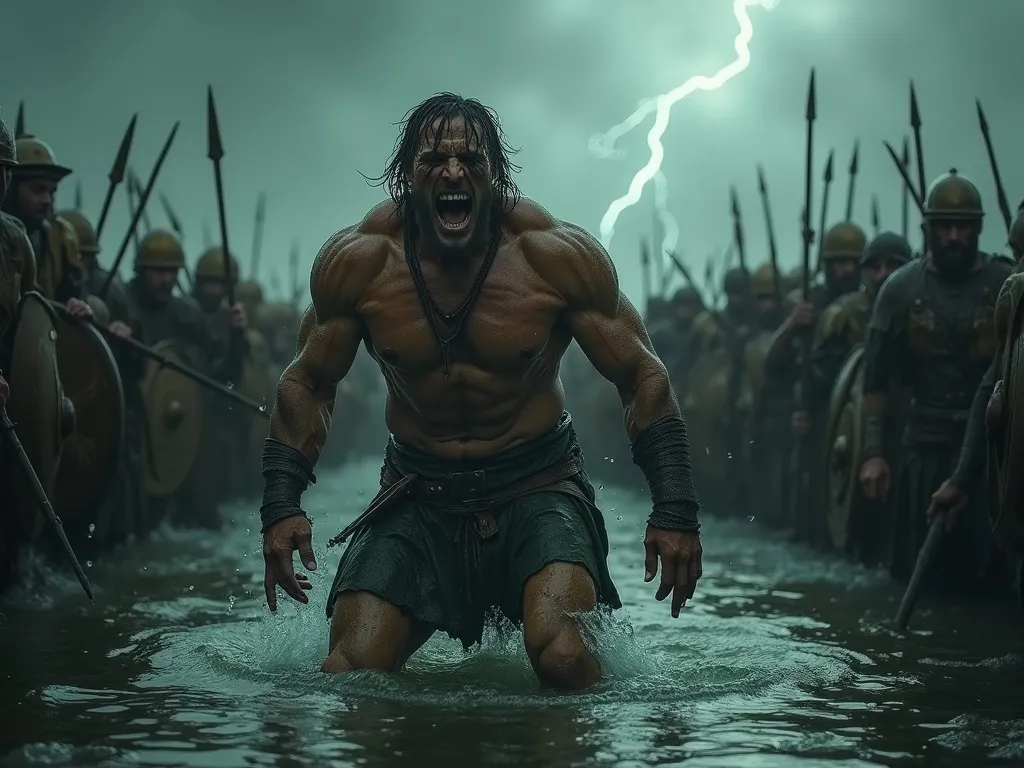
No feature of Cu Chulainn's myth is more discussed or more visually striking than the riastrad, the "warp spasm" or "battle frenzy." When it takes hold, his body undergoes a grotesque transformation: one eye sinks deep into his skull while the other balloons outward. His hair stands rigid, each strand tipped with a drop of blood. His muscles swell and rearrange. His heartbeat is audible from a distance. He becomes, in the most literal sense imaginable, something inhuman.
Scholars have offered multiple frameworks for understanding the riastrad. Some read it as a literary encoding of the berserker state, comparable to the odr of Norse warriors who entered battle-trance under the influence of Odin. Others see it as a mythological marker of liminality: the warrior crosses out of the social order to perform the violence that keeps the community safe, then must be ritually returned. The Ulster women famously confront Cu Chulainn after battles by sending naked women to meet him; his shocked modesty breaks the trance. It is one of the oldest documented battlefield demobilisation rituals in any literature.
The riastrad also raises a persistent question about heroism itself. Cu Chulainn in his frenzy cannot distinguish friend from enemy. The very power that saves Ulster can destroy Ulster. The hero carries the catastrophe inside him. That paradox gives the Ulster Cycle much of its tragic weight.
The Tain Bo Cuailnge: One Man Against an Army
The cu chulainn hound of ulster tradition reaches its apex in the Tain Bo Cuailnge, "The Cattle Raid of Cooley," the longest and most ambitious text in Old Irish literature. The story is straightforward in outline and almost unbearably complex in execution.
Queen Medb of Connacht covets the Brown Bull of Cooley, a supernatural animal of such power that its owner commands respect across Ireland. She assembles the armies of all four provinces and marches on Ulster. But Ulster's warriors are afflicted by a mysterious illness, a curse laid on the Ulaid by the goddess Macha, who was forced to race against horses while heavily pregnant and cursed the men of Ulster to suffer her birth-pangs in their hour of greatest need. They are immobilised.
Only Cu Chulainn is exempt. He is not fully Ulsterman by blood, and Macha's curse does not reach him.
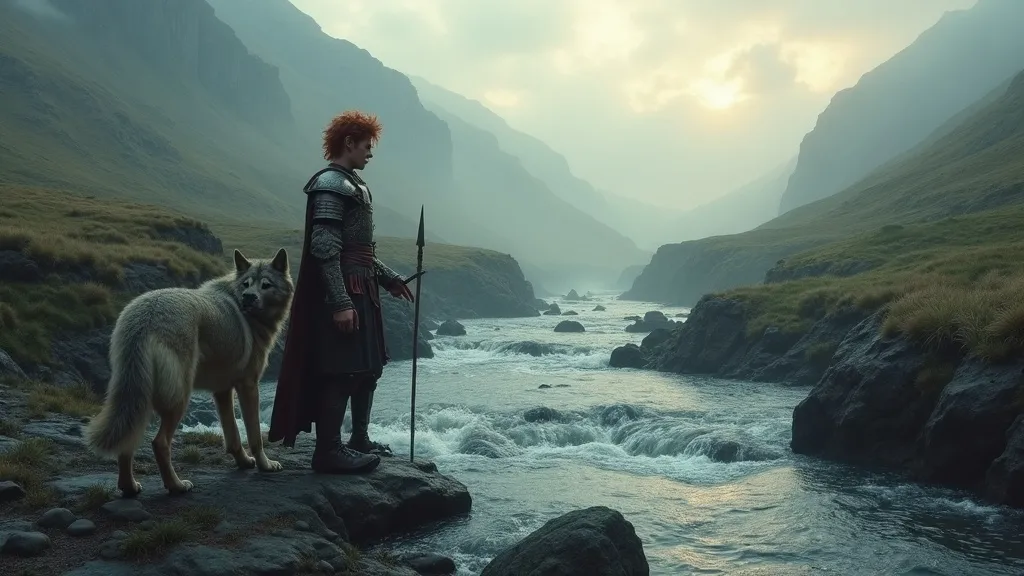
What follows is one of the most extraordinary narrative devices in any epic tradition: the concept of oenach, single combat at the ford. Cu Chulainn agrees to meet Medb's champions one at a time at a ford crossing, fighting them each day while the army waits. He defeats them all. For weeks, one man holds an entire province-spanning army at bay, honourably, according to the rules both sides accept.
Among the champions he faces is Ferdiad, his foster-brother from their shared training under Scathach, the person he loves most in the world. Medb bribes and manipulates Ferdiad into accepting the challenge. The two men fight for four days. They fight with such mutual grief that each night they send healing herbs to the other's camp and exchange embraces before separating. On the fourth day, Cu Chulainn uses the gae bolga. Ferdiad dies. The lament Cu Chulainn delivers over his friend's body is among the oldest expressions of masculine grief in European literature.
"All play, all sport, until Ferdiad came to the ford. I thought beloved Ferdiad would live forever after me. Yesterday he was greater than a mountain; today there is nothing but shadow."
The Ulster warriors eventually recover. The army of Connacht is repelled. The Brown Bull is temporarily taken but later destroys itself in conflict with another supernatural bull. Nobody wins a thing. The Tain ends in exhaustion rather than triumph, which is why it still feels true.
The Women Who Shaped His Fate
Cu Chulainn's story cannot be told without its women, who are some of the most powerfully drawn figures in all Celtic literature.
Emer, his wife, is chosen specifically because she is his equal. The text of Tochmarc Emire, "The Wooing of Emer," specifies that she possesses six gifts: beauty, chastity, sweet speech, needlework, wisdom, and chastity of voice. Her father Forgall Manach opposes the match and sends Cu Chulainn to train with Scathach, hoping the hero will die in the attempt. He does not, returns, and takes Emer by force from Forgall's fortress. Emer is not passive in this story. She negotiates, she objects, she establishes conditions. When Cu Chulainn later pursues the magical woman Fand into the Otherworld, Emer's grief and rage are given full weight in the text. Ultimately she relents, out of love rather than submission.
The Morrigan is something else entirely. She is a goddess of fate, war, and sovereignty, and her relationship with Cu Chulainn is one of the most complex divine-mortal entanglements in any mythology. She approaches him before the Tain and offers alliance. He rejects her. She then harasses him during his battles, appearing as an eel that trips him, a wolf that scatters cattle against him, a heifer driving a stampede. Each time, he injures her without knowing it is she. Later, wounded herself, the Morrigan appears to him in disguise as an old woman milking a cow. He blesses her three times as she shares her milk, and each blessing heals one of her injuries. It is the only warmth their story contains.
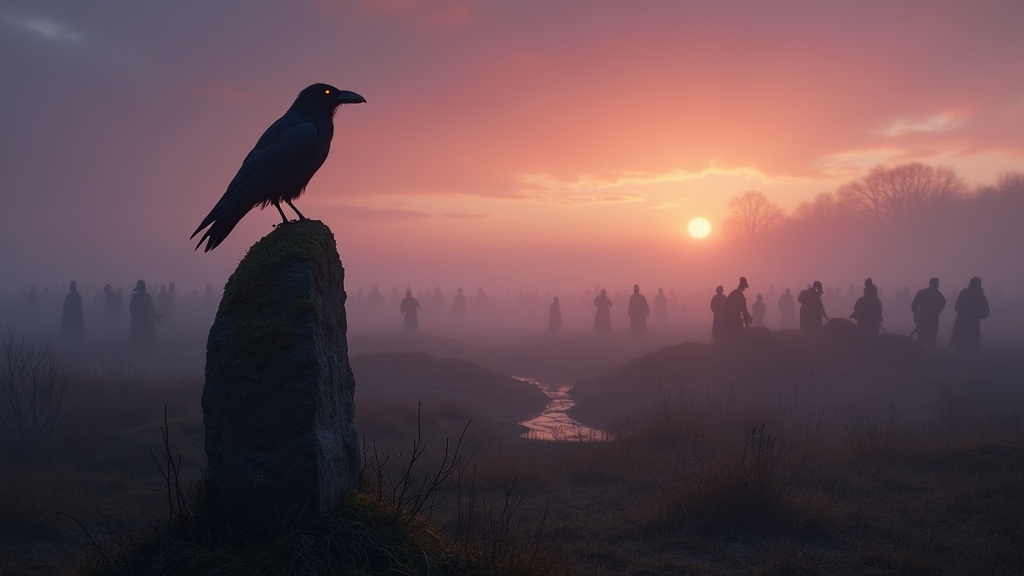
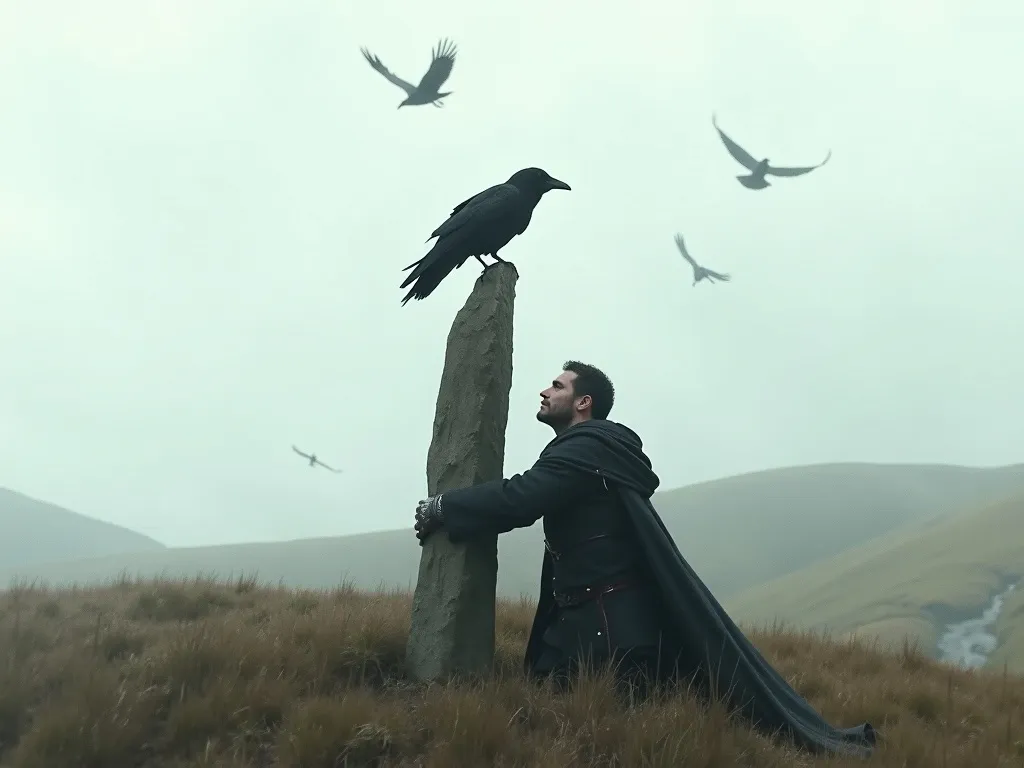
The Morrigan will appear again at Cu Chulainn's death: a crow perching on his shoulder as he is bound to a standing stone, watching him die. That image, the crow and the dying hero lashed upright, has entered Western visual culture in ways that outlast any specific knowledge of the myth behind it.
The Death of Cu Chulainn: A Fate Chosen Eyes Open
Cu Chulainn knew he would die young. The prophecy came to him when he was a boy: a life of glory and a short life were the same bargain. He accepted. That acceptance is, in some readings, the core of his character.
His death is engineered by Lugaid mac Con Roi and the daughters of Calatin, a sorcerer whose entire family Cu Chulainn had killed. The daughters use magic to draw him out against his will, attacking the very bonds of honour and geis (sacred prohibition) that structure his existence. He is tricked into breaking multiple geasa: he eats dog meat, violating one prohibition, and he stops to help a woman, violating another.
The three spears thrown by Lugaid each carry a prophecy: one will kill a king of charioteers (it kills his charioteer Laeg), one will kill a king of horses (it kills his horse Liath Macha), and the third will kill a king of warriors. Cu Chulainn is hit by the third. His intestines spill onto the grass. He ties himself to a standing stone so he can die upright, facing his enemies. He will not die on his knees.
Even as he dies, the sheer weight of his presence keeps his enemies at bay for hours. Only when the crow settles on his shoulder, the unmistakable sign that the life is gone, does Lugaid dare approach.
His right hand is then cut off to retrieve the sword he is still gripping. That detail, the enemy forced to amputate the dead man's hand because the grip will not release even in death, is the last extraordinary image in the story of Cu Chulainn, Hound of Ulster.
Cu Chulainn's Place in the Broader Celtic World
The Ulster Cycle represents one strand of Irish mythological literature. It sits alongside the Mythological Cycle (which covers the Tuatha De Danann), the Fenian Cycle (which follows Fionn mac Cumhaill and the Fianna), and the Historical or Kings' Cycle.
Cu Chulainn belongs, temporally, to the heroic age that Irish tradition places roughly contemporary with the Trojan War, though this synchronisation was a learned medieval construction rather than a genuine historical claim. The comparison with Greek epic was not lost on the monks who wrote down these texts; they shaped their transcriptions partly in dialogue with the classical tradition they had absorbed through Christian Latin scholarship.
Scholars including T.F. O'Rahilly and Alwyn and Brinley Rees have traced structural parallels between Cu Chulainn and the continental Celtic hero-pattern, noting similarities with figures from Welsh mythology, particularly in the Mabinogion. The hero's divine parentage, his fatal flaw encoded in geasa, his liminal relationship with the Otherworld, and his role as protector of a specific territorial community: these are not quirks of the Irish tradition but defining marks of how Celtic storytellers understood the function of a hero.
The Ulster Cycle also encodes genuine Iron Age material: the chariot warfare, the cattle-raiding economy, the institution of single combat at fords, the sacred role of the king as embodiment of sovereignty. Archaeology from sites like Navan Fort (believed to be Emain Macha in Co. Armagh) supports the broad social picture the texts describe, though the texts themselves are literary compositions from the 9th to 12th centuries CE drawing on much older oral tradition.
Cu Chulainn in Modernity: A Hero Claimed and Contested
The story of Cu Chulainn did not end with the medieval manuscripts. W.B. Yeats returned to him obsessively, writing five plays about the hero between 1904 and 1939. In Yeats's version, Cu Chulainn becomes a symbol of pure, irrational vitality set against the grey rationalism of modernity - a very late Victorian reading, but a powerful one. His play On Baile's Strand (1904) imagines the hero's unknowing killing of his own son, a motif absent from the medieval sources but powerfully present in other Indo-European traditions (compare the Persian tale of Sohrab and Rostam).
Oliver Sheppard's 1911 bronze sculpture "The Death of Cuchulainn" now stands in the General Post Office in Dublin, placed there in 1935 as a memorial to the 1916 Easter Rising. The leaders of that rebellion, particularly Patrick Pearse, explicitly invoked Cu Chulainn as a model for self-sacrifice in defence of Ireland. That political appropriation added a layer of contested meaning that persists: the same image has been claimed by Irish republican movements and, controversially, by Ulster loyalist groups, each reading a different meaning into the warrior bound to his stone.
This is what major mythological figures do: they outlast any single interpretation. The Hound of Ulster belongs now to everyone who reads his story and finds something true inside it.
Frequently Asked Questions About Cu Chulainn, Hound of Ulster
Frequently asked questions
What is the primary source for the Cu Chulainn myths?
The two main manuscript sources are the Book of the Dun Cow (Lebor na hUidre, compiled around 1100 CE) and the Book of Leinster (around 1160 CE). Both preserve versions of the Tain Bo Cuailnge and the surrounding cycle of tales. The manuscripts were written by Christian monks in Middle Irish, but the oral traditions they drew on are considered considerably older, with some linguistic features dating to the 7th or 8th century CE and possibly earlier.
Is Cu Chulainn related to any real historical figure?
No confirmed historical counterpart has been established. The Ulster Cycle places him in a quasi-historical Iron Age context, and medieval Irish scholars attempted to synchronise his life with the reign of the Roman emperor Augustus, but these chronologies are literary constructions. Navan Fort in County Armagh is widely associated with Emain Macha, and excavations there have revealed Iron Age ceremonial activity, but this confirms a real-world setting for the stories rather than a biographical person behind them.
What is a geis, and why does it matter to Cu Chulainn's death?
A geis (plural geasa) is a sacred taboo or prohibition that attaches to a person, often at birth or as a consequence of a vow. Breaking a geis brings catastrophic misfortune. Cu Chulainn operates under several geasa, including a prohibition against eating dog meat (a serious violation given that his name means "Hound of Culann") and specific obligations of hospitality. His enemies deliberately engineer situations where he must break one geis to honour another, unravelling the protective web of obligations around him and leaving him exposed to his fate.
How does Cu Chulainn compare to Achilles as a hero?
The parallels are real but should not be overstated. Both heroes have divine parentage (Lugh for Cu Chulainn, the sea-nymph Thetis for Achilles), both are given a choice between long obscurity and short glory, both have a transformative emotional friendship (Ferdiad/Patroclus) whose death precipitates the final tragic arc, and both die young in fulfilment of prophecy. The key difference is political: Achilles fights for personal honour within a pan-Greek coalition, whereas Cu Chulainn fights as the sole defender of a specific kingdom, Ulster, whose survival depends entirely on him. His heroism is communal in a way Achilles' is not.
Who is the Morrigan, and what is her role in Cu Chulainn's story?
The Morrigan is a goddess associated with fate, battle, prophecy, and the sovereignty of the land. She appears throughout the Ulster Cycle and the broader Mythological Cycle of Irish literature. Her relationship with Cu Chulainn is adversarial, erotic, and finally elegiac: she offers him alliance, he refuses her, she attacks him during battles, they wound each other, and she witnesses his death as a crow on his shoulder. She does not cause his death in a simple sense; rather, she embodies the fate-logic that the story has been building toward from the beginning.
Why is Cu Chulainn's story politically contested in modern Ireland?
Patrick Pearse and other leaders of the 1916 Easter Rising identified explicitly with Cu Chulainn's self-sacrifice in defence of Ireland, and Oliver Sheppard's bronze sculpture of the dying hero was placed in the Dublin GPO as their memorial in 1935. This association with Irish nationalism made the figure politically charged. Separately, Ulster loyalist murals in Belfast have also used Cu Chulainn imagery, claiming him as a pre-Norman Ulsterman with no specific Irish nationalist allegiance. The same mythological hero has been read as a symbol of two opposing communities, which is less a contradiction than a demonstration of how foundational he is to the entire island's cultural memory.
The Riastrad as Mirror: What the Warp Spasm Still Reflects
The riastrad has not finished speaking. Scholars in the late 20th and early 21st centuries began reading it through the lens of trauma studies and combat psychology, noting that the description of a warrior who cannot distinguish friend from enemy, who must be brought back from violence by a sensory shock connected to the body rather than to reason, maps with uncomfortable precision onto modern accounts of combat dissociation.
That is not to reduce the riastrad to a DSM category or to strip it of its mythological force. The two readings coexist. The medieval storytellers were precise observers of human behaviour under extreme duress, and they encoded what they saw in the language available to them, which was the language of the supernatural. When Cu Chulainn twists inside his own skin and becomes a creature of pure destruction, the image carries the weight of every war fought by every community that has needed someone to cross the line between the human and the terrible on their behalf.
The Hound of Ulster endures because he holds that weight without buckling. He knows what he is. He knows what it costs. He ties himself to the stone and faces the end anyway. That is not a comfortable heroism, and it was never meant to be. It is the kind that lasts.
Read the full book
Want the whole story?
The complete edition is an instant PDF download here, with a paperback on Amazon for selected titles.

Celtic
The Celtic Mythology Book: The Tuatha Dé Danann, Cú Chulainn, the Morrigan, and the Sacred Stories of Pre-Christian Ireland and Wales
Gods, Heroes, and the Four Treasures of Eriu
The mythology of the Celts before Christianity: the Tuatha Dé Danann, Cú Chulainn's war-feats, the Mabinogion's enchantments, and the bog cauldrons that survived the centuries.