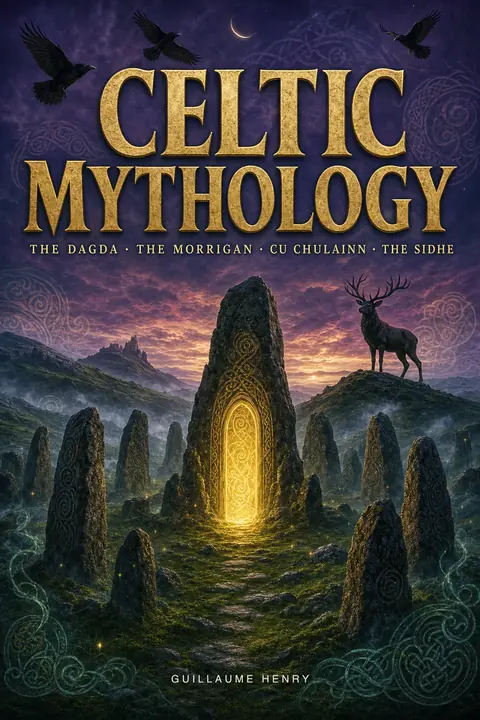
Celtic
Irish, Welsh, Gaulish, and Brythonic traditions. Gods, heroes, and the gaps left by conquest. Primary sources, no tourist versions.
Most guides to Celtic mythology treat it as a single, unified tradition. That approach collapses a thousand years of storytelling across Ireland, Wales, Gaul, and Britain into one tidy package. The reality is messier. The Celts never had a single sacred text, a Homer, or a Hesiod. What survives comes to us through Roman accounts written by conquerors, Christian monks copying pagan tales centuries after the gods stopped receiving offerings, and a handful of medieval manuscripts that preserve fragments of older oral traditions.
This guide separates the sources, names the gaps, and treats each tradition on its own terms.
What We Mean When We Say Celtic
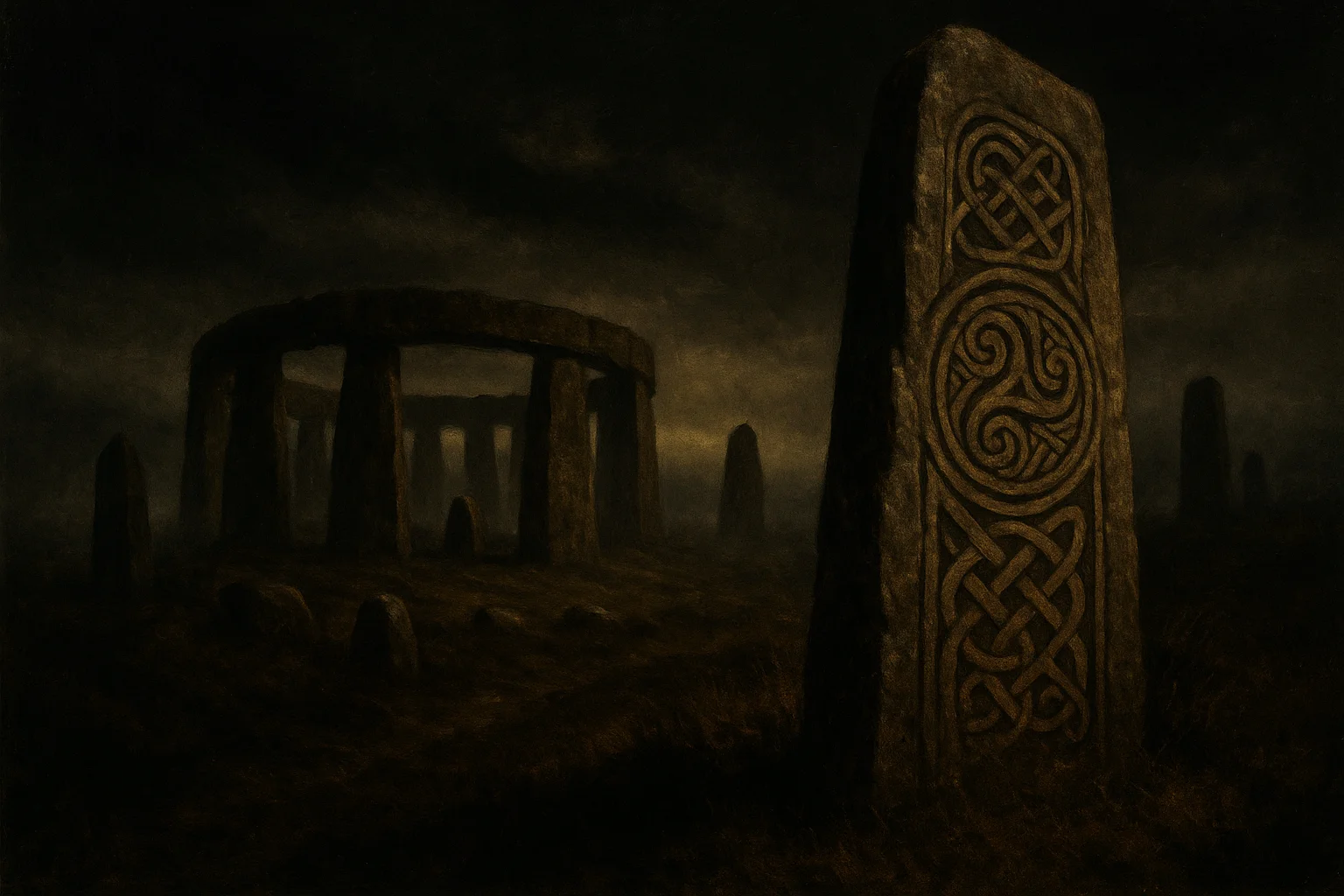
The term Celtic refers to a linguistic and cultural grouping, not a political empire. By the first century BCE, Celtic-speaking peoples occupied territory from Iberia to Anatolia. They shared certain social structures, artistic motifs, and religious practices, but they did not share a single mythology. Irish mythology differs from Welsh mythology in cosmology, divine genealogy, and narrative structure. Gaulish traditions, known primarily through Roman and Greek writers, differ again.
Julius Caesar, writing in De Bello Gallico 6.13-18, describes Gaulish gods by Roman names: Mercury, Apollo, Mars, Jupiter, Minerva. He tells us the Gauls believed they descended from a god of the dead, whom he calls Dis Pater. Whether this reflects genuine Gaulish theology or Roman interpretive habit is unclear. Lucan, in Pharsalia 1.444-446, names three gods: Teutates, Esus, and Taranis. These names appear nowhere in Irish or Welsh sources.
The traditions are related, but they are not interchangeable.
The Problem of Sources
What the Romans Destroyed
Gaulish mythology was an oral tradition maintained by druids. Caesar tells us druids spent up to 20 years memorising verse and law, and that they refused to commit sacred knowledge to writing. When Rome conquered Gaul, it systematically dismantled the druidic class. By the second century CE, the tradition was functionally extinct. What we know of Gaulish gods comes from inscriptions, votive offerings, and the interpretive glosses of Roman writers. No Gaulish epic survives. No cosmogony. No theogony.
The same pattern repeats across Roman Britain. Native traditions were Romanised, syncretised, or suppressed. By the time Christian missionaries arrived, much of the pre-Roman religious framework had already been erased.
What the Monks Preserved
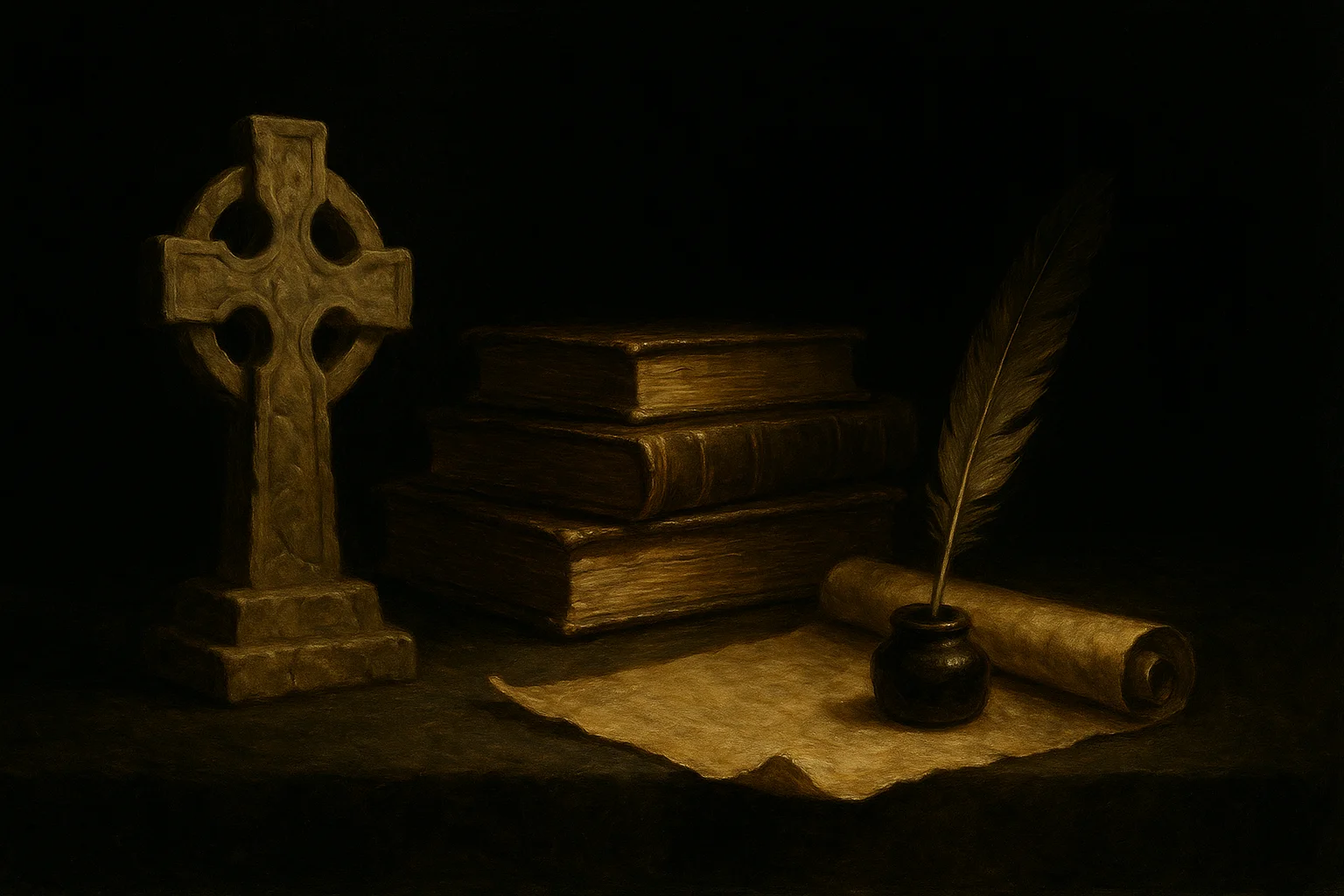
Irish and Welsh mythologies survive because Christian monks wrote them down. This is both a gift and a problem. The monks were not neutral scribes. They edited, moralised, and sometimes Christianised the material. Lebor Gabála Érenn, the Book of Invasions, frames the arrival of the Tuatha Dé Danann within a biblical chronology. The Táin Bó Cúailnge, preserved in the Book of Leinster and other manuscripts, retains pre-Christian elements but is narrated from a Christian vantage point.
Some tales survive in multiple versions with contradictory details. Scholars debate which layer is older. The safest approach is to acknowledge the uncertainty and work with what the manuscripts actually say.
Irish Mythology: The Four Cycles
Irish mythology is traditionally divided into four cycles. The division is a modern scholarly convenience, not an ancient Irish category, but it organises the material clearly.
The Mythological Cycle
This cycle concerns the gods and the successive invasions of Ireland. Lebor Gabála Érenn describes five waves of settlers, culminating in the arrival of the Tuatha Dé Danann, a race of divine or semi-divine beings who bring with them four treasures: the Stone of Fál, the Spear of Lugh, the Sword of Nuada, and the Cauldron of the Dagda. They defeat the Fir Bolg and later the Fomorians at the Second Battle of Mag Tuired, recounted in Cath Maige Tuired. Eventually, the Tuatha Dé are themselves displaced by the Milesians, ancestors of the Gaels, and retreat into the sidhe, the hollow hills.
The Ulster Cycle
The Táin Bó Cúailnge is the centrepiece of this cycle. It tells the story of Queen Medb of Connacht, who invades Ulster to steal the Brown Bull of Cooley. The hero Cú Chulainn, bound by a curse that has incapacitated the other warriors of Ulster, defends the province single-handedly. The narrative is brutal, aristocratic, and concerned with honour, cattle, and single combat. Cú Chulainn undergoes a battle frenzy called ríastrad, which transforms him into something monstrous.
"He became a fearsome thing, unrecognisable. His body twisted inside his skin." Táin Bó Cúailnge, Recension I
The Fenian Cycle
This cycle centres on Fionn mac Cumhaill and the Fianna, a band of warriors who serve the High King of Ireland. The tales are more romantic and less archaic in tone than the Ulster material. Acallam na Senórach, the Colloquy of the Ancients, frames many Fenian stories as conversations between the aged warrior Oisín and Saint Patrick, a narrative device that preserves pagan memory while asserting Christian authority.
The Historical Cycle
Also called the Kings' Cycle, this collection blends mythology with pseudo-history. It includes tales of legendary kings like Conn of the Hundred Battles and Niall of the Nine Hostages. The line between myth and history blurs here, as it does in many medieval genealogies.
Welsh Mythology: The Mabinogion and Beyond
The Mabinogion is the primary source for Welsh mythology. It is not a single text but a collection of 11 tales preserved in two medieval manuscripts: the White Book of Rhydderch and the Red Book of Hergest. The Four Branches of the Mabinogi proper concern the families of Pwyll, Branwen, Manawydan, and Math. These are not creation myths or theogonies. They are courtly tales with gods who behave like aristocrats.
Pwyll, prince of Dyfed, exchanges places with Arawn, king of Annwn, the Welsh Otherworld. Branwen is married to an Irish king, and the resulting war nearly destroys both islands. Math son of Mathonwy requires a virgin to hold his feet unless he is at war, a detail that has puzzled readers for centuries. The tales are strange, episodic, and resistant to tidy interpretation.
Other Welsh texts include Culhwch ac Olwen, which features Arthur and his warband long before the chivalric romances of the later Middle Ages. Here, Arthur is a rough, semi-divine figure who hunts supernatural boars and commands a retinue of men with bizarre powers. One can carry a mountain on his back. Another can hear an ant stir 50 miles away.
Welsh tradition also includes dragons appear in Welsh tradition as symbols of sovereignty and as creatures tied to the land itself, most famously in the tale of Lludd and Llefelys.
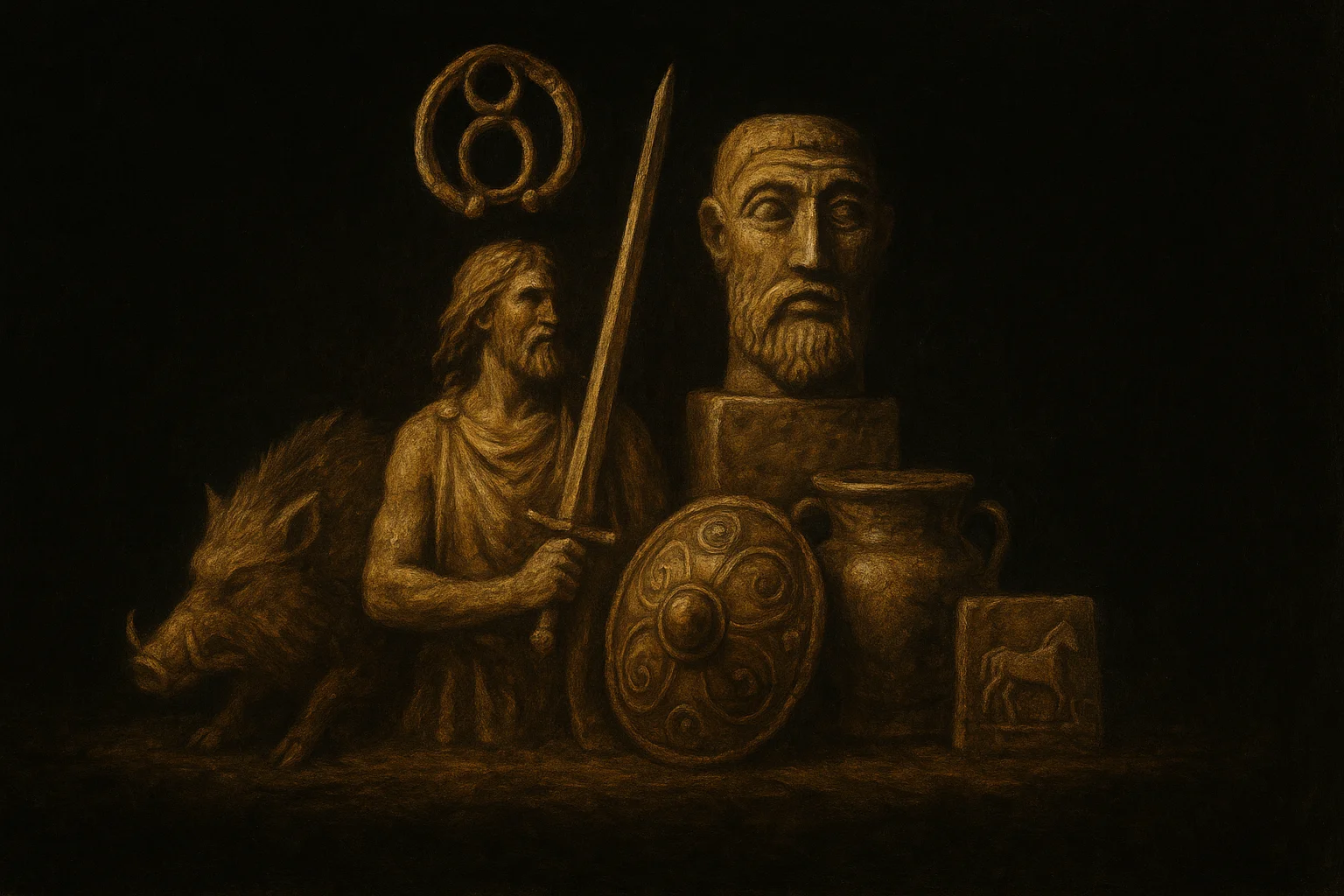
Gaulish and Continental Traditions
What we know of Gaulish mythology comes from three sources: Roman writers, inscriptions, and iconography. Caesar's account is the most detailed, but it is filtered through Roman religious categories. Inscriptions from Gaul and Roman Britain name over 400 deities, most of them local. Some, like Lugus, appear across wide regions. Others are attested only once.
Lucan names Teutates, Esus, and Taranis, and describes human sacrifice in their honour. Later commentators link these gods to Mercury, Mars, and Jupiter, but the correspondences are speculative. The Gundestrup Cauldron, a silver vessel found in Denmark but likely of Gaulish or Thracian origin, depicts antlered figures, warriors, and processions. The most famous panel shows a figure often identified as Cernunnos, a horned god associated with animals and fertility.
No Gaulish narrative survives. We have names, images, and Roman interpretations. The rest is silence.
Gods, Spirits, and the Otherworld
The Tuatha Dé Danann
The Tuatha Dé Danann, the People of the Goddess Danu, are the gods of Irish mythology. After their defeat by the Milesians, they withdraw into the sidhe, becoming the aos sí, the fairy folk of later Irish tradition. The Dagda is their king, a figure of abundance and magic who owns a cauldron that never empties. Lugh is a god of skill and kingship, master of all arts. The Morrígan is a goddess of war and sovereignty, appearing as a crow on the battlefield. Brigid, later Christianised as Saint Brigid, is associated with poetry, healing, and smithcraft.
The gods are not immortal in the Greek sense. They can be wounded, humiliated, and diminished. They are powerful, but they are not omnipotent.
The Sidhe and the Land
The Otherworld in Irish and Welsh tradition is not an afterlife. It is a parallel realm, sometimes located underground, sometimes across the sea, sometimes inside a hill. Time moves differently there. A night in the Otherworld may be a century in the mortal world. The sidhe are both places and beings. To enter a sidhe mound is to cross into the domain of the aos sí.
Welsh Annwn functions similarly. It is a realm of feasting, magic, and danger. Pwyll spends a year there. Arthur and his men raid it to steal a cauldron, as recounted in the poem Preiddeu Annwfn.
The Otherworld is not heaven or hell. It is simply other.
Irish Otherworld
Accessible through sidhe mounds, often beneath the earth. Time distortion is common. The Tuatha Dé Danann dwell there after their displacement.
Welsh Annwn
Ruled by Arawn or Gwyn ap Nudd. Depicted as a realm of plenty and hunting. Pwyll and Arthur both interact with it directly.
Heroes, Cattle Raids, and Honour
Celtic heroes are not moral exemplars. They are proud, violent, and bound by codes of honour that often lead to their deaths. Cú Chulainn kills his own son, Connla, because the boy will not reveal his name. Fionn mac Cumhaill burns his thumb on the Salmon of Knowledge and gains wisdom by accident. Branwen dies of a broken heart after seeing the destruction her marriage caused.
Cattle are currency, status, and the cause of wars. The Táin Bó Cúailnge begins because Medb and her husband argue over who owns the better bull. The entire Ulster Cycle revolves around livestock and the honour attached to owning them.
Single combat is sacred. Warriors boast before battle, reciting their genealogies and deeds. To refuse a challenge is to lose honour. To break a geis, a personal taboo, is to invite death. Cú Chulainn is bound by multiple geasa, and his enemies manipulate them to bring about his downfall.
The catalogue of mythological creatures in Celtic tradition includes shapeshifters and werewolf legends, mermaids and water spirits, and even vampiric revenants in Irish folklore, though these are more common in later medieval tales than in the earliest sources.
What Survived and What Did Not
What we call Celtic mythology overview is a reconstruction. The oral traditions of the druids are gone. The Gaulish epics are gone. What remains are Christian redactions, Roman summaries, and fragments preserved by accident.
Irish material is the richest because Ireland was never conquered by Rome and because Irish monks, for reasons still debated, chose to preserve pagan tales alongside Christian scripture. Welsh material survives in smaller quantities, filtered through medieval courtly aesthetics. Gaulish material is mostly names and images.
Some scholars compare the loss to the burning of the Library of Alexandria. Others argue we should be grateful for what the monks saved. Both are right.
Frequently asked questions
What are the main sources for Celtic mythology?
The primary sources are the Táin Bó Cúailnge and other Irish cycle tales, the Mabinogion for Welsh tradition, and Caesar's De Bello Gallico for Gaulish material. Irish sources are the most detailed. Gaulish sources are fragmentary. All were written down centuries after the oral traditions began.
How do Irish and Welsh mythologies differ?
Irish mythology is organised into cycles and includes detailed theogonies and divine genealogies. Welsh mythology, as preserved in the Mabinogion, is more episodic and courtly in tone. The gods in Welsh tales often behave like aristocrats rather than cosmic powers. The Otherworld functions similarly in both, but the names and structures differ.
Who are the Tuatha Dé Danann?
The Tuatha Dé Danann are the gods of Irish mythology, described in Lebor Gabála Érenn as a race of divine or semi-divine beings who ruled Ireland before the arrival of the Milesians. After their defeat, they withdrew into the sidhe and became the aos sí, the fairy folk of later tradition.
What is the Táin Bó Cúailnge about?
The Táin Bó Cúailnge, or Cattle Raid of Cooley, is the central tale of the Ulster Cycle. Queen Medb of Connacht invades Ulster to steal the Brown Bull of Cooley. The hero Cú Chulainn defends Ulster alone while the other warriors are incapacitated by a curse. The tale is violent, aristocratic, and concerned with honour and cattle.
Why is so much Gaulish mythology lost?
Gaulish mythology was an oral tradition maintained by druids, who refused to write down sacred knowledge. When Rome conquered Gaul, it dismantled the druidic class. By the second century CE, the tradition was extinct. What survives comes from Roman writers, inscriptions, and iconography, not from native Gaulish sources.
What role do druids play in Celtic myths?
Druids appear in Irish tales as poets, judges, and advisors. They perform divination, cast curses, and mediate between the human and divine worlds. In Gaulish sources, Caesar describes them as a learned class responsible for religious ritual and education. They do not appear as characters in Welsh tales, though bards and magicians perform similar roles.
Further reading on Mythologis
- Sphinx-like guardian figures in comparative mythology
- Sea serpents like Jörmungandr and their Celtic parallels
- Celtic mythology overview for a broader survey