
The Wall of Asgard: How Heimdall's Fortress Was Built and Nearly Breached
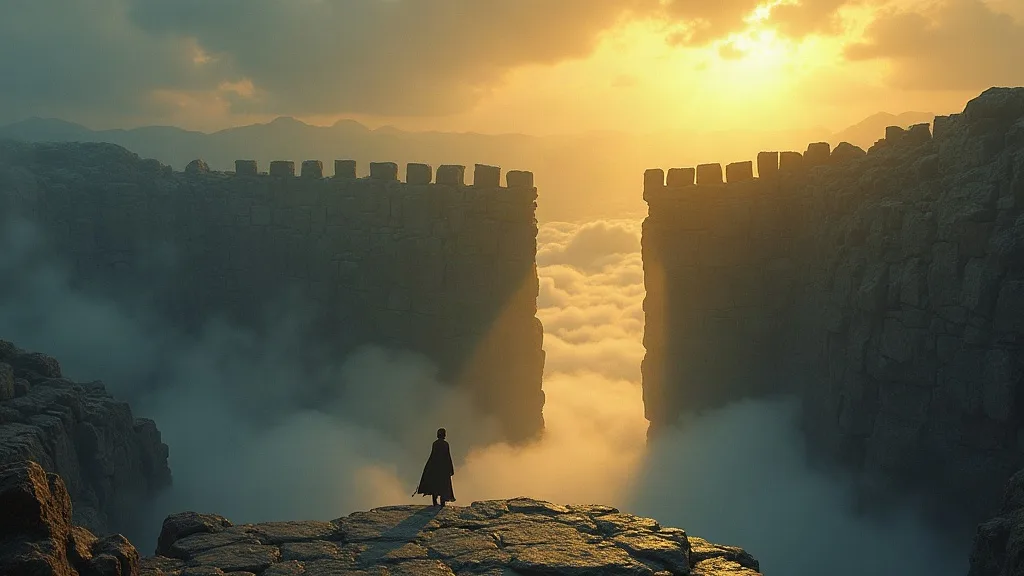
The wall of Asgard stands as the realm's most contested border. Built by a jotun craftsman and guarded by Heimdall, it was nearly lost to a giant's trick and destined to fall on Ragnarok. Here's how Norse cosmology protected its sacred center.
Contents
A jotun (a giant, one of the primordial forces of chaos) arrives at the gates of Asgard with an outrageous offer. He will build a wall so high and strong that no giant or jotun can breach it. His price: the sun, the moon, and the goddess Freyja as his bride. The Aesir, gods of order and war, accept. What follows is a race against time, a broken oath, and the reason Heimdall stands watch at the rainbow bridge today.
This is not just the story of a construction project. The wall of Asgard is where Norse cosmology shows us how fragile the divine realm truly is. Even the gods cannot trust themselves. Even their greatest defenses carry the seeds of their own destruction.
The Nameless Giant and the Impossible Wager
The Prose Edda, written down by Snorri Sturluson in 13th-century Iceland but drawing from older oral traditions, tells us that during the age of the world's building, Asgard's defenses were incomplete. The realm of the gods had no outer fortification. A mysterious jotun appeared and made his pitch directly to the Aesir.
The giant promised a wall that would encircle all of Asgard and seal it against invasion. Not just any wall: one so towering and strong that no hostile giant could ever breach it. The work would take three winters to complete.
The gods hesitated. But then came the price. The jotun demanded three things: the sun (Sunna), the moon (Mani), and the hand of Freyja, the goddess of love, beauty, and fertility. The Aesir conferred. Freyja was not theirs to give away without her consent. The sun and moon sustained all life in the nine worlds. Accepting would bring darkness and cold, and rob the Norse cosmos of its cyclical renewal.
The gods prepared to refuse. But Loki, the trickster god, spoke up. Loki suggested they accept the wager on one condition: the giant must complete the entire wall in a single winter, with no help from other jotnar. No servants, no allies. The jotun would work alone or not at all. Surely it was impossible. The gods would have their wall and lose nothing.
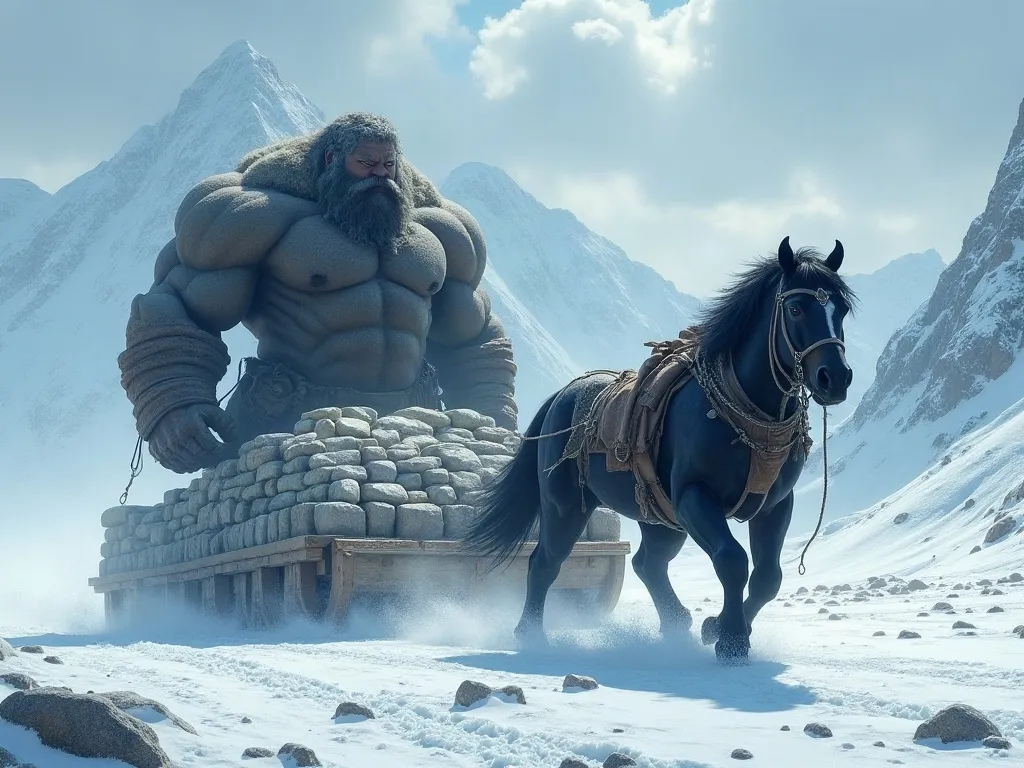
The giant heard this and asked for one concession: he could use his stallion, Svadilfari, to haul stone and earth. The gods agreed. They saw no harm in a horse.
The Giant's Ally and the Wall's Rising
The winter began. The jotun hitched his stallion to a sled and began hauling massive boulders from the mountains. Each night, the giant would pull new stones toward the rising wall. He worked with supernatural strength, and the barrier grew faster than any mortal could build.
By midwinter, most of Asgard's perimeter was complete. Panic spread among the Aesir. The wall was nearly finished. They would lose the wager. They would lose Freyja, the sun, and the moon. The cosmos would fall into shadow.
The gods rounded on Loki. This was his fault. His suggestion had backfired. He had led them into catastrophe. They threatened him with death if he did not find a way out.
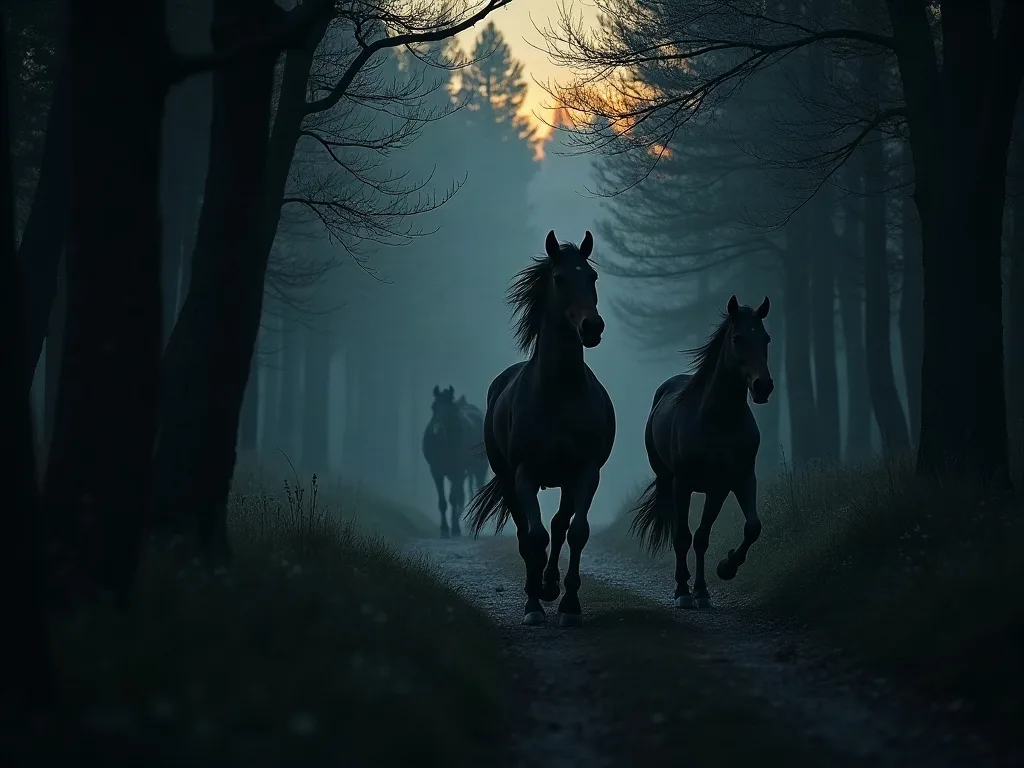
Loki acted with his characteristic cunning. He transformed himself into a mare and ran into the forest. When Svadilfari, the giant's stallion, saw the mare at dusk on the final night of winter, he broke free from his traces and bolted after her, following her deep into the woods. The giant, left without his horse, could not haul the final stones. The wall remained incomplete.
The jotun's rage was terrible. His true form began to change. He was not a human builder at all, but a jotun of immense power, his body swelling to its true size. The Aesir called upon Thor, the god of thunder and strength. Thor raised his hammer Mjolnir and smashed the giant's skull. The jotun fell dead, cast out of Asgard and into Jotunheim, the realm of giants.
The gods kept their treasures. The sun and moon continued their journeys. Freyja remained free. And Asgard had its wall, though it was never quite finished. The gap where the final stones should have been placed would remain a vulnerability.
This is the price of any bargain, the Eddas suggest. Even in victory, something is left incomplete.
Heimdall's Eternal Watch
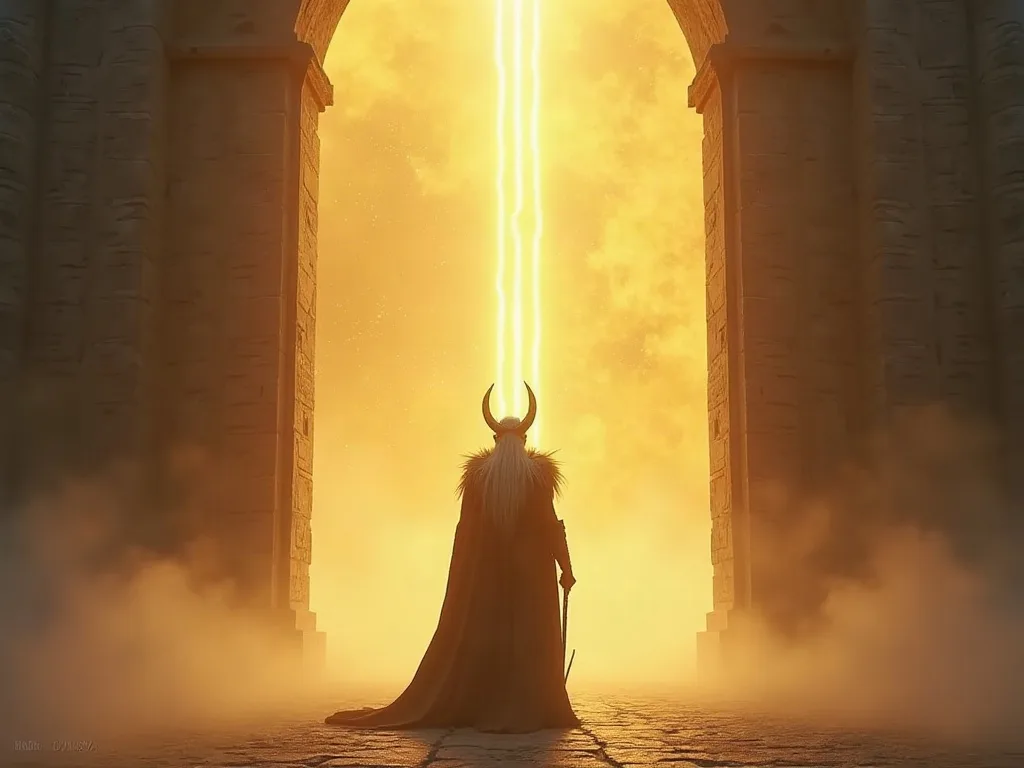
The wall's guardian became Heimdall, one of the Aesir's most enigmatic figures. Heimdall stands at the entrance to Asgard, at the base of the Bifrost, the rainbow bridge that connects the nine worlds. His role is absolute: no one enters Asgard without his knowledge. He never sleeps. He requires less rest than a bird. His hearing is so keen he can detect grass growing in the fields and wool being shorn from sheep.
Heimdall bears a great horn called the Gjallarhorn. This is not merely a signal horn. The Gjallarhorn is destiny itself made audible. When blown, its sound carries through all nine worlds, reaching every creature and spirit. Heimdall waits for the day when he must blow it, and when that moment comes, it will mark the beginning of Ragnarok, the twilight of the gods.
The wall and Heimdall are inseparable. The barrier protects Asgard's inner sanctum, but only because Heimdall watches. Without his vigilance, even a completed wall would mean nothing. Enemies move not through stone but through deceit, surprise, and the erosion of will. Heimdall embodies the gods' defiant awareness of threat.
The Wall's Role in Ragnarok
The Poetic Edda, particularly the Voluspa (the Prophecy of the Seeress), describes the final age when the wall's incompleteness becomes fatal. Ragnarok unfolds in stages. The sun turns black. Stars vanish from the sky. The earth sinks into the sea. Mountains crumble. Bonds break.
From the south comes Surtr (Surtr), a fire giant whose sword blazes brighter than the sun itself. He rides across the Bifrost, the rainbow bridge, heading straight for Asgard. As he crosses, the bridge cracks and breaks beneath him. But Surtr does not stop.
The wall of Asgard is breached. Whether by Surtr's fire or by the full assault of the jotnar from Muspelheim (the realm of fire) and Jotunheim, the barrier that once held back chaos collapses. The giants pour through. The realm that was protected by an incomplete wall, maintained only by eternal vigilance, falls to the inevitable.
In Norse cosmology, this is not failure. It is fate. The gods know from the beginning that Ragnarok will come. Odin, the chief god and father of men, consults the head of Mimir and reads the runes. He knows the ending. The wall was never meant to last forever. It was always meant to delay.
The Wall and Norse Concepts of Defense
The wall of Asgard reveals something fundamental about how the Norse understood power and protection. Unlike in many mythologies, where gods possess omniscience and invincibility, the Aesir are bound by laws they did not make. They must work, build, watch, and sacrifice.
Heimdall's vigil is not a guarantee of safety. It is a defiant statement: we know the threat. We acknowledge the danger. We stand ready anyway. The wall is beautiful and strong, but it was also incomplete from the start. The giants' influence seeps through the cracks.
This reflects a society that lived with genuine peril: short growing seasons, violent winters, raids from rival clans, the constant threat of starvation or conquest. The Norse did not expect perfect security. They expected honor in the struggle itself.
The incomplete wall also speaks to the Norse understanding of magic and craft. The giant who built it was not evil in any absolute sense. He was doing what jotnar do: attempting to impose order and gain power. The gods accepted his work because it served their purposes. Loki's intervention was necessary and shameful at once. He is both hero and villain in the same breath. That ambiguity is central to how Norse mythology works.
Asgard's Wall
The wall of Asgard is incomplete by necessity. It was built under a wager and defended by eternal vigilance, never by perfection. Its incompleteness is part of its meaning. Even in Norse heaven, defenses fail. The gods know it will fall. They stand watch anyway.
Other Divine Fortresses
In Greek mythology, Olympus is guarded by its natural position on a mountain and by the gods' immortality. Divine fortresses in Hindu tradition like the realm of Indra are sustained by the gods' power and dharma (cosmic order). These walls are perfect or near-perfect. They rely on the gods' superiority. They suggest that proper order, once established, endures.
The Jotun Builder: Ambiguity in Norse Creation
The Prose Edda never names the giant who built the wall. Snorri calls him simply "the jotun". This anonymity is deliberate. The giant is not a villain of Norse lore in the way that Loki or Fenrir become villains. He was doing his job. He was offering a fair bargain, or what seemed fair to him.
The real deception in the story belongs to Loki. By transforming into a mare and luring Svadilfari away, Loki ensured the giant could not complete his work. The giant's rage when he realized he'd been cheated was justified. He was a creature of Jotunheim, one of the nine worlds that predates Asgard and will outlast it.
In Norse cosmology, jotnar are not simply "bad". They represent primordial forces, the chaos from which order is carved. Fire giants, frost giants, hill giants, storm giants. Each has its own nature and power. The wall builder was practical and skilled. He wanted payment, not conquest. The tragedy is that he was undone by the same cunning that would define so much of the gods' interactions with giants.
This reflects how older Indo-European traditions often saw their "enemy" peoples or powers. The jotnar are the Other, the threat that defines the boundary of civilization, but they are also necessary. Without them, without the constant pressure from the outside, Asgard would have no meaning. The wall marks the frontier between order and chaos, divine and nondivine.
Echoes Across Norse Tradition
The wall appears again and again in Norse sagas and poems, always as a marker of Asgard's boundary and the gods' resolve. In the Gylfaginning, another section of the Prose Edda, High (the personification of Odin's wisdom) describes the wall to the inquiring King Gylfi. The wall is part of the cosmological backdrop, as essential as Yggdrasil (the world tree) or the roots that bind the nine worlds.
Some scholars have suggested that the wall's construction mirrors real Norse building practices and the labor systems of medieval Iceland, where Snorri lived. The giant's bargain echoes real historical disputes over land, labor, and tribute. The wager format (accept this impossible task, or lose your treasure) appears in other Norse tales, particularly stories of smith-gods and their crafts.
The wall also connects to the broader theme of boundary-crossing in Norse myth. The Bifrost itself is sometimes described as having three layers or colors, each marking a transition between worlds. Heimdall stands at this threshold. The wall reinforces the boundary. It says: here is Asgard, here is order, and here is where the divine realm ends.
The Wall in Scholarship and Modern Reception
The wall of Asgard has drawn surprisingly little focused attention in academic Norse studies, possibly because it appears in only a few key sources and is often treated as background detail to the more dramatic tale of Heimdall or Ragnarok. But recent scholarship has begun to recognize it as a window into how the Norse thought about defense, boundaries, and the limits of divine power.
Scholar scholars like John Lindow have noted that the incompleteness of the wall is almost certainly intentional in the Prose Edda narrative. An imperfect defense is more interesting than a perfect one. It raises questions. It suggests that the story's creators were thinking carefully about fate, risk, and the nature of the divine.
The wall also appears in modern retellings of Norse mythology, particularly in fiction and fantasy. Neil Gaiman's Norse Mythology (2017) presents the wager and Loki's intervention as a turning point in the gods' relationship with each other. The wall becomes not just a structure but a symbol of the gods' growing awareness of their own doom.
The Wall as Metaphor for Order Against Entropy
In the broadest sense, the wall of Asgard stands for any barrier between order and chaos, safety and danger, the known and the unknown. The Norse cosmos was not handed to the gods. It was constructed, piece by piece, boundary by boundary. The wall is one such boundary. Heimdall's watch is the effort required to maintain it.
This stands in contrast to mythologies where the divine realm is eternal and unchanging. In Norse tradition, everything changes. The wall will fall. Heimdall will sound his horn and meet his end against Loki. Odin will be devoured by Fenrir. The cosmos will sink into the sea and rise again. Nothing stands still.
The wall, then, is less about permanence and more about persistence. It stands as long as it stands. The gods defend it knowing it will fall. That knowledge makes their defense meaningful, not futile.
Frequently asked questions about the wall of Asgard?
Frequently asked questions
Who built the wall of Asgard and why?
A jotun (giant) offered to build an impenetrable wall around Asgard in exchange for the sun, the moon, and the goddess Freyja. The gods accepted the wager, believing the giant could never complete it in one winter. The giant worked with his stallion Svadilfari and nearly succeeded before Loki lured the horse away, preventing the wall's completion.
Why is the wall of Asgard incomplete?
On the final night of winter, Loki transformed into a mare and seduced the giant's stallion Svadilfari, leading the horse away into the forest. Without his horse, the giant could not haul the last stones to finish the wall. Thor then killed the giant in rage. The incomplete wall remains a gap in Asgard's defenses, a permanent reminder of the gods' deception.
What does Heimdall have to do with the wall of Asgard?
Heimdall became the wall's eternal guardian, standing at the entrance to Asgard where the Bifrost (rainbow bridge) connects to the realm. He never sleeps and can hear every sound in the nine worlds. His role is to ensure no one enters or leaves Asgard without his knowledge, making him the perfect protector of an incomplete wall.
How does the wall of Asgard fall during Ragnarok?
In the Voluspa, the Prophecy of the Seeress, Ragnarok is described as the twilight of the gods. As the final age begins, Surtr, a fire giant from Muspelheim, rides across the Bifrost toward Asgard. The bridge breaks beneath him, and he breaches the wall of Asgard, leading the forces of chaos into the divine realm. The wall's incompleteness plays a role in the gods' fate.
Where does the story of the wall appear in Norse sources?
The main account is in the Prose Edda, specifically in the Gylfaginning, written by Snorri Sturluson in 13th-century Iceland but preserving much older oral tradition. The wall is also referenced in the Poetic Edda, particularly the Voluspa, which describes its breach at Ragnarok. These are the primary Norse sources.
What does the wall of Asgard represent in Norse mythology?
The wall represents the boundary between order and chaos, the divine realm and the nondivine, safety and threat. Its incompleteness reflects the Norse understanding that nothing is permanent, not even divine defenses. It embodies the belief that vigilance and courage matter not because they guarantee victory, but because they affirm meaning in the face of inevitable change.
The Wall's Echo in Norse Understanding of Fate
The wall of Asgard teaches a final, essential lesson about how the Norse saw the future. The Aesir were not surprised by Ragnarok. Odin knew it was coming. The wall was never built to last forever. It was built to hold, to defend, to buy time. The gods stand watch knowing that watch will eventually end.
This is the opposite of false hope. It is a clear-eyed defiance. The Norse did not expect the universe to comfort them. They expected to struggle, to fight, to endure. And when the end came, they expected to face it with honor.
The wall remains, incomplete and watched, holding back chaos through will rather than perfection. In that image lies the whole of Norse philosophy: not victory, but the noble effort in the face of certain loss.
Free 25-page sample
Want the whole story?
Take the first 25 pages free. If it pulls you in, the full edition is yours as an instant PDF download, with a paperback on Amazon for selected titles.

Mythology
The World Mythology Book: The Gods, Heroes and Myths of Every Culture
The Gods, Heroes and Myths of Every Culture, in One Volume
The whole of world mythology in a single volume: Greek, Norse, Egyptian, Japanese, Hindu, Celtic, Slavic, Mesoamerican and African myths gathered side by side, each drawn from the primary sources.