
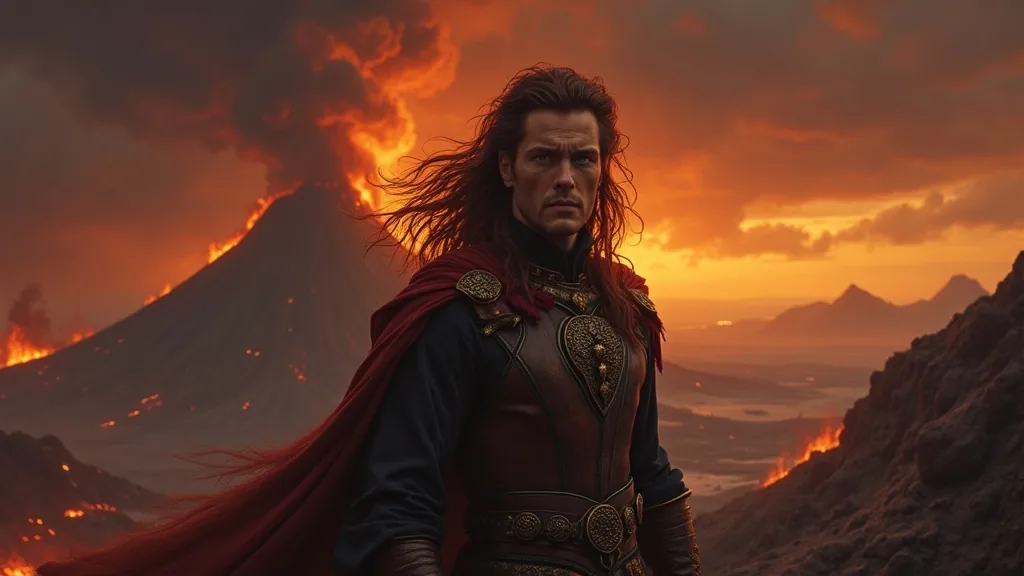
Loki the Trickster: Norse God of Chaos, Fire, and Transformation
Loki the trickster stands among the most complex figures in Norse mythology: a shapeshifter, a schemer, and a force of transformation whose brilliance and malice shaped the fate of gods and mortals alike.
Contents
The Paradox at the Heart of Asgard
Among the gods of the Norse pantheon, none provokes as much fascination, unease, or genuine awe as Loki. He is not simply a villain, nor a benevolent helper, nor a fool. He is all of these simultaneously, and that is precisely what makes him indispensable to Norse cosmology. Loki the trickster occupies the uneasy space between creation and destruction, between loyalty and betrayal, between the sacred and the profane.
He is the son of the giant Farbauti and the goddess (or giantess) Laufey, making him of mixed blood from the very beginning. His liminal origins placed him forever between worlds: not fully Aesir, yet welcomed among the gods of Asgard; not a giant, yet bound by blood to the ancient powers of Jotunheim. This in-between nature is the engine of every story in which Loki appears.
Shapeshifter, Schemer, and Unlikely Creator
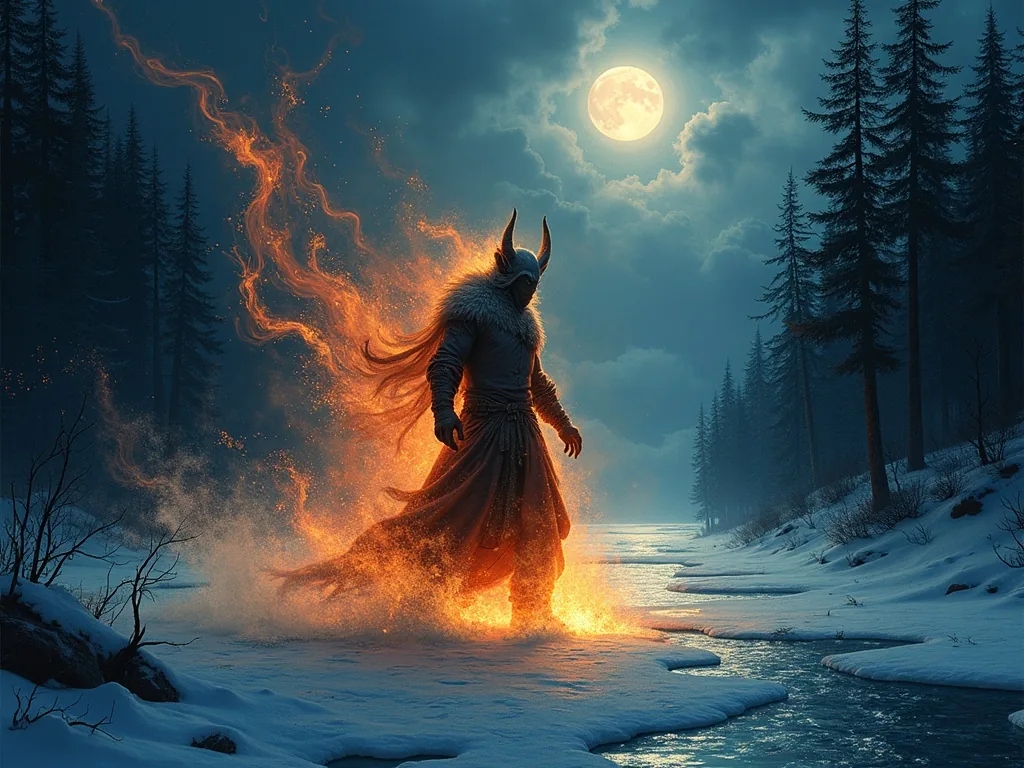
Loki's most celebrated attribute is his shapeshifting ability. He transforms into a mare to lure away the master-builder's stallion Svadilfari, an act that simultaneously saves Asgard from a ruinous bargain and results in Loki giving birth to the eight-legged horse Sleipnir, who becomes Odin's beloved steed. The episode captures everything essential about the trickster: the solution is scandalous, effective, and carries consequences that ripple far beyond the original problem.
He also transforms into a salmon when fleeing the wrath of the gods after the death of Baldr, a fly to infiltrate the dwarven forge of Brokk and Sindri, and a seal during a confrontation with Heimdall at Singasteinn. Each transformation is purposeful, born not from whimsy but from a calculating mind working under pressure.
The Gifts He Brought to the Gods
Loki's schemes, while frequently self-serving, generated some of the most powerful treasures in Norse myth:
- Gungnir, the unerring spear of Odin, forged by the dwarves known as the Sons of Ivaldi.
- Skidbladnir, the magical ship that could sail any sea and be folded like cloth.
- Mjolnir, Thor's hammer, hammered into existence by Brokk after Loki wagered his own head and then cheated by causing the handle to be made slightly too short.
- Draupnir, the gold ring that multiplied itself every nine nights, given to Odin.
- Gullinbursti, the golden boar ridden by Freyr.
These gifts were not given from generosity. They arose from bets, crises, and desperate improvisations. Yet without Loki's disruptive energy, the gods would have been considerably less armed and considerably less magnificent.
The Bonds with the Aesir: Blood-Brother and Corruptor
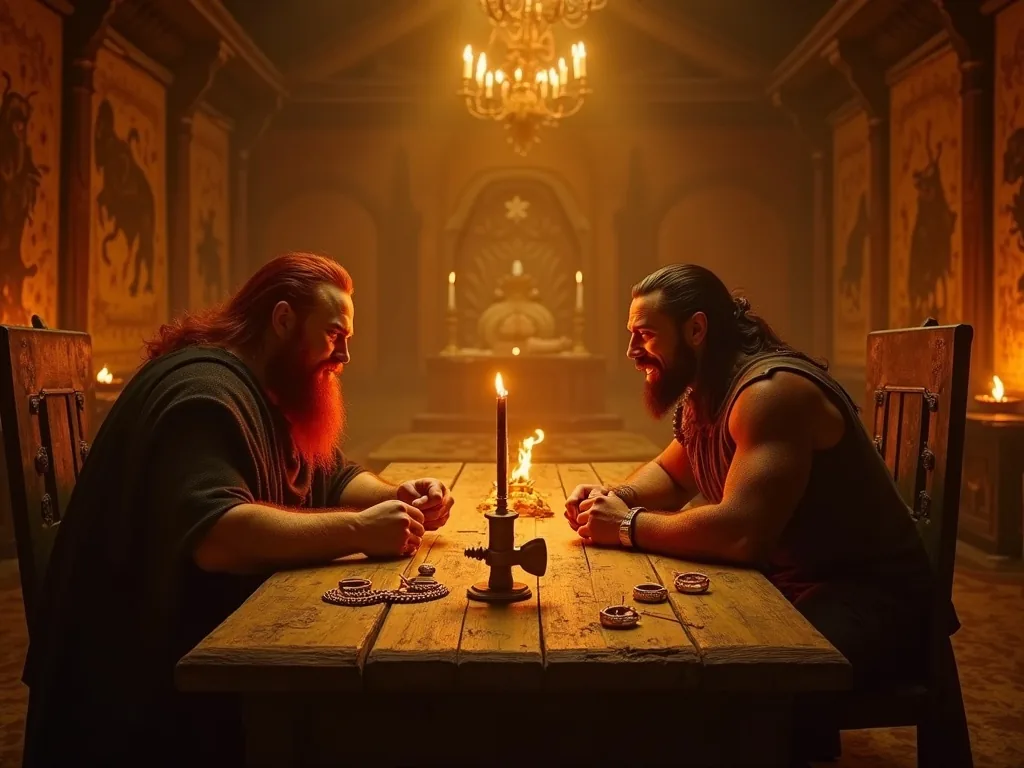
Loki and Odin share a blood-brotherhood, an ancient and sacred bond alluded to in the Lokasenna, one of the poems preserved in the Poetic Edda. Odin swore that he would never drink ale unless Loki were served beside him. This kinship is no mere narrative convenience; it reflects a deep mythological truth. The Allfather, himself a god of wisdom, magic, and cunning, recognized in Loki a mirror of his own restless, boundary-crossing nature.
With Thor, the relationship is warmer and more physical, a partnership of brawn and wit. In the Thrymskvida, Loki accompanies Thor (disguised as a bride) to Jotunheim to recover Mjolnir from the giant Thrym. The episode is broadly comic, yet the underlying logic is precise: Thor's strength is useless without Loki's clever scheme to place them in the right position. One cannot succeed without the other.
The Children of Loki
Loki fathered children by two partners, and the divergence between those offspring encapsulates his double nature:
By the giantess Angrboda ("she who brings grief"), Loki sired three beings of cosmic significance:
- Fenrir, the great wolf destined to swallow Odin at Ragnarok.
- Jormungandr, the Midgard Serpent encircling the world, fated to kill Thor.
- Hel, the ruler of the realm of the dead, half living and half corpse.
By his wife Sigyn, a loyal Aesir goddess, Loki had two sons: Narfi (sometimes Nari) and Vali. Their fate after the death of Baldr would become part of Loki's own punishment, a wound that courses through the mythology like a cold current.
The Death of Baldr and the Point of No Return
The killing of Baldr, the beloved and radiant son of Odin and Frigg, stands as the pivot point of Norse mythology. Every source, from Snorri Sturluson's Prose Edda to the Voluspa, agrees that Loki bears responsibility for this act, though the exact texture of his motivation differs across tellings.
Frigg had extracted oaths from every creature, plant, and object in existence never to harm Baldr. Every substance had sworn except the mistletoe, which Frigg had considered too young and harmless to bother. Loki discovered this omission, fashioned a dart of mistletoe, and guided the blind god Hodr's hand so that the dart struck Baldr dead.
The gods' grief was total. Hermod rode to Hel to beg for Baldr's return, and Hel agreed on one condition: every being in the world must weep for him. All did, save one. A giantess named Thokk, almost certainly Loki in disguise, refused:
"Baldr gave me no gladness in his birth or death. Let Hel keep what she has."
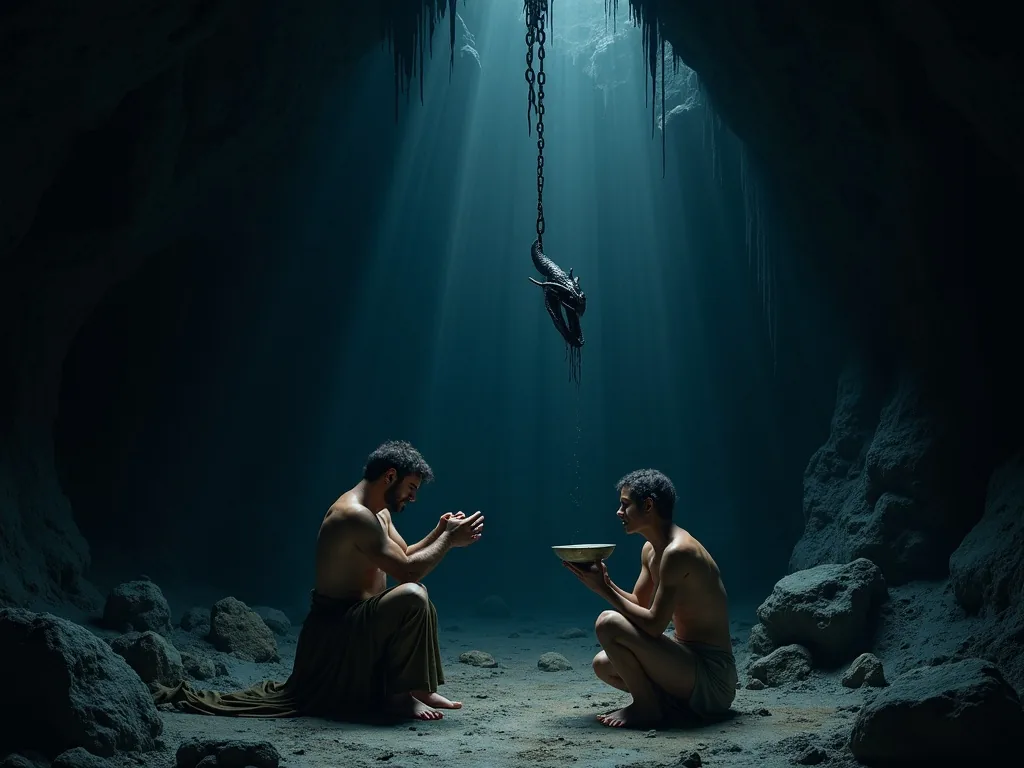
This single act of refusal sealed Baldr's fate until after Ragnarok. It also sealed Loki's. The gods captured him, bound him beneath the earth with the entrails of his own son Narfi, and placed a serpent above his face so that its venom dripped onto his brow. His wife Sigyn holds a bowl to catch the poison, but when she turns to empty it, the drops fall and Loki's writhing causes the earthquakes that shake the world.
Loki at Ragnarok: The Fire That Ends an Age
The Norse apocalypse, Ragnarok, is not simply a battle. It is the fulfillment of a cosmic logic that Loki himself set in motion. The Voluspa and the Prose Edda describe how, when the final age arrives, Loki breaks free of his bonds. He becomes the helmsman of Naglfar, the ship made from the fingernails and toenails of the dead, sailing from the north with a crew of giants to wage war against the gods.
At Ragnarok, Loki and Heimdall, who were old adversaries and had fought before in the form of seals over the necklace Brisingamen, meet in single combat. Both kill each other. The trickster's story ends not with a sneer or a scheme but in a mutual death that has the weight of inevitability, two opposing principles annihilating each other at the moment the world dissolves.
This apocalyptic role complicates any simple reading of Loki as a villain. He does not destroy the world out of pure malice. He is the mechanism by which a cosmos that had grown too rigid, too complacent, too dependent on a false peace was finally broken open so that a new world, green and renewed, could rise from the sea.
The Question of Loki's Cult and Historical Worship
Scholars have long debated whether Loki was ever the object of genuine religious worship among the Norse and Germanic peoples. Unlike Odin, Thor, or Freyr, there are no place names in Scandinavia that can be reliably traced to Loki's name. No temples are recorded. No sacrificial rites are attributed to him in the saga literature or in the accounts of medieval chroniclers.
Some researchers, notably the folklorist Hilda Ellis Davidson, have suggested that Loki may be more of a literary and cosmological figure than a cult deity proper: a narrative necessity rather than a god petitioned for aid. Others, drawing on comparative Indo-European mythology, align him with fire spirits or with trickster figures common across world traditions, suggesting a deeper and more ancient substrate of belief.
What can be said with confidence is that Loki was taken seriously. The myths that preserve him are not comic relief. They are cosmological documents, preserving in dramatic form the ancient Norse understanding that order cannot exist without disruption, and that the gods themselves depend on a force they can neither fully control nor safely discard.
Loki Across Centuries: From the Eddas to Modern Imagination
The Eddic poems and Snorri's Prose Edda, compiled in Iceland in the thirteenth century, are the primary sources for Loki's mythology. But his influence did not end there. In Scandinavian folk tradition, he was associated with fire, with the flickering and unreliable nature of flame. Some regional traditions linked him to spiders, to the aurora borealis, and to the knots one finds in fishing nets.
In the modern era, Loki has become one of the most recognized figures from any ancient mythology. His ambiguity, his wit, his genuine suffering, and his ultimate refusal to be contained have made him a touchstone for explorations of identity, queerness, moral complexity, and resistance to authority. He shapeshifts not only in myth but across centuries of interpretation, each era finding in him a reflection of its own anxieties and aspirations.
The Enduring Fire of the In-Between God
Loki the trickster endures because he refuses resolution. He cannot be neatly filed under good or evil, god or monster, friend or enemy. He is the figure who stands at every threshold and reminds those who would cross it that passage always carries a cost. He is the voice that asks, when divine order is taken for granted, whether that order truly serves everyone it claims to protect.
The Norse worldview was not naive about chaos. It did not pretend that fire only warms, or that cleverness is always kind. It built Loki into the architecture of the cosmos precisely because the cosmos required him: a reminder that creation and catastrophe share the same restless, bright-eyed face.
Free 25-page sample
Want the whole story?
Take the first 25 pages free. If it pulls you in, the full edition is yours as an instant PDF download, with a paperback on Amazon for selected titles.
Norse
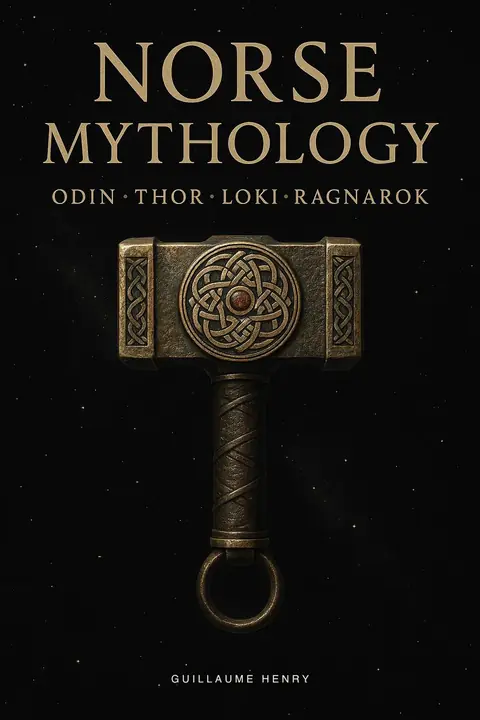
The Norse Mythology Book: Odin, Thor, Loki, Ragnarok and the Sagas of the Vikings
Odin, Thor, Loki, Ragnarok and the Sagas of the Vikings
The complete guide to Norse mythology drawn from the Eddas, the sagas, and the scholarship of those who read the source texts. Every god, every world, every myth.
More from Norse
All articles
Norse
The Prose Edda and Poetic Edda: Primary Sources of Norse Myth
The Prose Edda and Poetic Edda are the two great written pillars of Norse mythology, preserved in medieval Iceland centuries after the gods had stopped receiving sacrifices. Without them, Odin, Yggdrasil, and Ragnarok would be shadows.
Norse
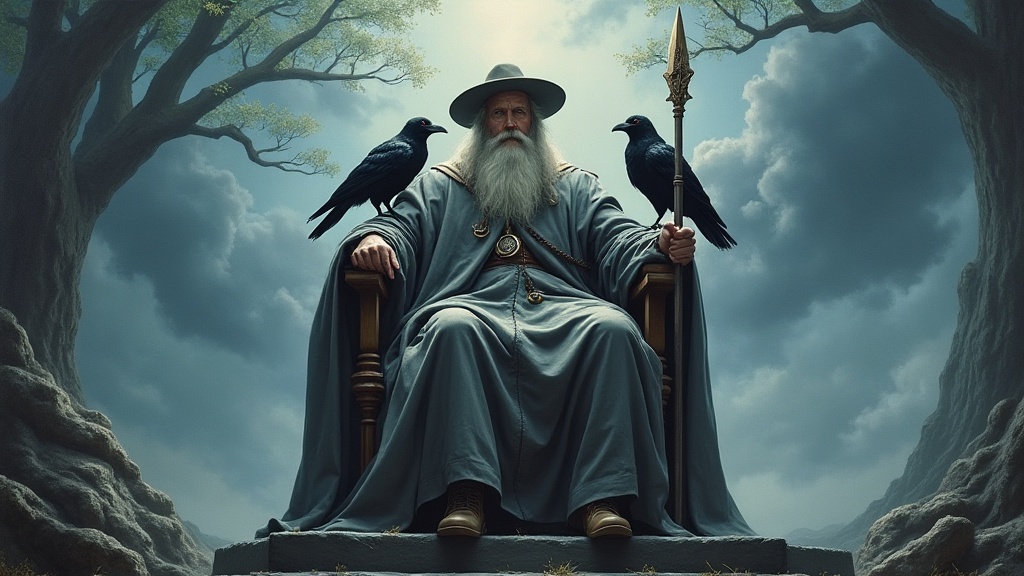
Odin: Allfather of Asgard
Odin stands at the center of Norse cosmology as ruler, wanderer, and keeper of forbidden wisdom. His contradictions make him the most haunting deity in the Germanic pantheon.
Norse
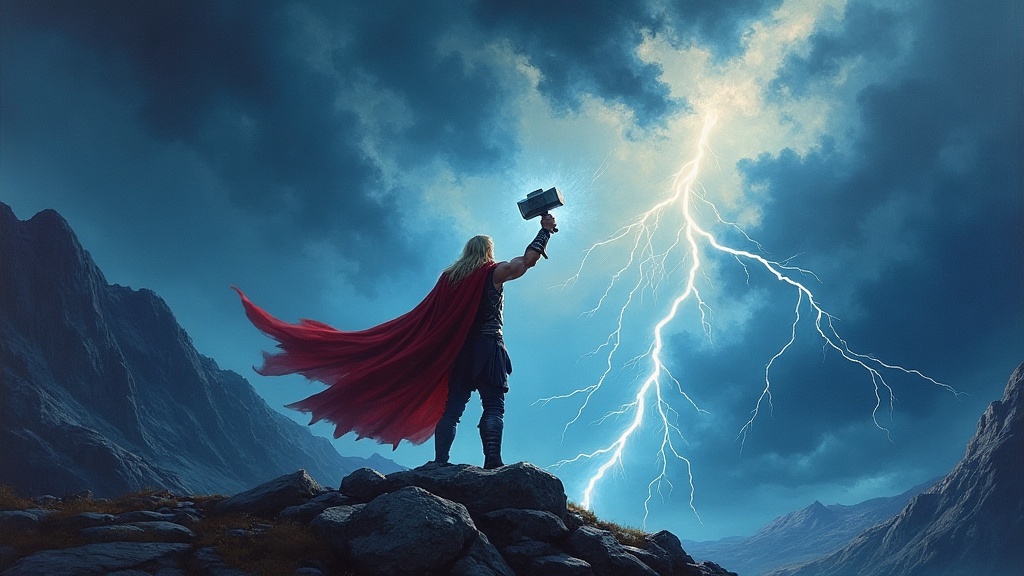
Mjolnir: The Sacred Symbol of Thor's Hammer
Mjolnir, the hammer of Thor, is one of the most potent symbols in Norse mythology, a weapon of divine thunder, a ward against chaos, and a mark of sacred covenant worn by Vikings for centuries.
Norse
Yggdrasil the World Tree: Axis of the Norse Cosmos
Yggdrasil the World Tree stands at the center of Norse cosmology, binding nine worlds in its roots and branches. Explore the myths, creatures, and sacred meanings woven into its eternal bark.