
At.óow: Sacred Clan Treasures and Regalia of the Tlingit
At.óow are the living sacred possessions of Tlingit clans: crests, songs, names, and regalia that carry the weight of ancestral history. They are not owned; they are custodied, worn, and defended across generations.
Contents
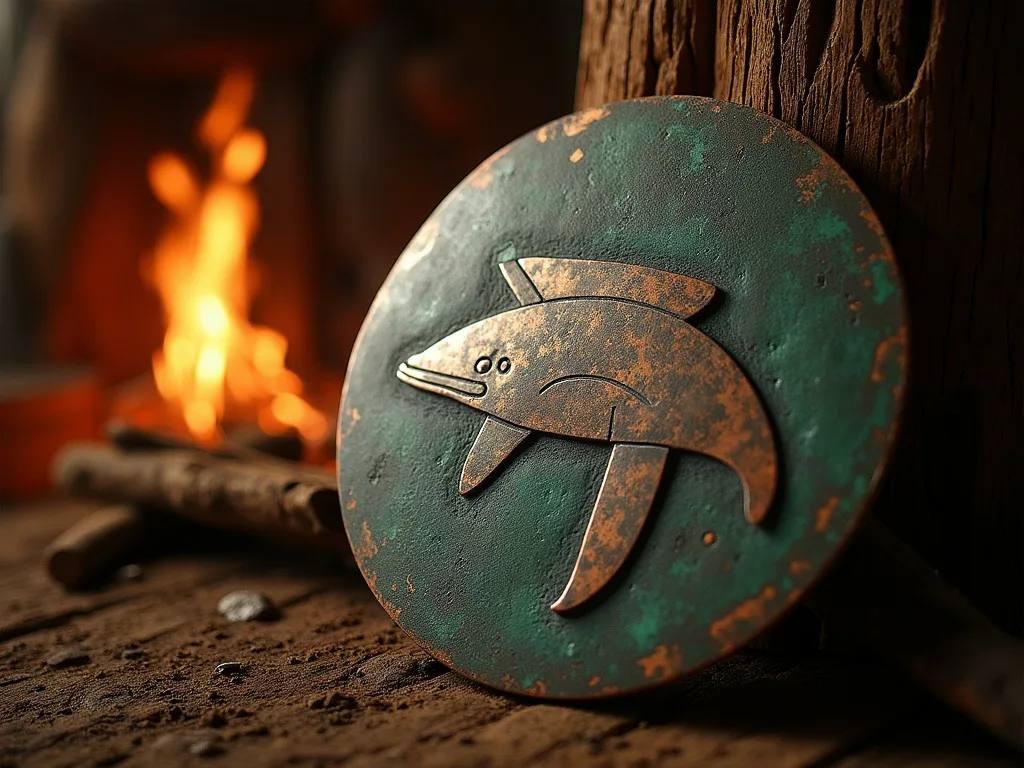
A copper shield trembles in firelight inside a clan house. The shaman who carries it does not grip it casually. He holds it the way you hold a verdict. Every face carved into its surface is a relative, a debt, a story that must not be forgotten. To drop it would be more than carelessness. It would be erasure.
This is the atmosphere in which At.óow: Sacred Clan Treasures and Regalia must be understood. Not as art objects arranged on museum shelves, but as compressed archives of Tlingit identity, each piece carrying the specific weight of a clan's accumulated experience with the world. The Tlingit people of the Pacific Northwest Coast, primarily in what is now Southeast Alaska and British Columbia, built a civilisation on memory. At.óow (pronounced roughly ah-TOO) are the material and immaterial instruments of that memory: crests, masks, blankets, songs, names, and rights that pass from generation to generation through the matrilineal moieties and clans that structure Tlingit society.
To call them "treasures" is accurate but incomplete. A treasure can be locked away. At.óow cannot. Their entire power depends on being witnessed, activated, and mourned over in public. They live in ceremony or they die in silence.
What At.óow Actually Are: Objects, Songs, and Rights
The Tlingit word at.óow translates most directly as "a purchased or owned thing," but the translation flattens the concept considerably. Scholars of Tlingit culture, including anthropologist Rosita Worl, have argued that at.óow encompass any entity, material or intangible, that has been obtained through a formal transaction of social cost: grief, labour, ceremony, or combat.
Physical at.óow include:
- Copper shields (tináa): large, T-shaped copper plates that accumulate value through ceremony and are sometimes ritually broken or thrown into the sea as acts of prestige
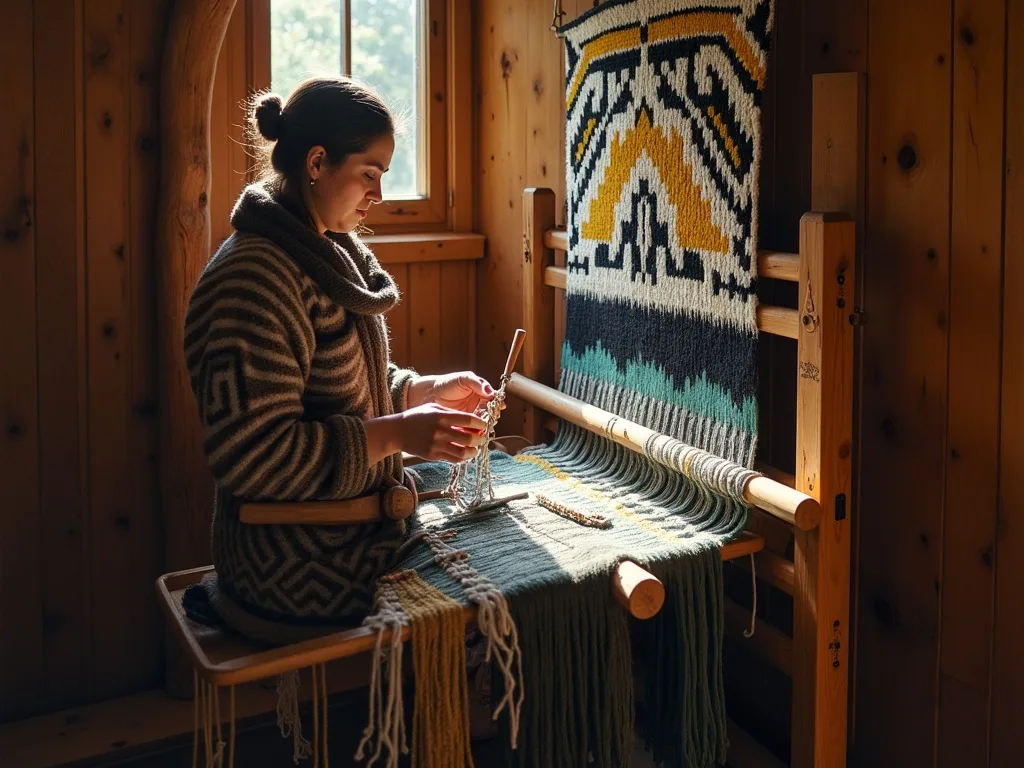
- Naaxein blankets (Chilkat blankets): woven from mountain goat wool and cedar bark, incorporating crest designs with geometric precision
- Raven's Tail robes: among the oldest regalia forms, featuring intricate black-and-white geometric patterns
- Clan hats: carved wooden hats, sometimes surmounted by stacked rings (at.óow k'é) that record the number of potlatches at which a hat has been ceremonially displayed
- Carved house posts and frontal poles: though embedded in architecture, they function as public declarations of at.óow rights
- Masks and headdresses: worn by specific titled individuals, never by anyone outside the authorised lineage
Intangible at.óow are equally binding. A song belongs to a clan. A name belongs to a clan. The right to perform a specific dance, to recount a specific ancestral narrative, or to use a specific crest image belongs to a clan. Trespassing on another clan's intangible at.óow is a serious offence, historically requiring formal restitution at a potlatch.
The Moiety System and How At.óow Moves Through It
Tlingit society is divided into two primary moieties: Raven (Yéil) and Eagle (also called Wolf, Ch'áak' or Gooch, depending on region). Every Tlingit person belongs to one moiety through their mother's line. Below the moiety level sit the clans (naa), and below the clans sit the house groups (hít), each with its own set of at.óow.
The protocol surrounding at.óow transfers is inseparable from the moiety system. At a memorial potlatch, the host clan (say, a Raven clan grieving a dead chief) pays the opposite moiety, Eagle clans, to witness, validate, and confirm the transfer or continued custody of at.óow. The Eagle witnesses are not passive guests. They are judges. Their presence transforms a private family matter into a legal public record.
This means at.óow can never be understood outside the social machinery they activate. A copper shield displayed without the correct witnesses present is just copper. The same shield displayed before the correct assembly, with songs sung and names spoken aloud, becomes a legally confirmed ancestral claim.
The scholar Nora Marks Dauenhauer, one of the foremost authorities on Tlingit oral literature, described this dynamic in her collaborative work with her husband Richard Dauenhauer: the potlatch is the "university" of Tlingit civilisation, the place where knowledge, ownership, and history are simultaneously taught, tested, and confirmed.
The Origins of At.óow: How Crests Are Acquired
No clan simply declares a crest. Every at.óow traces back to a specific ancestral encounter, usually with a non-human power or a transformative experience. The narrative that validates the crest is itself at.óow: it belongs to the clan and may not be told fully by outsiders.
Several acquisition patterns recur across recorded Tlingit oral literature:
Supernatural encounters: An ancestor survives a meeting with a creature or force that would have killed anyone without extraordinary protection. A Tlingit hunter trapped under ice by a killer whale (Kéet), for instance, might be recognised and released by the whale; if he returns and can prove what happened, his clan acquires the right to wear the Killer Whale crest. The creature's recognition of the ancestor becomes the legal basis for the crest.
Grieving and memorial: At.óow are frequently created to memorialise catastrophic loss. After the deaths of important clan members, surviving relatives commission new regalia that incorporate the story of that loss. The grief is literally woven or carved into the object. Wearing it later is not mourning; it is testimony.
Warfare and contest: Copper shields captured in raids or awarded after conflict carry the history of that conflict into the present. The tináa accumulates value precisely because of the events it has survived.
Shamanic acquisition: Tlingit ixt' (shamans) sometimes received crests directly from yéik (spirit helpers) during periods of initiation and visionary experience. These crests belonged to the shaman's clan and remained potent long after the shaman's death.
What makes these origin stories more than mythology is that they function as legal charters. When a clan displays a crest at a potlatch, it simultaneously narrates why it has the right to that crest. The story and the object validate each other. Remove the story and the object loses its authority; suppress the object and the story loses its anchor.
Copper: The Metal That Thinks
Among physical at.óow, the tináa deserves its own consideration. Copper shields of the Northwest Coast, shared in various forms with neighbouring peoples such as the Haida and Tsimshian, are among the most materially and conceptually complex objects in Indigenous North American culture.
A copper begins as raw material, relatively unremarkable. Its value accretes through ceremony. Each time a copper is displayed at a potlatch and gifts are distributed in its name, its ranked value increases. Tlingit accounts recorded by ethnographer John R. Swanton in the early twentieth century describe coppers worth the equivalent of hundreds of blankets, each blanket representing a unit of social obligation. The copper does not just store value; it generates it.
The ritual destruction of a copper is one of the most dramatic acts in Tlingit ceremonial life. Breaking a copper, or throwing pieces into the sea, demonstrates that a chief's prestige is so substantial that he can afford to destroy what lesser rivals could never afford to own. The broken copper does not disappear. Fragments sometimes become at.óow in their own right, given to rival chiefs as challenges or reconciliatory gifts.
The Haida people of Haida Gwaii, neighbours and sometimes rivals of the Tlingit, maintained closely parallel copper traditions, underlining how the northern Pacific Coast cultures shared a ceremonial grammar even as they spoke distinct languages and maintained distinct clan systems.
Naaxein: The Blanket That Maps the Cosmos
The Chilkat blanket, known in Tlingit as naaxein, is the most internationally recognised form of Tlingit at.óow. Major museums from New York to Berlin hold examples. But to see one behind glass is to see a body without breath.
Chilkat weaving technique developed along the northern Northwest Coast, with the Chilkat Tlingit of the Klukwan area becoming the principal practitioners by the nineteenth century. The looms produce fabric of extraordinary precision: weavers work from a pattern board painted by a male artist and execute the curvilinear, split-representation design in three to five colours using mountain goat wool and shredded cedar bark. A single blanket can take a year to complete.
The design is not decorative. Every element is the face, joint, or body part of a crest creature seen simultaneously from multiple perspectives. The convention, which anthropologist Franz Boas called "split representation," depicts a being as if its body has been split down the spine and both halves laid flat. The viewer who knows the visual grammar reads the creature's identity, the ancestor encounter it commemorates, and the clan's spatial position in the social universe.
At a potlatch, the naaxein is worn, danced, and witnessed. Each display is a public assertion: this clan, this house, this lineage holds this crest. The blanket does not need to speak. It argues.
Potlatch: The Court Where At.óow Are Confirmed
No account of at.óow is complete without the koo.éex' (potlatch), the ceremonial feast at which Tlingit clans validate their possessions before witnesses. The potlatch has been mischaracterised repeatedly in popular sources as an act of conspicuous destruction or a simple gift-giving feast. It is neither, or rather it is both and much more.
A memorial potlatch (koo.éex') is staged by the host clan to honour the dead, to formally transfer names and positions from the deceased to living successors, and to confirm the continued authority of all at.óow connected to the dead person. The host clan feeds, entertains, and pays the witnesses, who are always members of the opposite moiety. In return, the witnesses confirm, before the entire assembled community, that what they saw was legitimate.
The speeches delivered at potlatches are themselves at.óow. They cannot be given by just anyone. A clan's orator must know the exact genealogical and narrative material that justifies each claim being made that day. An error is not simply embarrassing; it is a legal vulnerability. A rival clan can, and historically did, rise and formally contest a misrepresented at.óow in front of the assembly.
The Canadian government banned the potlatch from 1885 to 1951 under the Indian Act, a suppression designed explicitly to destroy the social infrastructure of Northwest Coast peoples. The at.óow survived, hidden in private homes, carried in memory, whispered in oral literature. When the ban lifted, the ceremonies resumed. The continuity was not incidental. It was the point.
At.óow and the Politics of Identity
For contemporary Tlingit people, at.óow are inseparable from questions of legal identity, land rights, and cultural sovereignty. The crests on a clan's regalia are, in effect, that clan's oldest title deeds: physical and narrative proof of a relationship with specific territories, waterways, and resources going back to the time before European contact.
This is not a metaphor. In Tlingit legal tradition, a clan that has consistently displayed its at.óow related to a particular territory, over many generations and many witnessed potlatches, has a claim to that territory that is as binding as any document produced under Euro-American law. The oral record is the record.
Repatriation of at.óow from museums has become one of the most significant legal and cultural battlegrounds in contemporary Indigenous rights. Objects collected by ethnographers, purchased under conditions of economic desperation, or simply taken without consent during the late nineteenth and early twentieth centuries now sit in collections across the United States and Europe. Tlingit clans have argued, with increasing legal success under the Native American Graves Protection and Repatriation Act (NAGPRA), that these objects retain their spiritual and legal function and cannot be displayed or studied without consent.
The Whale House collection of Klukwan, which includes four monumental house posts and the famous Raven screen, became a landmark case in the 1990s when the Ganaxteidi clan successfully prevented the sale of the pieces to outside buyers. The clan did not simply want to retain art. It was defending its legal personality.
Cross-Cultural Parallels: Sacred Regalia in Other Traditions
The concept encoded in at.óow is not unique to the Tlingit, though its specific form is. Across the world, cultures have developed systems in which objects carry ancestral legal and spiritual weight that exceeds their physical substance.
The Māori taonga of New Zealand occupies a structurally similar position: sacred treasures that carry mana (prestige and spiritual power) from ancestors to descendants, whose display at formal gatherings confirms status and rights. The Hawaiian feather cloaks (ʻahu ʻula) worn only by high-ranking chiefs operated through a similar logic of exclusive custodianship and ceremonial activation.
In the Hindu tradition, the murtis housed in certain ancient temples are not representations of deities but actual presences, dressed, fed, and treated as living entities whose continued ritual maintenance sustains cosmic order. The parallel to at.óow is not formal but functional: the object requires activation, witnesses, and correct handling, or its power contracts.
Norse mythology offers a different angle: objects like Mjolnir carry identity and authority, functioning as proof of divine lineage. Thor's hammer cannot be wielded effectively by someone outside the correct ritual and genealogical context, much as a Tlingit copper cannot be displayed legitimately by someone outside the authorised clan.
The comparison does not flatten differences. What makes at.óow singular is the legal precision of the system that surrounds them: the witnessed potlatch, the formal contestation of false claims, the intergenerational oral record maintained with the rigour of a court archive.
Tlingit Art as Argument: Reading Crest Designs
To read a Tlingit crest design is to read a legal brief. The visual conventions of the northern Northwest Coast style, characterised by ovoid forms, U-forms, and split representation, are not stylistic preferences. They are a grammar.
An ovoid, that flattened oval that appears as joints, eyes, and cavities throughout Tlingit carving, marks a structural point in the body of the crest creature. U-forms extend from joints and faces, indicating musculature and motion. The split-representation convention shows the creature's internal logic: not what it looks like from the outside but how it is organised inside, which is to say, how its power is distributed.
An artist who paints a Raven crest incorrectly does not merely make an aesthetic error. The resulting image is an incorrect representation of an at.óow, which, if publicly displayed, becomes a legal misrepresentation. The conventions enforce accuracy, and accuracy protects ownership.
The late master carver Nathan Jackson, one of the most celebrated Tlingit artists of the twentieth century, consistently described his work in these terms: the carving was not self-expression but custodianship. The designs he produced for specific clans were their at.óow, and his role was to execute them correctly, not to improvise.
What Happens When At.óow Are Separated From Their Clans
When at.óow leave their ceremonial context, something specific and measurable happens. The object continues to exist physically. The ancestral knowledge attached to it begins to leak.
Elders who have spoken publicly about the repatriation of at.óow describe this in strikingly consistent terms: the object is incomplete without its story, but the story also begins to fray when the object is gone. The physical anchor of the regalia keeps the oral tradition sharp. Without the crest to display at a potlatch, the narrative that explains the crest becomes harder to justify maintaining in memory. Within two or three generations, without ceremonial use, portions of the at.óow tradition can become inaccessible to the very clan that holds it.
This is the deeper argument behind repatriation. Not sentiment, not cultural politics in the abstract, but a specific epistemological claim: the object and the knowledge are a single system, and the system degrades when they are separated. A Tlingit copper in a museum drawer is not preserved. It is undergoing a slow, documentable kind of loss.
Aztec sacred regalia suffered a related fate: the xiuhuitzolli headdresses and feathered shields taken to Europe in the sixteenth century were separated so completely from their ceremonial context that the knowledge of how to read them had to be partially reconstructed from written sources centuries later.
Frequently Asked Questions About At.óow
Frequently asked questions
What is the difference between a crest and an at.óow?
A crest is one category of at.óow: a visual emblem, usually an animal or supernatural being, that a clan has the right to depict on regalia, poles, and painted surfaces. At.óow is the broader category that includes crests but also encompasses songs, names, dances, stories, and the right to perform specific ceremonial roles. All crests are at.óow, but not all at.óow are crests.
How does a Tlingit clan prove it owns a particular at.óow?
Proof is established through witnessed performance at potlatches. A clan that has consistently displayed a crest, had that display confirmed by witnesses from the opposite moiety over multiple generations, and maintained the oral narrative explaining the crest's origin holds a claim that Tlingit legal tradition recognises as valid. Physical objects serve as supporting evidence, but the witnessed ceremony is the primary legal act.
Can at.óow be bought or sold in the Western legal sense?
No. At.óow can be formally transferred between clans through ceremony, but the transaction looks nothing like a commercial sale. The transferring clan loses neither its dignity nor its connection to the history behind the object; it transfers custodianship under specific conditions, usually at a potlatch with full witnessing. Objects that were sold to collectors during the nineteenth and early twentieth centuries are, from the Tlingit perspective, stolen rather than purchased, because the social and ceremonial preconditions for a legitimate transfer were not met.
What is the role of the opposite moiety in at.óow ceremonies?
The opposite moiety serves as the legal witness class. In Tlingit practice, a Raven clan validates its at.óow before Eagle witnesses, and vice versa. The witnesses are compensated through gifts and feasting, and in exchange they provide their public confirmation that what they saw was correct and legitimate. Their testimony is the mechanism by which private family history becomes public, contested, and legally binding social fact.
Are Chilkat blankets the most important form of at.óow?
Chilkat blankets, or naaxein, are among the most visible and internationally recognised forms of at.óow, but importance within Tlingit culture is not measured by visibility. A song can carry more legal and spiritual weight than a blanket. A name bestowed at a memorial potlatch may be the most consequential at.óow transferred that day. The hierarchy of importance depends entirely on context, the ceremony, the clan, and the specific history being activated.
How has colonialism affected at.óow traditions?
The Canadian potlatch ban (1885-1951) and similar pressures in Alaska disrupted the ceremonial transmission of at.óow for several generations. Objects were confiscated, sold, or hidden. Ceremonial knowledge was suppressed in residential school systems. Despite this, Tlingit communities maintained core traditions, and the post-ban revival has been sustained and ongoing. NAGPRA (1990) created a legal mechanism for the return of objects taken from Indigenous communities, and several major repatriations of Tlingit at.óow have been completed since the 1990s.
At.óow in the Twenty-First Century: Living Law, Not Museum Artifact
The arc of at.óow in the present does not bend toward disappearance. It bends toward assertion.
Across Southeast Alaska, Tlingit clans are staging potlatches with renewed energy and precision. Young weavers are learning the naaxein techniques that the potlatch ban generation could not teach openly. Carvers trained by masters like Nathan Jackson and the late Bill Holm are producing regalia whose designs are verified against clan records before the first cut. The Sealaska Heritage Institute in Juneau has built a programme specifically dedicated to at.óow documentation, working with elders to record the oral histories attached to specific objects before those elders are gone.
The legal dimension is sharpening too. As Indigenous land rights cases in Alaska and British Columbia proceed through courts and negotiation, the at.óow tradition provides a form of historical evidence that has no equivalent in the documentary record. A clan that can trace its continuous ceremonial relationship with a salmon river, confirmed at potlatches over two centuries, has a standing that a survey map from 1880 simply cannot override.
What the at.óow tradition ultimately demonstrates is that the Tlingit built a civilisation whose archives were living bodies, performed ceremonies, and witnessed claims. Every copper, every blanket, every name spoken at a koo.éex' is a sentence in a legal and historical document that has been under continuous revision and defence for longer than most written archives have existed. The objects are not relics. They are current.
Free 25-page sample
Want the whole story?
Take the first 25 pages free. If it pulls you in, the full edition is yours as an instant PDF download, with a paperback on Amazon for selected titles.

Mythology
The World Mythology Book: The Gods, Heroes and Myths of Every Culture
The Gods, Heroes and Myths of Every Culture, in One Volume
The whole of world mythology in a single volume: Greek, Norse, Egyptian, Japanese, Hindu, Celtic, Slavic, Mesoamerican and African myths gathered side by side, each drawn from the primary sources.