
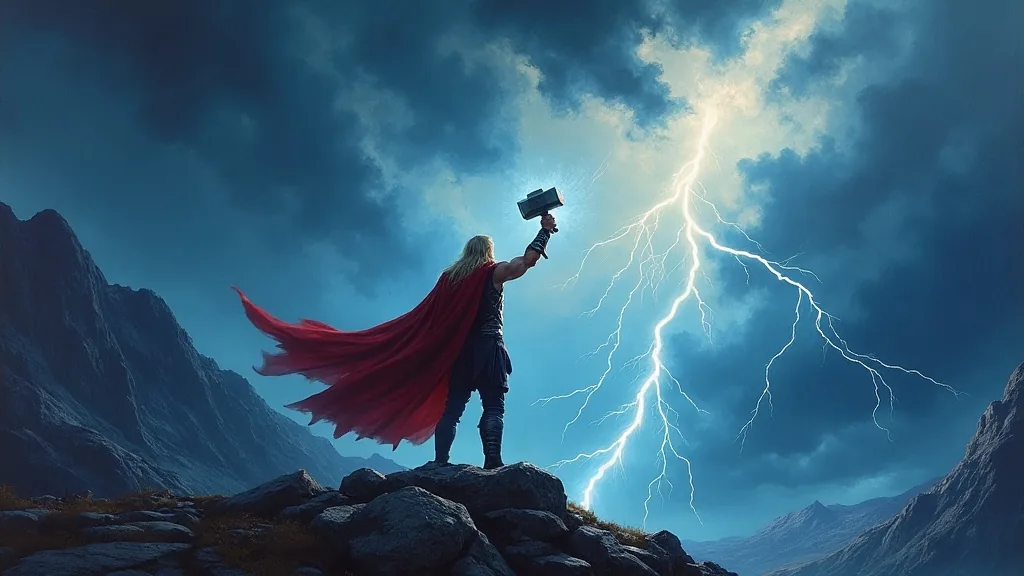
Mjolnir: The Sacred Symbol of Thor's Hammer
Mjolnir, the hammer of Thor, is one of the most potent symbols in Norse mythology, a weapon of divine thunder, a ward against chaos, and a mark of sacred covenant worn by Vikings for centuries.
Contents
The Hammer at the Heart of Norse Belief
Few objects in the entire corpus of world mythology carry as much symbolic weight as Mjolnir, the hammer of Thor. It is simultaneously a weapon of terrifying destruction, a tool of cosmic order, a blessing invoked at births and burials, and a pendant worn close to the skin by warriors, farmers, and seafarers alike. To understand Mjolnir is to step into the theological and emotional center of Norse religious life, a world where the boundary between the sacred and the everyday was deliberately thin.
The name itself is ancient. Linguists trace "Mjolnir" (Old Norse: Mjǫlnir) to a Proto-Germanic root connected to words meaning "to grind" or "to crush," and also to words for "lightning." Both meanings are intentional. The hammer grinds giants into the earth and splits the sky with thunder. It is not a symbol that invites ambiguity.
The Mythological Origins of Mjolnir
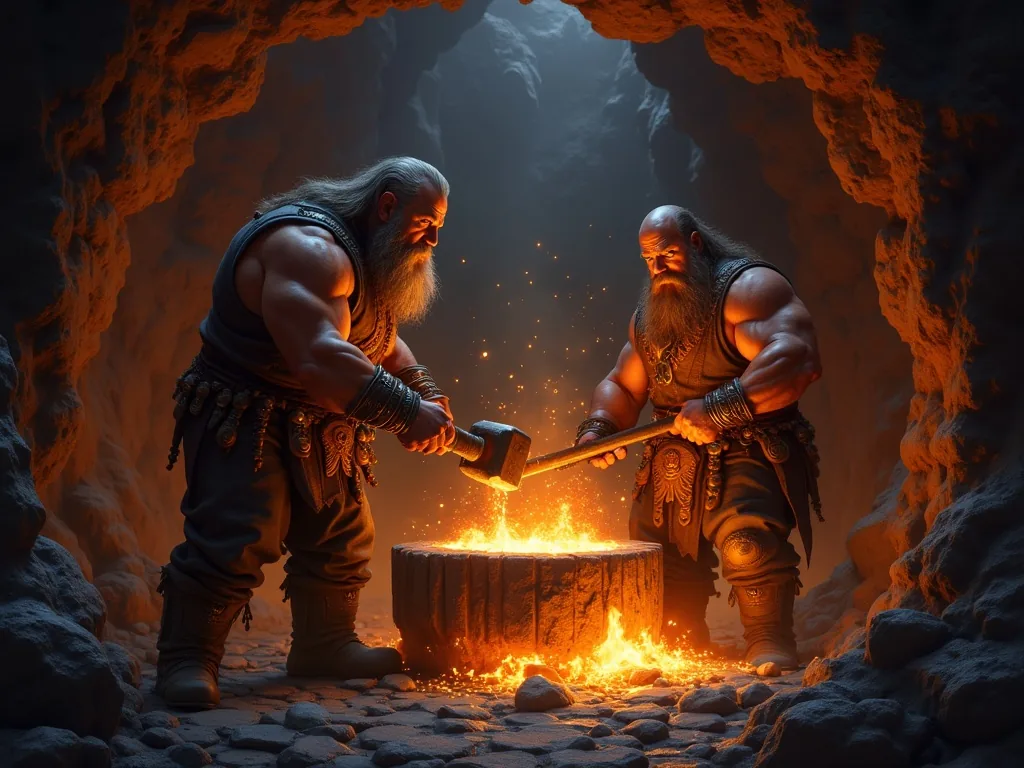
The story of Mjolnir's creation is told most fully in the Skáldskaparmál section of Snorri Sturluson's Prose Edda, composed in thirteenth-century Iceland but drawing on much older oral traditions. The tale begins with mischief: the trickster god Loki cuts off the golden hair of Sif, Thor's wife, while she sleeps. Facing Thor's wrath, Loki travels to Svartalfheim, the realm of the dwarves, and commissions the sons of Ivaldi to craft replacement hair of real gold, along with two additional treasures for the Aesir gods.
Emboldened, Loki makes a wager with another pair of master craftsmen, the dwarven brothers Brokkr and Sindri (also called Eitri in some manuscripts). He bets his own head that they cannot forge three objects to match those of the sons of Ivaldi. Brokkr and Sindri accept. They produce the golden ring Draupnir, the boar Gullinbursti with bristles of shining gold, and finally begin work on the hammer.
During the forging, Loki transforms into a fly and bites Brokkr on the eyelid, trying to break his concentration at the bellows. The tactic partially succeeds. The handle of the hammer comes out shorter than intended. Yet the gods, assembled in judgment, declare Mjolnir the greatest treasure of all, because it alone can protect Asgard from the giants. Loki loses his wager, though he cleverly argues that the brothers may take his head but cannot touch his neck, making it physically impossible to collect the prize cleanly.
The short handle is more than a narrative detail. It explains why Thor must wear iron gauntlets (járngreipr) and use a belt of strength (Megingjörð) to wield the hammer properly. Even a divine weapon carries its imperfection forward through time.
Mjolnir as a Cosmic Weapon
Thor's primary role in Norse cosmology is the defense of both Asgard and Midgard (the human world) against the jötnar, the giants who represent entropy, chaos, and the forces that will eventually bring about Ragnarök. Mjolnir is the instrument of that defense, and its powers are described with remarkable consistency across the Prose Edda, the Poetic Edda, and skaldic verse.
The Weapon That Returns
Like a divine boomerang, Mjolnir always returns to Thor's hand after being thrown. This quality places it in a category of mythological weapons that are extensions of their owner's will, objects with a kind of sentient loyalty. The hammer does not merely obey; it belongs.
The Power of Resurrection
One of the most striking attributes of Mjolnir is its ability to restore life. In the myth of Thor's journey to the land of the giant Útgarða-Loki, Thor kills his goats to feed his hosts, then uses the hammer to resurrect them the following morning, provided no bones have been broken. This same power is referenced when the god Baldr's funeral pyre is consecrated: Thor holds Mjolnir over the pyre to hallow it, connecting the hammer directly to the passage between life and death.
The Hallowing Function
This ritual hallowing is perhaps the most underappreciated aspect of Mjolnir's symbolism. Across the sagas and Eddic texts, the hammer is used to bless, to sanctify, and to consecrate. It is raised over brides at weddings. It is placed on the thighs of newborns. It marks the boundary between the profane and the sacred in Norse ceremonial life, functioning much as holy water or incense might in other religious traditions.
The Pendant: Archaeology and Devotion
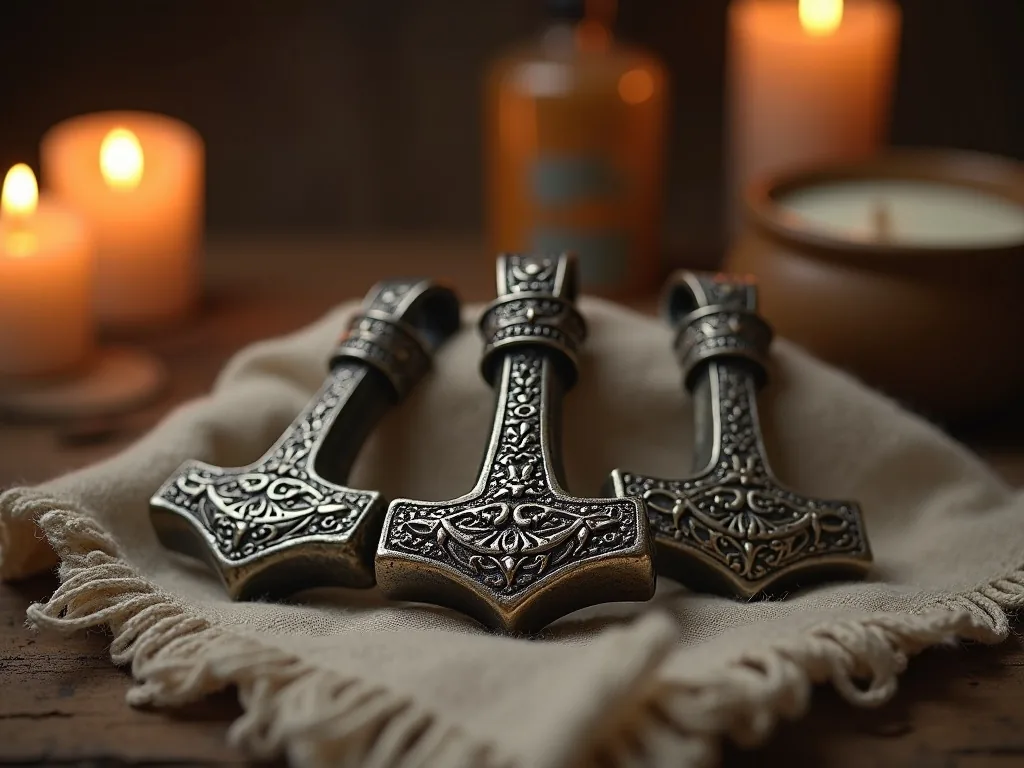
The mythological hammer and the physical amulet are inseparable in any honest discussion of Mjolnir's significance. Archaeological finds across Scandinavia, the British Isles, and the Norse diaspora have recovered more than one hundred hammer-shaped pendants dating primarily from the Viking Age (roughly 793 to 1066 CE). They appear in silver, bronze, iron, amber, and even whalebone.
The most famous single discovery is perhaps the Købelev hammer found on the Danish island of Lolland, remarkable because it bears a runic inscription reading hmar x is ("this is a hammer"), confirming that these pendants were understood by their wearers exactly as scholars had long theorized.
Several sites in Sweden, notably Aska in Hakenäs and various graves at Birka, have yielded hammer pendants alongside rich grave goods, suggesting their owners were people of status and piety. A grave at Thumby-Bienebek in Schleswig-Holstein contained a female burial with a Mjolnir pendant, reminding modern readers that devotion to Thor was not exclusive to warriors or men.
The pendants cluster in date and geography in ways that tell a social story. As Christianity spread through Scandinavia in the tenth and eleventh centuries, Mjolnir amulets appear to increase in number and geographic spread. Some scholars, including Neil Price in his landmark work The Children of Ash and Elm (2020), have argued that the hammer pendant became a deliberate counter-symbol to the Christian cross, a visible declaration of allegiance to the old gods during a period of profound religious tension. Intriguingly, a single mold found at Trendgården in Jutland was designed to cast both cross and hammer pendants simultaneously, suggesting that the craftsman, at least, was happy to serve customers of any faith.
Mjolnir in Eddic Narrative: Stolen and Recovered
The Þrymskviða ("Lay of Thrym"), one of the most vivid and darkly comic poems in the Poetic Edda, hinges entirely on the theft of Mjolnir. The giant Thrym steals the hammer and buries it eight leagues underground, then demands the goddess Freyja as his bride in exchange for its return. The gods, naturally, refuse to give Freyja, and Loki devises an alternative plan: Thor himself will disguise as a bride, veiled and dressed in women's clothing, and enter the giant's hall with Loki playing the role of handmaiden.
The poem is full of sharp comedy. Thor's appetite at the wedding feast, consuming an entire ox, eight salmon, and three barrels of mead, nearly gives the game away. Thrym notices his "bride's" eyes blazing with terrifying fire. Loki smoothly explains that the lady has not slept in eight days, so eager was she for this wedding.
When Mjolnir is finally brought out to consecrate the marriage (following the old custom), Thor seizes it, kills Thrym, destroys the entire assembly of giants, and returns to Asgard. The poem manages to be both a straightforward adventure myth and a meditation on the sacred function of the hammer: even in the hands of a giant, Mjolnir retains its ritual purpose, and it is precisely that ritual moment that Thor exploits to reclaim what is his.
The Symbol Across Time: From Runestones to the Modern World
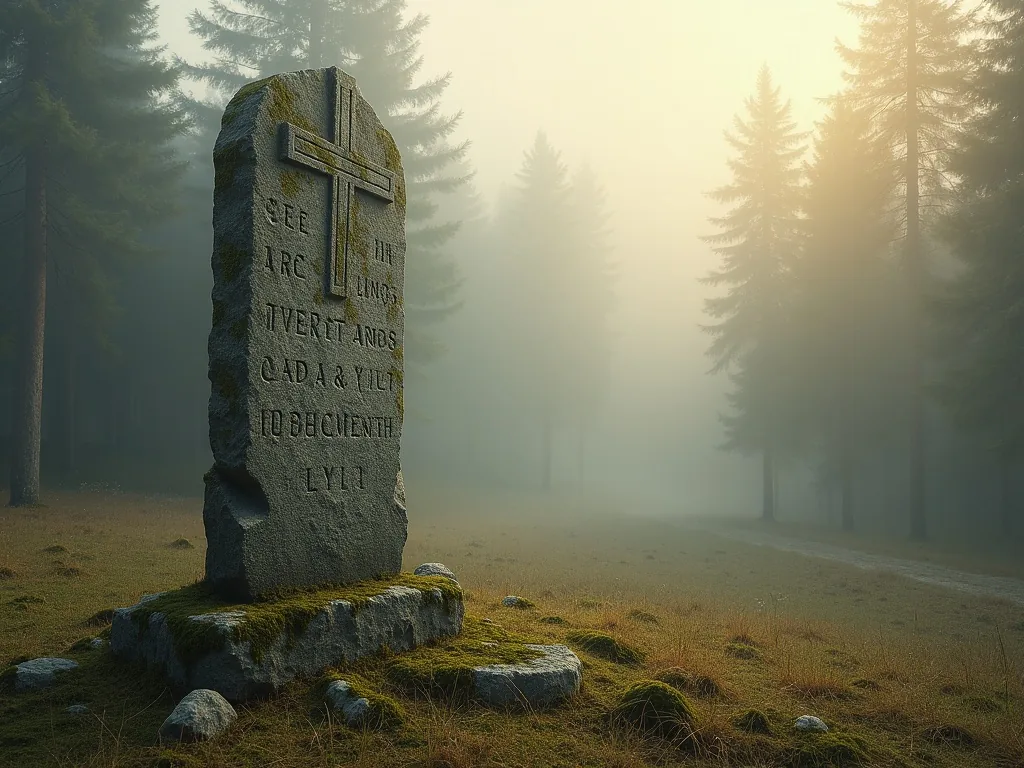
Runestones across Scandinavia invoke Mjolnir as a protective blessing for the deceased. The formula "Thor hallow these runes" (Þór vigi þessar rúnar) appears on several stones, and hammer symbols are carved at the edges of inscriptions as protective borders. The Stenquist stone in Sweden and various stones from the Danish region show the hammer not as decoration but as active spiritual protection, the equivalent of a benediction carved in stone.
The symbol's afterlife extends well past the Viking Age. In the nineteenth century, the Romantic nationalist movements of Scandinavia reclaimed Mjolnir as a cultural emblem, associating it with Nordic identity, strength, and ancestral pride. This reclamation was not without its later complications: twentieth-century fascist movements appropriated Norse symbols broadly, forcing a long and ongoing conversation about how ancient imagery is used and misused.
By the early twenty-first century, Mjolnir pendants had returned to widespread use among practitioners of Ásatrú and Heathenry, the modern reconstructionist faiths built around the Norse pantheon. For these communities, the hammer is a living religious symbol, not a historical curiosity or a cultural accessory. The Ásatrú Folk Assembly in the United States and the Ásatrúarfélagið in Iceland, the latter being a legally recognized religious organization, both treat Mjolnir with the same reverence that a cross holds in Christian communities.
The symbol has also entered global popular culture through comics, films, and video games, most visibly through Marvel's Thor franchise. While these portrayals dramatize and freely reinvent the mythology, they have introduced millions of readers and viewers to the basic outlines of the Norse cosmological world, creating a renewed appetite for the genuine, complex, and deeply beautiful traditions behind the hammer.
The Deeper Geometry of the Symbol
What makes Mjolnir endure as a symbol is not simply its association with power or storm. It is the particular geometry of meanings it holds together without collapsing.
It is a weapon and a blessing. It kills giants and consecrates marriages. It belongs to the roughest of the gods (Thor is never described as graceful or subtle) and yet performs the most tender ritual functions. It was forged imperfectly and is nonetheless the greatest treasure in all the nine worlds. It is lost and recovered. It is profaned and reclaimed.
In this sense, Mjolnir functions as a mythological paradox made concrete, the idea that the most sacred things are also the most dangerous, that protection and destruction are the same force directed by different intentions, and that even divine instruments carry the marks of their making. These are not comfortable ideas, but they are honest ones, and they explain why a short-handled hammer, forged by dwarves from spite and wager and a fly's bite, has outlasted so many smoother, simpler symbols.
Mjolnir and the Cosmology of Ordered Chaos
The Norse cosmos is not one where good triumphs permanently over evil. Ragnarök, the twilight of the gods, is not prevented but merely delayed, and Thor himself is fated to die battling the World Serpent Jörmungandr, taking nine steps before falling. Mjolnir does not offer salvation in the Christian sense. It offers something older and arguably more honest: the promise of a vigorous defense, the dignity of resistance, and the knowledge that the forces of order will fight for every remaining moment of the world.
To wear Mjolnir, in the Viking Age or in 2026, is to align oneself with that particular theology. Not the theology of eternal victory, but the theology of worthy struggle. The hammer is raised not because the giants can be defeated forever, but because Asgard and Midgard are worth defending for as long as strength remains. That is the symbol's truest meaning, the one carved into runestones, pressed into grave goods, and whispered in the oldest verses of the Poetic Edda.
Free 25-page sample
Want the whole story?
Take the first 25 pages free. If it pulls you in, the full edition is yours as an instant PDF download, with a paperback on Amazon for selected titles.
Norse
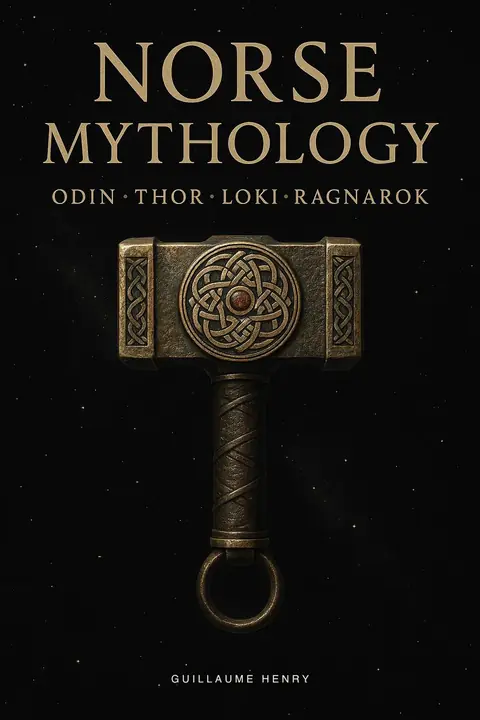
The Norse Mythology Book: Odin, Thor, Loki, Ragnarok and the Sagas of the Vikings
Odin, Thor, Loki, Ragnarok and the Sagas of the Vikings
The complete guide to Norse mythology drawn from the Eddas, the sagas, and the scholarship of those who read the source texts. Every god, every world, every myth.
More from Norse
All articles
Norse
The Prose Edda and Poetic Edda: Primary Sources of Norse Myth
The Prose Edda and Poetic Edda are the two great written pillars of Norse mythology, preserved in medieval Iceland centuries after the gods had stopped receiving sacrifices. Without them, Odin, Yggdrasil, and Ragnarok would be shadows.
Norse
Odin: Allfather of Asgard
Odin stands at the center of Norse cosmology as ruler, wanderer, and keeper of forbidden wisdom. His contradictions make him the most haunting deity in the Germanic pantheon.
Norse
Yggdrasil the World Tree: Axis of the Norse Cosmos
Yggdrasil the World Tree stands at the center of Norse cosmology, binding nine worlds in its roots and branches. Explore the myths, creatures, and sacred meanings woven into its eternal bark.
Norse
Thor, God of Thunder: Hammer, Storm, and the Sacred Defender of Worlds
Thor, the Norse god of thunder, stands as one of the most powerful and beloved figures in world mythology. Son of Odin, wielder of Mjolnir, and eternal guardian of Asgard and Midgard alike.