
The Jade Emperor: Ruler of Heaven and Lord of the Chinese Cosmos
The Jade Emperor sits atop the Chinese divine bureaucracy as sovereign of heaven, earth, and the underworld. His court mirrors imperial China in every detail, and his reach shapes festivals, folk religion, and literature to this day.
Contents
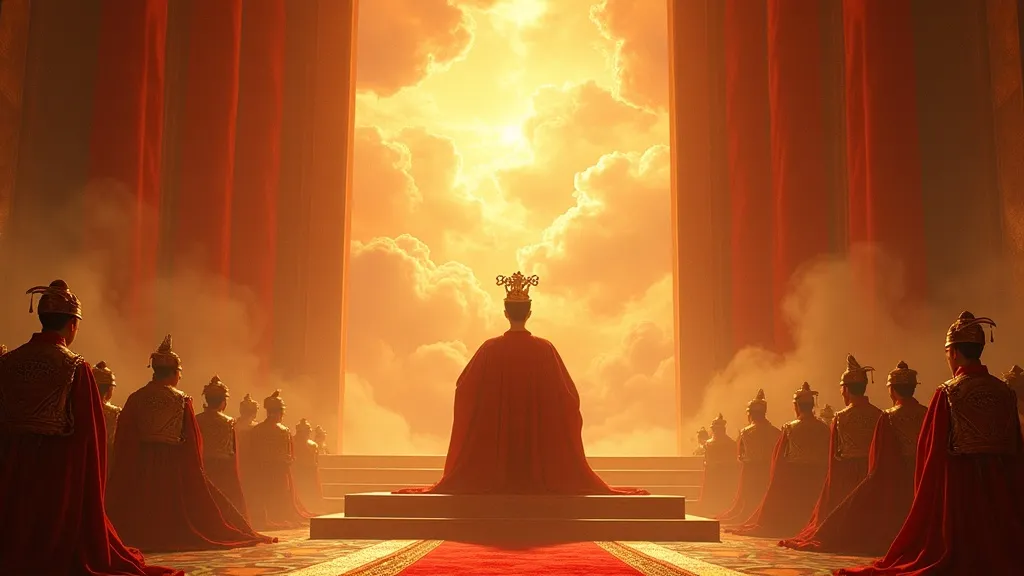
A celestial court assembled before him. Ranks of immortals, generals, and spirit officials knelt on jade floors polished by ten thousand years of ritual. At the center sat Yu Huang, the Jade Emperor, robed in gold and crowned with the flat-topped mianmian crown of emperors, twelve pendants of jade beads swaying before his face. No one spoke until he spoke first. That was the rule in heaven, just as it had been the rule in the Forbidden City below.
The jade emperor ruler of heaven is not a distant creator god brooding above storms. He is an administrator, a sovereign, a moral arbiter who keeps the cosmos running the way a well-governed dynasty keeps a kingdom from dissolving into chaos. He signs decrees, hears petitions, dispatches celestial officials, and punishes corrupt spirits the way any emperor might deal with corrupt magistrates. His myth is China's political imagination projected onto the sky.
That projection runs very deep. For roughly a thousand years, across the Song, Ming, and Qing dynasties, the Jade Emperor was the most widely worshipped deity in the Chinese popular pantheon. He still holds that position in Taiwan, among overseas Chinese communities, and in the continuing tradition of Chinese folk religion that survives quietly alongside Buddhism and Daoism.
Origins: From Ancient Sky Gods to the Divine Bureaucrat
The Jade Emperor did not spring fully formed from a single ancient text. His figure crystallized gradually, drawing from at least three distinct streams of Chinese religious thought.
The oldest stream is the worship of Tian, Heaven, which Chinese ritual addressed as an impersonal moral force as early as the Zhou dynasty (1046-256 BCE). The Son of Heaven, that is, the emperor, held his mandate to rule precisely because Tian endorsed it. Any catastrophe, famine, or military defeat was read as Tian withdrawing that mandate. The Jade Emperor inherited this moral authority: his cosmos rewards virtue and punishes wickedness, automatically and without mercy.
The second stream is Daoist theology. During the Tang dynasty (618-907 CE), Daoist thinkers elaborated a heavenly hierarchy with the Yuanshi Tianzun (the Heavenly Worthy of Primordial Beginning) at its apex, served by a cascade of jade-robed celestial rulers. The Jade Emperor, Yu Huang Da Di (Jade August Grand Deity), emerged within this framework as the supreme lord of the manifest cosmos. The Daoist Gaoshang Yu Huang Benjing, a canonical scripture likely composed around the Song dynasty, gives Yu Huang a full biographical mythology: his past lives, his 3,200 years of diligent cultivation, and his eventual elevation to the throne of heaven.
The third stream is popular religion, which cares very little for theological precision. Ordinary worshippers in the Song dynasty (960-1279 CE) needed a god who understood the system, who could intervene with other gods on a petitioner's behalf, and who commanded the same respect a magistrate or emperor commanded. The Jade Emperor fit perfectly. The Song emperor Zhenzong officially honored him with grand titles in 1007 CE, a royal endorsement that cemented his position at the top of the popular pantheon.
These three streams never fully merged. Daoist priests understand Yu Huang as a cosmological figure far subordinate to the Three Pure Ones. Buddhist monks see him as a powerful but ultimately non-liberated deity, bound to the wheel of rebirth like any other being. Folk worshippers simply call him Tiangong (Heavenly Grandfather) and burn incense on his birthday. All three traditions coexist, and none cancels the others out.
The Myth of His Ascension: Three Thousand Years of Virtue
The Gaoshang Yu Huang Benjing tells a story that deliberately echoes the Confucian ideal of the self-cultivating sage. The being who would become the Jade Emperor was born the prince of the kingdom of Bright Felicity and Pure Bliss. At birth, radiant light filled the kingdom. As a young man, he renounced the throne and retreated into the mountains to cultivate the Dao.
What followed was not a dramatic battle or a divine inheritance. It was patience. He accumulated merit through 3,200 lifetimes of practice, each lifetime a perfect expression of compassion and selfless service. After those 3,200 cycles, he cultivated the Dao for another 100,000,000 years before attaining true enlightenment. The arithmetic is staggering by design: no shortcuts, no divine parentage that exempts him from the work. His authority comes from earned virtue, not from conquest or bloodline.
This matters enormously for how worshippers relate to him. He is not an arbitrary tyrant. He reached heaven the hard way. His court operates according to moral law because he embodies moral law. When the Jade Emperor rewards the good and punishes the wicked, he acts consistently with everything he himself underwent.
After his ascension, the other celestial powers recognized his authority and he took the throne of heaven. He organized the celestial bureaucracy: ministries of thunder, rain, fire, and medicine; departments responsible for birth records, death tallies, and the assignment of mortal fate. The Kitchen God, Zao Jun, reports directly to his court each New Year, submitting a household's annual moral report before the Jade Emperor decides that family's fortunes for the coming year.
The Heavenly Court: A Mirror of Imperial China
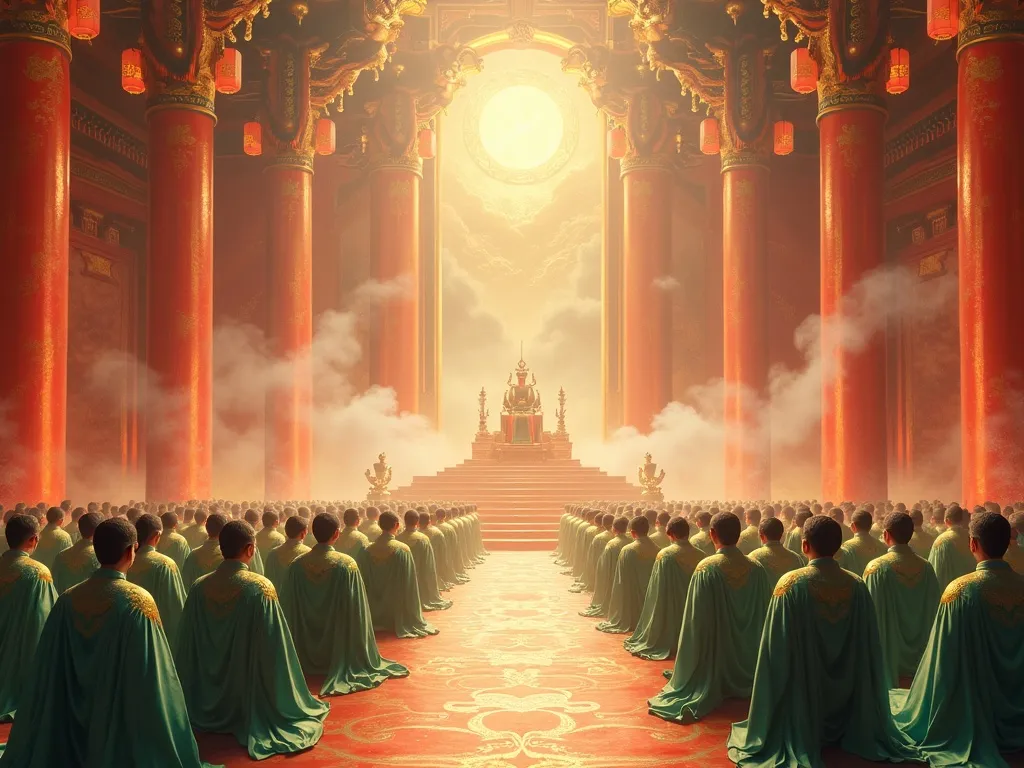
No other mythological system in the world built its divine realm so precisely on the model of earthly government. The Jade Emperor's heaven is not an Olympus of feuding personalities or a Valhalla of warriors feasting before apocalypse. It is an office. A very well-staffed one.
The jade emperor ruler of heaven presides over a court divided into recognizable imperial departments. Key figures include:
- Tai Bai Jin Xing, the Gold Star of Venus, who serves as the Jade Emperor's chief envoy and diplomatic messenger. He is elderly, gentle, and good at talking powerful beings into compliance.
- Lei Gong (the Duke of Thunder) and Dian Mu (the Mother of Lightning), who form the weather division and punish the secretly wicked whom ordinary courts cannot reach.
- Bi Fang, a one-legged fire bird, among various supernatural administrators of elemental forces.
- Dong Yue Da Di, the Great Emperor of the Eastern Peak, who oversees the detailed administration of human death and rebirth, essentially running heaven's HR department for souls.
- The Four Heavenly Kings, guardians of the cardinal directions, who appear at temple gates across East and Southeast Asia.
The celestial census was kept rigorously. Every god, spirit, and ghost had a rank, a title, a job description, and a performance review. Humans could appeal to spirits; spirits reported to higher officials; higher officials reported to the Jade Emperor. The system had grievance mechanisms. That was the point.
This bureaucratic structure served a social function. If a local official was corrupt and beyond reach, his corresponding spirit official could be petitioned in ritual. The divine bureaucracy offered accountability that earthly courts sometimes withheld.
Yu Huang (Jade Emperor)
Zeus (Greek)
Indra (Vedic)
The contrast sharpens what makes the Jade Emperor distinctive: where Zeus rules through personal authority and Indra rules through power that can be revoked by cosmic circumstance, Yu Huang rules through a system designed to outlast any individual occupant of its throne. The office is more permanent than the god.
Sun Wukong and the Jade Emperor: Heaven's Greatest Bureaucratic Crisis
No episode tests Yu Huang's authority more dramatically than his encounter with Sun Wukong, the Monkey King, in Wu Cheng'en's sixteenth-century novel Journey to the West (Xi You Ji). This text is so widely read across East Asia that it has shaped popular imagination of the heavenly court for five centuries.
Sun Wukong, the Stone Monkey born from a celestial rock, cultivates supernatural power through Daoist arts and descends on heaven demanding recognition. The Jade Emperor's first response is characteristically administrative: he offers Sun Wukong a minor position, Keeper of the Heavenly Horses (Bi Ma Wen). The Monkey King accepts, then discovers the post is one of heaven's lowest ranks. He storms back to earth, declares himself "Great Sage Equal to Heaven," and raises an army.
Heaven's generals fail to subdue him. The Jade Emperor promotes him again, this time to Guardian of the Peach Garden. Sun Wukong raids the peach garden, crashes a banquet of the immortals, steals and eats the pills of immortality, and defeats every army heaven sends. The confrontation reveals something careful readers notice: the Jade Emperor never truly panics. He sends soldiers, they fail, he sends generals, they fail, he finally calls on the Buddha. The solution comes from outside the Daoist heavenly bureaucracy entirely. The Buddha traps Sun Wukong under Five Elements Mountain for 500 years.
The episode reads partly as satire of bureaucratic rigidity: a system so focused on rank and procedure that it cannot improvise against a genuinely novel threat. But it also establishes the Jade Emperor's essential dignity. He never loses his composure. He delegates correctly. And ultimately, the Monkey King's rebellion leads to the pilgrimage that produces the Chinese Buddhist canon. Even the crisis serves heaven's larger purpose.
The Jade Emperor's Birthday and the New Year Rituals
Religious observance makes abstract theology concrete. The Jade Emperor's birthday falls on the ninth day of the first lunar month, just after the main New Year celebrations. In Taiwan and Fujian province, this day is treated with almost more solemnity than the New Year itself. Families set up elaborate outdoor altars before dawn, piling them with long sugarcane stalks (because sugarcane once saved the Jade Emperor from demons, according to local legend), incense towers, and offerings of fruit and rice wine.
The Jade Emperor's role in Chinese New Year is pivotal in a less visible way. Five days before New Year's Eve, the Kitchen God Zao Jun ascends to heaven to make his annual report. Families traditionally smear his paper icon's mouth with honey or malt sugar so he will only speak sweetly of them. The Jade Emperor reads all those reports and adjusts each household's fate for the coming year. Then, on the fourth day of the new year, the celestial officials return to their posts after their own celestial holiday. The sequence frames the entire New Year period as a diplomatic negotiation between humans and heaven.
The ninth day observance in southern Fujian and Taiwan involves a ritual called Pai Tian Gong (worshipping the Heavenly Grandfather). The timing: precisely at midnight on the eighth day, as the ninth begins. Entire neighborhoods light fireworks simultaneously to honor the moment the Jade Emperor's birthday arrives in heaven. The noise serves the same function it always has in Chinese ritual: announcing the presence of humans to heaven, bridging the two courts with sound.
Jade, Dragons, and the Language of Celestial Kingship
The choice of jade is not incidental. In Chinese civilization, jade (yu) carried a weight that gold carried in European cultures but with deeper metaphysical freight. Jade does not corrode. It feels cool against the skin. Its color ranges from pure white to deep imperial green, and its translucence suggested something between the material world and the spirit world. Confucius himself catalogued jade's virtues in the Liji: benevolence, wisdom, courage, purity. A man of virtue was a man of jade.
The jade emperor ruler of heaven takes his very name from this mineral theology. Yu Huang literally means Jade August, combining the material's moral weight with the imperial title huang (august sovereign) used by the First Emperor of China. To call the supreme heaven-ruler by a jade name is to say: he is the incorruptible moral substance that holds the cosmos together.
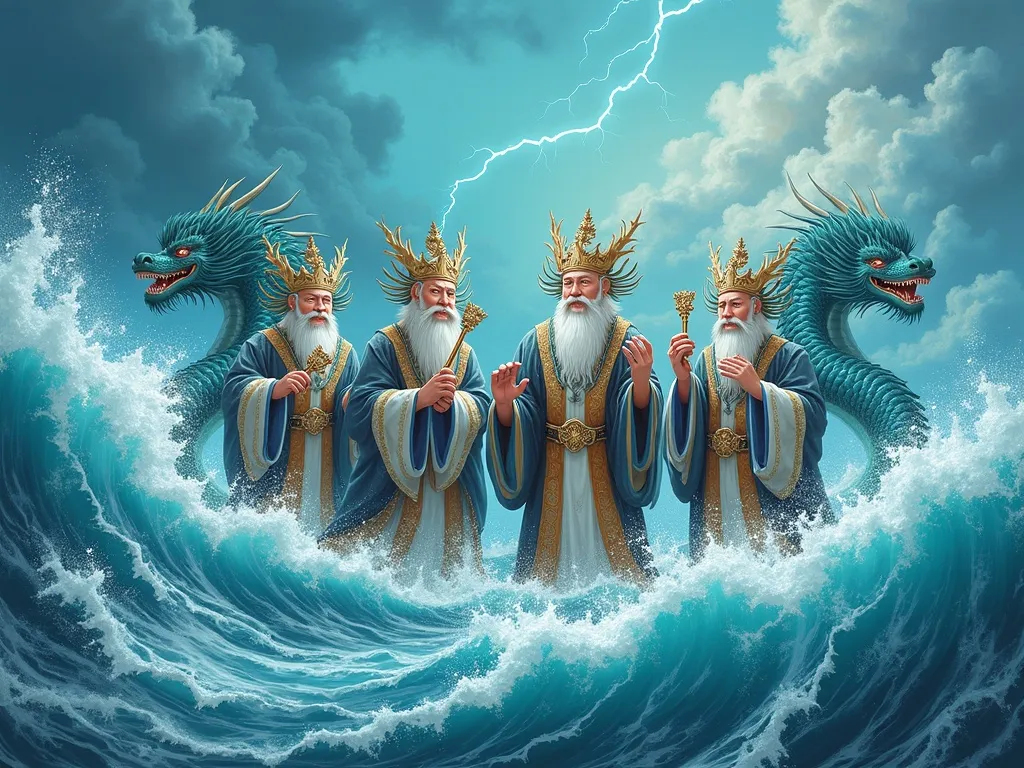
Dragons in Chinese mythology serve the Jade Emperor directly. The Four Dragon Kings, Ao Guang of the East Sea, Ao Qin of the South Sea, Ao Run of the West Sea, Ao Shun of the North Sea, govern rainfall and rivers under the Jade Emperor's mandate. They are not monsters. They are officials. When Sun Wukong bullies Ao Guang into surrendering the magical staff Ruyi Jingu Bang, he is strong-arming a celestial civil servant, which is precisely why the Dragon King files a formal complaint with the Jade Emperor's court afterward.
The Jade Emperor's throne room, as described in literary and ritual sources, sits atop a mountain of thirty-three heavens, attended by seventy-two divine treasures and guarded by generals who carry weapons inscribed with celestial script. The imagery draws from both Daoist cosmology and Buddhist deva realms: heaven here is not one level but a layered bureaucratic tower, with the Jade Emperor at its summit dealing with the broadest policy questions while subordinates handle details.
Scholarly Debates: Is the Jade Emperor Daoist, Popular, or Something Else?
Scholars of Chinese religion have long wrestled with how to categorize Yu Huang. The sinologist Stephan Feuchtwang, in his landmark study The Imperial Metaphor: Popular Religion in China (1992), emphasizes that the Jade Emperor belongs primarily to the popular tradition: he is the deity ordinary people address when no specific patron god covers their need. He is, in Feuchtwang's framing, a "default" sovereign, the celestial equivalent of petitioning the throne directly when local officials have failed you.
Kristofer Schipper, whose The Taoist Body remains foundational for understanding Daoist priestly tradition, and other historians of Daoism point out that orthodox Daoist clergy have often been ambivalent about the Jade Emperor's prominence. The Three Pure Ones (Sanqing) sit above him in Daoist theology, yet the Jade Emperor is far more visible in temple practice. This creates a striking inversion: the theologically highest figures are the least worshipped, and the theologically subordinate sovereign is the one who fills every major temple's central altar.
Donald Sutton and Robert Weller's ethnographic work on Chinese local religion shows how the Jade Emperor functions as an integrating figure across regional cult traditions. Local earth gods, mountain gods, and sea gods all receive their authority from his mandate, which means he provides a conceptual unity to an otherwise wildly diverse landscape of local cults. He is the constitutional monarch of Chinese polytheism: his authority legitimizes everyone else's, even when he rarely intervenes directly.
The question of Buddhist influence is also alive in scholarship. The biography in the Gaoshang Yu Huang Benjing, with its thousands of past lives and accumulated merit, reads almost like a jataka tale, the genre of stories about the Buddha's previous lives. The religious historian Valerie Hansen, in Changing Gods in Medieval China (1990), traces how Song dynasty popular religion actively synthesized Daoist, Buddhist, and local cult traditions into composite figures exactly like the Jade Emperor. Whether Buddhist concepts were deliberately integrated into Daoist texts about Yu Huang, or whether both traditions were drawing from a shared Chinese cultural grammar of virtue-accumulation, remains genuinely debated, and Hansen's documentary evidence from Song-era inscriptions suggests the synthesis was often deliberate and locally negotiated.
The Jade Emperor in Modern Culture: From Classic Literature to Global Media
Journey to the West is the primary transmission route for Yu Huang's image into global popular culture. The 1986 Chinese television adaptation became one of the most watched programs in Chinese broadcast history. More recently, the figure appears in the Netflix series American Born Chinese (2023), adapted from Gene Luen Yang's graphic novel, where the Jade Emperor is portrayed as a complex sovereign navigating duties between heaven and an increasingly complicated mortal world. The characterization is remarkably faithful to the classical sources: still an administrator, still moral, still bound by his own rules.
Video games set in Chinese mythological frameworks, including Black Myth: Wukong (2024), bring the heavenly court and its conflicts to an international audience of tens of millions. The Jade Emperor appears in these contexts as the authority against whom the protagonist struggles, which preserves the classical tension from Xi You Ji without requiring players to know any of the underlying religious history.
In Taiwan and diaspora communities in Southeast Asia, the United States, and the United Kingdom, active worship continues. The Jade Emperor Temple in Penang, Malaysia, draws thousands of visitors each lunar ninth day. The ritual logic has not changed in centuries: humans petition the sovereign of heaven for fair treatment, for good fortune, for the correction of injustice. The bureaucracy metaphor is alive because the need for a just court is alive.
Frequently Asked Questions About the Jade Emperor
Frequently asked questions
Is the Jade Emperor the same as the God of Heaven in Chinese religion?
He is the primary figure associated with heaven (Tian) in popular Chinese religion, but technically the two are distinct in Daoist theology. Tian as an impersonal moral force predates the Jade Emperor's personalized mythology by centuries. In practice, popular worship treats Tiangong (Heavenly Grandfather), another name for the Jade Emperor, as the ruler of heaven in a fully personal sense.
Where does the Jade Emperor appear in the oldest Chinese texts?
The Jade Emperor as a fully developed figure appears in Daoist scriptures from the Song dynasty, particularly the Gaoshang Yu Huang Benjing. Earlier texts mention celestial sovereigns and jade-robed heavenly rulers, but the specific figure of Yu Huang Da Di crystallized between the ninth and eleventh centuries CE. The Song emperor Zhenzong's 1007 CE proclamation is one of the earliest imperial endorsements.
Why is the Jade Emperor associated with jade specifically?
Jade held the highest symbolic status in Chinese material culture, associated with moral virtue, incorruptibility, and spiritual purity. Confucius catalogued eleven virtues represented by jade in the Liji. Naming the supreme celestial sovereign "Jade August" (Yu Huang) placed him within this tradition: he is morally incorruptible in the way jade does not rust or decay. The mineral itself was thought to bridge the human and spirit worlds.
How does the Jade Emperor relate to Buddhism if he is a Daoist figure?
The relationship is layered. In Buddhist cosmology, the Jade Emperor corresponds to Indra/Sakra, the king of the Trayastrimsa heaven, a powerful but non-liberated deity still within the cycle of rebirth. Chinese popular religion absorbed both Daoist and Buddhist elements without resolving the theological tension: temples dedicated to the Jade Emperor often also host Buddhist bodhisattvas, and practitioners move between both traditions freely.
What happens during the Jade Emperor's birthday celebration?
The ninth day of the first lunar month marks his birthday. In Fujian province and Taiwan especially, families construct outdoor altars at midnight as the ninth day begins, offering incense, sugarcane, fruit, and rice wine. The ritual is called Pai Tian Gong. Fireworks signal the start of the celestial birthday hour. In some traditions, the celebration is considered more significant than the main Lunar New Year, particularly among Hokkien (Fujian) communities.
Does the Jade Emperor appear in the Monkey King story, and what does that reveal about his character?
He is central to the first portion of Journey to the West. His handling of Sun Wukong's rebellion is revealing: he tries administrative solutions first (offering titles and positions), escalates methodically through military options, and ultimately calls on the Buddha when his own system proves insufficient. Scholars read this as both a satire of bureaucratic rigidity and a genuine portrait of a sovereign who acts within proper channels rather than through raw power.
The Jade Emperor's Continuing Mandate: What the Cosmic Office Reveals
Empires fall. Dynasties end. The celestial bureaucracy, somehow, continues. Part of what makes Yu Huang such a durable figure is that he is not tied to a single political moment. The Han dynasty court that shaped early Chinese religious vocabulary is long gone. So is the Tang, the Song, the Ming, the Qing. The Jade Emperor outlasted them all, absorbing the vocabulary of each successive dynasty and extending it toward the eternal.
The model of divinity the Jade Emperor represents is also a model of what justice should look like: a system where no act goes unrecorded, where every spirit official is accountable to a higher official, and where the sovereign at the top reached that position not through inheritance or conquest but through accumulated moral weight. It is an idealized image of governance, and like all idealized images, it works partly by contrast with the imperfect governments below it.
Guan Yu, the god of war and righteousness, serves in the Jade Emperor's court as a heavenly marshal. Guanyin, the bodhisattva of compassion, operates within the same cosmological neighborhood, often petitioning the Jade Emperor on behalf of suffering mortals. The Jade Emperor does not stand alone: he is a center of gravity around which an entire civilization's spiritual imagination orbits.
That imagination still turns. In temples from Taipei to Toronto, incense smoke rises toward a jade-robed figure on a high throne. The petitioners below ask the same questions their ancestors asked: Is my family being treated fairly? Will next year be better than this one? Is there anyone up there keeping track? The Jade Emperor's continuing mandate rests on the oldest of human needs: the need to believe that the universe, however vast and indifferent it sometimes seems, is being administered.
Read the full book
Want the whole story?
The complete edition is an instant PDF download here, with a paperback on Amazon for selected titles.

Chinese
The Chinese Mythology Book: Pangu, Nuwa, the Jade Emperor, and the Sacred Stories of the World's Oldest Living Tradition
5,000 Years of Dragons, Immortals, and the Celestial Court
From Pangu's creation to Sun Wukoku's rebellion: the unbroken mythological tradition of China, spanning the Yellow Emperor, Nuwa's clay humans, and the Jade Emperor's court.
More from Chinese
All articles
Chinese
Nuwa the Creator Goddess: Myth, Power, and the Making of Humanity
Nuwa shaped the first humans from yellow earth, mended the cracked sky, and held creation together when it threatened to fall apart. She is the oldest mother in Chinese mythology, and her stories run deeper than most Western readers know.
Chinese
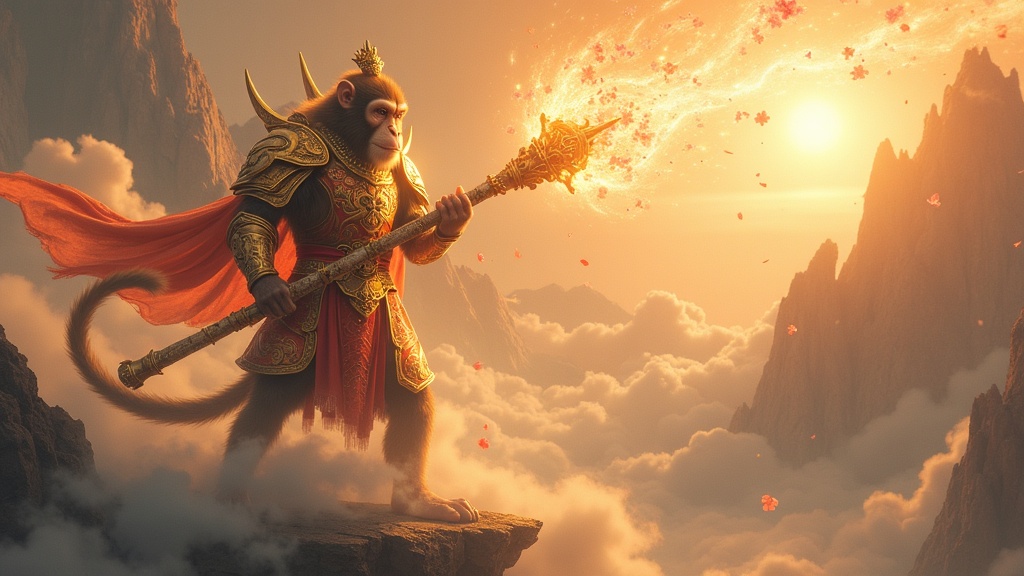
Sun Wukong the Monkey King: Trickster, Rebel, and Immortal of Chinese Myth
Born from stone, crowned king of monkeys, and bold enough to defy heaven itself: Sun Wukong stands as the most electrifying hero in Chinese mythology, a shape-shifter whose story refuses to stay still.
Chinese
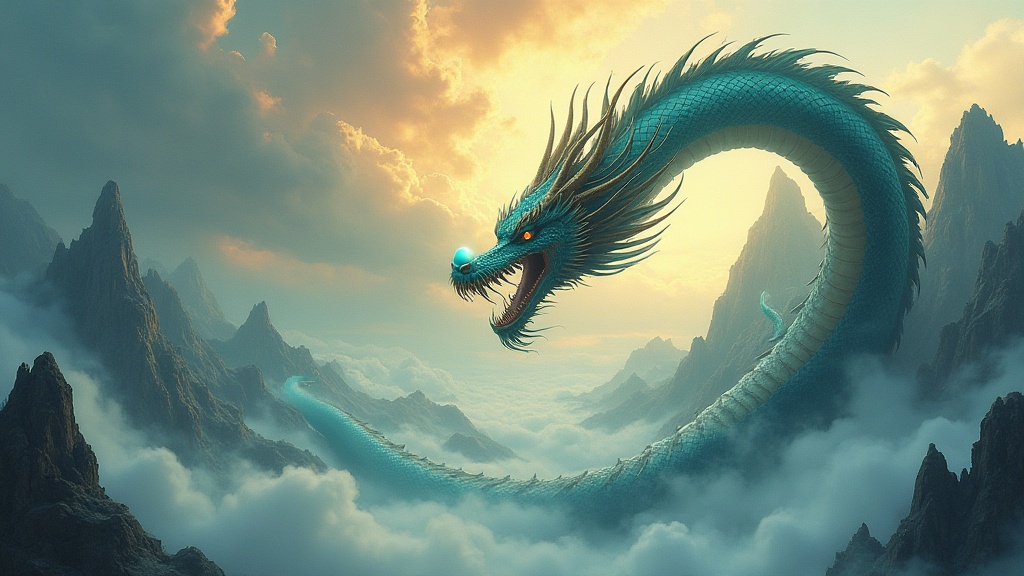
The Dragon Symbolism in Chinese Myth: Sovereign of Waters, Heaven, and Time
In Chinese mythology, the dragon is not a monster to be slain but a cosmic sovereign: lord of rivers, rain, and imperial destiny. Its symbolism reaches from creation itself to the bones of the earth.