
Nuwa the Creator Goddess: Myth, Power, and the Making of Humanity
Nuwa shaped the first humans from yellow earth, mended the cracked sky, and held creation together when it threatened to fall apart. She is the oldest mother in Chinese mythology, and her stories run deeper than most Western readers know.
Contents
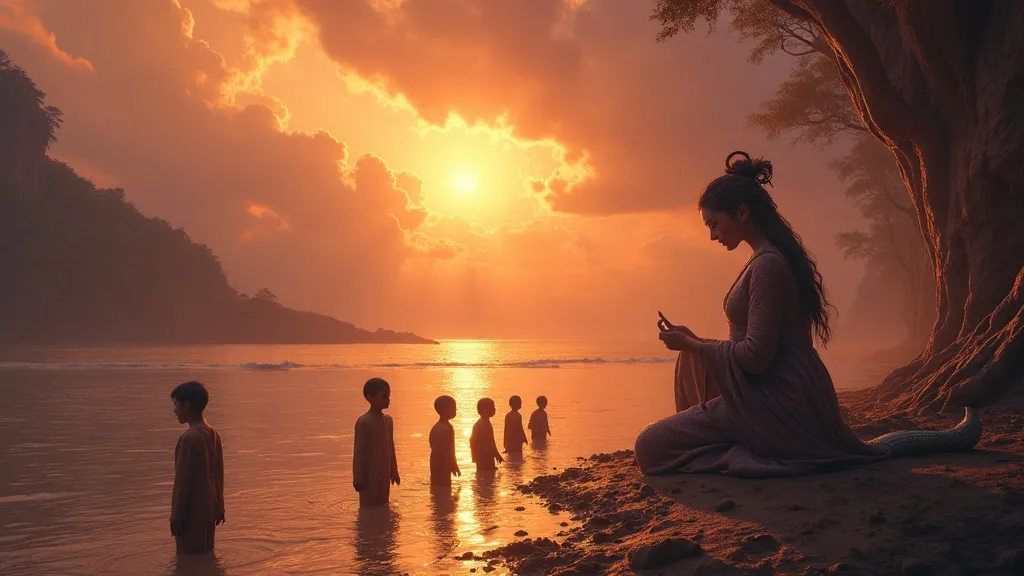
She knelt at the edge of a river, scooped yellow clay from the bank, and pressed it between her palms until it breathed. The figures she made stood upright, laughed, and wandered away into the world. When her hands grew tired, she dragged a reed through the mud and flicked the droplets into the air; each one landed as a person. Nuwa the creator goddess had just populated the earth, not with a word or a thought, but with her hands.
That image - the divine potter at the riverbank - is one of the oldest in Chinese religious memory. It appears in texts as early as the Shanhaijing (Classic of Mountains and Seas), echoes through the Huainanzi, and still shapes folk festivals across Gansu and Shanxi today. Nuwa is not a background figure. She is the axis on which early Chinese cosmology turns.
Who Nuwa Is: Portrait of the Primal Mother
Nuwa (女媧, also romanised as Nü Wa or Nügua) predates the standardised pantheons that later Chinese religion would organise into neat bureaucratic hierarchies. Her name appears in the Chuci (Songs of the South, ca. 4th-3rd century BCE) as a question: "Who fashioned the body of Nuwa?" The poet Qu Yuan asks it as if her existence is self-evident, her origins a genuine mystery. That rhetorical question is our earliest surviving textual reference to her, and its casual authority suggests she was already ancient by the Warring States period.
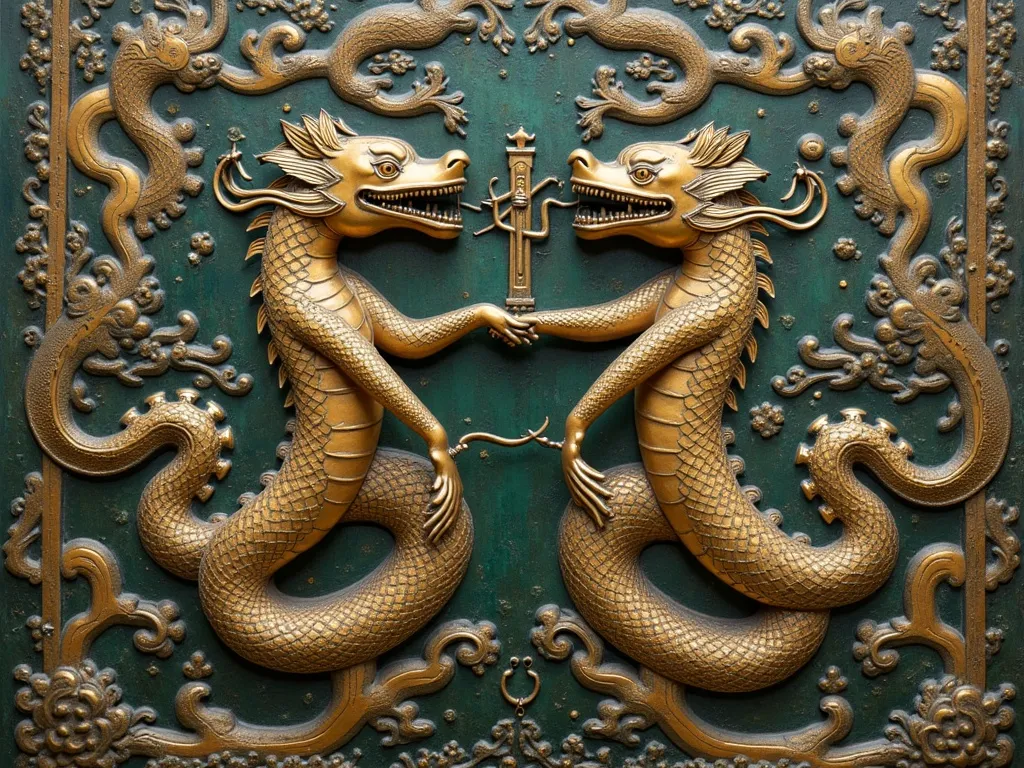
Nuwa's body in visual art is serpentine from the waist down, human above. Bronze mirrors from the Han dynasty (206 BCE - 220 CE) show her coiled beside Fuxi, her consort and brother, their dragon tails intertwined. This serpent form links her to water, fertility, and the primordial chaos out of which order grows, a visual grammar that appears independently in Mesopotamian and Mesoamerican traditions but carries its own Chinese logic here.
In the Shuowen Jiezi, the Han-dynasty lexicon compiled by Xu Shen around 100 CE, her name is parsed as relating to wa, a character associated with frogs and things curved or hollow. Some modern scholars read it as "the woman who is bent" or "the curved woman", a probable reference to her serpent body. Others trace the syllable to an archaic word for a vessel, which would make her name mean something close to "woman-container", the one who holds all life inside herself.
The Making of Humanity: Clay, Reed, and the First Breath
The primary creation narrative appears in the Fengsu Tongyi (Comprehensive Meaning of Customs and Mores), compiled by Ying Shao in the 2nd century CE. It is precise and unsentimental. Nuwa walks a desolate earth under a sky already set in place. She is lonely. She scoops yellow clay from a river, shapes it into a small human figure, and sets it on the ground. It comes alive immediately. She makes more, working steadily, but the world is vast and her hands are slow.
She picks up a vine, trails it through the muddy water, then cracks it like a whip over the earth. The droplets that land also become people. The clay-made figures, the text implies, become the noble and wealthy; the droplets flicked from the vine become the common people. Scholars debate whether this hierarchy was original to the myth or a later Confucian interpolation; the Huainanzi, which records a different tradition, says nothing about social stratification and presents all humans as equally Nuwa's children.
What matters cosmologically is the act itself: Nuwa the creator goddess is an artisan, not an abstraction. She does not speak creation into existence. She does not dream it. She builds it with wet hands, and the effort tires her. That physicality is distinctly Chinese. It places creation inside time, inside effort, inside the body of a goddess who can feel fatigue.
- Creation method: direct manipulation of yellow clay (huangtu), associated with the Yellow River and with the skin tone of the Chinese people in early ethnological thought.
- Scale: the entire human race, made incrementally, not all at once.
- Social reading: later texts distinguish the clay-made from the droplet-made, though this reading is contested.
- Emotional register: loneliness prompts creation, not divine command or cosmic plan.
The Broken Sky: Nuwa's Most Dangerous Hour
The second great story is the repair of heaven, narrated most fully in the Huainanzi (139 BCE), a philosophical compendium commissioned by Liu An, Prince of Huainan. It opens with catastrophe.
Gonggong, the water deity, battles the fire deity Zhurong for dominion over the world. Gonggong loses. In his rage, he slams his head into Mount Buzhou, one of the pillars holding up the sky. The pillar shatters. The sky tilts. Floods pour through the crack; fires erupt from the earth; monsters crawl through the breach; the four cardinal directions lose their alignment.
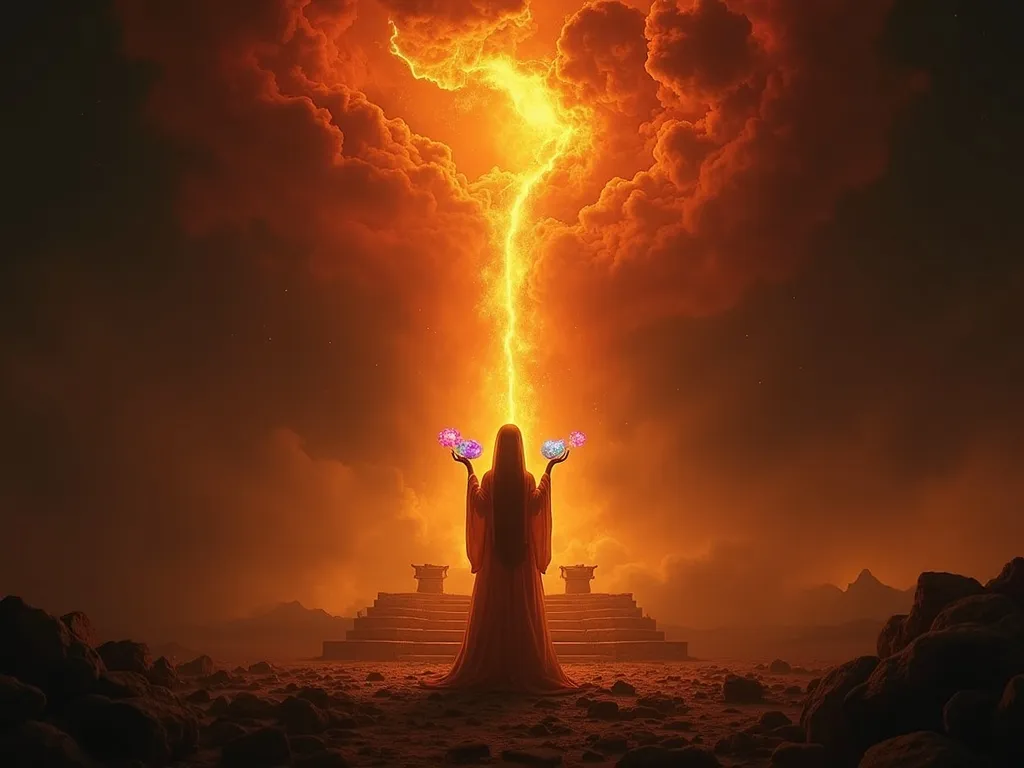
Nuwa acts without hesitation. She gathers five-coloured stones from a riverbed, melts them in a furnace, and uses the molten material to patch the hole in the sky. Then she kills a great sea turtle, cuts off its four legs, and uses them as new corner-pillars to stabilise the heavens. She gathers the ash of reed reeds to stop the flooding. She drives away the black dragon tormenting the central lands. One by one, she restores what was broken.
The Huainanzi describes the aftermath: "The sky was repaired and did not collapse again. The earth was whole and did not open again. Vicious beasts died and the good people lived. Square earth and round heaven embraced each other as before."
The sky-repair myth is cosmologically precise. The five-coloured stones correspond to the five elemental phases (wuxing): water, fire, wood, metal, earth. Nuwa does not create the cosmos ex nihilo; she mends a cosmos already partly made, which is a distinctly different theological claim. She is the preserving intelligence inside creation, not just its originating force.
Gonggong and Fuxi appear repeatedly in the mythology surrounding Nuwa, forming a triad of primordial powers whose interactions produce the world as it exists now. These figures deserve their own attention for anyone building a full picture of early Chinese cosmology.
Nuwa and Fuxi: Siblings, Consorts, Co-Creators
In the Han tradition preserved on stone reliefs and bronze mirrors, Nuwa and Fuxi appear as a paired couple whose serpent tails twist together like a double helix. Fuxi holds a carpenter's square (ju); Nuwa holds a compass (gui). Together, the instruments measure and divide space: the square for earth, the compass for heaven. This is not decorative symmetry. It encodes an entire cosmology of complementary opposites.
The sibling-consort relationship between them has struck some modern readers as disturbing, but the myth carries a specific logic: after a flood destroys humanity, Nuwa and Fuxi alone survive. They debate whether to marry, consult heaven by watching two columns of smoke merge into one, and accept the union as divinely sanctioned. The story appears in versions preserved in the oral traditions of the Miao people in Guizhou and Hunan, as well as in written Han texts. It is a repopulation myth, structurally parallel to the story of Deucalion and Pyrrha in Greek tradition, though the Chinese version preserves far more ritual detail.
Nuwa (Chinese)
Nuwa and Fuxi survive a great flood sent by heaven. They receive divine confirmation of their union through the merging of smoke columns. Nuwa then recreates or repopulates humanity through direct physical means. She is simultaneously progenitor, craftsperson, and cosmic repairwoman.
Pyrrha (Greek)
Pyrrha and Deucalion survive Zeus's flood aboard a chest. They receive instructions from Themis at Delphi: throw your mother's bones over your shoulder. The bones are stones; the stones become people. Pyrrha is a conduit of divine instruction rather than an autonomous creative agent.
The contrast is instructive. Pyrrha follows a divine oracle; Nuwa reasons, constructs, and acts on her own authority. Her autonomy inside the myth is not incidental. It reflects a theological position: Nuwa does not merely carry out a higher god's will. She is the highest god present.
Nuwa as Cultural Inventor: Music, Marriage, and the Reed Flute
Creation and sky-repair are the two arches of Nuwa's mythology, but she carries smaller gifts as well, and they reveal how her cult functioned in lived practice.
Several texts credit her with inventing the sheng, the mouth organ made from bundled bamboo pipes, one of the oldest continuous musical traditions in East Asia. The sheng resembles a bundle of reeds, and its invention by Nuwa connects her reed-flick creation act to music: humanity itself is a kind of instrument she played into being.
More significantly, Nuwa is credited in several sources with establishing the institution of marriage (meiyue), specifically the practice of matching men and women as proper pairs. The god of matchmaking in later Chinese folk religion, Yue Lao, carries a thread of red silk that he uses to tie destined couples together; the thread is sometimes said to originate with Nuwa's own arrangements. This civilising role, turning raw human material into social order, is consistent with her broader function: she makes humanity, and then she makes humanity work.
Her shrines appear across northern China, concentrated in Gansu province where the village of Tianshui preserves a temple to her (the Wa Huang Gong) that has drawn pilgrims since at least the Tang dynasty (618-907 CE). The spring festival there includes offerings of clay figures, a direct re-enactment of the creation myth that has continued for over a thousand years without interruption.
Nuwa in the Fengshen Yanyi and Later Literature
The 16th-century novel Fengshen Yanyi (Investiture of the Gods) recasts Chinese mythology into a sprawling epic of dynastic war and divine politics. Nuwa appears early in the narrative, and her role here is darker than in the cosmological texts.
King Zhou of Shang visits her temple and writes a lascivious poem on the wall, insulting the goddess. Nuwa, furious, sends three fox spirits to seduce and corrupt the king, setting in motion the downfall of the Shang dynasty. Critics have noted the uncomfortable gender dynamics of this version: the goddess punishes through proxy seduction rather than direct power. It reflects the patriarchal pressures of Ming-dynasty literary culture rather than the much older stratum of myth where Nuwa acts alone, without intermediaries, without asking permission.
This tension between the archaic Nuwa - autonomous, craftsperson, cosmic repairwoman - and the later domesticated or marginalised Nuwa appears throughout Chinese literary history. The older she gets, textually speaking, the more powerful she tends to be.
Nuwa in Scholarly Debate: Age, Gender, and Archaic Religion
Several live debates in sinology circle around Nuwa, and they are worth naming directly.
How old is she? The Qu Yuan reference places her in the 4th-3rd century BCE at the latest, but many scholars argue her cult is Neolithic in origin, tied to serpent-worship and river-goddess traditions that predate writing in the Yellow River basin. Anne Birrell, in her 1993 Chinese Mythology: An Introduction, notes that Nuwa's snake-body iconography appears to align with Yangshao culture ceramic motifs (ca. 5000-3000 BCE), though direct textual evidence is absent.
Was she originally male? Some scholars have pointed to variant characters used for her name in early texts and to the grammatically ambiguous use of gendered markers to argue that Nuwa may have been a gender-fluid or originally male figure later feminised. The mainstream scholarly position, supported by Birrell and by Rémi Mathieu's French-language studies of Chinese mythology, holds that Nuwa has been female throughout the textually recoverable tradition.
Is the sky-repair myth about the broken calendar? Wen Yiduo, the Chinese poet and mythologist writing in the 1940s, argued that Gonggong's destruction of Mount Buzhou encoded a real astronomical crisis, possibly an ancient observation of the earth's axial tilt. Nuwa's repair, on this reading, is the restoration of a correct calendar. The hypothesis is suggestive rather than proven, but it shows the myth has enough structural depth to carry multiple readings at once.
Chinese mythology as a whole presents this same layered quality: accounts that function as cosmology, as political allegory, as ritual prescription, and as pure narrative all at once.
Frequently Asked Questions About Nuwa the Creator Goddess
Frequently asked questions
What are the primary ancient sources for Nuwa's myths?
The earliest surviving reference is in Qu Yuan's Tianwen (Heavenly Questions, ca. 4th-3rd century BCE), where her name appears as an assumed-known figure. The creation-from-clay account comes from Ying Shao's Fengsu Tongyi (2nd century CE). The sky-repair narrative is told most fully in the Huainanzi (139 BCE). Visual sources, especially Han-dynasty stone reliefs from Shandong and Sichuan, add an iconographic layer that sometimes diverges from the textual accounts.
Why does Nuwa have a serpent's body?
Her serpent body connects her to the primordial, watery chaos (hundun) that preceded ordered creation in Chinese cosmological thought. Serpents in early Chinese religious art represented rivers, rain, fertility, and the generative powers of the earth. The paired serpent-bodies of Nuwa and Fuxi visible on Han-dynasty mirrors encode cosmic complementarity: heaven and earth, male and female, order and chaos held in productive tension.
Is Nuwa the same as Guanyin or other Chinese goddesses?
No. Nuwa belongs to an archaic, pre-Buddhist layer of Chinese religion. Guanyin is a bodhisattva imported from India (from the Sanskrit Avalokiteshvara) and adapted into Chinese Buddhism from roughly the 4th century CE onward. They represent entirely different religious strata. Nuwa is closer in function to a primordial creatrix, while Guanyin is a compassion deity within a developed soteriological tradition. They do not share mythology or ritual.
Does Nuwa appear in any living religious practice today?
Yes. The Wa Huang Gong temple in Tianshui, Gansu province, holds an annual spring festival in Nuwa's honour that draws tens of thousands of pilgrims. Offering clay figurines, lighting incense, and praying for healthy children and good marriages are the central rites. Similar smaller shrines exist in Shanxi and Henan. Nuwa is also venerated in some Taoist temples as a supreme ancestral goddess, though her cult predates Taoism as an organised religion.
What is the connection between Nuwa and the Chinese flood myth?
In the post-flood repopulation version of her myth, preserved in Miao oral tradition and some Han texts, Nuwa and her brother Fuxi are the sole survivors of a great deluge. They repopulate the earth through their own union, sanctioned by heaven. This strand of her mythology is distinct from the sky-repair narrative in the Huainanzi, though both involve Nuwa restoring order after catastrophic water damage. The two narratives may derive from different regional traditions that were never fully reconciled into a single canonical account.
How does Nuwa compare to creator figures in other mythologies?
She shares the clay-creation method with the Mesopotamian goddess Ninhursag, who shapes human figures from clay mixed with divine blood, and with the Abrahamic God of Genesis who forms Adam from dust. What distinguishes Nuwa is her combination of roles: she creates humanity, preserves the cosmos, invents music and marriage, and survives a flood. No single other world-mythology figure holds all four functions simultaneously in texts of comparable antiquity.
Nuwa in the Modern Imagination: Film, Fiction, and Feminist Reading
Nuwa has attracted serious attention from contemporary Chinese artists, novelists, and filmmakers, and the readings they produce are not uniform.
In Chinese fantasy literature (xianxia and xuanhuan fiction), Nuwa appears frequently as a tragic or morally ambiguous figure: the Fengshen Yanyi version, where she unleashes the fox spirits, is often the template. She is powerful but reactive, wronged but vengeful. This reading has been challenged by feminist scholars and writers who reach past the Ming novel to the Han cosmological texts, where Nuwa is not reactive at all. She sees a broken world and she fixes it. She does not wait to be wronged.
The 2016 film League of Gods and the 2017 animated series The Legend of Nuwa brought her to mass international audiences with mixed fidelity to the sources. More interesting is the scholarly recovery project: Chinese mythologists like Yuan Ke (whose 1950 Zhongguo Gudai Shenhua, Myths of Ancient China, remains a foundational text) devoted significant energy to rehabilitating Nuwa as a figure of genuine theological weight rather than decorative background.
For readers whose interest runs toward comparative religion, Nuwa the creator goddess raises a question that has no clean answer: why does the oldest, most cosmologically consequential figure in Chinese mythology carry a woman's body? The easy answer is matrilineal Neolithic origins. The more honest answer is that we do not know, and the question keeps pulling scholars back to her riverbank, where the clay is still wet and the first figures are just beginning to walk away.
Read the full book
Want the whole story?
The complete edition is an instant PDF download here, with a paperback on Amazon for selected titles.

Chinese
The Chinese Mythology Book: Pangu, Nuwa, the Jade Emperor, and the Sacred Stories of the World's Oldest Living Tradition
5,000 Years of Dragons, Immortals, and the Celestial Court
From Pangu's creation to Sun Wukoku's rebellion: the unbroken mythological tradition of China, spanning the Yellow Emperor, Nuwa's clay humans, and the Jade Emperor's court.
More from Chinese
All articles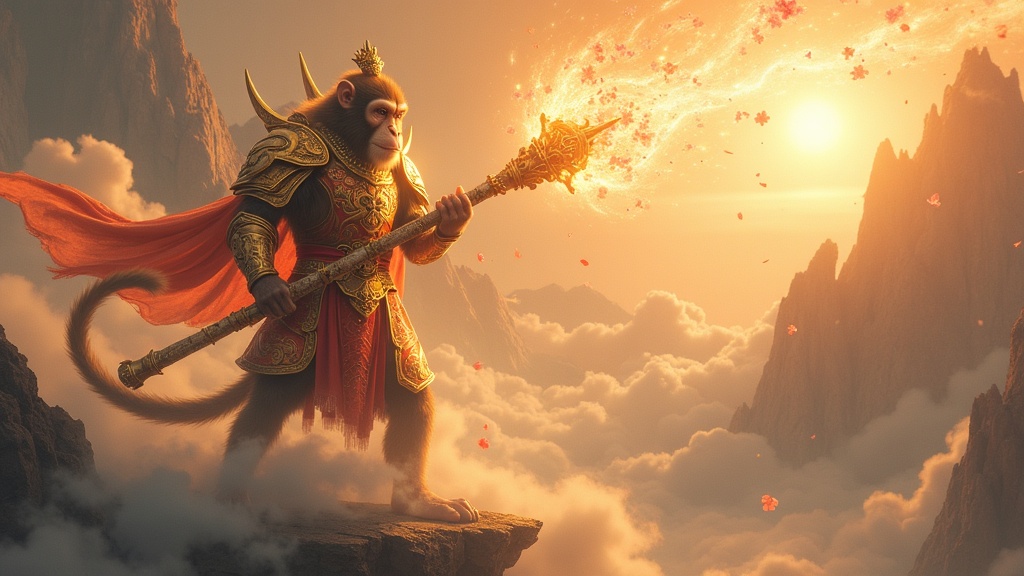
Chinese
Sun Wukong the Monkey King: Trickster, Rebel, and Immortal of Chinese Myth
Born from stone, crowned king of monkeys, and bold enough to defy heaven itself: Sun Wukong stands as the most electrifying hero in Chinese mythology, a shape-shifter whose story refuses to stay still.
Chinese
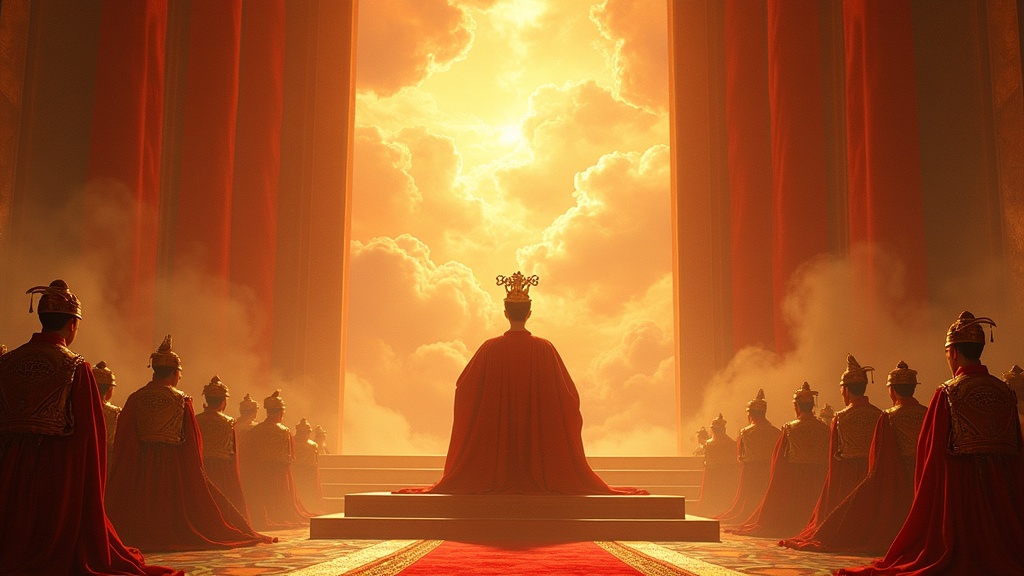
The Jade Emperor: Ruler of Heaven and Lord of the Chinese Cosmos
The Jade Emperor sits atop the Chinese divine bureaucracy as sovereign of heaven, earth, and the underworld. His court mirrors imperial China in every detail, and his reach shapes festivals, folk religion, and literature to this day.
Chinese
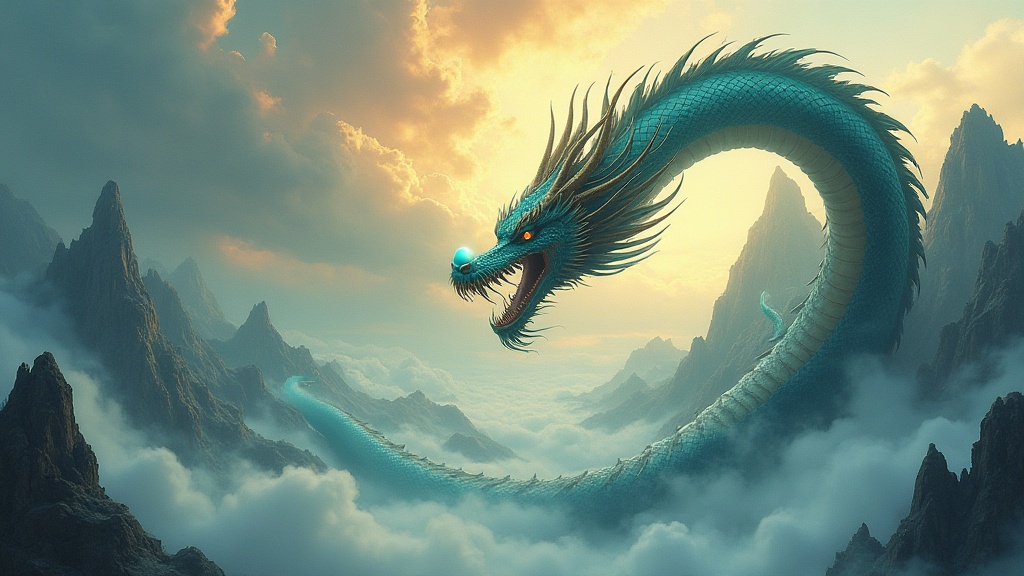
The Dragon Symbolism in Chinese Myth: Sovereign of Waters, Heaven, and Time
In Chinese mythology, the dragon is not a monster to be slain but a cosmic sovereign: lord of rivers, rain, and imperial destiny. Its symbolism reaches from creation itself to the bones of the earth.