
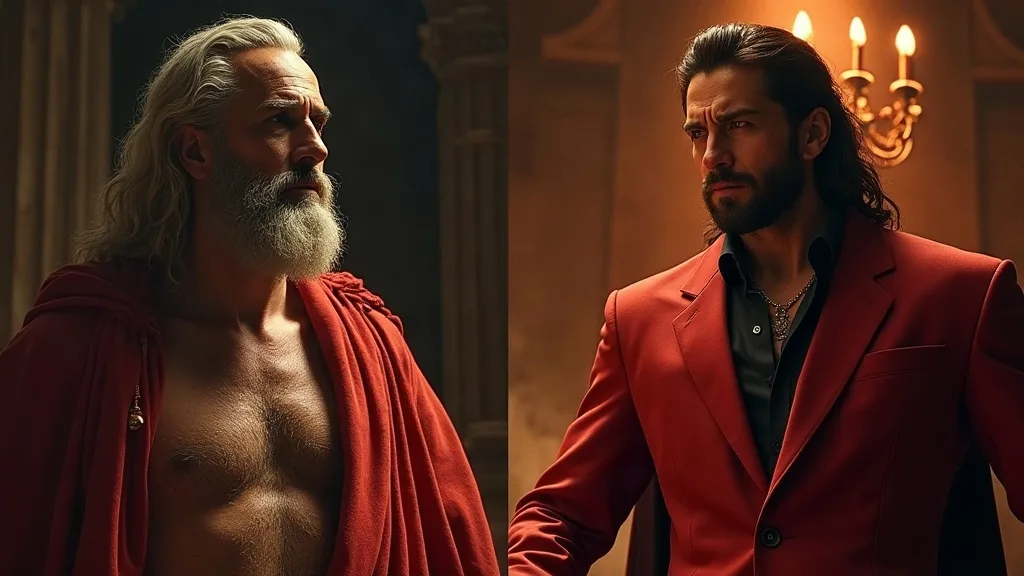
Hades Game vs Real Greek Mythology: What the Video Game Gets Right and Reinvents
The Hades video game borrows gods and underworld settings from ancient Greece but rewrites their personalities and relationships. See which myths the game honours, which it transforms, and why both versions matter.
Contents
Zagreus holds his father's wine glass in one hand and a blood-red spear in the other. Above him, the underworld trembles. His mother Persephone watches from a locked door. His father, Hades, sits in shadow on a stone throne, furious that his son keeps trying to escape to Olympus. This scene plays out differently in the 2020 indie game than it ever did in ancient Greek myth, yet the emotional weight feels true to something ancient and real.
The Hades video game created by Supergiant Games has become a cultural phenomenon among mythology enthusiasts, indie gamers, and people who simply love great storytelling. But it is not an adaptation of any single Greek myth. Instead, it is a creative remix: it takes the real underworld, the real divine family, the real conflicts from Hesiod and Homer, then asks "what if these gods were more like people, with crushes and rivalries and genuine emotion?" The game has introduced millions to the Olympian pantheon. Yet it also rewrites so much that many players emerge asking: what parts are real, and what did the game invent?
The answer matters. Understanding both versions teaches you something about ancient Greece and something about how storytelling works today.
The Hades of Ancient Greece vs the Game's Reinvention
In the ancient sources, Hades was not a villain. He was king of the underworld, a stern but just ruler. The Homeric Hymn to Demeter (a poem written around 600 BC) describes his abduction of Persephone: he burst from the earth, seized her, and carried her below. It was violent, non-consensual, and treated as tragedy. Yet Hades himself was never portrayed as cruel or ambitious. He simply did what needed doing: the dead had to be ruled, and he held that office without complaint.
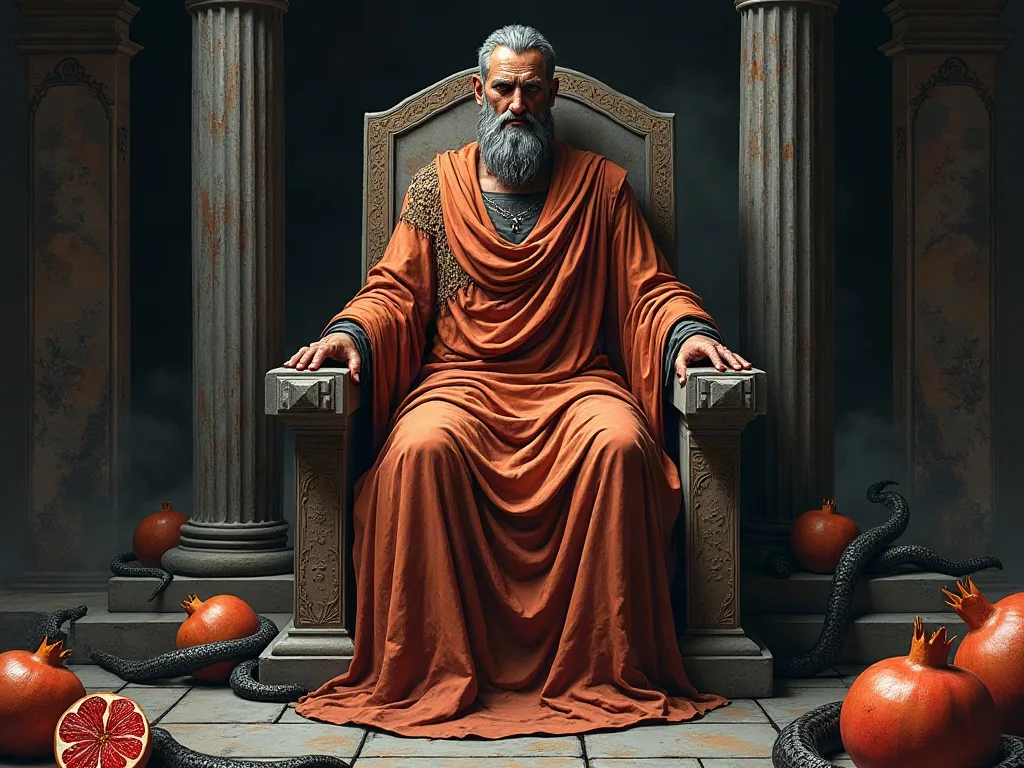
The game's Hades is entirely different. He wears a tailored red suit. He rules with quiet authority but suffers from severe depression and emotional isolation. He disapproves of his son's escape attempts not out of tyranny but out of fear: if Zagreus leaves, if his family abandons him further, the underworld will collapse without him. He is lonely, bound by duty, estranged from his wife. He has a therapist, Hecate, and a best friend in Nyx (the ancient goddess of night), both reimagined as warm, concerned figures rather than distant mythological essences.
The ancient Hades never had this inner life in any source. He ruled, accepted his lot, and appeared rarely in myth. The game invented his vulnerability. This is not a flaw in the game; it is its primary creative act. Supergiant wanted to explore what immortality and isolation do to a person. Hades the god became a vehicle for that exploration.
Persephone: From Victim to Complex Agent
The myth of Persephone and Hades has troubled readers for millennia. In most ancient versions, Persephone is a young woman (sometimes described as barely past childhood) who is kidnapped without consent. She spends six months or a year in the underworld with her abductor, then returns to earth for the other six months. Her mother Demeter's grief during that absence causes winter. It is a story about female powerlessness, marital coercion, and the brutality normalized in ancient society.
The game could not ignore this discomfort. Instead, it reframes the entire premise. In the Hades video game, Persephone left the underworld of her own choice, years ago. She abandoned Hades and Zagreus. She is alive on Olympus, and the two are locked in a marriage both feel is over. Zagreus barely remembers her. When he encounters her, she is not the meek, resigned figure of ancient myth but a powerful, manipulative woman with her own ambitions and regrets.
This Persephone is a complete reimagining. The ancient goddess had agency only within narrow bounds; the game gives her moral complexity and active choice. Many players find this version more honest about the emotional reality of failed relationships. Others see it as a misreading of the myth, removing the element of coercion that makes the story profound in its wrongness.
Both are defensible. What matters is recognizing the shift: the game did not inherit this Persephone from Greece. It built her.
Zagreus: A Hero the Ancients Never Knew
In genuine Greek mythology, Zagreus is an extremely minor figure. He appears mainly in one tradition: the Orphic mysteries, an esoteric religious cult that flourished in ancient Greece alongside mainstream religion. In the Orphic account, Zagreus is an illegitimate son of Zeus and Persephone, born in the underworld. Titans attack him, tear him apart, and devour him. Zeus takes what remains and resurrects him.
That is the extent of it. The ancient Zagreus has no personality, no narrative arc, no family drama. He is a symbol in a theology about death, rebirth, and divine transformation.
The game's Zagreus is an entirely original character. He is introspective, witty, trying to escape his father's kingdom and earn acceptance from Olympus. He is not the suffering victim of Orphic mythology; he is an action hero, a young man learning himself through repeated attempts at rebellion and escape. He has a strong British accent (in the English version), a modern sensibility, and genuine emotional stakes. The game made Zagreus a protagonist where ancient myth left only a cipher.
This is not a betrayal of myth but an act of creative courage: Supergiant took a forgotten scrap and gave it a soul.
The Olympian Family: Warmth vs Aloofness
In ancient Greek mythology, the Olympian gods are powerful, petty, and distant. They meddle in human affairs, love and seduce mortals, quarrel among themselves, but they exist in a separate realm. They are not relatable. They are awe-inspiring and terrifying.
The Hades game transforms Olympus into a place of family dysfunction. Zeus is a traditional patriarch, rarely present but wielding absolute authority. Athena appears as a rival warrior, competitive but respectful. Aphrodite is genuinely interested in Zagreus's romantic life and roots for him. Demeter is a hurt mother trying to rebuild her relationship with her estranged daughter.
None of these characterizations come from canonical myth. The ancient Aphrodite had no particular interest in matchmaking romance for young men (though she had many lovers herself). The ancient Demeter rarely appeared outside the Persephone cycle. The ancient gods did not attend therapy or send encouraging messages.
Yet something true lives in the game's approach: the Olympians were portrayed as having personality, motivation, and interior life. The ancient myths do give each god a character, a domain, a set of typical behaviors. The game translates those into modern psychology. It asks: if these beings were real and lived with human emotions, how would their mythological natures express themselves?
Achilles and Patroclus: An Ancient Love Made Explicit
One of the most celebrated additions in the Hades game is the romantic relationship between Achilles and Patroclus. Both characters appear in Homer's Iliad, the foundational epic of Greek culture. The ancient text shows them as inseparably close, with Achilles waging war on Troy partially out of rage at Patroclus's death. Scholars and readers have debated for centuries whether their bond was romantic or purely platonic.
The Hades game makes the answer clear: they are lovers, separated by circumstances, and the game allows you to reunite them. This is a creative choice, not a revelation from ancient source. The Iliad does not depict them as a couple. Later Greek writers, particularly the Hellenistic poet Aeschylus, explored the romantic reading, but it remained interpretation rather than fact.
The game's choice to make their love explicit and central serves a modern audience's need to see queer relationships in mythology. It also honors something real in the ancient text: the intensity of their connection, the centrality of their bond. The game did not invent their love; it named something the ancient world left ambiguous.
For many players, this is the game's deepest gift: showing that mythology can accommodate modern truth-telling without being falsified.
The Underworld's Architecture: Real and Reimagined
The underworld of ancient Greek myth was a complex place. Hades ruled it, yes, but it was not merely a hell. Charon, the ferryman, transported souls across the river Styx. The shades of the dead drank from the river Lethe and forgot their former lives. Some souls went to the Elysian Fields, a place of rest and reward. Others went to Tartarus, a deep pit for the wicked. Cerberus, the three-headed dog, guarded the gates.
The Hades video game keeps most of this architecture but changes its tone. The underworld becomes a vast, beautiful, dangerous realm. Charon still ferries souls, but now he is a jovial, merchant-like figure who sells you items. Cerberus is a loyal, three-headed hound you can pet and befriend. The rivers and halls have specific names and purposes. The Elysian Fields exist, but inaccessibly, as a mythical location rather than a destination zone.
The game's choice to make the underworld navigable, to allow Zagreus to traverse it repeatedly and meet its inhabitants, is entirely modern. The ancient underworld was a one-way trip. The living went there by mistake or through extraordinary means (like Orpheus with his lyre). Zagreus's repeated escapes are fantasy, comic book logic, not ancient theology.
But the geography feels true. The names are correct. The cosmology respects the source material while adapting it for gameplay.

Combat and the Hero's Journey: A Modern Lens on Ancient Narrative
Ancient Greek myth is full of combat. Heracles fights monsters. Achilles battles Trojans. Perseus defeats Medusa. The hero's journey through danger and trial is ancient.
The Hades game remixes this into roguelike dungeon mechanics. Zagreus fights through the underworld's layers, dies repeatedly, returns to his father's palace, and tries again. Each run reveals new story details, new relationships, new dialogue. It is a video game structure, not an ancient narrative form.
Yet the underlying pattern is real: the hero must face trials, must be tested, must persist through failure. Ancient quests did not loop and respawn, but they did demand courage, repetition, and growth through suffering. The game translates that ancient truth into interactive form.
Nyx, Hecate, and the Reinvention of Minor Figures
In ancient Greece, Nyx was a primordial goddess of night, one of the oldest powers in the cosmos. She appeared in Hesiod's Theogony (a poem from around 700 BC that describes where the gods come from) but had no cult worship, no mythology, no personality in the surviving sources. She simply was.
Hecate was a goddess of magic, crossroads, and liminal spaces. She was real, worshipped, and important to mystery religions. But she was rarely depicted as warm, maternal, or emotionally invested in individuals. She was powerful and distant.
The Hades game transforms both into fully realized characters. Nyx becomes Zagreus's adoptive mother, warm and supportive. Hecate becomes his mentor in magic, stern but caring. They have dialogue trees, emotional arcs, and genuine relationships with the protagonist.
This is pure invention. The ancient sources offer almost nothing about Nyx's personality or Hecate's inner life. The game created both from near-total imaginative freedom. And in doing so, it made the underworld feel inhabited, lived-in, real in a way that sparse ancient texts never quite could.
Why Supergiant's Choices Matter: Storytelling and Source Fidelity
The Hades video game succeeds because it respects the bones of the myth while daring to imagine flesh. It does not pretend to be a historical recreation. It is openly a work of fiction that uses mythology as material.
Consider how this differs from a game that tried to be "true" to ancient sources. Such a game would show Zagreus as a theological abstraction. It would depict Hades as a distant, impersonal force. It would treat Persephone as a tragedy, not a character. It would have no dialogue, no romance arcs, no personality. It would be accurate and dead.
Instead, Supergiant chose to make the myths alive. To do so, it had to humanize the gods, give them vulnerabilities, grant them ordinary emotional stakes. That required violating historical accuracy. But it honored something deeper: the ancient impulse behind these stories. The Greeks told myths about gods because gods let them explore human questions. The Hades game does the same thing, just with modern psychology and interactive form.
The Real Myth: Persephone's Resilience
If the Hades game takes one theme from the ancient sources and amplifies it, it is Persephone's resilience. In all versions of the myth, ancient and modern, Persephone survives. She endures a devastating loss (kidnapping, marriage, separation from her mother). She negotiates with her abductor and the gods. She spends half her time in the underworld and half in sunlight, and that balance sustains the seasons themselves. She is not erased by her suffering.
The game's Persephone retains this core: she is a woman working through trauma and emotional distance. She is not passive. She acts. The game reimagines the specific actions, but the underlying resilience is genuine to the myth.
Frequently asked questions about the Hades game and Greek mythology
Frequently asked questions
Is Zagreus a real god from ancient Greek mythology?
Zagreus is real but extremely obscure. He appears only in Orphic mystery religion, an esoteric tradition that existed alongside mainstream Greek religion. The Orphics describe him as a child of Zeus and Persephone, born in the underworld and torn apart by Titans. The ancient Zagreus has no personality or story. The Hades video game character is almost entirely original.
Did Hades and Persephone have a son named Zagreus?
No. In ancient mythology, Persephone and Hades had no children together in most sources. The Orphic tradition mentions Zagreus as a son of Zeus and Persephone (not Hades and Persephone), born before her marriage to Hades. The game created the family dynamic entirely.
Did Achilles and Patroclus have a romantic relationship in ancient Greece?
The ancient texts do not explicitly say. Homer's Iliad shows them as inseparably close, with Achilles waging devastating war to avenge Patroclus's death. Later Greek writers, particularly in Hellenistic periods, interpreted their bond as romantic. Scholars debate this interpretation. The Hades game makes the choice clear: they are lovers. This is a modern reading, not a recovery of lost ancient fact.
Why does the game make Hades depressed and emotionally vulnerable?
The ancient Hades had no psychological inner life in the sources. The game reimagined him to explore the emotional cost of isolation and duty. This is a creative choice specific to the game, not something drawn from myth. It serves the narrative purpose of making Hades a sympathetic character rather than a distant archetype.
Are the names and locations in the game based on real Greek mythology?
Should I read ancient sources after playing the Hades game?
Yes. The game uses mythology as a springboard, not a retelling. Reading the actual myths will show you what the game inherited and what it invented. Homer's Iliad, Hesiod's Theogony, and the Homeric Hymn to Demeter are the main sources. You will enjoy both: the game is richer knowing what it's playing with, and the ancient texts gain new resonance when you see how modern storytellers adapt them.
How Modern Myth-Making Differs From Ancient Storytelling
The Hades game raises a larger question: how do we retell myths in the modern world? The ancient Greeks did not see mythology as fixed scripture. Every poet, every playwright, remixed the stories. Aeschylus told the Oresteia differently than Homer would have. Euripides challenged traditional versions. Ovid Romanized the Greek myths, adding new details and reframing old ones.
The game inherits that tradition of play and reinvention. But it also serves a function the ancient myths did not: it needs to sustain engagement across dozens of hours of gameplay. It needs character arcs, dialogue trees, relationship progression, and repeatability. These requirements force modernization. The ancient myth could be sparse and symbolic; the game must be full and interpersonal.
This does not make the game false or inferior to the source. It makes it a sibling art form, responding to the same deep human questions (How do we survive isolation? What do we owe our families? How do power and love coexist?) but using different techniques. The game shows that mythology is not a museum piece but a living practice: we inherit these stories and tell them again for our moment, with our tools and our concerns.
The Hades video game will not be the last modern retelling of these myths. Other games, shows, and books will come, each making their own choices about what to keep and what to invent. Each version teaches us something about both the myth and ourselves.
Free 25-page sample
Want the whole story?
Take the first 25 pages free. If it pulls you in, the full edition is yours as an instant PDF download, with a paperback on Amazon for selected titles.

Mythology
The World Mythology Book: The Gods, Heroes and Myths of Every Culture
The Gods, Heroes and Myths of Every Culture, in One Volume
The whole of world mythology in a single volume: Greek, Norse, Egyptian, Japanese, Hindu, Celtic, Slavic, Mesoamerican and African myths gathered side by side, each drawn from the primary sources.