
The Legend of Zelda Mythology: Inspirations Explained
Discover how The Legend of Zelda weaves Norse, Japanese, Greek, and Celtic mythologies into its world. From Yggdrasil's echoes to Shinto spirits, explore the real myths behind gaming's greatest hero.
Contents
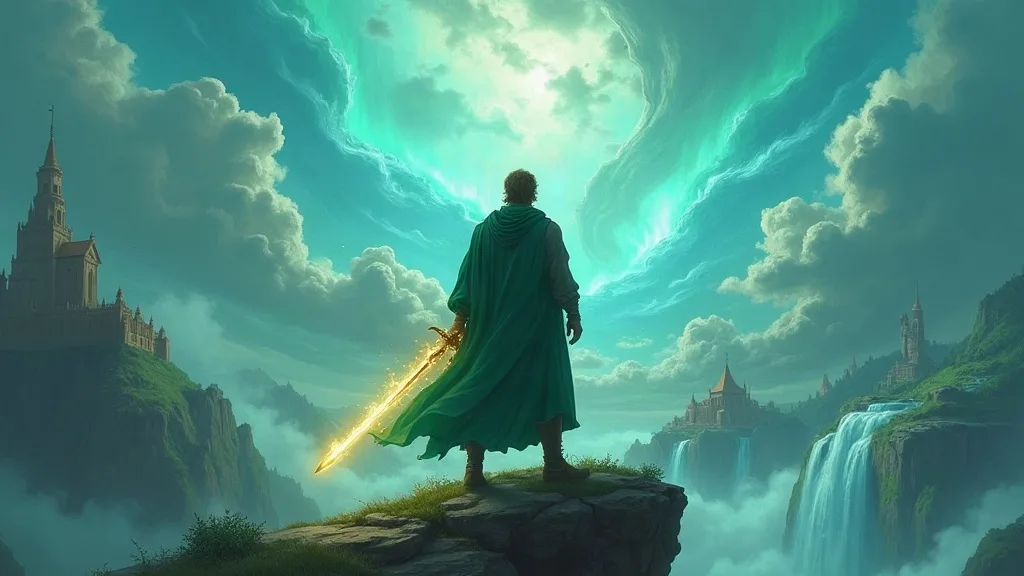
The moment Link draws his sword, he echoes a thousand myths. That blade, that tunic, that cyclical journey across corrupted lands and celestial realms: these aren't incidental trappings. Shigeru Miyamoto and Eiji Aonuma built The Legend of Zelda on a careful architecture of world mythologies. Norse cosmology flows through Breath of the Wild, Shinto reverence permeates Twilight Princess, Greek hero's journeys animate Wind Waker, and Celtic mysticism hums beneath Majora's Mask. Understanding these roots transforms how we read the games. Link stops being just a video-game hero and becomes an echo of Odysseus, of Gilgamesh, of the sacred kings of old.
This essay maps the mythological DNA of Zelda: which myths inspired which worlds, how ancient stories shaped game design, and why these echoes matter.
The Foundational Link: Norse Mythology and Cosmic Cycles
The most obvious mythological scaffold in Zelda is Norse cosmology. Breath of the Wild doesn't just reference the Norse mythology; it mirrors the structure of Yggdrasil, the World Tree that holds Nine Realms in branches and roots. Hyrule itself becomes a version of Midgard, the human realm, surrounded by forces of chaos. Calamity (the game's central threat) echoes Ragnarok, the Norse end-times, when order crumbles and old powers surge forward. When players destroy the Divine Beasts, they're not just solving puzzles; they're performing a ritual cleansing, a reversal of cosmic corruption, which is exactly the work of heroes in Norse myth.
The recycling of cycles in the Zelda timeline reflects the Norse view that time is not linear but cyclic. The timeline splits into three branches after Ocarina of Time, much as Norse cosmology describes multiple paths through fate. Calamity returns not once but repeatedly across ages, echoing the cyclic nature of Ragnarok: destruction and rebirth, eternal recurrence. This isn't Greek fate (linear, predetermined). It's Norse: cycles that break and reform.
Notably, Ganon (or Ganondorf), as a figure who refuses to stay dead, mirrors the undying malice of Midgard's enemies in Norse thought. He is the serpent, the fire, the returning chaos. His connection to the Triforce (the three-part divine object that grants wishes) also echoes the structure of Norse cosmic triads: past, present, future; earth, sky, sea; creation, preservation, destruction.
Shinto and Spirit Reverence in Twilight Princess and Skyward Sword
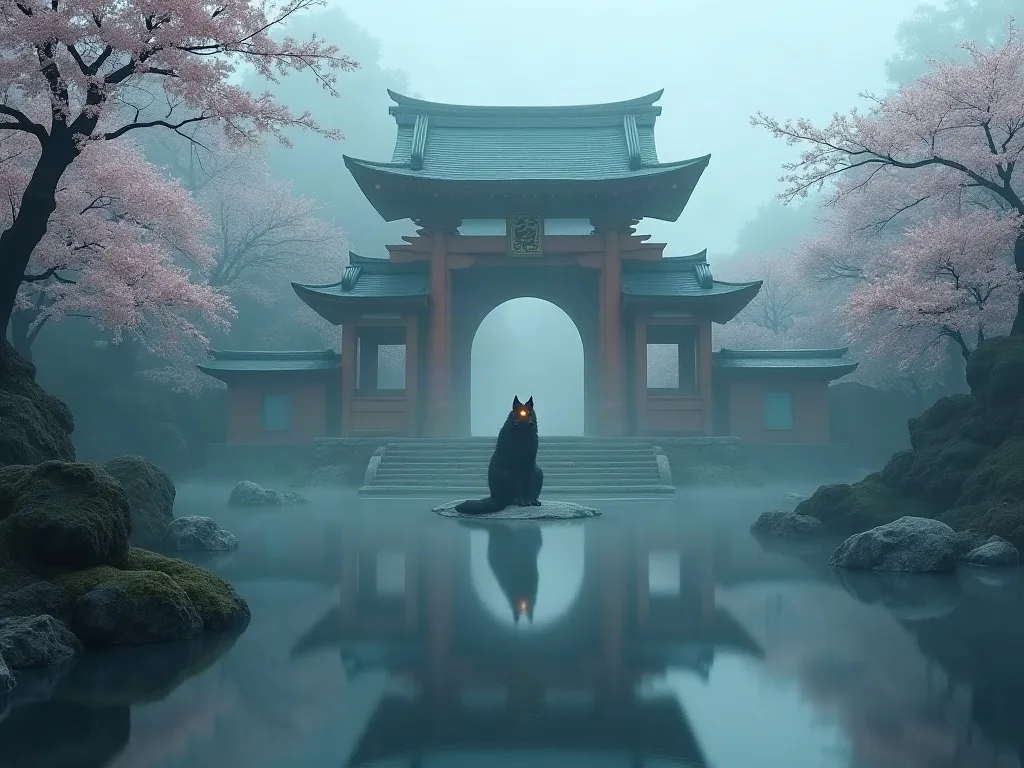
Japanese mythology, particularly Shinto beliefs, deeply influences several Zelda games. Twilight Princess is the clearest example. The Sacred Realm in that game operates as a version of the Shinto kami-no-sekai, the spirit world, inhabited by sacred forces and ancestors. The Mirror of Twilight functions like a Shinto mirror (an yata-no-kagami), a sacred object that reveals truth and separates worlds.
Wolf Link himself is a transformation motif rooted in Japanese folklore, where foxes (kitsune) and wolves (ookami) are shapeshifters and spiritual guardians. The Twilight Realm's nature as a corrupted mirror of the normal world parallels the Shinto concept of mononoke, spiritual pollution or disturbance that must be cleansed through ritual. When Link purges the Twilight, he's performing a spiritual purification, a misogi, central to Shinto practice.
In Skyward Sword, the relationship between the Master Sword and the Spirit Realm echoes Shinto reverence for sacred objects. Blades in Japanese mythology carry kami (divine essence). The sword-forging sequences, where the blade is tempered through trials, parallel the Japanese craft philosophy of kami-sama, the divine presence in careful creation. The Sky Realm itself, inhabited by the goddess Hylia and her chosen descendants, reads as a Shinto conception of an elevated divine plane, distinct but accessible through sacred sites (temples, shrines).
Greek Epic Heroism in Wind Waker and Ocarina of Time
Wind Waker draws its oxygen from Greek mythology, particularly the odyssey narrative (journeying across seas, facing trials, proving worth). Link's voyage from island to island, gathering pieces of a greater whole (the Triforce of Courage) mirrors Odysseus' journey in Homer's Odyssey. Like Odysseus, Link faces cyclops-like monsters (Stalchilds), encounters with divine beings, and must navigate between mortal and immortal realms. The game's structure is episodic, each island a canto; the overall arc is homecoming, the Greek nostos, a return to a lost golden age.
Valoo, the dragon/sky spirit, carries echoes of Greek draconic forces (compare Python, the serpent guarding Apollo's shrine). The Master Sword itself becomes a hero's fetish object in the Greek sense: the weapon that marks divine favor. Ganondorf, when defeated, descends into water and darkness, a katabasis, a descent into the underworld, much like how Greek heroes faced death gods and returned transformed.
Ocarina of Time, meanwhile, structures itself around the coming-of-age hero, the Greek paideia narrative. Link begins as a boy, trains under mentors, enters a magical realm (the Sacred Realm, parallel to the Greek underworld), and emerges as an adult hero ready for final trials. The Temple of Time functions as Apollo's oracle site might: a threshold where past and future collapse, where destinies are revealed and reversed.
The time-split mechanic (child Link, adult Link) echoes Greek chronological symbolism: Kronos (time) as a force that separates youth from maturity. By controlling time, Link mirrors the Olympian prerogatives; he becomes more than human.
Celtic Mysticism and Transformation in Majora's Mask
Majora's Mask is the Zelda game most steeped in Celtic and Celtic-adjacent mythology. The mask transformation system draws from Irish and Welsh tales of shape-shifting, where heroes and gods assume animal or hybrid forms to navigate between worlds. The Morrigan, the Celtic goddess of battle and transformation, appears implicitly throughout: masks grant not just new forms but new destinies, new deaths.
The three-day cycle that repeats in Majora's Mask mirrors the Celtic obsession with triadic time: cycles of three, spirals, and recursive patterns. Tír na nÓg, the Celtic Otherworld, is often described as outside normal time, where one day is a year; Majora's Mask's looping seventy-two hours create a similar temporal bubble, a trap and a test.
The Skull Kid, possessed by Majora's Mask, echoes the sidhe (Celtic fairy folk) and their capricious, dangerous magic. The mask itself is a foreign corruption, much as Celtic mythology often treats enchantments as invasive or otherworldly. Solving Majora's Mask requires community ritual (awakening four giants tied to cardinal directions and seasonal themes, very Celtic in structure), not just individual heroism.
The Bomber's Notebook, which tracks the townspeople's daily lives and emotional arcs, reflects a Celtic literary tradition of intimate knowledge of character and fate. It's almost a geis, a sacred obligation: to know and honor each person's story within the cycle.
The Triforce as Cosmological Trinity
The Triforce, Zelda's central symbol, deserves its own analysis. It appears in nearly every game and represents three divine gifts: Power, Wisdom, Courage. This is not uniquely mythological; it's universal. But the structure echoes multiple traditions simultaneously.
In Norse terms, Power, Wisdom, and Courage map to the three Norns: Urd (fate/power from the past), Verdandi (becoming/wisdom in the present), and Skuld (courage for what's to come). In Hindu cosmology, the Triforce parallels the Trimurti: Brahma (creator/courage to build), Vishnu (wisdom/preservation), and Shiva (power/dissolution). In Celtic terms, it echoes the triple goddess: Maiden (Courage), Mother (Wisdom), Crone (Power).
What makes the Triforce brilliant is that it's structurally indifferent to which mythology you apply it to. It functions as a universal divine template, much as the monomyth (the Hero's Journey) crosses all cultures. This allows Zelda to remain mythologically plural: no single game commits to one tradition, but all draw from the same archetypal well.
Underworld Journeys and the Sacred Descent
Across all Zelda games, the descent into the underworld (or its equivalent) is mandatory. In Ocarina of Time, Link enters Shadow Temple. In Wind Waker, he descends into the flooded Hyrule, the sunken civilization. In Twilight Princess, he enters the Twilight Realm. In Breath of the Wild, he ventures into Shrines, each a pocket underworld with its own logic.
This pattern draws from every mythological tradition. Greek heroes descend into the underworld (Orpheus, Heracles, Odysseus); Norse heroes enter Muspelheim or Niflheim; Hindu texts describe descents into the netherworld (pataloka); Celtic heroes enter sidhe mounds or fairy hills. The underworld journey serves a consistent function: transformation, confrontation with death, and return with knowledge or power. Link emerges from each descent changed, carrying a new piece of the puzzle.
The boss creatures that inhabit these spaces are often chimeric, mixing animal and human traits: part serpent, part giant, part spirit. This mixing echoes how mythological underworld guardians (Cerberus, Jormungandr, Rahu) blur categories. They test Link by forcing him to adapt his strategy, much as mythological heroes must learn the underworld's rules to survive.
Divine Kingship and the Eternal Return of Heroes
One of the deepest patterns in Zelda is the concept of divine kingship: the idea that certain bloodlines carry sacred destiny. Link himself is never explicitly royal, but he serves the royal family. Zelda (the princess) carries Hylia's blood, a direct divine lineage. This echoes the divine-right monarchies of real-world mythology.
The Japanese imperial line, claimed to descend from Amaterasu (the Shinto sun goddess), shaped Aonuma's and Miyamoto's thinking here. European heraldry and Arthurian legend (where kings and queens are chosen by destiny) also inform Zelda's royal mystique. Ganondorf, as a usurper, breaks the cosmic order by seizing what was not destined for him. When he falls, order is restored not through military victory alone but through spiritual rebalancing.
The recurring resurrection of heroes and villains in different timelines suggests reincarnation, a concept central to Hindu and Buddhist mythology. The timeline's branching, with multiple Links and Zeldas across ages, implies that the same archetypal souls return repeatedly, much as Vishnu incarnates whenever balance is threatened. This elevates the games beyond simple fantasy: they become mythic recurrence, the eternal return of sacred struggle.
Alchemy, Transformation, and the Philosopher's Stone
Several Zelda games feature alchemy and transformation: making potions, fusing materials, changing forms. In Ocarina of Time, the Blue Fire and Red Fire have alchemical properties. In Tears of the Kingdom, the entire Fusing system is essentially applied alchemy, combining base substances into new properties. This reflects a real mythological preoccupation: the transmutation of the base into the divine.
Alchemy appears in multiple traditions: Hermetic alchemy (seeking the Philosopher's Stone), Chinese Daoism (elixir of immortality), Indian rasavada (mercury and mineral alchemy for liberation), and medieval European grimoire traditions. All share the idea that matter can be spiritually elevated through process and intent. Link's alchemy isn't just gameplay; it's a spiritual metaphor for his own transformation from boy to hero.
The recurring theme of sacred objects conferring power (the Master Sword, the Ocarina, the Medallions) aligns with how mythological traditions treat crafted objects. Excalibur in Arthurian legend, Gungnir in Norse myth, Trident in Hindu myth: the object embodies cosmic order and can only be wielded by the worthy.
Water, Gardens, and Paradises in the Zelda Cosmos
Water appears everywhere in Zelda: the Great Sea of Wind Waker, Lake Hylia, Zora's Fountain, flooded temples. In mythology, water is the primordial element from which creation emerges (Egyptian Nun, Hindu Apas, Norse Mimir's Well). Water also destroys and purifies. The games use water similarly: as boundary, as source, as trial.
The recurring Zora race (water-dwelling people with fish-like traits) draws from global water mythology: mermaids and tritons in Greek myth, the Apsaras in Hindu, the selkie in Celtic lore. Zoras are neither fully human nor animal, echoing how water-spirits occupy liminality in myth. Their kindness to Link in many games (they're often allies) parallels how water-spirits in folklore can be benevolent guides or teachers.
The Lost Woods and Sacred Groves evoke the Celtic forest as a place of initiation and danger. In Irish myth, entering a fairy mound (sidhe) means time passes differently; in Zelda, the Lost Woods is spatially impossible, looping back on itself, testing the traveler's wit and memory. These spaces aren't just game design; they're enacted mythology, where the player physically experiences the disorientation the hero feels entering the sacred.
The Corruption Motif and Mythological Evil
Calamity, Twilight, Majora's Curse: Zelda's primary antagonistic forces aren't personified evil but rather cosmic contamination. This reflects how many mythologies view evil not as individual malice but as imbalance, disorder, spiritual pollution (mara in Buddhist thought, asuras vs. devas in Hindu, giants vs. Aesir in Norse).
Ganondorf, when he appears, is often depicted as a conduit for this larger corruption. In Wind Waker, he's portrayed almost sympathetically as a man trying to reclaim a drowned civilization, motivated by loss rather than pure malevolence. This nuance echoes how complex mythological figures (Loki, Ravana, Prometheus) are rarely simple villains.
The cyclical return of evil mirrors the Norse concept of Ragnarok: evil cannot be permanently destroyed, only defeated and waited out until the next return. This fatalism, which Western audiences often find pessimistic, is actually liberating in mythological terms: if destruction is inevitable, then heroism is about how you face it, not whether you win forever.
Breath of the Wild's Shamanic Landscape
In Breath of the Wild, every shrine, every puzzle, every sacred site operates as a shamanic threshold. The Sheikah Slate (Link's magical tool) functions like a shaman's knowledge; it reveals hidden truths and opens passages to spirit-worlds. The Divine Beasts are vast, living engines of power, similar to how shamanic traditions treat sacred animals as embodiments of natural forces.
The Gerudo people, desert-dwelling warriors with distinct aesthetics and customs, evoke Bedouin cultures and also shamanic traditions where knowledge of wild landscapes is sacred power. Urbosa, a Gerudo champion, wields lightning as if calling ancestral spirits; this parallels how shamans in many cultures (Siberian, indigenous American, African) commune with weather and animal spirits.
The game's freedom of approach (solve puzzles in any order, climb any mountain, ignore the main path) reflects a shamanic, non-linear cosmology. There is no single correct path to enlightenment, only many ways to navigate the sacred landscape. This contrasts sharply with the more tightly structured dungeons of earlier Zeldas, which followed a linear, almost Christian narrative arc: descent, trial, redemption.
Comparative Mythology: What Zelda Reveals About All Myths
By assembling Norse, Japanese, Greek, and Celtic elements into a coherent world, Zelda inadvertently reveals what scholars call the monomyth: the underlying pattern common to all great stories. Joseph Campbell identified this structure in his work The Hero with a Thousand Faces: the call to adventure, the crossing of thresholds, the ordeal, the revelation, the return. Every Zelda game follows this arc, and because it borrows from multiple traditions, it proves Campbell's thesis.
But Zelda also innovates. It treats mythology not as closed historical artifact but as living framework, something that can be remixed, reinterpreted, and made contemporary. When Breath of the Wild presents Link as silent and adaptive, it's updating the talkative, questing Odysseus into a version suited to modern, player-driven narrative. When Twilight Princess blends Shinto and European medieval fantasy, it suggests that mythological blending is itself mythological: cultures have always borrowed and adapted.
This is how mythology actually works in real life. The Romans absorbed Greek gods into their own pantheon. Hinduism synthesized Vedic and Dravidian elements. Norse Christianity fused pagan and Christian symbols. Zelda's mythological plurality isn't a betrayal of myth; it's myth's truest operation.
From Game Design to Mythological Function
Understanding Zelda's mythology also illuminates its game design. The dungeon structure (enter a corrupted space, solve its logic, restore it) is mythological before it's ludic. It's the shamanic journey: enter the spirit-world, learn its rules, heal it, return. The boss battles are confrontations with archetypal forces (a beast-headed giant, a mechanical god, a shadow-twin). The collection quests (gathering Medallions, Spiritual Stones, Divine Beasts) parallel real-world pilgrimage: visiting sacred sites, earning spiritual completion.
This is why Zelda games feel significant in a way many games don't. They're not just stories set in fantasy worlds; they're enactments of mythological structures. The player isn't watching a hero; they are the hero, walking the mythic path.
Mythology Beyond the Games: Fan Creation and Modern Myth-Making
One overlooked aspect of Zelda's mythological power is how players themselves become myth-makers. Fan theories about the timeline, fan art depicting Zelda pantheons, fan fiction exploring what happened between games: these are exactly how living mythologies work. Greek myths weren't fixed until Homer; they were told, retold, reinterpreted. Zelda fans do the same. They treat the games as a mythic corpus to be interpreted, argued over, and expanded.
This participatory mythology marks Zelda as genuinely alive in the mythological sense. It's not a museum piece but a growing, contested, living tradition. In this way, Zelda doesn't just reference mythology; it enacts it by inviting players into the work of myth-making itself.
Frequently asked questions about Zelda mythology inspirations
Frequently asked questions
Which mythology most influences The Legend of Zelda?
No single mythology dominates. Norse cosmology shapes Breath of the Wild's structure of cycles and cosmic balance; Japanese Shinto influences Twilight Princess and Skyward Sword's treatment of sacred realms and spiritual purity; Greek epic heroism animates Wind Waker and Ocarina of Time; Celtic mysticism permeates Majora's Mask's time loops and transformation magic. Zelda is deliberately pluralistic, drawing strength from multiple traditions simultaneously.
Is the Triforce based on a specific mythological symbol?
The Triforce's structure (three equal parts forming a whole) echoes universal trinity patterns: the Norse Norns, the Hindu Trimurti, the Celtic triple goddess. Rather than borrowing from one tradition, it abstracts a pattern that appears across cultures, making it a truly archetypal symbol. This allows different games to layer their own mythological meanings onto it.
Why does Link never speak?
Link's silence parallels shamanic tradition, where spiritual guides operate outside normal speech. It also mirrors the mythic hero as archetype: Link is every hero, so giving him a specific voice would limit his universality. Additionally, silence allows players to project themselves onto Link, making the mythic journey personal. This technique dates back to oral tradition, where listeners imagined heroes' voices themselves.
How does the Zelda timeline relate to mythological concepts of time?
The branching timeline after Ocarina of Time reflects Norse cyclical time (multiple possible futures, not one predetermined path) rather than Greek linear fate. By splitting into three branches, it embodies the Norse three Norns who weave past, present, and future. This structure insists that myth is not closed history but ongoing possibility, much as living mythological traditions continue to generate new stories and interpretations.
What do the Divine Beasts represent mythologically?
The Divine Beasts function as living embodiments of natural elements and cosmic forces. They parallel shamanic guardian spirits or Hindu devatas (celestial beings governing aspects of reality). Their corruption by Calamity mirrors how cosmic balance breaks when divine forces are inverted. Restoring them enacts a purification ritual found across cultures, from Shinto misogi to Hindu cosmic restoration (rita).
Are there mythological connections between Link and other famous heroes?
Absolutely. Link echoes Gilgamesh (seeking meaning through heroic trials), Odysseus (journeying across sacred landscapes), Rama (serving divine destiny through earthly action), and the Welsh hero Peredur (undergoing transformative quests). What unites them is the monomyth: the archetypal structure Campbell identified. Link is as mythologically resonant as these ancient heroes because he follows the same deep pattern.
The Zelda Pantheon: Building Modern Myth
What ultimately makes Zelda's relationship to mythology so significant is that it demonstrates myth is not historical artifact but living process. By synthesizing Norse, Japanese, Greek, and Celtic elements, Zelda doesn't dilute any single tradition; it reveals what all traditions share: an underlying language of sacred struggle, transformation, and cyclical return.
The games function as what classicist Mary Lefkowitz calls "mythic texts": stories designed to be endlessly interpretable, layered with meaning, responsive to their audience's concerns. Like the Odyssey or the Mahabharata, Zelda games can be read as entertainment, as spiritual instruction, as political allegory, as psychological journey. This multiplicity is not a flaw; it's the hallmark of genuine myth.
For players who've grown up with Zelda, the games have become their mythological education. Link's silent heroism, the sacred landscape, the cyclical threat of corruption and restoration: these have shaped how a generation understands heroism, destiny, and meaning. In that sense, Zelda is no longer derivative of world mythology; it's becoming its own modern mythology, a canon that will continue to generate interpretation, fan theory, and artistic response for decades to come. The games have become what they always quoted: genuine myth.
Free 25-page sample
Want the whole story?
Take the first 25 pages free. If it pulls you in, the full edition is yours as an instant PDF download, with a paperback on Amazon for selected titles.

Mythology
The World Mythology Book: The Gods, Heroes and Myths of Every Culture
The Gods, Heroes and Myths of Every Culture, in One Volume
The whole of world mythology in a single volume: Greek, Norse, Egyptian, Japanese, Hindu, Celtic, Slavic, Mesoamerican and African myths gathered side by side, each drawn from the primary sources.