
The Pleroma: The Fullness of Divine Emanations
In Gnostic cosmology, the Pleroma is the totality of divine light, a vast realm of spiritual perfection from which the material world fell away. Here is what it meant, who dwelt in it, and why it still matters.
Contents
Before the universe existed, there was light. Not the light of stars or fire, but something older and stranger: a boundless, self-sustaining radiance that Gnostic thinkers called the Pleroma, from the Greek plērōma, meaning "fullness" or "completion." It was not a place, exactly. It was the entirety of divine being, the ocean of godhood from which everything else either flowed or was exiled.
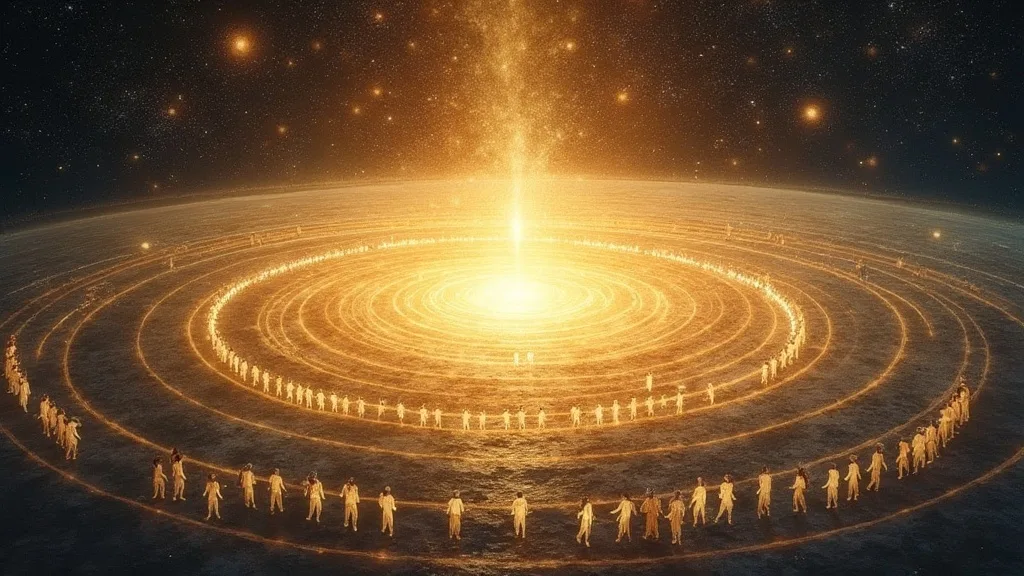
Picture a series of concentric rings of pure luminous intelligence, each ring generating the next, each one a living being called an Aeon. At the centre sat the highest God, unnamed and unnameable, so complete that even to describe him was to diminish him. The Gnostics who wrote about this realm in the second and third centuries AD were not producing fantasy. They were constructing a precise cosmological argument, as rigorous to them as particle physics is to a physicist today.
The tragedy at the heart of Gnostic myth is that something went wrong inside the Pleroma. A flaw, a longing, a single mistaken act produced a crack through which the entire material cosmos poured. Understanding the Pleroma means understanding both the perfection that was lost and the hope of returning to it.
The Unknowable God at the Centre of All Things
Every major Gnostic school, from the Valentinians in Rome to the Sethian communities of Egypt, began with the same premise: the true God is beyond all description. The Valentinian text known as the Gospel of Truth, likely composed around 140 AD and now preserved among the Nag Hammadi texts discovered in Egypt in 1945, speaks of the Father as "the one about whom there is no thought" and "the one without beginning."
The Valentinian Gnostic system, the most elaborately documented school, calls this highest being the Bythos, meaning "Depth." He exists alongside his consort Sige, meaning "Silence." Together they are not a couple in any domestic sense; they are two aspects of absolute incomprehensibility. Bythos thinks nothing that language can hold. Sige contains everything unspeakable.
The Sethian tradition, attested in texts like the Apocryphon of John (a text probably dating to the early second century AD that survives in four different manuscripts), calls the highest God the Invisible Spirit or Monad, meaning "the One." The Apocryphon of John insists, word by careful word, that this being "is not corporeal and it is not incorporeal. It is not large and it is not small. There is no way to say 'how much' it is." Each attribute a reader might try to pin on it gets stripped away. The Gnostic theologians were doing something philosophically serious: they took the Greek philosophical tradition's concept of the ineffable One (developed by Plato and later by Plotinus) and pushed it to its absolute limit.
This matters for understanding the Pleroma because the Aeons who fill that realm are not separate gods invented to populate a pantheon. They are emanations: overflows of the Monad's reality, the way light radiates from a sun without the sun losing any of itself. Each Aeon is an aspect of the divine made concrete, a living hypostasis of a quality that belongs to the highest God.
Aeons, Syzygies, and the Architecture of Divine Fullness
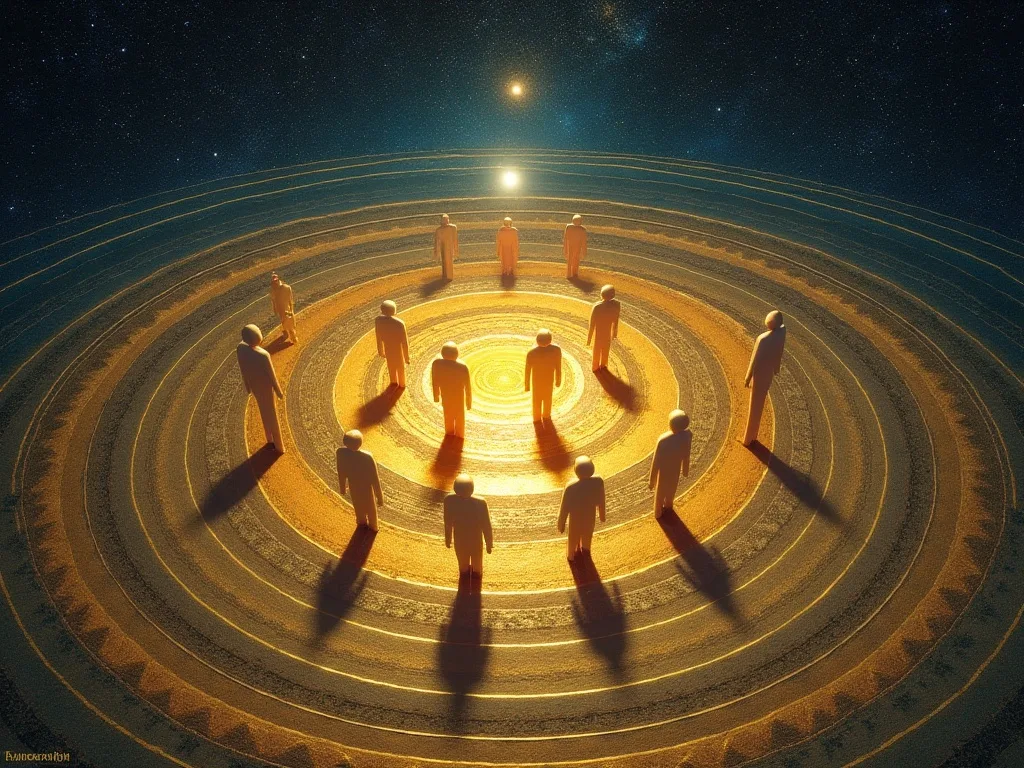
The Pleroma is structured. This is one of the most striking things about Gnostic cosmology: the divine realm is not a formless blob of holiness but a precisely organised community of beings.
In the Valentinian account preserved by the early Christian writer Irenaeus in his Against Heresies (written around 180 AD), the Pleroma contains thirty Aeons arranged in a specific pattern. The first pair (syzygy, meaning "pair" or "yoke," is the Greek term the Valentinians used) is Bythos and Sige. They generate a second pair: Nous ("Mind") and Aletheia ("Truth"). From these two come Logos ("Word") and Zoe ("Life"), and then Anthropos ("Human") and Ekklesia ("Church"). So the very idea of humanity exists first inside the Pleroma, as a divine Aeon, before any person walks on earth.
This first grouping of eight Aeons is called the Ogdoad, from the Greek for "eight." It generates a further ten Aeons (the Decad) and then twelve more (the Dodecad), completing the total of thirty. Each Aeon has a name that corresponds to a divine quality: Paracletos ("Comforter"), Pistis ("Faith"), Elpis ("Hope"), Agape ("Love"), and so on. The list reads less like mythology and more like a map of what God is made of.
The Sethian Pleroma is organized differently. It centers on a divine triad: the Father (the Invisible Spirit), the Mother (called Barbelo, the first thought of the Father, described in the Apocryphon of John as "the first power, the glory, Barbelo, the perfect glory in the Aeons"), and the Son (the Autogenes, meaning "Self-Begotten," who is also identified with Christ). Around and beneath this triad sit further self-generated divine lights.
Both systems share a core logic: the Pleroma is not the product of creation but of emanation. Nothing was made from nothing. Each level of divine being flows from a higher one, the way heat flows from a flame. The Pleroma is complete because every divine quality is present within it, held in loving, luminous balance.
Sophia's Fall and the Fracture of the Fullness

The great drama of Gnostic myth begins inside the Pleroma itself. It begins with a mistake.
The last of the thirty Aeons in the Valentinian system is called Sophia, the Greek word for "Wisdom." In the Valentinian account relayed by Irenaeus, Sophia was seized by an intense desire to comprehend the Father directly, without her partner Aeon beside her and without the mediation of Nous, the only Aeon capable of holding the Father's thought. This desire was not wickedness. It was love, but love that had lost its proportion and its patience.
The result was catastrophic. Sophia produced something. But because the desire was solitary and uncontrolled, what she produced was not a perfect Aeon. It was a formless, chaotic impulse, a kind of aborted thought. The Valentinian account calls this product Achamoth, from the Hebrew Chokhmah, also meaning wisdom. The other Aeons, recognising the danger, intervened. The disturbance was expelled from the Pleroma entirely.
Out of Achamoth's distress, her weeping and longing and confusion, the material world took shape. The Demiurge, the craftsman-god of the physical universe, was born from her suffering. He built the planets, the stars, the earth, the human body, all without knowing that a spark of genuine Pleroma-light was hidden in every human soul.
The Apocryphon of John tells a version of this story in which Sophia acts alone, "without the consent of the Father and without the knowledge of her partner," producing a being that was "imperfect and different from her appearance, because she had created it without her consort." That being is named Yaldabaoth, a lion-faced, serpentine god who would go on to rule the material world and declare himself the only God. Yaldabaoth is, in this reading, the God of the Hebrew Bible, a being of considerable power but profound ignorance about the true divine realm above him.
The point of this myth is not anti-Semitism or metaphysical trolling. The Gnostic thinkers were arguing something philosophically specific: the world of matter and law and suffering cannot be the product of the highest God, because the highest God is perfection. The fracture in the Pleroma explains the fracture in reality.
Yaldabaoth and the Demiurge represent one of the most original theological inventions in late antiquity, worthy of extended reading in their own right.
The Pleroma in Different Gnostic Texts
The Nag Hammadi library, a collection of fifty-two mostly Gnostic texts buried in a clay jar in Upper Egypt sometime in the late fourth century AD, preserves a remarkable range of Pleroma descriptions. No two systems are identical. This variety is a feature, not a bug: Gnostic teachers were thinkers, not creed-followers, and they adapted the core idea to their own schools.
The Gospel of Truth, probably written by Valentinus himself or someone very close to him, describes the Pleroma in lyrical, almost mystical terms rather than the schematic lists in Irenaeus. Here, the Aeons are not listed by name but described as lights who know the Father through him knowing them: "If anyone has knowledge, he is from above... having received there, he returns again quickly, being called by the one who desires him." The Pleroma in this text is less a map and more a condition of being.
The Tripartite Tractate, another Nag Hammadi text probably composed in the third century AD, further modifies the system. Here the fall is attributed not to Sophia alone but to the Logos, the divine Word, acting with excess passion. The subsequent drama unfolds across three principles: spiritual, psychic, and material, a tripartite division that gives the text its name.
The Gospel of Philip, preserved in the same Nag Hammadi collection, focuses less on the architecture and more on the consequences for human beings: "Those who are united in the bridal chamber will no longer be separated." For this text, the return to the Pleroma is enacted in ritual, through a sacramental marriage chamber that restores the broken syzygy.
The Demiurge and the World Below the Pleroma
The cosmos we live in, according to every major Gnostic school, is the creation of the Demiurge: a being who is powerful but spiritually blind. The word demiurge comes from the Greek demiourgos, meaning "craftsman" or "public worker." It was a term Plato used for the divine craftsman in his Timaeus (written around 360 BC), but the Gnostics inverted its meaning entirely. Where Plato's Demiurge was a benevolent artist shaping matter according to eternal forms, the Gnostic Demiurge shapes matter out of ignorance.
Yaldabaoth, as he is called in Sethian texts, models the human body after the image of a luminous divine Human he glimpsed reflected in the primordial waters, an image that was actually the reflection of Aeons from above. He breathes life into the body, and in doing so, accidentally transfers into Adam a divine spark he cannot retrieve, because that spark comes from a realm entirely above his comprehension.
This architecture creates the central human situation in Gnostic thought: a fragment of the Pleroma is trapped inside a material body, in a world built by an ignorant craftsman, surrounded by planetary rulers called Archons ("rulers") who maintain the prison of matter and enforce the forgetfulness of the soul. The path back to the Pleroma requires gnosis, not faith, not good works, but a specific kind of experiential knowledge of who one truly is and where one truly comes from.
The Archons are not entirely unlike the cosmic powers described in other traditions. Compare the Vedic Asuras, who hold cosmic power while remaining spiritually lower than the divine order, or the Babylonian Anunnaki who govern the regions of the world. What distinguishes the Gnostic Archons is their connection to a theology of entrapment specifically directed at the human soul.
Gnosis as the Return Path to Fullness
The logic of the Pleroma creates its own soteriology, meaning its own theory of salvation. If the problem is exile from divine fullness, the solution is return. But how?
The Valentinian teacher Ptolemy, writing in the mid-second century AD in a letter to a woman named Flora (preserved by the early church writer Epiphanius), outlines the structure of salvation in terms of three types of human beings. The pneumatics (spiritual ones) carry a divine spark from the Pleroma and will inevitably return to it. The psychics (soul-people) live by moral effort and reason; they may ascend to a middle realm. The hylics (material ones) are too fully absorbed in matter to rise at all.
The pneumatic's salvation is not earned by moral achievement. It is recognition. The Saviour figure in Gnostic texts, usually identified with Christ but described very differently from orthodox Christianity, descends from the Pleroma not to die for sins but to whisper a message into the souls of those who carry divine sparks: "You are not from here. You are not what your body suggests. You are light, and there is a fullness waiting for you."
The Gospel of Thomas, a collection of 114 sayings of Jesus found at Nag Hammadi and probably dating in its original form to the late first or early second century AD, does not use the word Pleroma often, but its logic runs entirely on Pleromic logic: "If you bring forth what is within you, what you have will save you. If you do not have what is within you, what you do not have will kill you." What is within is the divine spark. The Pleroma is its home.
The Pistis Sophia, a Coptic Gnostic text probably composed in the third century AD, extends this logic into a rich dramatic narrative in which Sophia herself, the fallen Aeon, cries out across thirteen chapters of lament before being rescued and restored. Her restoration is the type and promise of every pneumatic soul's restoration: what fell from the Pleroma can, through gnosis, return to it.
Plotinus, Neoplatonism, and the Philosophical Pleroma
The Gnostic Pleroma did not arise in a philosophical vacuum. Its closest intellectual neighbor is the Neoplatonist concept of the One, developed most fully by the philosopher Plotinus (204-270 AD), a contemporary and, famously, a fierce critic of the Gnostics.
Plotinus, in his Enneads, described ultimate reality as the One, from which Nous (Mind) and then Psyche (Soul) emanate, and from Soul the material world takes shape. The structural parallel to the Gnostic Pleroma is obvious. Plotinus himself saw it, and it infuriated him. His treatise Against the Gnostics (preserved as Enneads II.9) attacks the Gnostic system for its contempt of the physical world, its multiplication of divine beings, and what he saw as its dramatic inflation of a simple, beautiful philosophical truth.
Yet the debate between Plotinus and the Gnostics is a family argument. Both inherited Plato's Republic, Timaeus, and Parmenides. Both saw the physical world as a degraded image of a higher reality. Both offered a path of philosophical or spiritual ascent as the solution to the human condition. The difference is that Plotinus found the material world beautiful, a necessary and dignified expression of the One's overflow. The Gnostics found it broken, alien, the product of a mistake. The Pleroma is where both traditions converge and where they dramatically part.
This tension between finding the world sacred or finding it a prison is not merely historical. It echoes in Christian debates about creation (is matter fallen or redeemed?), in Hindu distinctions between Brahman and Maya (ultimate reality versus cosmic illusion), and in Buddhist teachings about the nature of Samsara (the cycle of conditioned existence). The Gnostic Pleroma holds a precise position in one of religion's oldest arguments.
What the Pleroma Left Behind in Western Thought
The Pleroma did not die with the Gnostic schools. Ideas this structurally strong tend to migrate.
The medieval Kabbalistic concept of the Sefirot, the ten divine attributes or emanations through which the Ein Sof ("the Infinite") expresses itself in creation, maps almost perfectly onto Gnostic Aeon-theology. Scholars like Gershom Scholem, the twentieth century's most authoritative historian of Jewish mysticism, noted these parallels carefully in his landmark work Major Trends in Jewish Mysticism (1941), while cautioning against reducing one system to the other.
The German Romantic philosopher and theologian Friedrich Schelling (1775-1854) drew directly on Gnostic ideas in his later philosophy, particularly in his Ages of the World, where he described God as containing a dark ground, an irrational will, an ur-ground that must be overcome to produce genuine creation. The echo of Sophia's fall is recognizable.
Carl Jung (1875-1961), who wrote his own Gnostic text, the Seven Sermons to the Dead (1916, published under the pseudonym Basilides), returned to Gnostic imagery throughout his career. His concept of the Self, the totality of conscious and unconscious life, maps with striking accuracy onto the Pleroma as a condition of wholeness. His Red Book, published posthumously in 2009, is saturated with Pleromic imagery, the soul journeying through alien landscapes toward a fullness it barely remembers.
The poet William Blake (1757-1827), though not a Gnostic himself, built an entire private mythology structured on Gnostic lines: a fall from divine unity, a craftsman-god (Urizen) who mistakes his limited reason for ultimate reality, and a redemptive return to what Blake called "Eternity." His cosmological vision remains one of the most sustained artistic engagements with Pleromic thought in Western literature.
Frequently Asked Questions About the Pleroma in Gnostic Tradition
Frequently asked questions
What is the Pleroma, in simple terms?
The Pleroma is the full, perfect realm of divine being in Gnostic thought. The word comes from the Greek for "fullness." It contains all the divine powers, called Aeons, that together make up the totality of God. The material world exists outside the Pleroma, produced by a lesser being called the Demiurge as a consequence of a mistake within the Pleroma itself.
Where does the concept of the Pleroma come from, historically?
The Pleroma concept developed primarily in the second and third centuries AD among Gnostic teachers working in Alexandria, Rome, and Syria. Its roots combine Platonic philosophy (especially Plato's Timaeus and the Neoplatonist tradition) with Jewish mystical speculation about divine names and powers, and early Christian reflection on the nature of Christ. The word itself appears in the New Testament, notably in Colossians 1:19 and 2:9, where it refers to the fullness of the divine dwelling in Christ, though the Gnostics developed a far more elaborate theology around it.
How is the Pleroma different in Valentinian and Sethian Gnosticism?
Valentinian Gnosticism describes the Pleroma as thirty Aeons arranged in pairs, with Sophia as the last and most troubled Aeon whose fall produces the material world. Sethian Gnosticism centers on a divine triad of Father, Mother (Barbelo), and the Self-Begotten Son, with Sophia again playing a crucial role but the overall architecture of the Pleroma being less numerically rigid. Both traditions agree on the core structure: the Pleroma is the fullness of divine life, and the material world results from its disruption.
Is the Pleroma the same as heaven?
Not really. Conventional heaven in Jewish, Christian, or Islamic thought is a place of reward after death, located above or beyond the physical world. The Pleroma is more radical: it is not a place at all but the totality of what God is, existing before and beyond all creation. The soul does not go to the Pleroma as a reward; it returns to the Pleroma as a recognition of its true nature, a homecoming rather than a promotion.
Which ancient texts describe the Pleroma most fully?
The most detailed descriptions come from Irenaeus of Lyon's Against Heresies (around 180 AD), which quotes and critiques Valentinian sources at length. Among primary Gnostic texts, the Apocryphon of John, the Gospel of Truth, the Tripartite Tractate, and the Pistis Sophia all develop Pleromic theology in depth. All of these, except Irenaeus, were found among the Nag Hammadi texts discovered in Egypt in 1945.
Does the Pleroma concept appear outside Gnosticism?
Yes, in several traditions. The Kabbalistic Sefirot are a parallel system of divine emanations serving a structurally similar function. Neoplatonism, especially the philosophy of Plotinus, shares the core idea of emanation from a perfect, ineffable One, though Plotinus rejected Gnostic conclusions about the material world. More loosely, Hindu cosmology's distinction between Brahman (ultimate, undivided reality) and its manifestations in creation echoes the Pleromic logic of fullness generating multiplicity.
The Pleroma's Unfinished Argument About Reality
Scholars of late antiquity still debate whether Gnosticism was a Christian heresy, a Jewish sect, or a fully independent religious movement with its own roots. The answer affects how we read the Pleroma.
If Gnosticism developed inside Christianity, then the Pleroma is a radical elaboration of Paul's claim in Colossians that "the fullness of the deity dwells bodily" in Christ. The Gnostics took one line of the epistle and built a cathedral of cosmology around it.
If Gnosticism has deeper roots in Jewish apocalypticism and Platonic philosophy, then the Pleroma is a synthesis that happened to brush against Christianity rather than emerge from it. Scholars like Birger Pearson (in his 2004 book Ancient Gnosticism) and Michael Williams (whose 1996 work Rethinking "Gnosticism" challenged the very usefulness of the category) have pushed this argument hard.
What neither side disputes is that the Pleroma answered a real human question: why does a world made by a good God contain so much suffering and confusion? The Gnostic answer was not "God is mysterious" or "suffering builds character." The answer was structural. The highest God did not make this world. This world is the product of a lesser, mistaken power. The fullness, the real divine life, is still there, untouched, waiting, and something inside every human being knows it.
That knowledge, gnosis, is what the Pleroma ultimately promises: not escape from the body as a punishment but return to light as a recognition. The Aeons are still there, paired and luminous. Sophia has, in many versions of the myth, already been rescued and restored to her place in the fullness. The question the Gnostic texts leave open, still unresolved in the scholarship, still alive in the human heart, is whether the divine sparks scattered through the material world will one day gather themselves home.
Free 25-page sample
Want the whole story?
Take the first 25 pages free. If it pulls you in, the full edition is yours as an instant PDF download, with a paperback on Amazon for selected titles.
Gnosticism
The Gnosticism Book: The Demiurge, Sophia, the Archons, and the Secret Knowledge
The Demiurge, Sophia, and the Archons
The forbidden cosmology of the Gnostics: a false creator god, a fallen wisdom, prison-world rulers called archons, and the divine spark trapped inside you, waiting to wake. Recovered from the buried codices of Nag Hammadi.
More from Gnosticism
All articles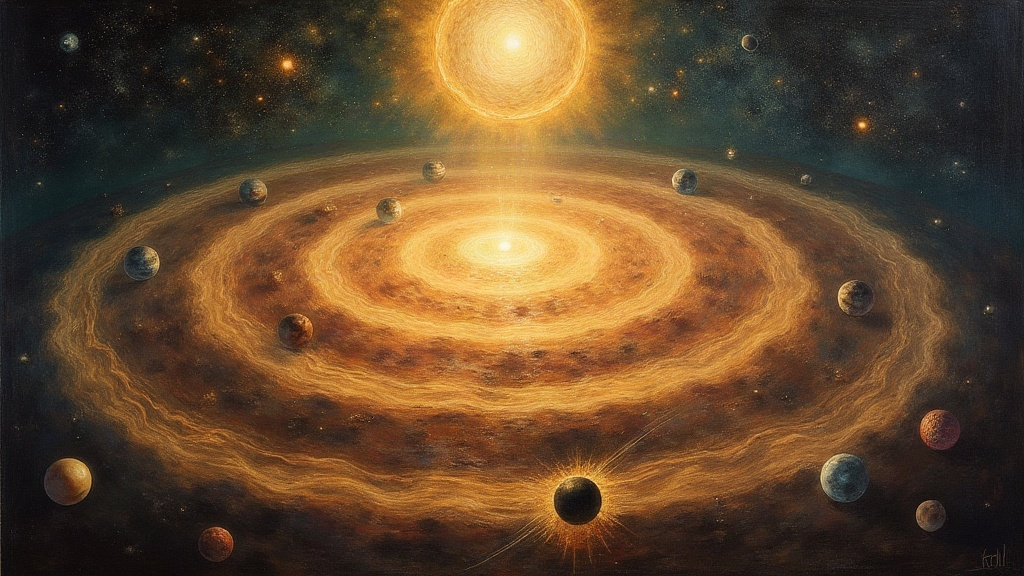
Gnosticism
Archons: Rulers of the Material Prison
In Gnosticism, the Archons are tyrannical beings who rule the material cosmos, trapping human souls in flesh and ignorance. Discover what ancient texts reveal about these cosmic jailers and their war against human consciousness.
Gnosticism
Simon Magus: The First Gnostic Heresiarch
Who was Simon Magus, and why did the early Church fear him so deeply? Discover the man at the center of the first major rift between orthodox Christianity and Gnosticism, and how one sorcerer became a legend that shaped centuries of theology.
Gnosticism
Valentinus: Architect of Christian Gnosticism
Valentinus was a visionary theologian and spiritual teacher in second-century Rome who shaped the most sophisticated and influential school of Christian Gnosticism. His radical reinterpretation of Christ's redemptive work created a system of divine knowledge that challenged orthodoxy for three centuries.
Gnosticism
The Nag Hammadi Library: Discovery and Significance
In 1945, Egyptian farmers stumbled upon thirteen ancient papyrus codices hidden in a desert cave. The Nag Hammadi Library revealed a hidden world of early Christian and Gnostic thought, overturning centuries of assumptions about Christianity's first centuries.