
Archons: Rulers of the Material Prison
In Gnosticism, the Archons are tyrannical beings who rule the material cosmos, trapping human souls in flesh and ignorance. Discover what ancient texts reveal about these cosmic jailers and their war against human consciousness.
Contents
The sky opens. A figure descends from the light above, brilliant and terrible. The seven spheres of the Archons begin to shudder. This is the visionary world of the ancient Gnostic scriptures: a cosmos not ruled by a loving God, but by a blind deceiver and his generals of flesh and shadow. The Archons are not demons in the way medieval Europe imagined them. They are commanders of the material world, architects of the prison that traps the divine spark within human bodies. For the Gnostics, the entire universe you see when you open your eyes is their dominion.
Who imprisoned the soul? Who convinced you that this world of suffering and meat is natural? The Gnostics had an unsettling answer: beings of immense power, neither wholly evil nor wholly ignorant, but trapped themselves in the machinery of creation, administering a system of cosmic enslavement. To understand the Archons is to glimpse a radically different cosmos from the one taught in the mainstream faiths that surrounded early Gnostic communities.
The Nature of the Archons: Flawed Architects of Matter
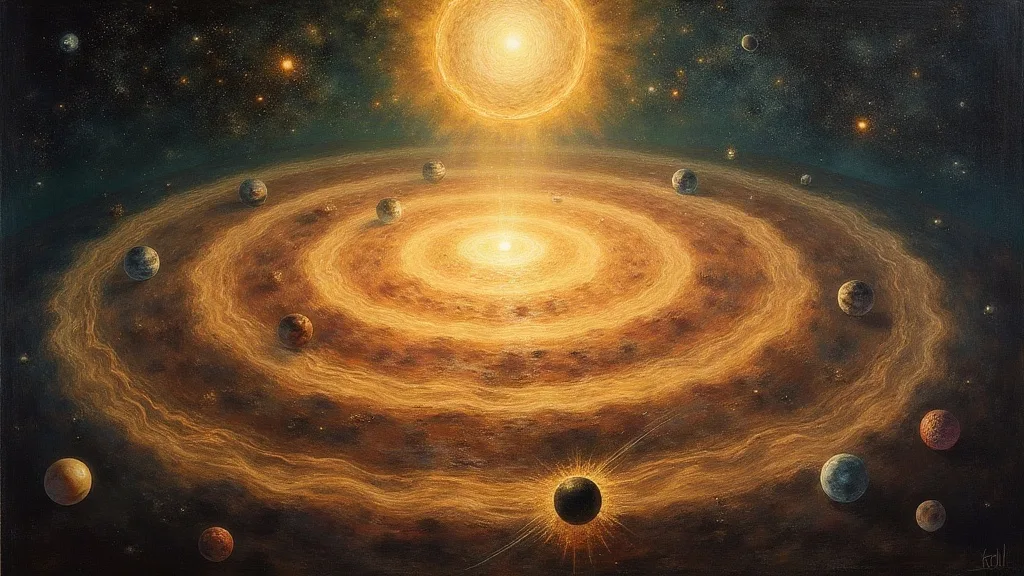
The Archons are not the servants of the true God; they serve the Demiurge, a blind and arrogant creator-god who mistakes himself for the supreme power. This distinction is vital. The Gnostics read the opening of Genesis not as a hymn to creation, but as a confession of ignorance. "Let there be light," the Demiurge declares. But he does not know the light that dwells above him. He rules only the material realm, the seven spheres that correspond to the planets known to ancient astronomy: Saturn, Jupiter, Mars, the Sun, Venus, Mercury, and the Moon.
Each sphere has its Archon, its governor. These beings are described in the Apocryphon of John, one of the most detailed Gnostic texts discovered in the Nag Hammadi library, as having animal forms or faces. One bears the face of a lion. Another of an ass. Another of a serpent. This is not fantasy; it is cosmology mapped onto the visible heavens. Each Archon embodies a planetary force, a cosmic principle. They do not hate humanity out of malice. They simply serve their nature: to bind, to confine, to enforce the laws of a prison they do not even recognize as such.
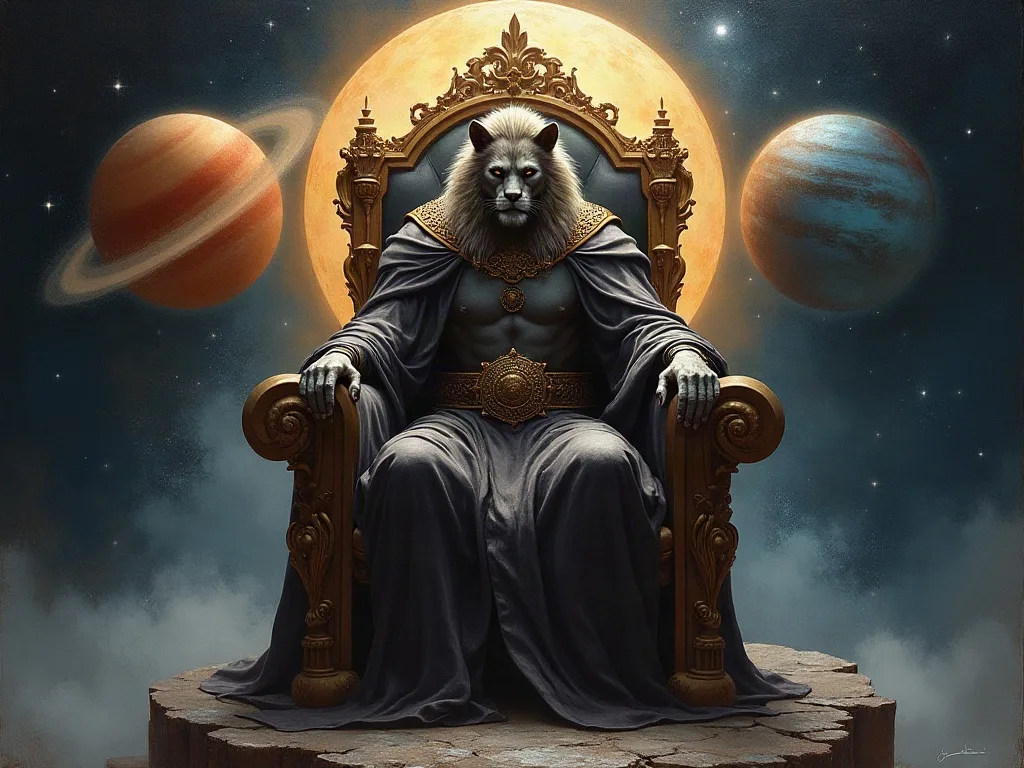
The chief Archon is Yaldabaoth, also called the Demiurge. He is described as the son of Sophia (Wisdom), who fell from the pleroma, the fullness of the divine realm. Yaldabaoth, blind and arrogant, looks upon his creation and declares, "I am God, and there is no other God beside me." The Gnostics saw in this declaration the most fundamental delusion: a demi-god mistaking himself for ultimate reality. Around him serve the other Archons, lesser but no less vigilant, each responsible for one of the material spheres.
What drives them? Not bloodlust or sadism, but something subtler: ignorance of their own nature combined with an almost bureaucratic commitment to order. They maintain the cosmos much as a prison warden maintains his cell block. The system itself perpetuates. The Archons do not need to actively torment the trapped; the machinery of matter, sensation, and desire does that work automatically.
The Cosmic War: How the Archons Trap the Divine Spark
The Gnostic cosmos is a war zone. High above the material spheres, in the pleroma, dwells the true God of light. Far below, imprisoned in the flesh, dwells the divine spark that is your innermost consciousness. The Archons stand between. They are the border guards, the soldiers of a cosmic occupation.
The creation of humanity, in the Gnostic reading, was an accidental by-product. Sophia, the Wisdom of the pleroma, fell into passion and desire. Her thought became too material, and she emanated Achamoth, a lesser wisdom, blind and terrified. From her dreams and anguish came the material world. The Archons, oblivious to anything higher, fashioned the human body as a vessel for the divine essence they did not realize they were trapping. It is as if slaves built a prison and forgot they were making a prison.
The Archons cannot allow consciousness to awaken. This is their primary function. They enforce forgetfulness. They implant false memories, false desires, false gods. The Gnostic texts describe how the Archons whisper to us:
"You are dust. You are born of dust, and to dust you will return. This flesh is you. These desires are you. This suffering is natural, inevitable, deserved."
Each whisper is a chain. The Archons administer the law of karma, the cycle of reincarnation, the machinery of guilt and punishment that keeps consciousness locked in the meat. They are what the Gnostics called the Heimarmene, the cosmic fate, the inescapable necessity that pins the divine spark to the wheel of becoming.
But the Archons have one fatal weakness: they cannot prevent knowledge itself. If a human being remembers their true origin, if they taste the light beyond the material, if they understand the deception, the entire structure shudders. This is why the Gnostics treasured gnosis, the direct knowledge of the divine. It was not theoretical knowledge; it was recognition, remembrance, awakening. The moment a soul knows itself as divine, the Archons have lost their grip.
The Seven Archons and Their Domains
The Apocryphon of John names the seven Archons and assigns to each a planetary sphere and an animal face. While the text exists in multiple versions, and details shift, the architecture is consistent. Each Archon represents a force that binds consciousness to matter.
Yaldabaoth, the chief, governs Saturn, the outermost and slowest of the visible planets. He is depicted with the face of a lion or serpent, bearing the ire and appetite of a predator. His decree flows downward through all the other spheres.
Yao rules Jupiter, depicted as an ass-headed or ram-headed figure. The Hypostasis of the Archons describes him as proud and dim-witted, yet functionally necessary to the cosmic machinery. Jupiter was associated with authority and law in classical astronomy; Yao enforces the rules.
Sabaoth holds Mars, the red war-god of the ancient world, depicted with a dragon or serpent face. He is the keeper of cosmic conflict, the enforcer of struggle and division.
The Sun, that visible giver of light and life, is ruled by an Archon whose face sometimes appears human, sometimes leonine. This is especially important: the Archons do not repel the light. They counterfeit it. The warmth and growth you feel from the sun is their distortion of the true light that dwells above the material universe. It is a magnificent lie.
Aphrodite (or an Archon bearing her name) governs Venus, keeper of desire and attachment. Through her sphere flows the magnetic pull of beauty, sex, belonging, all the emotions that bind the soul to the cycle of return and embodiment. She is not evil; she is the architect of a particular kind of forgetting.
Mercury, the swift messenger, is ruled by another Archon of quick intelligence and communication. His sphere teaches language, commerce, the building of civilization. These are not evil in themselves; but they tie consciousness to the external world, to the collective thought-forms of a fallen cosmos.
The Moon, closest to Earth, is the final barrier between matter and the starlit worlds above. Its Archon keeps time, enforces the rhythm of body, menstruation, appetite, the tides of biological compulsion.
Each sphere is a prison within a prison. The Archons do not hate the souls trapped within their domains; most of them do not even know the souls are trapped. They tend their spheres as a farmer tends a field.
The Role of the Demiurge: Blind Creator and Chief Architect
To fully understand the Archons, one must grasp the nature of the Demiurge, the being they serve. The Demiurge is not Satan in the Christian sense. He is something more subtle and more terrible: a demi-god of immense power who cannot perceive anything beyond his own domain.
The Apocryphon of John describes how Sophia, the highest Wisdom of the pleroma, produced the Demiurge without a true father, an act of passionate error. The Demiurge emerged ignorant of his own origins. When his eyes opened, he looked upon the void and the emanations of his mother's being, and believed he had created it all himself. His declaration, "I am God and there is no other," is not a boast. It is the sincere belief of a being of limited perception.
The Demiurge is not omnipotent. He is not omniscient. He is powerful within his domain and blind to everything beyond it. He created the material universe, the Archons, and the machinery of embodiment, all while believing himself to be the source of all good. The Gnostics read the God of the Old Testament through this lens: a being of power and will, yes, but not ultimate, and blind to mercy and kindness beyond the law.
The Archons function as the Demiurge's lieutenants. They obey him because they know no other master. They serve the system because they are, in a sense, part of the system itself. This makes them more tragic than simply evil. They are prisoners too, though they do not know it.
Knowledge as the Weapon Against the Archons: Gnosis and Awakening
The Gnostic path was not about moral perfection or faith. It was about knowledge: gnosis. This was not abstract theology. It was the direct, unmediated recognition of your true nature and the true nature of the cosmos. The moment this knowledge penetrated, the Archons began to lose their hold.
The Nag Hammadi texts describe how redeemer figures descended from the pleroma, messengers from above who carried knowledge past the Archons' sentries. These figures might appear in the form of a dream, a vision, a secret teaching, or even as an incognito descent into flesh. Their role was singular: to awaken the divine spark within human beings to the memory of its own origin.
When you gained gnosis, the Archons could not bind you in the same way. You understood the material world as a prison and therefore could no longer be fully imprisoned by it. The Archons might keep your body in the world; but your consciousness had already escaped. This is why the Gnostic traditions emphasized secrecy and hidden teachings. The Archons could not prevent someone who had already awakened from speaking; but they could prevent the spread of knowledge through fear, distortion, and the institutional machinery of false religions.
The Gnostics believed that the Catholic Church, with its insistence on obedience and divine reward for suffering, was itself a tool of the Archons. The earthly church, in this view, was a mirror of the cosmic prison. The promises of heaven and the threats of hell were the Archons' own machinery, adapted for use on Earth. This is why the early Gnostic communities were so rigorously persecuted. They were not heretics in the sense of holding slightly different doctrines. They were revolutionaries who taught that the official religion was itself a tool of cosmic enslavement.
The Archons Across Cultures: Echoes in Other Traditions
The concept of Archons as cosmic oppressors predates or parallels structures found in other mystical traditions. In Hindu philosophy, the concept of Maya, the cosmic illusion that binds consciousness to the wheel of samsara, shares structural similarities. The Archons are, in effect, the administrators of Maya. They maintain the illusion that keeps the soul believing it is separate from Brahman, the ultimate reality.
In Zoroastrianism, the great war between Ahura Mazda, the God of light, and Ahriman, the dark force, echoes the Gnostic cosmology. The Archons are, in a sense, the servants of a lesser Ahura Mazda, one who does not know the true light. The seven Archons may even correspond to the seven yazatas, the celestial beings who administer the cosmos, though in Zoroastrianism these are fundamentally good, not deceptive.
The Platonic concept of a Demiurge itself was a profound influence on Gnostic thought. Plato's Timaeus describes how a divine craftsman shaped the material world. The Gnostics took this idea and inverted it: what if the craftsman were ignorant and arrogant? What if he had created a prison, not a home?
Even in later Christian mysticism, the idea of cosmic authorities that must be overcome echoes the Archon concept. When Saint Paul writes of "principalities and powers," of "rulers of this darkness," he may be using language shaped by or in conversation with Gnostic cosmology. The cosmic war was not new to Christianity, but the Gnostics elaborated it into a complete alternative picture of reality.
The Problem of Evil: Why the Gnostics Needed the Archons
For Christian theology, the problem of evil has always been difficult. How can an omnipotent, omniscient God permit suffering? The Gnostics offered a radical answer: the God you think created the world did not. The true God is transcendent, perfect, and utterly removed from the material chaos below. The Archons and the Demiurge are responsible for evil, not because they are malicious (though some are), but because they are limited, ignorant, and operating according to laws inherent in matter itself.
This solved a problem that orthodox theology could never quite resolve. It also created a new one: how to explain why a perfect God would allow such a cosmos to exist at all? The Gnostic answer involved the mysterious fall of Sophia, a tragedy in the pleroma itself that cascaded downward into manifestation. The cosmos of the Archons is not an accident; it is a consequence of a cosmic drama whose full implications we cannot perceive from within matter.
The Gnostic cosmology also offered a profound comfort: your suffering is not your fault, and it is not punishment for sin. It is imprisonment. The cure is not repentance but awakening. The Archons do not want you dead; they want you asleep. And sleep can be broken.
The Archons in Modern Imagination: From Ancient Texts to Contemporary Myth
The ancient Gnostic texts were largely lost for over a thousand years. It was only with the discovery of the Nag Hammadi library in 1945, buried in the sands of Egypt, that the full scope of Gnostic cosmology returned to the modern world. Since then, the figure of the Archons has entered contemporary imagination in strange ways.
Science fiction has found in the Archons a ready-made metaphor for systems of control. The idea of beings who maintain reality through illusion, who feed on human consciousness, who are themselves trapped in a system they do not understand, has proven endlessly fertile. Philip K. Dick, whose work constantly probed the nature of reality and control, was deeply influenced by Gnosticism. His novels return obsessively to the question: what if the world we see is not what is? What if there are powerful beings maintaining the illusion?
Contemporary conspiracy theory, particularly the idea of hidden overlords and false reality, also echoes Gnostic Archon mythology. While the original Gnostic texts were sophisticated philosophical and visionary works, the metaphor of the Archons as hidden puppet-masters has proven too compelling to remain confined to academic study or historical reconstruction.
The Archons represent something deeper than any specific historical period or theological debate. They are the mythological embodiment of a question that has never died: Who controls the systems I move through? What am I not seeing? What if the frameworks I assume to be natural are actually imposed? These questions are eternal. The Archons are one answer, forged in the crucible of late antiquity, that continues to resonate.
Frequently asked questions about Archons in Gnosticism
Frequently asked questions
Are the Archons the same as demons or fallen angels?
Not exactly. Demons in Christian theology are typically fallen angels who rebelled against God out of pride or malice. The Archons are different: they are cosmic administrators who maintain the material universe without necessarily understanding that it is a prison. Some Archons are ignorant rather than evil; others are simply doing their job. This distinction is crucial to Gnostic theology, which does not frame the cosmos as a simple war between good and evil, but as a tragedy of limited perception.
Who are the primary sources for Archon mythology?
The Apocryphon of John is the most detailed account, existing in multiple versions in the Nag Hammadi library. The Hypostasis of the Archons offers another account with slightly different names and attributes. The On the Origin of the World provides additional cosmological details. These texts survived in Coptic translation, hidden in Egypt for over a thousand years, and were only rediscovered in 1945. Modern scholars rely on these sources and on fragments preserved in the writings of their critics, particularly the Church Fathers who worked to refute Gnosticism.
Why do the Archons let humans gain knowledge if it weakens their power?
According to Gnostic texts, the Archons cannot prevent knowledge itself; they can only obscure it and enforce forgetfulness. Knowledge, gnosis, is a property of the pleroma above, and once a divine spark within a human being touches it, the Archons' machinery falters. The Archons work by preventing the soul from seeking, by making the prison seem natural and inevitable. But if someone awakens and begins to remember their true origin, no amount of cosmic law can re-imprison them entirely. This is why the Gnostics prized hidden teachings and secret initiations: not because knowledge was scarce, but because awakening is disruptive to the system.
Is Yaldabaoth, the chief Archon, the same as Satan?
Not in the Christian sense. Yaldabaoth is described as blind and arrogant rather than maliciously evil. He genuinely believes he is God; he is not rebelling against a higher God he knows exists. Some later Christian Gnostics did equate the Demiurge with Satan or the God of the Old Testament, but the original Gnostic texts treat the Demiurge as tragic rather than demonic: a being of limited perception whose very ignorance makes him dangerous.
What is the relationship between Sophia and the Archons?
Sophia, Wisdom, is a divine being from the pleroma who fell into passion and error. From her fall came Achamoth, a lesser wisdom, whose confusion and terror generated the material world. The Archons were then produced from matter itself or from Achamoth's emotions, depending on the version. The Archons do not know Sophia; they serve the Demiurge, who is Sophia's tragic offspring. This layered mythology suggests that evil and suffering are not external impositions, but consequences of cosmic errors within the divine realm itself.
The Archons Beyond the Text: Contemporary Reinterpretation and Scholarship
Since the rediscovery of the Nag Hammadi texts, scholars have fiercely debated the sources and coherence of Gnostic mythology. Were the Archons influenced by Persian Zoroastrianism? By Platonic philosophy? By Jewish mysticism? The answer is likely yes to all three. The Gnostics were heavily influenced by their intellectual environment. The seven spheres correspond to classical astronomy. The concept of a fallen Wisdom derives from Jewish interpretations of Sophia. The notion of a Demiurge comes from Plato's Timaeus. Yet what the Gnostics created was synthesis, not mere borrowing.
Contemporary scholarly debate centers on whether Gnosticism represents a radical departure from Judaism and Christianity, or a development within them. Some scholars argue that early Christian communities, particularly those influenced by Paul, contained Gnostic strands. Others maintain that Gnosticism is a later response to the success of orthodox Christianity, an alternative theology born in the second century.
What is certain is this: the Archons represent a cosmology fundamentally at odds with the mainstream religious traditions of the Mediterranean world. They embody a perspective that sees the material world not as the creation of a perfect God, but as the result of cosmic error and ignorance. For those who embraced this vision, the implications were staggering. You are not fallen because of sin; you are imprisoned because of cosmic circumstance. Your task is not obedience but awakening. Your enemy is not the Devil in the traditional sense, but a system of ignorance maintained by beings who do not realize what they are maintaining.
This vision has never died. It reappears in philosophy, science fiction, mysticism, and contemporary spirituality, each time finding new language for the same question: What if the world we see is not what is? What if we are trapped? The Archons are the name the Gnostics gave to that trapping force, and the name has proven unforgettable.
Free 25-page sample
Want the whole story?
Take the first 25 pages free. If it pulls you in, the full edition is yours as an instant PDF download, with a paperback on Amazon for selected titles.
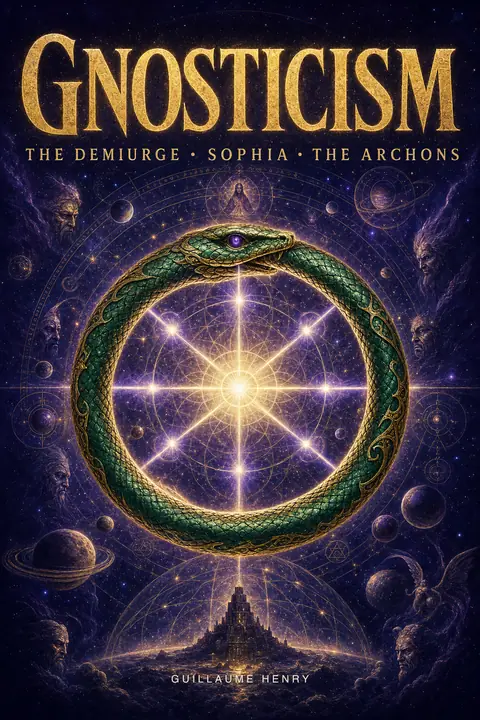
Gnosticism
The Gnosticism Book: The Demiurge, Sophia, the Archons, and the Secret Knowledge
The Demiurge, Sophia, and the Archons
The forbidden cosmology of the Gnostics: a false creator god, a fallen wisdom, prison-world rulers called archons, and the divine spark trapped inside you, waiting to wake. Recovered from the buried codices of Nag Hammadi.
More from Gnosticism
All articles
Gnosticism
Simon Magus: The First Gnostic Heresiarch
Who was Simon Magus, and why did the early Church fear him so deeply? Discover the man at the center of the first major rift between orthodox Christianity and Gnosticism, and how one sorcerer became a legend that shaped centuries of theology.
Gnosticism
Valentinus: Architect of Christian Gnosticism
Valentinus was a visionary theologian and spiritual teacher in second-century Rome who shaped the most sophisticated and influential school of Christian Gnosticism. His radical reinterpretation of Christ's redemptive work created a system of divine knowledge that challenged orthodoxy for three centuries.
Gnosticism
The Nag Hammadi Library: Discovery and Significance
In 1945, Egyptian farmers stumbled upon thirteen ancient papyrus codices hidden in a desert cave. The Nag Hammadi Library revealed a hidden world of early Christian and Gnostic thought, overturning centuries of assumptions about Christianity's first centuries.
Gnosticism
The Serpent in Eden: Gnostic Reinterpretation of Genesis
In Gnostic thought, the serpent who tempted Eve becomes a liberator, not a deceiver. Discover how early Christian heretics flipped Genesis on its head, casting the God of the Old Testament as a flawed demiurge and the serpent as an agent of divine knowledge.