
Inanna's Descent to the Underworld: The Oldest Journey Through Death
Inanna, Queen of Heaven, stripped of her power gate by gate, faced her dark twin in the land of no return. Her story, written 4,000 years ago, is the oldest recorded descent myth on Earth.
Contents
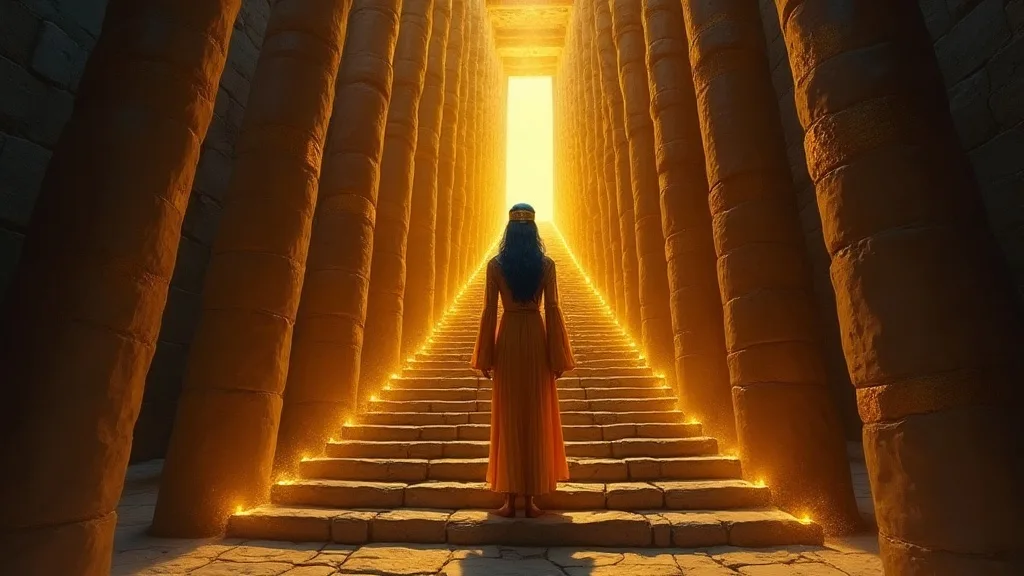
Inanna's Descent to the Underworld begins not with weakness but with ambition. The Queen of Heaven, goddess of love and war, storms toward the Great Below wearing her crown, her lapis lazuli necklace, her golden ring, her measuring rod. She goes, as the text says, "with ear open to the Great Below." She is not fleeing something. She is reaching for dominion over death itself.
That opening gesture, arrogant and luminous, sets the tone for a myth that Sumerian scribes pressed into clay tablets around 1750 BCE, though the oral tradition likely runs centuries deeper. The poem has survived in fragments from Nippur, Ur, and Susa. Assembled by scholars like Samuel Noah Kramer and Diane Wolkstein in the late twentieth century, it stands today as the oldest descent narrative in written human history, roughly a thousand years older than the Homeric poems and fifteen centuries older than Virgil's Aeneid.
What follows is not a simple hero's journey. It is a story about power stripped layer by layer, about the cost of crossing absolute thresholds, and about the unsettling fact that no one returns from the land of no return without leaving something behind.
Inanna, Queen of Heaven: Who She Was Before the Descent
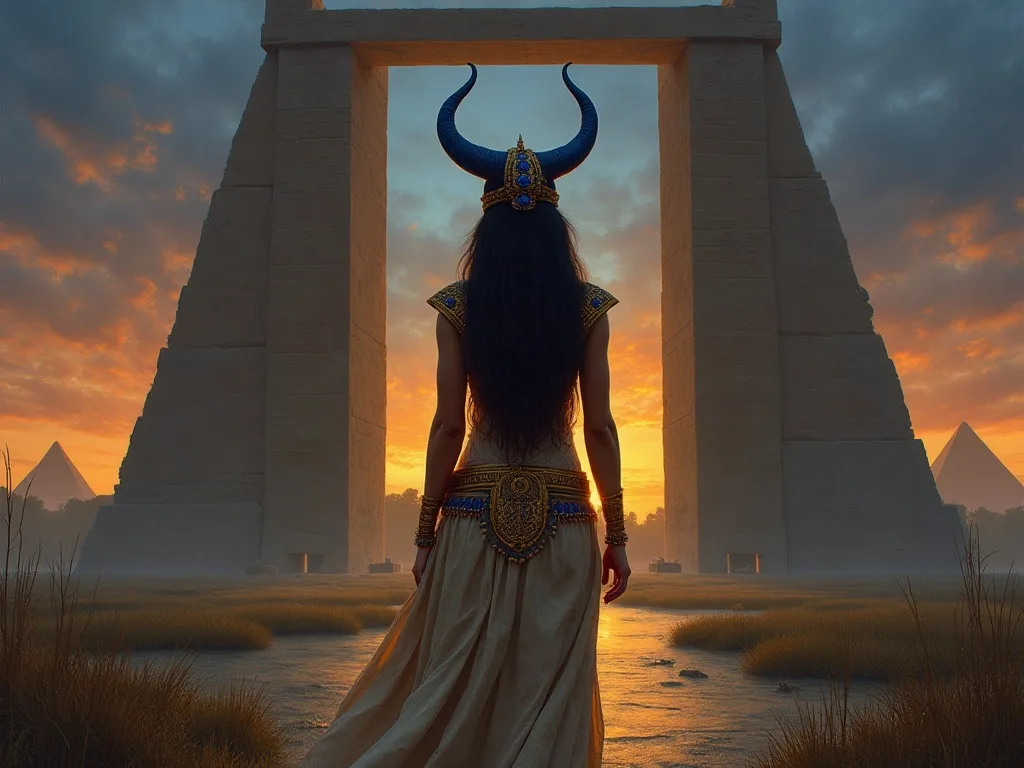
Before the gates, Inanna was the most complete deity in the Sumerian pantheon. Other gods commanded single domains; she held war, love, fertility, and the storehouse. Her symbol, the reed bundle, appeared on the oldest Uruk seals, dating to around 3200 BCE. Her temples at Uruk and Nippur were among the most richly endowed in Mesopotamia.
Her name in Sumerian probably derived from Nin-ana, "Lady of Heaven," and she shared attributes and possibly origin with the Akkadian goddess Ishtar, though the two were never perfectly interchangeable. Inanna was more volatile, more mortal in her appetites. She could be tender, as in the love poetry addressed to her consort Dumuzi, and she could be terrifying, as in the Hymn of Inanna composed by the high priestess Enheduanna around 2300 BCE, the earliest signed literary work in human history.
She carried the me, the divine decrees that governed civilization: kingship, the descent to the underworld, the ascent from the underworld, the scribal arts, the art of lovemaking, musical instruments, the crafts of the smith. She had, according to the myth "Inanna and Enki," stolen many of these me from Enki, the god of wisdom, by getting him drunk and spiriting them away on her boat to Uruk. She was not passive. She collected power.
That drive toward power is precisely what propels her downward.
The Seven Gates and the Stripping of Power
Inanna's Descent to the Underworld hinges on a single, devastating mechanism. The underworld, Kur, ruled by her sister Ereshkigal, has seven gates. At each gate, a gatekeeper named Neti stops her. At each gate, one of her divine attributes is taken:
- At the first gate, her crown (shugurra), the crown of the steppe.
- At the second, her lapis lazuli measuring rod.
- At the third, her necklace of small lapis lazuli beads.
- At the fourth, the sparkling stones at her breast.
- At the fifth, the gold ring on her hand.
- At the sixth, the breastplate called "Come, man, come."
- At the seventh, the royal robe.
She protests each removal. Neti answers with the same phrase, a liturgical hammer blow repeated seven times: "Quiet, Inanna, the ways of the underworld are perfect. They may not be questioned."
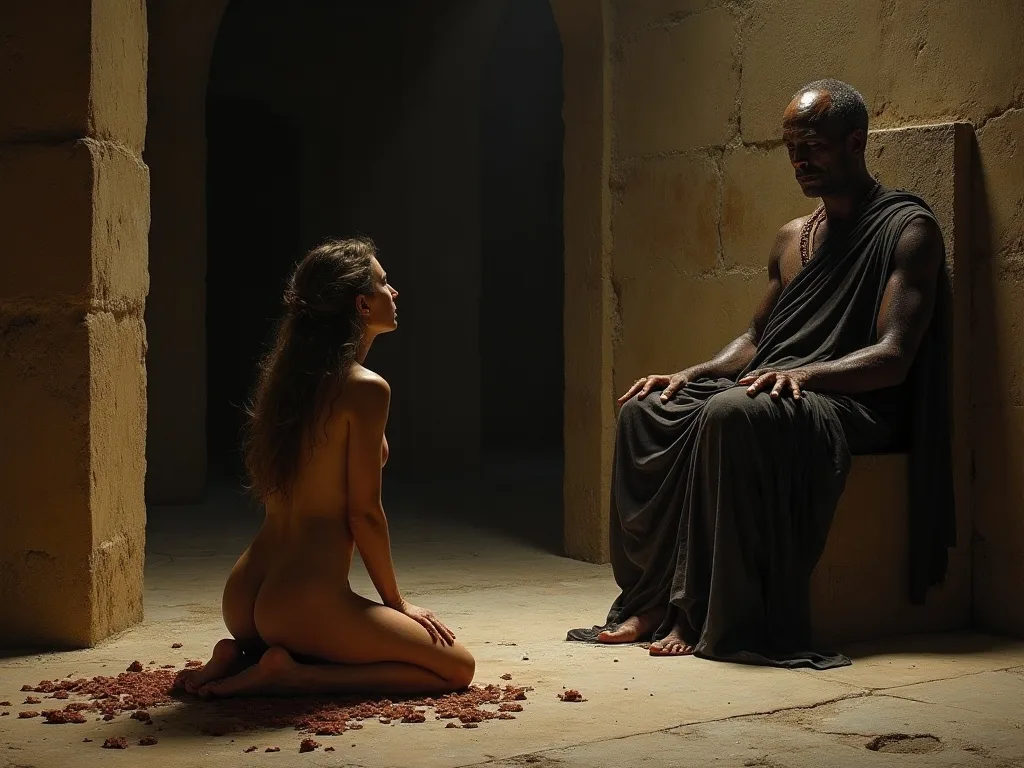
The repetition is not lazy composition. It is structural theology. The underworld operates outside the logic of rank and negotiation that governs the upper world. Inanna cannot bargain her way past death the way she bargained the me from Enki. Each gate peels away one layer of what makes her Inanna. By the seventh gate she arrives naked, on her knees.
What she encounters next is her sister Ereshkigal, the dark mirror. Ereshkigal did not choose her kingdom; she was carried off to the Great Below at the beginning of time. She rules over the dead, the gidim, who eat clay and drink dust. She is raw anguish personified: the myth describes her "moaning like a woman in labor." When she sees Inanna, she fastens the eye of death upon her, speaks the word of wrath, and strikes her as a corpse. Inanna is hung on a peg.
For three days and three nights, the Queen of Heaven hangs dead on a hook in the underworld.
Ereshkigal: The Sister Who Was Never Rescued
No figure in Inanna's Descent is more philosophically dense than Ereshkigal herself. She is not a simple villain. Scholars like Rivkah Kluger in her Jungian reading of the myth (The Archetypal Significance of Gilgamesh, 1991) and Betty De Shong Meador in Inanna, Lady of Largest Heart (2000) have argued that Ereshkigal represents the shadow self that Inanna refuses to acknowledge: the grief, the loss, the unprocessed pain beneath the glittering queen.
The two sisters are never reconciled. The myth does not offer that comfort. Ereshkigal remains in the underworld, raging. She moaned for the river she could not drink, for the fields she could not plow. Her anguish is total and unassuaged. Two small creatures, the kurgarra and galatur, sent by the god Enki to retrieve Inanna's corpse, succeed precisely because they do something no one else has done: they sit with Ereshkigal in her pain. They moan when she moans. They sigh when she sighs. In gratitude, she releases Inanna's body.
This moment, often overlooked, is arguably the moral center of the myth. Pure empathy, offered by creatures small enough to slip through the cracks of the gates, accomplishes what Inanna's divine power could not.
Inanna's Faithful Servant and the Failure of Enki's Court
Before descending, Inanna did something prudent: she told her faithful minister Ninshubur that if she did not return in three days, Ninshubur should mourn and then go, in sequence, to three gods for help.
Ninshubur followed the instructions precisely. She dressed in sackcloth. She beat a drum. She tore at her eyes and mouth, the formal gestures of Mesopotamian lamentation. Then she went to Enlil, king of the gods at Nippur. Enlil refused, saying Inanna had craved the Great Below and its power: she must face the consequences.
She went to Nanna, the moon god at Ur. Nanna refused for the same reason.
She went to Enki, god of wisdom at Eridu. Enki alone grieved. He fashioned the kurgarra and galatur from the dirt beneath his fingernail and sent them down with the food and water of life.
This sequence matters mythologically. It is not random. Enlil represents rigid cosmic order. Nanna represents natural cycles that proceed whether humans wish them to or not. Only Enki, the trickster craftsman who operates at the edges of rules, can find the solution. The myth quietly argues that rigid law cannot save life; only flexible intelligence can.
The Price of Return: Dumuzi in the Underworld
No one leaves the underworld empty-handed. The galla, the demons of the underworld, escort Inanna back, but with a condition: she must provide a substitute to remain in Kur in her place.
Inanna ascends through the seven gates, recovering each attribute in reverse order. She returns to the upper world. The galla follow, insisting.
She looks at each person who mourned her absence: Ninshubur, dressed in rags, weeping. She refuses to give Ninshubur. She looks at her sons, who mourned and wept dust. She refuses.
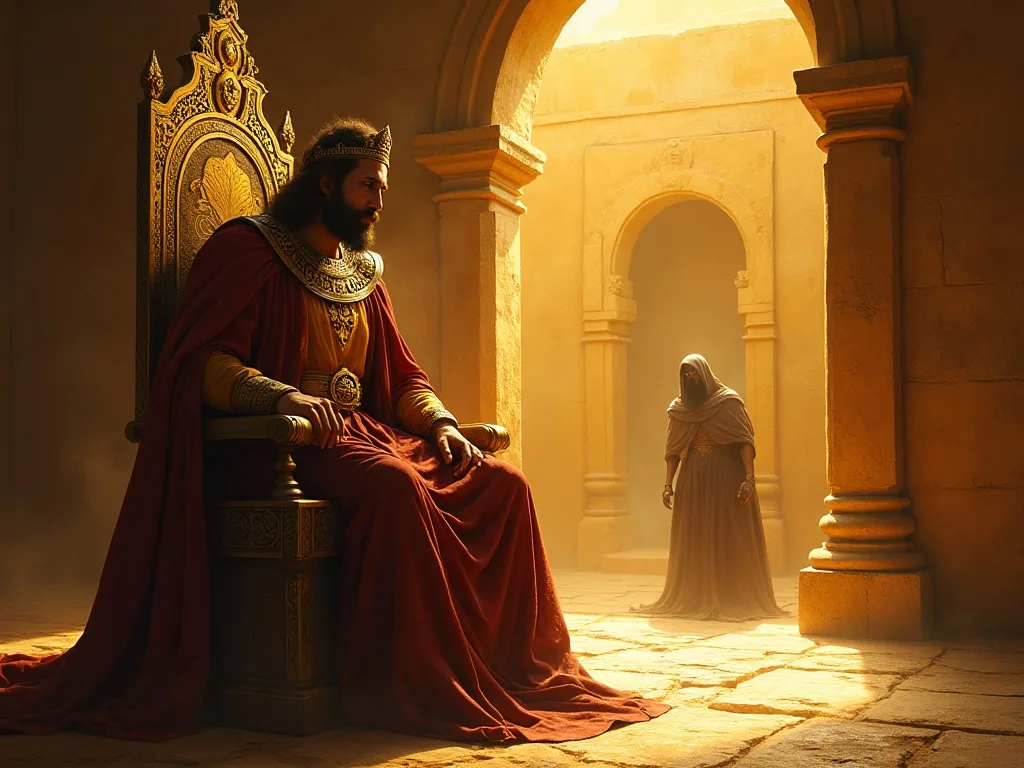
Then she reaches Uruk and finds her husband, Dumuzi, the shepherd king. He is not mourning. He sits in splendor on his throne, his fine garments unchanged, seemingly untouched by her three-day death.
Inanna fastens on him the eye of death. She speaks the word of wrath. She gives him to the galla.
This moment has troubled readers for centuries. Was it fury? Justice? Political theology about the expendability of kingship? The myth refuses to explain itself. Dumuzi's terror is vivid and immediate: he weeps, he prays to Utu the sun god to transform him into a snake so he can flee. Utu helps him. He escapes, briefly. He is caught.
His sister Geshtinanna eventually negotiates a compromise with Inanna: she and Dumuzi will each spend half the year in the underworld. This is the Sumerian explanation for the rhythm of the seasons: Dumuzi below in summer's scorching silence, Geshtinanna below in winter's agricultural death.
Mythological Parallels: From Persephone to Orpheus
Inanna's Descent to the Underworld did not vanish when Sumer fell. Its structure echoes across the ancient world with a persistence that suggests either direct transmission or a shared deep grammar of human anxiety about death.
The most discussed parallel is the Greek myth of Persephone. Both narratives involve a goddess connected to fertility entering an underworld ruled by a dark sovereign, and both tie her absence to the seasonal death of crops. The key structural difference: Persephone is taken; Inanna goes. The Greek version removes the goddess's agency, reframing the myth as abduction rather than ambition.
The Akkadian version of the descent myth, titled The Descent of Ishtar, abbreviated the Sumerian original significantly and shifted its emphasis. Here, Ishtar's descent causes all sexual reproduction on earth to cease: animals stop mating, humans lose desire. Her rescue is more bureaucratic, ordered directly by Ea (the Akkadian Enki) at the request of the gods. The galla and the moral complexity of the substitute largely disappear.
The later Orpheus myths invert the gender positions: a male figure descends to retrieve a female beloved. But the mechanism of the gaze as death, the failure to fully master the underworld's logic, echoes the structure of Inanna's myth closely enough that some scholars (Walter Burkert among them) have argued for a transmission route through Anatolia into archaic Greek tradition.
The Tablets Themselves: How the Myth Survived
The physical survival of Inanna's Descent to the Underworld is its own drama. The poem exists in no single complete copy. Scholars work from over thirty fragmentary tablets, the largest group excavated from Nippur by the University of Pennsylvania expeditions between 1889 and 1900. The tablets are now distributed between the University Museum in Philadelphia, the Istanbul Archaeological Museums, and the British Museum in London.
Samuel Noah Kramer, the twentieth century's most tireless translator of Sumerian, published the first substantial reconstruction in 1951. His collaboration with Diane Wolkstein produced the accessible 1983 edition, Inanna: Queen of Heaven and Earth, which brought the myth to a wide English-speaking audience for the first time.
The Sumerian script itself is a challenge. Unlike Akkadian, which is a Semitic language with surviving cognates, Sumerian is a language isolate: no known relatives, no Rosetta Stone. Translators triangulate meaning through bilingual Sumerian-Akkadian glossaries and the internal logic of the texts. This means that contested translations are common, and certain phrases remain genuinely uncertain.
One of the most debated is the opening line, usually translated as "From the Great Above she opened her ear to the Great Below." The word geshtug, "ear," also means "wisdom" in certain contexts. Did Inanna open her mind, or her perception, or her desire? The ambiguity is not a flaw. It is part of the text's generative power.
The Sacred Marriage and the Political Theology of Descent
The myth of Inanna's Descent cannot be fully separated from the hieros gamos, the sacred marriage ritual practiced at Uruk and other Sumerian cities. In this ritual, a king enacted symbolic union with Inanna, embodied by the high priestess, to secure divine favor for the land. The text The Courtship of Inanna and Dumuzi, which predates or runs parallel to the descent myth, is explicitly erotic and explicitly royal: the union of the shepherd king with the Queen of Heaven produces abundance.
The descent myth subverts this theology. The same king who partnered with heaven's queen ends up in the underworld. His failure to mourn, his ease and splendor while she hung dead, costs him everything. Some Assyriologists, including Thorkild Jacobsen in The Treasures of Darkness (1976), read the myth as a political warning about the limits of royal power: the king depends on divine favor he cannot simply assume.
The cycle of Dumuzi's death and return also underlies the Mesopotamian liturgical calendar. The month of Dumuzu (our June-July) was a period of lamentation for the dead god, marked by wailing women and ritual mourning. This liturgical anchor confirms that the myth was not purely literary. It was lived annually by the cities that received its clay tablets.
Inanna's Descent in Modern Scholarship and Living Tradition
The twentieth century rediscovery of Inanna's Descent to the Underworld has generated an extraordinary secondary literature. Jungian analysts found in Ereshkigal the archetype of the neglected unconscious. Feminist scholars in the 1970s and 1980s, including Merlin Stone and Anne Baring, positioned Inanna as evidence of pre-patriarchal goddess religion, though this interpretation has been contested by mainstream Assyriology, which finds the Sumerian pantheon more complex than any simple feminist or anti-feminist reading allows.
The poet Sylvia Plath never read the Inanna texts directly, but the structural parallel between her late poetry and the stripping-down myth has been noted by critics. Anne Carson's Nox (2010) shares the tablet-fragment aesthetic. The composer Anne Leahy set portions of the descent to music. Inanna has appeared in contemporary novels, role-playing games, and neo-pagan liturgical practices. The kurgarra and galatur, those nameless grief-witnesses, have been adopted as patron figures by psychotherapists writing about trauma.
What keeps the myth alive is not nostalgia for ancient Sumer. It is the precision of the myth's insight: that anyone who reaches for total dominion, who wants to rule what cannot be ruled, will be stripped to nothing at the threshold. The question the myth leaves open is whether that stripping is punishment or initiation. The tablets do not say. That silence is part of what four thousand years of readers have found impossible to stop thinking about.
Frequently Asked Questions About Inanna's Descent to the Underworld
Frequently asked questions
What is the oldest surviving written source for Inanna's Descent to the Underworld?
The myth survives on Sumerian cuneiform tablets dated to approximately 1750 BCE, excavated primarily from the ancient city of Nippur in modern Iraq. The tablets were recovered by University of Pennsylvania expeditions in the late nineteenth century and first translated systematically by Assyriologist Samuel Noah Kramer in the mid-twentieth century. No single complete tablet exists; the canonical text is a scholarly reconstruction from over thirty fragments.
Why does Inanna give Dumuzi to the underworld demons?
The myth does not provide a single explicit reason. Dumuzi was found sitting on his throne in fine clothes while Inanna was hanging dead in the underworld; his failure to mourn her seems to trigger her wrath. Some Assyriologists read this as a political statement about kingship's dependence on divine favor. Others read it psychologically: Dumuzi represents the part of the self that profits from the heroine's suffering without sharing it. The myth deliberately withholds a clean moral verdict.
How does Inanna's Descent differ from the Akkadian Descent of Ishtar?
The Akkadian version, written in a Semitic language and dated to roughly 1000-700 BCE, is considerably shorter and less psychologically complex. It omits the kurgarra and galatur as empathic witnesses, reduces the substitute-payment narrative, and frames Ishtar's descent more as a cosmic disruption (all reproduction ceases) than a personal ambition. The Sumerian original has Inanna acting with deliberate purpose; the Akkadian Ishtar's motivation is less clear.
Is Inanna the same goddess as Ishtar?
They share attributes, iconography, and mythological roles, but they are not identical. Inanna is Sumerian; Ishtar is Akkadian. The identification deepened under the Akkadian Empire (circa 2334-2154 BCE) when Semitic rulers absorbed and relabeled many Sumerian deities. Some of Inanna's most distinctive traits, including her volatility and her role in the sacred marriage ritual, were toned down or recontextualized in the Akkadian tradition. Scholars treat them as closely related but distinct divine personalities.
What do the seven gates represent symbolically?
In the literal logic of the myth, the seven gates correspond to the seven attributes Inanna wears as her divine identity. Symbolically, the sevenfold stripping has been read as a correspondence to the seven planetary spheres of Mesopotamian cosmology (each planet governing one attribute of a divine being), to the seven layers of the underworld described in other Akkadian texts like Nergal and Ereshkigal, and, in Jungian readings, to the progressive dismantling of ego structures. The number seven carried cosmic weight across ancient Near Eastern tradition and almost certainly maps onto astronomical observation.
Did the myth have a ritual function in ancient Sumer?
Yes. The month of Dumuzu (approximately June-July in the Sumerian calendar) was observed with public lamentation rituals mourning the death of Dumuzi. Women and priests performed formal weeping, beat drums, and enacted the grief of both Inanna and Geshtinanna. These rituals are attested in administrative records from Ur III period temples (circa 2100-2000 BCE). The myth was thus not only a literary text but a liturgical script performed annually across the cities of ancient Mesopotamia.
The Myth's Unresolved Core: What the Tablets Cannot Tell Us
Four thousand years after Sumerian scribes pressed these signs into wet clay, one question stays open. Was Inanna's Descent to the Underworld always the story we have, or did the canonical version fix in writing a myth that had been more fluid, more varied, more locally inflected across the dozens of temple cities that worshipped her?
The honest answer is that we do not know. Oral traditions do not fossilize. What we have is the textual deposit, the consensus version that scribal schools at Nippur copied and taught. The theological arguments encoded in the sequence of Enlil, Nanna, and Enki being asked for help, the political theology of the substitute, the peculiar tenderness of the kurgarra and galatur: any of these could be the innovations of a single brilliant poet, or the distillation of centuries of retelling.
What archaeology cannot recover is the voice of the priestess who first sang this in the great Inanna temple at Uruk, possibly in the dark, possibly for an audience that knew the ending before the first word was spoken. That performance is gone. The clay tablet survived because clay is more durable than breath. But the myth's staying power, its ability to appear again and again in Greek descent narratives, in Renaissance paintings of Orpheus, in the psychoanalytic consulting room, in contemporary fiction, suggests that what the priestess put into words was something that human beings had been trying to articulate long before Sumerian script existed.
The descent always strips you. Something waits at the bottom. The question is always whether you have someone small and faithful enough to sit with your anguish until it relents.
Read the full book
Want the whole story?
The complete edition is an instant PDF download here, with a paperback on Amazon for selected titles.
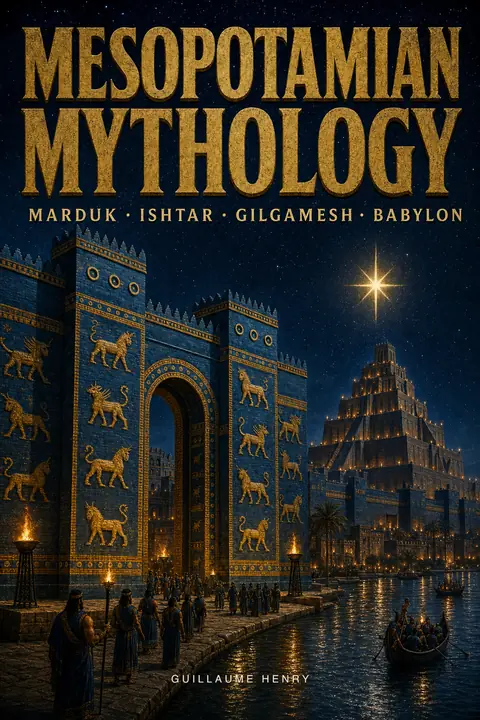
Mesopotamian
The Mesopotamian Mythology Book: Marduk, Tiamat, Ishtar and the Sacred Stories of Babylon's Cosmic Order
From Sumer to Assyria: The Gods Who Shaped Civilization
The full sweep of Mesopotamian myth from Sumer through Babylon and Assyria. Marduk's battle with Tiamat, Ishtar's descent, the Enuma Elish, and the Anunnaki who ruled before the flood.
More from Mesopotamian
All articles
Mesopotamian
Gilgamesh: The King Who Sought Eternal Life
Gilgamesh ruled Uruk, fought monsters, and crossed the waters of death chasing a secret that no mortal could keep. His epic is the oldest great story humanity ever wrote down.
Mesopotamian
Inanna: Goddess of Love, War, and the Morning Star
Inanna ruled desire, battle, and the blazing planet Venus from the oldest cities on earth. Her myths rewrote how humanity understood power, descent, and resurrection.
Mesopotamian
Ishtar: Goddess of Love and War in Ancient Mesopotamia
Ishtar ruled the Mesopotamian cosmos as the goddess of desire, war, and the morning star. Her myths shaped civilization for three thousand years and still echo in every culture that followed.
Mesopotamian
Marduk: King of the Babylonian Gods
Marduk rose from a minor deity of Babylon to the supreme god of Mesopotamia, slaying the chaos-dragon Tiamat and building the cosmos from her body. His story reshaped ancient religion for over a thousand years.