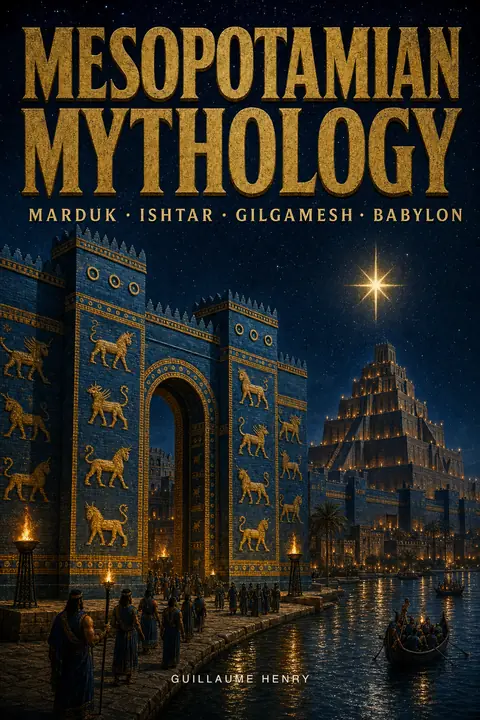
Mesopotamian
Gods, creation, and cosmic order in ancient Babylon. From Marduk's rise to the Enuma Elish, explore the myths that shaped Mesopotamian civilisation.
Browse Mesopotamian
When Babylon rose to political dominance in southern Mesopotamia during the second millennium BCE, its priests did not simply inherit the myths of older Sumerian cities. They rewrote them. Babylonian mythology is the product of deliberate theological revision, a cuneiform campaign to elevate Marduk, patron god of Babylon, above the older pantheon and to anchor the city's imperial ambitions in cosmic precedent. The texts that survive, inscribed on clay tablets in Akkadian, show a tradition that absorbed Sumerian cosmology, reordered its divine hierarchy, and encoded political theology into creation itself.
The result is a body of myth that is both literary monument and state propaganda. To read the Enuma Elish or the Epic of Gilgamesh is to encounter stories shaped by scribes who understood that control of narrative meant control of legitimacy.
What is Babylonian mythology?
Babylonian mythology refers to the corpus of religious narratives, cosmological texts, and ritual traditions produced in Babylon and the wider Babylonian empire from roughly 1900 BCE onward. Written primarily in Akkadian, a Semitic language, these myths draw heavily on earlier Sumerian material but reconfigure divine roles, genealogies, and cosmic events to reflect Babylon's political ascendancy. The most complete sources are cuneiform tablets recovered from sites including Nineveh, Sippar, and Babylon itself, many preserved in the library of the Assyrian king Ashurbanipal.
Unlike the fragmented oral traditions of many ancient cultures, Babylonian myth survives in standardised literary forms. Scribes copied and transmitted texts across centuries, and the myths were recited during state rituals, taught in scribal schools, and invoked in royal inscriptions. The Code of Hammurabi, for instance, opens with a prologue that names Marduk as the god who granted kingship to Hammurabi, embedding myth directly into legal authority.
The tradition is inseparable from Babylonian religion and empire. Theology and statecraft were not distinct domains. To understand the myths is to see how a city justified its dominance through the language of the divine.
The Enuma Elish: Creation from chaos
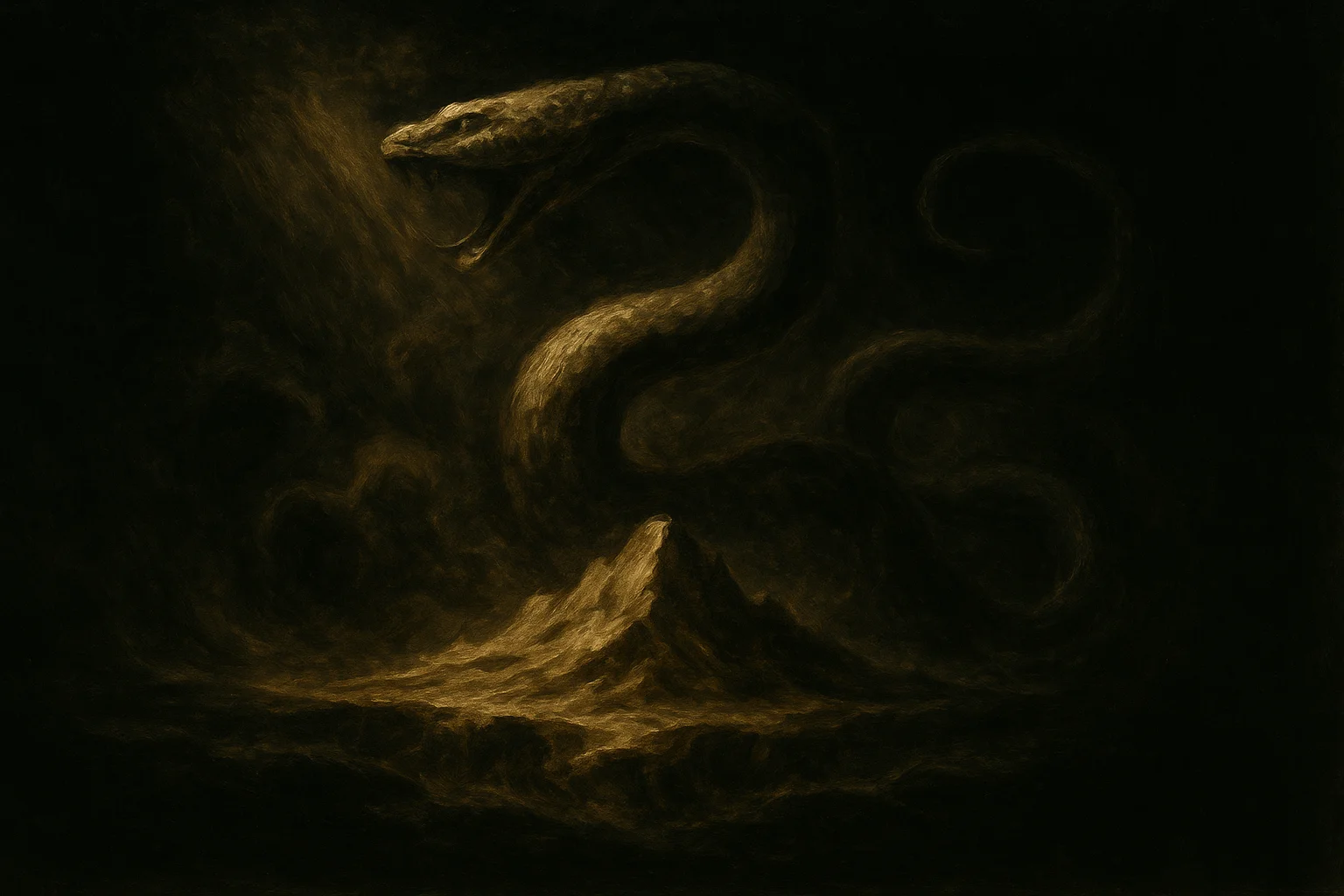
The Enuma Elish, named for its opening words ("When on high"), is the Babylonian creation epic. Composed no later than the twelfth century BCE and possibly earlier, it survives on seven tablets and was recited annually during the Akitu festival. The text describes the origins of the cosmos, the rise of Marduk, and the creation of humanity. It is not a neutral cosmogony. It is a manifesto.
Apsu and Tiamat: The primordial waters
The poem begins with two primordial entities: Apsu, the freshwater abyss, and Tiamat, the saltwater ocean. They exist before heaven and earth, before gods, before names. From their mingling, the first generation of gods emerges. But the younger gods are noisy, restless, and Apsu grows weary of them. He plots their destruction.
Ea, god of wisdom, learns of the plan and kills Apsu in his sleep. Tiamat, enraged by the murder of her consort, prepares for war. She creates an army of monsters, including the dragon Mushhushshu and eleven other hybrid creatures. She elevates the god Kingu to command them and gives him the Tablet of Destinies, the cosmic instrument of authority.
Marduk's ascent and the slaying of Tiamat
The older gods panic. None will face Tiamat until Marduk, son of Ea, steps forward. He agrees to fight on one condition: if he wins, he will be made king of the gods. The assembly consents. Tablet IV of the Enuma Elish describes the battle. Marduk arms himself with winds, a net, a bow, and a mace. He traps Tiamat in his net, fills her with wind, and shoots an arrow through her belly. He splits her corpse in two.
"He split her like a shellfish into two parts: half of her he set up and ceiled it as sky." Enuma Elish, Tablet IV
From Tiamat's body, Marduk fashions the cosmos. Her upper half becomes the sky, her lower half the earth. He assigns stations to the gods, organises the calendar, and sets the stars in motion. The defeated Kingu is executed, and from his blood, humanity is created.
The creation of heaven, earth, and humanity
Marduk's creation of the world is an act of ordering, not ex nihilo generation. Chaos is not annihilated but structured. The cosmos is Tiamat's corpse, repurposed. Humanity, fashioned from the blood of a rebel god, exists to perform the labour the gods no longer wish to bear. Tablet VI states this plainly: humans are created to serve the gods, to maintain temples, to offer sacrifices.
The Enuma Elish closes with the recitation of Marduk's fifty names, each one a title or attribute that consolidates his supremacy. The text is not subtle. It is a theological constitution, written to legitimise Marduk's kingship and, by extension, Babylon's.
The Babylonian pantheon
The gods of Babylon were inherited from Sumerian tradition but reorganised. Older deities were demoted, renamed, or absorbed. The pantheon reflects both continuity and calculated revision.
Marduk: King of the gods
Marduk was originally a local agricultural deity of Babylon. By the time of the Enuma Elish, he had been elevated to supreme god, absorbing the attributes of Enlil, the Sumerian storm god and former king of the pantheon. Marduk's symbol, the Mushhushshu dragon, appears on the Ishtar Gate and throughout Babylonian iconography. His temple, the Esagila, stood at the centre of Babylon, and his ziggurat, Etemenanki, may have inspired later traditions of the Tower of Babel.
Marduk's rise is a case study in theological politics. His supremacy was not ancient. It was constructed, argued, and ritually reinforced.
Ishtar: Love, war, and the descent to the underworld
Ishtar, the Babylonian form of the Sumerian Inanna, governs both love and war. She is volatile, dangerous, and central to multiple narrative traditions. The Descent of Ishtar to the Underworld, preserved in Akkadian, describes her journey to the realm of her sister Ereshkigal. At each of seven gates, Ishtar is stripped of her garments and power. She is killed, hung on a hook, and only revived through the intervention of Ea.
The text is ritually dense and has been interpreted as a seasonal myth, a fertility allegory, and a meditation on mortality. What is clear is that Ishtar's absence causes sterility on earth. Her return restores life.
Ea (Enki): Wisdom and the shaping of humanity
Ea, called Enki in Sumerian, is the god of fresh water, wisdom, and magic. He dwells in the Apsu, the subterranean freshwater ocean. In the Atrahasis Epic, Ea creates humanity from clay and the blood of a slain god to relieve the lesser gods of their labour. In the Enuma Elish, he kills Apsu and fathers Marduk. Ea is the problem-solver, the god who intervenes when cosmic order is threatened.
He also warns Atrahasis (the Babylonian Noah figure) of the coming flood, instructing him to build a boat and preserve life. Ea's role as humanity's protector contrasts with the more distant, authoritarian Marduk.
Shamash, Sin, and the celestial order
Shamash, the sun god, and Sin, the moon god, govern time and justice. Shamash is invoked in the Code of Hammurabi as the source of law. Sin's phases regulate the calendar. Both are children of Enlil in older tradition, but in Babylonian texts they are subordinated to Marduk's cosmic order. Their roles are administrative, not sovereign.
Sumerian Enlil
Supreme storm god, king of the pantheon, source of kingship and cosmic authority before Babylon's rise.
Babylonian Marduk
Absorbs Enlil's kingship, recast as creator and cosmic orderer, elevated through the Enuma Elish narrative.
The Epic of Gilgamesh and the flood tradition
The Epic of Gilgamesh, preserved in its Standard Babylonian version on eleven tablets, is the oldest surviving epic poem. It tells the story of Gilgamesh, king of Uruk, and his quest for immortality. The text is Sumerian in origin but was reworked in Akkadian by scribes in Babylon and Nineveh. Tablet XI contains the flood narrative, in which Utnapishtim (the Babylonian equivalent of Atrahasis) recounts how he survived a divine deluge by building a boat at Ea's instruction.
The flood story in Gilgamesh parallels the Atrahasis Epic and predates the biblical Noah narrative by centuries. Utnapishtim releases birds to test for dry land, offers sacrifice, and is granted immortality by the gods. Gilgamesh seeks him out, hoping to learn the secret of eternal life, but returns empty-handed. The epic concludes not with triumph but with acceptance: mortality is the human condition.
The text was copied and studied across the ancient Near East. Fragments have been found in Hittite, Hurrian, and even Akkadian versions from sites as far as Megiddo. It was a canonical work, taught in scribal schools, and its themes of friendship, loss, and the limits of human ambition resonated across cultures.
Cosmology and the structure of the universe
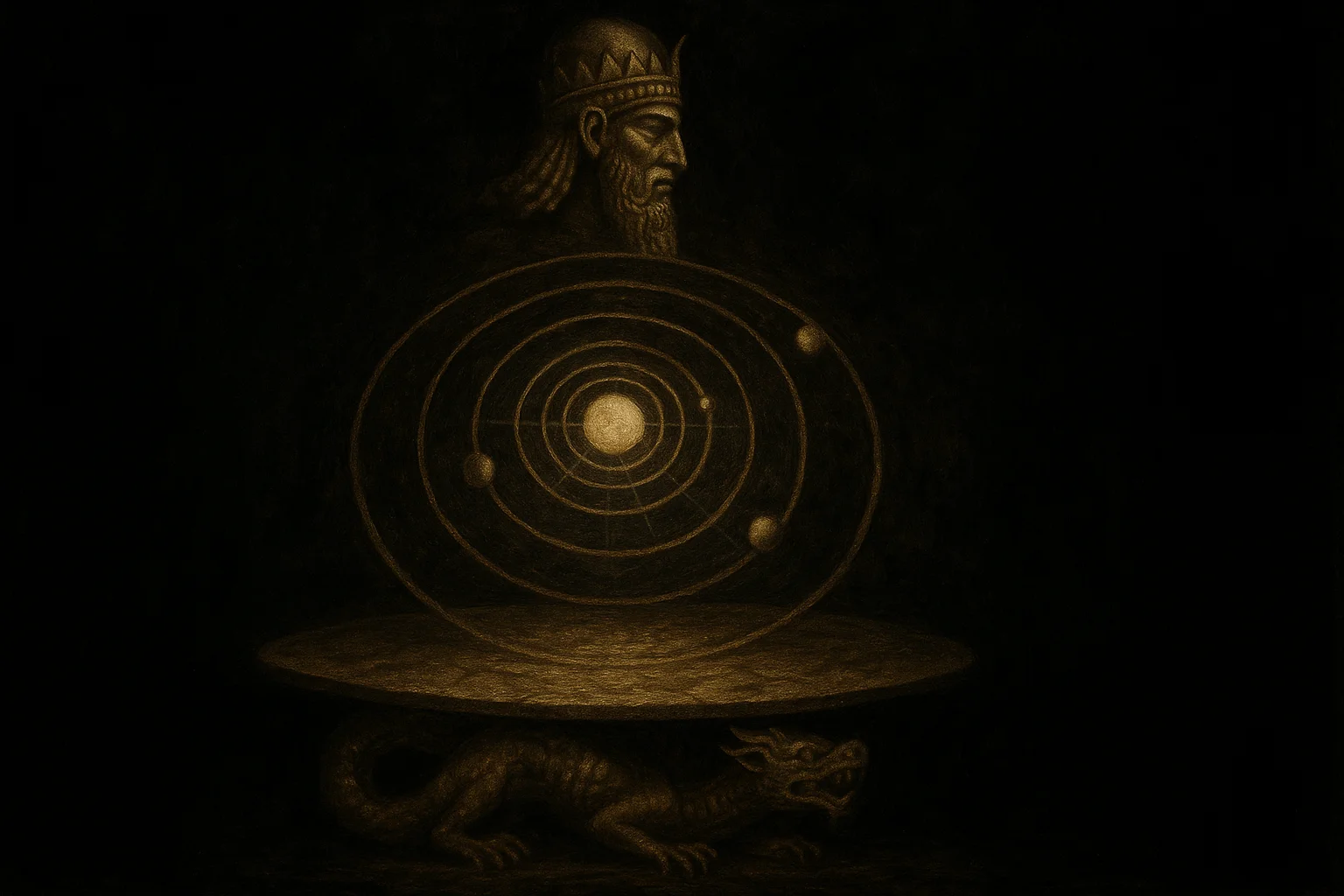
Babylonian cosmology divides the universe into three tiers: heaven, earth, and the underworld. Heaven is the domain of the gods, earth the realm of humanity, and the underworld, ruled by Ereshkigal, the land of the dead. The earth is conceived as a flat disc surrounded by a cosmic ocean, with the Apsu beneath and the firmament above.
The gods are assigned stations. Anu, the sky god, rules the heavens. Enlil (later subordinated to Marduk) governs the air and earth. Ea presides over the Apsu. The stars are divine, their movements regulated by Marduk's decree. The Mul.Apin tablets, astronomical compendia from Babylonian scribes, record the rising and setting of constellations, linking celestial observation to ritual calendar.
This cosmology is not speculative. It is encoded in ritual, architecture, and law. The ziggurat is a cosmic mountain, a bridge between earth and heaven. The Akitu festival re-enacts creation annually, renewing the king's mandate and reaffirming Marduk's sovereignty.
Ritual, kingship, and the Akitu festival
The Akitu, Babylon's New Year festival, was the ritual centre of Babylonian religion. Celebrated in the spring month of Nisan, it lasted 11 days and involved processions, sacrifices, and the recitation of the Enuma Elish. On the fifth day, the king was ritually humiliated before Marduk's statue, stripped of his regalia, and struck by the high priest. He then swore an oath of loyalty to the god. This act symbolically renewed the cosmic order and the king's divine mandate.
The festival culminated in a procession along the Processional Way to the Akitu house outside the city, where the gods' fates for the coming year were decreed. The ritual was both religious and political, a public performance of Babylon's theology and the king's subordination to Marduk.
- The king's humiliation re-enacted the submission of chaos to order.
- The recitation of the Enuma Elish reminded the assembly of Marduk's cosmic victory.
- The procession displayed Babylon's wealth and the gods' favour.
- The Tablet of Destinies was symbolically renewed, reaffirming divine sovereignty.
Kingship in Babylon was not inherited by blood alone. It was granted by the gods and renewed through ritual. The Akitu was the mechanism of that renewal.
Babylonian myth and its Sumerian inheritance
Babylonian mythology did not emerge in a vacuum. It inherited a millennium of Sumerian tradition: the stories of Inanna, Enlil, Enki, and the flood. But Babylonian scribes did not simply translate. They revised, reordered, and reinterpreted. Marduk replaced Enlil as king of the gods. Ishtar absorbed and expanded Inanna's roles. The creation narrative was rewritten to centre Babylon's patron deity.
This process is visible in the texts themselves. The Sumerian poem "Enki and Ninmah" describes the creation of humanity as a collaborative act. The Babylonian Atrahasis Epic recasts it as a solution to divine labour disputes. The Sumerian "Inanna's Descent to the Underworld" becomes the Akkadian "Descent of Ishtar," with theological emphasis shifted.
The relationship between Sumerian and Babylonian myth is one of continuity and appropriation. Babylon did not erase its predecessors. It claimed them, rewrote them, and made them serve a new political order.
Legacy and influence
Babylonian mythology shaped the religious imagination of the ancient Near East. Its flood narrative influenced the Hebrew Bible. Its cosmology informed later Jewish and Christian conceptions of heaven and hell. The figure of Tiamat, the chaos dragon, echoes in later traditions of cosmic serpents, from the sea serpent Jörmungandr in Norse myth to the Leviathan of the Tanakh.
Greek writers including Berossus, a Babylonian priest writing in the third century BCE, transmitted Babylonian traditions to the Hellenistic world. The Enuma Elish was still being copied in the Seleucid period, centuries after Babylon's political collapse. The myths outlasted the empire that produced them.
Modern scholarship has recovered these texts slowly. The Enuma Elish was first published in 1876. The Standard Babylonian Gilgamesh was not fully reconstructed until the twentieth century. Each new tablet fragment refines our understanding. The tradition is not closed. It is still being read.
Frequently asked questions
What is the Enuma Elish and why does it matter?
The Enuma Elish is the Babylonian creation epic, composed no later than the twelfth century BCE. It describes Marduk's defeat of Tiamat and his creation of the cosmos from her body. The text was recited annually during the Akitu festival and served as both religious cosmology and political theology, legitimising Babylon's dominance and Marduk's supremacy over older Sumerian gods.
How did Babylonian myths differ from earlier Sumerian stories?
Babylonian scribes rewrote Sumerian myths to elevate Marduk above Enlil and centre Babylon's theological authority. Characters were renamed (Inanna became Ishtar, Enki became Ea), narratives were restructured, and creation stories were recast to reflect Marduk's cosmic kingship. The core mythological material remained Sumerian, but its theological emphasis shifted to serve Babylonian political interests.
What role did Marduk play in Babylonian religion?
Marduk was the patron god of Babylon and king of the pantheon. Originally a local agricultural deity, he was elevated to supreme god through the Enuma Elish, which portrays him as creator and cosmic orderer. His temple, the Esagila, and his ziggurat, Etemenanki, were the ritual and architectural centres of Babylon. The Akitu festival annually re-enacted his victory over chaos and renewed the king's divine mandate.
How did Babylonian cosmology explain the structure of the universe?
Babylonian cosmology divided the universe into three tiers: heaven (domain of the gods), earth (realm of humanity), and the underworld (land of the dead). The earth was a flat disc surrounded by a cosmic ocean, with the Apsu (freshwater abyss) beneath and the firmament above. Marduk organised the stars, assigned divine stations, and regulated the calendar, embedding cosmic order into observable celestial phenomena.
What is the connection between the Epic of Gilgamesh and Babylonian mythology?
The Epic of Gilgamesh is a Sumerian-origin narrative reworked in Akkadian by Babylonian scribes. Its Standard Babylonian version includes Tablet XI, which preserves the flood story of Utnapishtim, a key Babylonian myth also found in the Atrahasis Epic. The epic was taught in scribal schools, copied across the Near East, and became a canonical text that transmitted Babylonian cosmology, theology, and views on mortality.
Why was the Akitu festival important in Babylonian religion?
The Akitu was Babylon's 11-day New Year festival, held in the spring month of Nisan. It involved the recitation of the Enuma Elish, ritual humiliation and renewal of the king, and a procession to the Akitu house. The festival re-enacted Marduk's cosmic victory, renewed divine authority, and publicly affirmed Babylon's theological and political order. It was the ritual mechanism through which kingship and cosmic order were annually restored.
Further reading on Mythologis
Famous Mesopotamian myths
View all →Recent in Mesopotamian
2 entries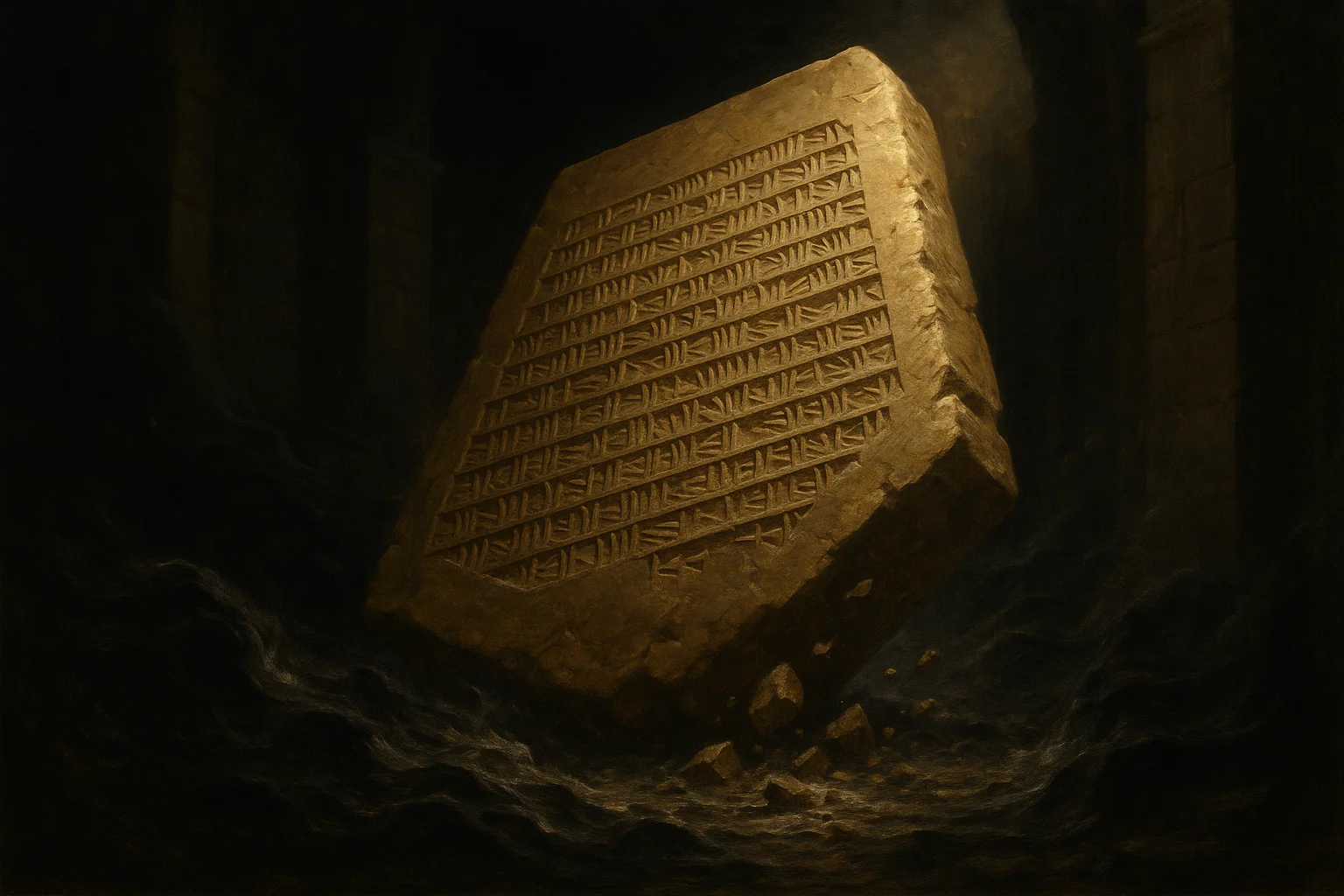
Mesopotamian
Enuma Elish: The Babylonian Creation Epic
The seven-tablet epic that made Marduk supreme. How Babylon rewrote creation to justify empire, tablet by tablet.
Mesopotamian
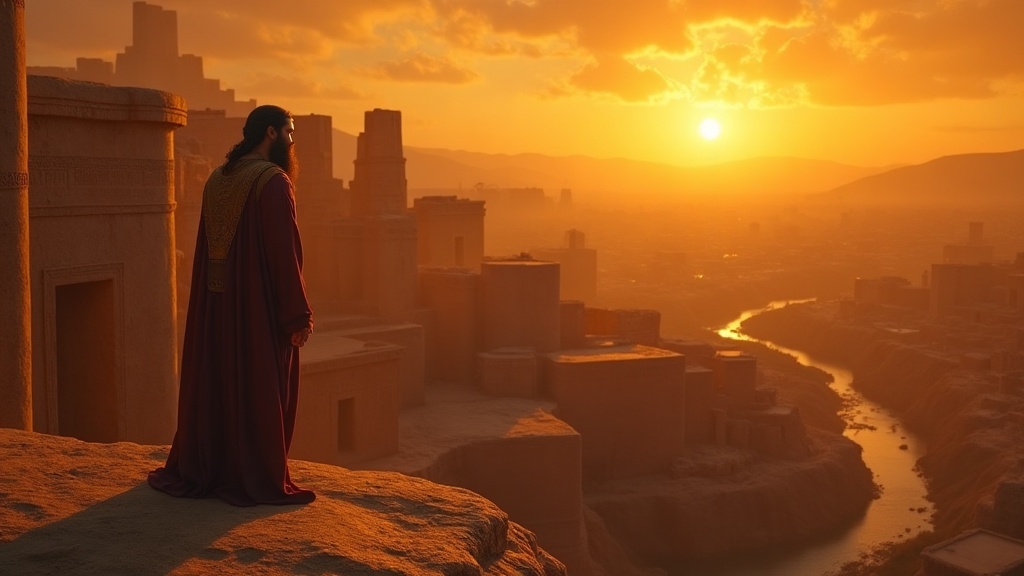
The Epic of Gilgamesh: Humanity's Oldest Mirror
Carved into clay tablets over four thousand years ago, the Epic of Gilgamesh wrestles with immortality, grief, and what it means to be human. It remains the oldest surviving work of literary mythology the world possesses.