
The Vision Quest: Rite of Passage and Spiritual Revelation
The vision quest stands at the heart of many Native American spiritual traditions: a solitary journey into wilderness where seekers fast, pray, and await contact with the sacred. Discover how this ancient ceremony marks the threshold between boyhood and manhood, illness and healing, confusion and purpose.
Contents
A young man sits alone on a stone ridge at dawn. For four days he has eaten nothing, spoken to no one. Around him stretches miles of open country. He watches the light change, feels the wind, listens to the animals. He is waiting. His people sent him here to meet something that has no name yet. By sunset, that meeting might come in the form of an eagle, a buffalo, a dream, or a voice. When it does, his life will split into before and after. This is the vision quest, one of the most widespread and sacred practices in Native American spirituality.
The vision quest is not a single ceremony but a family of rituals shared across dozens of tribal nations, each adapted to local landscape, language, and spiritual understanding. What unites them is a core truth: a person steps into isolation, into hunger, into vulnerability, and there encounters a power that transforms them. The vision is not sought like a holiday destination. It is earned through discipline, fasting, and prayer. What comes back from the wilderness is never the same person who left.
The Sacred Architecture of the Vision Quest
The structure of a vision quest follows a pattern recognized from the Great Plains to the Pacific Northwest, though each nation adds its own marks. A young man (and sometimes a young woman, depending on the nation) approaches an elder, a spiritual leader, and asks to undertake the ceremony. This is not a casual request. It signals readiness to cross a threshold: from childhood to adulthood, from health to recovery, from ignorance to purpose.
The elder agrees or declines. The seeker is prepared through teaching. Among the Lakota, the ceremony is called Hanbleceya, which means "crying for a vision." Among the Cheyenne, it may be called Maheo mahpe, seeking a dream from the Creator. Among the Navajo, the structure differs; vision comes through other ceremonies like the Night Chant, though solitary prayer plays a role. The names differ, but the architecture holds.
The seeker is taken to a sacred place, usually high ground: a mountain, a butte, the edge of a canyon. The Lakota often used the Black Hills, ground considered so sacred that the vision quest there is treated as among the most powerful. The seeker is stripped down. No food, no water (or minimal water, depending on the nation). No shelter, though sometimes a small circle of stones marks the boundary of the vigil space. No weapons. The seeker stands nearly naked against the sky, exposed to cold, heat, wind, rain, the full fact of the body's fragility.
The seeker stays for one, two, three, or four days. Four is the sacred number in many Native American traditions, repeated in the four directions, four seasons, four ages of a person's life. The seeker prays. The prayers are not formal speeches but direct cries to the spirit world, requests for guidance, calls to the ancestors, invitations to whatever power wishes to speak.
The vigil is a kind of controlled threshold between consciousness and dream. Hunger makes the mind thin and permeable. Exhaustion loosens the grip of the everyday self. In this state, visions come. Sometimes they arrive as literal images: an animal walks into view and holds the seeker's gaze. Sometimes they are dreams so vivid that the dreamer wakes certain something real has entered them. Sometimes they are voices, wordless but unmistakable. Sometimes they are abstract: a knowing that settles in the chest, a sudden clarity about why the seeker is alive.
The Guardians: Animal Spirits and Teachers
The spirits that most often appear in visions are animals. This is not coincidence. In many Native American worldviews, animals are not lesser beings but older cousins who carry powers humans have forgotten. An eagle's vision travels farther than human eyes. A bear knows the deep earth and hibernation's threshold between life and death. A wolf understands loyalty and the hunt. A buffalo is mass and abundance. These are not symbols to be interpreted but actual presences to be recognized.
When a seeker meets an animal in vision, the encounter is treated as real contact. The animal gives what is called a "medicine" or personal power. The word medicine in this context doesn't mean cure but rather spiritual strength, a specific capacity or insight the seeker can now carry. A warrior who meets the eagle in vision may gain acute sight in battle and the courage of swift attack. A hunter who meets the bear may gain patience and the knowledge of when to wait and when to strike. A healer who meets the buffalo may gain the capacity to restore what has been broken.
The spirit animal teaches through its own nature. The seeker does not negotiate or question. If a coyote appears and seems to mock the seeker, that is teaching about the dangers of pride and the value of humor. If a spider appears and weaves silk, that is teaching about creation and patience. The vision is not what the seeker hoped for; it is what the seeker needs.
Among some nations, particularly on the Pacific Northwest Coast, the vision quest structure differs because the seismic and spiritual landscape is different. Here, visions often come through fasting, isolation, and bathing in rivers and sea, the boundary between fresh and salt water treated as a place where spirits gather. The Tlingit, Haida, and other groups speak of spirit boxes, spiritual encounters during vision quests that confer not individual medicine but rights to tell certain stories, to carve certain symbols, to inherit specific narratives and powers.
The Threshold: From Illness and Confusion to Calling
The vision quest is not only a coming-of-age ceremony. It is also undertaken by people in crisis: illness, grief, profound confusion about life direction, or the need for healing after trauma. A person might spend months or years carrying a sickness that no physical remedy cures. The body aches but the doctors find nothing. In such cases, an elder might recommend that the sick person undertake a vision quest. The assumption is that the sickness has a spiritual root. The person has lost connection to their power, their purpose, their right relationship with the spirit world.
The hunger of the fast serves multiple purposes. It weakens the rational mind, the voice that constantly interprets and judges. It makes the body heavy and the spirit light. Among the Blackfoot nations, there is a saying: "When the belly is empty, the spirit grows loud." The vision that comes in this state is not invented by the conscious mind; it arrives from elsewhere. The seeker recognizes it not as imagination but as intrusion, something that breaks the surface of ordinary thought.
The Return and the Integration
The vigil ends. The seeker comes down from the mountain or butte. An elder is waiting, often with food and water. The first return to the body after days without sustenance is treated with great care. The person eats slowly, drinks small amounts. The body is fragile, permeable. For the next four days, the seeker often remains in a kind of retreat, speaking little, sitting quietly, allowing the vision to settle like sediment in deep water.
Then comes the act of telling. The seeker recounts the vision to the elder and, depending on the nation's practice, to the community. This recounting is not storytelling in the casual sense. The language used is precise, direct, repetitive. Every animal, every color, every sound and sensation is noted. The elder listens and helps the seeker understand what the vision means. This is not interpretation in the modern psychological sense (the eagle doesn't symbolize ambition; the eagle is the eagle and carries its own meaning). Rather, the elder helps the seeker see how the vision fits into the seeker's life, into the community's needs, into the larger pattern.
A young man who meets a buffalo in his vision may learn that he is called to become a hunter and provider, that his strength is for the people. A young woman who meets a deer might learn that her way is toward gentleness, toward the healing of the wounded, toward care. A person undertaking the quest during illness who meets a raven might learn that the sickness is a threshold, that the spirit is calling them into a new understanding of death and renewal.
The vision is not forgotten. It becomes part of the seeker's name, their identity, their role in the community. Some seekers receive a new name that reflects what they learned. Others are given specific responsibilities: to be the keeper of a certain story, to lead hunts in a certain season, to serve as a healer or counselor. The vision is not a private spiritual experience; it is public property, something the community witnesses and validates.
Regional Variations: The Great Plains, the Northwest, the Southwest
Though the core structure persists, the vision quest takes different forms across the continent. On the Great Plains, among the Lakota, Cheyenne, Arapaho, and Blackfoot nations, the vision quest was (and is) a central rite of passage. The plains offered vast open spaces where solitude was absolute. A young man might climb a butte or find a ridge and sit there, exposed to the weather, the animals, the full presence of sky and grass. The vision that comes is often direct: an animal appears or a voice speaks. The seeker is left with a clear calling.
In the Pacific Northwest, among the Tlingit, Haida, and Kwakwaka'wakw, the vision quest was intertwined with the harvesting of rights and wealth. A young person of noble birth might undertake a vision quest to establish or validate a claim to a certain crest (a heraldic symbol), to the right to tell certain stories, to the ownership of a copper shield or a name. The visions here were often more elaborate, involving multiple spirits, complex genealogies of power, and the validation of social rank.
In the Southwest, among Pueblo peoples, Navajo, and Apache nations, the structure differed because the entire spiritual landscape was organized differently. Pueblo peoples emphasized community ceremonies (kivas, kachina dances) over individual quests, though periods of fasting and prayer were important. The Navajo organized spiritual power through elaborate sand paintings and chants, though solitary prayer and fasting remained important for certain callings. The Apache maintained vision quest practices but often in the context of initiation into the role of warrior or shaman.
In the Eastern Woodlands, among the Haudenosaunee (Iroquois), Delaware, and other nations, vision quests were part of the spiritual landscape, though the emphasis on community ceremonies was strong. Among some groups, fasting was undertaken in preparation for participation in community events like the Green Corn Ceremony or the Winter Ceremonial.
The common thread across all these regions: a person withdraws from ordinary society, fasts, prays, and waits in a liminal space (a mountain, a river, a sweat lodge, a designated ceremonial site) for a spirit to approach and offer guidance. The form varies; the fundamental belief holds.
The Spirit of the Practice: Why Solitude and Hunger Matter
Modern readers accustomed to spirituality that emphasizes comfort and ease sometimes struggle to understand why the vision quest requires such hardship. Why not simply meditate in a warm room? Why fast? Why expose yourself to weather and risk?
The answer lies in the worldview embedded in the practice. In many Native American traditions, the spirit world is not soft and always accommodating. It is powerful, indifferent, and operates by its own laws. To approach it with casual request is to misunderstand the relationship. The seeker must demonstrate seriousness through sacrifice. The fast is not punitive; it is a kind of gift, an offering of the body's comfort to show that the question matters more than ease. The solitude is not isolation but exposure; in removing human company, the seeker opens the possibility of other company.
The hardship also serves a practical function. When the body is weakened and the mind is thinned by days without food, the boundary between the conscious and the dreaming becomes permeable. Visions come more readily. This is not mysticism pretending to be science; it is straightforward physiology. The human brain, deprived of glucose, deprived of sleep, in a state of stress and exposure, shifts into different modes of consciousness. In these modes, the internal and external blur. What the seeker experiences as contact with a spirit might be describable in modern neuroscience as a hallucination or a dream that feels utterly real. But this modern language does not negate the experience. It describes it differently, not more truly.
For the person undertaking the vision quest, the distinction between spiritual encounter and neurological state is not relevant. What matters is that something real and powerful is happening, something that cannot be forced or controlled, something that changes the person irreversibly. That is the hallmark of genuine initiation: you cannot un-know what you have been shown.
Continuity and Crisis: The Vision Quest in Modern Times
The vision quest never disappeared, though for over a century it was suppressed. During the era of Indian boarding schools (roughly 1870 to 1950), Native children were removed from their families, their languages were forbidden, and their spiritual practices were prohibited. Many communities lost the unbroken transmission of knowledge that the vision quest requires. An elder cannot teach what they were forbidden to practice or what was beaten out of them.
In the later 20th century, as tribal sovereignty strengthened and cultural reclamation became possible, the vision quest was revived by many nations. Elders who had maintained the knowledge secretly or in fragments began to teach again. Young people, hungry to know their heritage, undertook quests. Some nations have been able to restore the practice in its original form. Others have adapted it, working with the land and the spiritual understanding available to them.
The practice exists today, though it is not advertised to outsiders. Some tribes permit non-Native people to undertake quests under their guidance; most restrict the practice to community members. This boundary itself reflects part of the rite's meaning: it is a ceremony that belongs to a specific people, embedded in their land and their relationship with their ancestors. To undertake a vision quest without that belonging would be to perform a pantomime, not to enter the actual threshold.
Modern debates within Native communities center on questions of authenticity and adaptation. Some elders insist on traditional practices as closely as possible. Others argue that the spirit of the quest matters more than the exact form, and that the ceremony must be alive and responsive to the current moment. Some youth undertake vision quests as a profound return to their heritage and a rejection of the cultural dissolution that colonization imposed. Others find that the quest does not call to them, and that is also valid; not every person in a nation needs to undertake every ceremony.
Frequently asked questions about the vision quest
Frequently asked questions
Is the vision quest only for men?
Historically, in many nations the vision quest was primarily a male coming-of-age ceremony, but this was not universal. Some nations included women in vision quest practices, and in modern times, more communities are opening the ceremony to all genders. The practice varies by nation and by era. What matters is the individual's readiness and the community's permission.
What if no vision comes during the vigil?
This is not failure, though it may feel that way to the seeker. Some elders teach that the absence of a dramatic vision is itself a vision, or that the vision may come later, in dreams after the quest is complete. Sometimes a seeker undertakes multiple quests before a powerful encounter occurs. The vision is a gift from the spirit world, not an achievement the seeker can force. Part of the rite's teaching is accepting what comes, including silence.
Can non-Native people undertake a vision quest?
Some tribes offer vision quest ceremonies to respectfully interested outsiders; most do not. The vision quest is rooted in a specific people's relationship with their land, their ancestors, and their spiritual understanding. For the ceremony to be authentic, it must be held within that belonging. Non-Native people seeking similar experiences might look into contemplative practices within their own traditions, or might ask the question itself: why am I drawn to a ceremony that is not mine, and what am I really seeking?
How does the vision quest compare to mystical fasting practices in other religions?
Many traditions include fasting and solitude as a path to spiritual encounter: Christian monks, Hindu yogis, Islamic Sufi practitioners, and shamans in Siberia and Central Asia have all used similar methods. What is distinctive about the vision quest in many Native American traditions is the emphasis on the encounter with a spirit ally (often an animal), the validation of the vision by community and elders, and the integration of the vision into the seeker's social role and identity. The vision is not pursued for personal enlightenment alone but for the benefit of the whole people.
What is a spirit animal, and is it the same as a totem?
A spirit animal (also called a power animal or medicine animal) is encountered in a vision and offers teaching or strength specific to that individual. A totem, in many nations, is different: it is a symbol of a clan or family group, often inherited rather than earned, and represents the whole group's relationship with that animal. Some nations use these terms differently, so the precise meanings vary by tradition.
Can a vision quest be undertaken for healing?
Yes. Beyond coming-of-age, a person facing illness, grief, profound confusion, or spiritual emptiness may undertake a vision quest as a path to healing and restoration. The assumption is that some imbalances have a spiritual root that physical medicine alone cannot address. The vision quest is meant to reconnect the person with their power and purpose, which often leads to recovery or profound acceptance of the situation, depending on what the spirits teach.
The Sacred Threshold in a Secular Age
The vision quest represents something that modernity has largely abandoned: the belief that a person is not complete, not truly adult, not ready to live fully, until they have encountered something vastly larger than themselves in solitude and vulnerability. The secular world tends to view spiritual experience as optional, a supplement to life rather than its foundation. The vision quest assumes the opposite: that until you have heard the voice of the sacred, however you understand it, you are walking in the dark.
This assumption runs counter to modern therapeutic culture, which tends to emphasize the safety of the person undertaking the experience. The vision quest is not safe. It is risky. The person might be injured by weather, might encounter an animal (though death or serious injury is rare), might be psychologically overwhelmed by what they encounter in solitude. The ceremony is guarded by elders precisely because the risk is real. But the risk is not something to be eliminated; it is part of the point. What matters enough to die for is what matters enough to live for.
The vision quest remains alive in many Native American communities today. For some seekers, it is the most significant experience of their lives. For others, it is a responsibility that the community honors but that individual people may choose not to undertake. What persists is the belief that walked beneath it: that a human being contains a potential that only awakens in the presence of the sacred, and that the wilderness and solitude are the proper classroom for that awakening.
Free 25-page sample
Want the whole story?
Take the first 25 pages free. If it pulls you in, the full edition is yours as an instant PDF download, with a paperback on Amazon for selected titles.
Native American
The Native American Mythology Book: Raven, Coyote, Spider Woman, and the Sacred Stories of Turtle Island
From Pacific Raven to Atlantic Glooscap
The unbroken pre-contact mythology of North America: Raven stealing light, Coyote's tricks, Spider Woman weaving creation, Sedna beneath the ice, and the kachina spirits of the mesa.
More from Native American
All articles
Native American
The Sun Dance: Plains Ceremony of Renewal and Sacrifice
The Sun Dance stands as the most sacred communal ceremony of the Great Plains nations, a multi-day ritual of piercing, fasting, and prayer where participants offer their bodies to restore balance and healing to their people. We trace its origins, structure, and enduring power across Lakota, Cheyenne, Arapaho, and Shoshone traditions.
Native American
The Medicine Wheel: Sacred Symbol and Ceremonial Structure
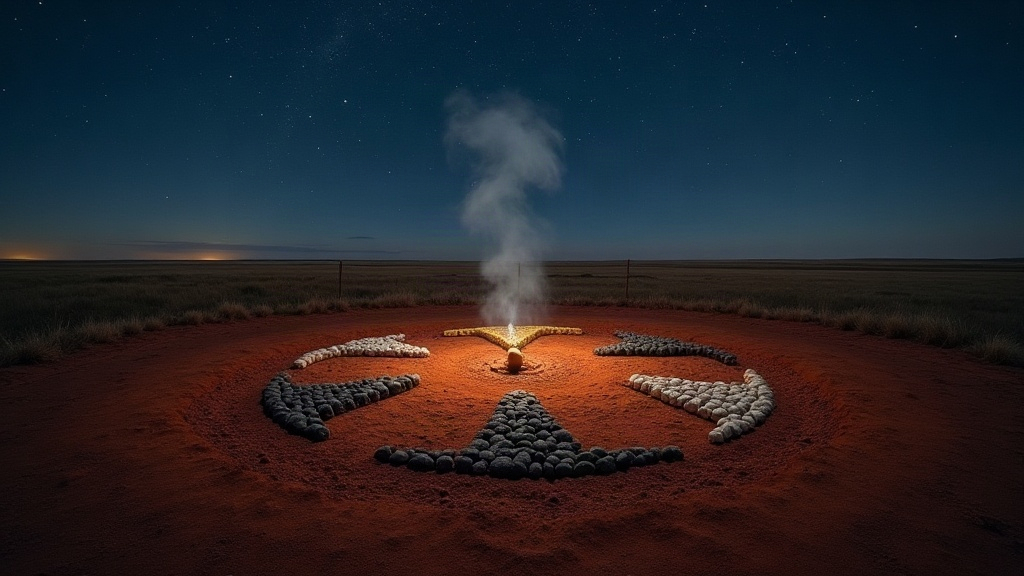
The Medicine Wheel represents the interconnected nature of existence across countless Native American traditions. Discover how this ancient symbol functions as both spiritual map and healing practice, grounded in real ceremonies that still guide communities today.

Native American
Sedna: Inuit Goddess of the Sea and Marine Animals
Sedna rules the Arctic depths as the Inuit goddess of the sea and marine animals. Her story begins with betrayal and transformation: a fallen maiden becomes the sovereign of the ocean, controlling the seal, whale, and fish that sustained Arctic peoples for millennia. Discover how her myth shaped survival, hunting ritual, and the spiritual bond between humans and the sea.

Native American
Raven: Creator and Trickster of the Pacific Northwest
Raven is both creator and chaos-bringer in Pacific Northwest Indigenous traditions, the figure who stole light from darkness and shaped the world through cunning and hunger. Explore how this contradictory god reflects the region's cultures.