
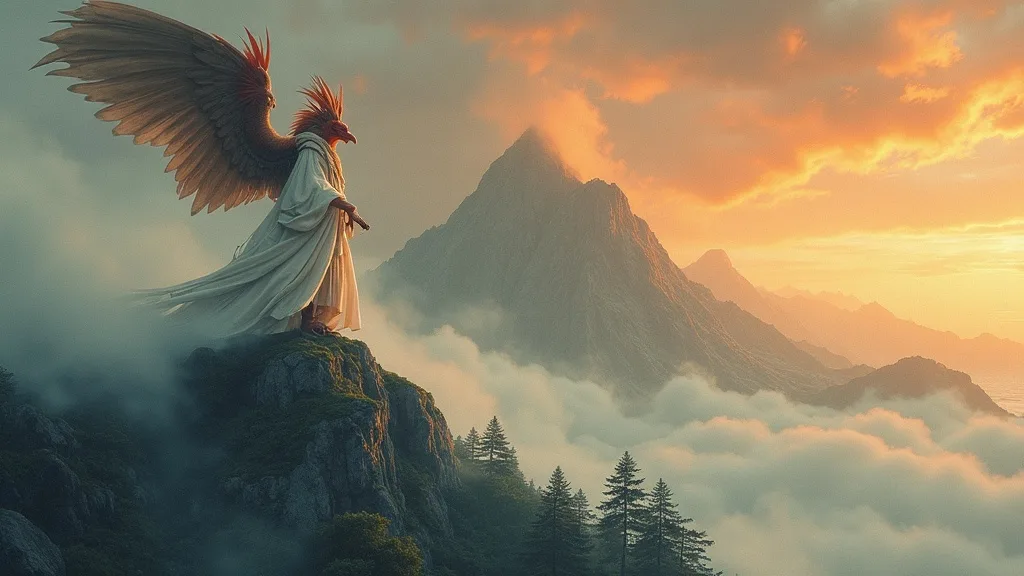
Tengu: Mountain Goblins and Supernatural Warriors of Japanese Mythology
Half-bird, half-man, and entirely terrifying: the Tengu roamed Japan's sacred peaks for over a millennium, teaching swordsmanship, punishing the arrogant, and blurring the line between demon and divine protector.
Contents
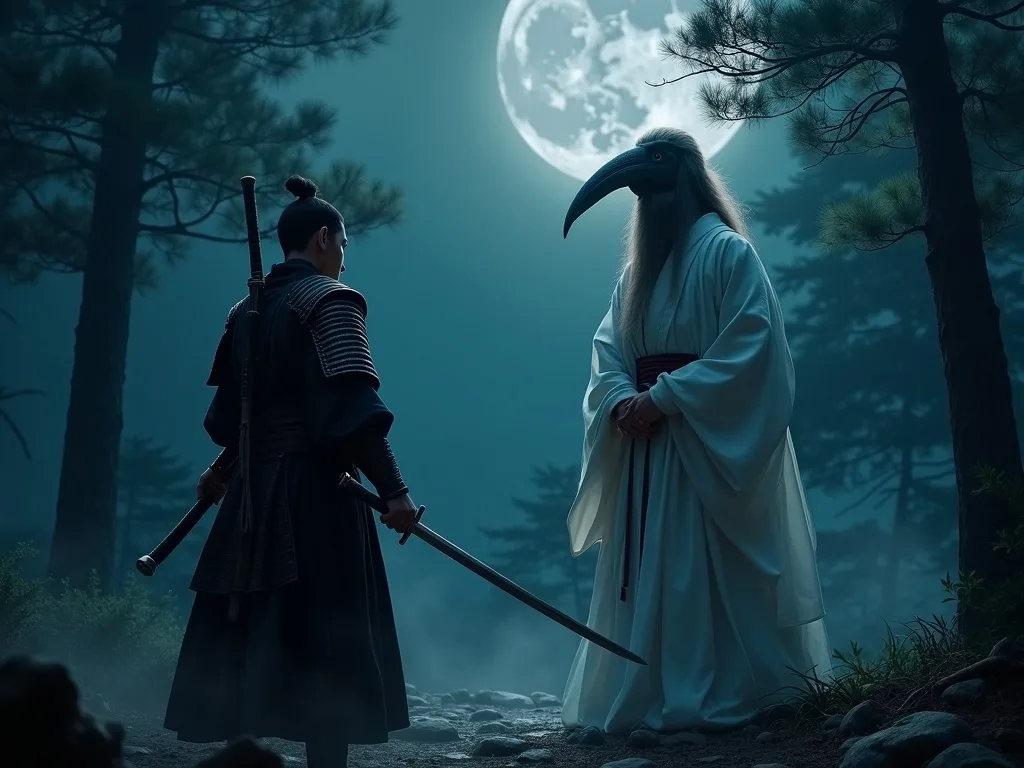
A warrior arrives at the edge of a mountain forest. Night is falling. Somewhere above the treeline, wings beat against cold air, and a single red face peers down from the cedar branches. The warrior does not run. He has been summoned here. For the next seven years, he will learn to fight in ways no human teacher could show him.
This is the world the Tengu inhabit: vertical, dangerous, half-divine and half-monstrous. They nest where Japan's volcanic peaks dissolve into cloud. They carry fans made of feathers. They wear the long, hooked nose that became their most enduring image. And for over a thousand years, the people of Japan have regarded them with a very specific mixture of terror and reverence that few other supernatural beings manage to inspire.
The Tengu are not simply goblins. They are warriors, tricksters, teachers, and, at various points in Japanese history, the sworn enemies of Buddhism, the guardians of mountain shrines, and the phantom instructors of the country's greatest sword-fighters. Their story moves from a borrowed Chinese bird-demon through a thousand years of transformation, picking up swords, Buddhist robes, and Shinto rites along the way.
From China to the Mountain Peaks: Origins of the Tengu
The first recorded appearance of the word tengu in Japanese writing comes from the Nihon Shoki (日本書紀), the chronicle of Japan compiled in 720 AD. A meteor blazes across the sky, and a Buddhist monk identifies it as a tengu. The entry is brief, almost dismissive. Nobody yet imagined the elaborate mythology that would grow around the name.
Tengu as a fully developed creature emerged gradually during the Heian period (794-1185 AD), a time when Buddhism was deeply entangled with Japanese court culture and when the tension between imported religion and older mountain spirits was sharpest. The sutras warned against mara, supernatural beings that lead souls astray. Japanese storytellers found in the Tengu a perfect local face for that danger.
The Konjaku Monogatarishu (今昔物語集), a vast collection of tales assembled around 1120 AD, is one of the richest early sources. It places Tengu throughout the mountains of Honshu, always interfering with Buddhist monks: pulling them off paths, mimicking the voices of masters, staging elaborate illusions to break a meditating practitioner's concentration. These early Tengu are not helpful. They are obstacles wearing supernatural flesh.
Yet even here, something more complex is stirring. The monks who encounter Tengu in these stories are rarely innocent. Many are proud men, more interested in rank than wisdom. The Tengu punish arrogance dressed in clerical robes. This moral dimension would deepen considerably as the centuries passed.
The Two Bodies of the Tengu: Karasu and Daitengu
By the Kamakura period (1185-1333 AD), Japanese artists and storytellers had settled into a distinction that remains useful today. There were two recognisable Tengu types, and they were almost opposites in form.
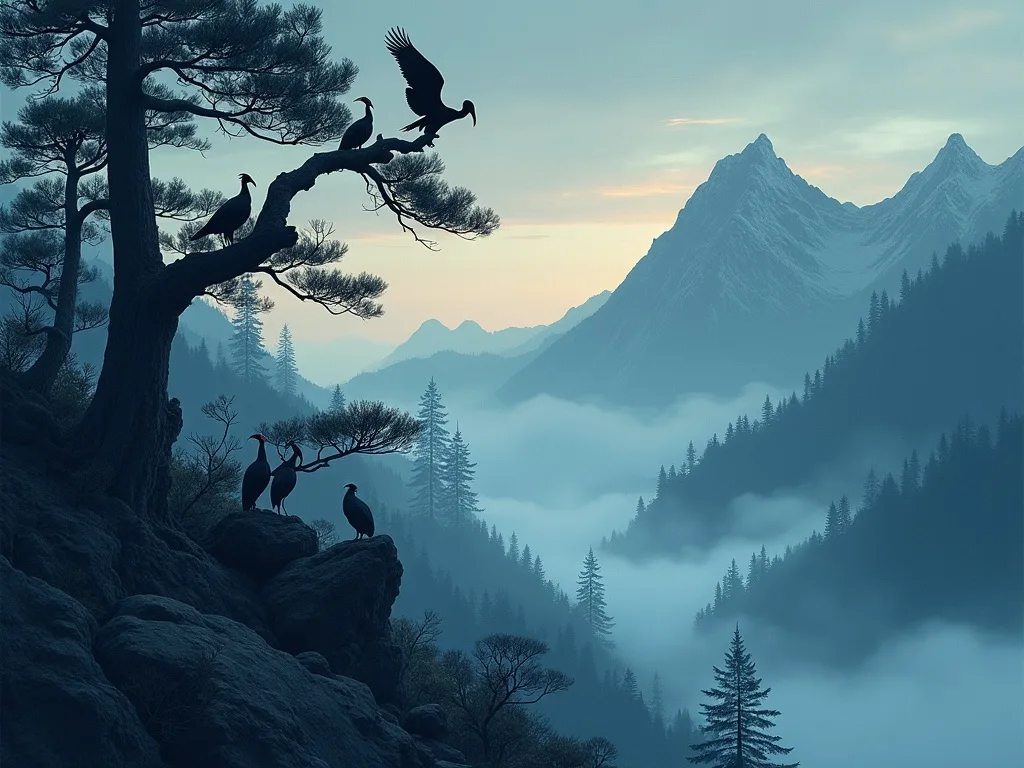
The Karasu-Tengu (烏天狗), or "crow Tengu," wore the body of a large bird of prey: black feathers, a genuine beak, taloned feet, and wings spanning several metres. Karasu-Tengu appeared in groups, forming something like a flock around a mountain. They were supernatural in scale but animal in form, and they served as messengers and soldiers for their superiors.
The Daitengu (大天狗), the "great Tengu," had a far more human silhouette. Humanoid in height and proportion, they wore the robes of a yamabushi (mountain ascetic), carried a magical fan made of feathers called a hauchiwa, and had a single defining feature that marked them immediately: the impossibly long nose, sometimes curved downward like a beak, sometimes thrusting forward like a spike. This nose became the symbol of the Tengu in popular culture. Today it appears on festival masks, shrine decorations, and the rooftops of mountain temples across Japan.
The Daitengu commanded specific mountains. Sojobo, the greatest of them all, ruled Mount Kurama, north of Kyoto. He is the Tengu who, according to legend, trained the young warrior Minamoto no Yoshitsune in swordsmanship and strategy, a story that would later reshape how all Japan thought about these creatures.
The Sword and the Mountain: Tengu as Warrior-Teachers
The training of Yoshitsune on Mount Kurama is one of the most enduring stories in Japanese narrative tradition. Yoshitsune, called Ushiwakamaru as a boy, was the son of a defeated clan, sent to a Buddhist monastery at Kurama to be raised as a monk. He did not become a monk. Instead, according to texts like the Heike Monogatari (平家物語, compiled in the 13th century), he met Sojobo in the mountain forests and was taught the secret arts of combat.
The skills Sojobo passed on were not ordinary swordsmanship. They included hyoho, the deeper principles of strategy. Speed that seemed inhuman. Movement that borrowed from the flight of birds. Yoshitsune later became the greatest military commander of the Genpei War (1180-1185 AD), the conflict that decided whether the Minamoto or the Taira clan would control Japan. His tactics at the Battle of Ichi-no-Tani, where his cavalry charged down a cliff face that enemies considered unscalable, read like something a winged teacher might design.
This story changed the Tengu's reputation fundamentally. A being that had spent the Heian period as a demonic obstacle was now, at least in some stories, a transmitter of superhuman skill to worthy humans. The Tengu became supernatural masters of budo (martial arts), and this association never entirely faded.
Later traditions connected Tengu to the transmission of specific sword schools. The Shinto Muso-ryu school of jo (staff fighting) traces its founding to a dream-encounter with a Tengu. Several ninjutsu traditions claim similar origins. Whether these accounts reflect real historical beliefs or later mythologising is something scholars debate, but the connection between Tengu mountain spirits and the highest levels of martial mastery became firmly embedded in Japanese culture.
Enemies of Buddhism, Guardians of Mountains
The relationship between the Tengu and Buddhism is genuinely strange, and worth understanding clearly. For several centuries, the two traditions were locked in open narrative hostility.
The Tengu Zoshi (天狗草紙), an illustrated scroll from around 1296 AD, is the most direct statement of this hostility. It depicts monks of various Buddhist sects being reborn as Tengu after death. Their sin: pride. A monk who cared more about his rank, his status, and his learning than about actual spiritual progress was, according to this text, at risk of becoming one of these mountain beings after death. The Tengu were, in this reading, Hell's prefects for the sin of spiritual arrogance.
Yet the same mountains where Tengu were said to torment monks were also considered sacred by Shugendo, the tradition of mountain asceticism that blended Shinto nature-worship with Buddhist practice. The yamabushi who practiced Shugendo wore white robes, carried conch-shell trumpets, and spent weeks on mountain peaks performing rituals. These are exactly the robes and the mountain landscape that the Daitengu inhabit. The Tengu were simultaneously demons punishing bad monks and spirit-doubles of the good ones.
By the Edo period (1603-1868 AD), this contradiction had largely resolved itself in the Tengu's favour. Mountain shrines across Japan began venerating local Tengu as kami (divine presences), spiritual guardians of the forest and the peak. The great Tengu of specific mountains received names, faces, and dedicated festivals. Atago Gongen shrine near Kyoto venerated a Tengu associated with fire prevention. The Tengu of Mount Takao in Tokyo's western ranges became a popular object of urban pilgrims. These were no longer demons in any simple sense. They were fierce, unpredictable, but ultimately protective forces rooted in a specific landscape.
Shinto mountain spirits and kami of this kind represent one of the most distinctive features of Japanese religious geography: the idea that mountains are living presences that must be honoured and can be offended.
The Fan, the Nose, and the Feather: Tengu Symbols and Their Meanings
Every major feature of the Tengu's appearance carries its own logic.
The feather fan (hauchiwa) is the Tengu's most practical supernatural tool. A stroke of this fan can raise winds strong enough to level forests. In stories, Tengu use it to test the courage of heroes, to scatter enemy armies, and sometimes to play pranks on travellers. The fan connects the Tengu to fuujin, the wind god, and to the general sense that mountain weather is a conscious, moody force. When storms sweep down Japanese peaks without warning, folklore says Tengu are quarrelling.
The long nose evolved from the beak of the Karasu-Tengu as the humanoid Daitengu form grew more popular. By the Edo period, the nose had become so strongly associated with the Tengu that the adjective tengu ni naru ("to become a Tengu") meant to grow arrogant, to let your pride extend further than your face should allow. The nose is a visual metaphor for overreach. This made the Tengu a remarkably efficient cultural symbol: their very body expressed the sin they punished.
The yamabushi robes (white garments with a small black hat called a tokin) placed the Tengu firmly in a tradition that real, living practitioners of Shugendo wore. When an artist painted a Daitengu in these robes, they were making an argument: this is what a mountain ascetic becomes when pride wins over practice. The Tengu was a warning portrait of what every monk, every swordsman, every spiritual practitioner might turn into if they let status matter more than truth.
Tengu in War, Politics, and Popular Fear
The Tengu did not stay neatly in the mountains. During Japan's medieval period, they became politically charged figures. Rival Buddhist factions accused each other of using Tengu-magic. Defeated warlords were said to have become vengeful Tengu after death. The onryo (vengeful spirit) tradition and the Tengu tradition overlapped in stories about powerful men who died with rage unresolved.
Emperor Sutoku, who died in exile in 1164 AD after losing a bitter political struggle, was believed to have transformed into a great Tengu after his death. The fear around Sutoku was genuine enough that his vengeful ghost (tatari) was blamed for disasters for generations. He was eventually enshrined and appeased, but the Tengu identification stuck.
In the political turbulence leading up to the Meiji Restoration (1868), a wave of supernatural anxiety swept through Japan. Rumours circulated that Tengu were gathering in the mountains. Some accounts from this period describe mass sightings on mountain slopes, lights moving through forests, the sound of weapons clashing at night. Historians have read these reports as expressions of collective anxiety during a period of radical political change: a society reaching for supernatural explanation during an incomprehensible transformation.
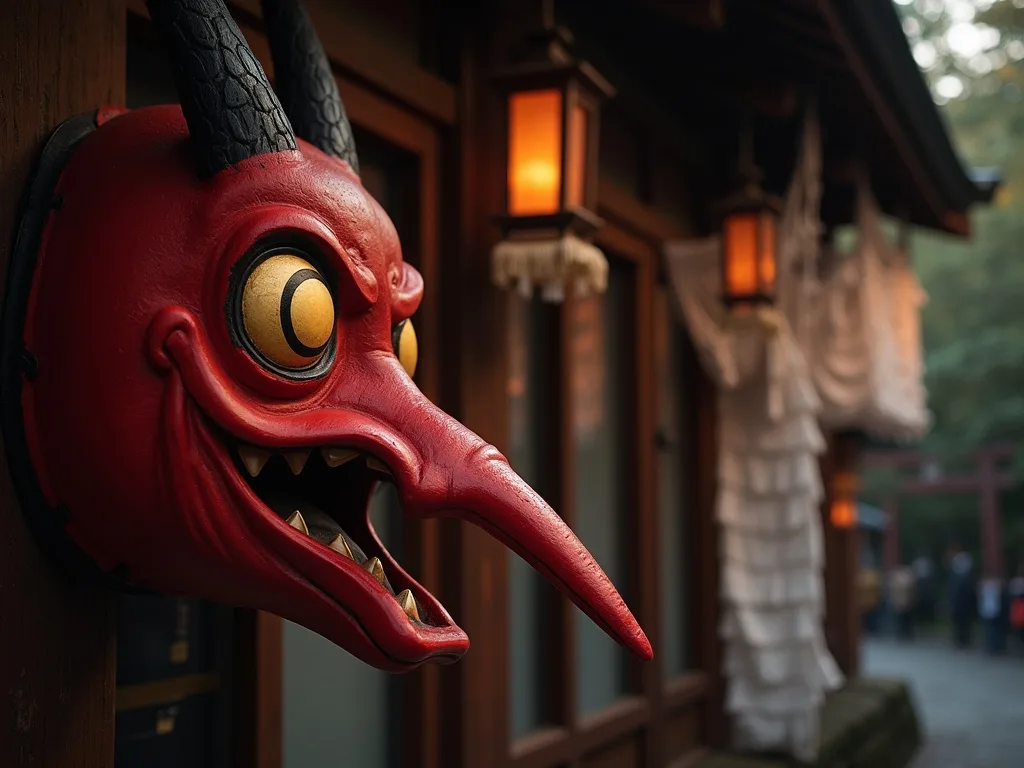
Popular theatre found the Tengu irresistible. Noh plays featuring Tengu characters, like Kurama Tengu (named for Sojobo's mountain), performed the tension between the creature's dangerous nature and its hidden wisdom. Kabuki expanded on this, making Tengu figures spectacular with elaborate costumes and acrobatic staging. The mask-makers of these traditions produced some of the most striking objects in Japanese craft: red-faced, long-nosed, fierce-eyed masks that tourists still buy at Mount Kurama today.
The Oni, Japan's club-wielding demons, sometimes appear alongside Tengu in these theatrical traditions, and the contrast is instructive. Oni are blunt, violent, and relatively easy to read. Tengu are subtle. A Tengu might fight you, trick you, or teach you the secret art that makes you invincible. You rarely know which until it is already happening.
The Tengu in Living Japanese Culture
The Tengu did not retire when Japan modernised. They adapted.
At Mount Kurama in Kyoto Prefecture, a temple dedicated to a cosmic being called Mao-son sits alongside a shrine that marks the spot where Yoshitsune is said to have trained. The mountain's Tengu are still honoured in formal ritual. The Kurama Fire Festival (Hi Matsuri) each October draws crowds who witness torch-lit processions that invoke the mountain's ancient presences.
At Yakuoin temple on Mount Takao, west of Tokyo, the Tengu appear on virtually every surface: carved in cedar, painted on gates, rendered in stone along the approach path. These are not decorative curiosities. Yakuoin holds the Tengu as its chief protective deity, and the fire rituals (goma) performed here explicitly invite the mountain spirit's protection.
Manga, anime, and video games have borrowed the Tengu image repeatedly, and not always superficially. The Tengu appear in works by Osamu Tezuka, in the Haiku folk horror tradition, in role-playing games that try to preserve their moral complexity. The creature that punishes arrogance translates naturally into modern narrative because arrogance has not become less common.
The long-nosed mask has become one of Japan's most recognised visual exports. It appears on keyrings and sake bottles and festival posters. But under that commercial surface, the original logic holds: a mountain, a test, a creature that will either destroy you or make you extraordinary, depending entirely on who you are when you arrive.
Contemporary Japanese folklore and the spirit world show just how continuous this tradition remains. Shugendo was legally suppressed after the Meiji Restoration in 1872, then revived after World War II. The practitioners who climb mountain routes today in white robes, blowing conch shells, are participating in a tradition that runs directly back to the same cultural matrix that produced the Daitengu. The mountain has not changed. The question it asks of the person who climbs it has not changed either.
What Tengu Say About Japanese Ideas of Power and Pride
Every culture builds creatures that dramatise its anxieties. The Tengu, across a thousand years of stories, have dramatised one anxiety consistently: what happens to skill and knowledge when pride colonises them.
The Tengu is an expert. In swordsmanship, in strategy, in the arts of spiritual practice. But the Tengu's expertise has been warped by ego. The monk who became a Tengu was brilliant; that is precisely the problem. He loved being brilliant more than he loved what his brilliance was supposed to serve. The result is a being who lives in the mountains, outside human community, powerful and isolated, still possessing the skill but no longer able to use it for any purpose except his own will.
When the Tengu teaches Yoshitsune, something remarkable happens: the skill flows out again. The teacher transmits what ego had locked away. There is a strand of Japanese thought, visible in the martial arts tradition and in Zen Buddhist practice alike, that sees the mastery of technique as a path back through ego rather than around it. You become so good that self-consciousness dissolves. The Tengu who teaches a worthy student is, in this reading, finding his own release as much as making a warrior.
The Kappa, Japan's river tricksters, share the Tengu's quality of being simultaneously dangerous and potentially helpful, depending on how the human protagonist behaves. Japanese supernatural tradition frequently works this way: the spirit reflects the person who encounters it. Come to the mountain in arrogance, and the Tengu will break you. Come in genuine readiness to learn, and the mountain opens.
This is not a comfortable moral. It places the full weight of the encounter on the human. But it is a serious one, and it has kept the Tengu alive in Japanese imagination long after many simpler monsters have faded.
Frequently Asked Questions About Tengu in Japanese Mythology
Frequently asked questions
What is the difference between a Karasu-Tengu and a Daitengu?
A Karasu-Tengu (crow Tengu) has the full body of a large bird of prey, with a genuine beak, feathers, and talons. It typically operates in groups and serves as a messenger or soldier. A Daitengu (great Tengu) is largely humanoid, wearing yamabushi robes and carrying a feather fan, with the famous elongated nose replacing the beak. Daitengu are more powerful, command specific mountains, and are the ones most likely to appear in stories involving human protagonists.
Did the Tengu really teach Minamoto no Yoshitsune to fight?
Yoshitsune was a real historical figure who commanded Minamoto forces during the Genpei War (1180-1185 AD) and became famous for unconventional battlefield tactics. The story of his training by the Tengu Sojobo on Mount Kurama is mythological, appearing in texts like the Heike Monogatari and later elaborated in Noh and Kabuki drama. Historians see it as a narrative that gave supernatural authority to Yoshitsune's unusual genius, which real sources confirm was extraordinary by the standards of his time.
Are Tengu considered evil in Japanese religion?
Their moral status shifted considerably over time. In Heian and Kamakura period Buddhism, Tengu were classified as demons who obstructed spiritual practice. The Tengu Zoshi scroll (c.1296 AD) depicted them as reincarnated arrogant monks. By the Edo period, however, many Tengu were venerated at Shinto shrines as protective mountain kami. Today, figures like the Tengu of Mount Takao and Mount Kurama receive ritual honour. They are best understood not as simply evil, but as fierce, ambiguous forces that respond to the character of whoever encounters them.
Where does the Tengu's long nose come from?
The elongated nose evolved as the Daitengu's humanoid form became more popular than the fully bird-like Karasu-Tengu. The nose retained the suggestion of a beak while fitting a human face. It also took on symbolic weight: the Edo-period expression tengu ni naru (to become a Tengu) meant to grow arrogant or puffed up with pride, making the nose a literal image of ego extending beyond its natural limit. The design is most visible in the carved and lacquered masks used in Noh, Kabuki, and shrine festivals.
Which mountains in Japan are most associated with Tengu?
Mount Kurama in Kyoto Prefecture is the most mythologically significant, as the home of Sojobo, greatest of the Daitengu, and the alleged training ground of Yoshitsune. Mount Takao in western Tokyo, home to Yakuoin temple, has some of the most visible living Tengu veneration, with the creature appearing throughout the temple's iconography. Mount Atago near Kyoto and Oyama in Kanagawa Prefecture also have strong Tengu traditions. These sites are all historically associated with Shugendo, the mountain ascetic practice that produced the yamabushi whose image the Daitengu shares.
How did the Tengu influence Japanese martial arts traditions?
Several major schools claim supernatural origins connected to Tengu encounters. The Shinto Muso-ryu school of jo (staff fighting), founded around 1605 AD by Muso Gonnosuke, traces its key technique to a dream in which a Tengu-like spirit revealed the critical principle of migi (right-hand) technique. Ninjutsu traditions in regions like Iga and Koga similarly invoked Tengu instruction to explain skills that seemed to exceed normal human capacity. Whether these accounts reflect literal belief or served as pedagogical myth, they show how deeply the Tengu was embedded in the culture's understanding of martial mastery.
The Tengu Beyond Japan: Cross-Cultural Echoes and Unresolved Debates
Scholars of comparative religion have noted that the Tengu occupies a role found in surprising places across world mythology: the superhuman instructor who lives outside ordinary society and transmits forbidden or extreme knowledge to a chosen few.
The Greek centaur Chiron, teacher of Achilles and Heracles, lives on a mountain, possesses knowledge beyond human reach, and chooses his students carefully. The Celtic tradition of the sídhe, supernatural beings who sometimes take human warriors into their realm to train them, runs parallel. The shamanic traditions of Siberia and Central Asia feature spirit-teachers who inhabit liminal zones, mountains and forests, and grant power to initiates who survive the encounter.
This pattern appears too consistently to be coincidence. It seems to express something real about how cultures think about the acquisition of extraordinary skill: it comes from outside the social order, it is dangerous to seek, and it transforms the person who survives it into something that no longer entirely belongs to ordinary human life. Yoshitsune, after Mount Kurama, never lived an ordinary life. He was brilliant and doomed in equal measure. The Tengu's gift came with a cost that the stories never fully explain but always imply.
What remains genuinely unresolved in scholarly debate is the exact relationship between the Tengu and the yamabushi tradition. Did Shugendo practitioners create the Tengu image as a supernatural projection of their own practice, a way of saying "this is what our mountains contain"? Or did pre-existing mountain spirit beliefs shape the imagery that Shugendo practitioners later inherited? The Shugendo Shoshinshu (14th century) and other internal texts suggest that yamabushi themselves believed Tengu to be real presences on the peaks they climbed, not metaphors. The line between the practitioner and the spirit they venerated may have been intentionally thin.
That ambiguity is, perhaps, exactly where the Tengu belongs. Not fully demon, not fully divine. Not fully human, not entirely alien. A red face at the edge of the treeline, watching the warrior arrive, deciding whether tonight the lesson begins or the punishment does.
Free 25-page sample
Want the whole story?
Take the first 25 pages free. If it pulls you in, the full edition is yours as an instant PDF download, with a paperback on Amazon for selected titles.
Japanese
The Japanese Mythology and Yokai Book: Amaterasu, Susanoo, Kami, and the Sacred Stories of Japan
Amaterasu, Susanoo, Yokai, Kami, and the Sacred Stories of Japan
The Kojiki, the Nihon Shoki, and the bestiaries of Toriyama Sekien. Every kami, every yokai, every ghost story.
More from Japanese
All articles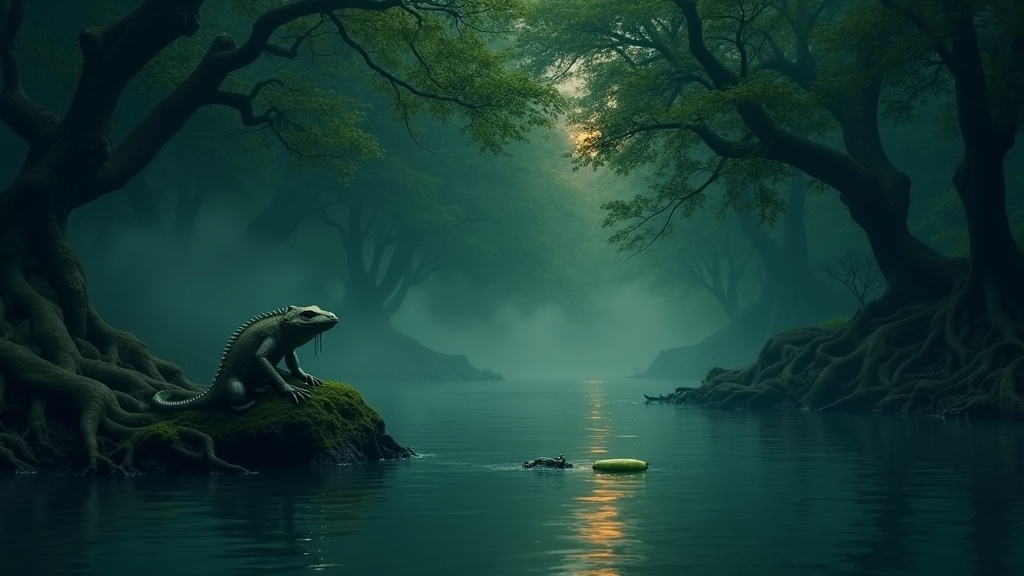
Japanese
Kappa: Water Demons of Rivers and Ponds
The kappa lurks in every river and pond of Japan, a reptilian child-sized creature that drowns swimmers, demands cucumbers, and bows with deadly politeness. Here is the full story of one of Japanese folklore's most enduring monsters.
Japanese
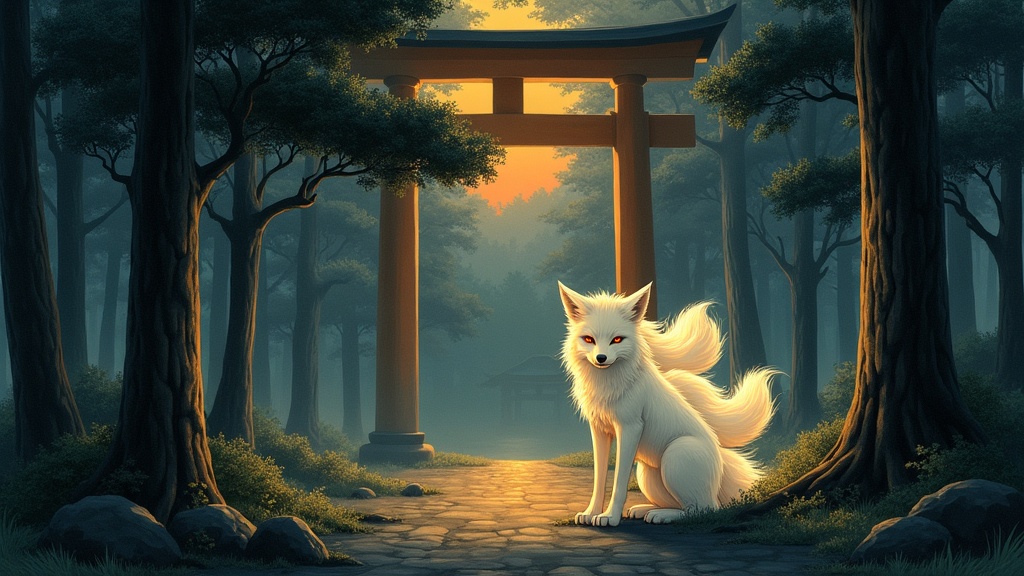
Kitsune: The Fox Spirit of Japanese Mythology
The kitsune is Japan's most storied supernatural creature: a fox of shifting form, ancient intelligence, and divine allegiance. From rice-field shrines to imperial courts, its nine tails have cast shadows across two millennia of myth.
Japanese
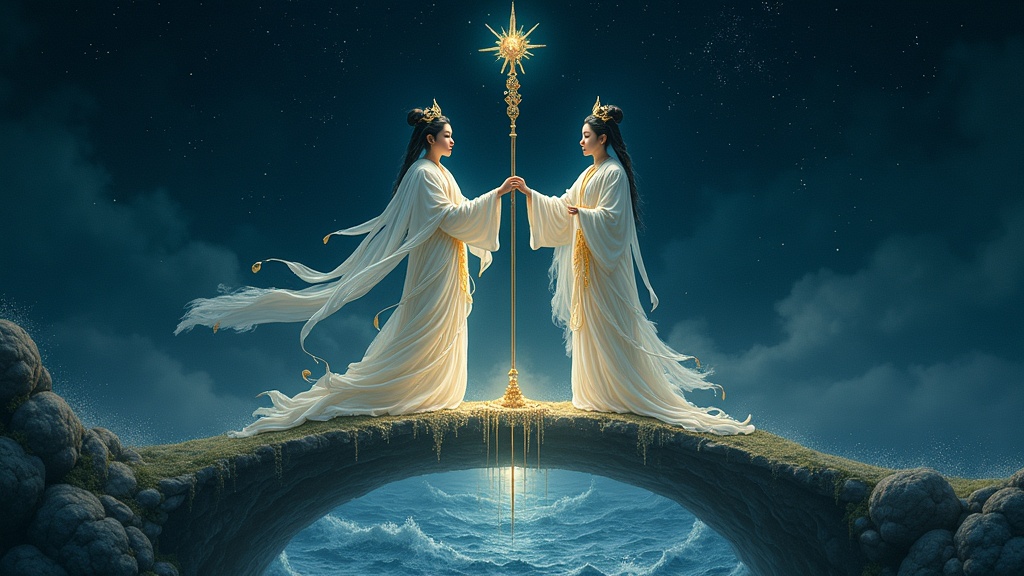
Izanagi and Izanami: The Creation Myth That Built the Japanese Islands
Before Japan existed, two deities stood on a bridge of heaven and stirred the primordial sea. The story of Izanagi and Izanami is the most elemental creation myth in the Shinto tradition.
Japanese
Susanoo the Storm God: Chaos, Courage, and the First Poem in Japanese Myth
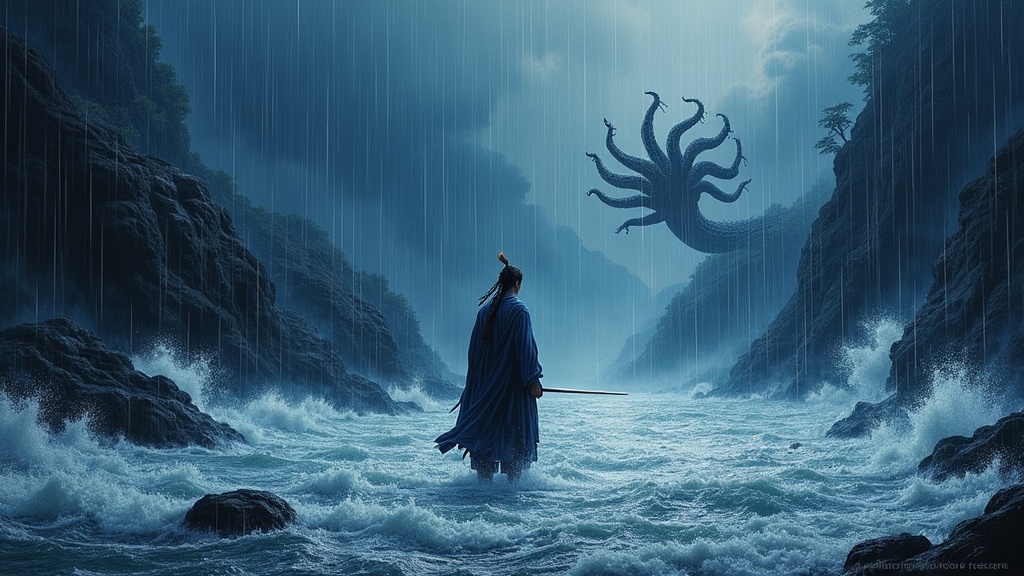
Banished from heaven, mourned by the seas, and celebrated as the slayer of an eight-headed dragon, Susanoo stands as the most turbulent and deeply human figure in the Japanese pantheon.