
The Valkyries: Choosers of the Slain in Norse Mythology
Armored, spear-bearing, and answerable only to Odin, the Valkyries rode into every battle to decide who lived and who fed the ravens. Here is the full story.
Contents
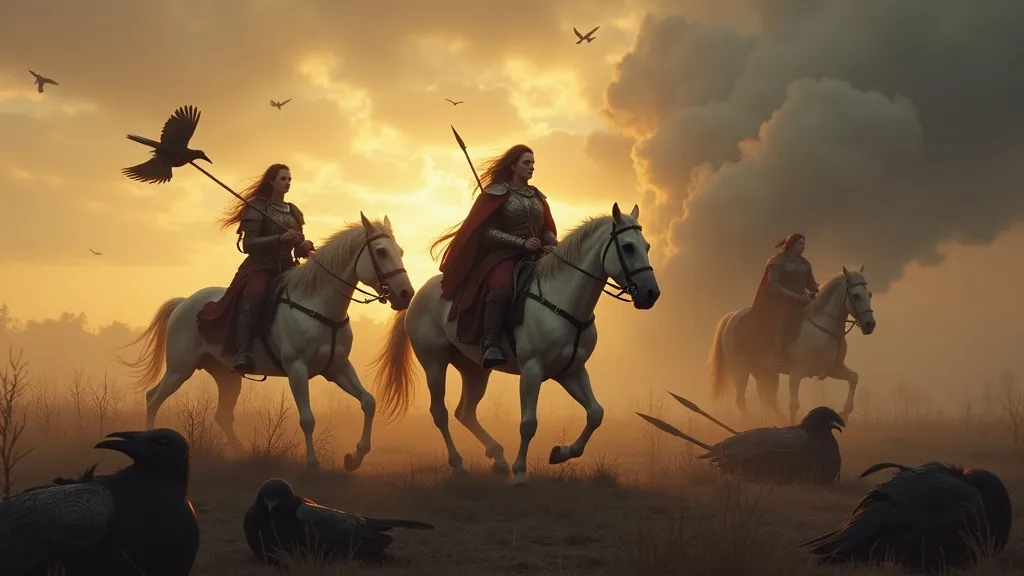
The battlefield at dawn is not chaos. It is a court, and sentence has already been passed. Before the first sword clears its scabbard, the riders are already there, moving through the pre-light, their byrnies gleaming, their spears angled downward. They do not fight. They choose. That act of choosing, carried out above the din of iron and screaming horses, is what makes the valkyries chooser of the slain one of the most vivid offices in all of Norse religion: not death itself, but death's selection.
The Old Norse title is valkyrja, plural valkyrjur. It compounds valr, meaning "the slain on a battlefield," with kjósa, "to choose." The kenning is exact. These figures were not simple angels of mercy and they were not demons feeding on carnage. They were agents of an administrative cosmos, servants of Odin who kept count of the heroic dead because Odin needed that count to matter. The hall of Valhalla required provisioning, and its population was selected rather than random.
What follows traces that office from its earliest attestations in skaldic verse through the Eddic poems, the prose handbooks of Snorri Sturluson, and the heroic sagas, then asks the harder question: what does the choosing actually mean, cosmologically and poetically, inside the Old Norse world-view?
The Office of the Valkyrja: What the Name Actually Carries
The compound valkyrja is not a metaphor. Old Norse compounds built on valr cluster around battlefield death with surgical precision. Valföðr, "Father of the Slain," is one of Odin's heiti. Valhöll, "Hall of the Slain," names the destination. Valr itself designates the specific dead: warriors who fell with weapons in hand, not the drowned or the aged or the stillborn. Every component of the compound locks the valkyrja to this exact domain.
Kjósa is equally precise. It means to choose, to elect, to distinguish one from another. The verb is active. The valkyrja does not wait for warriors to die and then escort them; the older stratum of the material suggests the choosing precedes or coincides with the act of dying. In the Grímnismál, Odin names twelve valkyries who bear ale in Valhalla: Hrist, Mist, Skeggjöld, Skögul, Hildr, Þrúðr, Hlökk, Herfjötur, Göll, Geirahöð, Randgríðr, and Ráðgríðr. The list is performative. It tells us these figures have names, roles, and individuality, even when their function is collective.
The names themselves encode their work. Hildr means "battle." Göll means "tumult" or "screaming." Herfjötur means "fetter of the host," pointing to the valkyrie's power to paralyse warriors and decide outcomes before swords even connect. Skögul most likely means "shaker" or "high-towering." These are not soft names. They are operational designations, the names of forces rather than persons, though the sagas were to give them persons in abundance.
Serving Odin: The Logic of Valhalla's Population
Valhalla needed dead heroes for a structural reason that the Norse sources spell out plainly. The einherjar, the "lone fighters" or "those who fight alone," were the chosen dead, the warriors whom the valkyries had selected from every battle since the world's second age. They trained in Valhalla's courtyard every day, fought to genuine wounds, healed each evening, and ate the boar Sæhrímnir (who regenerated nightly) while drinking mead from the goat Heiðrún. This was not leisure. It was preparation.
The Gylfaginning in Snorri Sturluson's Prose Edda (written c. 1220 CE) frames the purpose without ambiguity: Odin was assembling an army for Ragnarök. The einherjar were his reserve force for the final war against Loki's coalition: the wolf Fenrir, the serpent Jörmungandr, and the armies of Múspellsheim. The valkyries' act of selection was therefore not arbitrary mercy. It was strategic. Odin, whose name carries associations with fury and with the frantic mental state of battle ecstasy, required the finest warriors. The valkyries were his recruiters.
This situates the valkyries chooser of the slain inside a teleological structure: all history moves toward Ragnarök, and the valkyries' battlefield selections are individual data points in that trajectory. A warrior chosen is a warrior positioned for the last war. A warrior left to the goddess Hel is one who falls outside that military calculus, perhaps because the manner or moment of their death made them unsuitable.
Skaldic Evidence: The Oldest Attestations
The skaldic corpus gives us the earliest reliable textual access to the valkyrjur. Bragi Boddason, the ninth-century skald, uses the term in Ragnarsdrápa. Other early skalds deploy kennings that assume the audience knows the figures: hrafnásar ("raven-Aesir") for valkyries, or göndul as a simplex name in battle-poetry. The tenth-century Eiríksmál, composed on the death of King Eiríkr Bloodaxe (killed 954 CE), dramatises Odin waking from a dream and sending valkyries to prepare Valhalla for a great king's arrival. The poem asks which army is approaching; Odin's answer points to Eiríkr himself. Here the valkyrie is the mechanism by which a historically real king passes into mythological space.
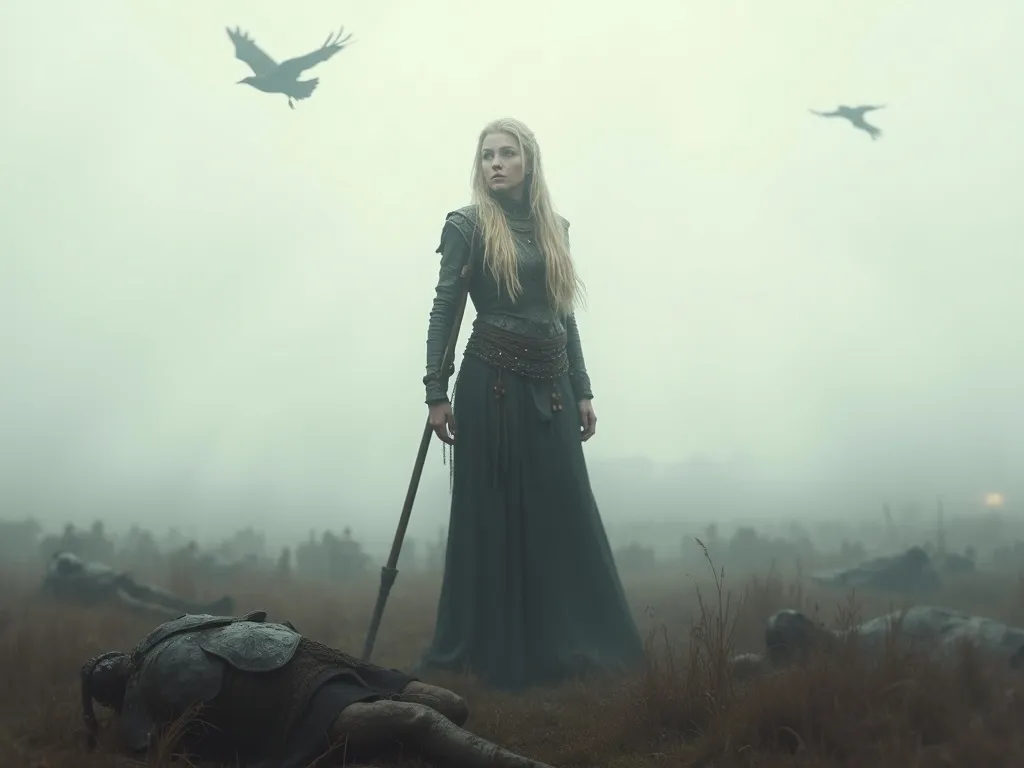
The Hákonarmál by Eyvindr Skáldaspillir (late tenth century) does the same for King Hákon the Good. Two named valkyries, Göndul and Skögul, observe Hákon's last battle and evaluate him. Skögul explicitly selects him for Odin's hall. The poem preserves what may be the most theologically direct statement of the chooser function in the corpus: the valkyrie watches, weighs, and acts. The selection is simultaneous with the king's death; it is not a post-mortem administrative process. The dying is the choosing.
This early skaldic material is important because it pre-dates Snorri's prose systematisation by roughly two centuries. It shows that the valkyrja concept was not invented by thirteenth-century Icelandic compilers but was a live and functional element of court poetry from at least the ninth century, when Norse belief systems were still practiced and not yet retrospective cultural reconstruction.
The Eddic Portraits: Heroic Valkyries with Inner Lives
The Poetic Edda (preserved in the Codex Regius, c. 1270 CE, though the poems themselves are considerably older) adds a dimension the functional kennings cannot: individual psychology. The most extended treatment is Brynhildr, the valkyrie who defies Odin's will in the Sigrdrífumál and Helgakviða Hundingsbana. She chooses the wrong king, the one Odin had not decreed victorious, and Odin punishes her by pricking her with a sleep-thorn and encircling her with fire. She becomes the sleeping warrior-woman whom Sigurðr wakes with a sword cut through her armour.
The punishment is revealing. A valkyrie's authority to choose derived entirely from Odin's delegation. When she chose independently, outside his mandate, she ceased to be a valkyrja and became mortal. The fire-circle is not poetic decoration; it is a boundary between her prior supernatural status and her new vulnerability. Sigurðr, who crosses fire because he knows no fear, is the only hero capable of reaching a former divinity who has been returned to the human plane.
Hildr, featured in the Old Norse saga tradition, takes the choosing motif in a darker direction. In versions of the Hjaðningavíg (the "Battle of the Heðnings"), Hildr has the power to resurrect the slain at night so that the battle can resume at dawn, perpetually. Her father Högni and her abductor Heðinn fight forever. Hildr reanimates the dead. The choosing here has become a loop, an infinite war she maintains, which casts the valkyrie function as something beyond benevolent selection and into a kind of terrible permanence.
Sigurún in the Helgakviða Hundingsbana II loves the hero Helgi and, after his death, meets him one last night in his burial mound before he is reborn. She is named a valkyrja but the poem's emotional weight lies in her grief, not her office. This tension - between the professional chooser and the woman who mourns the chosen - is one the Eddic poets found generative. It refuses to reduce the valkyrie to a function.
The Armor, the Spear, and the Shield-Maiden Problem
Depictions of valkyries in material culture are older than any written source. The gold foil figures (guldgubber) from Migration Period Scandinavia (fifth and sixth centuries CE) show paired male and female figures in what may be greeting or embrace. More directly, several bildsteine, the picture stones of Gotland, show a mounted female figure with a drinking horn, greeting a rider: this is almost certainly a visual rendering of the valkyrie welcoming the newly arrived einherjar to Valhalla.
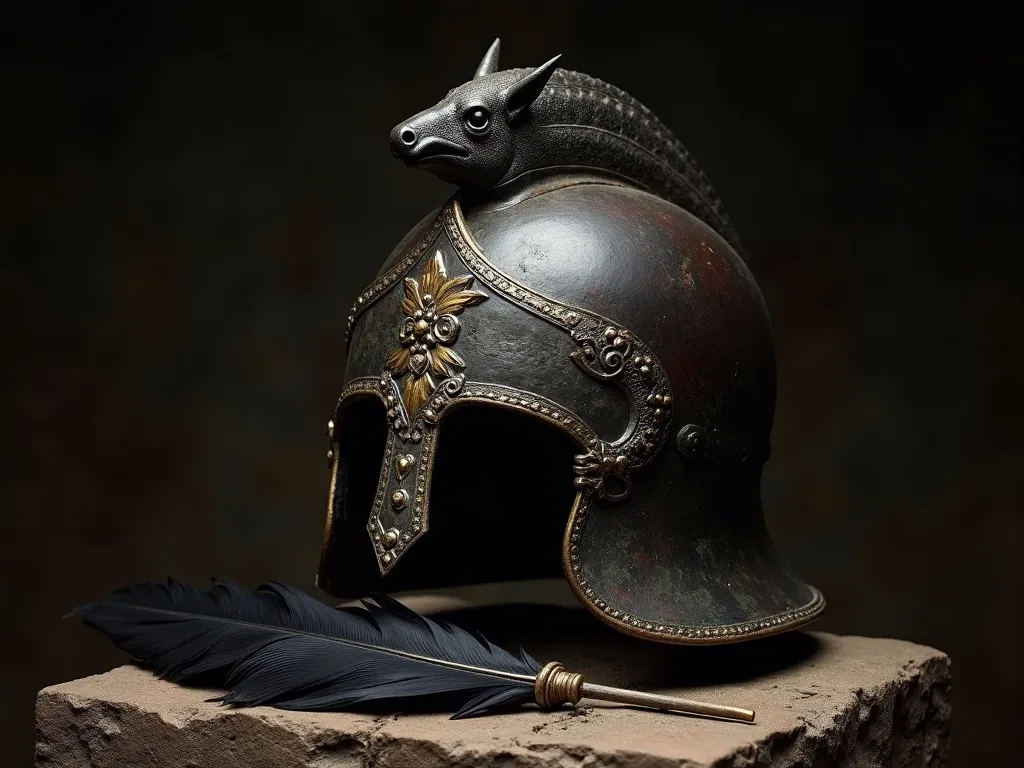
Helmet plates from Vendel (Sweden) and Valsgärde show a warrior accompanied by a spear-bearing female figure. The iconography predates the Viking Age proper. This matters because it suggests the valkyrja concept had visual and cultural currency before the skaldic tradition codified it in verse.
The question of skjaldmær ("shield-maidens") overlaps here and requires care. Not every armed woman in the Norse corpus is a valkyrie. Hervör in the Hervarar saga is a skjaldmær who wields the cursed sword Tyrfingr(read more about cursed weapons at Norse mythology), but there is no systematic presentation of her as a chooser of the slain. The categories blur in the sagas but were probably distinct in earlier usage. The valkyrja is defined by her function: selection in service of Odin. The skjaldmær is defined by her social transgression: a woman who takes up arms. Some figures, like Brynhildr, belong to both categories. Many do not.
Choosers of Fate: The Valkyries and Norn Mythology
A persistent scholarly question asks how far the valkyrja role overlaps with that of the Norns, the three fate-spinners Urðr, Verðandi, and Skuld who weave or carve the destiny of men. Both sets of figures deal in death's administration. Both serve a function that looks like predestination from the outside.
The distinction the Old Norse sources seem to maintain is this: the Norns set the span of a life at birth. The valkyries act at the battlefield end of that span, selecting from among those whose time has come. Skuld, interestingly, appears in both lists: she is named as a Norn in the Völuspá and as a valkyrie in Grímnismál. Her double membership suggests the categories were understood as adjacent rather than hermetically sealed.
Some scholars, notably Hilda Ellis Davidson in Roles of the Northern Goddess (1998), have argued that both figures descend from an older stratum of Germanic belief in female spirits who attended death and fate, the dísir, collective ancestral female powers who could protect or destroy their kin. The valkyrie, in this reading, is a specialised and mythologically elevated form of the dísir: still female, still attached to death, but now given cosmic function and Odin's authority. The dísablót, the sacrifice to the dísir held in late autumn or early winter, may have carried some of the same battlefield weight.
The Valkyrie's Cup: Mead, Sovereignty, and the Welcome
Across the sources, one gesture recurs: a woman, sometimes explicitly a valkyrie, offers a cup of mead or ale to a king or hero. In Skírnismál the motif appears in altered form; in the Sigrdrifumál, the newly awakened Sigrdrifa (almost certainly Brynhildr) hands Sigurðr a drinking horn filled with minni, "memorial mead," mixed with magic and knowledge. The Hávamál touches on drinking and wisdom in halls. And the Gotland bildsteine repeatedly show this cup-offering at the gates of what seems to be Valhalla.
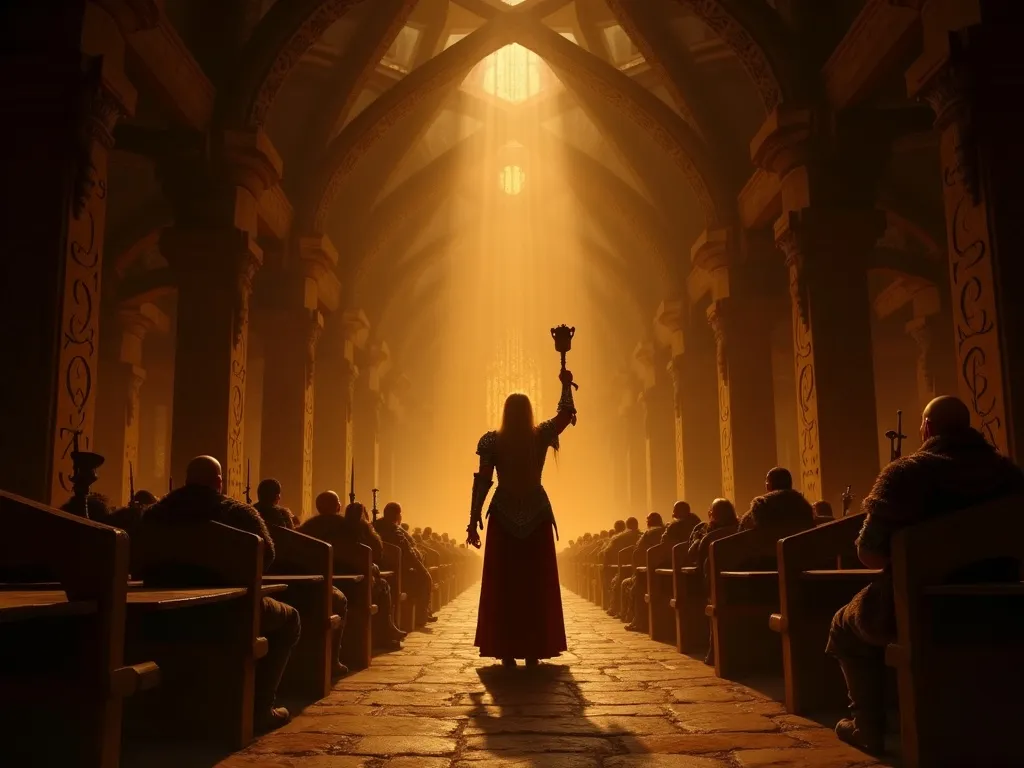
The cup carries a sovereignty charge. In Irish mythology the same gesture, a woman offering drink to a king, marks legitimate rule; the parallel is not accidental. Georges Dumézil and later scholars in the comparative Indo-European tradition noted that the female figure conferring status through drink recurs across Germanic, Celtic, and Indic sources. Among the valkyries chooser of the slain, this function is the hall-side complement to the battlefield function: they select, escort, and then receive the dead with ceremony. The cup closes the loop the spear opened.
Valkyries in the Post-Viking and Medieval Reception
By the time Snorri compiled the Prose Edda in Iceland around 1220 CE, the valkyries had already begun their literary second life. They appear in the fornaldarsögur (legendary sagas) as enchanted women, sleeping in fire-rings, bound by oaths, sometimes clearly supernatural and sometimes operating as human shield-maidens who happen to share their names. The theological machinery is quieter; the narrative drama louder.
The Old English poem Beowulf does not mention valkyries by name, but the concept of a female chooser of the slain appears in the figure of Wealhþēow, the cup-bearing queen who moves among warriors, and in the term wælcyrge used for monstrous female figures in glosses and Ælfric's writings. Old English wælcyrge is the direct cognate of valkyrja and appears in glosses translating Latin words for the Greek Furies and similar figures. This suggests that in Anglo-Saxon England the concept was known but had acquired darker, more demonic colouring than in the Norse tradition proper.
Richard Wagner's operatic cycle Der Ring des Nibelungen (1848-1874) gave nineteenth-century Europe its dominant visual template: winged helmets, mounted on horses, carrying spears across stormy skies. Wagner drew primarily on the Völsunga saga and the Eddic poems, but he filtered them through Romantic nationalism. The winged helmet, ironically, has no basis in the archaeological record; the Vendel and Valsgärde helmets have boar crests and cheek guards, not wings. The image persists anyway, which tells us something useful about how the mythological imagination works: even corrected, the icon remains operational.
Frequently asked questions about the Valkyries: Choosers of the Slain
Frequently asked questions
Did the Valkyries only take warriors to Valhalla, or did they choose some for Hel?
The sources suggest that the valkyries selected specifically for Odin's hall, Valhalla, and its population of einherjar. Warriors who died of illness, old age, or in ways considered less heroic went to Hel, the realm presided over by Hel, Loki's daughter. The Prose Edda (Snorri's Gylfaginning) states this division plainly: Odin takes half the slain, the goddess Freyja takes the other half to her hall Fólkvangr. Hel receives those who die outside battle. The valkyries served Odin's half, and possibly Freyja's, though Freyja's selection mechanism is not described in detail.
How many Valkyries are named in the Norse sources, and do the lists agree?
No two lists in the sources agree completely. The Grímnismál names twelve. The Völuspá names a different set of thirteen. Snorri's Prose Edda offers yet another partial list. Scholars count roughly thirty distinct names across all sources. Some names, like Hildr, Skögul, and Göndul, appear in multiple texts and are likely to be among the oldest attested figures. Others appear only once and may be local or poetic inventions. The inconsistency reflects the oral and regional character of Norse religious tradition: there was no single canonical text governing such matters.
Is there a connection between the Valkyries and the Norns?
Yes, and the Norse sources themselves acknowledge it. Skuld is named as both a Norn (in Völuspá) and a valkyrie (in Grímnismál), which places her explicitly in both categories. Scholars like Hilda Ellis Davidson have argued that both sets of figures descend from a common Germanic belief in the dísir, female spirits attached to fate and death. The functional distinction appears to be temporal: the Norns set a life's span at birth; the valkyries act at the moment of battlefield death. But both are administrators of fate operating within Odin's cosmic order.
What primary sources describe the Valkyries in most detail?
The richest sources are: the Poetic Edda (particularly Völuspá, Grímnismál, Sigrdrífumál, and the Helgakviða poems), preserved in the Codex Regius (c. 1270 CE); Snorri Sturluson's Prose Edda (c. 1220 CE), especially the Gylfaginning and Skáldskaparmál; and the skaldic poems Eiríksmál and Hákonarmál (tenth century), which are among the earliest texts to depict named valkyries performing the selection act. The Völsunga saga and Hervarar saga provide narrative elaboration in prose form.
Were Valkyries worshipped or propitiated in actual Norse religious practice?
Direct worship of individual valkyries is not well-attested. However, the dísablót, a sacrifice performed in honour of the collective dísir (including, perhaps, valkyrie-like figures), was a genuine cultic practice mentioned in several sagas and believed to have taken place seasonally. Amulets and bracteates depicting female figures associated with battle and death have been found across Scandinavia and Anglo-Saxon England. The Oseberg tapestry fragments (ninth century, Norway) may depict a procession including valkyrie-like figures. Whether these constitute worship in a theologically formal sense or apotropaic engagement with powerful spirits is debated by scholars.
How does the Valkyrie figure compare to similar figures in other mythologies?
Several traditions feature female beings who attend battlefield death. The Irish Badb, part of the Morrígan triad, is a crow-goddess who presides over battle and chooses its outcome, closely paralleling the valkyrja function. Dumézil connected both figures to a proto-Indo-European template of female sovereignty spirits linked to warfare. In ancient Greek tradition, the Keres were dark female spirits who seized the dying on the battlefield and carried them to the underworld, though without the selectivity and hall-service the Norse material emphasises. The valkyrie is distinct in her dual function: battlefield chooser and Valhalla servant, combining selection with hospitality.
The Valkyrie's Unresolved Problem: Agency, Will, and Cosmic Constraint
The deepest tension in the valkyries chooser of the slain is the question of genuine agency. If Odin has already determined the outcome of every battle through his foreknowledge and his manipulation of fate, what does the valkyrie actually choose? Is the choosing a real act of discrimination, or is it execution of a pre-set algorithm that only looks like selection?
The Eddic texts give no clean answer. Brynhildr's punishment for choosing independently implies the choosing could go wrong, that deviation was possible, which implies the valkyrie had genuine will. Yet the Hákonarmál shows valkyries observing a battle and then selecting Hákon as if the outcome had already been written. These two pictures sit uneasily together.
One productive reading, compatible with the Norse wyrd-adjacent concept of örlög (primal law, or the layers of fate set at the dawn of time), is that the valkyrie operates inside a structure of fate that is real but not mechanical. The Norns have set the span; the valkyrie has latitude within that span to act at the correct moment. She cannot override örlög but she shapes the texture of its unfolding. Brynhildr's error, in this reading, was not choosing against fate but choosing at the wrong node of it, misreading which king's time had genuinely come.
This question has attracted sustained scholarly attention precisely because it touches the deepest problem in Norse cosmology: whether the gods and their servants are free actors or participants in an already-written script. Odin's collection of the dead looks like preparation; Ragnarök looks like inevitability. The valkyrie stands between those two facts, choosing, ride by ride, battle by battle, the army that will still lose at the end. Her office is tragic in the precise sense: she performs her work with full competence inside a structure she cannot alter.
That unresolved tension may be why the figure has persisted. The valkyrie is not an easy comfort. She does not promise salvation. She promises significance: your death was chosen, your name was counted, your body will train in the hall until the last morning. It is a grim kind of meaning, but it is meaning precisely fitted to a culture that built its metaphysics around a war that everyone knew would be lost.
Free 25-page sample
Want the whole story?
Take the first 25 pages free. If it pulls you in, the full edition is yours as an instant PDF download, with a paperback on Amazon for selected titles.

Norse
The Norse Mythology Book: Odin, Thor, Loki, Ragnarok and the Sagas of the Vikings
Odin, Thor, Loki, Ragnarok and the Sagas of the Vikings
The complete guide to Norse mythology drawn from the Eddas, the sagas, and the scholarship of those who read the source texts. Every god, every world, every myth.
More from Norse
All articles
Norse
Valhalla: Hall of the Slain in Norse Mythology
Valhalla is not paradise for the virtuous. It is a war-hall for the chosen dead, where Odin gathers his army for the last battle. Every detail inside its gold-shimmering walls tells you exactly what Norse cosmology valued most.
Norse
Fenrir the Giant Wolf: Bound God-Killer of Norse Myth
Born of Loki and fated to swallow Odin at Ragnarok, Fenrir the giant wolf is Norse mythology's most terrible prisoner. This is his full story.
Norse
Ragnarok: The End of Days in Norse Mythology
Ragnarok is not simply a Norse apocalypse. It is a cosmos that chooses to burn so it can be reborn, and the gods who march into that fire know exactly what awaits them.
Norse
The Prose Edda and Poetic Edda: Primary Sources of Norse Myth
The Prose Edda and Poetic Edda are the two great written pillars of Norse mythology, preserved in medieval Iceland centuries after the gods had stopped receiving sacrifices. Without them, Odin, Yggdrasil, and Ragnarok would be shadows.