
Ragnarok: The End of Days in Norse Mythology
Ragnarok is not simply a Norse apocalypse. It is a cosmos that chooses to burn so it can be reborn, and the gods who march into that fire know exactly what awaits them.
Contents
The wolves catch the sun first. Sköll, who has chased the solar disk across the sky since time began, finally closes his jaws around it. His brother Hati takes the moon. Darkness drops over the Nine Worlds like a lid on a coffin, and the three-year winter called Fimbulwinter locks the earth in ice. Families turn on one another. The bonds of kinship that hold human society together dissolve. Then the ground heaves, every chain in every realm snaps, and the prisoners walk free.
This is how the old Norse sources describe the opening movements of Ragnarok the end of days: not as a sudden divine catastrophe, but as a slow unraveling that mirrors, point for point, every failure of the human social order. The Völuspá, the great visionary poem preserved in the 13th-century Codex Regius, recounts it through the voice of a seeress summoned by Odin himself. She has seen the beginning of things. She knows the end. And she is not afraid to name it.
What follows is not a simple story of gods defeating monsters. Ragnarok is a structure, a theological argument, a meditation on time and renewal built into the architecture of Norse cosmology. Every figure who dies in it, dies on purpose, fighting the one adversary they were always fated to face.
The Warnings Written Into the Cosmos
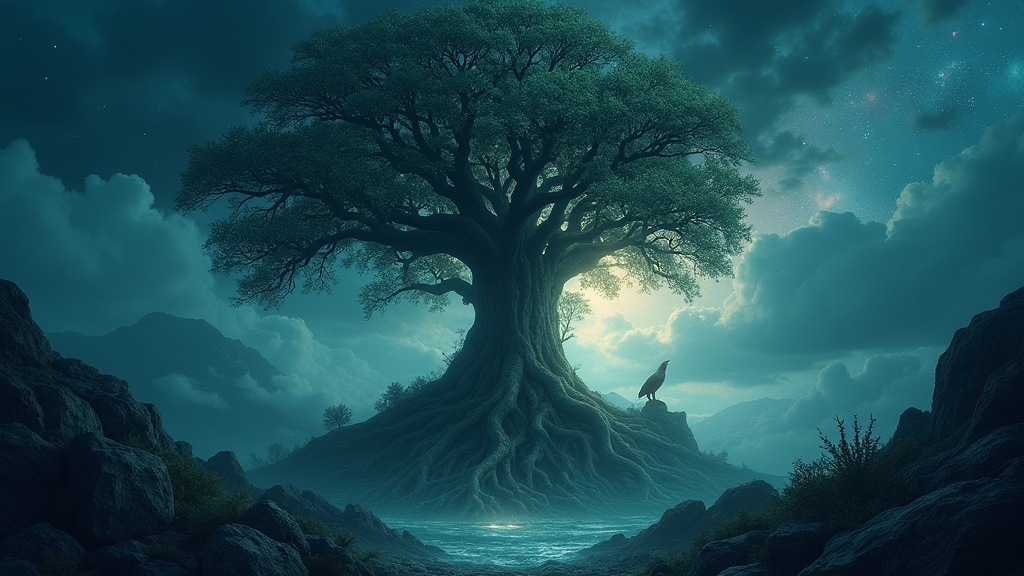
Norse cosmology did not hide the end of the world. It advertised it. From the moment Yggdrasil, the great ash tree at the axis of all existence, began to rot at its roots, the countdown had already started. Three roots feed the tree: one reaches into Ásgarðr, home of the Aesir; one into Jötunheimr, land of the giants; one into Niflheimr, the primordial cold. At that third root, the dragon Níðhöggr gnaws perpetually, chewing through the foundation of the world with the patience of entropy itself.
The Aesir knew. Odin, the Allfather, spent centuries stockpiling warriors in Valhöll: the einherjar, the glorious dead chosen by the Valkyries from every battlefield. Eight hundred fighters pour through each of Valhalla's 540 doors when the horn sounds. They feast on boar and mead every night. Every day, they train for the one battle they will lose. This is perhaps the starkest element in all of Norse theology: the gods build an army they know will fall, and they build it anyway.

The signs that Ragnarok has begun accumulate in waves. First: the murder of Baldr, the shining son of Odin, arranged by Loki through the blind god Höðr and a dart of mistletoe. Baldr's death is both the most grievous loss among the Aesir and a cosmic signal: once the most beloved of gods can be killed, the protective order of things has already cracked. Then Fimbulwinter. Then the loosing of the bound monsters.
Loki, punished for Baldr's death by being chained beneath mountains with serpent venom dripping onto his face, finally breaks free. His son the Midgard Serpent Jörmungandr thrashes up from the ocean floor, poisoning the seas. His daughter Hel marshals the armies of the dishonored dead. His other son Fenrir, the great wolf bound since youth by the magical ribbon Gleipnir, snaps that silken chain. When Fenrir opens his jaws, the upper jaw scrapes the sky and the lower one drags along the earth.
The Roles of Loki's Children in Ragnarok
Each of Loki's monstrous offspring occupies a specific position in the cosmological collapse, and the symmetry between their roles and the Aesir who face them is almost mathematical.
Fenrir has only one opponent capable of facing him: Víðarr, the silent god, son of Odin. Víðarr wears a magical shoe built from all the leather scraps that cobblers have ever discarded. With it he pins Fenrir's lower jaw to the ground, seizes the upper jaw, and tears the wolf apart. Odin, however, is not saved by his son. Fenrir swallows the Allfather whole before Víðarr intervenes. One of the few gods powerful enough to shape the entire cosmos dies inside the stomach of a wolf.
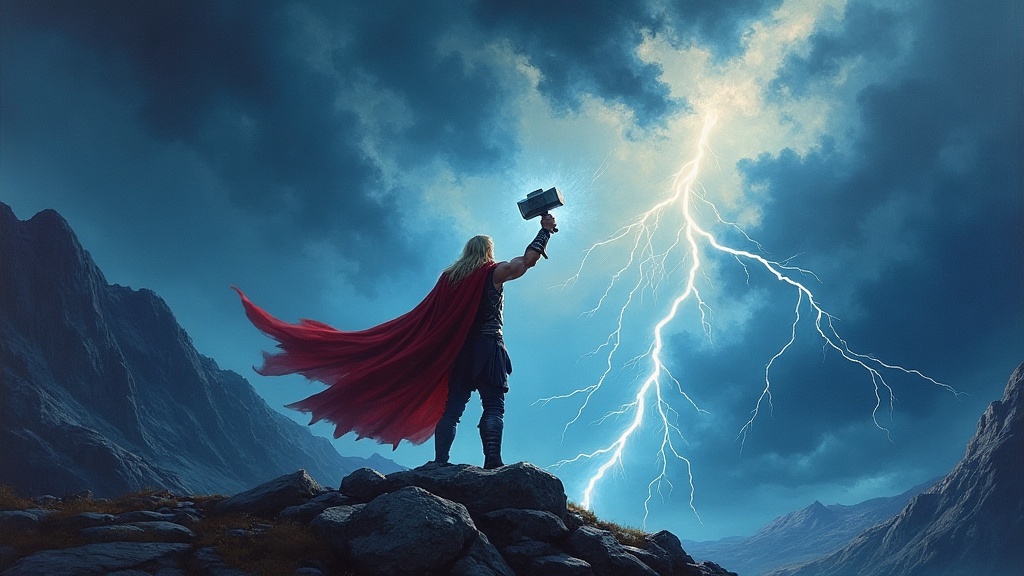
Jörmungandr is reserved for Thor. This pairing is personal: Thor has tried to kill the serpent three times across various myths, each time thwarted by circumstance or by the serpent's sheer scale. At Ragnarok, Thor drives his hammer Mjölnir into Jörmungandr's skull, killing the serpent outright. Then he takes nine steps. The serpent's venom, saturating the air, drops him on the tenth step. Thor kills his eternal enemy and the poison kills Thor. Nine steps. The exactness of that detail in the Völuspá feels less like poetry than like a deathbed report.
The fire giant Surtr brings a different kind of annihilation. He comes from Múspellsheim, the primordial realm of fire, carrying a sword that blazes brighter than the sun. He meets Freyr, the Vanir god of fertility and abundance, in single combat. Freyr gave away his magical sword years earlier as a bride-price for the giantess Gerðr; he fights with an antler. He loses. After Surtr cuts Freyr down, the fire giant sweeps his sword across the earth, and everything burns: the Nine Worlds, the rainbow bridge Bifröst, the halls of gods and men.

Odin's Death
Odin is swallowed whole by Fenrir, the wolf he feared and helped to bind since its birth. His death is immediate, total, an erasure. He is avenged by his son Víðarr, who tears the wolf apart. The Allfather who knew everything, who sacrificed an eye and hung nine days on Yggdrasil for wisdom, cannot outthink a fate he himself foresaw.
Thor's Death
Thor kills the Midgard Serpent with Mjölnir, his greatest enemy slain at last, but the serpent's venom is already in his blood. He walks nine steps and collapses. His death is a victory wrapped in poison: he achieves what he always sought, and it kills him anyway. No ambiguity, no rescue. Nine steps, then the ground.
Heimdall and Loki: The Final Duel
The battle has a symmetry that goes beyond individual pairings. Two figures who have opposed each other since the dawn of time meet in their own final exchange: Heimdall, the watchman of the Aesir who stands on the Bifröst blowing his horn Gjallarhorn to summon the gods, and Loki himself.
The sources are brief on their combat. Both the Völuspá and the Prose Edda say only that they kill each other. But the opposition matters. Heimdall is the god of sight, of vigilance, of the preserved social order; Loki is its unraveler. Heimdall can see a hundred leagues in any direction, hear wool growing on sheep. Loki is the shape-shifter, the one who cannot be watched because he is never the same shape twice. Their mutual destruction closes the argument that Loki's presence in Ásgarðr opened: the agent of chaos and the guardian of order cancel each other out, leaving nothing.
Tyr, the god of justice, meets the hound Garmr, guardian of Hel's gate, who has also broken free. They too kill each other. Ragnarok the end of days proceeds this way: every dangerous thing that was bound, chained, watched, or banished comes home to collect its debt, and the price is always symmetric.
What Burns and What Survives
The fire is total. Surtr's sword sweeps across the Nine Worlds. Yggdrasil shudders and falls. The earth sinks into the sea. But here is the pivot that separates Norse apocalypse from pure nihilism.
The Völuspá does not end with Surtr's fire. It continues for several more stanzas, and the seeress describes a second earth rising from the waters: green, unscorched, bearing the dew that falls on its meadows without any sun having to burn it there. Grain grows where no one planted it. The earth does not need to be managed by gods to sustain itself; after everything, it simply regenerates.
A small group of gods survive. Víðarr and Váli, sons of Odin, are alive. Thor's sons Móði and Magni find Mjölnir on the ash-covered ground and carry the hammer into the new age. Baldr returns from Hel, walking back into sunlight alongside Höðr, the blind god who killed him (themselves now reconciled). Hœnir returns as well, and together these survivors meet in the ruins of Iðavöllr, the old gathering place of the gods, and begin the world again.

Most significantly, the seeress speaks of a new sun: the daughter of the old sun, born before her mother was swallowed by Sköll. She rides across a new sky. Human survivors are there too: Líf and Lífþrasir, a man and a woman who hid in the forest Hoddmímis holt through Fimbulwinter and Surtr's fire, eating morning dew, stepping out into the green earth as the first humans of the next cycle.
The Old Norse Name and What It Actually Means
The word Ragnarök comes from Old Norse: regin (the gods, the ruling powers) and rök (fate, origin, reason, twilight). It does not mean "twilight of the gods" as the popular translation would have it, though that rendering comes from the variant spelling Ragnarøkkr ("darkness of the gods"), which Snorri uses at one point in the Prose Edda. The standard Völuspá term is Ragnarök, with the final syllable carrying the weight of "judgment" or "destiny."
This distinction matters because it shifts the register from melancholy aestheticism to cosmological necessity. The gods do not fade like a sunset. They are judged by the logic of the world they built. Every bound monster, every deferred consequence, every unanswered transgression comes due at Ragnarok. The rök is the reckoning. And the Norse sources treat it as neither tragedy nor punishment, but as the price of having made a world that contained wolves and serpents in the first place.
Scholars including John Lindow (Norse Mythology: A Guide to the Gods, Heroes, Rituals, and Beliefs, 2001) and Rudolf Simek have noted that the cyclical structure of Ragnarok may reflect contact with Christian eschatological ideas through Scandinavian trading networks, though the consensus holds that the core myth predates systematic Christian influence. The parallels with Christian Last Judgment are real but secondary; the Norse version lacks a moral sorting of souls. The dead return not because they were righteous but because the structure of the cosmos demands it.
Loki's Role: Catalyst, Prisoner, Destroyer
No reading of Ragnarok the end of days is complete without accounting for Loki's ambivalence. He is not evil in the straightforward sense. He is the agent of necessary change who eventually goes one step too far, and then one step too far again, until his presence in the ordered world becomes untenable.
His children were bound because prophecy said they would help destroy the cosmos. Loki himself was chained because he engineered Baldr's murder and then refused the penitence that might have softened his sentence. The Aesir, knowing what was coming, tried to prevent it by containing the dangerous elements. They only succeeded in making those elements furious. Every chain is a promise that the thing inside it will, eventually, break free.
This is the structure's cruelest irony: the gods' attempt to delay Ragnarok is precisely what gives it its destructive momentum. Fenrir's hatred is personal; he was bound unjustly, as a cub, before he had done anything wrong. Loki's hatred has a similar genealogy. The Norse sources do not present the destroying forces as simply monstrous; they present them as the direct consequences of Aesir choices. Ragnarok the end of days is, at its core, a myth about debt, not about evil.
Cross-Cultural Echoes and Scholarly Debate
The cyclical apocalypse is not unique to Norse tradition, but the Norse version handles it with an unusual combination of predestination and agency. The Hindu concept of Pralaya, the dissolution of the cosmos at the end of each kalpa, offers a structural comparison: in both traditions, the world ends and is rebuilt, and the ending is embedded in the design of the cosmos from the start. But in Hindu cosmology, dissolution happens on cosmic timescales measured in billions of years, impersonal and rhythmic. At Ragnarok, specific named individuals carry out specific fated acts, and the pathos comes precisely from their knowledge.
The Zoroastrian Frashokereti (final renewal) shares the resurrection motif: a world purged by fire and metal, the dead raised, a cosmic sorting. The Norse rebirth after Ragnarok, however, does not include divine judgment of human souls. The human survivors are simply the ones who outlasted the fire. There is no moral hierarchy in who gets to inhabit the new world.
Some scholars, notably Margaret Clunies Ross in Prolonged Echoes (1994), have argued that the Ragnarok myth as preserved in the Völuspá is already a literary composition, a sophisticated poetic reshaping of older oral material, rather than a direct transcript of pre-Christian belief. The dating debate remains open. What is not in dispute is that the myth was alive and functioning in Scandinavian culture centuries before the Codex Regius was written down, as evidenced by runic inscriptions, skaldic verse, and carved stone crosses from the Viking Age that show scenes identifiable as Ragnarok imagery: Odin with the wolf, the bound Loki, the serpent rising from water.
The Gosforth Cross in Cumbria, England (c. 920-950 CE), carved by Norse settlers in Christian Britain, shows Víðarr tearing open Fenrir's jaws on one face and what appears to be the Crucifixion on another. The craftsman, or his patron, apparently saw no contradiction between the two stories. Both involve a figure who endures death to make something new possible. The theological rhyme was legible to people who lived in both worlds.
Frequently Asked Questions About Ragnarok the End of Days
Frequently asked questions
Is Ragnarok the same as the Christian apocalypse?
They share structural similarities: a final battle, the destruction of the current world, and the emergence of a new age. But the Norse version lacks a moral judgment of individual souls. No one is saved by virtue; the survivors are those who were sheltered by geography or divine lineage. The Völuspá shows no afterlife reward system comparable to Christian heaven. Scholars believe the similarities reflect cultural contact and poetic borrowing rather than a single shared origin.
Do the gods know Ragnarok is coming?
Yes, explicitly. Odin consults the seeress specifically to learn the fate of the gods. He knows Fenrir will swallow him; he builds the einherjar army in Valhalla anyway. This foreknowledge is central to the myth's emotional weight. The Aesir are not blindsided; they choose to fight a battle they know they will lose, which the Norse sources treat as a form of heroic integrity rather than futility.
Which gods survive Ragnarok?
The Völuspá names Víðarr, Váli, Móði, Magni, Baldr, Höðr, and Hœnir as survivors. Thor, Odin, Freyr, Tyr, and Heimdall all die in the battle. Loki and his children Fenrir and Jörmungandr also die, as does the fire giant Surtr, who destroys the world before being consumed by his own fire according to some readings.
What is Fimbulwinter and how does it relate to Ragnarok?
Fimbulwinter (Old Norse: fimbulvetr, "great winter") is a three-year winter without intervening summer that precedes Ragnarok. Snow drives in from all directions; the sun gives no warmth; human family bonds collapse into warfare. It functions as both a natural catastrophe and a moral one, a sign that the social fabric has already unraveled before the cosmic battle begins. Some scholars have speculated it preserves folk memory of the 536 CE volcanic winter that caused global cooling.
What is the new world like after Ragnarok?
According to the Völuspá, the earth rises from the sea green and fertile, with fields that grow grain untended. Baldr and Höðr return from the dead reconciled. Thor's sons Móði and Magni carry Mjölnir into the new age. A new sun, daughter of the old, crosses the sky. Two human survivors, Líf and Lífþrasir, emerge from the forest Hoddmímis holt to repopulate the world. The new age inherits the tools of the old but not its conflicts.
Is Ragnarok a real historical belief or a literary invention?
The myth is attested in multiple independent sources: the Völuspá, Snorri Sturluson's Prose Edda, skaldic poetry, and Viking Age stone carvings including the Gosforth Cross (c. 920-950 CE). The literary shaping is real; the Völuspá is a sophisticated poem, not a raw folk transcript. But the core imagery, the wolf swallowing the sun, the serpent rising, the fire from the south, appears in sources old enough to predate systematic Christian influence on Norse religious life.
Ragnarok in the Modern Imagination
The myth did not stay buried in medieval manuscripts. Richard Wagner staged it in 1876 as Götterdämmerung, the final opera of his Ring cycle, translating the Norse material into German romantic tragedy with such force that many readers came to the Eddas afterward expecting to find Wagner and were surprised by the sparer, harder Norse original. The Norwegian word for Ragnarok entered mainstream English through Wagner's German, carrying his emotional coloring with it.
The 20th century found new uses for the myth. Tolkien, who read the Eddas in Old Norse as a student, built the cosmology of Middle-earth on the same cyclical structure: a world that will end, that contains within itself the seeds of its own destruction, whose heroes know their role in the catastrophe and go to it anyway. The courage of the einherjar is visible in every member of the Fellowship.
Contemporary fiction, film, and games have returned to Ragnarok the end of days repeatedly, often stripping the cyclical rebirth and keeping only the destruction. This is a significant distortion. The Norse sources are clear: the fire is the precondition for the meadow. Surtr burns the world so that Baldr can walk back into it. Remove the regeneration and you have nihilism; keep it and you have something closer to faith, the belief that ruin is a stage in a larger process, not a final word.
The Gosforth Cross carver already understood this in 950 CE, setting Víðarr and Christ side by side in stone, two figures who endure catastrophe so that something better can exist on the other side. The image holds. Ragnarok is not the end of the story. It is the end of a world that made its own destruction necessary, and the beginning of one that does not yet know what it will become.
Free 25-page sample
Want the whole story?
Take the first 25 pages free. If it pulls you in, the full edition is yours as an instant PDF download, with a paperback on Amazon for selected titles.
Norse
The Norse Mythology Book: Odin, Thor, Loki, Ragnarok and the Sagas of the Vikings
Odin, Thor, Loki, Ragnarok and the Sagas of the Vikings
The complete guide to Norse mythology drawn from the Eddas, the sagas, and the scholarship of those who read the source texts. Every god, every world, every myth.
More from Norse
All articles
Norse
The Prose Edda and Poetic Edda: Primary Sources of Norse Myth
The Prose Edda and Poetic Edda are the two great written pillars of Norse mythology, preserved in medieval Iceland centuries after the gods had stopped receiving sacrifices. Without them, Odin, Yggdrasil, and Ragnarok would be shadows.
Norse
Odin: Allfather of Asgard
Odin stands at the center of Norse cosmology as ruler, wanderer, and keeper of forbidden wisdom. His contradictions make him the most haunting deity in the Germanic pantheon.
Norse
Mjolnir: The Sacred Symbol of Thor's Hammer
Mjolnir, the hammer of Thor, is one of the most potent symbols in Norse mythology, a weapon of divine thunder, a ward against chaos, and a mark of sacred covenant worn by Vikings for centuries.
Norse
Yggdrasil the World Tree: Axis of the Norse Cosmos
Yggdrasil the World Tree stands at the center of Norse cosmology, binding nine worlds in its roots and branches. Explore the myths, creatures, and sacred meanings woven into its eternal bark.