
The Prose Edda and Poetic Edda: Primary Sources of Norse Myth
The Prose Edda and Poetic Edda are the two great written pillars of Norse mythology, preserved in medieval Iceland centuries after the gods had stopped receiving sacrifices. Without them, Odin, Yggdrasil, and Ragnarok would be shadows.
Contents
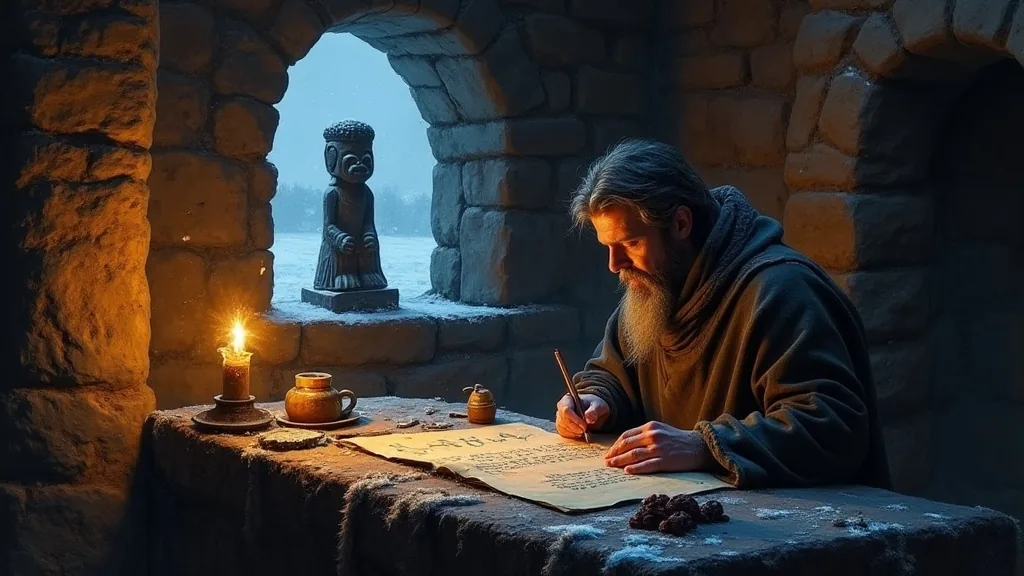
A single manuscript, its vellum leaves stained by eight centuries of Icelandic winters, holds the oldest surviving record of how the world was made from the body of a frost giant. Another, composed by a Christian scholar with an evident love for the old stories, preserves the names of the dwarves who forged Odin's spear and the kennings poets used when they praised Norse kings. Together, these two collections, known as The Prose Edda and Poetic Edda: Primary Sources of Norse Myth, form the bedrock on which almost everything recognizable in Norse mythology stands.
Without them, Yggdrasil would be nameless. Ragnarok would be unrecoverable. The nine worlds, the mead of poetry, the wolf Fenrir straining at his binding: all of it survives because scribes in thirteenth-century Iceland chose to write it down. That act of preservation, partial and politically charged as it was, remains one of the most consequential moments in the history of world mythology.
The Poetic Edda: Voices from the Elder Age
The Poetic Edda is not a single authored work. It is an anthology of poems, gathered by an unknown compiler, preserved primarily in the Codex Regius (GKS 2365 4to), a manuscript dating to around 1270 CE. The Codex Regius was discovered in 1643 by Bishop Brynjolfur Sveinsson, who sent it to the Danish king as a royal gift, hence the name. For centuries it sat in Copenhagen; Iceland did not repatriate the manuscript until 1971.
The poems themselves are older than their written form. Scholars place their composition anywhere between the ninth and twelfth centuries, with some stanzas preserving linguistic and metrical features that suggest oral origins reaching back to the Viking Age or earlier. The collection includes around thirty poems, traditionally divided into two groups: mythological poems and heroic poems.
The Mythological Poems
The mythological section opens with Voluspa ("The Prophecy of the Seeress"), the single most important text for understanding the Norse cosmological cycle. In it, a volva (seeress) recites the creation of the world, the murder of Baldr, and the coming destruction of Ragnarok to a listening Odin. The poem's framing is extraordinary: the god of wisdom is being told what he already partially knows by a woman whose power exceeds his. Knowledge and doom are braided together from the first stanza.
Other essential mythological poems include Havamal ("Sayings of the High One"), a gnomic poem in which Odin dispenses practical wisdom, describes his self-sacrifice on Yggdrasil to gain the runes, and recounts his seductions. Grimnismal ("Sayings of Grimnir") catalogs the geography of the nine worlds. Thrymskvida narrates the theft of Thor's hammer and his cross-dressed retrieval mission with characteristic comic energy. Lokasenna records Loki delivering devastating insults to every god at a divine feast, a scene that reads like a trial whose verdict is already written.
The Heroic Poems
The second half of the Codex Regius preserves the Volsung cycle: poems about Sigurd the dragon-slayer, the Valkyrie Brynhildr, and the cursed gold of Andvari. These overlap with the later German Nibelungenlied, confirming that both traditions draw on a common Germanic narrative substrate. The heroic poems are not mythology in the strict sense, but they encode the same value system: honor, fate, the impossibility of escaping destiny.
The Prose Edda: Snorri's Deliberate Archive
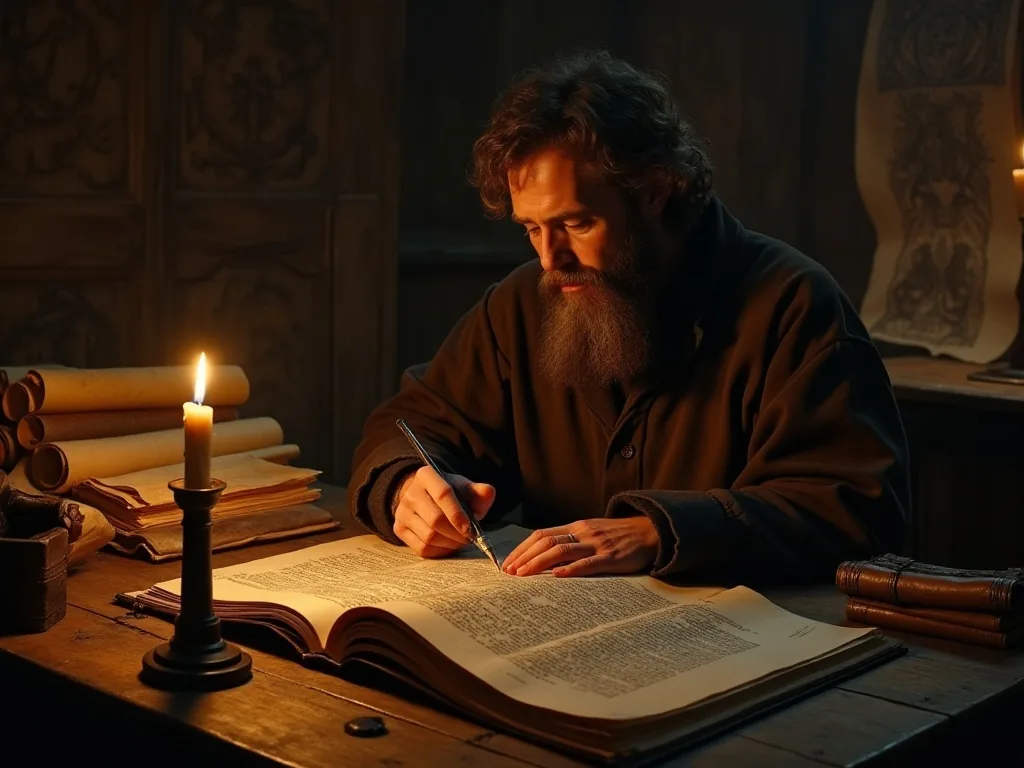
The Prose Edda is a single-authored work, composed around 1220 CE by Snorri Sturluson, an Icelandic chieftain, historian, and poet of the first rank. Snorri wrote the Prose Edda as a handbook for skalds, the court poets of the Norse world, who were in danger of losing the ability to decode the dense metaphorical system, the kennings, that traditional Norse poetry depended on.
A kenning is a compressed metaphor: the sea is "the whale road," gold is "the fire of the river," a sword is "the wound-snake." Without knowing the myths behind each kenning, a thirteenth-century poet could not compose in the traditional style. Snorri's solution was to retell the myths systematically so that the metaphors would become legible again.
The Four Parts of the Prose Edda
Snorri organized his text into four sections:
- Prologue: A euhemeristic framing in which the Norse gods are presented as ancient human kings from Troy, later deified by credulous followers. This allowed a Christian author to retell pagan myths without technically endorsing pagan belief.
- Gylfaginning ("The Deceiving of Gylfi"): A king named Gylfi visits Asgard disguised and questions three mysterious figures about the nature of the cosmos. Their answers constitute the fullest surviving account of Norse cosmology: the creation from Ymir's body, the structure of the nine worlds, the stories of the gods and their adversaries, and the long account of Ragnarok.
- Skaldskaparmal ("The Language of Poetry"): A technical guide to kennings, organized around the myths that give each metaphor its meaning. It preserves myths not found elsewhere, including the full story of how Odin stole the Mead of Poetry from the giant Suttungr.
- Hattatal ("A Tally of Metres"): A poem Snorri composed in honor of the Norwegian king Hakon Hakonarson, with his own commentary explaining the metrical patterns used.
Snorri's Problem as a Source
Snorri's brilliance as a synthesizer is also his limitation as a source. He wrote two hundred years after conversion. He had theological reasons to rationalize the myths. He harmonized contradictory traditions into single coherent narratives, erasing the local and temporal variation that had surely existed across the Viking world. When scholars read Gylfaginning, they are reading Norse mythology filtered through one extraordinarily learned medieval Christian mind.
That does not make the Prose Edda unreliable; it makes it complicated. The challenge for every reader is to see both the myths Snorri inherited and the frame he built around them.
How the Two Eddas Relate to Each Other
The Prose Edda and Poetic Edda are not independent archives. Snorri knew the poems of the Poetic Edda, or closely related versions of them, and drew on them extensively. He quotes directly from Voluspa, Grimnismal, and others throughout Gylfaginning. This means that for certain myths, the two Eddas corroborate each other: the account of Ragnarok in Voluspa matches the prose narrative in Gylfaginning, giving scholars some confidence that both are transmitting a genuine old tradition.
But the relationship also complicates matters. When Snorri's prose account of a myth has no poetic parallel, scholars must decide how much independent tradition he preserves versus how much he invented or elaborated. The story of Utgard-Loki, in which Thor is humiliated by a series of rigged contests during a visit to a giant's hall, appears only in Gylfaginning with no surviving poetic parallel. Is it an ancient myth Snorri alone preserved? Or is it Snorri's own elaboration? The debate remains genuinely open.
Poetic Edda
- Anonymous compiler, not a single author
- Preserved in the Codex Regius (c. 1270 CE)
- Written in Old Norse alliterative verse
- Older linguistic layers suggest pre-Christian oral origins
- Includes the Volsung heroic cycle alongside mythological poems
- Rawer, more fragmentary, harder to read without context
Prose Edda
- Single author: Snorri Sturluson (c. 1220 CE)
- Preserved in multiple manuscripts (Codex Upsaliensis, Codex Regius, Codex Wormianus)
- Written in prose with extensive verse quotations
- Explicitly composed for Christian-era skalds as a technical handbook
- Organized as a systematic mythology and poetics manual
- Fuller narratives, but shaped by Snorri's euhemeristic framing
What the Eddas Preserve and What They Miss
The picture of Norse religion that emerges from the two Eddas is geographically and temporally narrow. The manuscripts come from Iceland. Most of the poets whose work survives were Icelanders or Norwegians. The beliefs of Danish, Swedish, and Anglo-Saxon Norse communities are represented only obliquely, through archaeological finds, place names, and the rare reference in Latin chronicles.
The Eddas also preserve an elite tradition. Skaldic poetry was composed by professionals for aristocratic audiences. The myths in the Poetic Edda were the myths that mattered to people who cared about poetic craft. Popular, everyday religious practice, the household cults of the disir (female protective spirits), the local worship of land-spirits (landvaettir), the rites performed at the great temple at Uppsala described by Adam of Bremen in his Gesta Hammaburgensis Ecclesiae Pontificum, barely surfaces in the Eddic texts.
What survives is a curated tradition, shaped by the concerns of poets and by the transformative pressure of Christian literacy. The gods who appear most vividly, Odin, Thor, Loki, Freyr, Frigg, are the gods who generated the richest metaphorical vocabulary. Others, like Ullr (god of archery and skiing, who seems to have been widely worshipped based on place-name evidence) or Nerthus (described by Tacitus in the first century CE as an earth goddess of the Germanic peoples), appear as ghosts in the text, named but barely characterized.
The Manuscripts' Journey: From Oral Performance to Vellum
Neither Edda sprang from nothing onto the page. The poems of the Poetic Edda were composed to be performed, memorized, and transmitted orally across generations of poets. The alliterative metre, fornyrdislag ("old story metre") and ljodahattr ("song metre"), built the poems to survive memorization, with stress patterns and half-line structures that held the words in place like a frame.
By the time they were written down in thirteenth-century Iceland, a Christian literate culture was meeting an oral pagan one. The scribes who copied the Codex Regius were almost certainly Christian monks or clergy, yet they preserved material that describes the hanging of sacrificial victims at Odin's sacred tree, the sexual escapades of the gods, and the utter destruction of the divine world at Ragnarok with apparent equanimity. Their motives remain a matter of scholarly discussion. Antiquarian pride, literary enthusiasm, and a recognition that the skaldic tradition needed its mythological grammar saved are all plausible factors.
Snorri's motives are clearer because he states them. He opens Skaldskaparmal with an explicit concern: young poets are losing the capacity to understand the old kennings. His archive is an act of literary conservation, an attempt to prevent a poetic tradition from dying with its last competent practitioners.
Frequently Asked Questions about the Prose Edda and Poetic Edda
Frequently asked questions
Which Edda is older, the Prose Edda or the Poetic Edda?
The Prose Edda was composed around 1220 CE by Snorri Sturluson, while the main manuscript of the Poetic Edda, the Codex Regius, dates to around 1270 CE. But the individual poems in the Poetic Edda are linguistically and metrically older than either manuscript, with some likely composed in the ninth or tenth century. In terms of the age of the material, the Poetic Edda preserves older layers of tradition, even though it was written down later.
Are the Eddas reliable sources for what Vikings actually believed?
They are indispensable but imperfect. Both were written in Christian Iceland, two or more centuries after the conversion of 1000 CE. Snorri explicitly frames the gods as ancient human kings to make them theologically palatable. The poems of the Poetic Edda are older in linguistic character but were still copied by Christian scribes. Archaeological evidence, place-name studies, and external sources like Tacitus and Adam of Bremen help scholars triangulate which elements reflect genuine pre-Christian belief.
Who was Snorri Sturluson and why does his identity matter?
Snorri Sturluson (1179-1241 CE) was one of the most powerful chieftains in Iceland, a poet, lawyer, and historian who also wrote the Heimskringla, a history of the Norwegian kings. His identity matters because his political ambitions, his Christianity, and his literary goals all shaped the Prose Edda. He was not a neutral compiler but an author with an agenda: to preserve skaldic craft while remaining safe as a Christian intellectual. Reading the Prose Edda well means reading it as Snorri's text, not as a transparent window onto Viking Age religion.
What is the difference between Eddic poetry and skaldic poetry?
Eddic poetry, preserved in the Poetic Edda, is composed in relatively simple alliterative metres and is largely anonymous, focused on mythological narrative and wisdom. Skaldic poetry is more complex, composed in intricate metres with dense kenning-chains, and is usually attributed to named court poets praising specific historical figures. Snorri's Prose Edda was written primarily to explain skaldic kennings, but it draws heavily on Eddic poems as sources for the myths those kennings encode.
What happened to the Codex Regius after it was discovered?
Bishop Brynjolfur Sveinsson discovered the Codex Regius in 1643 and sent it to King Frederick III of Denmark as a gift, where it was held in Copenhagen for over three centuries. Iceland, which became independent in 1944, negotiated its return for decades. The manuscript was finally repatriated in 1971, arriving by naval vessel to public celebration. It is now held at the Arni Magnusson Institute in Reykjavik, where it remains one of Iceland's most treasured cultural artifacts.
Are there Norse myths that appear in neither Edda?
Yes. Some myths are attested only in skaldic poetry, in late Icelandic sagas, or in foreign sources. The goddess Nerthus, described by the Roman historian Tacitus in his first-century CE Germania, does not appear clearly in either Edda, though some scholars see her echoed in the god Njord. The worship of Ullr, evidenced by Scandinavian place names like Ullensaker in Norway, receives almost no narrative treatment in either text. The Eddas capture a rich but partial slice of the full Norse religious world.
The Eddas in the Modern Imagination: From Wagner to Tolkien to the Marvel Screen
The Prose Edda and Poetic Edda: Primary Sources of Norse Myth did not stay locked in academic editions. Their rediscovery in the seventeenth and eighteenth centuries fed directly into Romanticism's hunger for a northern European mythology to rival Greece and Rome. By the nineteenth century, they had become cultural ammunition.
Richard Wagner drew on both the Eddas and the German Nibelungenlied for his operatic cycle Der Ring des Nibelungen (1876), transforming Sigurd into Siegfried, Odin into Wotan, and the Volsung gold into the Ring. His appropriation was deliberate and nationalistic, a move to crown Germanic myth as the equal of Homeric epic.
J.R.R. Tolkien read the Eddas in Old Norse at Oxford and carried them into the architecture of Middle-earth. The dwarven name-list from Voluspa gave him Gandalf, Thorin, Dwalin, Balin, and most of the dwarves of The Hobbit wholesale. Tolkien's own essay "On Fairy-Stories" and his unfinished Legend of Sigurd and Gudrun (published posthumously in 2009) demonstrate how seriously he took the Eddic tradition as living literary material.
The Marvel Cinematic Universe's Thor films, whatever liberties they take with the myths, have sent millions of viewers back to the primary sources, producing a wave of popular translations and scholarly editions. Lee M. Hollander's translation of the Poetic Edda (1962) and Anthony Faulkes's translation of the Prose Edda (1987) remain standard academic editions, while Jesse Byock's and Jackson Crawford's more recent translations prioritize accessibility without sacrificing accuracy.
The question the Eddas always return to is the same one Voluspa poses at its close: after Ragnarok destroys everything, a new world rises from the sea, green and fertile, and the surviving gods find the old gold game-pieces in the grass. The myth refuses to end in pure destruction. Whether that recovery was always part of the tradition, or whether it reflects the pressure of Christian resurrection theology on a pagan scribe, is a question the manuscripts cannot answer by themselves. That irreducible uncertainty is precisely what keeps scholars, poets, and readers returning to these two collections, generation after generation, looking for what was almost lost.
Free 25-page sample
Want the whole story?
Take the first 25 pages free. If it pulls you in, the full edition is yours as an instant PDF download, with a paperback on Amazon for selected titles.
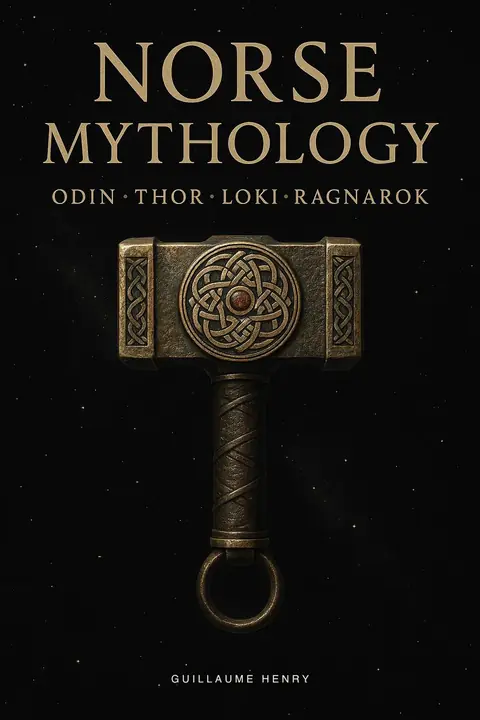
Norse
The Norse Mythology Book: Odin, Thor, Loki, Ragnarok and the Sagas of the Vikings
Odin, Thor, Loki, Ragnarok and the Sagas of the Vikings
The complete guide to Norse mythology drawn from the Eddas, the sagas, and the scholarship of those who read the source texts. Every god, every world, every myth.
More from Norse
All articles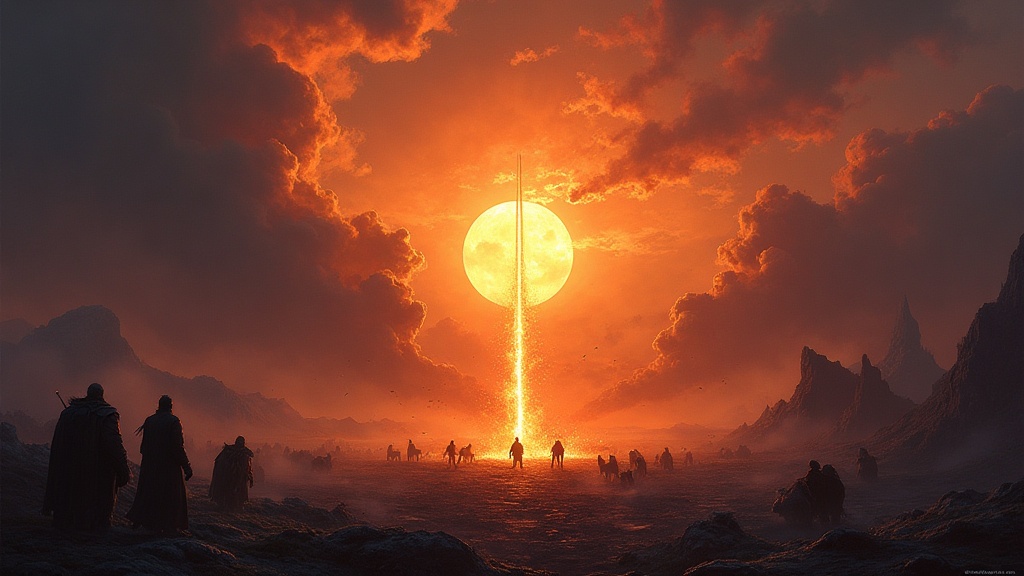
Norse
Ragnarok: The End of Days in Norse Mythology
Ragnarok is not simply a Norse apocalypse. It is a cosmos that chooses to burn so it can be reborn, and the gods who march into that fire know exactly what awaits them.
Norse
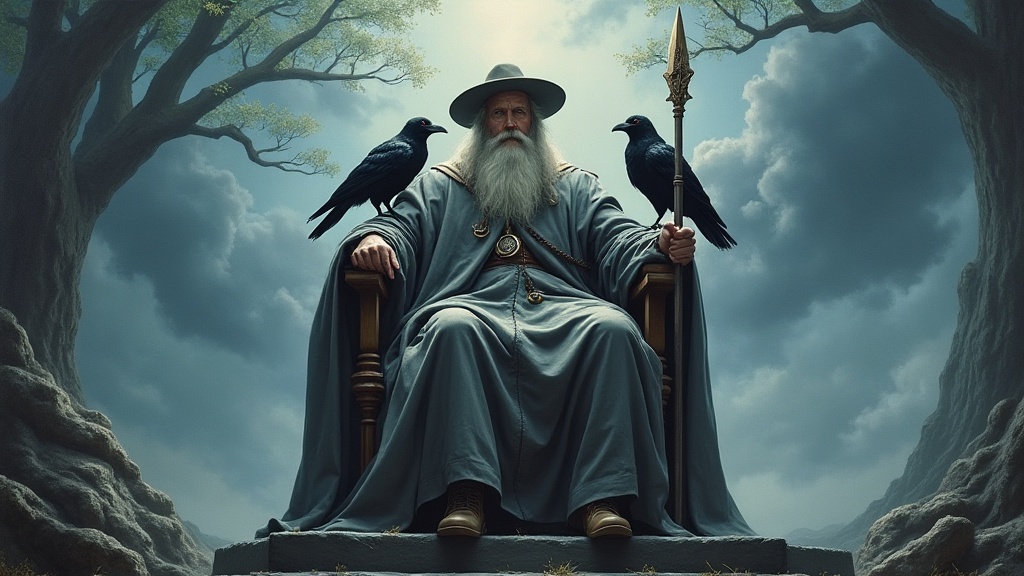
Odin: Allfather of Asgard
Odin stands at the center of Norse cosmology as ruler, wanderer, and keeper of forbidden wisdom. His contradictions make him the most haunting deity in the Germanic pantheon.
Norse
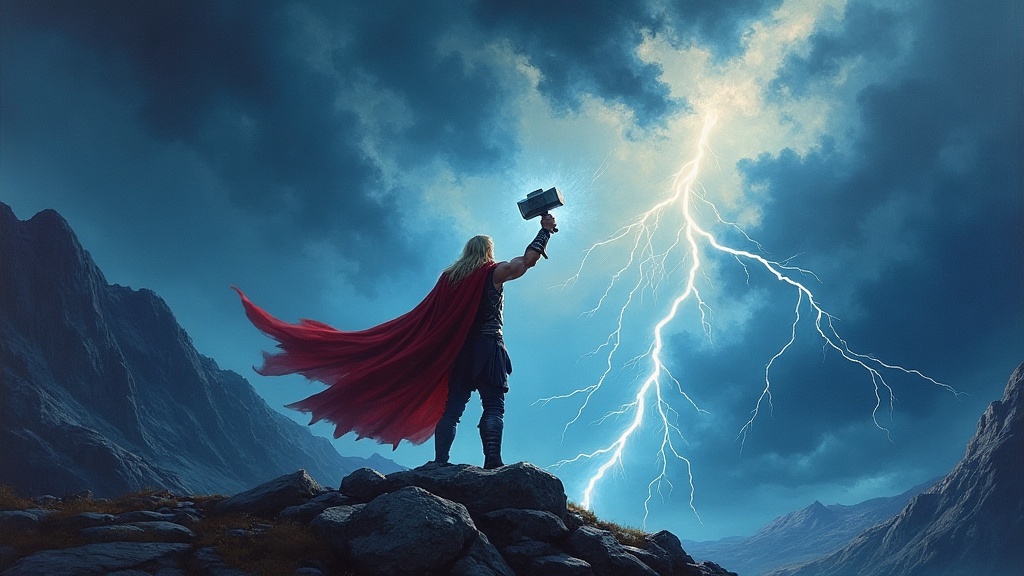
Mjolnir: The Sacred Symbol of Thor's Hammer
Mjolnir, the hammer of Thor, is one of the most potent symbols in Norse mythology, a weapon of divine thunder, a ward against chaos, and a mark of sacred covenant worn by Vikings for centuries.
Norse
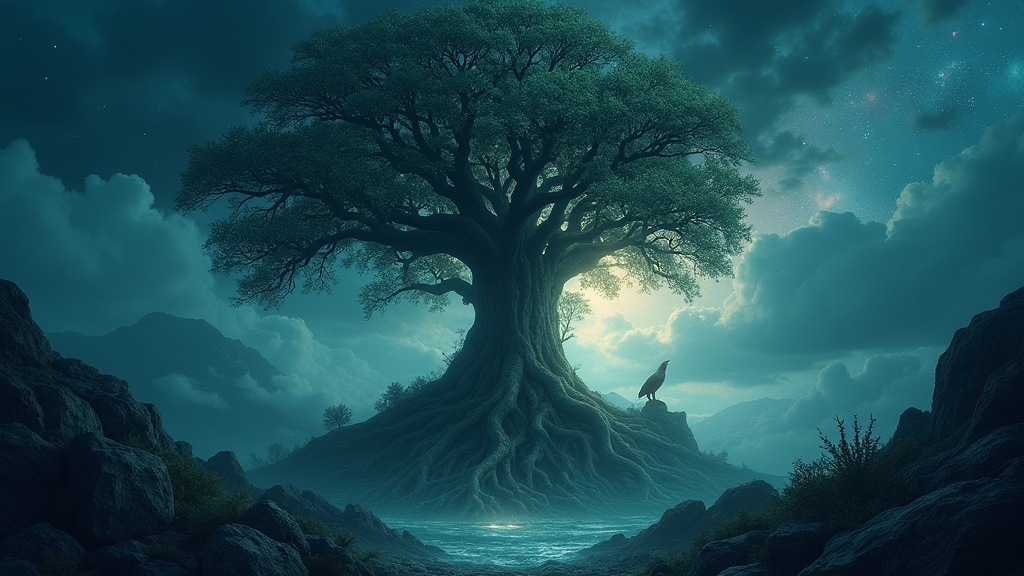
Yggdrasil the World Tree: Axis of the Norse Cosmos
Yggdrasil the World Tree stands at the center of Norse cosmology, binding nine worlds in its roots and branches. Explore the myths, creatures, and sacred meanings woven into its eternal bark.