
Valhalla: Hall of the Slain in Norse Mythology
Valhalla is not paradise for the virtuous. It is a war-hall for the chosen dead, where Odin gathers his army for the last battle. Every detail inside its gold-shimmering walls tells you exactly what Norse cosmology valued most.
Contents
The spear lands before the warrior hits the ground. That is how the Valkyries choose. The chosen soldier does not dissolve into darkness; he rises from the mud of whatever field claimed him and follows a shieldmaiden on horseback across the sky, toward a hall whose roof is made of shields, whose rafters are spears, and whose benches seat an army that will never stop growing until the day the world ends.
That hall is Valhalla, the hall of the slain. Its name comes directly from Old Norse: Valhöll, built from valr (the slain on a battlefield) and höll (hall). No poetic euphemism, no gentle metaphor. The Norse named this place with brutal precision. A hall. For the dead. Who died in battle.
What makes Valhalla so compelling, centuries after the last Norse skald sang of it, is not its grandeur but its purpose. This is not a reward for a good life. It is a recruitment station at the end of time. Odin is not a generous host. He is a general preparing for an apocalypse, and every warrior who feasts in Valhalla is a soldier he intends to use.
Where Valhalla Stands: Asgard's Most Purposeful Palace
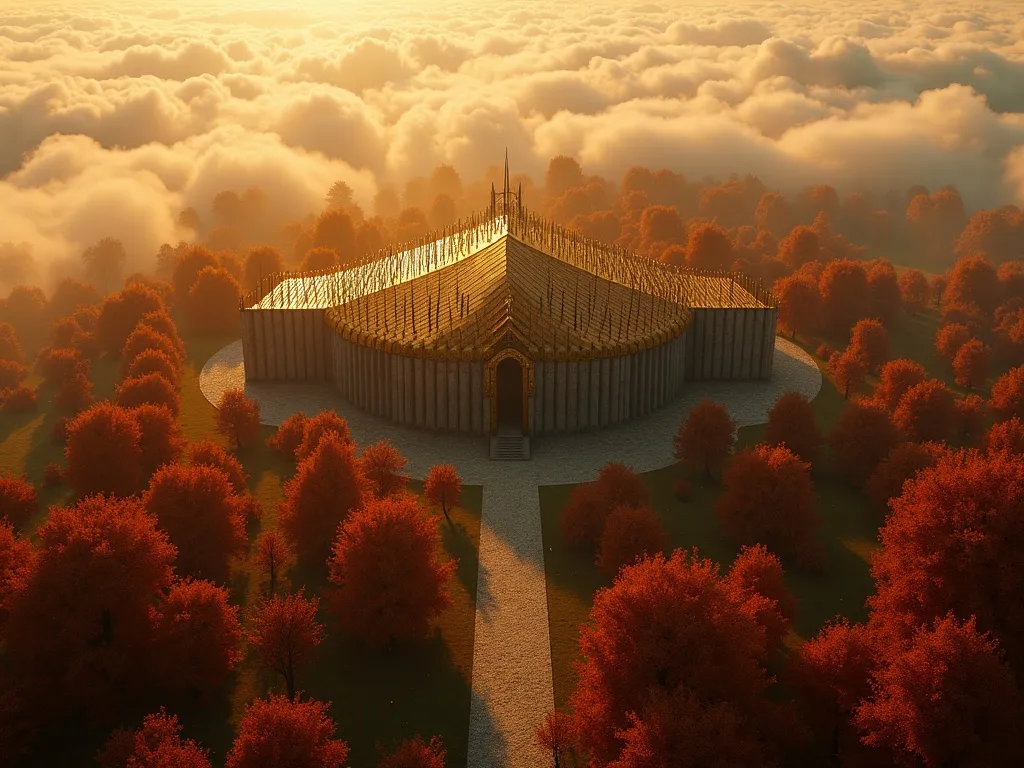
Valhalla sits inside Asgard, the realm of the Aesir gods, in a grove called Glasir where trees bear leaves of red gold. The Prose Edda, compiled by the Icelandic scholar Snorri Sturluson around 1220 CE, gives the clearest architectural description: the hall has 540 doors, each wide enough that 800 warriors can march through shoulder to shoulder. That figure compounds into a number Norse poets kept in their heads as the theoretical maximum of Odin's army: 432,000 warriors total.
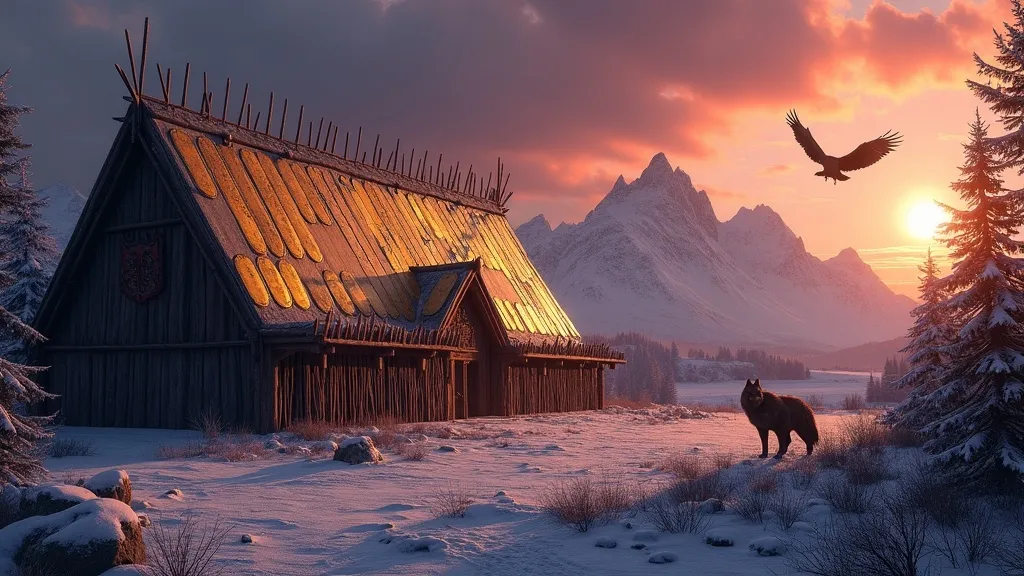
The roof consists of overlapping shields. The walls are built of spear-shafts. A wolf hangs at the western door; an eagle circles above. These are not decorative choices. The wolf signals death; the eagle signals predatory vigilance. Entering Valhalla means passing through a threshold of martial symbolism so dense it functions almost as an initiation rite.
The hall belongs to the district of Asgard called Glaðsheimr, "the bright home." Odin's high seat, Hliðskjálf, from which he surveys all the nine realms, is not far. Valhalla is, in spatial terms, as close to Odin's centre of power as an architectural structure can be. Its proximity to that throne is not incidental: the einherjar, the chosen warriors who dwell there, are extensions of his will.
Nearby stands Gladsheim's great assembly hall, and across Asgard, other gods maintain their own magnificent halls: Freyr holds Alfheim, Thor commands Bilskirnir (said in the Grímnismál to have 540 rooms, a number that mirrors Valhalla's doors). But no hall in Norse cosmology carries the same strategic weight. Bilskirnir is a home. Valhalla is an army.
The Einherjar: Warriors Who Die Every Morning
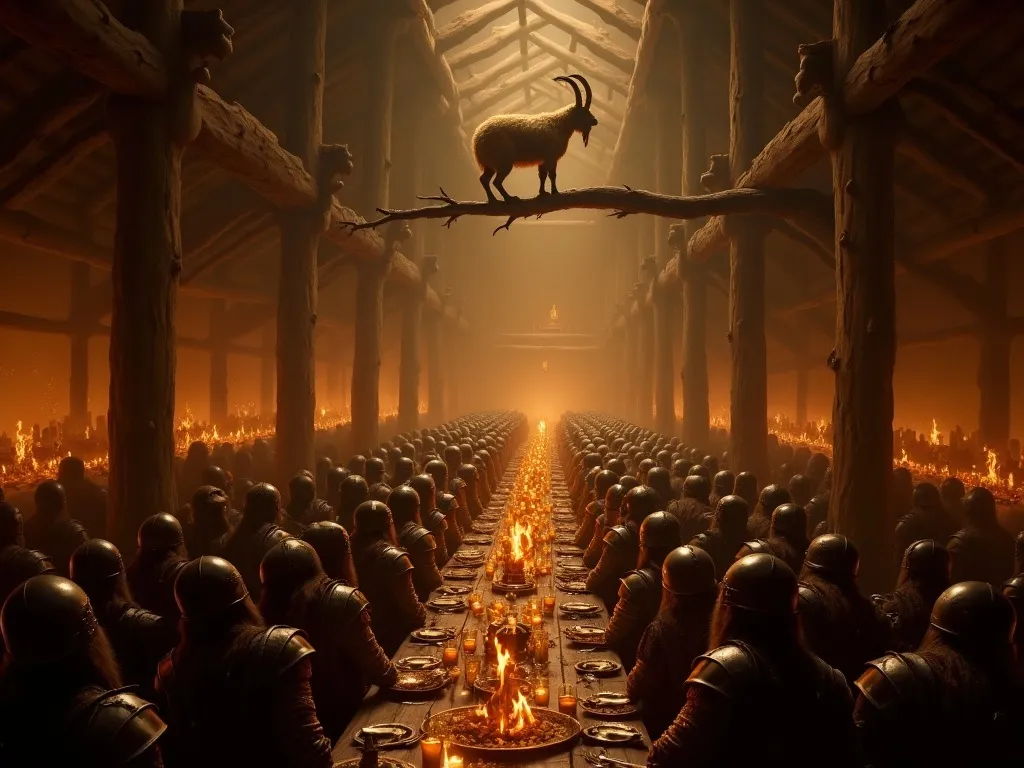
The einherjar are the residents of Valhalla: the chosen battlefield dead, men singled out by the Valkyries from the carnage of human wars. Their daily existence follows a rhythm that Snorri describes in meticulous detail. Each morning they arm themselves, ride out into Valhalla's courtyard, and fight one another until the wounds are mortal. Each evening the dead rise, healed completely, and return to the hall to feast.
The feasting matters as much as the fighting. The meat comes from a boar called Sæhrímnir, who is slaughtered and cooked each evening, only to be whole again the next morning. The mead flows from the udder of the goat Heiðrún, who grazes on the branches of the great tree Læraðr (identified by many scholars with Yggdrasil, the world ash). The Grímnismál, one of the poems in the Poetic Edda, states that Heiðrún produces enough mead to fill a great vat daily, enough for all the einherjar to drink their fill without the supply ever diminishing.
This cycle, fight-die-resurrect-feast, is explicitly a training programme. The word einherjar itself translates roughly as "those who fight alone" or "the one-army men," though scholars debate the precise etymology. What matters is function: these are warriors being hardened, endlessly, for a single engagement. The Norse did not imagine heaven as a place where suffering stops. They imagined it as a place where suffering becomes purposeful.
The Valkyries who select the warriors also serve mead inside the hall. These figures, whose name means "choosers of the slain" (valkyrja in Old Norse), operate at both ends of the warrior's existence: they choose him on the battlefield and attend him in death. The Völuspá, the "prophecy of the völva" and one of the oldest surviving Eddic poems, connects them directly to Odin's will. They are not independent agents of fate; they are instruments of a god who has already consulted the Norns.
What the Primary Sources Actually Say
The valhalla hall of the slain is described across several distinct sources, and these sources do not always agree.
The Prose Edda (Snorri Sturluson, c. 1220) gives the most systematic account: the 540 doors, Sæhrímnir, Heiðrún, the daily battle-cycle. This is also the most "tidied" version, shaped by a Christian-educated author trying to record (and possibly rationalise) a pagan cosmology.
The Poetic Edda is older and rougher. The Grímnismál (poem 8 in most editions) is spoken by Odin in disguise to a human king and provides a first-person tour of the halls of Asgard. Valhalla receives the most attention: Odin describes the shields on the roof, the spear-rafters, the wolf, the eagle. He names the goat and the boar. The poem feels less like mythology and more like a catalogue, a mnemonic device for skalds who needed to know the correct details.
The Völuspá addresses Valhalla's purpose rather than its architecture. The völva (seeress) who narrates the poem situates Valhalla within the countdown to Ragnarok: the einherjar will march out through those 540 doors when the horn sounds. Their great enemy will be the forces of Loki, the giants, and the monsters who break free at the world's end.
The Ynglinga saga by Snorri and the skaldic verses preserved in Egils saga and Hákonarmál confirm the same framework but add regional texture: Scandinavian kings expected to feast alongside their warriors after death. Hákon the Good, a Norwegian king who died around 961 CE, is welcomed to Valhalla in the poem Hákonarmál by the Valkyries Göndul and Skögul. The poem is one of the few surviving texts that treats Valhalla as a specific destination for a named historical person.
Odin's Motives: The God Who Already Knows He Will Lose
Understanding Valhalla requires understanding Odin, the Allfather, the one-eyed god of wisdom, war, and poetry. Odin has consulted the Norns. He has sat with the dead völva and heard the Völuspá told to him from beyond death. He knows Ragnarok is coming. He knows his own fate: a wolf named Fenrir will swallow him.
And yet he builds Valhalla. Yet he sends the Valkyries to collect the best fighters from human history. Yet he arms 432,000 warriors and drills them daily in combat.
This is not delusion. It is the defining Norse virtue: to act with full knowledge of failure and act anyway. The einherjar who train in Valhalla will fight Fenrir's forces at Ragnarok and lose. Odin knows this. The hall of the slain is built on that knowledge, and it stands anyway. The Norse cosmos does not offer comfort through guaranteed victory. It offers meaning through resolute action in the face of certain doom.
This theology sits at the heart of what scholars sometimes call "the tragic heroism of Norse religion." Georges Dumézil, the French scholar who spent decades analyzing Indo-European mythology, saw in Odin's relationship to the einherjar a model of warrior-patron loyalty that echoes across cultures, but with a distinctly Norse twist: the patron has no illusions. Odin is not promising his warriors salvation. He is promising them company and purpose in the time remaining.
Who Gets In: The Criteria for Valhalla
The popular modern assumption is that any brave warrior earns a place in Valhalla. The primary sources are more specific and more complicated.
The core criterion in the Eddas is dying in battle. A warrior who dies of illness, old age, or accident does not go to Valhalla. He goes to Hel, the grey realm presided over by the goddess Hel, who is Loki's daughter. Death by drowning belongs to the sea-goddess Rán. The Norse afterlife is not binary: it distributes the dead across multiple realms according to the manner of dying, not the character of the deceased.
But battlefield death alone is insufficient. The Valkyries choose. Not every soldier who dies in combat is selected. The Old Norse phrase kjósa val (to choose the slain) implies active discrimination. What criteria do the Valkyries apply? The sources do not say explicitly. Scholars have inferred that skill, lineage, and Odin's strategic needs all played a role. A king's champion, a berserker of unusual ferocity, a warrior whose reputation would add prestige to the hall: these seem more likely candidates than an ordinary foot soldier.
The gender question is genuinely complex. The shieldmaiden tradition, documented in Saxo Grammaticus' Gesta Danorum (c. 1200 CE) and referenced in several sagas, includes women who fight and die in battle. Whether they enter Valhalla is never addressed directly in the primary Eddic sources. The Valkyries themselves are female warriors who serve Odin in death's administration, occupying a liminal space between the living and the dead.
One category of dead who definitely did not go to Valhalla: those who died as sacrifices to Odin. The god of the hanged, Hangatyr, accepted human sacrifice by hanging (the method of Odin's own self-sacrifice on Yggdrasil in the Hávamál). Whether these sacrificial dead joined the einherjar or occupied a separate status is another open scholarly question.
Valhalla Against Hel: Two Norse Afterlives Compared
Valhalla
Valhalla receives the battle-slain specifically chosen by the Valkyries. Ruled by Odin. Located in Asgard. Residents, the einherjar, fight daily, feast nightly, and prepare for Ragnarok. The space is bright, loud, purposeful. Gold shields on the roof catch the light. The supply of meat and mead is infinite. Residents are fully embodied, healed each evening.
Hel
Hel receives the vast majority of the human dead: those who die of sickness, age, or accident. Ruled by the goddess Hel (whose body is half living, half corpse). Located underground in Niflheim, or adjacent to it. The space is grey, cold, and quiet. No army assembles there. Residents are not punished, but they are passive. The Norse sources describe Hel as bleak rather than torturous.
The contrast between these two afterlives reveals Norse values at a structural level. Activity, war-readiness, and usefulness to Odin mark Valhalla. Passivity and irrelevance to the cosmic narrative mark Hel. The Norse did not fear Hel as a place of torment (that conflation with Christian Hell came later, under missionaries). They feared it as a place of meaninglessness.
Interestingly, Baldr, the most beloved of the Aesir, goes to Hel when he is killed by a mistletoe dart arranged by Loki. His death is the single most mourned event in Norse myth, yet he does not go to Valhalla. The god of light, purity, and peace has no place in a war-hall. He waits in Hel until after Ragnarok, when he will emerge to help rebuild the world.
Valhalla in Skaldic Poetry and Viking Age Belief
The Eddic texts give theology. The skaldic poems give us the social history of how Valhalla was actually used by the living.
Skalds were professional poets attached to Viking Age courts, and they composed lausavísur (occasional verses) and longer drápur (praise-poems) that regularly invoked Valhalla as the destination awaiting their royal patrons. Poetic kennings for dying in battle include phrases that translate roughly as "going to Odin's hall" or "joining the einherjar." These were not empty phrases. They appear in inscriptions, in sagas, in the poetry composed at funerals.
The Eiríksmál, composed around 954 CE after the death of Eric Bloodaxe, last Viking king of York, opens with Odin waking from a dream and asking why the noise from Valhalla is so loud. Bragi, the god of poetry, tells him a great king is approaching. Odin sends the heroes Sigmund and Sinfjötli to open the doors. The poem compresses Valhalla's etiquette and social hierarchy into a brief but sharp scene: Odin worries because the king arrives, and even inside the hall, rank matters.
Runestones from Sweden, particularly the Uppland series dated to the 11th century, use formulas that implicitly invoke Valhalla's promise. Stones raised for warriors killed in battle often use the phrase dó á víkingu (died on a viking voyage) in ways that distinguish their manner of death from ordinary dying. The distinction was not sentimental. It was cosmological.
Valhalla's Afterlife in Modern Culture
The hall of the slain did not remain locked inside Icelandic manuscripts. It became, across the 19th and 20th centuries, one of the most recognisable pieces of world mythology, colonised by politics, reinterpreted by composers, and eventually absorbed into popular entertainment in ways that the original skalds would find both alien and recognisable.
Richard Wagner's Ring Cycle (1848-1874) features Valhalla as a literal stage set: a gleaming fortress that Wotan (Odin) builds to house his warriors. Wagner's Valhalla shares the original's strategic function but strips it of the daily combat cycle and the black comedy of Sæhrímnir being cooked and resurrected every night. It becomes grand and operatic, which suits Wagner, but loses something of the Norse original's matter-of-fact grimness.
The 19th century German nationalist movement adopted Valhalla as a cultural symbol, which is why King Ludwig I of Bavaria named his neoclassical hall of fame near Regensburg "Walhalla" (built 1842). That building, housing busts of distinguished Germans, applies a Norse cosmological concept to a secular nationalist project in ways that reveal more about Romantic-era politics than about pre-Christian Norse religion.
In contemporary culture, Valhalla appears in Marvel's Thor films, video games (God of War, Assassin's Creed Valhalla), and countless tattoos and metal album covers. The Marvel version is architecturally grand but theologically thin: the hall becomes a general-purpose afterlife reward rather than a strategic staging ground. God of War (2018 and Ragnarok) treats Norse cosmology with more fidelity, preserving the countdown-to-apocalypse structure. Assassin's Creed Valhalla (2020) uses the hall as a framing device for its entire narrative, presenting a protagonist who envisions death in battle as Valhalla-entry, which aligns fairly well with 9th-century Viking Age belief.
The consistent thread across all these adaptations is that Valhalla retains its martial selectivity. Even when softened, the idea that the hall is not for everyone persists. That specificity, the insistence on criteria, is what keeps the concept alive and generative. It speaks to something older than Viking Age Scandinavia: the wish to believe that how one dies matters as much as how one lives.
Frequently Asked Questions About Valhalla's Hall of the Slain
Frequently asked questions
Is Valhalla the Norse equivalent of heaven?
Not exactly. The Judeo-Christian heaven receives the virtuous dead regardless of how they died. Valhalla receives only those killed in battle and specifically chosen by the Valkyries. Most Norse dead went to Hel, a grey neutral realm, not a place of punishment. Valhalla is better understood as a military garrison operating inside a theological countdown to Ragnarok than as a paradise reward.
What are the primary sources that describe Valhalla?
The main sources are the Grímnismál and Völuspá in the Poetic Edda (preserved in the Codex Regius manuscript, written down c. 1270 CE but containing older oral material), Snorri Sturluson's Prose Edda (c. 1220 CE), and skaldic poems like the Eiríksmál (c. 954 CE) and Hákonarmál (c. 961 CE). Saxo Grammaticus' Gesta Danorum (c. 1200 CE) provides a Latin perspective on the same tradition.
Could women enter Valhalla in Norse belief?
The primary Eddic texts do not directly address this. The Valkyries themselves are female and serve in Valhalla as mead-servers and Odin's agents, but they are divine beings rather than human dead. Saga literature describes shieldmaidens (skjaldmær) who fight in battle, but whether they qualified for Valhalla on death is left unresolved by surviving sources. Modern adaptations often say yes; the medieval texts simply do not say.
What happens to the einherjar at Ragnarok?
According to the Völuspá, when Heimdall blows the Gjallarhorn, the einherjar arm themselves and march out of Valhalla's 540 doors to fight beside Odin against the forces of chaos: Fenrir's wolf pack, Jormungandr the world serpent, Surtr's fire giants, and the armies released from Hel. Odin is swallowed by Fenrir. The einherjar are not described as surviving. The cosmos itself is destroyed, then partially reborn, and the einherjar do not feature in the renewal.
How many warriors does Valhalla hold?
The Grímnismál states Valhalla has 540 doors (dyrr) and 800 warriors march through each door at the approach of Ragnarok. 540 multiplied by 800 gives 432,000. Whether this was understood as a literal census or as a conventional number expressing "uncountable" is debated among scholars. In Old Norse numerical culture, large round numbers often signal rhetorical enormity rather than precise headcounts.
Does Valhalla have any connection to other Indo-European afterlife myths?
Yes, compelling parallels exist. The Irish Tech Duinn (House of Donn) receives the heroic dead under a lord of the dead. The Iranian Chinvat Bridge separates worthy from unworthy souls. The Vedic svarga of the warrior class features feasting and combat. Georges Dumézil argued that the warrior-afterlife tradition, a feasting hall ruled by a martial deity where chosen dead await a final conflict, belongs to a very ancient Indo-European layer shared across Vedic, Iranian, and Germanic cultures. Valhalla is the most elaborately preserved expression of that archetype.
The Unresolved Question: Did Vikings Truly Believe in Valhalla?
This is where scholarship gets genuinely complicated, and where the honest answer requires sitting with uncertainty rather than flattening it.
The texts that describe Valhalla were written down in Christian Iceland, largely by Christian authors, between roughly 1200 and 1300 CE. The actual Viking Age ran from roughly 793 to 1066 CE. The gap between living practice and surviving text is at minimum 130 years, often longer. Snorri Sturluson wrote as an educated antiquarian who wanted to preserve skaldic tradition partly so that Christian readers could understand ancient poems. He was not a practicing pagan.
Archaeological evidence adds texture but not resolution. The Oseberg ship burial (Norway, c. 834 CE) placed two women in a vessel packed with grave goods, tapestries, and sacrificed animals. The Gokstad burial (c. 900 CE) interred a man with horses, dogs, and a peacock. These burials suggest strong belief in a continued existence after death that required material provisions, but they do not specify Valhalla. They are consistent with a range of afterlife beliefs.
Runestones that praise dead warriors in language connecting their death to Odin's domain offer the closest thing to contemporary popular belief. But skalds were poets serving courts, and their poems were professional products as much as personal confessions.
What the evidence does support is this: the concept of the valhalla hall of the slain was not purely literary. It circulated in the culture, shaped how warrior deaths were commemorated, influenced burial practice, and gave meaning to violent death in a society where violent death was common. Whether individual Norse men and women believed in Valhalla the way a medieval Christian believed in heaven is a question that goes beyond what surviving sources can answer. What we know is that the image was powerful enough to persist, adapt, and eventually survive its own religion, arriving intact into the 21st century still carrying the weight of spear-rafters and shield-roofs and a god who already knows how the story ends.
Free 25-page sample
Want the whole story?
Take the first 25 pages free. If it pulls you in, the full edition is yours as an instant PDF download, with a paperback on Amazon for selected titles.

Norse
The Norse Mythology Book: Odin, Thor, Loki, Ragnarok and the Sagas of the Vikings
Odin, Thor, Loki, Ragnarok and the Sagas of the Vikings
The complete guide to Norse mythology drawn from the Eddas, the sagas, and the scholarship of those who read the source texts. Every god, every world, every myth.
More from Norse
All articles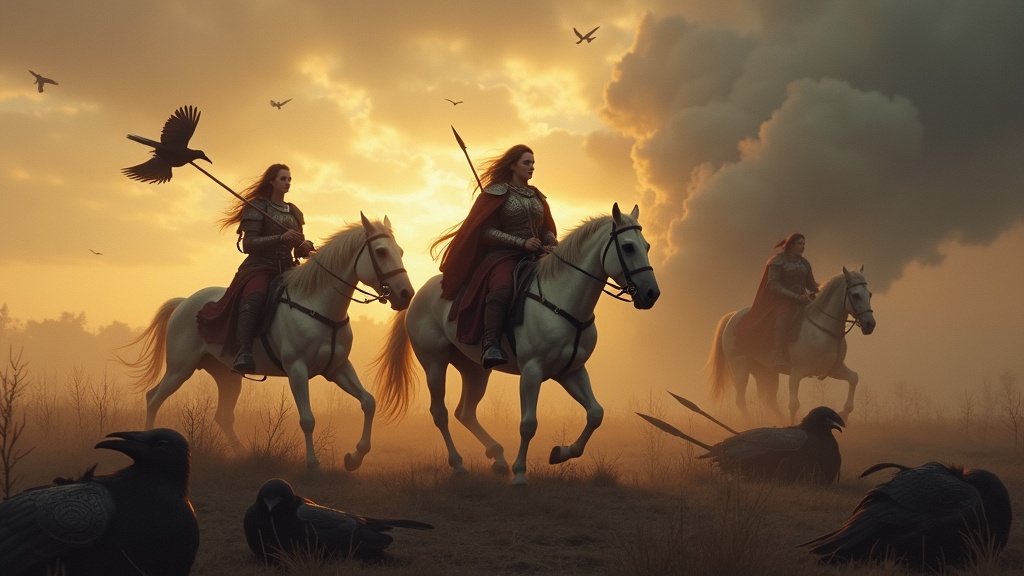
Norse
The Valkyries: Choosers of the Slain in Norse Mythology
Armored, spear-bearing, and answerable only to Odin, the Valkyries rode into every battle to decide who lived and who fed the ravens. Here is the full story.
Norse
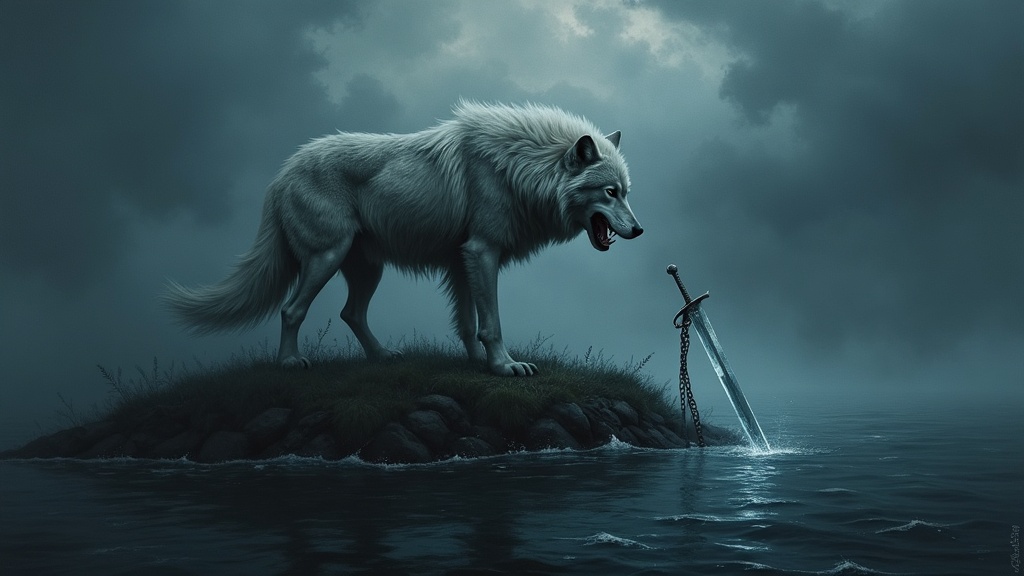
Fenrir the Giant Wolf: Bound God-Killer of Norse Myth
Born of Loki and fated to swallow Odin at Ragnarok, Fenrir the giant wolf is Norse mythology's most terrible prisoner. This is his full story.
Norse
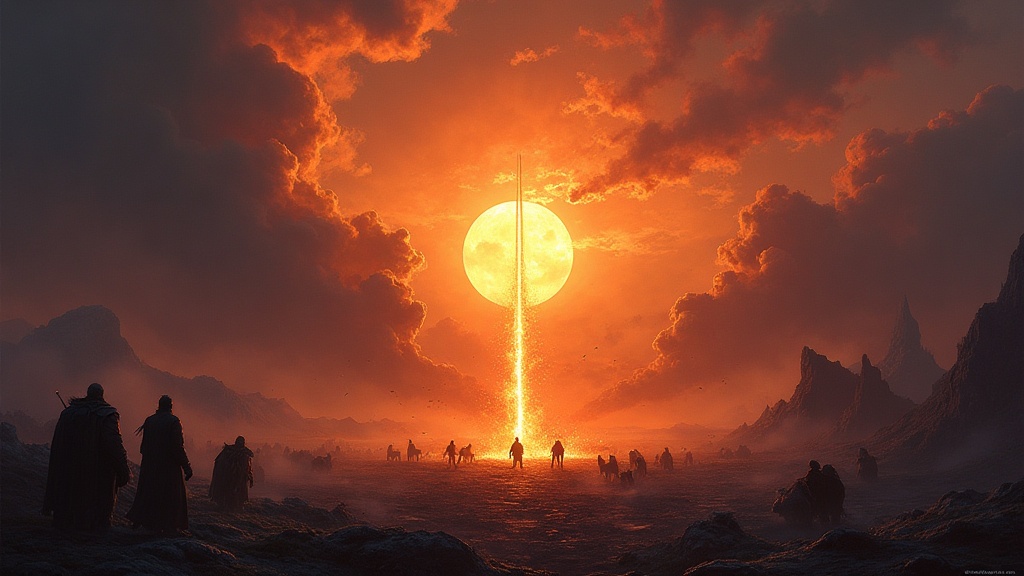
Ragnarok: The End of Days in Norse Mythology
Ragnarok is not simply a Norse apocalypse. It is a cosmos that chooses to burn so it can be reborn, and the gods who march into that fire know exactly what awaits them.
Norse
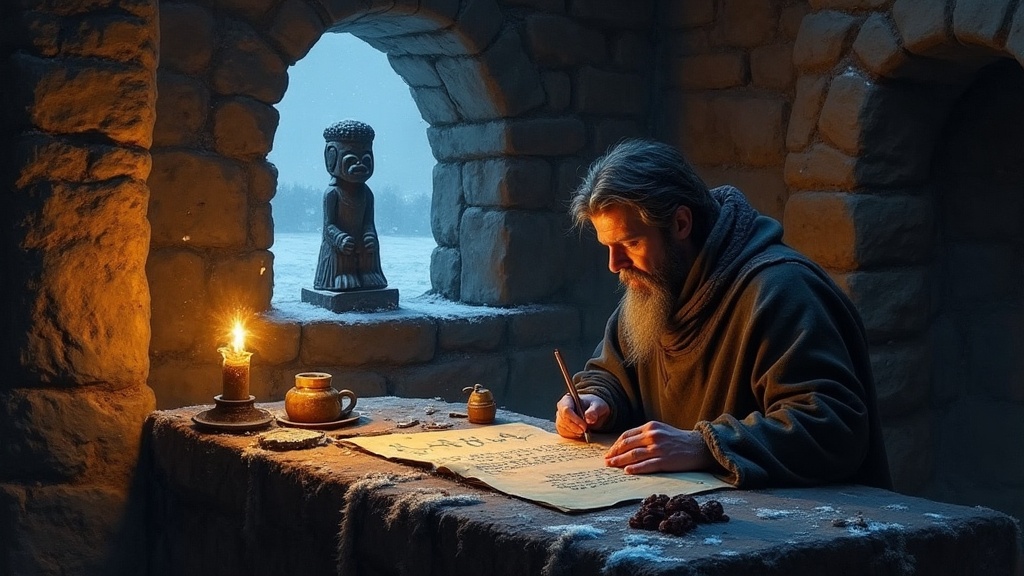
The Prose Edda and Poetic Edda: Primary Sources of Norse Myth
The Prose Edda and Poetic Edda are the two great written pillars of Norse mythology, preserved in medieval Iceland centuries after the gods had stopped receiving sacrifices. Without them, Odin, Yggdrasil, and Ragnarok would be shadows.