
Odin: Allfather of Asgard
Odin stands at the center of Norse cosmology as ruler, wanderer, and keeper of forbidden wisdom. His contradictions make him the most haunting deity in the Germanic pantheon.
Contents
The Lord Who Roams
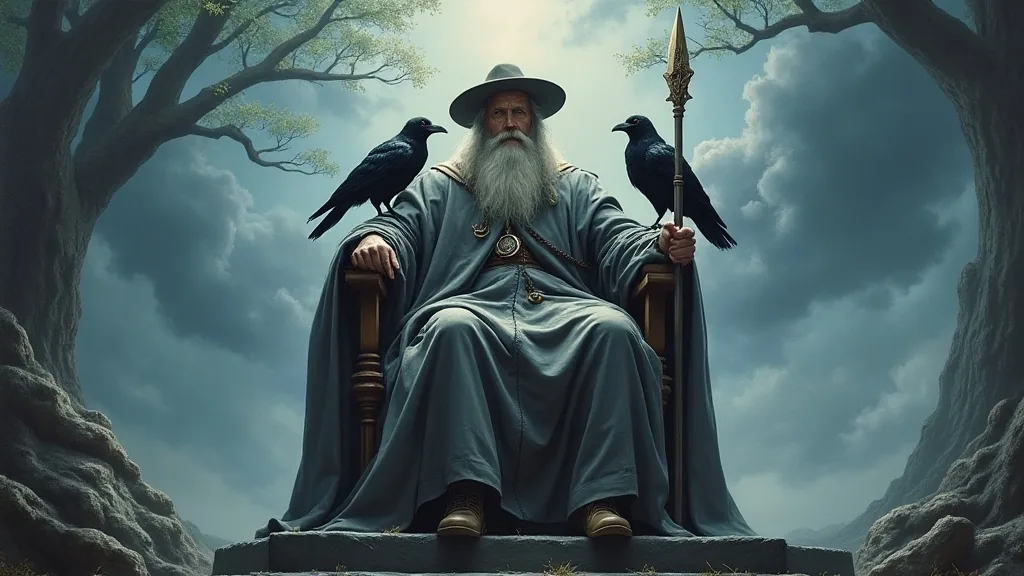
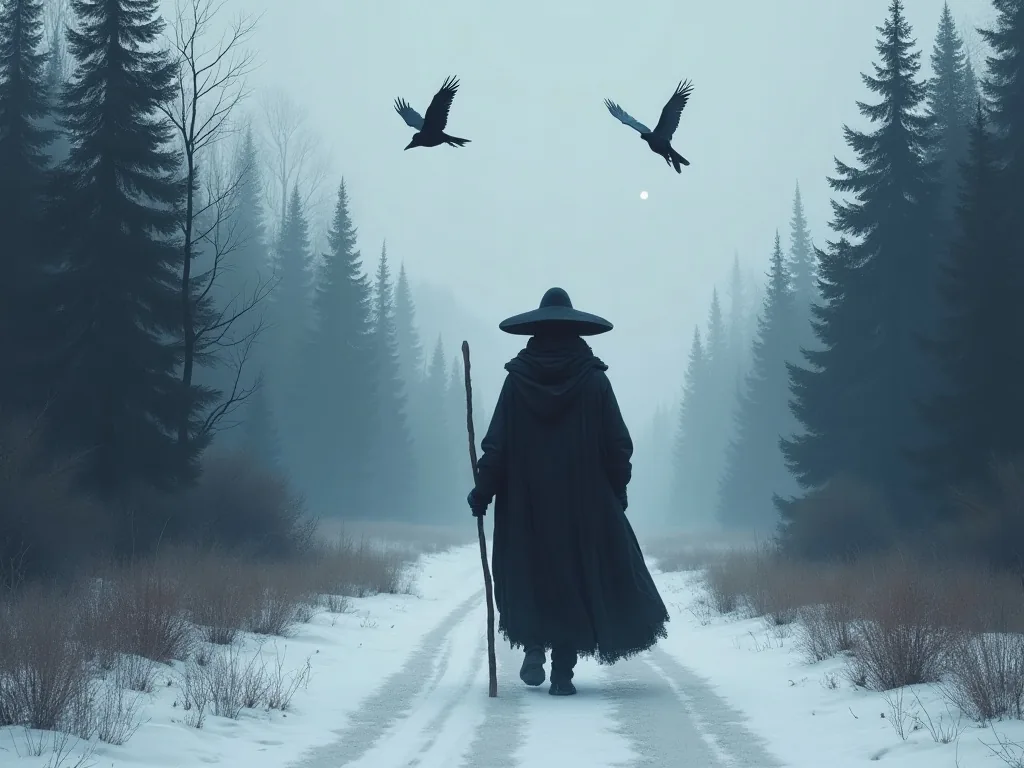
Most pantheons seat their chief deity on an unassailable throne. Odin refuses that comfort. He is equally at home striding the frost-bitten roads of Midgard in a wide-brimmed hat and a gray traveler's cloak as he is sitting upon Hlidskjalf, the high seat of Asgard from which he surveys all nine worlds. That restlessness is not a character flaw. It is his defining principle: Odin seeks, endlessly, because the cosmos is always on the verge of ending and knowledge is the only shield worth carrying.
He carries many names. The Poetic Edda alone attributes over fifty heiti, or by-names, to him: Grimnir (the Masked One), Gangleri (the Wanderer), Ygg (the Terrible), Harbard (Grey-beard), and Bolverk (Worker of Misfortune), among scores of others. Each name encodes a myth, a disguise, or a deed. To name Odin correctly is itself an act of power.
Origins and Cosmological Role
Odin is the son of Bor and the giantess Bestla, placing him at the intersection of the divine Aesir and the older, wilder race of the jotnar. Together with his brothers Vili and Ve, he slew the primordial frost-giant Ymir. From Ymir's flesh they shaped the earth; from his blood, the seas; from his skull, the vault of the sky; from his bones, the mountains. This act of sacred violence is recounted in the Prose Edda of Snorri Sturluson and echoed in the Poetic Edda poem "Grimnismal."
Odin, Vili, and Ve then found the first humans, Ask and Embla, as lifeless trees on the shore. Odin breathed into them ond, the animating spirit or vital breath. Vili gave them wit and sensation; Ve gave them blood, warmth, and fair complexions. This tripartite gift mirrors the three-part soul found in other Indo-European creation myths, linking Norse cosmology to a vast and ancient theological family.
Hlidskjalf and the Ravens
From Hlidskjalf, Odin observes all realms. His two ravens, Huginn (Thought) and Muninn (Memory), fly out each dawn over the world and return at evening to perch on his shoulders and whisper what they have seen. Odin himself confides in "Grimnismal" that he fears Muninn's absence more than Huginn's, a quietly devastating line: the loss of memory is a worse fate than the loss of thought. One can think again; one cannot reconstruct what is forgotten.
His two wolves, Geri and Freki (Greedy and Ravenous), lie at his feet in the great hall Valhalla. Odin himself does not eat; he sustains himself on wine alone, passing his food to the wolves. This abstinence marks him as operating on a different metaphysical plane than the feasting warriors around him.
The Price of Wisdom
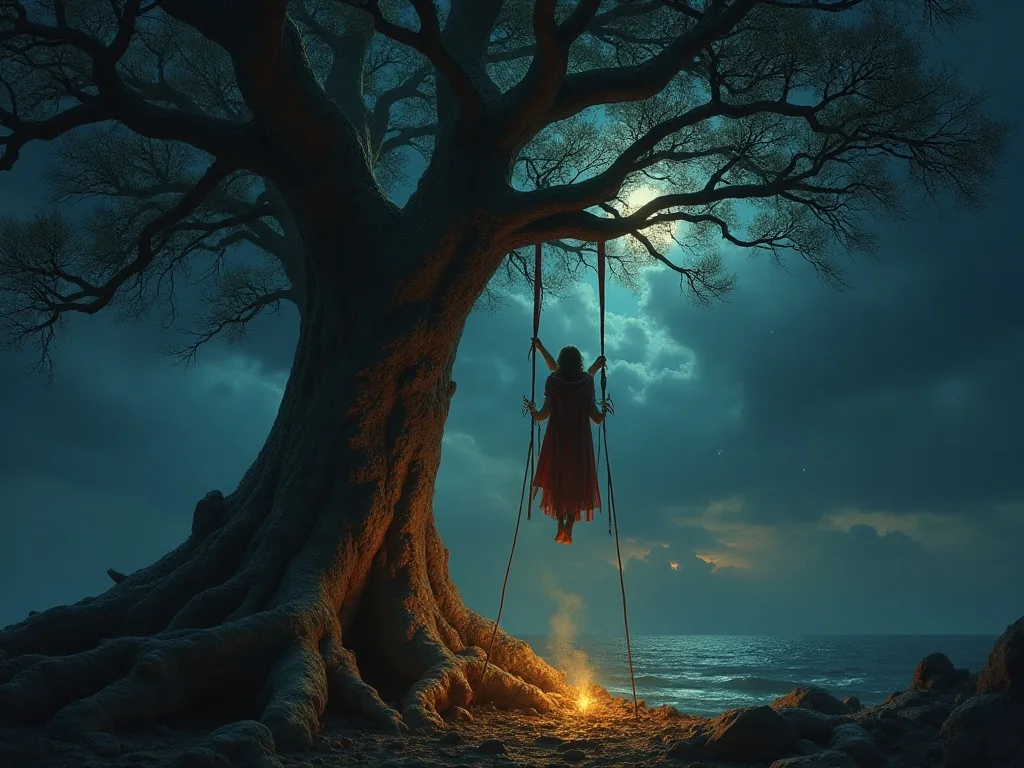
No myth better crystallizes Odin's nature than his self-sacrifice on Yggdrasil, the World Tree. The account appears most vividly in the poem "Havamal," attributed to Odin himself in the first person:
I know that I hung on the windswept tree, nine long nights, wounded with a spear, dedicated to Odin, myself to myself.
He hung without food, without water, peering downward into the void. On the ninth night, he seized the runes, the cosmic alphabet of fate and power, and fell screaming back into the world transformed. The runes were not invented; they were discovered within the structure of reality. This distinction matters enormously. Odin did not create a tool; he endured the ordeal necessary to perceive what already existed.
The sacrifice of his eye at Mimir's Well operates by the same logic. Mimir guards the well beneath one of Yggdrasil's roots, and its waters grant cosmic memory. Odin offered his eye as payment. He accepted monocular vision in exchange for a deeper sight: one eye sees the present world; the absent eye sees beyond it.
Odin and the Dead
Odin presides over two intertwined domains that seem paradoxical at first: war and death on one hand, poetry and inspiration on the other. Both domains, in Norse thinking, involve a kind of possession, a moment when ordinary boundaries dissolve.
Valhalla and the Einherjar
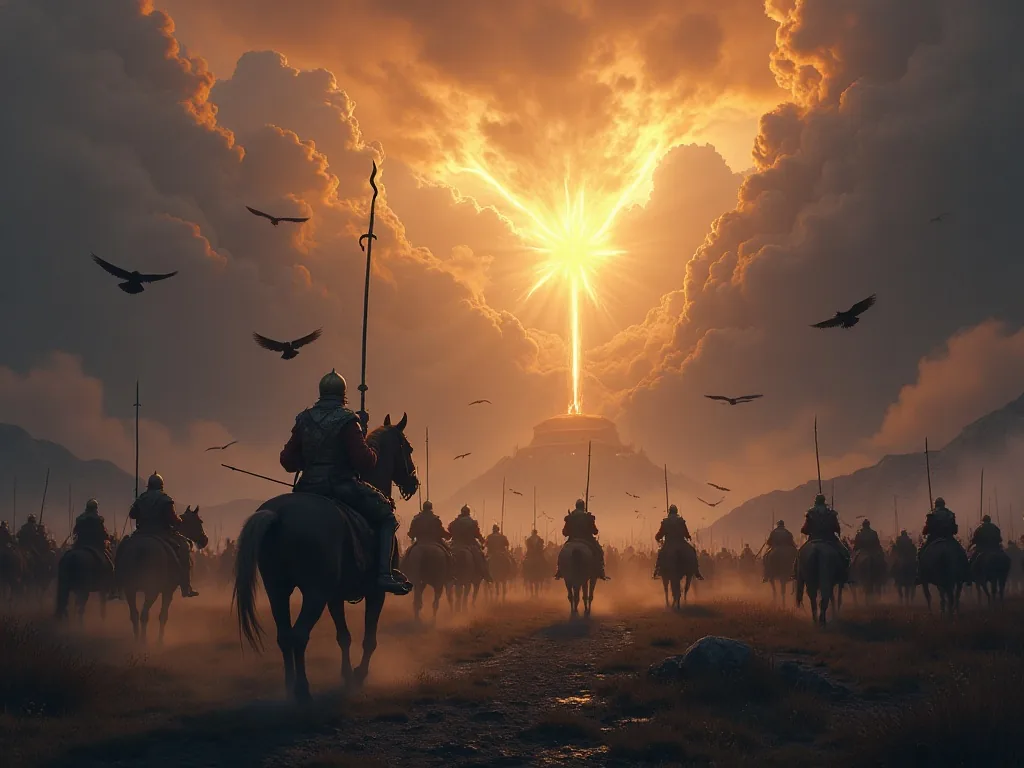
Warriors slain in battle who die with courage are chosen by the Valkyries, the divine shield-maidens who serve Odin's will, and carried to Valhalla (Hall of the Slain). There they become the Einherjar, the chosen dead who feast and fight each day, their wounds healing by nightfall. They are not rewarded for virtue in any abstract moral sense. They are recruited. Odin is building an army for Ragnarok, the twilight catastrophe prophesied to destroy and remake the cosmos.
This is the cold arithmetic underneath the heroic splendor. Every slain warrior in Valhalla is a soldier enrolled for a final battle that Odin knows, through his hard-won wisdom, he will likely lose. The wolf Fenrir is fated to swallow him. He has seen it. He prepares anyway.
The Seidr and Shamanic Roots
Odin is also a practitioner of seidr, a form of Norse magic associated primarily with women and the Vanir goddess Freya, who taught it to him. The practice carries social stigma in the Norse sources; Loki taunts Odin in "Lokasenna" for performing ergi, unmanliness, by practicing seidr. Odin absorbs the insult. The power matters more than the reputation.
His shamanic character, the trance-journeys, the animal familiars, the spirit-helpers, the self-mortification on the World Tree, connects him to a circumpolar tradition of shamanism that pre-dates the literary Eddas by millennia. Scholars such as Hilda Ellis Davidson and Mircea Eliade have drawn these parallels extensively, situating Odin within a global pattern of wounded, wandering spirit-masters who cross between the worlds of the living and the dead.
The Allfather in the Eddic Cycle
The Prose Edda of Snorri Sturluson, composed in Iceland around 1220 CE, is the most systematic account of Odin's mythology. Snorri, a Christian writing about pagan material, frames much of his account within "Gylfaginning" (The Deceiving of Gylfi), a dialogue in which a Swedish king visits Asgard in disguise and receives answers from three figures: High, Just-as-High, and Third. These three voices are generally understood as aspects of Odin himself. He instructs through deception, which is entirely in character.
The Poetic Edda, preserved in the Codex Regius manuscript discovered in Iceland in 1643, contains older material, including "Voluspa" (the Seeress's Prophecy), in which a volva recounts the creation of the world and its fated destruction to Odin. It is one of the most remarkable documents in world literature: a god who knows everything nonetheless summons a dead seeress to hear it again, perhaps hoping the story has changed.
Odin and Loki
The relationship between Odin and Loki is one of the most psychologically rich in Norse mythology. They are sworn blood-brothers, bound by an oath Snorri alludes to but never fully explains. Odin repeatedly defends Loki in divine councils, absorbs his provocations, and grants him continued access to Asgard long after his behavior becomes destructive. Some scholars read this as a cosmic interdependence: Odin's ordered wisdom requires Loki's disruptive chaos as a counterbalance, just as creation required the violence done to Ymir.
Ragnarok and the Limits of Foresight
The shadow of Ragnarok falls over every aspect of Odin's mythology. The Norse sources, particularly "Voluspa," describe the sequence with terrible precision: the binding of Fenrir will break, Jormungandr the World Serpent will rise, Surtr will ride from Muspelheim with a flaming sword, Yggdrasil will shudder, and the gods will fall.
Odin will be swallowed whole by Fenrir. His son Vidar will then rip the wolf apart in vengeance, and the world will eventually be reborn. But Odin himself does not survive into the renewed cosmos. All his accumulated wisdom, every rune torn from the void, every draught of Mimir's waters, cannot prevent the outcome, only delay it and ensure it ends in something rather than nothing.
This is the existential weight that makes Odin a genuinely tragic figure. He is not ignorant of his fate like Achilles; he is not deceived like Baldr. He knows precisely what is coming and acts with complete commitment anyway. In that sense he embodies what the Norse sources call "the warrior's bargain": full awareness of death, paired with full engagement in life.
Legacy Across Cultures and Time
Odin's influence radiates far beyond the Norse sagas. He is linguistically and culturally ancestral to the Germanic Wotan and the Anglo-Saxon Woden, after whom Wednesday (Woden's Day) is named. The Roman historian Tacitus identified a Wotan-like deity among the Germanic tribes in the first century CE, calling him Mercury, recognizing the parallel functions of psychopomp, lord of travelers, and master of eloquence.
In the Viking Age, Odin held particular prominence among the aristocratic and warrior classes, while Thor held broader appeal among farmers and common folk. The two gods represent complementary modes of divinity: Thor's power is direct, physical, and protective; Odin's is oblique, intellectual, and ultimately concerned with the fate of the whole cosmos rather than any individual within it.
Modern readers encounter Odin through J.R.R. Tolkien's Gandalf, a wandering old man with a staff and a wide-brimmed hat who sacrifices himself and returns transformed. They meet him in Neil Gaiman's fiction and in contemporary Asatru, the reconstructed Norse religious tradition practiced by tens of thousands worldwide. Each encounter strips away layers of literary mediation and reaches toward the same archetype: the god who knows the price of every truth and pays it without flinching.
The Wanderer as Theological Statement
Odin's perpetual wandering is not an incidental trait. It is a theological position. A god who sits on his throne and issues decrees assumes that the world is already legible, already ordered, already conquered. Odin assumes nothing of the kind. He walks the roads because reality is dangerous and strange and requires constant renegotiation. He sits among mortals in disguise, tests them, learns from them, is sometimes bested by them, as in "Vafthrudnismal," where he enters a riddling contest with the wise giant Vafthrudnir, staking his own head on the outcome.
The question he finally asks the giant is one no being but Odin could answer: what did Odin whisper into the ear of his dead son Baldr before the funeral pyre was lit? Vafthrudnir recognizes the trap too late. No one knows what Odin said because Odin has not yet said it. Wisdom, in the end, belongs to those willing to carry questions that have no witnesses.
Free 25-page sample
Want the whole story?
Take the first 25 pages free. If it pulls you in, the full edition is yours as an instant PDF download, with a paperback on Amazon for selected titles.
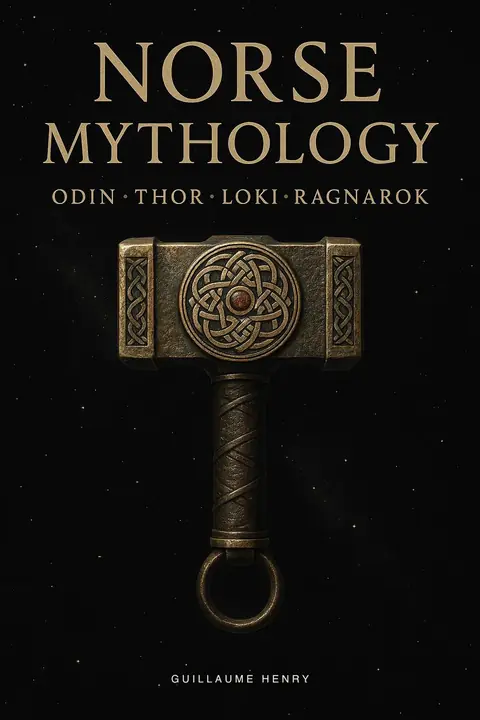
Norse
The Norse Mythology Book: Odin, Thor, Loki, Ragnarok and the Sagas of the Vikings
Odin, Thor, Loki, Ragnarok and the Sagas of the Vikings
The complete guide to Norse mythology drawn from the Eddas, the sagas, and the scholarship of those who read the source texts. Every god, every world, every myth.
More from Norse
All articles
Norse
The Prose Edda and Poetic Edda: Primary Sources of Norse Myth
The Prose Edda and Poetic Edda are the two great written pillars of Norse mythology, preserved in medieval Iceland centuries after the gods had stopped receiving sacrifices. Without them, Odin, Yggdrasil, and Ragnarok would be shadows.
Norse
Mjolnir: The Sacred Symbol of Thor's Hammer
Mjolnir, the hammer of Thor, is one of the most potent symbols in Norse mythology, a weapon of divine thunder, a ward against chaos, and a mark of sacred covenant worn by Vikings for centuries.
Norse
Yggdrasil the World Tree: Axis of the Norse Cosmos
Yggdrasil the World Tree stands at the center of Norse cosmology, binding nine worlds in its roots and branches. Explore the myths, creatures, and sacred meanings woven into its eternal bark.
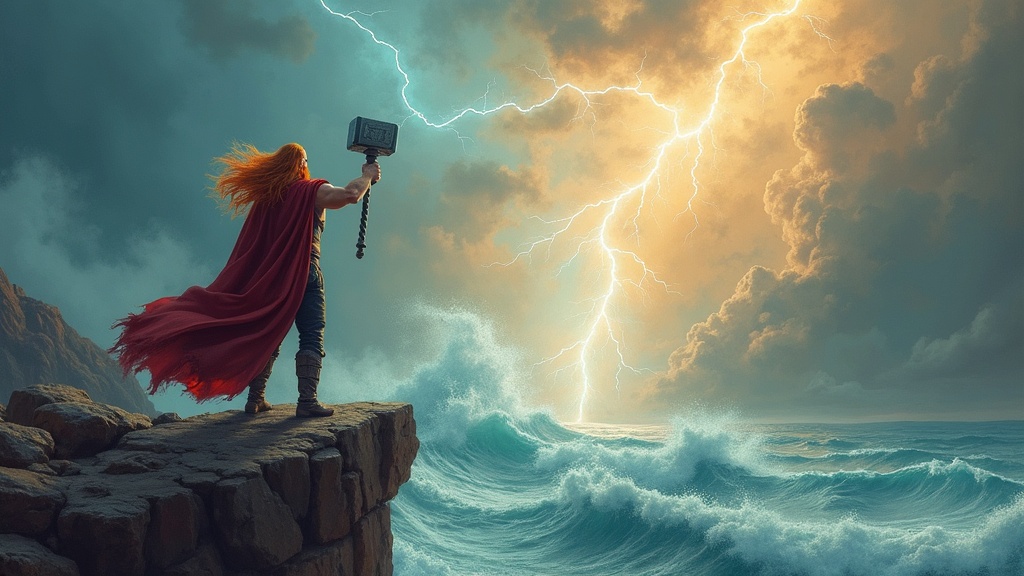
Norse
Thor, God of Thunder: Hammer, Storm, and the Sacred Defender of Worlds
Thor, the Norse god of thunder, stands as one of the most powerful and beloved figures in world mythology. Son of Odin, wielder of Mjolnir, and eternal guardian of Asgard and Midgard alike.