
Apocalypse and End-of-the-World Myths
How cultures imagine the end: cyclical renewal, cosmic battle, judgment, and fire. From Ragnarök to the Popol Vuh, traced to primary sources.
Contents
Apocalypse and end-of-the-world myths are narratives found across cultures that describe the destruction or transformation of the cosmos through cyclical renewal, divine judgment, cosmic battle, or elemental catastrophe. The term apocalypse itself derives from the Greek apokalypsis, meaning revelation or unveiling, not simply destruction. These myths appear in Norse Ragnarök, Hindu cycles of dissolution, the Book of Revelation, Zoroastrian Frashokereti, and Mesoamerican world-age cosmologies, each offering distinct visions of how time, matter, and moral order reach their terminus.
Most treatments of these narratives list examples without structure or primary sources. The traditions themselves, however, organize end-time events into recognizable patterns: some cultures envision endless cycles of creation and destruction, others a single final judgment, still others a cosmic battle that resets the board. The differences matter. They reveal how a culture understands time, fate, and whether the gods themselves are subject to the end.
What apocalypse means
The word apocalypse entered English through the Greek title of the Book of Revelation, Apokalypsis Ioannou, the unveiling of John. In its original sense it signifies disclosure of hidden knowledge, not the event itself. Over centuries the term shifted to mean the catastrophic end it describes. This semantic drift obscures an important point: many apocalyptic texts are less interested in destruction than in what the end reveals about divine justice, cosmic order, or the fate of souls.
Not all end-of-world narratives are apocalypses in the strict sense. The Norse Völuspá and Snorri's Prose Edda recount Ragnarök without moralizing or unveiling secret truths. The Aztec Five Suns cosmology treats destruction as routine maintenance, not revelation. The term remains useful as shorthand, but the reader should note the distinction between eschatology, the study of last things, and apocalypse, a genre of revelatory literature.
Cyclical destruction and renewal
Several traditions treat the end not as finale but as punctuation. The cosmos dies and is reborn, sometimes with minor variations, sometimes identically. Time is not a line but a wheel. This model appears most clearly in Hindu, Aztec, and Maya cosmologies, where creation myths and destruction myths are two halves of the same cycle.
The Aztec Five Suns
The Aztec cosmos has passed through four previous world ages, each presided over by a different sun and destroyed by a different catastrophe. The first sun, Nahui-Ocelotl, ended when jaguars devoured humanity. The second, Nahui-Ehecatl, was swept away by hurricanes. The third, Nahui-Quiahuitl, perished in a rain of fire. The fourth, Nahui-Atl, drowned in a great flood. The present age, Nahui-Ollin, the sun of movement, is fated to end in earthquakes.
Each destruction is total, yet the gods recreate humanity from maize, bone meal, or other materials. The cycle is not progressive. There is no improvement from one age to the next, no moral lesson encoded in the sequence. The gods simply try again.
Hindu cycles of dissolution
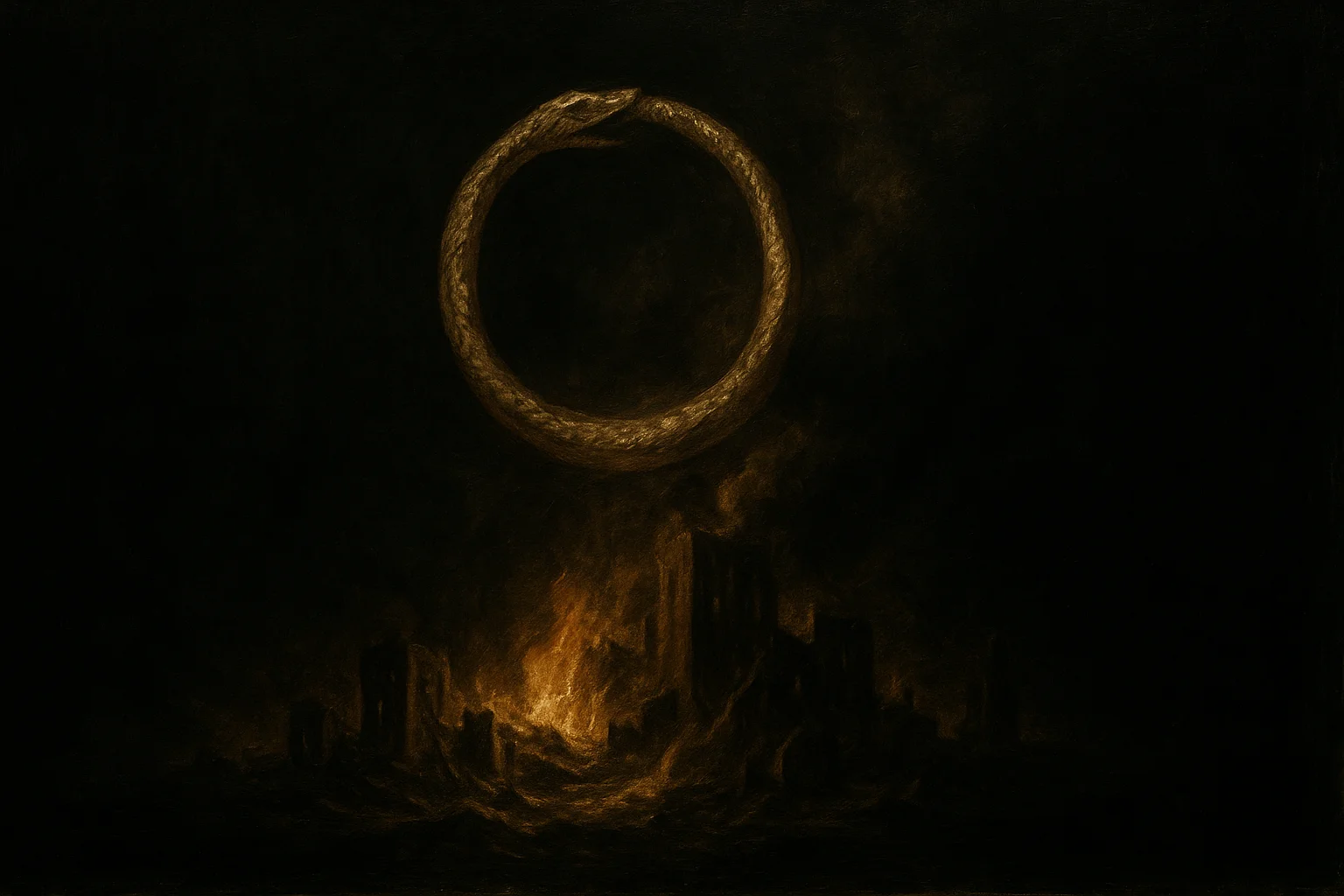
Hindu cosmology measures time in kalpas, vast cycles of creation and dissolution. A single kalpa lasts 4.32 billion years, the lifespan of Brahma's day. At the end of each kalpa, the universe dissolves into the cosmic ocean, and Vishnu sleeps on the serpent Shesha until the next cycle begins. The Bhagavata Purana 12.4 describes the signs of the age's end: drought, famine, the collapse of dharma, the appearance of Kalki, the tenth avatar of Vishnu, who rides a white horse and wields a flaming sword.
Dissolution, or pralaya, occurs at multiple scales. A minor pralaya ends a single age, a mahapralaya ends a kalpa, and a prakritika pralaya dissolves even the unmanifest principles of matter. The cosmos exhales and inhales. Nothing is permanent, not even the gods who preside over individual cycles.
The Popol Vuh and Maya cosmology
The Popol Vuh, the K'iche' Maya creation narrative recorded in the sixteenth century, recounts multiple failed attempts to create humanity. The gods first shape people from mud, but they dissolve in water. Next they carve wooden figures, but these lack souls and are destroyed by their own tools and animals. Only the fourth creation, humanity formed from maize dough, succeeds. Part 1 of the text treats each failed creation as a necessary experiment, not a moral failure.
Maya cosmology also tracks longer cycles measured by the Long Count calendar, which resets every 5,125 years. The completion of a cycle, or b'ak'tun, does not imply destruction, though later interpreters have projected apocalyptic meanings onto these transitions. The primary sources are more concerned with continuity and renewal than with finality.
Ragnarök: the Norse twilight
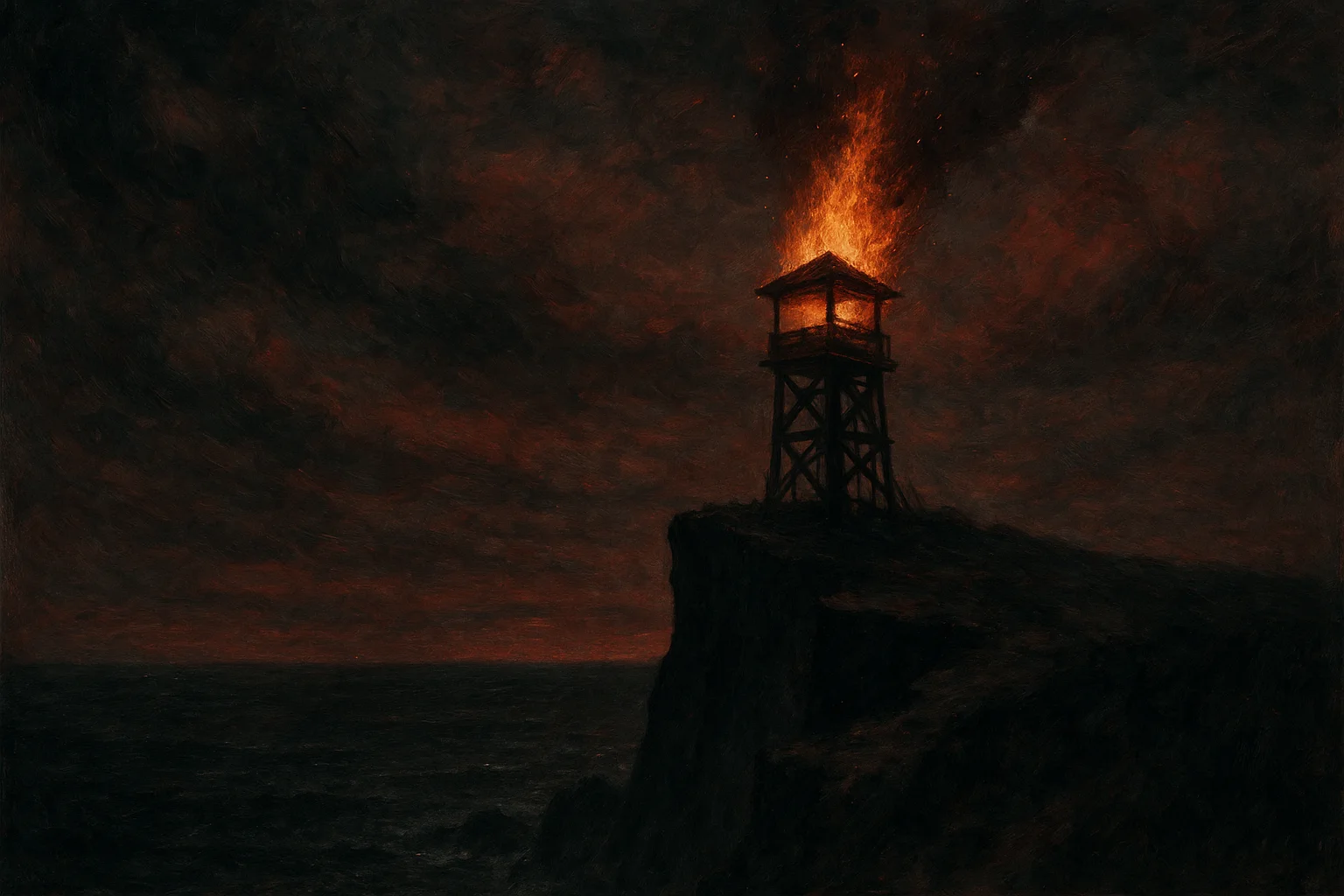
Ragnarök, the doom of the gods, is the most detailed apocalypse narrative in Norse tradition. The Völuspá, stanzas 40 through 66, and Snorri Sturluson's Prose Edda, Gylfaginning 51 through 53, describe a sequence of catastrophes triggered by the breaking of bonds and the betrayal of oaths. The wolf Fenrir breaks free, Jörmungandr rises from the sea, and the fire giant Surtr marches from Muspelheim with a flaming sword.
The gods know Ragnarök is coming. Odin gathers warriors in Valhalla to fight in the final battle, but the outcome is fixed. Thor kills Jörmungandr but dies from its venom. Odin is swallowed by Fenrir. Freyr falls to Surtr. The world tree Yggdrasil shudders, the sky splits, and fire consumes the earth. The cosmos sinks into the sea.
Yet Ragnarök is not the absolute end. Two humans, Líf and Lífthrasir, survive by hiding in the wood Hoddmímis holt. The earth rises again from the water, green and fertile. Baldr returns from Hel, and a new generation of gods inherits the ruins. The Völuspá closes with ambiguity: is this renewal or repetition? The text does not say.
Now do I see the earth anew / Rise all green from the waves again; / The cataracts fall, and the eagle flies, / And fish he catches beneath the cliffs. Völuspá, stanza 59, translated by Henry Adams Bellows
Fire, flood, and elemental ends
Many apocalypses are elemental. The world burns or drowns, not because of moral failure but because fire and water are the agents of cosmic reset. Flood myths appear in Mesopotamian, Hebrew, Greek, and Indigenous American traditions, often as divine punishment but sometimes as simple necessity. Fire, by contrast, is more often associated with purification and judgment.
Zoroastrian Frashokereti
Zoroastrian eschatology describes a final renovation, Frashokereti, when the forces of good defeat the forces of evil and the cosmos is purified. The Bundahishn, chapters 30 and 34, details a sequence of events: the arrival of the Saoshyant, the final savior born of Zoroaster's seed, the resurrection of the dead, and a river of molten metal that flows across the earth. The righteous pass through unharmed; the wicked are burned clean.
This is not destruction but restoration. The earth becomes paradise, death is abolished, and Ahura Mazda reigns without opposition. Frashokereti influenced later Jewish, Christian, and Islamic apocalyptic thought, particularly the concepts of resurrection, final judgment, and the defeat of a cosmic adversary.
Stoic ekpyrosis
The Stoics taught that the cosmos undergoes periodic conflagration, ekpyrosis, in which all matter returns to fire. This is not punishment but the natural conclusion of a cosmic cycle. Marcus Aurelius, in Meditations 10.7, writes that the rational soul observes the periodic destruction of the world and its renewal without distress, understanding that all things return to the logos, the ordering principle of the universe.
Ekpyrosis differs from other fire-apocalypses in its lack of moral dimension. The cosmos burns because fire is the primordial substance, and all compounds must eventually resolve into their origin. The Stoics borrowed the concept from Heraclitus, who taught that fire is the fundamental element and that the cosmos is an ever-living fire, kindling in measures and going out in measures.
Zoroastrian Frashokereti
Moral purification through molten metal; the righteous survive unharmed, the wicked are cleansed, and the cosmos becomes eternal paradise.
Stoic ekpyrosis
Amoral dissolution into fire; all matter returns to the logos, and the cycle begins again without judgment or permanent change.
Judgment and the moral reckoning
A subset of apocalypses centers on judgment. The end is not random catastrophe but the moment when accounts are settled, the righteous rewarded, and the wicked punished. This model appears most clearly in Abrahamic traditions, though earlier Egyptian and Zoroastrian texts establish the pattern.
The Book of Revelation
The Book of Revelation, chapters 6 through 22, is the defining apocalyptic text in Christian tradition. Written in the late first century, it describes a series of visions granted to John of Patmos: seven seals, seven trumpets, seven bowls of wrath, the fall of Babylon, the binding of Satan, the resurrection of the dead, and the final judgment before the white throne. The wicked are cast into the lake of fire, and the righteous dwell in the New Jerusalem, a city of gold and jasper where God dwells among humanity.
Revelation draws heavily on earlier Jewish apocalyptic literature, particularly the Book of Daniel and the Book of Enoch, and on Zoroastrian imagery of cosmic battle and final purification. Its influence on Western eschatology is unmatched. The text has been read as prophecy, allegory, political resistance, and mystical vision, often simultaneously.
Islamic Qiyamah
Islamic eschatology describes Qiyamah, the Day of Resurrection, when the trumpet sounds and all souls are gathered for judgment. The Quran, Surah 81, At-Takwir, and Surah 82, Al-Infitar, describe the signs: the sun is darkened, the stars fall, the mountains are set in motion, the seas boil, and the graves are overturned. Each soul is reunited with its record of deeds, and God judges with perfect justice.
The righteous enter Jannah, paradise, described as gardens beneath which rivers flow. The wicked are cast into Jahannam, a place of fire and torment. Islamic eschatology shares structural elements with Zoroastrian and Christian models but emphasizes individual accountability and the absolute sovereignty of God over the final outcome.
Egyptian weighing of the heart
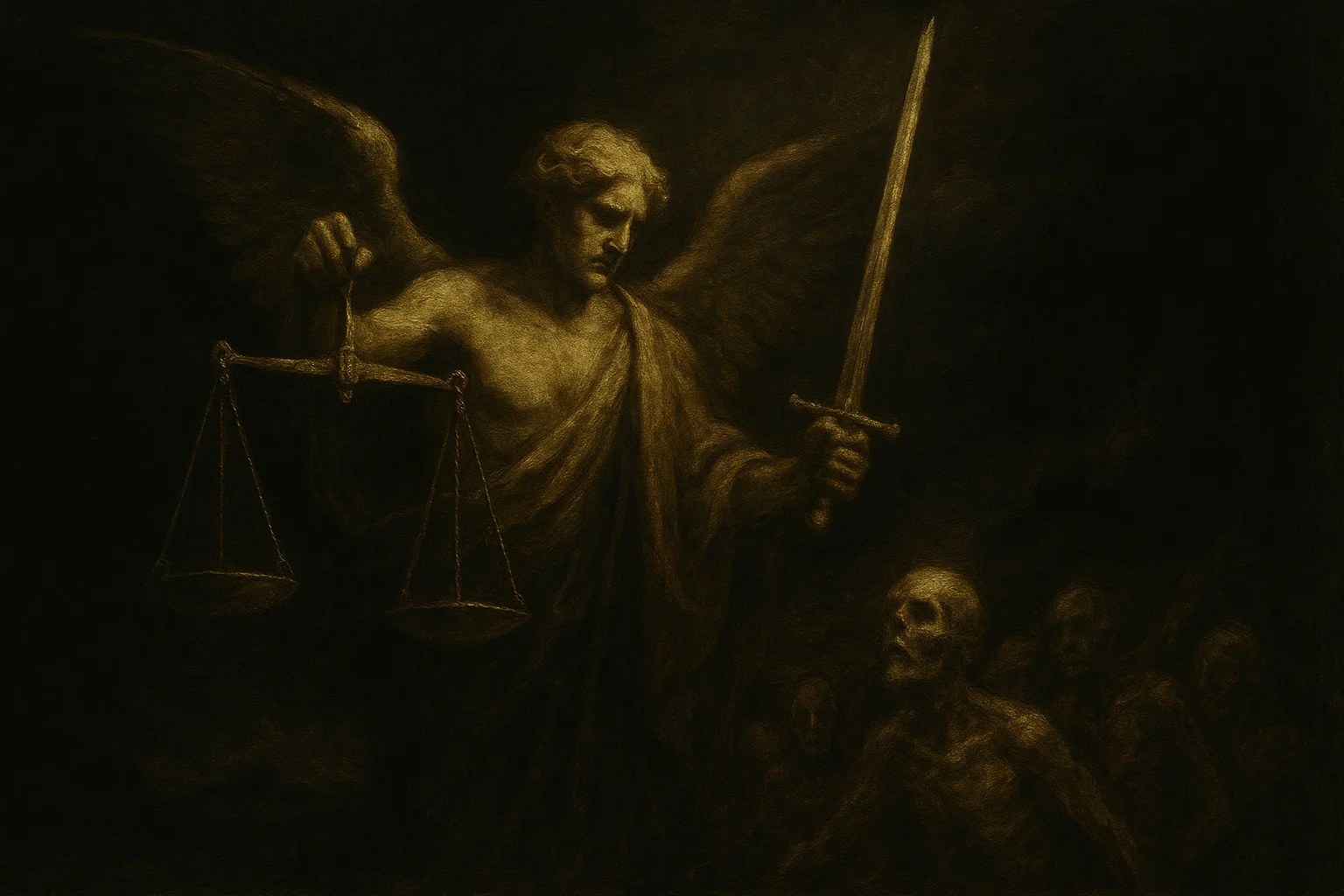
The Egyptian judgment of the dead, depicted in the Book of the Dead and tomb paintings, is not a collective apocalypse but an individual reckoning. After death, the deceased's heart is weighed against the feather of Ma'at, goddess of truth and order. If the heart is lighter than the feather, the soul proceeds to the Field of Reeds, a paradise that mirrors the Nile valley. If heavier, the heart is devoured by Ammit, a composite creature, and the soul ceases to exist.
This is judgment without resurrection or cosmic renewal. The Egyptian model influenced later Mediterranean eschatologies, particularly the idea that moral conduct determines post-mortem fate. The weighing of the heart appears in modified form in Zoroastrian, Jewish, and Christian texts.
What survives the end
Few apocalypses are absolute. Most traditions preserve something: a remnant of humanity, a seed of the old world, a memory carried forward. In Norse myth, Líf and Lífthrasir repopulate the earth. In the Popol Vuh, maize survives each failed creation. In Zoroastrianism, the righteous inherit a perfected cosmos. Even the Book of Revelation concludes not with annihilation but with the New Jerusalem, a transformed creation.
The survival of a remnant serves narrative and theological purposes. It allows continuity, explains the present world as the product of an earlier catastrophe, and offers hope that the current order, however flawed, is not the final word. The pattern appears across cultures: the flood survivors in Mesopotamian, Hebrew, and Greek traditions; the hidden humans in Norse and Hindu cosmologies; the ancestors who emerge from caves or mountains in Indigenous American narratives.
- Norse: Líf and Lífthrasir survive Ragnarök in the wood Hoddmímis holt
- Hindu: Manu survives the flood and becomes the progenitor of the next age
- Greek: Deucalion and Pyrrha repopulate the earth after Zeus's flood
- Abrahamic: Noah and his family survive the deluge in the ark
- Zoroastrian: The righteous pass through molten metal and inherit the renewed earth
What survives is rarely random. It is chosen by the gods, hidden by fate, or preserved by virtue. The remnant carries forward the knowledge, seed, or moral order necessary to begin again. This pattern links apocalypse to dying and rising gods, seasonal cycles, and the broader mythic theme of death and renewal.
Patterns across traditions
Comparing apocalypses reveals structural commonalities. Most involve a trigger: broken oaths, moral decay, cosmic imbalance, or simply the exhaustion of time. Most feature elemental agents: fire, flood, earthquake, darkness. Most describe a battle or confrontation between opposing forces, whether gods and giants, good and evil, or order and chaos. And most conclude with judgment, renewal, or both.
The differences are equally telling. Cyclical models treat the end as inevitable and amoral, while linear models invest it with moral weight. Traditions with thunder gods and warrior deities, such as Norse and Hindu, emphasize cosmic battle. Traditions with strong ethical monotheism, such as Zoroastrian, Jewish, Christian, and Islamic, emphasize judgment and the vindication of the righteous. Traditions with agricultural calendars and seasonal rituals, such as Mesoamerican, treat destruction and renewal as routine.
Geography and climate also shape apocalyptic imagery. Flood myths cluster in river valleys and coastal regions. Fire apocalypses appear in volcanic zones and arid climates. The Norse emphasis on ice and fire reflects the extremes of Scandinavian weather. The Zoroastrian river of molten metal may draw on Iranian metallurgy and the sacred role of fire in Zoroastrian ritual.
Scholars have debated whether these patterns result from diffusion, independent invention, or universal human concerns. The answer is likely all three. Some apocalyptic motifs, such as the flood, appear so widely that independent invention is plausible. Others, such as the resurrection of the dead and the final judgment, show clear lines of transmission from Zoroastrianism to Judaism to Christianity to Islam. Still others, such as the cosmic battle, may reflect shared Indo-European heritage, as argued by scholars like Georges Dumézil.
Frequently asked questions
What does the word apocalypse actually mean?
The word apocalypse derives from the Greek apokalypsis, meaning revelation or unveiling, and originally referred to the disclosure of hidden divine knowledge rather than catastrophic destruction. It entered English through the Greek title of the Book of Revelation, Apokalypsis Ioannou, and over centuries shifted in meaning to denote the end-of-world events the text describes. The semantic drift obscures the fact that many apocalyptic texts are less concerned with destruction than with what the end reveals about divine justice, cosmic order, or the fate of souls.
Which mythologies believe the world ends and begins again in cycles?
Hindu, Aztec, Maya, and Stoic cosmologies all describe cyclical destruction and renewal, treating the end of the world not as a final event but as a recurring phase in an endless process. Hindu tradition measures time in kalpas, vast cycles lasting billions of years, at the end of which the universe dissolves and is recreated. Aztec cosmology recounts five successive world ages, each destroyed by a different catastrophe and followed by a new creation. The Stoics taught that the cosmos undergoes periodic conflagration, ekpyrosis, in which all matter returns to fire before the cycle begins again.
What happens during Ragnarök in Norse mythology?
Ragnarök, the doom of the gods, begins when ancient bonds break and the wolf Fenrir, the serpent Jörmungandr, and the fire giant Surtr are unleashed to wage war against the gods, as described in the Völuspá and Snorri's Prose Edda. Thor kills Jörmungandr but dies from its venom, Odin is swallowed by Fenrir, and Surtr's flames consume the earth, which sinks into the sea. Yet the end is not absolute: the earth rises again, two humans survive to repopulate the world, and a new generation of gods inherits the ruins. The sources leave ambiguous whether this renewal is a true beginning or merely a repetition of the same cycle.
Do all apocalypse myths involve divine judgment?
Not all apocalypse myths involve divine judgment; cyclical models such as Hindu pralaya, Aztec world ages, and Stoic ekpyrosis treat destruction as a natural or inevitable process without moral dimension. In these traditions, the end occurs because time has run its course, cosmic balance requires reset, or the material world must return to its elemental origin. By contrast, Zoroastrian Frashokereti, the Book of Revelation, and Islamic Qiyamah center on moral reckoning, where the righteous are rewarded and the wicked punished. The presence or absence of judgment reflects broader theological assumptions about whether the cosmos operates according to impersonal laws or divine will.
What role do floods and fire play in end-of-the-world stories?
Floods and fire are the most common elemental agents of apocalypse, appearing across cultures as mechanisms of cosmic reset, purification, or divine punishment. Flood myths, found in Mesopotamian, Hebrew, Greek, and Indigenous American traditions, often serve to cleanse the earth of corruption and allow a remnant of humanity to survive and begin anew. Fire apocalypses, such as Zoroastrian Frashokereti, Stoic ekpyrosis, and the Norse Ragnarök, emphasize purification, transformation, or the return of matter to its primordial state. The prevalence of these elements likely reflects both environmental experience, such as volcanic eruptions and seasonal flooding, and the symbolic associations of water with chaos and fire with divine power.
Does anything or anyone survive the apocalypse in these myths?
Most apocalypse myths preserve a remnant, whether human survivors, divine beings, or seeds of the old world, to ensure continuity and allow for renewal or repopulation. In Norse tradition, Líf and Lífthrasir survive Ragnarök hidden in a wood and repopulate the earth, while in Hindu cosmology Manu survives the flood to become the progenitor of the next age. The Book of Revelation concludes with the New Jerusalem, a transformed creation where the righteous dwell, and Zoroastrian Frashokereti describes the righteous passing through molten metal unharmed to inherit a perfected cosmos. The survival of a remnant serves narrative and theological purposes, offering hope that the current order is not the final word and explaining the present world as the product of an earlier catastrophe.
Further reading on Mythologis
Read the full book
Want the whole story?
The complete edition is an instant PDF download here, with a paperback on Amazon for selected titles.
Mythology
The World Mythology Book: The Gods, Heroes and Myths of Every Culture
The Gods, Heroes and Myths of Every Culture, in One Volume
The whole of world mythology in a single volume: Greek, Norse, Egyptian, Japanese, Hindu, Celtic, Slavic, Mesoamerican and African myths gathered side by side, each drawn from the primary sources.