
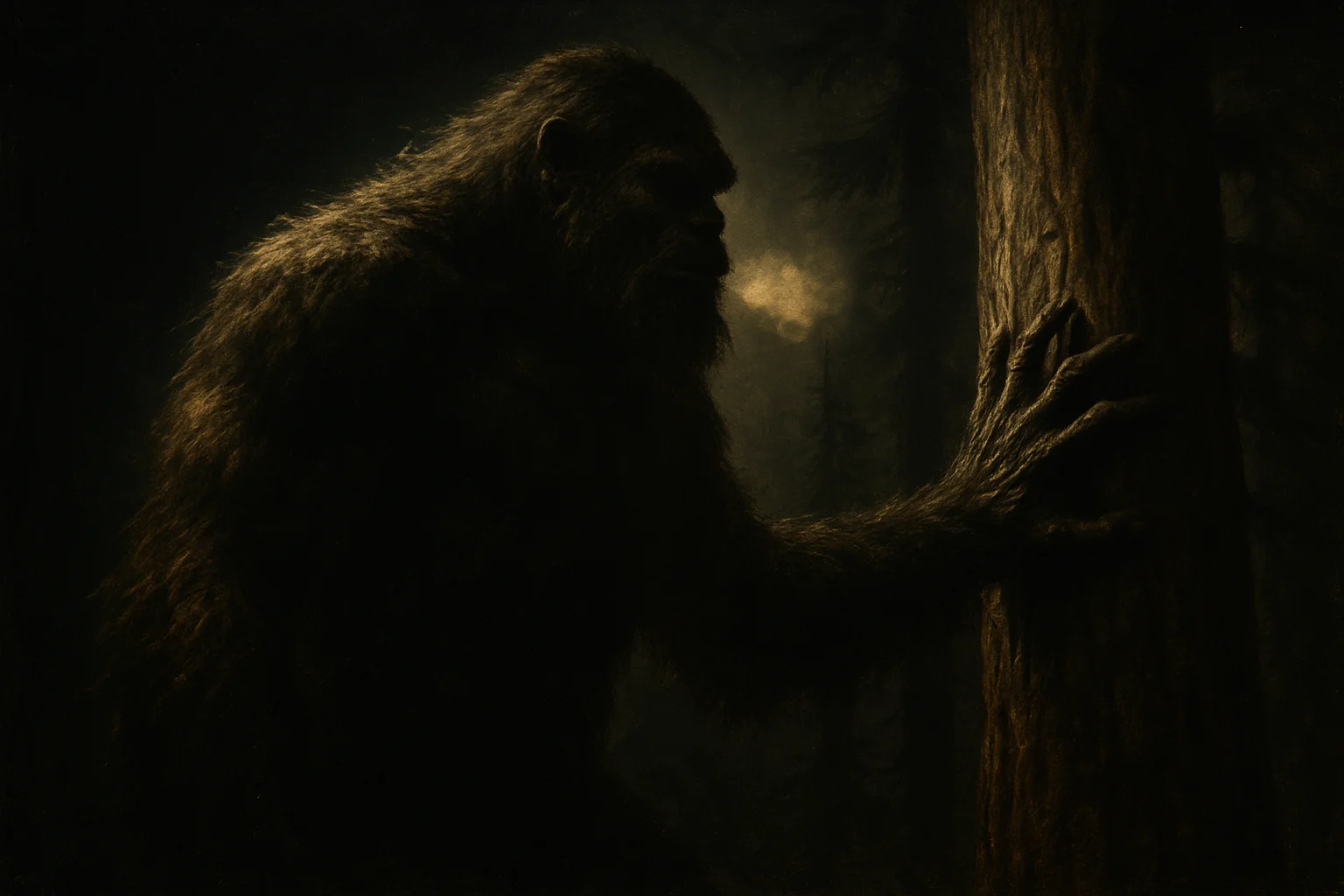
Bigfoot and Sasquatch in Mythology
Bigfoot and Sasquatch draw on distinct Indigenous traditions: Salish Sasq'ets, Algonquian Witiko, and others. Separate myth from modern hoax.
Contents
Bigfoot and Sasquatch refer to a large, bipedal, ape-like creature reported in North American wilderness, though the terms have distinct origins: Sasquatch derives from the Halq'emeylem word sasq'ets, documented among Salish peoples of the Pacific Northwest, while Bigfoot emerged as a popular term following 1958 newspaper reports of oversized footprints in Humboldt County, California. Indigenous traditions across the continent describe a range of forest beings, from protective guardians to malevolent cannibals, that predate the modern cryptid by centuries. The contemporary Bigfoot phenomenon conflates these separate traditions into a single legend, obscuring the cultural specificity of each.
The modern Bigfoot industry thrives on blurred lines. What began as distinct oral traditions among Coast Salish, Algonquian, and other Indigenous nations became a catchall category after mid-twentieth-century hoaxes and media sensationalism. Separating the strands requires attention to language, geography, and the ethnographic record.
The Name and the Modern Myth
The word Sasquatch entered English through J.W. Burns, a schoolteacher working among the Sts'ailes First Nation in British Columbia during the 1920s. Burns collected stories of the sasq'ets, a term from the Halq'emeylem language describing a class of wild, hairy beings living in the mountains. He anglicised the word and published accounts in Canadian newspapers, framing the figure as a single species rather than a category of spirits or beings with varied roles.
Bigfoot, by contrast, is a coinage of American journalism. The term appeared in October 1958 after construction workers near Bluff Creek, California, reported finding enormous footprints at a logging site. The Humboldt Times ran the story, and the name stuck. Decades later, family members of Ray Wallace, the site foreman, revealed that Wallace had carved wooden feet and staged the prints as a prank. By then, the legend had escaped containment.
The two names now function as synonyms in popular usage, but their origins point to different traditions: one rooted in Coast Salish cosmology, the other in twentieth-century hoax culture.
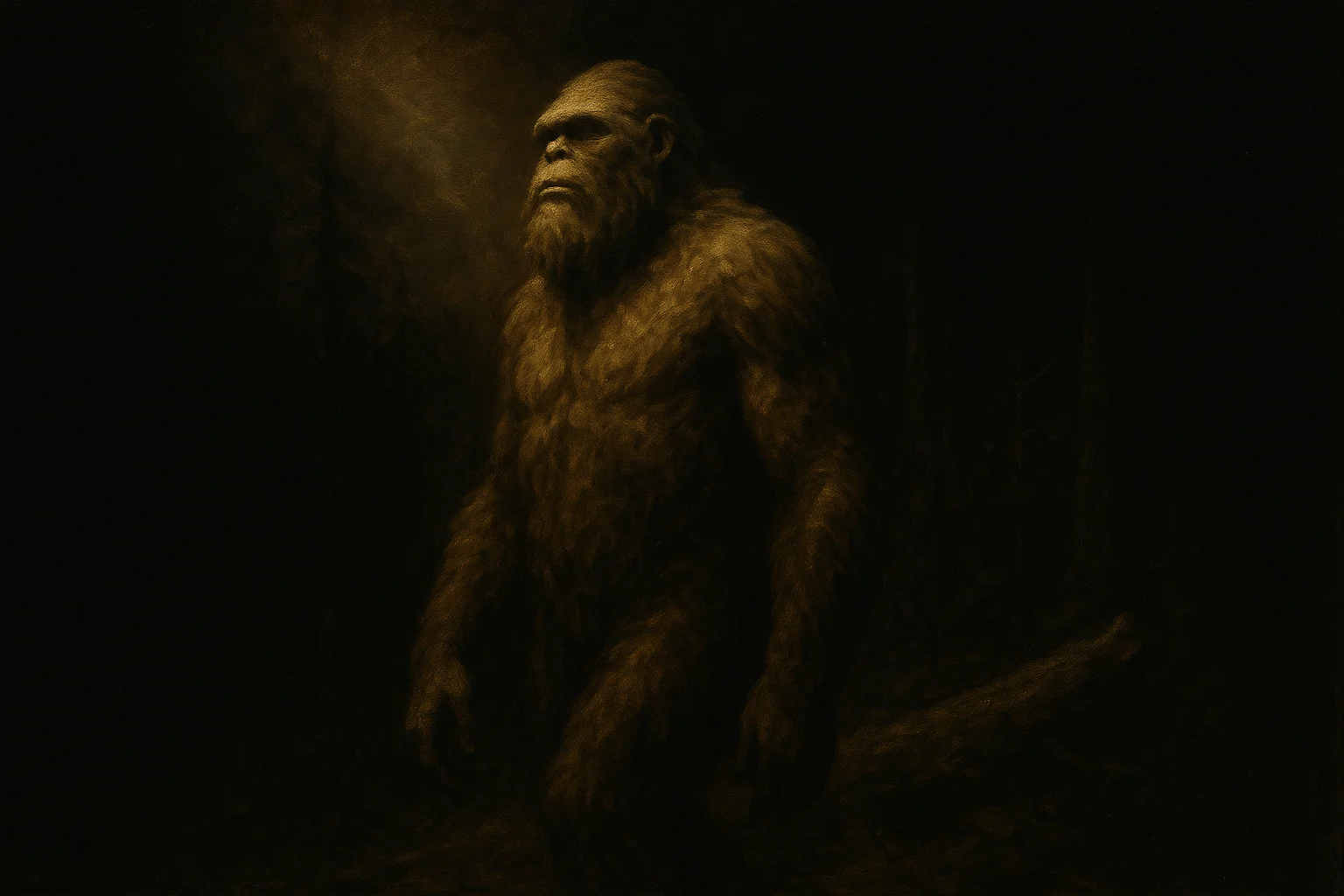
Salish Sasq'ets: The Forest Guardian
Among the Halq'emeylem-speaking Sts'ailes First Nation, the sasq'ets appears as a guardian of the forest and a figure of spiritual power. Anthropologist Wayne Suttles documented accounts in the mid-twentieth century in which the sasq'ets tests humans, punishes disrespect toward nature, and occasionally abducts individuals who violate territorial boundaries. The being is not inherently malevolent but operates according to its own logic, outside human moral categories.
The sasq'ets lives in remote mountain regions, avoids direct contact, and leaves evidence of its presence: tracks, broken branches, an acrid smell. Encounters carry consequences. Those who see the sasq'ets and fail to show proper respect may fall ill or suffer misfortune. Those who approach with humility may receive protection or knowledge.
The sasq'ets belongs to a broader category of transformative beings in Coast Salish cosmology. It shares conceptual space with other entities that mediate between human and non-human worlds, enforcing ecological balance and testing moral boundaries. Reducing it to a flesh-and-blood ape misses the point entirely.
Algonquian Witiko and Wendigo: Hunger Made Flesh
The Witiko, also rendered as Wendigo or Windigo, appears in Algonquian oral traditions across the Great Lakes and subarctic regions. It is not a forest giant but a vampire-like figure embodying the horror of cannibalism and insatiable hunger. Ethnographer Basil Johnston, an Ojibwe scholar, describes the Witiko in Ojibway Heritage (1976) as a human transformed by starvation, greed, or spiritual corruption into a skeletal, ice-hearted monster that preys on its own kin.
The Witiko grows larger with each victim it consumes, yet its hunger never abates. Its heart is made of ice, and only fire can destroy it. The figure serves as a moral warning against selfishness, hoarding, and the breakdown of communal bonds during harsh winters. Some traditions describe the Witiko as possessing individuals, driving them to commit acts of cannibalism before they fully transform.
Conflating the Witiko with Sasquatch erases the former's specific cultural function. The Witiko is not a cryptid to be tracked but a symbol of social collapse and the consequences of violating kinship obligations. It belongs in the same conceptual space as the werewolf: a human who crosses a boundary and loses their humanity.
Other Indigenous Traditions: Ts'emekwes, Sne-Nah, and Regional Variants
The Lummi Nation of Washington State describes the Ts'emekwes, a giant covered in hair who inhabits the forests and mountains of the Salish Sea region. Lummi oral histories, documented by the Lummi Indian Business Council, present the Ts'emekwes as a powerful but neutral figure, neither benevolent nor malicious. It avoids humans and prefers solitude. Encounters are rare and typically accidental.
The Spokane people speak of Sne-Nah, a nocturnal being that leaves tracks and emits a distinctive whistle. The Sne-Nah is said to steal food and occasionally abduct children who wander too far from camp. Like the sasq'ets, it enforces boundaries and punishes carelessness.
Other traditions include:
- The Kwakwaka'wakw of Vancouver Island describe the Bukwus, a wild man of the woods who lures the drowned or lost into his realm.
- The Nlaka'pamux of the Fraser Canyon speak of the Skookum, a term meaning "strong" or "powerful," applied to various supernatural beings including forest giants.
- The Yakama Nation refers to Oh-Mah, a large, hairy being that protects certain areas from human intrusion.
These figures are not interchangeable. Each belongs to a specific cultural and ecological context, with distinct attributes and narrative functions. Lumping them together as "Native American Bigfoot legends" flattens the diversity of Indigenous cosmologies.
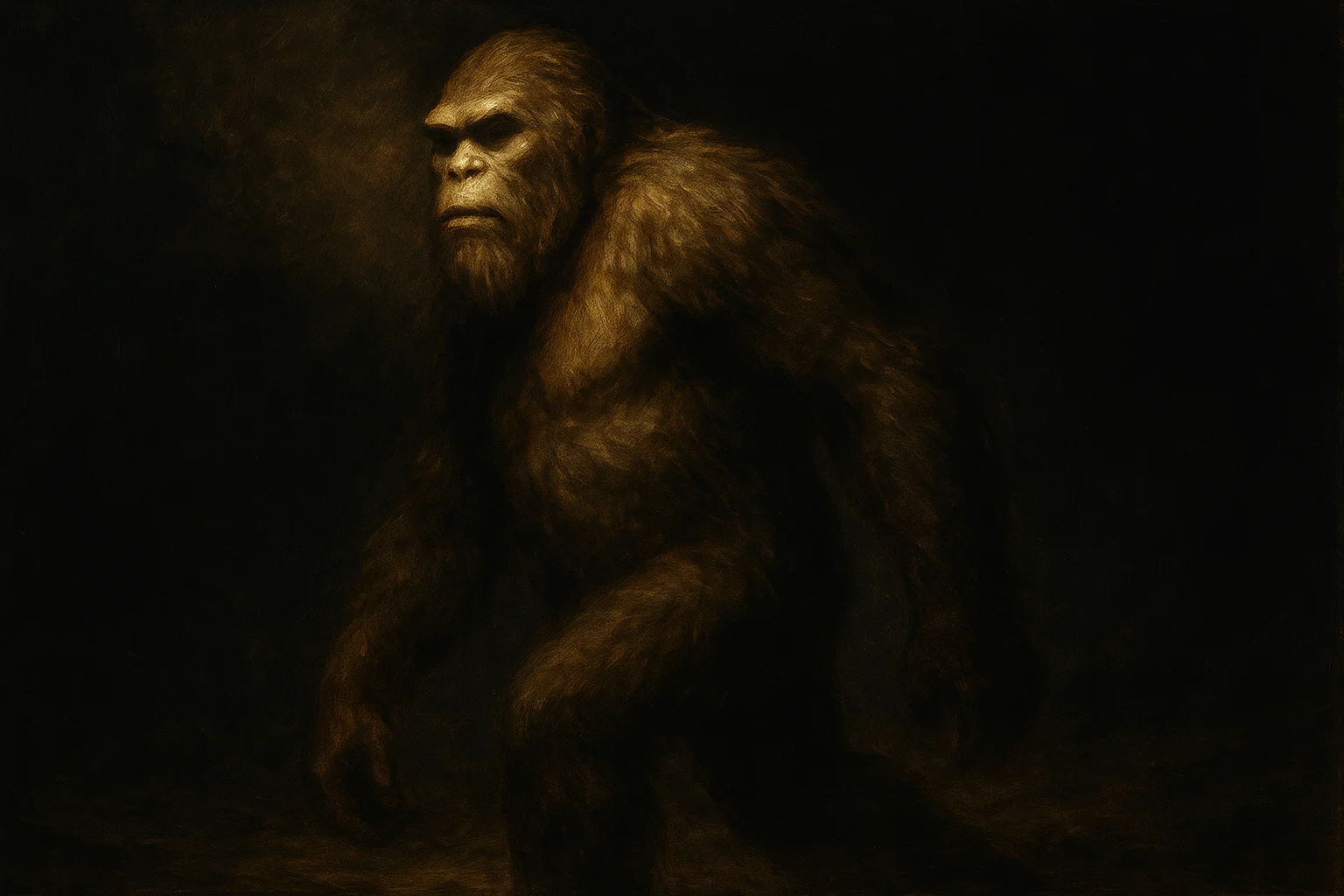
The 1958 Hoax and the Birth of the Cryptid
The modern Bigfoot phenomenon crystallised in October 1958 when construction workers at a road-building site near Bluff Creek, California, reported finding large, human-like footprints. The Humboldt Times published the story, coining the term Bigfoot and sparking a media frenzy. Investigators, amateur cryptozoologists, and curiosity-seekers descended on the area. Plaster casts were made. Theories proliferated.
In 2002, after Ray Wallace's death, his family revealed that Wallace had fabricated the prints using carved wooden feet. The hoax succeeded beyond his expectations, launching a cottage industry of Bigfoot tourism, documentaries, and pseudo-scientific expeditions. The 1967 Patterson-Gimlin film, shot near Bluff Creek, remains the most famous purported evidence of Bigfoot, though its authenticity is disputed and the filmmakers' credibility questioned.
The hoax did not invent the idea of a North American wild man, but it transformed scattered Indigenous traditions and frontier tall tales into a unified cryptid narrative. Bigfoot became a creature to be hunted, photographed, and proven, divorced from the spiritual and moral dimensions of the original traditions.
Pre-1958 Indigenous Traditions
Spiritual beings with specific cultural roles, moral lessons, and ecological functions. Not physical animals but entities that mediate between human and non-human worlds.
Post-1958 Cryptid Narrative
A flesh-and-blood primate, possibly a relic hominid, to be tracked, captured, or documented. Stripped of cultural context and reframed as a zoological mystery.
Global Wild-Man Figures: Yeti, Almas, and the European Woodwose
Bigfoot belongs to a global family of wild-man figures, each shaped by local geography and cultural anxieties. These beings occupy the threshold between human and animal, civilisation and wilderness, known and unknown.
The Himalayan Yeti
The Yeti, or "abominable snowman," appears in Tibetan and Sherpa oral traditions as a creature of the high Himalayas. Descriptions vary: some accounts describe a large, ape-like being; others a smaller, more human figure. Mountaineer Reinhold Messner, in My Quest for the Yeti (2000), argues that Yeti sightings likely refer to the Himalayan brown bear, whose bipedal gait and size match many reports.
Sherpa traditions treat the Yeti with caution but not terror. It is a creature of the mountains, best avoided but not inherently evil. Western expeditions in the 1950s sensationalised the figure, much as American media did with Bigfoot.
The Caucasian Almas
The Almas appears in folklore from the Caucasus Mountains and Central Asia, described as a human-like wildman covered in reddish-brown hair. Accounts date back centuries, with some researchers speculating that the figure preserves memories of Neanderthals or other archaic hominids. Evidence remains anecdotal, and the Almas occupies a similar cultural niche to Bigfoot: a liminal being that haunts remote regions.
The Medieval Woodwose
The woodwose, or wild man of the woods, appears throughout medieval European art and literature. Church carvings from the twelfth to fifteenth centuries depict hairy, club-wielding figures living outside civilisation. The woodwose represents untamed nature, the pagan past, and the boundary between Christian order and wilderness chaos. It shares conceptual space with the dragon and other creatures that mark the edge of the known world.
The woodwose is not a cryptid but a symbolic figure, much like the original sasq'ets and Witiko. Its transformation into a physical creature in modern cryptozoology mirrors the fate of Bigfoot.
Why the Figure Endures
Bigfoot persists because it serves multiple functions. For some, it represents the hope that wilderness still holds mysteries beyond human knowledge. For others, it offers a narrative of resistance to scientific authority and institutional scepticism. Indigenous communities, meanwhile, continue to navigate the tension between protecting sacred traditions and correcting the distortions of popular culture.
The figure also thrives in the gaps of the modern world. As forests shrink and surveillance expands, the idea of an undetected giant becomes more compelling, not less. Bigfoot occupies the same psychological space as trickster gods across cultures: a figure that defies categorisation and resists capture, reminding us that some things remain outside our control.
The endurance of Bigfoot also reflects a hunger for connection to the land and to older ways of knowing. In an age of ecological crisis, the wild man of the woods becomes a symbol of what has been lost and what might still be preserved. Whether as cryptid, spirit, or metaphor, the figure refuses to disappear.
Frequently asked questions
What is the difference between Bigfoot and Sasquatch?
Sasquatch derives from the Halq'emeylem word sasq'ets, documented among Coast Salish peoples of the Pacific Northwest, referring to a forest guardian figure with spiritual and ecological roles, while Bigfoot is a term coined by American newspapers in 1958 following reports of large footprints in California, later revealed as a hoax. The two names now function as synonyms in popular usage, but Sasquatch carries Indigenous cultural context that Bigfoot lacks. The modern cryptid narrative conflates these distinct origins.
Is Bigfoot the same as the Wendigo?
Bigfoot and the Wendigo (or Witiko) are not the same; they originate from different Indigenous traditions and serve different cultural functions. The Wendigo appears in Algonquian oral traditions as a cannibalistic figure embodying insatiable hunger and social collapse, often depicted as skeletal with an ice heart, while Bigfoot refers to a large, hairy, ape-like creature associated with Coast Salish and other Pacific Northwest traditions. Conflating the two erases the specific moral and spiritual dimensions of each figure.
When did the modern Bigfoot legend begin?
The modern Bigfoot legend crystallised in October 1958 when construction workers near Bluff Creek, California, reported finding large footprints, which the Humboldt Times publicised under the name Bigfoot. The footprints were later revealed as a hoax perpetrated by site foreman Ray Wallace, who used carved wooden feet to create the tracks. The 1958 incident transformed scattered Indigenous traditions and frontier folklore into a unified cryptid narrative that persists today.
Are there similar wild-man creatures in other cultures?
Yes, wild-man figures appear globally, including the Yeti of the Himalayas, the Almas of the Caucasus and Central Asia, and the woodwose of medieval Europe, each shaped by local geography and cultural anxieties about the boundary between civilisation and wilderness. The Yeti appears in Tibetan and Sherpa oral traditions as a mountain-dwelling creature, while the woodwose appears in twelfth- to fifteenth-century European church carvings as a symbol of untamed nature. These figures share conceptual space with Bigfoot but belong to distinct cultural contexts.
Why do Bigfoot stories persist despite lack of evidence?
Bigfoot stories persist because the figure serves multiple psychological and cultural functions: it represents the hope that wilderness retains mysteries beyond scientific knowledge, offers a narrative of resistance to institutional authority, and symbolises ecological loss in an age of environmental crisis. For Indigenous communities, related traditions carry spiritual and moral significance that transcends the question of physical existence. The figure thrives in the gaps of the modern world, occupying the same space as other liminal beings that defy categorisation and resist capture.
Further reading on Mythologis
Read the full book
Want the whole story?
The complete edition is an instant PDF download here, with a paperback on Amazon for selected titles.
Mythology
The World Mythology Book: The Gods, Heroes and Myths of Every Culture
The Gods, Heroes and Myths of Every Culture, in One Volume
The whole of world mythology in a single volume: Greek, Norse, Egyptian, Japanese, Hindu, Celtic, Slavic, Mesoamerican and African myths gathered side by side, each drawn from the primary sources.