
God of War vs Real Norse Mythology: Accuracy, Invention, and the Thunder God's True Story
God of War remade Norse mythology for millions, but how much stays true to the actual gods, prophecies, and doomed world described in the medieval Eddas? Here's what the games invent, what they preserve, and why the differences matter.
Contents
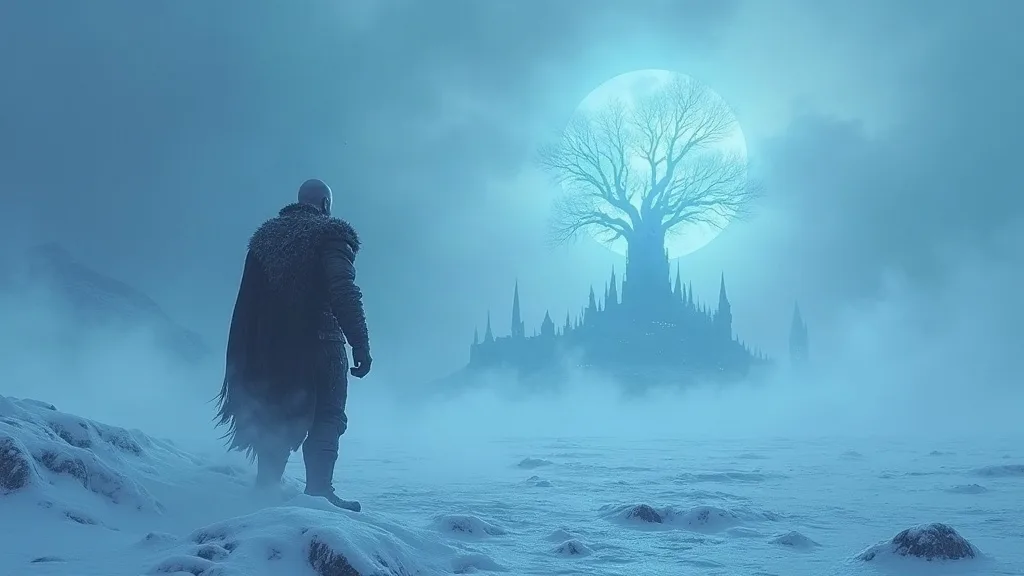
Kratos arrives in Midgard. An old man with a wooden cart blocks a narrow forest path. This scene opens the 2018 game, and it reshapes Norse mythology into something new: intimate, brutal, psychologically grounded. The tone is nothing like the sagas.
The actual Norse myths, preserved in medieval texts called the Eddas (two collections of poems and prose written down around 1200 AD, centuries after Vikings stopped practicing the old religion), show a cosmos of constant conflict. Gods wage war against giants. Odin trades his eye for knowledge. Ragnarok, the end of all worlds, is already written into existence from the beginning. The Norse did not imagine salvation or resurrection. They imagined heroic failure.
God of War borrows this doom. It does not borrow much else. Understanding the gap between Kratos's Midgard and the real one reveals what makes mythology so portable, so malleable, and ultimately, what makes the games so successful at telling their own story.
How God of War Changes the Core Cast
The gods in the games are unrecognizable in character and motivation compared to the Eddas, even when the names match.
Odin in the real myths is a god of war, magic, poetry, and death. He is ruthless, brilliant, and fundamentally tragic. He knows Ragnarok is coming. He knows he will lose. The Poetic Edda, a collection of ancient Norse poems preserved in a 13th-century manuscript, describes Odin as the All-Father, the wisest of the Aesir (the ruling tribe of gods dwelling in Asgard). He spoke in riddles. He sacrificed his eye at the well of Mimir to gain knowledge of the future. This sacrifice is permanent. The loss defines him.
In God of War, Odin is a tyrant obsessed with cheating fate. He binds prophecy itself. He surgically controls his people through the Bifrost, a magical pathway between worlds. He is paranoid, narcissistic, utterly disconnected from the tragic, doomed acceptance that defines the actual Odin. The game's version makes him a despot you cheer to defeat. The real Odin makes you mourn, because you know his wisdom and bravery cannot save him or his world.
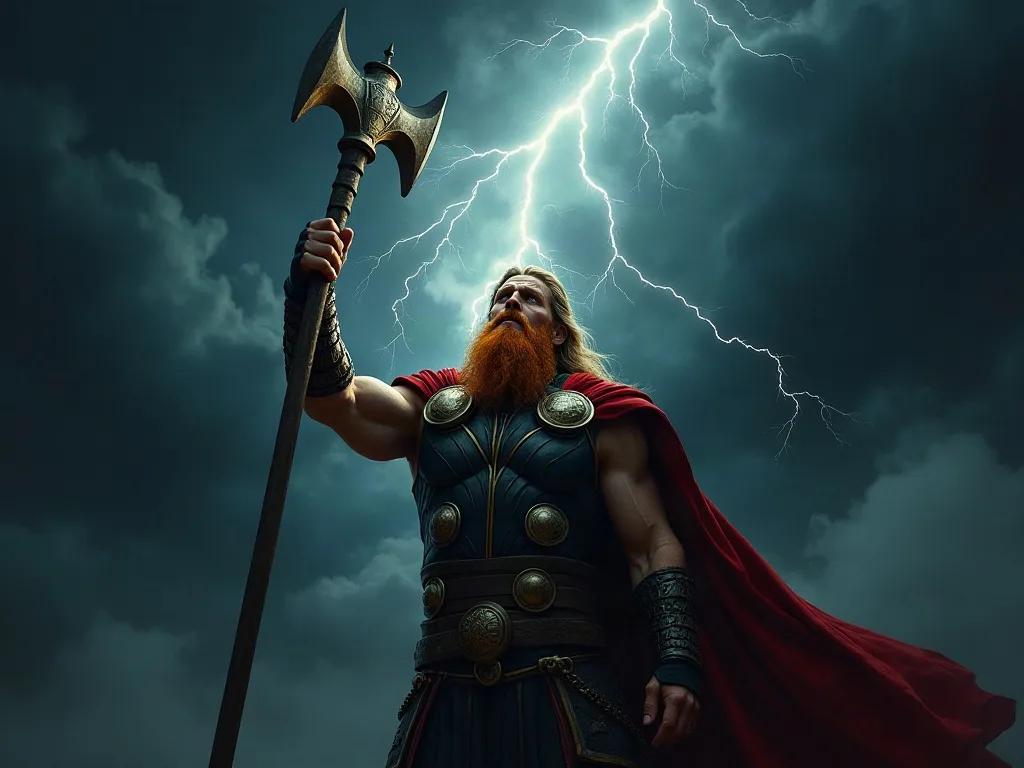
Thor, the thunder god, fares only slightly better. Real Thor is a warrior defined by contradiction. He wields Mjolnir, a hammer so heavy only he can lift it. He is muscular and boisterous, fond of eating and drinking, but not stupid. He battles the Midgard Serpent, a world-encircling snake that will kill him during Ragnarok. He loses. The Prose Edda, an 13th-century guide to Norse mythology written by Snorri Sturluson, tells us Thor dies spitting venom after wounding the serpent. This is his glory: not survival, but worthy combat.
God of War's Thor is different. He is cold, judging, and personal in his vendetta against Kratos. The games never establish why this Thor matters as a cosmic force. He is a obstacle, a son rebelling against his father, a familiar video-game archetype. He is not the myth.
Freya, a goddess in the games who fights alongside Kratos, barely appears in the Eddas at all. She is mentioned as a goddess of love and fertility who rides a boar. That is nearly all we know. God of War invents her entire personality, her pain, her betrayal arc. This is not necessarily bad. It is simply invention.
What God of War Gets Right About Doom
Where the games align with the actual myths is in atmosphere and fate.
The Eddas describe Ragnarok in relentless detail. The sun will darken. The stars will vanish. The earth will sink into the sea. Fenrir, a monstrous wolf bound by magical chains, will break free and devour Odin. Heimdall, the watchman god, will sound the Gjallarhorn, a horn heard in all nine worlds. Loki, the trickster bound beneath the earth, will escape his chains and lead the forces of chaos. Asgard itself will burn.
This is not a threat distant in time. In the Norse worldview, Ragnarok was cosmically assured, inevitable, already happening in slow motion. Death awaited the gods. They fought anyway. This is heroism without hope.
The games also respect the violence embedded in Norse cosmology. Real Norse myths are visceral. Bodies break. Blood flows. Divine conflicts are not metaphors; they are literal, physical, terrible. God of War translates this into gameplay and cutscene, into Kratos's axe and fists. It is one of the few adaptations that does not sanitize the actual aggression of the source material.
Mimir: The One Accurate Relationship
One element stands out as remarkably true to the Eddas: the relationship between Kratos and Mimir.
In the real myths, Mimir is a giant of immense wisdom. His head is placed at the base of Yggdrasil, the world tree, at a well where Odin came to drink and gain knowledge. Mimir warned Odin that giants would eventually invade and that Ragnarok would come. He was an oracle of doom.
In God of War, Mimir is a disembodied head Kratos carries, a source of historical knowledge and practical advice. He is loyal, sardonic, and grounded in genuine Norse lore. More than any other character, Mimir speaks with the voice of the actual myths. When Mimir explains the Nine Realms, he draws from the real cosmology: Asgard, Vanaheim, Midgard, Jotunheim, Muspelheim, Niflheim, Niavellir, Svartalfheim, and Helheim. These nine are from the Eddas. This is not invented.
Mimir's presence is a reminder that the games are not hostile to their source material. They simply choose which parts to honor and which to reshape for storytelling.
The Prophecy Problem: Fate Versus Free Will
Here the games make a bold departure from the myths.
In the Eddas, fate is real, inescapable, and known in advance. The gods have seers and prophecies. They know the end. They cannot change it. This produces a strange heroism: acceptance mixed with defiance. You cannot win, so you choose to be dignified in defeat.
God of War introduces a new conflict: can fate be broken? Is prophecy absolute, or can a god or mortal rewrite it through will and action? This is Greek philosophy, not Norse. It echoes the actual premise of the first God of War game set in ancient Greece, where Kratos defies the Olympian gods.
The games ask: what if Ragnarok could be prevented? What if the prophecies are not destiny but only predictions? This reframes the entire story. It makes Odin not a tragic figure accepting doom but a dictator trying to control the future. It makes Kratos a rebel who challenges cosmic law.
The real Norse myths do not ask this question. They assume the answer: prophecy is fact. You endure it. The games assume prophecy is a cage to be broken. This is the fundamental invention.
Where the Nine Realms and Lore Hold Up
God of War's architecture of the Nine Realms is largely faithful. The names are real. The relationships between worlds are mapped from the Eddas. When Kratos travels through Asgard, Vanaheim, Jotunheim, and Niflheim, he moves through a cosmos that resembles the source.
Yggdrasil, the world tree, is real. It is described in the Eddas as a massive ash tree whose roots reach into different realms, whose branches hold up the sky. It is eternal. It will not die even during Ragnarok. God of War treats Yggdrasil with reverence. It is the axis of the world. Travel through it is perilous. This is accurate.
The Bifrost, the rainbow bridge, connects Asgard to the other realms. In the Eddas, the Bifrost is guarded by Heimdall, a god so alert he needs less sleep than a bird. God of War keeps the bridge and its guardian role, though it adds the detail that Odin controls passage through it as a tool of tyranny. This is invention layered onto accurate foundation.
The games also respect the racial categories: Aesir and Vanir are two tribes of gods. The Aesir rule from Asgard. The Vanir are older gods associated with fertility and magic. There was an ancient war between them, and they eventually merged. This comes directly from the Eddas.
Giants (Jotun) are not evil in Norse mythology; they are simply huge, powerful beings who live in Jotunheim and have their own civilization. God of War respects this. Giants are not monsters. Some are allies to Kratos. Some are enemies. They have their own interests. This is more sophisticated than many pop-culture adaptations, which flatten giants into evil brutes.
The Story Kratos Brings: Grief Over Destiny
God of War's greatest departure is tonal and narrative. The games are a story of a father teaching his son, of trauma passed down, of grief transforming into wisdom. They are fundamentally about family.
The Eddas are not. They are about cycles, repetition, prophecy, and sacrifice. A father-son drama is almost absent from the actual Norse myths. Odin has many sons; he does not raise them tenderly. Loki has children with a giantess; the relationship is distant and strange. Family is political and cosmic, not intimate.
By making Kratos a single parent protecting a son (Atreus) from a harsh world, God of War imports a Greek tragedy framework into a Norse setting. This is why the games have such emotional resonance for modern audiences. They answer a question the myths do not ask: how do you raise a child in a doomed world? How do you teach them to be strong when you know they will suffer?
This is the creative genius of the adaptation. It is not faithful to Norse mythology. It is faithful to what makes stories human.
Ragnarok in the Games: Faster Than the Myths
God of War Ragnarok (2023) brings the end of worlds to the screen. It is a spectacular, intimate apocalypse.
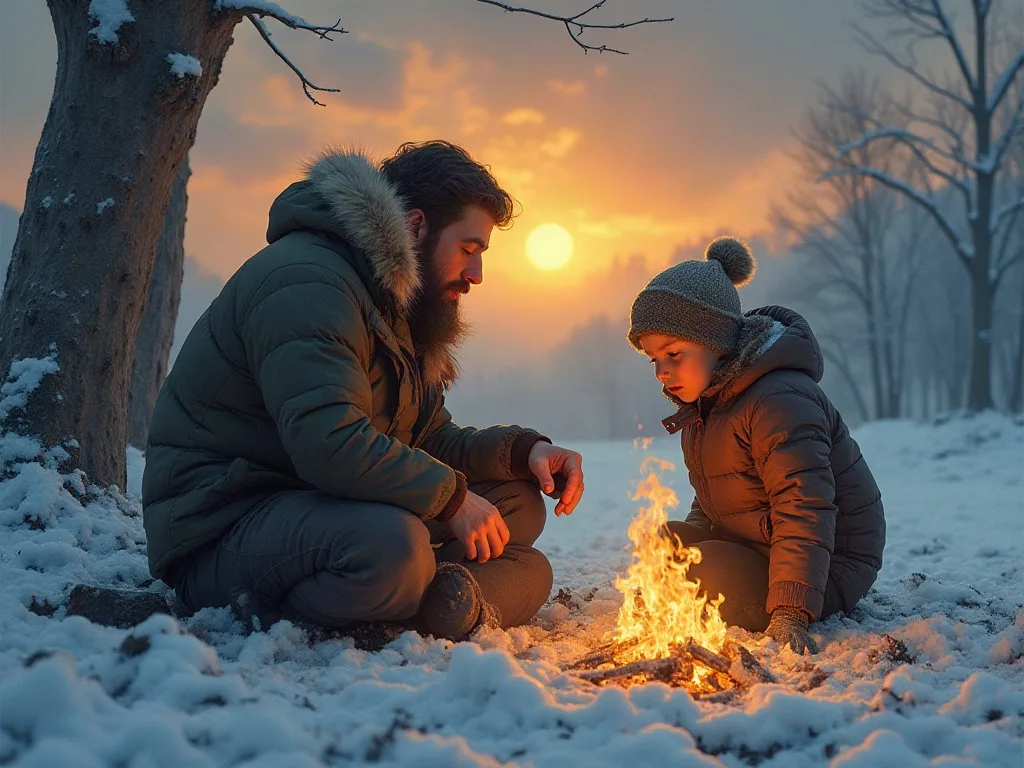
In the Eddas, Ragnarok happens in stages. There is a preparatory winter called Fimbulwinter, three winters with no summer between them. Snow falls from every direction. Winds grow fierce. Kinship breaks down. Fathers fight sons. The sun's heat provides no warmth. Then the actual destruction begins.
The games compress this. Ragnarok is happening now, but it is not the complete annihilation the myths describe. Midgard is frozen and dying, but the Nine Realms persist. Creatures from prophecy are loose, but the final destruction is not yet absolute. This gives the story space to breathe. It also softens the finality. In the games, survival and rebuilding are possible. In the myths, survival after Ragnarok is marginal and uncertain.
The games do preserve the detail that two humans, Lif and Lifthrasir, shelter inside Yggdrasil and survive Ragnarok. In the Eddas, they emerge to repopulate the earth. The games use this. It offers hope. The myths offer only exhaustion and renewal that is barely better than oblivion.
Why Adaptation Matters More Than Accuracy
God of War succeeds not because it is faithful to the Eddas but because it understands why the myths matter. It grasps the emotional core: doom, defiance, family, the cost of power, the value of standing against the darkness even when you cannot win.
Accuracy to source material is one tool. It is not the goal. The goal is to tell a story that moves people. God of War does this. It uses Norse mythology as a skeleton, and it builds a complete new body on it.
Other adaptations (Marvel's Thor films, for example) treat the myths as decoration. They scatter Norse names over stories that have no connection to the source. God of War respects the material enough to argue with it, to rewrite it, to make it its own. This is how living mythology works. It changes. It is told and retold. Each generation finds new meaning in the old stories.
The Eddas themselves are not a single, frozen text. They are medieval Christian scribes' attempts to record pagan oral traditions that had been dead for centuries. They are already an adaptation, an interpretation, a guess at what the old religion might have been. God of War is not less valid than the Eddas because it invents. Both are attempts to make sense of gods and cosmos.
Frequently asked questions about God of War and Norse mythology
Frequently asked questions
Is Kratos based on a real Norse god or hero?
No. Kratos is an original creation, a Greek hero (from the original God of War games set in ancient Greece) transplanted into a Norse setting. The Norse myths have no equivalent figure. Kratos's role as an outsider learning Norse culture is the innovation that allows the games to explain lore to players unfamiliar with the myths.
Does God of War follow the prophecy of Ragnarok accurately?
The games preserve the atmosphere of inevitable doom and the fact that Ragnarok is coming, but they invent the possibility of altering fate. In the actual Eddas, prophecy is absolute and cannot be changed. This is the single biggest departure from the source material, and it reshapes the entire meaning of the story.
Are the Nine Realms real Norse mythology?
Yes. The nine worlds (Asgard, Midgard, Jotunheim, Vanaheim, Muspelheim, Niflheim, Niavellir, Svartalfheim, Helheim) are named directly from the Eddas. Their relationships and characteristics are largely accurate to the source. This is one area where the games stay remarkably faithful.
Why is Odin so evil in the games compared to the myths?
The actual Odin is tragic and morally complex, not evil. He sacrifices, he schemes, he knows he will lose Ragnarok. The games needed a clear antagonist for Kratos to oppose, so they made Odin a tyrant obsessed with controlling fate. This is a deliberate creative choice, not a misunderstanding of the source material. The games privilege storytelling over mythological accuracy.
Are there characters in God of War who are NOT in the real myths?
Yes. Freya, Atreus (Kratos's son), and many other characters are original creations or heavily invented. The games use real Norse gods as a foundation but build an entirely new story on top. This is adaptation, not translation.
What should I read to learn the real Norse myths that God of War references?
Read the Poetic Edda and the Prose Edda. Both are available in modern English translations. They are the primary sources for everything we know about Norse mythology. They are older than any other mythology texts by centuries and were written down in medieval Iceland by Christian scribes from pagan oral tradition. They contain the actual prophecies, gods, and cosmology that God of War uses as a skeleton.
The Living Myth: Why Pop Culture Keeps Rewriting the Gods
The gap between God of War and the Eddas is not a problem to solve. It is evidence that mythology is alive.
When you read the Eddas, you are not reading original Norse religion. You are reading medieval Christian monks' attempts to preserve pagan oral tradition centuries after the religion had died. They selected which stories to record. They added commentary. They shaped the narrative.
Snorri Sturluson, who wrote the Prose Edda around 1220 AD, was a Christian looking back at a pagan past he had never seen. He was adapting too. His version became what we call the real myths. That is how canon works. The last person to write it down wins.
God of War is part of this chain. It is a 2018-2023 adaptation of the adapted, medieval Christian record of the oral tradition of a religion that ended around 1100 AD. It is not less authentic for being new. It is what mythology does: it moves, it changes, it finds new audiences and tells them what they need to hear.
The games tell a story about parenthood, about cycles of trauma, about learning to break patterns. That is not in the Eddas. But it is not false to them either. It is what happens when a living culture meets a dead one and asks: what do we do with this?
The answer is: you take it, you honor what matters, you change what you need to, and you tell the story your audience needs. God of War does this better than almost any adaptation of any mythology. It is not accurate. It is better. It is true.
Free 25-page sample
Want the whole story?
Take the first 25 pages free. If it pulls you in, the full edition is yours as an instant PDF download, with a paperback on Amazon for selected titles.

Mythology
The World Mythology Book: The Gods, Heroes and Myths of Every Culture
The Gods, Heroes and Myths of Every Culture, in One Volume
The whole of world mythology in a single volume: Greek, Norse, Egyptian, Japanese, Hindu, Celtic, Slavic, Mesoamerican and African myths gathered side by side, each drawn from the primary sources.